The Water Babies,
By Charles Kingsley.
Chapter 7,
Part 2.
And what became the poor little dog?
Why,
After he kicked and coughed a little,
He sneezed so hard that he sneezed himself clean out of his skin and turned into a water dog,
And jumped and danced around Tom,
And ran over the crest of the waves,
And snapped at the jellyfish and the mackerel,
And followed Tom the whole way to the other end of nowhere.
Then they went on again,
Till they began to see the peak of Jan Mayen's land,
Standing up like a white sugar loaf,
Two miles above the clouds.
And there they fell in with the whole flock of mollymauks,
Who were feeding on a dead whale.
These are the fellows to show you the way,
Said Mother Carrie's chickens.
We cannot help you further north.
We don't like to get among the ice pack,
For fear it should nip our toes.
But the mollies dare fly anywhere.
So the petrels called to the mollies,
But they were so busy and greedy,
Gobbling and pecking and spluttering,
And fighting over the blubber,
That they did not take the least notice.
Come,
Come,
Said the petrels,
You lazy,
Greedy lubbers.
This young man is going to Mother Carrie,
And if you don't attend on him,
You won't earn your discharge from her,
You know.
Greedy we are,
Said a fat old molly,
But lazy we ain't.
And as for lubbers,
We're no more lubbers than you.
Let's have a look at the lad.
And he flapped right into Tom's face,
And stared at him in the most impudent way,
For the mollies are audacious fellows,
As all whalers know.
And then asked him where he hailed from,
And what land he sighted last.
And when Tom told him,
He seemed pleased,
And said he was a good plucked one to have gotten so far.
Come along,
Lads,
He said to the rest,
And give this little chap a cast over the pack,
For Mother Carrie's sake.
We've eaten blubber enough for today,
And we'll work out a bit of our time by helping the lad.
So the mollies took Tom up on their backs,
And flew off with them,
Laughing and joking,
And oh,
How they did smell of train oil.
Who are you,
You jolly birds?
Asked Tom.
We are the spirits of the old Greenland skippers,
As every sailor knows,
Who hunted here,
Right whales and horse whales,
Full hundreds of years ago on.
But because we are saucy and greedy,
We were all turned into mollies,
To eat whale's blubber all our days.
But,
Lubbers,
We are none,
And could sail a ship now against any man in the North Seas,
Though we don't hold with this new-fangled steam.
And it's a shame of those black imps of Petrel's to call us so.
But because they're Her Grace's pets,
They think they may say anything they like.
And who are you?
Asked Tom of him,
For he saw that he was the king of all the birds.
My name is Hendrick Hudson,
And a right good skipper was I,
And my name will last to the world's end,
In spite of all the wrong I did.
For I discovered Hudson River,
And I named Hudson's Bay,
And many have come in my wake that dared not have shown me the way.
But I was a hard man in my time,
That's truth,
And stole the poor Indians off the coast of Maine,
And sold them for slaves down in Virginia.
And at last I was so cruel to my sailors,
Here in these very seas,
That they set me adrift in an open boat,
And I was never heard of more.
So now I'm the king of all mollies,
Till I've worked out my time.
And now they came to the edge of the pack,
And beyond it they could see shiny wall looming,
Through mist,
And snow,
And storm.
But the pack rolled horribly upon the swell,
And the ice giants fought and roared,
And leaped upon each other's backs,
And ground each other to powder.
So the tom was afraid to venture among them,
Lest he should be ground to powder too.
And he was the more afraid,
When he saw lying among the ice pack,
The wrecks of many a gallant ship.
Some with masts and yards,
All standing,
Some with seamen frozen fast on board.
Alas,
Alas for them,
They were all true English hearts,
And they came to their end like good knights arrant,
In searching for the white gate,
That never was opened yet.
But the good mollies took Tom and his dog up,
And flew with them safe over the pack,
And the roaring ice giants,
And set them down at the foot of shiny wall.
And where is the gate,
Asked Tom.
There is no gate,
Said the mollies.
No gate,
Cried Tom aghast.
None,
Never a crack of one.
And that's the whole of the secret,
As better fellows,
Lad,
Than you've ever found to their cost.
And if there had been,
They'd have killed by now every right whale that swims the sea.
What am I to do then?
Dive under the flow,
To be sure,
If you have pluck.
I've not come so far to turn now,
Said Tom,
So here goes for a header.
A lucky voyage to you,
Lad,
Said the mollies.
We knew you were the right kind of sort,
So goodbye.
And why don't you come too,
Asked Tom.
But the mollies only wailed sadly.
We can't go yet,
We can't go yet,
And flew away over the pack.
So Tom dived under the great white gate,
Which was never opened yet,
And went on in black darkness,
At the bottom of the sea,
For seven days and seven nights.
And yet he was not a bit frightened.
Why should he be?
He was a brave English lad,
Whose business is to go out and see all the world.
And at last he saw the light,
And clear water ahead.
And up he came a thousand fathoms,
Among clouds of sea moths,
Which fluttered round his head.
There were moths with pink heads and wings,
And opal bodies,
That flapped about slowly.
Moths with brown wings,
That flapped about quickly.
Yellow shrimps,
That hopped and skipped most quickly of all.
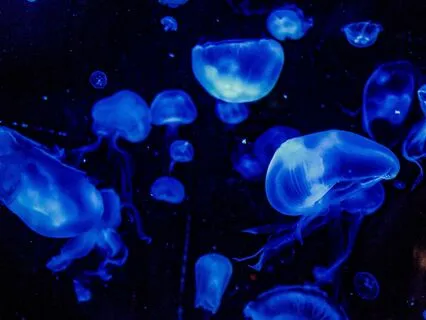
And jellies of all the colors in the world,
That neither hopped nor skipped,
But only dawdled and yawned,
And would not get out of his way.
The dog snapped at them till his jaws were tired,
But Tom hardly minded them at all.
He was so eager to get to the top of the water,
And see the pool where the good whales go.
And a very large pool it was,
Miles and miles across,
Though the air was so clear that the ice cliffs on the opposite side looked as if they were close at hand.
All round it the ice cliffs rose,
In walls and spires and battlements,
In caves and bridges,
In stories and galleries,
In which the ice fairies live,
And drive away the storms and clouds,
That Mother Carrie's pool may lie calm from year's end to year's end.
And the son acted policeman,
And walked around outside every day,
Peeping just over the top of the ice wall,
To see that all went right.
And now and then he played conjuring tricks,
Or had an exhibition of fireworks,
To amuse the ice fairies.
For he would make himself into four or five suns at once,
Or paint the sky with rings and crosses and crescents of white fire,
And stick himself in the middle of it,
And wink at the fairies,
And I dare say they were very much amused,
For anything's fun in the country.
And there the good whales lay,
The happy sleepy beasts,
Upon the still oily sea.
They were all right whales,
You must know,
And finners,
And razorbacks,
And bottlenoses,
And spotted sea unicorns,
With long ivory horns.
But the sperm whales were such raging,
Ramping,
Roaring fellows,
That if Mother Carrie let them in,
There would be no more peace in Peace Pool.
So she packs them away in a great pond by themselves at the South Pole,
Two hundred and sixty-three miles,
South-southeast of Mount Erebus,
The great volcano in the ice.
And there they butt each other with their ugly noses,
Day and night,
From year's end to year's end.
But here,
There were only good quiet beasts,
Lying about like the black holes of sloops,
And blowing every now and then jets of white steam,
Or sculling round with their huge mouths open,
For the sea moths to swim down their throats.
There were no threshers there to thresh their poor old backs,
Or swordfish to stab their stomachs,
Or sawfish to rip them up,
Or ice sharks to bite lumps out of their sides,
Or whalers to harpoon and lance them.
They were quite safe and happy there,
And all they had to do was wait quietly in Peace Pool till Mother Carrie sent for them to make them out of old beasts into new.
Tom swam up the nearest whale and asked the way to Mother Carrie.
There she sits in the middle,
Said the whale.
Tom looked,
But he could see nothing in the middle of the pool,
But one peaked iceberg,
And he said so.
That's Mother Carrie,
Said the whale,
As you will find her when you get to her.
There she sits making old beasts into new all the year round.
How does she do that?
That's her concern,
Not mine,
Said the old whale,
And yawned so wide,
For he was very large,
That there swam into his mouth nine hundred and forty-three sea moths,
Thirteen thousand eight hundred and forty-six jellyfish,
No bigger than pin's heads,
A string of salpe nine yards long,
And forty-three little ice crabs,
Who gave each other a parting pinch all around,
Tucked their legs under their stomachs,
And determined to die decently,
Like Julius Caesar.
I suppose,
Said Tom,
She cuts up a great whale like you in a whale shoal for porpoises.
At which the old whale laughed so violently,
That he coughed up all the creatures,
Who swam away again very thankful at having escaped out of that terrible whalebone net of his,
From which borne no traveller returns,
And Tom went on to the iceberg,
Wondering,
And when he came near it,
It took the form of the grandest old lady he had ever seen,
A white marble lady,
Sitting on a white marble throne,
And from the foot of the throne there swum away,
Out and out into the sea,
Millions of new-born creatures,
Of more shapes and colours than man ever dreamed,
And they were Mother Carrie's children,
Whom she makes out of the sea-water all day long.
He expected,
Of course,
Like some grown people who ought to know better,
To find her snipping,
Piecing,
Fitting,
Stitching,
Cobbling,
Basting,
Filling,
Planning,
Hammering,
Tuning,
Polishing,
Moulding,
Measuring,
Chiselling,
Clipping,
And so forth,
As men do when they go to work to make anything.
But instead of that,
She sat quite still with her chin upon her hand,
Looking down into the sea with two great blue eyes,
As blue as the sea itself.
Her hair was as white as the snow,
For she was very,
Very,
Very old,
In fact,
As old as anything which you are likely to come across,
Except the difference between right and wrong.
And when she saw Tom,
She looked at him very kindly.
"'What do you want,
My little man?
It is long since I've seen a water baby here.
' Tom told her his errand,
And asked the way to the other end of nowhere.
"'You ought to know yourself,
For you've been there already.
' "'Have I,
Ma'am?
I'm sure I forgot all about it.
' "'Then look at me.
' And as Tom looked into her great blue eyes,
He recollected the way perfectly.
"'Now,
Was that not strange?
' "'Thank you,
Ma'am,
' said Tom.
"'Then I won't trouble your ladyship any more.
I hear you're very busy.
' "'I am never more busy than I am now,
' she said,
Without stirring a finger.
"'I heard,
Ma'am,
That you were always making new beasts out of old.
' "'So people fancy.
But I'm not going to trouble myself to make things,
My little dear.
I sit here and make them make themselves.
' "'You are a clever fairy indeed,
' thought Tom.
And he was quite right.
That is a grand trick of good old Mother Carrie's,
And a grand answer,
Which she has had occasion to make several times to impertinent people.
There once,
For instance,
Was a fairy who was so clever that she found out how to make butterflies.
I don't mean sham ones,
No,
But real live ones which would fly and eat and lay eggs,
And do everything they ought.
And she was so proud of her skill that she went flying straight off to the North Pole to boast to Mother Carrie how she could make butterflies.
But Mother Carrie laughed.
"'No,
Silly child,
' she said,
"'that anyone can make things,
If they take the time and the trouble enough.
But it is not everyone who,
Like me,
Can make things make themselves.
But people do not yet believe that Mother Carrie is as clever as all that comes to.
And they will not till they,
Too,
Go to the journey to the other end of nowhere.
' "'And now,
My pretty little man,
' said Mother Carrie,
"'you are sure you know the way to the other end of nowhere?
' Tom thought,
And behold,
He had forgotten it utterly.
"'That is because you took your eyes off me.
' Tom looked at her again,
And recollected,
And then looked away,
And then forgot in an instant.
"'But what am I to do,
Ma'am,
For I can't keep looking at you when I am somewhere else?
You must do without me,
As most people have to do,
For nine hundred and ninety-nine thousandths of their lives,
And look at the dog instead,
For he knows the way well enough,
And will not forget it.
Besides,
You may meet some very queer-tempered people there,
Who will not let you pass without this passport of mine,
Which you must hang round your neck and take care of,
And of course,
As the dog will always go behind you,
You must go the whole way backward.
' "'Backward!
' cried Tom,
"'then I shall not be able to see my way.
On the contrary,
If you look forward,
You will not see a step before you,
And be certain to go wrong,
But if you look behind you,
And watch carefully whatever you have passed,
And especially keep your eye on the dog,
Who goes by instinct,
And therefore can't go wrong,
Then you will know what is coming next,
As plainly as if you saw it in a looking-glass.
' Tom was very much astonished,
But he obeyed her,
For he had learned always to believe what the fairies told him.
"'So it is,
My dear child,
' said Mother Carrie,
"'and I will tell you a story,
Which will show you that I am perfectly right,
As it is my custom to be.
' Once upon a time there were two brothers.
One was called Prometheus,
Because he always looked before him,
And boasted that he was wise beforehand.
The other was called Epimetheus,
Because he always looked behind him,
And did not boast at all,
But said humbly,
Like the Irishman,
That he had sooner prophecy after the event.
Well,
Prometheus was a very clever fellow,
Of course,
And invented all sorts of wonderful things,
But unfortunately,
When they were set to work,
The work was just what they would not do,
Wherefore very little has come of them,
And very little is left of them,
And now nobody knows what they were,
Save a few archaeological old gentlemen who scratch in queer corners.
But Epimetheus was a very slow fellow,
Certainly,
And went among men for a clod,
And a muff,
And a milk-sop,
And a slow-coach,
And a bloke,
And a boodle,
And so forth,
And very little he did for many years,
But what he did he never had to do over again.
And what happened at last?
There came to the two brothers the most beautiful creature that ever was seen,
Pandora by name,
Which means all the gifts of the gods,
But because she had a strange box in her hand,
This fanciful,
Forecasting,
Suspicious,
Prudential,
Theoretical,
Deductive,
Prophesizing Prometheus,
Who was always settling what was going to happen,
Would not have anything to do with pretty Pandora and her box.
But Epimetheus took her with it,
And as he took everything that came,
He married her for better or worse,
As every man ought,
Whenever he is given the chance of a good wife,
And they opened the box between them,
And,
Of course,
To see what was inside,
For else of what possible use could it have been to them.
And out flew all the ills which flesh is heir to,
All the children of the four great bogies,
Self-will,
Ignorance,
Fear,
And dirt.
For instance,
Measles,
Famines,
Monks,
Quacks,
Unpaid bills,
Idols,
Tight stays,
Whooping coughs,
Potatoes,
Popes,
Bad wine,
Wars,
Despots,
Peacemongers,
Demagogues,
And worst of all,
Naughty boys and girls.
But one thing remained at the bottom of the box,
And that was hope.
So Epimetheus got a great deal of trouble,
As most men do in this world,
But he got the three best things in the world under the bargain,
A good wife,
And experience,
And hope.
While Prometheus had just as much trouble,
And a great deal more,
As you will hear,
Of his own making,
With nothing beside,
Save fancies spun out of his own brain,
As a spider spins her web out of her stomach.
And Prometheus kept on looking before him so far ahead,
That as he was running with the box of lucifers,
Which were the only useful things he ever invented,
And do as much harm as good,
He trod on his own nose,
And tumbled down,
As most deductive philosophers do,
Whereby he set the tames on fire,
And they have hardly put it out again yet.
So he had to be chained to the top of the mountain,
With a vulture by him to give him a peck whenever he stirred,
Lest he should turn the whole world upside down with his prophecies and his theories.
But stupid old Epimetheus went working and grubbing on,
With the help of his wife Pandora,
Always looking behind him to see what had happened,
Till he really learnt to know now and then what would happen next,
And understood so well which side his bread was buttered,
And which way the cat jumped,
That he began to make things which would work,
And go on working too,
To till and drain the ground,
And to make looms,
And ships,
And railroads,
And steam ploughs,
And electric telegraphs,
And all the things which you see in the great exhibition,
And a foretell famine,
And bad weather,
And the price of stocks,
And,
What is the hardest of all,
The next vagary of the great idle whirligig,
Which some call public opinion,
Till at last he grew as rich and as fat as a farmer,
And people thought twice before they meddled with him,
But only once before they asked him to help them,
For because he earned his money well,
He could afford to spend it well likewise.
And his children are the men of science,
Who get good lasting work done in the world,
But the children of Prometheus are the fanatics,
And the theorists,
And the bigots,
And the boars,
And the noisy windy people,
Who go telling silly folk what will happen,
Instead of looking to see what has already happened.
Now was not Mother Carrie's a wonderful story?
And I'm happy to say,
Tom believed it every word,
For so it happened to Tom likewise.
He was very sorely tired,
For though by keeping the dog to heels,
Or rather to toes,
For he had to walk backward,
He could see pretty well which way the dog was hunting,
Yet it was much slower work to go backwards than to go forwards.
But,
What was more trying still,
No sooner had he got out of the peace-pole,
Than there came running to him all the conjurers,
Fortune-tellers,
Astrologers,
Prophesizers,
And projectors,
As many as were in those parts,
And there are too many of them everywhere.
Old Mother shipped in on her broomstick,
With Merlin,
Thomas the Rhymer,
Nostradamus,
Raphael,
Moore,
Old Nixon,
And a good many in black coats and white ties,
Who you might have known better,
Considering in what century you were born,
All bawling and screaming at him,
Look ahead,
Only look ahead,
And we will show you what man never saw before,
And right away,
To the end of the world.
But I am proud to say that,
Though Tom had not been to Cambridge,
For,
If he had,
He would have certainly been senior wrangler,
He was such a little dogged,
Hard,
Gnarly four-square brick of an English boy,
But he never turned his head round once all the way from peace-pole to the other end of nowhere,
But kept his eye on the dog and let him pick out the scent,
Hot or cold,
Straight or crooked,
Wet or dry,
Uphill or down dale,
By which means he never made a single mistake,
And saw all the wonderful and hitherto by no mortal man imagined things,
Which it is my duty to relate to you in the next chapter.
And that is the end of our story this evening,
Until next time,
Sweet dreams.