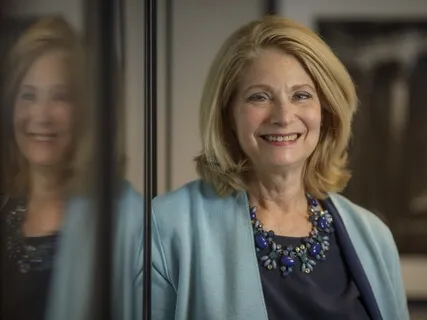
Welcome to the Everyday Mindfulness Show where we educate and inspire people to live fuller lives through mindful practices.
Let's get started with your host,
New York Times contributor,
Leadership advisor,
Sought after keynote speaker,
The author of the Amazon hot new release,
Everyday Mindfulness from chaos to calm in a crazy world,
She's smart,
Strong,
Sassy,
And a trendsetter in the field of mindful leadership.
Your host,
Holly Duckworth.
Hello,
Welcome to the Everyday Mindfulness Show.
Today I have a fantastic conversation planned for you.
We are talking to the author of the new book,
Curating Your Life,
Ending the Struggle for Work-Life Balance.
And if you've listened to any of the episodes of the show,
You know I'm a big fan of what I call work-life integration.
So reading Gail's book just felt like coming home.
Gail is an MBA,
A PhD.
She was a therapist who actually went back to school and got a degree in business.
And now she brings that perfect blend of her degrees and her experience as a mother,
As an entrepreneur,
And as a therapist to this book.
Gail,
Thanks for saying yes to coming on the show.
Oh,
I'm just delighted to be here.
Thank you.
So we know that we could talk about this all day long.
And so as we were prepping for this conversation,
I said,
Gail,
We can't do it all.
What do you think about focusing in on this chapter seven,
Curation at the Workplace?
Curate your workplace.
And so I wanted to start with that idea of what is curate?
What does it mean to curate your life?
Great.
Well,
Thank you because I think we do need to start by explaining that.
This is actually a reaction.
Well,
It comes out of the fact that I was a therapist for over 20 years.
I've been a coach for almost 20 years.
And the groups that I worked with in those two roles are quite different in many ways.
But the constant that came through over the decades was people trying to do too much,
Feeling exhausted,
Overwhelmed,
And inadequate.
And I thought,
Golly,
That's a bad problem.
And we've been talking about work-life balance for as long as I can remember.
And nobody I know has a balanced life,
But people believe that other people do.
And that makes them just feel more inadequate and overwhelmed.
So I thought,
There's got to be another way to think about this that's going to work better for us.
And I got the notion of thinking about it in terms of curation.
So you think about what a museum curator does.
First of all,
He or she has to figure out what is the exhibit about.
And then you start making decisions about what belongs in the exhibit and what doesn't.
Because if you try to put everything the museum owns into the exhibit,
You will just have a cluttered mess that nobody wants to look at.
So you have to make decisions.
And that means you have to leave stuff out of the exhibit that's beautiful and valuable and important because it just doesn't fit in the exhibit.
Not this one anyway.
And then within your exhibit,
You have to make decisions about what are the really one,
Two,
Three items that are the focus,
The center of the exhibit.
And what are the things that go off in the side rooms?
They're there,
But they're not really the most important thing.
And in the same way,
When we think about how we're spending our energy,
There has to be stuff that we say,
You know what?
It's great stuff,
And I'm not going to do it.
It doesn't fit right now.
And there's stuff that has to be in my life,
But I only have to be good enough.
I don't have to be great at that stuff.
It goes into the side rooms.
And if you do those two things,
Then you will have the energy for what your greatness is,
For what it is you really want and need to be doing,
Where your talent lies.
And that's what we want our lives to be about anyway.
So I think this curation model works a whole lot better.
At least it has for the people that I have been working with and in my own life.
So that's why I'm telling other people about it.
I really loved this because you go on to talk about energy curation and business culture.
Yes.
And you tell a funny story about quitting time and the day ends around five o'clock and the CEO jumps in the elevator and a couple of coworkers end up in there.
And the CEO looks at his watch and the story,
The employee says,
Oh my gosh,
I'm getting caught by the boss leaving early,
Which later you go on to say,
No,
He was actually on his way to a flight and was just checking the flight.
So I think this is an interesting conversation about mindfulness in the workplace and that how can we as teams build a positive energy culture?
Do you have any thoughts on that?
Oh yeah.
I mean,
First of all,
What I would say is I think in general business leadership culture right now is awful on this topic.
We boast about the fact that we're always on,
That we work 24 seven as if that's something to be proud of instead of the fact that it's really pretty stupid to try to do that because it makes you less productive.
But that's the culture.
And so,
I mean,
I wrote once about the fact that parents in some ways are in the closet the way gay people used to be,
That you don't talk about your kids at work.
And if you leave early,
You pretend that it's because you have an important meeting rather than you're going to pick up your kid from school.
The culture again is not open or helpful for those kinds of commitments.
So yes,
Business leaders then have,
I think,
A responsibility not only to pay attention to their own curation,
But to actively work to create a culture in the workplace and with their teams that supports and advocates people leading curated lives.
And that really goes against that always on,
Always on,
I can work,
I'll work 27 hours a day.
That is so prevalent in the United States right now.
As our listeners continue this practice of mindfulness,
We continue to explore the definition of mindfulness and the awareness of it as a concept.
And we've done a lot of interviews now and a lot of that wraps around this idea of presence and being fully present at home and at work.
So I'm curious,
What's your take on mindfulness?
When I first started to hear about mindfulness,
I thought,
Oh,
Golly,
That sounds awfully fluffy and woo woo.
And I wasn't sure that this was something that any of the executives that I was working with would have any interest in.
But in fact,
I read the research and it's really solid that the regular practice of mindfulness has all kinds of benefits,
Not only for your health and wellbeing,
But again,
For your effectiveness and your productivity as a business leader,
That leaders who utilize mindfulness do their work better.
So I've become a real advocate of mindfulness.
The issue that I found is people saying,
Well,
But I don't have time for it.
I'm too busy.
And that's where this curation piece comes in of,
Is this important?
Does this belong in my exhibit?
Does my exhibit need to include mindfulness?
And if so,
How am I going to do that?
And it often means what am I going to do less of?
How am I going to find the energy to do this?
Because although mindfulness gives us energy,
It also takes some energy to plan,
To make the space,
To focus.
And so making it a priority and deciding that it belongs in my exhibit is really key,
I think,
To making it not just a want to have,
But an I actually have this in my work life.
Am I making sense?
You're making perfect sense.
And let me ask a question for our listeners,
Which is,
Okay,
Gail,
This is great,
But I was hired to do a job and I have a job description and I have numbers I have to meet and my boss doesn't care if I curate my life.
What do you do with those people when they show up in your conversation?
Those are exactly the people with whom I work and I am one of those people.
Right?
I mean,
We don't get to be professionals and business leaders by not having high standards and not expecting a lot from ourselves.
But what I say is,
Look,
Even Leonardo da Vinci wasn't great at everything.
He was great at more things than most of us are,
But he was not great at everything.
So yes,
There are all kinds of things that I have to do in my work life.
I'm being paid.
I am obligated to do those things.
But the secret is I don't have to be great at all of them.
Some of them I can be just good enough.
I even use the term embracing mediocrity and people have a lot of trouble with that.
But yeah,
If we're honest with ourselves,
There are things we do both in our personal lives and in our work life where it's good enough.
It's not great.
And unless you let yourself do that,
If you try to be great and perfect at everything,
You are going to be great and perfect at nothing.
This is the secret to doing your job well.
It's not about being a slacker who doesn't care.
Going back to this idea of work life balance,
In a world that says bigger,
Better,
Faster,
More,
More,
More,
More,
More,
Come on,
Gail,
I need more time.
I need more dollars.
I need more money.
I need more.
Right.
How would you educate someone on starting a conversation with their boss about curation as a practice or my practice?
Give the boss my book,
Make it a Christmas present for your boss.
I'm being a little tongue in cheek there.
One of the things I say is that some of this is stuff we can just quietly do and we don't have to tell people about it.
I don't have to announce to my boss,
By the way,
I'm being mediocre about getting my sports in on time.
You just quietly do it.
The fact is a lot of that stuff,
It doesn't matter.
Nobody notices that you're doing it 94% instead of 102%.
I don't believe we have to talk about everything.
On the other hand,
Some of us do have bosses who have very unreasonable demands and expectations.
In some ways,
I won't like to speak to those bosses and say,
This is not how you get the best work out of your people.
In fact,
In some cases,
It's the boss's responsibility to say to people,
Go home,
Take a break,
Quit working.
I have some examples about that in the book that I think really illustrate the importance of that because people are working themselves too hard sometimes.
Some of this is on the boss and some of it is you just have to kind of gently push back on your boss or explain why you're making the choices you are making and how they are going to lead to better results.
I think that's the thing when you talk to bosses,
If you can talk in business language about outcomes and results,
You're likely going to have the impact that you want to have.
I talk a lot about context too,
And I like this idea of a word we hear a lot,
But I don't think we often really truly appreciate,
Which is we're all leaders,
But we're all responsible for what we lead.
I like to break that word down and say ability to respond.
In those situations,
How can we inspire ourselves to risk the conversation?
We never know what a coworker,
A boss,
A client,
A customer is going through.
I just think sometimes being willing to have that two to five minute conversation before you engage in the business of,
How are you today?
And genuinely connecting outside of the business place.
You'll be surprised at how many people's sons are having a great day in college or their daughters are challenged or they're raising their parents.
I think that is a big part now of work-life balance,
Work-life integration is appreciating the oneness of,
We bring it all to work whether we want to believe it or not.
I couldn't agree more.
I think keeping that in mind always that there are almost certainly things going on with the people I work with that I don't know about.
A very quick story,
If I may,
That I think illustrates this.
Some years ago,
I went to a nice small boutique and I bought a dress.
It needed to be altered.
So I came back a week later to pick up the dress.
And there was just one woman working in the boutique and she was on the phone.
And I stood there and I stood there and I stood there and she's talking on the phone.
And frankly,
I'm getting ticked off.
I'm the customer.
I want to just pick up my dress and go get off the darn phone.
Finally,
She hangs up the phone,
She turns around and looks at me and her face is just radiant.
And she says,
We've been trying to adopt the baby and I just learned that we have a child.
And I just thought,
Oh my gosh,
I'm here getting all ticked off because I want to pick up my dress.
And she's got this life changing thing going on.
And I try to remember that when I look at people in the workplace,
Either I'm the customer or I'm working with them and well,
You know,
Why aren't they giving 110% here?
What's going on?
And the answer often is something is going on and I don't always know about it.
So yes,
As the boss or as a colleague or as a client or a customer,
I can assume that something's going on.
I can ask about it.
I may not always know,
But as you said,
We bring our whole selves to work and there's no way we can avoid doing that.
I think sometimes when we're curating our workplace,
It's almost as simple as using people's names,
Bringing the human back to the workplace.
I recently interviewed a sales professional and we were talking about email communication and I,
You know,
I'm trainable.
I start the email off,
You know,
Blah,
Blah,
Blah,
Blah,
Blah.
Let's have you on the show and this is the day and whatever.
And,
And his coaching,
You know,
Hello,
Gail,
How are you?
Well,
You know,
Bringing in some of those spaces to,
To connect.
And that doesn't mean they go,
As you say,
In the heart and the center of your art museum,
But having room and space for those personal and professional relationships,
No matter how good the robots get,
They can't beat us at that game.
Yeah.
I mean,
I absolutely agree.
And in fact,
I have a whole section in the book about email because email is treacherous.
It's,
I've had clients who nearly lost their jobs because of a thoughtless email that they sent.
So email matters.
And one of the ways to make email more human and less,
Less harsh,
Which is how it often comes across is to do what I call an email sandwich,
Which is I put your name in something nice at the beginning.
I say what I need to say.
And then I say,
Looking forward to the next time we get together,
Gail at the end.
And that's the email sandwich.
And I talk about that in terms of the times when I have to say no to somebody as part of the curation.
You want me to work with you on project X,
And I simply don't want to use my energy for that right now.
I,
My exhibit is full.
So I have to say no to you.
Do I do that on email?
Yeah,
Maybe.
But if I can make a phone call or meet with you in person,
It's probably going to go better.
And that's,
You know,
That whole art of how you say no to people is part of how you make curation work.
Email,
Social media,
It really is truly a fascinating experience.
And I think even,
You know,
Women often get told,
Oh,
Women aren't good at setting those boundaries.
And the same is true for men nowadays that setting those boundaries of what tool am I going to communicate on?
How am I going to communicate?
What am I going to share?
I had an experience this week where I have an email list of the folks that are on my Facebook.
And I had emailed those folks with some exciting news about my upcoming book and those things.
And this woman wrote me back,
You didn't have an unsubscribe button.
And I was,
I laughed.
I actually wrote it back.
I said,
Well,
The email didn't have an unsubscribe button because you were put on a,
I curated the list of people that I thought would care,
You know,
And I'm,
I'm so sorry that,
You know,
We don't have that same understanding.
I'm get,
Got your name from corresponding with me on Facebook.
I will remove you from my Facebook.
And then she comes back with an email.
Absolutely not.
You,
You shouldn't unfriend me from Facebook.
I'm like,
Wait a minute.
You,
You,
You choose not to have a one-on-one relationship with me,
But you think it's okay to maintain this,
This group group,
Facebook distance relationship.
And so I think that's an interesting thing as we curate our lives and curate our workplaces is where and how do we make that one-on-one contact?
How do we honor the group contact and letting projects and people go to create that work life that serves us?
Yes,
I agree.
And I think in a way,
Your,
Your story just now talk,
Talk,
Speak to two different kinds of curation,
One of which is frankly,
People curation.
There are people in your life who give you energy,
And there are people in your life who draw energy from you.
Now,
If you are a generous and loving and kind person,
You will have people in your life who draw energy from you,
Family members and other people who need you and you can,
You can help them and care for them.
But you need to focus on also having people in your life who give you energy and,
And support you and nourish you.
And sometimes you have to look at certain people and say,
You know what,
I need to curate those people out of my life that I don't have the energy to give to them at this time.
So there's people curation that I think is part of this.
And the other,
Of course,
Is the whole question of how much of my energy do I want to use on social media?
How much do I want to be on Facebook and LinkedIn and Twitter and the picture one,
You know,
All of those.
And how much of my time do I want to be looking outdoors,
Going for a walk,
Playing with a child,
Doing things in the real world instead of the virtual world.
And I think that's a huge challenge for people these days.
I really love what you say here.
One of the key aspects of leading a curated workplace is knowing yourself well enough to seek out leadership roles,
Your abilities and passions,
Offer the best you have to your co-workers,
And you won't be getting in their way as they try to offer their best back to you.
Yes,
Yes,
Yes.
Because sometimes leaders go after senior roles because it's prestigious or it pays.
But in fact,
What makes you great in that role is something that isn't you.
Maybe it's a role that requires really terrific sales ability when in fact you're an intellectual who likes to do research.
Now,
You can push yourself to learn things that don't come naturally.
But if you're really trying to fit your foot into a wrong size shoe,
You're just going to be in pain.
So knowing yourself well enough to say no,
You know,
That sales job,
Yeah,
The exciting and glamorous and I double my salary.
But it doesn't fit.
That's not my greatness.
So I don't want to go there.
One of the things we're starting to talk about more on the show is becoming mindfulness.
We all start our journey with different tools.
Some of us,
It's a gratitude journal,
Some of it's meditation,
Some of it's reading a book or listening to the show.
And we become different people through whatever practice we choose.
And some of those things come through our workplace through a career change.
I'm curious,
What made what inspired you to move from being in the therapist role to entrepreneurial coach?
Yes,
I can tell you there was a moment where I was sitting with a new client.
And he was taught with first session,
He was talking about his issues.
And I heard this voice inside my head that said,
I know you.
I know what you're gonna say.
I know what I'm gonna say.
I know how long this is going to take.
I know how it's gonna turn out.
And I thought to myself,
Oh,
Gail,
Your client deserves a therapist who's more engaged than that.
And you deserve work that is engaging you more than that.
I thought I would be a therapist my whole life.
But I realized I was losing my passion for that.
And it was time to do something else.
And it wasn't instantaneous.
I mean,
It took me a while to figure out what that something else was going to be.
And then how to figure out how I was going to get there.
But it was one of the best decisions I've ever made in my life was to make that mid career change.
And actually,
I'm a huge fan of that because our careers are so long now,
That I think for many of us,
There are those turning points where we really need to figure out how to use our energy differently,
Either because something happens to us,
We lose our job.
Or we hear that voice saying,
Yeah,
Yeah,
Yeah,
I'm kind of bored now.
And that means it's time to do something else.
Well,
And that's what's so exciting that you know,
The statistic used to be at seven careers in your life.
Now,
I'm sure it's many more,
More than that.
But that's the gift of curating your office as as an individual,
And then as a collective team within the frame of the office that there is the ability to risk and have those conversations,
What works for us,
You know,
What Ted has to leave and pick up this kid at three o'clock,
He's going to be gone for two hours,
And then he works from home.
And if that works for your office,
Great,
If it doesn't,
That's fine.
How can you make those fits,
But it takes the willingness to say we're going to curate our office,
We're going to,
To to flex in a world now that is certainly full full of uncertainty and how we choose to address that uncertainty.
One of the huge challenges I think we have in the American business culture is that the years where most people are having young children are the same years which are key to building your career.
And that makes for craziness,
You know,
Because you're trying to,
You know,
To get that promotion to do that super duper work at the same time that you're trying to be there for your three year old.
And that's,
Again,
Not just a women's problem.
One of the things I'm really loving is as I watch younger male executives,
Is that they are determined to be there with and for their children in a way I think that some of the previous generation were not.
And I think this is something again,
As if you're a senior leader,
That we need to think about that.
How can we help people in that decade of their life curate so that they can do maybe focus more on the kids for five years,
And then come back in gangbusters.
When I had little boys at home,
I have three sons,
I had an office on the back of my house,
I was lucky I could do that.
And so I could move between my worlds very easily.
In my second career,
I was on the road four days out of five when I first started.
I wouldn't have wanted to do that when I have little boys at home,
But by that time,
They were off in university.
And I could do that.
There's a big piece of this,
Which is about recuration,
That it doesn't matter what exhibit you create,
It's not going to work for your whole life.
And so you're constantly having to re-examine that exhibit and take some stuff out and put some other stuff in and do it differently.
Either because things happen to you or because you want to make different choices.
Or you happen to things as I like to joke,
And you have a whole chapter in here about recurating your life.
And yes,
You know,
That's the journey and that's the process.
So Gail,
How can people get in touch with you and how can they get a copy of this great book?
Okay,
Well,
The book is available online.
Publication date is April the 8th,
But it's there for pre-sale on Amazon and on some other sites as well.
So by all means,
Sign up.
And if people are interested in getting in touch with me,
They can Google my name,
Gail Golden.
My website is gailgoldenconsulting.
Com.
So I'd love to hear from folks and love to share some more about these ideas.
As you can tell,
This is one of my passions is working with people around these kinds of issues.
And so I'm excited to see where the book will go.
Well,
I'm so grateful that you reached out that you shared the book with me and with the listeners because it is time for us to take responsibility for our life and sit down and make those conscious choices about what goes in the main rooms,
What goes in the side rooms.
That's just such a great metaphor.
And you have so many great stories of people in your book that have actually done it and live to tell the tale.
So if you're listening to the show saying,
Yeah,
It's great,
Holly,
But it's not for me.
I love this book because there's so many great stories.
I reached out to Gail or myself and begin the process because you only get one chance at living this amazing life and it should be the life that you want it to be.
Absolutely.
Well,
Thank you for this opportunity.
It has been a pleasure speaking with you.
Awesome,
Gail.
We look forward to talking with you soon.
Thank you for joining us for today's show.