Holness,
Welcome.
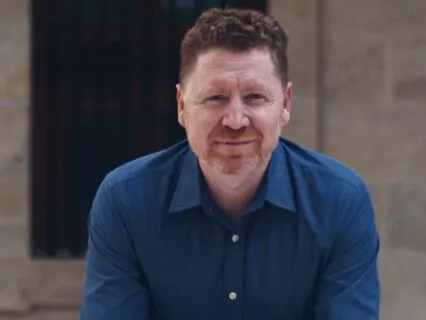
Today I have James Robbins with me.
James,
What's going on?
Josh,
Good to be here.
Thanks for having me on your show.
Oh,
Well,
Thanks for joining.
The classic question I go with,
Who is James?
What kind of work does he do?
James was raised on a small cattle ranch in the foothills of the Rockies as a shy,
Introverted redhead,
But he went on to create a company that teaches leaders how to lead better and also not just with leadership skills,
But how to really bring the best of yourself to the world.
So what got you interested in leadership?
You know,
Why leadership?
Yeah.
Yeah,
My original plan in life,
I was gonna become a film director,
And then as life can throw you a curve ball,
I ended up going into ministry,
Christian ministry,
Which was not even on my top 100 possibilities of things I might do with my life.
But I did it because I enjoyed helping people,
And I love that.
But over time,
And I started having kids,
I was like,
I need to make more money than I'm making now.
And I met this guy who was a speaker,
And he would speak at these conferences and get paid more in one speech than I did all month.
And I was doing like,
You know,
Seven,
Eight speeches in ministry.
And so I thought I could do that,
But I was like,
What should I talk about?
And I thought of John Maxwell,
Who had been a preacher and then started teaching leadership.
And I thought,
Well,
I teach leadership in a not-for-profit,
Why don't I do that?
So that was the segue.
The motivation wasn't,
You know,
Let me change the world in terms of helping leaders get better.
It was initially started like,
Hey,
I just need to make more money so I can make sure I'm taking care of my kids.
But that ended up turning into a career,
And I really focused on it and became good at what I was doing.
And so,
Yeah,
That's how I started teaching leadership.
So I guess why we're on this topic of leadership,
Just kind of start maybe from the ground level here.
What do you,
What kind of issues do you see with leaders today and blocks?
And then what do you think leaders are doing okay?
And then what kind of skillset do you like uniquely bring to these areas,
You know?
Well,
Definitely in terms of leadership,
The class has gotten smarter,
Right?
Decade by decade,
Right?
We're doing better than we were,
You know,
Two decades ago.
But the biggest challenge that leaders face is that,
Well,
It's sort of like the same challenge that Eastern Airlines had back in 1970s when they were coming into Miami to land at night,
And one of the light bulbs didn't come on to confirm that the landing gear was down.
So the two pilots began trying to change this light bulb,
And what they think happened was that the pilot's knee hit the console and it turned off the autopilot,
So no one was flying the plane.
And meanwhile,
They're fiddling with this light,
And they finally get it out and looked at it.
It looked fine.
They go to stick it back in,
And it's jammed again.
But meanwhile,
The plane is continuing to descend down to like 1,
000 feet,
800 feet,
500 feet,
And it gets to 500,
And there's an alarm that goes off that they hear this every time they land,
Just says,
Hey,
You're at 500.
Now it's dark,
They're over the Everglades.
Still though,
Right in front of their faces,
There's an altimeter,
But no one's paying attention because they're trying to solve this problem.
Well,
They get to 200 feet,
And finally Tower radios them and says,
Hey,
Eastern,
Like everything okay?
And they're like,
Yeah,
Well,
We're at 2,
000,
Right?
And the last thing recorded on the black box was,
Hey,
What happened to our altitude?
Is they realized what had happened?
And I share that because it's a similar thing that happens to leaders today is that they get so busy in task work,
Like changing light bulbs,
That they neglect the people work.
And it's the people work that actually is what produces the results,
Right?
So a leader's real task is helping your people be as successful as you need them to be.
At the same time,
You gotta change 100 light bulbs,
And are they important?
Yes,
They are,
But you can't lose the people work.
So that's the biggest challenge that managers are facing,
Leaders are facing.
The other thing,
It sounds like communication.
If we're gonna maybe use a metaphor and use it literally here,
Why wasn't the control tower in more communication with them?
Why did they get distracted?
Why did they think this one thing was so important and then forgetting,
I talk about mindfulness,
Right?
And how do they get off course and remember the most important thing?
There's an old Zen saying,
The most important thing is to remember the most important thing.
So I think the communication aspect here is important.
And why don't you elaborate what you mean by people work too,
To expound on that a little.
For sure,
And by the way,
That story is still taught in aviation schools today.
That was also a question,
Like what in the world was tower doing and why did they not radio earlier?
But part of this is biology.
Like our brain,
When we're trying to solve a problem and add in a little bit of stress,
We get this spotlight effect,
Which makes us great at solving the problem.
But if that,
Most problems don't exist in a vacuum and so what's the other thing?
And for aviators,
It's always fly the plane,
Right?
That's the thing.
So for leaders,
It's lead your people.
And anyone who has been a leader or a manager or runs their own business with staff,
You'll know what I mean when I say,
Sometimes it's like,
I hope my staff doesn't find me today so I can just get stuff done.
But the people work,
Work is all about how do I unlock potential in my staff?
How do I help them raise their level?
And it's gonna come down to some,
Honestly,
Some basic things.
I care about them.
I'm helping them grow.
I am appreciating the work that they're doing.
I'm giving them feedback on their progress because that's an important human need.
I'm helping them realize something significant about what they do so they can link it to purpose and I'm not micromanaging them.
I'm letting them have autonomy so they can invest more of themselves.
So that's people work,
Right?
The task work is,
Okay,
What do we gotta get done?
What's on the to-do list?
Who's doing what?
The people work is that little conversation on Friday.
Hey,
What are your plans for the weekend?
And then on Monday,
Remembering to,
Hey,
Did you guys go on that hike?
How was it?
Oh,
Fantastic.
Hey,
How was your son Joey's soccer tournament on the weekend?
That's people work.
It's those little moments that we increase the trust,
We increase the reciprocity.
There's a lot of good things that go on there.
What's coming up now around that too is authenticity and how important that can be,
At least for some,
Right?
So I'm thinking,
And then the purpose as well.
So I'm wondering,
Yeah,
How important that is because instead of just treating it,
The people work like another task on the to-do list,
Right?
That in order to be successful,
I need to do this.
I mean,
On the extreme end,
You have like a psychopathy where people can play the game really well,
But they just have no empathy whatsoever.
But then you have people,
I guess,
On the other extreme where they're just getting too emotionally involved,
Maybe too bleeding heart,
Where they can't,
They get,
Yeah,
Where they can't do the other things they need to do.
So the balance on this,
And I think the authenticity is really important when it comes to that.
And then purpose,
I'm gonna talk about how important purpose is.
And the other thing around purpose,
I'm wondering that people,
Because it's been so long since I've been in the corporate world,
But like that aren't maybe a good fit and how you teach leaders to deal with people that aren't a good fit,
And then how kind of maybe to refresh and inspire interest when it's just that maybe that's all it is.
Maybe they just a slight unalignment or out of alignment.
For sure.
I wanna go back to what you said about authenticity.
So that's so important.
And the challenge for a lot of leaders,
Especially when they first come into leadership.
So in your first five,
Six years as a leader,
A lot of times your only reference for what is a leader is the bosses you've had before you.
And so it depends on who they were.
So my first couple of bosses in life were either absent or super like driving and not people at all,
Or like no excuses,
You didn't get it done,
Like very binary.
So my initial thing was,
Okay,
That's what a leader is,
But that's not who I am.
So it took a while for me to understand,
Oh,
There's different styles of leadership.
Like I'm more of a coaching leader or a servant leader.
And to give yourself permission that it's okay to actually be yourself.
Because at the end of the day,
Leadership is about producing results,
Right?
You're doing it with people,
But whether you're a not-for-profit or whether you're a fortune 100,
You've got to produce results.
And so what's gonna do that?
The end of the day,
Like I said,
It's gonna be about unlocking the potential of your people.
Because when you think about it,
Every one of us,
And even for those of you listening,
If you look at your own life,
There's an incredible gap between you at your best and you at your,
Let's say mediocre or not so great,
Right?
Even business owners,
Right?
Some days we can come in and just be crushing it,
Other days we're not.
Well,
That gap,
That's part of what we tweak as leaders.
Because if I can take my team,
Let's say you have a team of 10 and I get them all just 10% more engaged.
Well,
That's like I just added an employee that I don't have to pay for or train.
So you have to think about it in that way.
In terms of the comment about how do you know when someone's not a good fit or not,
In the corporate world,
Here's what I see.
A lot of people will say,
Well,
I don't think this person's a good fit or they're just not a motivated person.
And sometimes managers say that because they're just frustrated because they don't know how to get through,
Right?
They don't know how to motivate the person.
So obviously that's one of the things that we help them with to figure that out.
But there are times of course,
Where somebody's not a fit,
But that becomes obvious usually to all,
Right?
Where it's either outside of their capacity or it's outside of their passion range,
Right?
Where they're just,
They're not passionate about this at all.
They don't care,
They don't wanna give their heart.
And sometimes we serve them by just saying,
Hey,
You know what?
It's time for you probably to do something else.
Because a lot of times people are afraid to make a change.
And so sometimes that's a servant leader right there when you say,
Hey,
I'm gonna help you make this change so you can get on with your life.
And I've had to do that before.
I had to let a guy go who was amazing,
But I knew that like this wasn't where his future was.
And I said,
Hey,
You gotta go.
And he took it hard,
But then he went on and now he's in the FBI.
So I would say he's doing pretty well.
Well,
Right on.
Thank you for that.
Now,
I know you do stories and narratives too,
And you're a big climber,
Right?
Or you do trail running.
Tell me how your kind of personal interest,
How you leverage these and storytelling to help some of the things we've already been talking about.
Storytelling is just the most powerful way that we communicate.
Obviously we do it all the time.
Everyone here does it all day.
I,
Like I said,
I grew up in the foothills of the Rocky Mountains,
So the mountains also were always a part of my story.
Growing up,
My father would take me fishing and things like that.
I used to do scrambling on peaks near where I lived,
But nothing hardcore.
I'm afraid of heights,
So that keeps me from doing some of these big mountains.
But in 2008,
Maybe,
I signed up for an expedition down in Bolivia.
And it was just one of these professionally guided climbs that I'd met the guy who ran the company.
And I would go visit him at his house,
And he would say,
Hey,
We're going to Mount Elbrus in Russia.
Why don't you come with us?
And I'd be like,
Oh,
I'd love to.
I'd love to,
But I can't.
And then a couple of months later,
I'd go visit him again.
He's like,
Hey,
We're gonna go to Kilimanjaro.
Why don't you come?
And I was like,
Oh,
I'd love to,
But I can't.
I just kept saying I can't all the time.
And finally one day,
He's like,
Hey,
We're going to Bolivia.
We're gonna climb the highest peak in the country.
And he's like,
Why don't you come?
And I was like,
Oh,
I'd love to,
But,
And then I just thought,
What am I,
Like,
I'm never gonna go.
Like,
I'm never going to go.
And so I was actually,
I'd left his house.
I was driving home.
And then I was like,
No,
I'm doing it.
So I called him back.
I'm like,
All right,
How much is the deposit?
Okay,
Here's my credit card.
So with that,
You know,
You're never really committed until you pay something,
Right?
So whether it's money or time or something.
But I went on this expedition to Bolivia,
And it was a great experience.
The story of that,
And here's what's interesting.
So back to the stories.
I came back from that trip and a friend of mine said,
Hey,
Why don't you come out?
I've got a men's group,
A men's conference,
And you could just tell the story of what happened in Bolivia.
And I was like,
Well,
Sure,
I guess.
I mean,
I don't know that there's much of a story,
But,
You know,
I'll see.
And I didn't even realize it at the time.
And I'm like a storyteller,
But I was just sitting on this goldmine of stories.
And so as I then thought through it,
I was like,
Oh,
Actually there's a lot here.
And that's one of my signature stories when I'm speaking on stage is I tell this story.
Everybody loves it.
They get so much out of it.
When it comes to stories and mountains,
That's how that goes for me.
But all of us,
We have all these moments in our life that we think,
Well,
I don't think there's anything to tell here.
And then when you actually start to look into it,
You realize there's universal principles because most stories are you wanted something.
There's something you're trying to get and something's in the way and everyone can relate with that.
So stories connect us,
Right?
People live through our stories,
Becomes their story.
But at the end of the day,
Whatever the point of the story,
What I call the Trojan horse,
Whatever the point of the story is,
That's how we communicate that across.
Because if you think about it in this way,
It's really wild.
I could get up on stage.
Let's say,
One of my keynotes,
The main point is that leadership isn't easy,
But it doesn't have to be complicated.
It's really doing the little things consistently.
That's kind of like the point of the talk.
But I could save everybody 50 minutes and just get up and say that sentence.
But it doesn't have the same teeth,
Right?
Because it's not wrapped in something digestible.
It's gotta get in the body.
It's like a medication.
And the story is the thing that wraps it.
And that is what creates transformation.
So when it comes to storytelling techniques,
A lot of people mess up their stories because they just try to tell too much and they give too much details.
So for example,
I mentioned to you before we got on air that I broke my ankle on Saturday morning trail running.
So there's a story in that.
I haven't figured out how I would use that story,
But there's a story in that.
But basically,
It was a friend of mine and I,
We were running on this trail on a mountain in the dark under headlamps and I broke my ankle.
But when people would go to tell that story,
At first they would wanna say,
Well,
The reason I was on that mountain is because I am looking for new trail routes for the trail running group that I'm a part of.
And like all this stuff that you don't need that in the story.
That's not what's important.
Stories all begin with a really simple context.
You can think of it like at the opening scene,
Whatever that is.
And it's usually just like a time,
Place and person.
Like,
Hey,
My buddy and I were running,
We're trail running on a mountain in the dark under headlamps.
That's all you need to know right at the beginning.
And then most stories are going to have what we would call an inciting incident.
And that is that moment where the story changes.
Like,
Okay,
So yeah,
We're running and then I'm gonna tell how I wanted to get some video to show some friends.
And so I started running with my phone while I'm looking at the screen and I didn't pay attention and then crack,
Right?
So that becomes the inciting incident.
Now,
That creates the new goal.
The new goal is like,
I need to get back down this mountain on a broken angle and I don't have that much time to do it.
So then that becomes the story.
And however I would develop that,
I would add in some tension,
Some extra rising stakes,
Whatever that might be.
It could be like,
I knew I can't keep walking on this too much longer,
But there's gonna be some kind of climax and then some sort of lesson in it.
So you take this event that some people would wanna tell you that over 30 minutes at the pub,
That you really can tell that story in probably three minutes.
Again,
It's gonna be context dependent.
If I'm in a keynote on stage,
I might tease that out a little bit depending on how important the point is that I'm making or it might get reduced to be sort of like an analogy as well,
I mean,
But the other thing about stories is remember that they're so versatile.
They are like the Swiss army knife,
Like they are a multi-tool.
So even that story of breaking my ankle on this trail,
Well,
What could that story be about?
Because it's not really just about me breaking my ankle on the trail.
I mean,
That could be about technology and how we're always looking at our phones and what's the price of that.
It could be about the importance of having companionship and the guy that stuck with me and helped me get to the bottom.
It could be a story about pushing yourself and doing things that are difficult even if there's risk involved.
And yeah,
Sometimes it doesn't go your way.
That's the great thing about stories is that they're just this multi-tool and I've used the same story sometimes to make like three different completely separate points on stage and it fits,
It flows.
It's just what data points are we gonna pull out and make that's what the story is about.
And then that's what the audience remembers.
Oh,
James was on stage.
He told the story about breaking his ankle on the trail because he was looking at his phone and then he went out and talk and shared some statistics about how much we look at our phones and babies are impacted because their mothers are not giving eye contact.
And like,
So they remember all that,
But it started because I'm looking at my phone and I break my ankle.
So you keep things tight.
You don't need to overstuff.
Don't be like the uncle at the family reunion that's like,
Well,
Before I tell you this,
I gotta tell you the backstory.
No,
We don't need the backstory.
Well,
I appreciate you sharing that.
Not cool on you breaking your ankle,
But there's really some good pointers and how to leverage this.
So now I wanna ask,
Since you're a public speaker and I wanna get some,
Pick your brain a little bit on what kind of tips and advice you have just in general for speaking in general,
Whatever comes to mind,
Whatever comes up here.
I know with me,
I haven't practiced enough.
My thing is the ums and the ahs and needing to replace them with silences and the space between words,
How powerful that is and likening it to a musician where different musicians can play the exact same thing,
But the ones that do the spacing,
It makes a lot of difference.
But that's just one little thing amongst so many different points and challenges with public speaking.
So yeah,
What do you advise or what kind of tips and recommendations do you have in general and then anything specific too?
Well,
You bring up a great point about the,
Let's say ums and ahs,
Right?
It's a common thing that people come up with,
But I bet if you're hanging out with your friends and they're like,
Hey,
What'd you do last weekend?
And you start telling them the story of how you broke your ankle,
I bet you don't have ums and ahs in there.
Am I right?
You know,
Probably not,
Because I know,
I think one of the reasons they say is because you're kind of buying time,
You're thinking about what to say next.
And so that fills in the gaps to get the next thing formulated or whatever.
So maybe there's something to that,
But yeah.
Yeah,
Exactly.
Right,
With the buddies,
Buddies,
There's no pressure,
Not really performance,
You can let your guard down and just be however you are too and it's not like a formal setting.
Yeah,
And so the reason I ask you that is because that's not a speaking technique thing,
That's a mindset thing.
And so when we wanna work on that,
It's not so much like,
Okay,
I gotta make sure I'm not doing that.
No,
The solution to that is actually making sure that you are coming and really being present into your talk and not worrying about what people are gonna think and is this gonna be good enough?
And so of course,
There's a lot of things that are gonna help get you to that point,
Right?
So one is gonna be preparation,
Two is gonna be some mindset work,
But three is really focused on I am here to serve these people.
And one thing I still do,
And I've done almost 3000 presentations,
But when I go and I'm waiting at the front or backstage or wherever,
I will look out at the audience and I'll just take a moment and I'll try to put myself in their shoes for a moment and I will try to feel empathy because so let's say I'm at a big HR conference and I'll look out at this room and I'll think,
Because I know HR pretty well,
And I'll think,
You know what?
These people work hard.
They have a difficult job.
No one's ever happy with them.
They've got some time off to come to this conference.
They've come to my session.
I want to really serve these people.
And just by turning the spotlight off of myself that I'm like,
Oh,
I hope this is okay and I hope I remember this point and I get it back onto them.
And then the other part to that is trusting yourself,
Right?
So if you have prepared,
Not memorized,
But if you have prepared,
Like this is my message,
It's not like this is my talk and the points I want to make.
No,
This is my message.
Even if you veer off your own script a little bit,
Not a big deal because you know the message that you're trying to get across.
So that would be one thing I'd say is like,
Really be clear about what's the message at the end of the day.
If they only hear one thing,
What is that?
Okay,
Make sure they're going to hear that.
But get into that place of empathy.
Get into and be prepared enough so that you are not like,
Oh no,
What do I need to say next?
And trust me,
I've spent so many hours on stage sweating bullets,
Being in my head,
Thinking this sucks,
I'm losing the audience,
Like all these insecure moments.
But you just keep going and you get better and better as you go.
Context,
Right?
So that's one thing.
And I guess a lot of people don't really have that experience.
I've only had that a few times,
Right?
And I can totally agree.
Yes,
The more prepared,
The better for something like that.
Now,
When we're talking about something kind of more abstract like podcasting here,
Right?
Where we don't,
We're not in front of a live audience where we can get feedback or that kind of have this different energy,
I think too,
Maybe.
Yeah,
How might it differ from,
What have you learned from,
You're a podcaster too,
What have you learned as far as differences and if that kind of still,
How much of that still applies and how much doesn't?
And I guess it depends on people's style and how they do things too with podcasting as well,
Yeah.
So there's gonna be some similarities and there's gonna be some differences.
And the similarities are,
It still comes down to being present in the moment,
Like not in your head,
But in the conversation and trusting yourself so that you're not gonna give into insecurities.
But there's still some skills to layer on top of that.
And so to give you the podcasting example,
When I started my podcast and I started having guests on and Olympic athletes or whoever,
Navy SEALs,
And what I noticed was,
Wow,
I'm really nervous.
Like this is,
Even though I'm a communicator for my living,
I asked this guy a question,
But I didn't even listen to his answer because I'm sweating bullets on what's the next question.
And then I asked that question and then I'm thinking that was a stupid question.
And then I don't hear his answer again,
Right?
So that's the process.
And I'm like,
Okay,
So I need to grow in this interviewing skill thing,
But it's the same thing in my chair right now as the interviewee is I realized,
You know,
When my last book had come out and we started doing podcasts,
I thought this is a skill I don't,
I have not yet developed,
Which is okay.
It just means,
All right,
Just you gotta put in the reps and be intentional.
And I think this is where we get down to intentional practice.
Like if you really wanna master something.
So early on in my speaking career,
Because I had so many insecurities,
Every speech I would go in,
I would have one goal.
What's my one goal this time?
It's to make sure I make more eye contact with the audience.
All right,
That's my one goal.
But after I get on the plane,
I'm going home,
Hey,
What went well?
What are you gonna do different or more of less of next time?
And I just kept doing that.
So the same,
I do the same thing with podcasts.
You know,
If I'm interviewing someone or if I'm on a show,
Hey,
What went well?
What would I like to do differently next time?
I don't really like how I answered that question.
I think I could have answered that better.
I think that's the skill part that we practice,
But it doesn't replace the inner core of,
I'm gonna be here,
I'm gonna be present.
I'm on Josh's show.
I'm gonna be my best for his show and for his audience.
And if I start getting insecure about my answers,
I'm no longer in Josh's show.
I'm now in the James Robbins show,
Which sometimes is not the best show to be in,
So.
All right,
Cool.
Really helpful,
I appreciate that too.
So I think when we get wrapped up,
Well,
Yeah,
I would just echo the wise reflection too,
Because that's how we,
We have to have kind of feedback.
One of the best ways to start,
Of course,
Is with ourselves.
I mean,
A lot of times we're our own worst critic,
But a lot of times it's easier to take feedback from ourselves than other people too.
I guess we can reach out to others,
But when I think about doing that,
I think,
Oh,
Am I gonna burden them?
What if they don't wanna spend their precious time,
You know,
Giving me feedback?
Or then what if I can't take the feedback too or something like that?
So these are other things,
But I do think this wise reflection,
And that goes with almost every area of life,
You know,
From how we're relating to others,
You know,
Our ethical stance.
Yeah,
How we're moving and speaking in the world on a daily basis,
How we are when things don't go our way is a huge one,
You know,
Of any kind of spiritual practice.
So yeah,
Wise reflection is utmost importance for sure.
And I like that one goal,
Making it manageable and just putting all the energy in just that one goal,
And it really can kind of amplify the effectiveness,
I think,
Just doing one thing each time.
So it's already enough stuff going on,
Right?
So I think that's really wise advice too.
So I wanna loop back to where I think started from before we start wrapping up here.
Where do you see,
Going back to leadership,
Where do you see kind of like,
I don't know,
Like leadership trends or things happening in this space?
Where do you see them going?
And then,
I mean,
With that,
What do you agree with and what would you like to change course?
And I guess I'm maybe talking about things you see in your own work,
And then maybe things you see on a wider societal scale that you can just speculate on,
Or just,
You know,
From what you see in your studies and talking to people too,
Outside of your own personal work.
I think leaders are only going to get better.
In fact,
They have no excuse to get better now,
Especially with AI coming online,
Right?
Where any manager can basically start using AI to let AI know,
This is my team,
This is their Gallup scores,
This is their MBTI,
And here's what I'm trying to do.
Like AI can really be this running mate with you to guide you as you lead.
Now,
I still think you're gonna need human leaders.
I will sometimes have AI say,
Hey,
You're my boss for the day,
Tell me what I should be doing.
It's nice to have that,
But I'm not gonna,
That's me,
You know,
Telling it to be my boss.
It'd be another thing if someone told me AI was my boss.
I think most people are gonna push back on that.
Although AI could be better bosses than a lot of leaders out there.
But AI,
Leaders are gonna be able to tap in more and more to that.
Like,
How do I have this conversation with this person?
It's gonna give you some great things.
Where we're going in our company is we are,
Even though we still teach skills,
To me,
That's like the top of the iceberg.
The bottom of the iceberg is you as a person,
Right?
How you show up,
Being authentic,
Regulating your nervous system,
All those good things,
Being in alignment.
So we're starting to add that to our whole process,
That it's not just about learning how to have a difficult conversation.
It's also helping the leader go,
Well,
Why is this conversation so difficult for me?
What are the things that triggered me from the past?
What are the stories I'm telling myself so I can create new stories?
Because if this conversation is triggering me,
I'm probably getting triggered at home.
I'm probably getting triggered at the gas station.
And so let me evolve as a human being.
Then,
Obviously,
I will bring better things to work.
So that's where we're going with it.
And I think leaders overall are gonna have some good help,
I think,
With AI.
Well,
Let me throw,
I guess,
A more challenging question here.
Some people,
I think,
Aren't as optimistic about AI.
And I don't wanna get into fear-mongering here.
And I use it myself.
It cuts down a lot of time that I have to spend on things.
And it's the pros and cons.
So weighing the pros and cons.
But there are some people that are really saying that it's already happened,
Replacing certain jobs.
So where,
I guess,
The way to frame this is how can,
I guess,
The human element make sure that they're not replaceable by AI?
Because of all these kind of warnings we have that AI and then AI-driven robotics are going to replace so many different jobs and things like this.
Do you see this happening?
Do you wanna prepare for it?
Do you wanna try to prevent it?
What's your outlook and view on this?
Yeah,
Overall,
I'm an optimistic guy.
But there are times I go down the AI rabbit hole and I start researching and hearing what's coming out.
And I can't help but have sometimes a dark,
Gloomy feeling and the question,
What have we done?
Because I think there are challenges that it's just gonna,
Legislation will just be behind,
Like catching up.
I think there's gonna be a lot of damage done.
So from a leadership perspective,
I hold to what I said earlier,
Where I think leaders can use it,
But they're still gonna wanna motivate their staff.
If you need humans doing the work,
They're gonna want a human boss.
At least that's how I think.
But as things start to get more and more replaced by AI,
I don't know.
I feel nervous at times for my kids when I think about them and the fields they're going into.
I got a daughter that wants to become a therapist and that field is getting hit for sure.
Do you wanna encourage your kid to go into law school right now?
I don't know.
I think that sector's gonna get hit big.
I already use a lawyer less because I have AI to give me some quick answers.
Now I can't do everything.
But again,
We're talking AI today.
What's AI in three years and how much better is it?
So I do worry for my kids.
And I do worry for,
My son was taking computer science in college and then he was like,
Dad,
What am I doing?
They don't even teach AI.
And how good is a coding degree going to be when there's all these coders out of work that will be more in line?
So I hear you on that.
I think there are some things I'm nervous about.
And we live in a country where,
Especially if you're a publicly trading company,
People don't think about the staff first.
They just think about the quarterly returns,
The quarterly numbers,
And they're gonna do whatever.
But I'm hoping for business owners,
Like in January of this year,
I had a meeting with my team and I said,
Do you know that a lot of what you guys do could be replaced by AI?
Now,
I'm not gonna replace you with AI,
But I'm gonna ask you to go learn AI so you can bring more value.
And I think that's the key,
Right?
It's like,
Especially if you have some good people working with you,
Which I do,
Then all right,
I want them to level up their skills.
Because I also told them like,
A lot of stuff what you guys do is you're gonna find it hard to get work.
So I need you to go out and level up on what you can bring to the company because I want you to stay.
I hope a lot of business owners can think in that same way,
Right?
Not just how can I maximize profit?
How can I cut all these staff and have AI do it?
I'll keep your staff,
But then get them to learn AI so that,
Now,
It might mean that I hire less in the future.
Probably will hire less in the future.
It'll be interesting to watch how this all plays out.
To your question,
Should we try to stop this?
I think that's pretty difficult when you've got companies in these arm,
Not just companies,
Countries in an arms race,
Right?
It's almost like back to the 60s of like,
Let's get a person to the moon.
I mean,
The reason we don't have someone on Mars is because there's no geopolitical pressure to get someone on Mars,
Or we would have had someone on Mars by now.
But to get to the moon,
It was like the space race.
We got to win this.
So now it's the AI race.
So I think people are just gonna just build these,
Who knows what we're building,
But we're building something.
Well,
We're building a lot of data centers is what,
I shouldn't say we,
But a lot of data centers are supposedly being built in this golden dome program,
I think,
Too.
And so,
Yeah,
I don't think really this is the space to get into it,
But I think you addressed that really well.
And we really,
None of us really can know the future,
Right?
Until it gets here,
There's things we can prepare for and steps we can take.
And then,
You know,
Kind of our,
How our values and ideologies guide us through these things,
Too.
Yeah,
It reminds me of when I was working in online marketing,
I think it was around the turn of the century,
I'm showing my age here.
And I think one of the programmers we had there,
I think when he was going through training in school,
They asked him something like,
If you could develop a program that would replace your own job,
Would you do it?
You know,
One of these hiring questions or something.
I think it's a great question.
I don't need to really go into how it should be answered or not be answered,
But I just throw that out there.
So I think with that,
I think we gotta start wrapping up.
Anything else you wanna draw people's attention to before taking us out on a final message?
Us,
The listeners.
For sure.
What do you do when you feel like maybe you're on the wrong path in your life?
Like maybe what you're doing now isn't what you're supposed to be doing,
And you feel inside like there's a,
There's something bigger for you to do,
But you're not sure what.
And at the same time,
Leaving what you're doing would seem so scary in a lot of ways.
James,
Thanks so much for joining me here today.
I really appreciate it.
Usually I say,
Taking us all out.
May all beings everywhere find their optimal motivation and purpose for doing what they're doing,
And for now and into the future.
Bye now.
Thanks,
Josh.