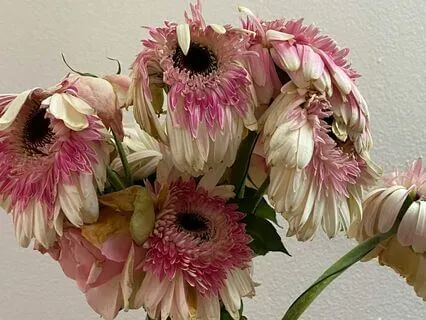
You are going to die.
It's a particularly morbid topic,
But it is also the elephant in the room.
Should it be so morbid?
This is part of healing back the veil and looking at this supposedly morbid topic for what it really is.
It's like in Super Mario Brothers,
That ghost that is chasing Mario when you're playing him,
Turning around and it freezes in its tracks.
If you keep avoiding it,
If you keep running from it and not looking at it,
It keeps chasing you and chasing you.
As soon as you turn back and face it,
It freezes in its tracks every time.
The boogeyman in the closet is just a shadow.
So if we can face death,
We can really sit with it and see it for what it really is.
Is it really as scary?
Is it really as powerful?
Does it have as much power over us if we really look at it?
So that is today's topic,
Death,
And one of the biggest topics of all.
I've talked about sex in one of my other videos.
Now I'm approaching another big topic,
Which is death.
And particularly in the West,
We have this really interesting,
Fascinating relationship with this concept.
And it's occurred to me a number of times that we have a bit of a warped perception of death,
Particularly in Western culture.
I've reflected on this many times in my life.
And it's also been through traveling to other countries and being in other cultures and witnessing their approach to death.
So I think in Western culture,
We have a particularly warped view of death.
I've reflected on this a number of times.
And it's been particularly through going to other countries and experiencing other cultures and looking at other cultures' approaches to death that I've seen even more just how strange our attitude is to death in the West.
No one wants to talk about it.
People want to avoid it,
As I said,
Like it's the elephant in the room.
Whereas it seems like in other cultures,
There's more of an openness and even a very direct and practical exploration of death.
I was in Mexico once,
Actually,
And I was walking down one of the main roads in a small little town in Mexico.
And I started to hear and notice that there was a parade of sorts coming along the street behind me.
And there were trumpets playing,
And there was celebratory music playing,
And there was this big crowd dancing and singing.
And as they passed,
I noticed that they had raised above them a coffin that they were carrying.
And so this was actually a funeral of sorts.
But it really struck me just how celebratory this funeral was in Mexico.
And particularly comparing that to how morbid and glum and gloomy funerals generally are in the West.
And I don't know about you,
But I'd rather at my funeral that my friends and my family would celebrate,
And they would dance,
And they would rejoice.
Not for the fact that I've died,
But to honor my life in a joyous and celebratory way,
Rather than in an exclusively morbid way.
Not to say that there will,
Of course,
Be some inevitable grief,
But I feel like we've got it twisted a little bit,
The way in which we essentially look at death in the West.
Another example that I think is really interesting is looking at death as the Tibetan culture does.
I have not been to Tibet.
Books such as the Tibetan Book of the Dead show that there's a very strong history associated with death in Tibet.
And it's deeply rooted in their culture to almost use life itself,
Use the life as a practice of moving towards death,
Of befriending death,
Of understanding death,
And almost using your life to prepare for the moment of death.
Because the moment of death is considered to be of such significance that certain Tibetans will spend a lifetime cultivating the right mindset and the right attitude to prepare for that moment when they transition.
Because of how important it is to develop the right attitude and the right mindset towards death and what comes in that transition from life to death.
So this whole attitude of befriending and getting closer to death,
Rather than seeing it as the enemy.
Another example is India and the Aghoris in India.
So the Aghoris in India have a particularly interesting practice where they will actually meditate at cremation grounds.
They will actually sit on funeral pyres,
Which is essentially burning bodies,
And get closer to skulls and bones and literally get so close to death in a very practical way that they are really embracing everything about death.
And I don't know a huge amount about this particular religious practice,
So I won't go too much into it.
But this is just an example of another culture,
Another religious practice,
Where it is seen that really embracing all aspects of the dark,
Of the shadow,
Death being one part of it,
Is really also about getting closer to the divine.
Getting closer to death,
Getting closer to the divine.
Because death is just as much a part of the divine as life,
As living.
There's a scene that I particularly remember from the movie Fight Club,
Where Brad Pitt and Edward Norton's character,
Essentially turning out to be the same character,
But they're both in this scene where they get this clerk from outside a convenience store.
And one of the characters places,
I think it's Brad Pitt's character,
Places a gun at the head or in the mouth of this poor convenience store clerk and starts to threaten him and to really get very real and very aggressive towards him,
In some ways about how close he is to dying,
And starts talking to him about,
What is it that you really want to do in your life?
What is it that you really want to do,
Rather than working in this convenience store?
And he starts screaming and panicking and crying about how he always wanted to be a vet.
And at this moment that he is faced with death,
He's being confronted in this moment by Brad Pitt's character about actually really doing what he really wants to do in this life and not wasting it.
And it's really only in that immediacy,
That immediate moment of being faced with death,
That he can truly see what it is that he really needs to do in his life.
And one question,
What is he really actually living for?
So the closer we get to death,
The more urgency we can have in our life.
The more we can put aside and cut through all the superficial crap that we're probably spending a lot of our days with and really get to the point of what we really want to do and what is meaningful to us and what we're really living for.
Death also makes us look at materialism in a whole new way.
So what do I mean by that?
All these things that we're accumulating in our life and we're spending so much time and energy accumulating all these things,
Whether from cars and TVs and all kinds of televisions and I don't know,
Just material things,
All the things that we accumulate.
We don't take any of them with us when we die.
We can't take any of it with us.
And that's particularly true with probably the most significant material thing that we all get so caught up about,
Which is money.
We also can't take any money with us when we die.
We don't take anything with us.
And so all these things that we've collected in the material world and spent so much time and effort to accumulate,
We can't take any of it with us when we die.
So when we look back at the moment of death,
On what we've spent our time accumulating,
I wonder what we'll be thinking in that moment.
We'll be thinking,
Oh,
I wish I'd spent more time accumulating more stuff and things.
Wish I'd got an extra plasma screen TV.
Wish I'd got that extra Mustang car or that swimming pool.
Or will we be perhaps wishing that we'd accumulated closer friendships and deeper connections with friends and family and loved ones?
Do we wish that we'd accumulated more merit,
Accumulated more opportunities to give and to share and to grow and to love?
Is that perhaps not the real currency?
Is that perhaps not the real material wealth?
So that's another interesting way that we can also look at death and to bring more meaning to our life and to bring more understanding about what's really important.
So once again,
It's about befriending death and death becoming our friend.
Memento Mori is a very famous saying that some of you might have heard of,
Which seems to have become a bit of a meme in some circles in popular culture.
Memento Mori is roughly translated as,
Remember that you will die.
Remember that you will die.
So using this as a mantra of sorts,
On a daily basis,
Can be an incredibly powerful thing.
So it's natural to go through phases in life where death feels very close and death feels very immediate.
And then somehow it's this human nature that we have to forget,
To constantly forget.
Almost like this illusion,
This illusory mindset keeps creeping back in and we forget how fleeting life is.
We forget how fragile and fleeting life is.
Because if we really knew how fragile life was,
I think we'd all live in very,
Very different ways.
So how do you personally feel about death?
What is your approach to death?
Does it terrify you?
Do you feel okay about it?
Do you welcome it?
These are all really important questions to ask,
Particularly as human beings,
Particularly if we're on a spiritual path.
Such an important thing for us to explore.
Very,
Very important.
And so I'd really encourage all of us to reflect more on death.
Even using it as a daily practice or a meditation to enrich and to enhance our lives.
It's definitely possible,
Definitely possible.
So thanks for tuning in again and listening to some of my reflections.
On this particular topic.
Until next time.
Bye for now.