It's How Do We Fix It?
With Richard and Jim.
New ways of thinking about charity and giving.
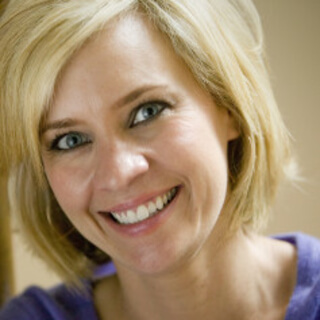
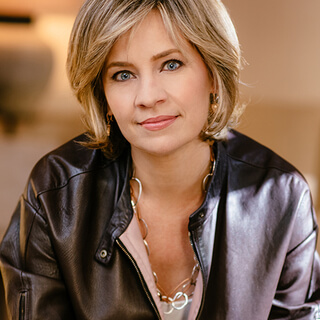
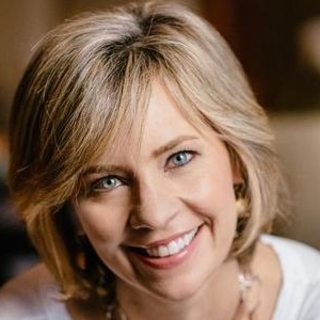
Jennifer McCray.
One person with a great idea,
That doesn't work.
Create a community that's throwing its fate together to create change versus pitching somebody or selling somebody.
What a different dynamic.
Yeah,
About halfway through the year,
I remember thinking,
I just have to get another job.
This is horrible,
Demeaning work.
And it was in that moment that I had the epiphany that I was making about the money,
Not about education and the building,
What we're going to do in that building.
Our show is about fixes.
Yeah,
How to make the world a better place.
How do we fix it?
How do we fix it?
As we often say,
Our show is about solutions,
Making things better.
One way to make a difference is to get involved in a cause or charity.
But while most Americans think that's a good idea,
Only about one in four of us,
According to a recent survey,
Contributes consistently.
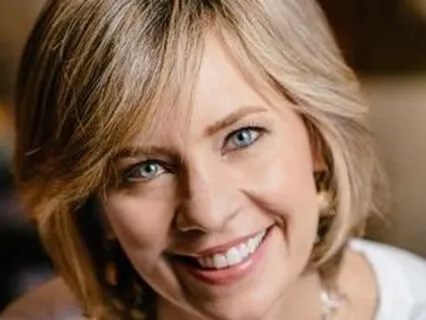
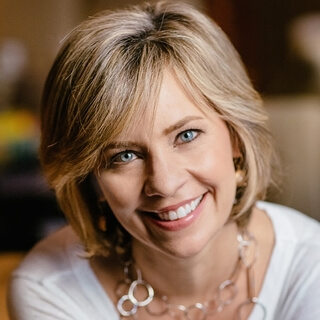
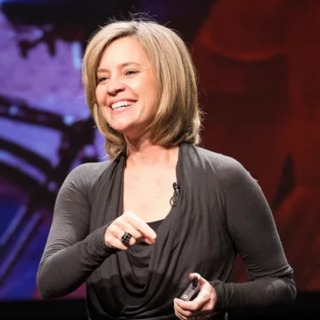
Jennifer McCray is our guest on this episode.
She's an expert in giving and fundraising,
As well as helping organizations and philanthropies be more effective.
Jennifer joins us via Skype from the San Francisco Bay Area.
Welcome.
Thanks.
Pleasure to be here.
So I want to get this one out of the way first.
And that is,
What would you say to people who doubt if they can make a difference?
You know,
I think making a difference is really less about what we're doing and more about how we're seeing what we're doing.
And so I think a lot about this idea of whether we see our work as a job or we see it as a calling.
Because I think if we see our work as a calling,
No matter what we're doing,
We're making a difference in the world.
So can I give you an example?
Oh yeah,
Sure.
Go ahead.
So I like to tell the story,
A true story of a time when I had come back from this really long,
Arduous trip to Africa.
And I got back to JFK.
I was living in New York and I got through immigration and customs and got outside.
And there was this incredibly long taxi line.
And so finally,
When I got to my place in the taxi line,
I opened the door.
And right away,
There was something different going on in this taxi.
There is this beautiful,
Beautiful Persian carpet lining the floor where my feet were supposed to go.
And I could hear this ethereal sitar music playing.
And the taxi driver,
He had this long white beard and a turban.
And I remember him so clearly because he had these sparkly blue eyes.
Instead of kind of just grunting at me in the mirror,
He actually turned around and said,
Where can I take you?
And I remember my shoulders just dropping.
And I said,
You can take me home.
And he said,
Still looking at me.
I remember this just so well because he said,
I will drive you as carefully as I would drive my own daughter.
And in that moment,
I remember feeling if somebody who has a job as difficult as a New York taxi driver,
Felt like he was making it not just earning a living,
Not just,
You know,
Driving people around,
But was actually making a difference because his calling was to give people safe passage.
I thought,
Well,
Why can't we all feel like that in whatever we're doing?
Wow,
That's such a great story.
You wrote a really interesting blog post recently called Why Fix It?
Of course,
Richard and I noticed it because our show is called How Do We Fix It?
And you talked about how we have this impulse when we see a person in need or a friend having a problem to start trying to fix their problem,
Give them advice.
And you talked about how important it is first just to listen.
Well,
It just came from this deeply personal experience of when I felt most able to be present for somebody or vice versa when they're present for me,
It's when we're in this space of listening.
And so sometimes when I'm teaching,
I'll say talk about a time when you really felt like you had a challenge you needed help with,
A time when you felt you really needed somebody to be there for you.
What did not work for you?
And inevitably people say it didn't work when people came in and said,
Oh,
Let me tell you about my experience with it or let me tell you how to fix it,
You know,
Those kind of things.
And conversely,
I say what did work?
And the answer is pretty much always the same.
You know,
The person sat with me and listened to me until I had said everything I needed to say.
And,
You know,
We have the answers inside of ourselves.
And the beauty of relationship is for people to help us not fix it or even I keep using the word help,
But I actually kind of hate the word help because I think even the word help puts us in a supplicant position,
But be in relationship with each other in a way that we can actually be authentic and vulnerable.
I love that.
And it's and listening often is as important or more appropriate in some situations than doing.
No question.
That is an active act of courage to actually be vulnerable enough with somebody else,
Especially somebody you feel you quote unquote need something from.
And so if you can get out of that space of need,
You know,
If this is important work,
We're asking people to join with us.
That's a whole different model.
So you've spent a couple of decades working in the field of philanthropy.
And how did you get into this field?
You know,
I really just fell into it right out of college.
Early on in my career,
I realized that fundraising is always going to be incredibly hard if I thought that the relationship was going to be built around money.
And so while of course we have to get money moving in support of the work we're doing,
But it's not about money at the center of the relationship,
Because any time you put money at the center of any relationship,
There's going to be a power dynamic at work.
And that power dynamic is ostensibly whoever has the money has the power and whoever is looking for the money is in the supplicant position.
And so I made a decision really early on in my career that I would always keep the work itself at the center of my relationship.
And then money just becomes,
You know,
The gas that goes in the car and then gives you the ballast and the confidence to really go into conversations with people standing up,
Not kneeling down.
We have kind of this begging bowl mentality still happening a lot around this space.
Yeah,
That's a very interesting point.
I believe,
Jennifer,
You have an example from your own life about that.
Yeah,
I just I was I was really fortunate when I got out of college because I had a great boss who was the president of my alma mater where I worked as a fundraiser.
And he said,
You can't raise money sitting behind a desk.
Which is absolutely true.
I still say that to people today.
You need to really be out building relationships.
He said,
We're building a new science building.
Go out and make 350 face to face visits this year.
And I was I was pretty undaunted at 21.
And I grew up in Pittsburgh and had really never been out of Pittsburgh,
Except maybe one time.
But he said,
Cover New York City.
That's that's where all the resources are.
So I remember meeting with very,
You know,
Illustrious alumni and parents and friends of the college and being pretty fearless and would sit down in their office and I'd make some small talk and pull out the blueprint and say,
Your name goes here.
Wouldn't you like to give some money?
And it was like crickets every time I was making the ask.
Just no response.
I wasn't even getting second meetings with people.
And so,
Yeah,
About halfway through the year,
I remember just so well this this feeling of of dejection and walking up Fifth Avenue,
Going back to my my hotel room and thinking,
I just have to get another job.
This is horrible,
Demeaning work.
And it was in that moment that I had the epiphany that I was making about the money,
Not about the science and the education and the building,
What we're going to do in that building.
So just reframed,
You know,
I think so much of everything we do in life,
But,
You know,
In particular here,
It's about reframing what we're doing.
So what did you do differently after that?
I mean,
How did your how did your the pitch change?
Well,
So first of all,
I never pitch,
You know,
I just feel like this is so much not about selling to customers.
I think it's about creating community and creating consortium.
And,
You know,
So one of the organizations I started,
The Quincy Jones Music Consortium,
I was working with Quincy Jones and a bunch of other leaders in the space of bringing music to kids.
And,
You know,
We we knew we wanted to use Quincy's name for obvious reasons,
But decided to decided to call it the Quincy Jones Music Consortium because the word consortium comes from the Latin consort.
And it was really interesting because for years,
Actually,
I thought that word meant to stand together,
Which was really powerful.
Right.
So I was telling people the word consort,
We're creating a consortium of people to stand together.
And then within the last 12 months,
A friend of mine said,
You know,
Not actually translated as standing together,
It's actually translated as throwing your fate together.
And I thought,
Wow,
That is even more powerful to create a community that's throwing its fate together to create change versus pitching somebody or selling somebody.
What a different dynamic.
I think we have a vision in our heads that a lot of philanthropic organizations are headed up by billionaires who have big egos and are used to being told you're terrific.
How do you deal with that problem that you called edifice complex?
There's also a great article from my friend,
Jed Emerson,
Who called it the dance of deceit.
And I think that very much is about the sales mode or putting money at the center.
And we're kind of secretly saying,
Oh,
Yeah,
We're building relationship.
But what we're really doing is just wanting you to occasionally throw some money over the wall or,
You know,
And this is where we get into a place where there's no transparency,
Where we're not adaptive,
Giving people metrics that we think they want to see instead of really looking at,
You know,
What does it mean to actually to solve a problem?
And the edifice complex was a term another friend coined with people who are putting their name on a building without really being invested in the cause.
So one thing that you're involved with that I was really impressed by is this campaign called Born Free Africa.
Can you tell us a little bit about that?
Born Free was focused on eradicating mother to child transmission of HIV because,
You know,
There's absolute conviction in our world that HIV can be eradicated,
But it starts with moms not giving it to their babies because it's a virus.
And as soon as a mom gives it to her baby,
The virus will continue.
And so one pill once a day can eliminate the chances that a mom will give the virus to her baby.
But it's this question of how are we getting to the moms?
How are we getting the meds to the moms?
So Born Free has been really working on that in terms of helping governments be more efficient and partnering with civil society,
Clinics,
Etc.
And how's it going?
Well,
The 2015 data that came in from UNAIDS was we're under 100,
I think it's 110,
000 moms now.
So the trajectory has been phenomenal from,
You know,
900,
000 five years ago to under 100,
000.
That's so encouraging.
You know,
You mentioned data and the importance of knowing what we're doing.
One of the questions I have for you is when we talk about philanthropy and we have these very successful,
Very affluent people who've had a lot of success in their fields,
How do we know that their brilliant ideas about what the world needs are actually going to work?
I mean,
You know,
You had Mark Zuckerberg investing a huge sum of money in education in Jersey City,
But with very ambiguous results.
You know,
The Clinton Foundation,
You know,
Helped build a huge corporate project to provide housing and jobs in Haiti.
And that thing has been kind of a bust.
What do you tell the people how to sort of check their ideas to make sure that they're actually going to do the help that they hope to do?
Well,
There's lots of ways to talk about that.
One is a solution that we're working on is part of this larger system and how it fits.
We cannot operate in isolation.
I'm a huge fan of community organizing because I believe we have to organize as leaders.
To get this work done,
Which means it's about giving others the capacity to be part of a movement of change.
And so I work really closely with the great community organizer,
Marshall Ganz at Harvard.
And we spend a lot of time talking about the role of philanthropy in organizing and how do we actually balance power?
How do we create communities of people that are standing together?
It's a really interesting question.
Yeah,
Yeah.
There must have been a lot of people who were in the room.
Yeah,
Yeah,
There must have been failures along the way that you've experienced.
What lessons have you learned from that?
Well,
The biggest lesson is it can't be a solo operation.
One person with a great idea,
That doesn't work because you can't enable others.
You know,
How we're leveraging the momentum and the results is incredibly powerful and important.
But do you have a model for how philanthropy should evolve to be a little more egalitarian,
Less reinforcing of elite power structures?
I do think we have to talk about this question of power and what does it really mean to share power and to be powerful together?
I'm passionate about community organizing.
And one of the challenges that I see a lot of times in traditional community organizing is you're organizing against the man,
You know,
When in reality,
I think that we can actually do more together if we're building the kind of relationships that we've been talking about.
So it's impossible to do work together if you're doing a dance of deceit and saying secretly,
I don't like people with a lot of money,
But I feel like I need them to play the game.
And that doesn't work on any level.
And so how are we pushing philanthropists and people with,
Quote unquote,
Traditional power is equally important as inviting people who are on the side.
You know,
I don't even like to say the side,
Because,
Again,
I feel like that whole I don't like that comment when people say I've been on both sides of the table.
I'm like,
There's no table.
But,
You know,
People who are looking to organize resources in some way to really ask some tough questions about their own relationship with money.
You know,
A lot of us have deep biases against people who've been successful and yet feel this need to partner with them.
And it gets so ugly.
Explain how to be a soulful fundraiser.
Well,
I think it starts remembering that we exist in relationship and we cannot get the work done by ourselves.
So we have to partner with people.
We certainly spend a lot of time,
I think,
Selling ourselves.
You know,
If you're exhausted,
You are in sales mode.
If you feel energized and full of possibility,
You are connecting.
I want to switch from the organizational to the personal.
One of the groups that I've given some money to is a group that works with kids in schools and suggests projects that you might want to contribute to and really involves the giver.
It's not just merely writing a check.
Yeah,
DotersChoose.
Org is a great organization.
And I think they're so smart in how they set up their organization because it's really a model of citizen philanthropy.
And it's I think why like churches and synagogues and organizations like Kiva and others are really successful because they've baked giving right into the mission of the organization.
So while,
Of course,
The mission of DotersChoose.
Org is about providing teachers money for classroom projects,
It's about engaging everyday citizens and giving.
So it's a really powerful model.
And I think they're one of the fastest growing nonprofits out there because they're the best nonprofits out there because of it.
One of the groups that we've worked with is Solutions Journalism Network,
Which is headed up by David Bornstein and Tina Rosenberg.
And they are very much mission driven and collaborative in spirit.
Is that part of where you see philanthropy going in the future?
Definitely.
Yeah.
And I've worked closely with David for many years.
He's a friend and a colleague.
And their organization's growing really quickly,
Too,
Not just because they're meeting a need because they're creating partnerships in the way that we're talking about.
Jennifer McCray,
Thanks very much for joining us.
It's been a really interesting and wise counsel from you.
Thank you.
My pleasure.
Thanks so much.
So,
Richard,
I have to say,
First off,
It's really nice working in our brand new studio,
Which also happens to be the study in your New York apartment.
On this really luxurious card table.
Actually,
There's a great story about this card table.
Can I tell it?
And that is that we have two of these card tables because we have.
.
.
And it's really like a $20 card table.
And the other one's in the living room.
My wife was walking along the street in New York.
And there she found the identical card table to the one that we had.
Wow,
That's pretty cool.
To me,
It looks more like a TV dinner table.
That would be a pretty small game of cards.
That's true.
That's true.
It is more of a solitaire table or a TV dinner table.
But it's nice to be in this kind of environment and with our guest in from Skype from the West Coast and talking about something really important,
Which is just how do we make the world a better place?
How do we leverage the wealth that we have as a society and put it to good use?
Yeah.
Jennifer McCray,
One of the things I loved about what she said was the importance of collaboration in every respect,
Because you often do think when considering charities or foundations that it's all about one great donor and his billions of dollars.
And the edifice complex of getting your name on the fancy student center at Yale or whatever it might be.
And we certainly see examples of that all over New York City.
But still,
She says that very often the difference between a successful enterprise and one that is not making a difference is collaboration and adaptability,
The ability to change with the times and consider the views of everyone and be part of a bigger cause.
You have to involve people on the ground.
You know,
There's a famous story of somebody who delivered hundreds of wheelbarrows to a part of Africa to help people move their crops around.
Came back two years later,
The wheels had all gone flat.
So people were carrying the wheelbars on their heads to move stuff around.
And the people who were giving the wheelbarrows meant well,
But their gift wasn't very effective.
Her philosophy is don't go in and tell people what they need.
First,
Go and listen to them and then see if there's some good ideas in other parts of the world that might also work here.
But it also has to work indigenously.
In fact,
Many of the inventions they've spread are then wind up being created for a profit by local artisans.
And they really do have a good effect,
But they're not given as charity.
They become part of the actual economy.
They're not given as charity.
Such an important point.
One of the most haunting images I have is visiting South Sudan,
Very poor country,
Very poor village,
Back in the 90s,
And seeing in this village square a huge satellite dish rusting completely out of use.
Was donated by the Canadian government in an effort to connect this village to the rest of the world.
Yes.
Through technology.
There was one thing that I wish we could have gotten into a little more detail on.
I think it's something that the philanthropic world doesn't focus on enough,
Which is hardheaded analysis of results.
You know,
I mentioned that case of Mark Zuckerberg,
Very smart guy,
You know,
Lots of great ideas of how to fix education,
Worked with Cory Booker,
The visionary mayor at the time of Newark.
And the project was a disaster might be too strong a word,
But it didn't work.
And it didn't make a difference.
They spent millions and millions and millions of dollars.
They had distorted their whole education system,
Which was a total mess,
But they didn't make it much better.
And,
You know,
Just because you're a genius and you start one of the world's biggest companies doesn't mean you know that much about education,
Especially if you're one of those people who are so smart,
You didn't even need to go to school.
You know,
I mean,
That's not that that doesn't necessarily make you an expert.
But I want to end the show on a positive note.
There are many charities and many causes that have made a huge difference,
Including some enterprises pushed by the Clinton Foundation.
I would,
I'm sure that in the whole,
The Clinton administration,
The Clinton Foundation has done,
You know,
Much more good.
I'm not,
You know,
And there are so many wonderful groups doing important work around the world.
But for us as givers,
For people who want to give to a cause,
Be involved,
I think is one of the things that Jennifer is saying.
And also go to causes that invite you in the door.
I mean,
Donors Choose is one example where they invite you to have a dialogue with the teachers and with the students,
And they write you letters when you give them money for,
For instance,
A new iPad for their classroom.
And that makes a difference.
It's it brings us all together.
How do we fix it?
I'm Richard Davis.
And I'm Jim Meggs.
And thanks to Miranda Schaffer,
Who's sitting here on the sofa with us today,
Our producer.
And the music is by Lou Stravinsky.
Thanks for joining us.
Shows produced by Davies Content.
We make digital audio for companies and nonprofits at Davies content.
Com.
Thank you.