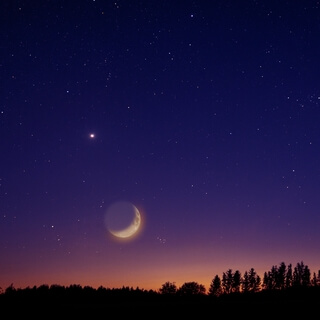
First Night.
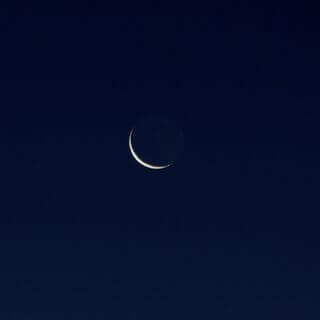
New Moon Night.
Kameshvari Nitya.
Goddess of Loneliness.
The goddess Kameshvari is lustrous and red,
With a ruby crown and the crescent moon on her forehead.
She carries a sugarcane bow and the five flower arrows of desire,
Representing longing,
Maddening,
Kindling,
Enchanting,
And wasting.
She carries a cup filled with gems and holds a handout,
Palm up,
In a mudra called varamudra.
Kameshvari's name means always empowering desire,
And she specifically reminds us of the nectar that we can find within our own loneliness when we are empty,
Like the moon in the dark.
Loneliness calls for real connection,
And the superficial experience of simply being around people who don't really see you for who you are is not going to be enough.
Sometimes Kameshvari's loneliness is a call to spend time alone,
So you can consider what it is you truly want to move forward with in your life.
I particularly like this poem by Hefez,
Translated by Daniel Ladinsky with a modification from me for Kameshvari's New Moon Night.
The poem is called My Eyes So Soft.
Don't surrender your loneliness so quickly.
Let it cut more deep.
Let it ferment and season you as few human or even divine ingredients can.
Something missing in my heart tonight has made my eyes so soft,
My voice so tender,
My need of love absolutely clear.
Rest your hands in your lap,
Palms up,
In Kameshvari's gesture of gift giving and receiving,
Varamudra.
Take a couple of deep breaths in and out.
Install your awareness,
Especially at the bottom of your exhale,
In the emptiness at that moment just before you begin your inhale.
Explore this moment of emptiness and observe what arises there.
How does it feel at the bottom of your breath?
What happens in the moment before you inhale?
There's no need to hold the breath.
Just notice when that moment arises.
Be with that moment.
The moment of emptiness.
The new moon of the breath.
Keep your awareness on your breath.
Your mind will wander.
Thoughts may arise,
Images,
Emotions,
Sensations.
That's totally okay.
Notice those.
Let them be present in your experience.
Continue to anchor to the emptiness at the bottom of your breath.
Notice how deeply you may desire to inhale at that moment of the bottom of your breath.
Don't hold your breath or create any tension.
Perhaps get curious about that moment.
Just rest in the emptiness.
Don't rush to fill yourself up.
Not quite yet.
Notice that this moment returns.
Every breath.
Fill up.
Inhale to the top.
Exhale again.
And then here we are at the bottom of the breath.
The end and the beginning of the cycle.
Other desires may rest here.
Do you discover in the dark,
An emptiness at the bottom of a single breath?
Second night.
Bhagamalini Nitya.
Goddess of disruptive desire.
Bhagamalini Nitya is smiling and beautiful with a noose and goad,
A sugar cane bow and flower arrows,
A red lotus that blooms during the day and a blue lotus that blooms at night.
Lotuses are born into the murky depths of a muddy pond and find their way to the light to bloom at the surface.
When we take the time to go into our darkest places and feel the desires hiding there,
They may guide us through the murky depths to bloom at the surface of the water.
On the second night of the moon,
Sometimes we can see a tiny sliver of light breaking through the dark night.
A sliver of hope for inevitable change.
There's a crack in everything Leonard Cohen has written.
That's how the light gets in.
Even when we feel like things are going to stay the same forever no matter what we do,
We don't realize what change has been happening behind the scenes.
We don't know when that lotus is about to complete its long journey.
Bhagamalini represents the drive for change.
That deep,
Dark part in us that can move through any obstacles,
Including our own fear and resistance,
To reach the light of whatever it is we are truly seeking.
Bhagamalini's desire is disruptive.
It insists on changing the status quo.
It's uncomfortable.
It's hard.
It's confusing.
But the lotus desires the light.
It will reach through the water to find the moon or the sun calling her to the surface.
For this meditation,
Sit comfortably and focus your awareness on your low belly.
Let your breath be natural and observe what it does.
Watch what you feel deep in your belly in the lowest places at the heart of who you are.
Notice whether the breath is willing to go there and observe what happens if it does.
Notice if you're holding unconscious tension in the spaces of your belly.
Do your best to allow these spaces to soften and relax so that the breath can be invited a little deeper into your belly.
Continue to watch for what arises.
As thoughts and images arise,
Don't analyze them.
There's nothing you need to do with those thoughts or emotions or images right now.
Just let them be a part of what you're noticing and keep your awareness in the dark depths of your belly.
Notice if something arises that you're trying to avoid.
A hint that this is happening is that you start to feel something and then you find yourself hooked into some situation in the past or the future.
Try to stay present with the sensations in your body right now,
Even if they don't make sense yet.
Allow yourself to rest in the dark,
Murky,
Confusing places in your body.
We don't always know with our minds what we truly desire.
Sometimes we know and we don't know why we resist it.
In this meditation,
We're taking a moment to be present with fear and insecurity and confusion and the strangeness of contemplating change.
Trust that the ability and the desire to make these changes is in you,
Deep in your belly in these dark places.
Even if it doesn't make sense quite yet,
Trust that that's happening.
Let's take a few more deep breaths into the low belly.
Third night.
Klinanitia,
Goddess of embodiment.
Klina is sitting on a lotus flower,
The half moon resting on her forehead.
She is adorned with unfinished gems and she is glistening with sweat,
Her eyes glassy,
Listless with desire.
The cup she holds catches the beads of sweat,
Shining like pearls that drip from her brow.
She's surrounded by many other goddesses that look just like her.
Klinanitia's name means she who is always wet.
Her inner self,
Her old fears,
Buried traumas,
And deep desires are exuding through her skin as sweat and tears.
The floodgates have opened and there's no point in holding back now.
There's nowhere to be but in the body.
Klina is about breaking down the blocks we've put in place to protect ourselves from painful memories,
Mistakes we've made,
Or feelings like shame or regret.
Klina is surrounded by other selves,
The many identities we've been before,
Want to be and try not to be.
Here,
All ourselves,
Past,
Present,
And future have value.
Every person we've ever been has a story to tell and a lesson to learn.
We don't need to hold these other selves at bay or try to make them go away.
We let everything melt so it can rise to the surface and become a part of our body in the present.
Klina's wetness,
Her sweat and tears,
Mean a release of some old pain or blockage in the body.
She indicates the return of flow,
And with it,
Sometimes,
Grief,
Desire,
Sadness,
Anger,
Pleasure,
And ultimately,
Healing.
With Klina,
We need a meditation that is explicitly embodied.
So yin yoga is a form of physical meditation that allows you to focus on the sensations of your body rather than anything specific happening in your mind.
Pigeon Post specifically gets us into our hips,
A notorious place for concealing old anger,
Grief,
Or trauma that may need to be melted.
Just try to stay present with what you feel in your body.
We're confronting the sensations in the body so that we can stay present in those places and let the blockages release in the physical form.
Take a deep breath to settle into the shape.
Be as still as you can.
Try to relax into the sensations that you feel.
Let your breath go directly to the source of the most sensation.
Observe what thoughts and feelings arise,
But stay anchored to the sensations that are happening in your body right now.
When discomfort arises,
Don't avoid it.
Go in with your awareness.
Try to be present with the fullness of the sensation.
Imagine sending your breath to that place.
Notice if you're tensing up against the sensation,
And do your best to relax.
Notice what's most obvious right away.
Continue to breathe into the sensations that you feel in your hip.
Get curious about the sensations.
Watch closely and see if the sensation changes,
Becomes more or less intense,
Or maybe moves to a different place in your body.
Be aware of emotions that arise with sensation.
Just try to stay present with the sensations of anger or irritation.
Emotions are sensations.
They're called feelings because we feel them.
Some emotion is arising for you,
Even if it's boredom.
Treat it the same way as you would a physical sensation.
Get curious.
What exactly does that emotion feel like?
Where is it in the body?
What happens if you breathe right into the sensation of that emotion?
Let's take another deep breath here.
You may like to exhale out the mouth,
Just kind of letting that energy go.
How does it feel now in your hips,
Your legs,
Your shoulders,
Your jaw?
What emotional residue do you still feel?
Fourth night,
Barunda Nitya,
Goddess of vulnerability.
Barunda's body is like molten gold and is adorned with ornaments of celestial beauty.
Her skin is shimmering and she wears a brilliant smile.
Other than that,
She's naked,
Which is rare among goddesses in this tradition.
She also carries more weapons than any of the other moon goddesses,
Including a noose,
A goad,
A mace,
A sword,
A discus or chakra,
A thunderbolt and a bow with arrows.
She also carries a shield called the kavacha that works a little like a protective spell,
A chant or a song she can sing to herself when she's afraid.
Barunda also has healing,
Detoxifying powers.
Meditating with her can protect us from the three kinds of poison,
From plants,
Animals or from human-made potions.
Barunda is all about empowering vulnerability.
She represents the type of vulnerability that means you know where your weak places are,
You know what you need and where you're tender.
Barunda gently goads us to share ourselves with another person genuinely,
To ask for what we really want and to stand up for ourselves when what we're getting is not enough.
She is paradoxically most protected with all her weapons because she is brave enough to fully,
Truly reveal herself in her nakedness.
It's actually when we're trying to hide our vulnerabilities,
When we insist nothing's wrong,
We're fine,
We're fine,
That we're actually not fine.
It takes some real courage to be honest about who you are and when we offer that to another person we can stand by our truth,
Even if everything ends up going sideways.
It's true that our others can't always hold our truest,
Deepest selves and when we're honest about who we are,
Sometimes people do walk away.
But it's good to know who can hold our realness and more often than not when we offer ourselves up with honesty,
Responsibility and true vulnerability,
It really encourages others to do the same.
Come to a comfortable position and close your eyes.
Follow your breath into the deepest,
Darkest parts of you,
Including the parts that hurt in the past or even right now.
Where have you been wounded?
Where is there pain?
Where is there emotional or energetic scar tissue trying to protect,
Certain areas of vulnerability?
Breathe into those places.
Honor the wounds and all that you've done to protect them.
Where in your body do you feel your longing?
Where do you feel your need?
Your hunger?
Your thirst for connection?
Your desire to be held?
Breathe into these places.
Give yourself a chance to feel them honestly.
Keep breathing deeply.
When you feel an urge to push something away,
To avoid,
Try to stay present.
Let your breath help you do that.
Notice the physical places in your body that arise as you do this and whenever possible,
Place your hands on those parts of your body.
Place your hands on the wounds.
Place your hands on the hunger.
Place your hands on the need,
The longing,
The pain.
As emotions arise,
See if they have a name.
Sadness.
Anger.
Fear.
Shame.
Name them if you can.
Say hello to each emotion and sensation.
If they don't have a name,
That's okay.
Just notice that it's there.
Honor that sensation or emotion.
Place your hands there.
Breathe into that spot.
Your body is always trying to help you survive.
There's a reason for each of the emotions and sensations that you feel.
Even if you have no idea what the reason is and it doesn't matter.
Thank each emotion for what it's been doing for you.
Now imagine a huge cauldron in front of you filled with molten gold.
This cauldron has the capacity to detoxify poisons.
Old emotions that served us once but do not serve us now can sometimes turn poisonous inside of our bodies.
Shame tries to protect us,
But it can be poisonous when it prevents us from showing up fully,
Especially to the ones we love.
Imagine pulling these poisons out of your body with your hands,
Drawing them out gently,
Thanking them as you do.
Gently drop each poison into the cauldron of molten gold,
Watching for the alchemy of transformation.
The poisons become gold.
They become a source for your own self-knowledge.
The gold can exist because of what you've been through.
At the end of Leonard Cohen's How to Speak Poetry,
He writes,
Avoid the flourish.
Do not be afraid to be weak.
Do not be ashamed to be tired.
You look good when you're tired.
You look like you could go on forever.
Now come into my arms.
You're the image of my beauty.
Take a moment to imagine holding yourself with that compassion and that kindness,
Including everything you've been through,
All the poisons that have been there,
All the ways that you've tried to help yourself survive.
Place your palms over top of your own heart and honor the whole of you.
Fifth night,
Vanivasini Nitya,
The goddess of choice.
With the beauty of early youth and a lotus face that smiles gently,
Vanivasini is lustrous,
Like burning gold.
She is dressed in yellow silk,
The color of healing,
And is adorned with rubies,
Pearls,
And clusters of gems.
The rubies are so radiant they make everything around her seem dull and colorless.
In her eight arms,
She holds the red lotus,
The color of healing,
And the conch shell,
A bow of red sugarcane,
The full moon,
The white water lily,
A golden horn,
Flower arrows,
And a citrus fruit beloved of Ayurvedic medicine called the Mathulunga.
Two of her names are the fire dweller and she who devours the universe.
She is the spark that might just burn the house down.
The first few nights of the Moon Goddess series are about desire.
Over the last few nights,
We've thought about what we wanted and we've spent time trying to get to the heart of the issue.
Vanivasini is all about taking action,
Moving to the next step,
Actually going for it.
The conch shell that she holds is traditionally blown to open the temple gates,
Or metaphorically to open the gates of the heart.
The conch and the golden horn can also signify the start of the battle,
To summon your allies as you go forth into what you must do.
We live in a time of too much choice.
We have so much freedom we don't know what to do with it.
We can sit at the fork in the road so long we wither and die while we're trying to make a decision.
We are so often told what we should want that few of us are willing to do the work of deciding what's right for us,
What we really do want on our own terms,
And we end up letting someone else do it for us.
Vanivasini wants us to choose,
To take action,
To go down a path and don't look back.
She even wants us to make mistakes.
Making mistakes and taking responsibility for the consequences of our actions can be one of the most powerful sources of wisdom in this world.
We can't do that if other people are always making our choices for us.
Sometimes we get paralyzed because we think there's a right and a wrong choice.
That's a false dichotomy.
There are only actions and consequences,
Some of which we can predict,
And some of which we can't.
It's better to go all the way into something and really know whether or not it would work,
Rather than spending the whole time moving forward with guards and escape routes in place in case we don't like it.
We do the best we can with the information we have available,
And if we make a mess of it,
Well,
Then we go from there.
Vanivasini reminds us to bow down to the great value of making our own choices and making our own mistakes.
Your choice is yours.
Take a tall,
Comfortable seat and focus your attention on your solar plexus,
That space between your belly button and your low ribs.
In chakra theory,
This is the source of your ego energy,
Your core strength in all the senses of that word,
Your ability to stand up for yourself,
To speak up and to take action.
Let your breath move to this place.
Perhaps even place your hands here,
One on top of the other.
Feel for your willpower,
Your ability to move,
To make decisions,
To change things,
To do as you will,
No matter what everyone else is doing or what everyone else thinks you should want.
Imagine a spark at this place,
A little flame.
Let your breath stoke the flame,
Encouraging it to light up,
To warm you from the inside,
To melt frozen places or encourage movement in your body.
If movement arises,
Let it come.
That's totally fine.
You can also simply feel the movement of your breath,
The rise and fall,
The encouragement of the flame,
Like a bellows stoking your fire.
As you sit with this image of the flame moving with your breath,
Notice if a call to action is arising from your belly,
Your heart,
Or anywhere else.
Notice if there is a particular thing that you know you need to make a decision about.
Often you do know,
Deep in your body,
What you must do,
Although you certainly don't know how it will turn out or if you'll like it or not.
Other people will react.
You can't tell the future.
There are things you know and things you don't know,
So focus on what you do know,
What you feel,
What you want,
What you will.
Take a deep breath in through the nose and out through the mouth.
Let your hands move down towards your lower belly and let the breath move there with your hands.
If possible,
Press your palms into the earth to ground this intense energy.
Imagine letting go of any anxiety or fear through your hands.
Let the earth take it for you.
Sixth Knight,
Vajrasvari Nitya,
Goddess of Intoxication.
Vajrasvari's name comes from the Sanskrit word vajra,
Which can mean both thunderbolt and diamond.
As a weapon,
The vajra takes on the indestructibility of the diamond with the irresistible force of the thunderbolt.
One of her names is Mahavadrasvari,
The great goddess of the vajra.
She is seated on a lotus,
Which is resting on a throne in a golden boat flowing in an ocean of blood.
She is red.
She wears red clothing.
The diadem on her head is encrusted with lustrous rubies and her flower arrows are of red pomegranate.
In his lectures,
Erik Stonberg adds that her bloodshot eyes sway,
Like red wine,
Indicating that she is intoxicated with her desire.
Vajrasvari is the first goddess in the second set of five knights here,
Representing connection.
The first five knights are about moving towards love,
Connection,
And change.
Vajrasvari is about being in the moment and allowing herself to become totally intoxicated by that connection,
To going almost too far into that moment.
In our world,
We often miss these moments of sweetness and connection.
There are small moments of pleasure and joy all day,
Every day.
The first sip of coffee in the morning,
Laughing with a friend.
And sometimes we have major moments of sweetness,
Like a beautiful view on an exotic holiday,
Falling in love,
Getting that acceptance letter in the mail.
The first type,
We don't even notice most of the time,
And the second type,
We don't want to let ourselves fully feel,
Waiting instead for the other shoe to drop,
Or distracting ourselves by trying to figure out how we can post about it on Facebook,
Rather than actually letting ourselves feel the joy in our bodies.
It's vulnerable to feel pleasure.
And from the perspective of evolution,
It's smarter to notice and remember the dangers of life,
Rather than the sweet taste of safety and joy.
Vajrasvari wants us to notice,
To slow down and drink in the moment of sweetness,
However tiny it might be.
Other things may be going on too.
Life is complicated,
And most of us are not in a constant experience of winning the lottery.
We can be in full-fledged grief,
And still notice the beauty of the leaves turning colors in the fall.
We can be devastated that we just lost a dream job,
And still let someone kiss us,
And be in the kiss for as long as it lasts.
When we experience joy,
We don't have to do it at the expense of the other things that are happening too.
All Vajrasvari is asking is that we experience it,
That we be in it in the first place.
Take a deep breath and relax.
Think of a sweet moment.
Perhaps there is something good happening in your life right now.
Think about that.
Let yourself obsess about it.
If nothing in particular is coming to mind,
Think about the last time you experienced a delicious taste in your mouth,
Or a beautiful view,
Or a sweet sensation.
Maybe it's even just the fact that you made it to a place where you could do this guided meditation.
These things don't have to be big and dramatic.
They can be very small and humble.
Choose something,
And focus in on the sensations of pleasure associated with that thing.
Anchor your attention to the physical experience of sweetness.
Where do you feel it in your body when you think about this small,
Or large,
Pleasure?
When you find it,
Let your awareness rest in that part of your body.
If you're not quite sure,
Place your awareness in the space of your heart.
You may even like to place your palms there,
To anchor your awareness to it even more firmly.
Keep in mind,
We're not trying to suppress or ignore painful sensations or emotions.
They are part of life as well,
And they can be present right alongside the sweetness.
Right now,
We're just doing our best to let our awareness rest on pleasure.
Soak up pleasure.
Let yourself have it.
Let it be physical.
Allow yourself to be intoxicated.
By this small or large pleasure in your life,
Go all the way into that experience of sweetness.
Let's take one more deep breath here.
Then bring your hands together in front of your heart,
And gently bow your mind to your body's ability to experience pleasure alongside whatever else is going on.
You may find this a useful practice to think about,
The next time something pleasurable is happening in real time.
You might even like to seek out a moment of pleasure.
Ask for a kiss from someone you like,
And practice with them.
Tell someone a joke,
And watch them laugh.
Wait until you're hungry,
And then eat something delicious.
If you can see the moon right now,
Look at her.
Soak up her beauty.
These can all be small pleasure practices.
Seventh Night Shivadutti Nitya Goddess of Equality Shivadutti,
Smiling gently,
Is bright like the midday sun in summer.
She wears red,
And the nine gems in her crown represent the nine planets,
Yes,
Including Pluto.
She has three eyes,
And in her four left hands she carries a goad,
A sword,
A double-sided axe,
And a lotus.
In her four right hands she has a horn,
A shield,
And a bow.
She is surrounded by rishis,
Wise men who are singing her praises.
She is the destroyer of wickedness,
And is eager to grant the pleasing objects of desire.
And anyone who worships her attains the Shiva state,
That of Shiva,
The male god of destruction,
And the goddess's eternal consort.
Tonight,
The moon is at its halfway point between new and full.
Sometimes,
If you look at it on this night,
It is visibly,
Perfectly halved.
In Sanskrit,
Dhuti means go-between or messenger.
In some Sanskrit and Tamil literature,
There are characters whose job is to send messages between lovers.
A lover in great pain from the suffering of separation can send a dhuta,
A male messenger,
Or a dhuti,
A female messenger,
Ideally expert in love affairs,
To pass on the message of passionate love and suffering.
Philosophically,
This moment represents the idea in tantra that everything that exists is due to the relationship between Shiva and Shakti,
Goddess and god,
Light and dark,
Movement and stillness,
Sacred and profane.
The relationship between Shakti and Shiva create a third thing,
The relationship between them.
It doesn't subsume them,
They don't become one,
They become three.
Something new is generated because of their union.
In our relationships with our intimate others,
Both people contribute to the relationship between them.
Shiva dhuti's double-sided axe has a blade that faces both toward the enemy and towards the self.
When we are close enough with someone,
Our choices can affect both people.
What we give is also often what we receive.
The way in which we treat our others matters to how we experience ourselves.
Let your palms be relaxed and open in a gesture of receiving.
Relax your jaw.
Think of someone you love,
And it doesn't have to be a lover,
Someone that you have an intimacy with,
A closeness.
Imagine the relationship between you as a physical space.
And there may be literal,
Real physical spaces that you do share,
And those may inform this imagining.
But imagine something else,
A space that you can create for yourself,
A space that you can create in your mind.
It may help to imagine your loved one standing across from you,
And let your imagination fill in the space between you.
What does the space look like?
Is it tight and cramped,
Or vast?
Imagine stepping into this space.
What does it feel like to enter into a space that's shared between you,
That's created,
A third thing that's generated because of the relationship between you and your other?
Imagine yourself in the space,
Walking around or maybe sitting.
Are there chairs to sit in?
A bed?
A kitchen?
Is it a home?
A wild,
Natural space?
Is it all one?
Are there different zones that look and feel different?
Explore the space in your mind.
How do you feel spending time in this imaginary space?
Is your loved one there with you?
Do you feel healthy,
Nurtured,
Nourished?
Are you comfortable?
Are there some areas that are comfortable and others less so?
Are there poisonous spaces or dark corners?
And if there are,
Perhaps explore those spaces.
What happens if you move closer to them?
How much of the space feels like yours?
Do you have a claim on all of it?
Some of it?
Exactly half?
And what about your loved one?
Does some of the space belong to them and not to you?
Or is it truly shared?
Continue to explore the space in your mind,
Staying aware of how you feel in the space.
Use your imagination.
The space can shift and change.
Simply explore with your mind.
Now imagine yourself leaving the space,
Walking out,
Passing through the threshold,
Closing the door,
Returning to where you are now in reality,
In the real-time space you occupy with your body.
How does it feel to return to a space that's just yours?
A space that your loved one does not occupy,
Even if that just means your body right now,
This small space.
Does it feel like a relief?
Is there longing?
A bit of both?
Eighth Night,
Tvarta Nitya,
Goddess of Instinct.
Tvarta means quick or swift in Sanskrit.
Tvarta Nitya is dark in the first flush of youth,
Her beautiful lotus-like face smiling gently.
She's clad in new leaves and her crystal crown has a crest of peacock feathers.
Peacock feathers are everywhere on this scene.
She wears them like bangles on her arms and they adorn the eight fierce and great serpents that are draped over her body.
Peacock feathers also make up a banner and form a kind of umbrella to protect her.
Her throat and breasts are smeared with red sandal and covered with strings of extremely poisonous ganjra berries.
Two of her forehands hold the noose and the goad and the other two are held up in abhaya mudra,
A gesture of fearlessness,
And vara mudra for receptivity in granting boons.
She is also surrounded by lions,
Monkeys,
Bears,
And tigers who are growling and howling,
Screaming and roaring.
Tvarta reminds us of what we do know,
The wild instincts that can guide us from a deeper place than our mental ruminations and what everyone else around us is saying.
It represents a very deep connection in our relationship with ourselves when we can feel in our gut what we need,
What we want,
And what doesn't feel good to us.
Of course we can't tell the future or read other people's minds,
But we can get closer to our own wild instincts and learn to trust ourselves a little better.
Tvarta is protected by her beautiful peacock feathers.
She is literally draped in snakes and she wears poisonous berries around her neck.
Peacocks are snake eaters.
They can ingest poisonous snakes and it's said that the venom they take in is what gives them such colorful feathers.
Tvarta's wild instincts are so effective because she has taken in the toxins of her environment,
Her traumas,
And her pain and digested them,
Processed them,
And let them become her adornments.
Bad things happen to all of us and when we face these things head on and allow them to become a part of us,
They can become an aspect of our wisdom,
Part of our unique beauty.
They can teach us how to feel sensitively in our bodies and move toward what we want and away from what we don't.
We learn to trust ourselves.
Our toxins can become our precious gems.
Take a couple of deep breaths and settle into the shape that you've chosen whether you're sitting,
Lying down,
Or walking around.
Let your shoulders and your jaw relax and take a moment to feel for the place where you get your gut instincts.
For most of us we feel this indeed in the gut,
The place where we process and digest our food as well as our experiences.
Our guts have their own system of neurons and they are constantly responding to what's coming into our bodies as well as what's happening in the nervous system and in the brain.
Sometimes our guts notice things our brains don't obviously perceive and then the gut can actually send a message to the brain.
For some people that gut feeling spot is right at the solar plexus.
For some it's a little lower down at the belly button.
For others it's way at the base almost right at the pelvic floor.
Some of us can actually feel our gut instincts in our genitals too and what we feel in those places can be a quick indication of whether we feel safe,
Protected,
Responsive,
Fearful,
Or frozen.
Sexual response has an intimate relationship with our nervous system and our genitals sometimes know before we do whether or not we're stressed out.
Take a moment to explore the space between your heart and the bottom of your torso near your pelvic floor.
Notice what feels sensitive,
What's responsive.
Relax any tension that you find in these regions that you can let go of.
Allow your breath to move wherever there's space for it.
Notice if there's one particular place that tends to speak to you or is speaking to you right now.
If you can,
Place your hands on or near that part of your body.
Let your gut talk to you.
Listen to whatever it has to say.
Listen like you listen to your best friend.
Don't interrupt or judge or give advice.
Just really try to hear what's happening in your belly.
Perhaps there's something going on in your life right now that you're confused about or a decision that you're trying to make.
Think about that situation and present it to this part of your body.
If I say yes,
You might say to your gut,
How might that feel?
And what if I say no?
Notice how your body responds to these possibilities.
I know this might feel a little like consulting a crystal ball.
Your gut absolutely can tell you something about how you feel,
But keep in mind it cannot tell you anything about your external reality.
It doesn't know the future or what other people are thinking or will do.
You might also find that you want to say yes,
But you also feel scared.
Your gut is allowed to be confused and not know the answer.
The point is that you're spending time with your gut,
Listening,
Befriending this source of wild instinct.
Ninth Knight,
Kulasundari Nitya,
The Goddess of Learning.
Kulasundari is glowing,
Kind,
And blissful,
Seated on her red lotus,
Smeared with blood.
She has 12 arms and three eyes in each of her six lotus-like faces.
She is surrounded by other goddesses who are also wearing red,
And she is adorned with red ornaments,
Including a rosary of coral beads,
Rubies,
And clusters of red gems on her beauteous breasts.
In her many arms,
She holds a red lotus,
A drinking cup made of gems,
A garland of gems,
A medicinal citron fruit,
And a conch shell.
Her crown is bright with gems beyond all price,
And is adorned with earrings,
Necklaces,
Waist chains,
Armlets,
Anklets,
And pretty much every other form of jewelry you could think to name.
She also carries a book and a golden pen,
And in her are all the words of the Vedas,
The great books of knowledge in Indian tradition.
One hand is held up in varamudra,
The gesture for gift-giving,
And another in vyakadamudra,
Also sometimes called vitarka or jananamudra,
Where the thumb and index finger touch,
Palm facing forward.
It's understood as a gesture for counting or teaching,
And has been seen in Hinduism,
Buddhism,
And even in some images of Christ.
Kulasundari is said to be white when she is worshipped for the sake of learning,
And golden when the focus is wealth.
It's said that meditating with this goddess can make the practitioner all-knowing.
I often like to think of Kulasundari as the goddess of critical thinking.
With the book she holds in her hands,
She asks us to consider what we've learned from our experiences,
And also from the world around us,
Our families,
Our peers,
Movies,
TV,
And all the rest of it.
On the ninth night of the moon cycle,
We are still in the phase of connection,
And so part of what we're learning to think critically about is love.
What we've been told about love,
What we think love is supposed to look like,
How we compare our loves to the way other people do it.
Kulasundari wants us to get very clear on the scripts we've taken in from the world around us,
And to understand that they are scripts.
Not all of these narratives are genuine to who we are in our hearts.
This goddess also carries a golden pen.
Such a formidable weapon,
She doesn't need the swords and double-sided axes many of the other goddesses hold.
The pen reminds us of the power we have to write our own stories,
To add what we've learned through our own experimentation,
Our experiences,
And mistakes.
And coming up with new scripts for how we want to live our lives,
Even if it looks like nothing we've ever seen before.
Kulasundari is also a goddess who invites us to explore writing as a physical act of creation and expression for its own sake.
This is a practice of connecting the pathways between the critical mind and the honest,
Authentic heart.
Censor the body and you censor breath and speech at the same time feminist writer Elaine Cixous has written.
And why don't you write?
Write.
Writing is for you.
You are for you.
Your body is yours.
Take it.
Bring your awareness to the center of your heart.
Place where you feel your love,
Your grief,
And your connection with others.
Breathe into this place.
Perhaps you can even place your hands on this part of your body.
Allow your awareness to rest in the space of your heart.
Notice all your heart is holding for you.
Notice anything you've been trying to silence or quiet down that's coming from your heart.
Let it all be heard.
Let it all be felt.
Now,
Shift your awareness to your third eye area.
It's a little bit above the space between your eyebrows and right in the center of your brain.
In chakra theory,
This space is associated with our intuition and our mental intelligence.
We also associate it with the rational mind,
Our thinking and decision-making cells.
You might like to think of this as focusing on the prefrontal cortex,
The rational part of the brain.
For this part of the meditation,
You may like to place your palms together and gently lean your forehead onto the soft base of your thumbs.
Imagine breathing into this third eye area.
Notice what you think and feel here.
This is also an area that's associated with vision and images.
Notice anything that arises,
Anything that you see behind the darkness of your own eyes.
Now imagine a pathway between these two places,
The head and the heart,
The rational brain and the feeling self.
You may like to release your hands to your lap if you haven't already or place one hand on your heart,
One hand or fingertip on your forehead.
The pathway between these two places runs right through your throat,
Through the space where you use your voice.
Imagine the current or corridor between these two locations energetically.
Perhaps you can imagine it like a light or simply a sensation.
Allow these two parts of your body to be in contact.
Let them talk to each other.
Let them argue and disagree and ask questions and sit silently together.
Notice anything that happens in your throat,
Jaw or vocal cords.
Simply allow for the channel between them to open and observe what may happen.
Tenth Night.
Nitya Nitya.
Goddess of the Deathlight.
Nitya Nitya is colored like the rising sun with a luminous crown on her head and her face is lit by a soft smile.
Dressed in red and adorned with rubies,
She carries in her 12 hands a noose,
A goad,
A white lotus,
A book,
A sugar cane bow with flowery arrows,
A shield,
A trident,
A sword and a skull that she carries upturned like a cup.
She also holds up varamudra,
The gesture for granting favors or giving gifts,
And abhayamudra,
The gesture of dispelling fear.
One who meditates with this goddess becomes Khechara,
Which is the blissful state of Shiva,
The lord of death.
All these goddesses are called Nitya,
Which means eternal or forever.
So Nitya Nitya is forever,
Forever.
This goddess embodies the paradoxical eternality of the moon.
It is always and forever going through the same cycle,
But also by definition no single moment can last.
Nitya Nitya offers her skull upturned to you like a cup you can drink from.
Be in this moment,
She seems to say,
Because it will end.
Live your life because you will die.
Non-attachment,
According to yoga teacher Michael Stone,
Doesn't mean not getting attached to something because it will die.
It's actually a very deep form of intimacy,
Which means being fully and completely engaged with whatever is happening in the moment,
Precisely because it will never be that way again.
We love our lovers,
Not because of who we think they should be,
Or the role they play in our lives,
Or their usefulness to us.
We love them wholly for who they are in that moment,
And we give them the space to change,
On their own terms,
Because they're going to whether we like it or not.
Being present sure sounds easy,
And we know we're supposed to live in the now.
But being present is really complicated.
Being in the present sometimes includes ghosts and shadows from a past that still exists in our bodies.
Deeply loving is incredibly vulnerable and painful,
Because one way or another,
It won't last.
Not forever.
No one in our lives stays the same.
Not our loved ones,
And not us ourselves.
Change is inevitable.
Rather than run away from this and try to find some detached equanimity,
As some spiritual traditions advise,
Nitya Nitya wants us to go all the way into that complicated moment.
See our loved ones with a vision of inevitable death.
Not only of the body,
But the death of the moment.
Death of the context.
Death of the story.
See them for who they are right now.
Author and storyteller Clarissa Pinkola Estes calls this kind of clear seeing the skull light.
She writes,
The skull light is not forgiving.
It is easier to throw away the light and go back to sleep.
It is true.
It is hard to hold the skull light out before us sometimes.
For with it,
We clearly see all sides of ourselves and others.
Both the disfigured and the divine and all conditions in between.
This is the death light of true love.
We will enter into a really simple presence practice.
Some of you may like to do this one with your eyes gently open so that you can take in whatever is happening in front of you as well as internally.
Take a deep breath and enter this moment as fully and completely as you can.
Your body is the key to the present moment.
The breath is the key to the body.
Follow the breath in.
Notice how each inhale inevitably dies and is reborn as an exhale.
Cycle repeats itself over and over.
We are inhaling and then we are exhaling.
We are exhaling and then it changes again over and over.
Nitya Nitya forever forever.
Nitya Nitya forever forever.
Where does your breath lead you?
Experience the sensations of your skin,
Your guts,
Your emotions,
Even the stories that may be running through your mind.
If your eyes are open,
Notice the light,
The colors in the room.
Notice any sounds you hear inside this room or just outside of it.
Notice that each sound begins and eventually ends.
If we wait long enough,
This light will die,
Whether because the sun goes down or because the light bulb burns out.
Appreciate what's happening now because it's happening now.
It will eventually die to whatever happens next.
And that's okay.
It's okay.
The key is to be with what's actually happening now.
If and when you start time traveling to the past or the future,
Come back to your body,
No matter how painful,
Blissful or boring it may be in here.
Let go of each moment to make space for the next one.
Let go of the past to make space for the next one.
11th night.
Nilapatica Nitya,
The goddess of the blue.
This goddess sitting on her lotus is sapphire blue in color and is bedacked with clusters of gems and pearls.
She has five faces with three eyes in each and in her ten hands,
She carries the noose,
The goad,
A shield,
A sword,
A bow made of horn,
Arrows,
A little blue flag,
And a small dart.
Her name means she who is always falling into the blue.
She holds up one hand in varamudra,
The gesture for granting gifts,
And another in habhayamudra,
The gesture for dispelling fear.
She is surrounded by goddesses that resemble her.
Nilapatika represents the first of the final five nights in our cycle.
We have moved past the experience of pure connection and must now begin the process of returning back to our individual selves,
To separation.
We fall back from the intensity of the present moment and the real world and slip away into our imagination,
Into dreams.
Nilapatika's blue color symbolizes halahala,
A substance that arose once upon a time when the gods and demons got together to stir up the cosmic lake,
The Milky Way,
In order to try to find the amrit,
The nectar of immortality.
In order to stir up this huge cosmic lake,
The gods and demons used the Serpent King,
Vasuki,
For a churning cord,
And Mount Mandara for a churning spindle.
Kurma,
A huge tortoise who is an avatar of the god Vishnu,
Supported the whole structure.
The gods and demons churned and churned for a thousand years,
And from the depths of the cosmic lake arose the moon,
The sun,
An elephant with eight trunks,
The goddess Lakshmi,
And many other treasures but no amrit.
The seekers continued to churn until a great cloud of poisonous blue smoke,
Halahala,
Appeared,
Immediately killing several of them and forcing others to stop.
Enter our hero,
The god Shiva,
To save the day.
He swallowed the blue poison and held it at the level of his throat,
Turning his throat blue and earning him the name Nilakantha,
The blue-throated one.
This act allowed the gods and demons to go deeper into their search for the nectar of immortality,
Which they eventually found.
This story is often told as a parable about the need for a guru.
When we do the work of spelunking into our own subconscious worlds through yoga,
Meditation,
Or therapy,
It's a wild and woolly world in there.
We find gems,
But we also find poison.
It can be an intense experience to cultivate self-awareness,
And sometimes we need a teacher or counselor to help us hold the blue that comes out of our internal churning.
From the tantric perspective,
However,
And for Nilapatika,
The blue is the amrit.
This is the nectar we've been looking for.
Nilapatika is always falling into this blue.
Yes,
We sometimes need people to help us on our journey,
But we can't let them hold our blue for us forever.
This blue is the secret to the gems and riches of uncovering our own subconscious minds.
Including the really awful stuff we're hiding in there.
When we can come to terms with our poisons and our toxins,
When we can hold them in our hands,
On our own,
When we can stop relying on anyone else to feel better,
We've begun the process of churning,
Transforming the halahala,
The poison,
Into amrit,
The nectar.
Yes,
Sometimes we need help.
But don't let someone else hold your blue for you.
At least not too long.
It's yours.
It always has been,
And it always will be.
This meditation is best done in a really comfortable position.
You can even do this one as you're about to go to sleep for the night.
If you fall asleep during this meditation,
That's totally okay.
You can do your writing in the morning.
Write down any dreams you remember.
Take a deep breath to settle into the shape that you've taken and to relax your body.
Imagine the moon tonight in an ovoid shape reminiscent of a human eye.
Picture it looming at your own third eye,
In between and just above your eyebrows.
The space that governs your dreams and intuition.
Keep your mind on that image and observe any other images that arise for you.
Be brave.
The images that arise might be sweet or salty,
Bitter or sour.
Try not to hook into any one image.
Let them change as they're going to.
Now imagine the color blue.
Let it fill up whatever is happening behind your eyes.
Whatever images you see may be filtered by a beautiful sapphire blue color.
This blue is yours.
It belongs to you.
Notice that the blue is a form of smoke.
If there are others around you,
They run from the smoke.
You stand your ground.
You root your feet into the earth below you.
If you need someone by your side to help you through this,
Imagine someone you trust.
A teacher.
A friend.
And then talk.
Perhaps even imagine Nilapatika,
This beautiful sapphire blue goddess,
Supporting and encouraging you to stay with what belongs to you.
Your blue.
She's been there.
She knows you can do this.
Take a deep breath in.
Fill your throat and your lungs with the blue smoke.
As you exhale,
The smoke has changed.
Forms into a cloud and then droplets like rain.
Inhale the blue smoke.
And every exhale,
The smoke has transformed into translucent blue rain.
Inhale deeply.
Watch the power of each exhale.
Over time,
You inhale the entire cloud of blue smoke and transform it into these clouds of droplets of blue rain.
Inhale the last of the blue smoke if you haven't already.
Exhale to release the droplets of rain.
Look at the ground.
And notice that the droplets of rain are sapphires.
Beautiful,
Translucent gems formed beautifully into imperfect,
Irregular shapes.
In your mind's eye,
Pick up a small handful.
Hold the sapphires in your palms,
Feeling their sturdiness,
Their coolness,
And their imperfect beauty.
These are your precious gems,
Formed in the hearth of your fear,
Your insecurity,
Your shame,
Your trauma,
Your ugliness,
And your old memories.
More importantly,
You have discovered that you have the skill inside you to turn your worst experiences into gems.
This is your power.
And while others can certainly help you along the way,
This is a power you have always had and will always have.
Twelfth night.
Vijaya Nitya,
The two-faced goddess of ugliness.
Vijaya's body is lustrous red,
Like the rising sun.
Each of her five faces are smiling.
She's wearing yellow and is adorned with many ornaments,
Including a brilliant crown with a crescent moon on her forehead.
In her ten hands,
She carries a noose and goad,
A shield,
A bow and arrows,
A discus or chakra,
A conch,
A white lotus,
And a healing citron fruit.
She is reclined on the back of a sleeping lion.
She is surrounded by other goddesses who are sitting on tigers.
Her name means a slice of victory.
In the narrative of the moon cycle,
We've moved from the cycle of connection,
Where everything is beautiful and intoxicating and intense,
To separation,
Where we start to come back to ourselves and see the ways in which we are not connected to ourselves or to our others.
Vijaya has a double-sided nature,
And which face you see changes depending on how you approach her.
If you worship her at night,
She is salmiya,
Or sweet and easeful.
But if you worship her during the clear light of day,
She is ghori,
G-h-o-r-i,
Horrifying and terrible.
We all have ghori aspects of ourselves.
We all have beauty and we all have ugliness.
They do not cancel each other out.
True love,
Though,
Can hold both beauty and ugliness.
The philosopher Slavoj Žižek has said,
Part of our daily perception of reality is that our trash,
Our garbage,
Disappears from our world.
The difficult thing is to find poetry,
Spirituality in this dimension,
To recreate,
If not beauty,
Then aesthetic dimension in things like this,
In trash itself.
That is the true love of the world.
Because what is love?
Love is not idealization.
Every true lover knows that if you really love a woman or a man,
That you don't idealize him or her.
Love means that you accept a person with all their failures,
Stupidities,
Ugly points,
And nonetheless the person is absolute for you.
You see perfection in imperfection itself,
And this is how we should learn to love the world.
Ujjaya encourages us to love her when she's sweet and the lion is sleeping at night,
But also to be brave and see her during the clear light of day,
When our ugliness has its own power.
For this meditation,
Sit or lie down comfortably.
If you happen to have a sleeping lion to recline on,
Go for it.
Take a deep breath and relax.
Think about a part of your body that you have a troubled relationship with.
That you might consider to be ugly.
Imagine breathing directly into that place and rest your awareness on its ugliness.
If you can,
Place your hands on or near this part of your body.
Allow feelings and thoughts to arise.
Don't push anything away.
Is there shame?
Insecurity?
Fear?
Memories or images?
Get curious.
How do those things feel in your body?
What is the function of this part of your body?
How does it play its part in keeping you alive and healthy?
Keep in mind that your body is always trying to help you survive,
In some way or another,
Even if it's doing that awkwardly or it seems counterintuitive.
If this is a part of the body where you experience pain or discomfort,
What might that pain or discomfort be trying to tell you?
Without judgment or needing to do anything about it right now,
Can you simply hear the message from the body?
And sometimes the pain is old.
It's like an echo of something that happened before.
Sometimes pain wants us to take action,
And sometimes it's just sitting there singing its song,
Nothing you can do about it.
What if you just listen compassionately anyway?
Notice if there's tension here.
See if you can relax this part of your body.
Imagine your breath moving through it.
Consider what it might be like to befriend this part of your body,
To think of it as just a part of your integrated whole.
Take another deep breath.
Thank this part of your body for talking to you,
If it said anything.
And if it didn't,
Just thank it for being with you for a while.
Honor this body part for the role it plays in the whole that is you.
Night.
Sarvamangala Nitya.
Goddess of Freedom.
Sarvamangala is a golden color,
Bedecked with pearls and a ruby crown on her head.
She has only two arms and one hand is held up in Varanudra,
The gesture for gift giving and receiving,
And the other holds the Matulunga,
Which is either a pomegranate or the healing citron fruit often used in Ayurveda.
Her name means all-beneficent or all-auspicious.
Her eyes are soft and full of mercy,
Named sun and moon,
And she has the god of the sun,
Surya,
The god of fire,
Agni,
And the god of the moon,
Soma,
Standing behind her.
She is said to confer the quality of Khechara,
The Shiva state we've visited before,
But here it's defined as one who moves across the firmament,
Or floating freely under the vault of the sky.
Sarvamangala holds very little in her hands,
And there are no weapons weighing her down.
She is sweet and light,
And her energy is very spacious.
There is,
However,
A lot going on around her.
She is surrounded by 76 other deities,
Who have originated from the solar,
Lunar,
And fiery letters,
Representing the consonants,
Vowels,
And diphthongs of Sanskrit.
Some of these deities include Badra,
Propitious,
Bhavani,
Existence,
Bhavya,
Futurity,
Vishalakshi,
Large-eyed or whose senses are great,
Suvishmita,
Wonderstruck,
Karuna,
Pity,
Kamala,
Desirable,
And Kalpa,
Competency.
Sarvamangala stands at the center of many different states of mind,
With no weapons,
Finding freedom in the middle of a crowd.
No matter who we are and what we do in our day-to-day lives,
We must find spaces,
Even if they are just in our own minds,
Where we can float freely,
Unbound by those various selves.
These are healing spaces,
And they can be entered from anywhere,
Anytime,
No matter how much crazy business is going on around us.
Sarvamangala wants to give us tools to access these altered states of mind.
She is the goddess of freedom in our own minds.
In his lectures,
Erik Stonberg talks about how our true nature is to be free.
We are not bound beings trying to get free,
He says.
We are free beings trying to get bound.
We spend our short lives tying ourselves to loved ones,
Family,
Career ambitions,
Homes,
Places,
Money.
All these things are wonderful and important,
And there are reasons to be attached to them.
But sometimes we forget that we don't have to.
When we give ourselves a moment to imagine that all our bounds could be released,
We can look down on them with a bit of perspective,
And then really choose what we want to bind ourselves to.
What are our true commitments?
What do we really want to be attached to?
And have we tied ourselves to something that is weighing us down,
That we could find a way to free ourselves from?
Sit or lie down comfortably for this meditation.
This is another one that might put you to sleep,
And that's totally fine.
Dreaming is one of those places where we can float freely in the vault of the sky.
If you do fall asleep,
Just write down your dreams in the morning.
Notice the edges of your body,
The boundary between yourself and the rest of the world.
Feel your skin there.
Notice that that boundary is not necessarily sharp or clear.
Your heat radiates out a few inches into the world around you.
The magnetic pulse of your heart,
Your microbiome,
And your sense of yourself expand a little beyond your skin.
Can you feel the edges of that energetic body,
The non-corporeal self?
Let your awareness explore those edges,
Feeling for where you begin and where you end in space.
With your mind's eye,
Picture a huge blue sky.
Think of prairie land like deep in Saskatchewan,
The horizon so long and flat it expands beyond the edges of your vision.
Look up from this imaginary earth so that all you see is blue sky,
No edges.
An expanse of beautiful blue.
Now inhale and imagine yourself getting lighter.
Let each inhale help you to expand into the space a little bit more.
Imagine the edges of your body blurring as you get lighter and you begin to join the blue sky,
To float into it.
Explore the vastness of the vault of the sky.
With no boundaries,
Your consciousness floats alongside your thoughts,
Emotions,
Sensations,
And memories.
Nothing is tied to anything else.
Nothing needs to be done right now.
Nothing needs to make sense.
This feeling is expansive,
Beautiful,
Calming,
And very freeing.
Notice the feeling of floating,
Of flying,
The lightness of your body and your mind.
Notice the way your breath may move you gently,
Like wind in a sail,
Exploring the sky.
Take another deep breath and focus on your exhale out.
With each exhale,
You become more aware of your body in space.
You become slightly heavier with each exhale,
Slightly more integrated.
You can feel your body being gently invited back to earth,
Your feet yearning for the comforting touch of the ground.
You are totally in control of this descent.
You want to return to earth,
So you are slowly,
Gently returning.
Let your exhales guide you back to the ground.
Imagine your feet landing gently on soft grass,
The blue sky still above you.
Now come back to your body in the present.
Notice the parts of your body that are touching the ground,
Or the chair,
Or the bed,
Whatever is attached to the earth.
Feel the soft resistance of what's underneath you,
Pressing up to meet your body.
Take another deep breath,
Noticing the relationship between your body and your mind.
Your connectedness to the earth,
And your freedom to move above it.
The expansion of the inhale,
And the grounding of the exhale.
Javala Malini Nitya Javala means flames in Sanskrit,
And Malini means a small garland or necklace.
So Javala Malini's name means the garland of flames.
She is lustrous like flaming fire,
And resplendent with her ruby crown,
And is bedecked with jewels and riches and all kinds of adornment.
Her six lotus-like faces have three eyes each,
And all are lit up with a sweet smile.
In her twelve arms she carries the noose,
The goad,
The sword,
A shield,
Bow and arrows,
The mace,
A spear,
A tortoise,
And fire.
Her hands are held up in vara mudra for granting gifts,
And apaya mudra for dispelling fear.
She is surrounded by many other goddesses to be worshipped with her,
Including,
And forgive my pronunciation here,
Gasmara,
Devourer.
Vishvakabala,
Universe swallower.
Lalakshi,
Hungry-eyed.
Lolajivika,
Hungry-tongued.
Sarvabhaksa,
All-devouring.
Saharakshi,
Thousand-eyed.
Nisanga,
Companionless.
Sampratipriya,
Who delights to destroy.
Aprameya,
Immeasurable.
Purnarupa,
All-comprehending.
Siddhirupa,
Image of success.
Pavana,
Purifying.
And Ekarupini,
Whose form is one.
Jvalamalini has many weapons that she's carrying,
Plus a tortoise.
The tortoise represents the ability to draw into oneself,
To be alone,
And Jvalamalini's weapons fiercely protect the right to the tender practice of being on your own.
Here,
We are in the cycle of separation,
And we honour the great value of separation from a relationship,
Even and especially when that includes pain and heartbreak.
Leaving our lovers can feel like a loss of identity,
And while most breakups are absolutely devastating,
They can also provide a really good opportunity to start picking up the pieces and figuring out how you want to put yourself back together.
Who will you want to be next?
At this stage,
The last thing we want to do is jump into another relationship,
Or let someone else tell us how to feel our grief.
This is a time to embrace aloneness as empowering and necessary,
To help us nourish what we need to come next.
And this isn't always about a breakup,
Either.
Small separations happen all the time in all kinds of relationships.
Even the longest,
Healthiest intimate relationships have moments of distance and discord,
Or simply moments where one partner needs a minute to process and integrate some change in themselves that has nothing to do with their loved one.
I also sometimes think about Jvalamalini as a goddess of anger,
Who uses her anger productively as an opportunity to acknowledge that a need is not being met or that a boundary has been crossed.
Rather than lashing out with the energy of her anger,
She uses that energy as a force to protect her need to pause and be alone and think about what she needs and how to communicate that.
When she's ready to come out of her shell,
She may be able to speak to her other with kindness,
Taking responsibility for what she needs and feels,
And invite her other to come closer to return to an even deeper intimacy with her.
Jvalamalini is fierce.
She is surrounded by her girls,
Goddesses named universe swallower,
Hungry-tongued,
And even companionless.
Our time spent alone is valuable in and of itself,
And it usually eventually turns back into Kameshvara's empowering loneliness,
The desire to reconnect all over again.
This is an eternal cycle,
And we're not trying to stop here or at any part of it,
But rather value each moment of separation,
Desire,
And connection as it comes.
But now,
On the 14th night of the moon,
It's time to light your torches and take a chance to withdraw into your own tortoise shell.
The meditation we'll do with Jvalamalini is called Pratyahara.
It's often translated from the Sanskrit as withdrawing the senses,
But I prefer to think of it as drawing the senses closer.
We'll use the sense of hearing to practice this one.
You can sit or lie down for this meditation,
Or perhaps even do this one in child's pose,
So that your body takes the shape of an inward-turning tortoise.
Take a moment to become aware of your sense of hearing.
Listen for what's far from your body.
Cars you hear outside,
Neighbors wrestling around,
The wind in the trees or the rain on the rooftops.
Observe that a sound is a vibration.
Each noise has a beginning,
Middle,
And end that you perceive with your body.
You feel each sound as it rises and falls.
Try not to worry too much about the meaning of each sound.
Just notice that it comes into your body and it eventually leaves again.
Now come a little closer.
Listen for the sounds in the room.
Closer into your body.
Is there a clock ticking?
A cat or dog wrestling nearby?
Perhaps you can hear your clothes shifting as you move in your place.
My voice in your ears.
Each noise has a beginning,
Middle,
And end.
It enters your body,
You feel it as a vibration,
And it leaves your body again.
Now come closer.
Notice the sound of your breath in your body,
Your heartbeat,
The blood rushing in your ears.
Perhaps you can imagine your thoughts and emotions as vibrations that enter your body,
Stay a while,
And leave again.
Everything is rising and falling.
Simply vibrations.
Nothing you need to label or worry about right now.
Let your awareness pulse from inside your body to back out again.
Your attention will be pulled and that's okay.
Like the tides in the ocean,
Let your awareness continue to wash closer and closer to your internal experience.
Each sound you hear is simply a vibration,
Enters your body,
And leaves again.
Fifteenth Night Chitra Nitya Goddess of Storytelling Chitra is lustrous,
Like the rays of the rising sun,
And is decked with jewels made of nine kinds of gems.
She wears a wonderful silken garment of variegated color.
She is described as all-bliss,
Sarvanandamayi,
And ever-existent,
Nitya.
And she grants all desires.
The word Chitra in Sanskrit means variegated or dappled with various colors,
Like this goddess's silken garment.
Plus,
It has the added connotation of craft,
Something artful that's been created,
Like poetry,
A painting,
Or a film.
Sometimes she's imagined with the other fifteen moon goddesses just outside the scene,
Observing it from above,
Like a narrator on stage,
Just beside the drama,
Explaining it to the audience.
This,
The fifteenth night,
Is usually the night of a full moon.
The moon cycle takes about fifteen nights to complete.
This is the completion of our journey from the darkness of the new moon to the total illumination of the full.
But of course,
Our story isn't quite finished yet.
Still,
We pause here,
And let the goddess of storytelling help us to think about where we've been and where we're going.
Chitra takes in what's happened so far,
Encompassing all the nights of the moon cycle.
This is the moment where we look back at what's happened and decide how to interpret it.
Chitra is the goddess of the stories we tell ourselves about our lives,
So we'd better be careful how we write them.
As human beings,
Storytelling is a part of our nature.
It's how we pass on information to the younger generation and how we frame our lives and what we want them to be.
This can be incredibly useful.
Often when we go through a difficult time,
We're able to let it go when we have a story that makes sense to us about what happened,
Why,
And how we can integrate it into our lives for the future.
We can also get stuck in our stories.
We can have disempowering stories in our minds about how we're never good enough or we will always be abandoned,
For example.
Our stories about our loved ones and who we think they should be and the role they play in our lives can prevent us from seeing who they really are and loving them at the core.
Chitra is not suggesting we stop telling ourselves stories altogether,
Of course,
But rather to become mindful that we are the storytellers of our own lives.
The key is to make the story variegated like her silken dress and be willing to let it change when it's time for the story to change.
Find your way into a comfortable position for this meditation.
For this one,
We're going to work with our emotions.
If there's something present for you that you're feeling really strongly already today,
We can work with that emotion.
Otherwise,
We'll work with one of the themes of the moon goddesses.
Desire.
Take a deep breath and think about something or someone you desire.
This should be real desire,
Deep and intense.
Not something you feel like you should want,
But something you really,
Really want with your body.
Imagine the desired object in your mind's eye.
Let your desire fill you up.
Get into the story of the desire.
The why,
The who,
The when,
Where,
And perhaps especially,
What if.
Let yourself go deep into the story or the fantasy of the desire.
Now,
Focus on how the story feels in your body.
Where do you feel your desire specifically?
Is it in one place or more than one place in your body?
Is it hot,
Cold,
Tingly,
Intense?
Does it come in waves?
Let the story continue to inform the physical experience.
Now,
Stay with this physical experience of desire.
Begin to let go of the story.
Keep your awareness on the sensations you feel in your body.
Breathe into what you feel as the narrative around the desired object,
And even the object itself,
Fade from your mind.
The story will pop in and out.
Just try to stay with the experience of a storyless desire,
A pure emotion.
What happens to this desire without its story?
Does it stay at the same intensity?
Does the physical sensation shift and change?
Observe the connection,
The relationship between the sensations of the emotion and the narrative surrounding the emotion.
Take another deep breath as you're ready.
Just take a moment to notice what that experience was like for you.
16th Night Lalita,
Goddess of Playfulness Often,
A full moon happens 15 days after the new moon,
Not 16 days.
But with Tantra,
There's always a little bit more there than you bargained for.
Lalita,
The playful one,
Is extra,
But she's also the first,
The queen of the moon goddesses,
And also the last,
The full moon goddess.
The other 15 are sometimes referred to as the full moon goddesses.
Sometimes,
Lalita is placed at the beginning of the ritual during the new moon,
And sometimes she's placed at the end with the full.
Lalita is both the beginning and the ending of our moon goddess ritual.
Lalita is also called Tripura Sundari,
Or she who is lovely in the three worlds,
Shodashi,
The 16th,
And Raja Rajeshwari,
The goddess of the gods.
In addition to her beauty,
Playfulness,
And supremacy,
Lalita is also a demon slayer.
Once upon a time,
A terrible demon named Bandishura had gained the ability to make whatever he said come true.
He was a demon of bound curses,
And was going around cursing his enemies dead and stealing whatever he wanted from the gods.
This is a demon we all have in our heads,
Actually.
This is the one that tries to bind us with curses all the time,
Telling us we're not good enough,
That no one should see our work,
That we can't do it.
Most of us know this guy pretty well.
Bandishura also had a peculiar power that is a bit of a motif in these old myths.
He could not be killed by any man or god.
The demons often seem to think that means they are invincible,
Because they keep forgetting how powerful a woman can be.
So the gods pray to Shakti,
The great goddess,
To help them defeat Bandishura.
Shakti appears from out of a great lotus as Lalita,
The most beautiful goddess any of the gods had ever seen.
It's worth reading liberally from her description,
From one of her source texts,
The Lalita Sahasranama,
Or the Thousand Names of Lalita.
She is the embodiment of all the beauty of the universe,
And there is no other beauty that can be compared to hers.
She is overwhelmingly red,
Carrying a golden lotus and a cup made of rubies that is brimming with honey and surrounded by bees.
She has a golden sheen to her complexion and her clothing,
And the chief of stars,
The full moon,
Rests in her crown.
She is often seen dancing in a forest grove,
Her mouth rolling with wine,
Glowing with sexual and spiritual delight.
She carries the noose,
The goad,
The sugarcane bow,
And five flowery arrows of desire.
Her dense,
Greasy,
And soft braid of hair resembles a group of blue lotuses in bloom,
And the sweet smell of her hair is how all flowers get their fragrance.
Her eyes move like fishes moving in a pond,
And she has a cleft in her chin that is said to come from her consort Shiva touching it so often in his eagerness to drink the nectar of her lower lip.
Growing from her navel is soft,
Creeper-like hair that travels up to her breasts,
Which are so heavy,
They pull her chest forward,
Creating three folds in her belly that indicate prosperity and wisdom.
Her knees are like crowns of perfect rubies,
And the very arch of her foot is more beautiful and curvier than a tortoise shell.
The gods are so hypnotized by the beauty of this goddess that appears from her lotus that they bow deeply to her,
And she adorns herself with the jewels and rubies that fall from their crowns.
Now,
Back to the story.
Our demon of bound curses,
Bandishura,
Is aware that Lalita is coming for him,
So he tries to bind her with his words.
He tells her,
He mocks her femininity,
Her sweetness,
And her rosy glow.
He laughs at the thought of taking her on in battle.
He follows her around for days,
Pestering her with his bound curses,
Telling her that she's not good enough,
Not strong enough,
Not powerful enough to defeat him.
When we encounter these kinds of bound curses in our own minds,
They prevent us from showing anyone our art,
From being vulnerable about feeling our feelings or sharing our desires.
These bound curses keep us stuck,
Unable to engage in the playful possibilities of all the different ways we could be living our lives.
These are the bound curses that keep us disempowered.
At first,
Lalita simply lets him follow her around and talk for a while.
She gives no indication,
Initially,
That she's going to do anything.
She has no sword,
No mace,
No great axe that will behead the demon.
But God's become a little worried.
What is this beautiful woman going to do?
Finally,
She sits down and looks the demon right in the eyes.
She pulls out a bottle of bright red nail polish,
And asks her attendants,
The Nityas among them,
To please paint her nails this gorgeous red color,
The color of Raga,
Desire.
They do so,
And she softly blows on them to let them dry.
As she does so,
The Dashamahavidya,
The ten great wisdom goddesses,
Fly out of each fingernail,
Surrounding Bandishora with the attractive energy of an atom bomb,
And burst him into a million pieces.
Lalita laughs sweetly,
And the universes return to a state of balance.
One of the things I love most about this story is that Lalita doesn't need to become someone else to be powerful.
She's able to access her own power by being exactly who she is,
Pretty,
Sweet,
And playful,
Just like Bandishora said.
Lalita's playfulness is in part represented by the noose and the goad,
Tools we've seen over and over again with the moon goddesses.
Both are traditionally used for training elephants.
The noose is a little like a leash that can draw the elephant forward,
And the goad gently pokes the elephant away.
The noose represents Raga,
The attractive force of desire.
You may have noticed that most of the moon goddesses are red,
Or clad in red,
Or red rubies,
Or pomegranate flowers.
Red is the color of Raga,
The color of desire.
The goad represents Dvesha,
The repellent force of dislike or disgust.
In many spiritual traditions,
Desire and repulsion are sources of suffering,
Forms of attachment.
Whether you are drawn to something or repulsed by it,
That thing still controls where you go.
In Tantra,
However,
The push and pull of attraction and repulsion desire and separation are the source of the fundamental engine of the universe,
Play.
We live in a reality of binaries.
Hot and cold,
Black and white,
Up and down,
Beautiful and ugly.
Tantra reminds us that the binary is false.
There's no true separation between these seeming opposites.
They're just kind of like different sides of the same coin.
The great trick is that the moon is still the moon,
Whether you were seeing her in light or in darkness.
Just when you think you know her,
She cycles back to become her opposite all over again.
Lalita tells us that our preferences,
Our likes and dislikes,
Our attractions and desires and pleasures and heartbreak and ugliness and joy and pain,
Are all just different sides of a constantly cycling universe of play.
We have a right to everything we think and feel,
Lalita reminds us.
But so does everyone else.
The places where we connect are wonderful and sweet,
But the places where we don't are important sources of learning.
We're not trying to get connected and stay there.
We want to enjoy those moments,
But then we must re-enter the flow,
Come back to a self alone,
And then return to desire as loneliness,
Which inevitably draws us to connection again.
We might as well enjoy the moments of sweetness when they come,
And try to learn as much as we can from the moments of pain when they inevitably come too.
Just like the moon,
We will cycle from darkness to light and back again many times in our lives.
Just like the moon,
This play goes on forever and ever.
Lalita invites us to enjoy that ride.
Find a comfortable position for tonight's meditation.
Focus your awareness on the movement of your breath.
Notice the natural movement and play of the breath,
The way it's drawn in when the lungs are empty,
And released out when the lungs are full.
Feel the way the inhale encompasses both a drawing in as well as a feeling of expansion,
While the exhale is a pressing out even as your body contracts in towards itself.
Begin to play a little bit with your own breath.
Please be gentle here.
Draw in breath as long as you can,
Fill your lungs up,
And pause.
Notice the intense repulsion,
The need to exhale.
And then let it happen.
Exhale all your breath out,
And pause at the bottom,
Feeling for the incredibly intense desire to draw breath in again.
And then let that happen.
Rinse and repeat.
Notice that your body has a limit for raga and a limit for dvesha.
Both must happen in order for the cycle to continue.
Now,
Try to find the middle of an inhale.
Can you pause there?
Neither full nor empty.
Equanimous to inhale or exhale.
Happens in that pause.
An inhale or an exhale must come.
Movement is needed.
And do the same with the middle of an exhale.
Try to find that halfway point between the beginning and the end of your exhale.
Pause.
What happens to your desire?
Where does your breath go?
Try that a few times.
Now,
Take a clearing breath in through your nose,
A big sigh.
Your mouth,
Let it go.
Step back from the practice of your breath.
Notice that it happens even when you're not controlling it,
When you're not thinking about it.
Even as your breath becomes quieter and slower,
Gentle push and pull of raga and dvesha is there.
This play is the very source of your life.
As you sit with your breath,
Notice what else is at play in your internal world.
Thoughts may come and go.
Emotions rise and fall.
Sensations and sounds come up and go away.
You're spinning with the earth,
Constant movement,
In an illusion of stillness.
Let's sit together with this for a few moments to enjoy the ride.
15th night.
Chitra Nitya,
Goddess of storytelling.
Chitra is lustrous,
Like the rays of the rising sun,
And is decked with jewels made of nine kinds of gems.
She wears a wonderful silken garment of variegated color.
She is described as all bliss,
Sarvanandamayi,
And ever-existent,
Nitya.
And she grants all desires.
The word chitra in Sanskrit means variegated or dappled with various colors,
Like this goddess's silken garment.
Plus,
It has the added connotation of craft,
Something artful that's been created,
Like poetry,
A painting,
Or a film.
Sometimes she's imagined with the other 15 moon goddesses just outside the scene,
Observing it from above,
Like a narrator on stage,
Just beside the drama,
Explaining it to the audience.
This,
The 15th night,
Is usually the night of a full moon.
The moon cycle takes about 15 nights to complete.
This is the completion of our journey from the darkness of the new moon to the total illumination of the full.
But of course,
Our story isn't quite finished yet.
Still,
We pause here and let the goddess of storytelling help us to think about where we've been and where we're going.
Chitra takes in what's happened so far,
Encompassing all the nights of the moon cycle.
This is the moment where we look back at what's happened and decide how to interpret it.
Chitra is the goddess of the stories we tell ourselves about our lives,
So we'd better be careful not to let her influence our lives.
We have to be careful how we write them.
As human beings,
Storytelling is a part of our nature.
It's how we pass on information to the younger generation and how we frame our lives and what we want them to be.
This can be incredibly useful.
Often when we go through a difficult time,
We're able to let it go when we have a story that makes sense to us about what happened,
Why,
And how we can integrate it into our lives for the future.
We can also get stuck in our stories.
We can have disempowering stories in our minds about how we're never good enough or we will always be abandoned,
For example.
Our stories about our loved ones and who we think they should be and the role they play in our lives can prevent us from seeing who they really are and loving them at the core.
Chitra is not suggesting we stop telling ourselves stories altogether,
Of course,
But rather to become mindful that we are the storytellers of our own lives.
The key is to make the story variegated,
Like her silken dress,
And be willing to let it change when it's time for the story to change.
Find your way into a comfortable position for this meditation.
For this one,
We're going to work with our emotions.
If there's something present for you that you're feeling really strongly already today,
We can work with that emotion.
Otherwise,
We'll work with one of the themes of the moon goddesses,
Desire.
Take a deep breath and think about something or someone you desire.
This should be real desire,
Deep and intense.
Not something you feel like you should want,
But something you really,
Really want with your body.
Imagine the desired object in your mind's eye.
Let your desire fill you up.
Get into the story of the desire.
The why,
The who,
The when,
Where,
And perhaps especially,
What if.
Let yourself go deep into the story or the fantasy of the desire.
Now,
Focus on how the story feels in your body.
Where do you feel your desire specifically?
Is it in one place or more than one place in your body?
Is it hot,
Cold,
Tingly,
Intense?
Does it come in waves?
Let the story continue to inform the physical experience of desire.
Now,
Stay with this physical experience of desire.
Begin to let go of the story.
Keep your awareness on the sensations you feel in your body.
Breathe into what you feel as the narrative around the desired object and even the object itself fade from your mind.
The story will pop in and out.
Just try to stay with the experience of a storyless desire,
A pure emotion.
What happens to this desire without its story?
Does it stay at the same intensity?
Does the physical sensation shift and change?
Observe the connection,
The relationship between the sensations of the emotion and the narrative surrounding the emotion.
Take another deep breath as you're ready.
Just take a moment to notice what that experience was like for you.
Jhavala Malini Nitya.
Jhavala means flames in Sanskrit and Malini means a small garland or necklace.
So Jhavala Malini's name means the garland of flames.
She is lustrous like flaming fire and resplendent with her ruby crown and is bedecked with jewels and riches and all kinds of adornment.
Her six lotus-like faces have three eyes each and all are lit up with a sweet smile.
In her 12 arms she carries the noose,
The goad,
The sword,
A shield,
Bow and arrows,
The mace,
A spear,
A tortoise,
And fire.
Her hands are held up in vara mudra for granting gifts and upaya mudra for dispelling fear.
She is surrounded by many other goddesses to be worshipped with her,
Including,
And forgive my pronunciation here,
Gasmara,
Devourer,
Vishvakabala,
Universe swallower,
Lalakshi,
Hungry-eyed,
Lolajivika,
Hungry-tongued,
Sarvabhaksa,
All-devouring,
Saharakshi,
Thousand-eyed,
Nisanga,
Companionless,
Samhirtipriya,
Who delights to destroy,
Aprameya,
Immeasurable,
Purnarupa,
All-comprehending,
Siddhirupa,
Image of success,
Havana,
Purifying,
And Ekarupini,
Whose form is one.
Javala Malini has many weapons that she's carrying,
Plus a tortoise.
The tortoise represents the ability to draw into oneself,
To be alone,
And Javala Malini's weapons fiercely protect the right to the tender practice of being on your own.
Here,
We are in the cycle of separation,
And we honor the great value of separation from a relationship,
Even and especially when that includes pain and heartbreak.
Leaving our lovers can feel like a loss of identity,
And while most breakups are absolutely devastating,
They can also provide a really good opportunity to start picking up the pieces and figuring out how you want to put yourself back together,
Who you want to be next.
At this stage,
The last thing we want to do is jump into another relationship,
Or let someone else tell us how to feel our grief.
This is a time to embrace aloneness as empowering and necessary,
To help us nourish what we need to come next.
And this isn't always about a breakup,
Either.
Small separations happen all the time in all relationships.
Even the longest,
Healthiest intimate relationships have moments of distance and discord,
Or simply moments where one partner needs a minute to process and integrate some change in themselves that has nothing to do with their loved one.
I also sometimes think about Javala Malini as a goddess of anger,
Who uses her anger productively as an opportunity to acknowledge that a need is not being met or that a boundary has been crossed.
Rather than lashing out with the energy of her anger,
She uses that energy as a force to protect her need to pause and be alone and think about what she needs and how to communicate that.
When she's ready to come out of her shell,
She may be able to speak to her other with kindness,
Taking responsibility for what she needs and feels,
And invite her other to come closer,
To return to an even deeper intimacy with her.
Javala Malini is fierce.
She is surrounded by her girls,
Goddesses named universe swallower,
Hungry-tongued,
And even companionless.
Our time spent alone is valuable in and of itself,
And it usually eventually turns back into Kameshvara's empowering loneliness,
The desire to reconnect all over again.
This is an eternal cycle,
And we're not trying to stop here or at any part of it,
But rather value each moment of separation,
Desire,
And connection as it comes.
But now,
On the 14th night of the moon,
It's time to light your torches and take a chance to withdraw into your own tortoise shell.
The meditation we'll do with Javala Malini is called Pratyahara.
It's often translated from the Sanskrit as withdrawing the senses,
But I prefer to think of it as drawing the senses closer.
We'll use the sense of hearing to practice this one.
You can sit or lie down for this meditation,
Or perhaps even do this one in child's pose,
So that your body takes the shape of an inward-turning tortoise.
Take a moment to become aware of your sense of hearing.
Listen for what's far from your body.
Cars you hear outside,
Neighbors wrestling around,
The wind in the trees or the rain on the rooftops.
Observe that a sound is a vibration.
Each noise has a beginning,
Middle,
And end that you perceive with your body.
You feel each sound as it rises and falls.
Try not to worry too much about the meaning of each sound.
Just notice that it comes into your body and it eventually leaves again.
Now come a little closer.
Listen for the sounds in the room.
Closer into your body.
Is there a clock ticking?
A cat or dog wrestling nearby?
Perhaps you can hear your clothes shifting as you move in your place.
My voice in your ears.
Each noise has a beginning,
Middle,
And end.
It enters your body.
You feel it as a vibration,
And it leaves your body again.
Then now come closer.
Notice the sound of your breath in your body,
Your heartbeat,
The blood rushing in your ears.
Perhaps you can imagine your thoughts and emotions as vibrations that enter your body,
Stay a while,
And leave again.
Everything is rising and falling,
Simply vibrations.
Nothing you need to label or worry about right now.
Let your awareness pulse from inside your body to back out again.
Your attention will be pulled,
And that's okay.
Like the tides in the ocean,
Let your awareness continue to wash closer and closer to your internal experience.
Each sound you hear is simply a vibration,
Enters your body,
And leaves again.
Thirteenth Night Sarvamangala Nitya Goddess of Freedom Sarvamangala is a golden color,
Bedecked with pearls and a ruby crown on her head.
She has only two arms and one hand is held up in varamudra,
The gesture for gift giving and receiving,
And the other holds the matulunga,
Which is either a pomegranate or the healing citron fruit often used in Ayurveda.
Her name means all-beneficent or all-auspicious.
Her eyes are soft and full of mercy,
Named sun and moon,
And she has the god of the sun,
Surya,
The god of fire,
Agni,
And the god of the moon,
Soma,
Standing behind her.
She is said to confer the quality of khechara,
The Shiva state we've visited before,
But here it's defined as one who moves across the firmament,
Or floating freely under the vault of the sky.
Sarvamangala holds very little in her hands,
And there are no weapons weighing her down.
She is sweet and light,
And her energy is very spacious.
There is,
However,
A lot going on around her.
She is surrounded by 76 other deities who have originated from the solar,
Lunar,
And fiery letters,
Representing the consonants,
Vowels,
And diphthongs of Sanskrit.
Some of these deities include Badra,
Propitious,
Bhavani,
Existence,
Bhavya,
Futurity,
Vishalakshi,
Large-eyed or whose senses are great,
Suvishmita,
Wonder-struck,
Karuna,
Pity,
Kamala,
Desireful,
And Kalpa,
Competency.
Sarvamangala stands at the center of many different states of mind,
With no weapons,
Finding freedom in the middle of a crowd.
No matter who we are and what we do in our day-to-day lives,
We must find spaces,
Even if they are just in our own minds,
Where we can float freely,
Unbound by those various selves.
These are healing spaces,
And they can be entered from anywhere,
Anytime,
No matter how much crazy business is going on around us.
Sarvamangala wants to give us tools to access these altered states of mind.
She is the goddess of freedom in our own minds.
In his lectures,
Eric Stonberg talks about how our true nature is to be free.
We are not bound beings trying to get free,
He says.
We are free beings trying to get bound.
We spend our short lives tying ourselves to loved ones,
Family,
Career ambitions,
Homes,
Places,
Money.
All these things are wonderful and important,
And there are reasons to be attached to them.
But sometimes we forget that we don't have to.
When we give ourselves a moment to imagine that all our bounds could be released,
We can look down on them with a bit of perspective,
And then really choose what we want to bind ourselves to.
What are our true commitments?
What do we really want to be attached to?
And have we tied ourselves to something that is weighing us down,
That we could find a way to free ourselves from?
Sit or lie down comfortably for this meditation.
This is another one that might put you to sleep,
And that's totally fine.
Dreaming is one of those places where we can float freely in the vault of the sky.
If you do fall asleep,
Just write down your dreams in the morning.
Notice the edges of your body,
The boundary between yourself and the rest of the world.
Feel your skin there.
Notice that that boundary is not necessarily sharp or clear.
Your heat radiates out a few inches into the world around you.
The magnetic pulse of your heart,
Your microbiome,
And your sense of yourself expand a little beyond your skin.
Can you feel the edges of that energetic body,
The non-corporeal self?
Let your awareness explore those edges,
Feeling for where you begin and where you end in space.
With your mind's eye,
Picture a huge blue sky.
Think of prairie land,
Like deep in Saskatchewan.
The horizon so long and flat,
It expands beyond the edges of your vision.
Look up from this imaginary earth so that all you see is blue sky.
No edges.
An expanse of beautiful blue.
Now inhale and imagine yourself getting lighter.
Let each inhale help you to expand into the space a little bit more.
Imagine the edges of your body blurring as you get lighter and you begin to join the blue sky,
To float into it.
Explore the vastness of the vault of the sky.
With no boundaries,
Your consciousness floats alongside your thoughts,
Emotions,
Sensations,
And memories.
Nothing is tied to anything else.
Nothing needs to be done right now.
Nothing needs to make sense.
This feeling is expansive,
Beautiful,
Calm,
And peaceful.
It is very calming,
Very freeing.
Notice the feeling of floating,
Of flying,
The lightness of your body and your mind.
Notice the way your breath may move you gently,
Like wind in a sail,
Exploring the sky.
Take another deep breath and focus on your exhale out.
With each exhale,
You become more aware of your body in space.
You become slightly heavier with each exhale,
Slightly more integrated.
You can feel your body being gently invited back to earth,
Your feet yearning for the comforting touch of the ground.
You are totally in control of this descent.
You want to return to earth,
So you are slowly,
Gently returning.
Let your exhales guide you back to the ground.
Imagine your feet landing gently on soft grass,
The blue sky still above you.
Now come back to your body in the present.
Notice the parts of your body that are touching the ground,
Or the chair,
Or the bed,
Whatever is attached to the earth.
Feel the soft resistance of what's underneath you,
Pressing up to meet your body.
Take another deep breath,
Noticing the relationship between your connectedness to the earth and your freedom to move above it.
The expansion of the inhale and the grounding of the exhale.
Twelfth night,
Vijaya Nitya,
The two-faced goddess of ugliness.
Vijaya's body is lustrous red,
Like the rising sun.
Each of her five faces are smiling.
She's wearing yellow and is adorned with many ornaments,
Including a brilliant crown with a crescent moon on her forehead.
In her ten hands,
She carries a noose and goad,
A shield,
A bow and arrows,
A discus or chakra,
A conch,
A white lotus,
And a healing citron fruit.
She is reclined on the back of a sleeping lion.
She is surrounded by other goddesses who are sitting on tigers.
Her name means a slice of victory.
In the narrative of the moon cycle,
We've moved from the cycle of connection,
Where everything is beautiful and intoxicating and intense,
To separation,
Where we start to come back to ourselves and see the ways in which we are not connected to ourselves or to our others.
Vijaya has a double-sided nature,
And which face you see changes depending on how you approach her.
If you worship her at night,
She is salmya,
Or sweet and easeful.
But if you worship her during the clear light of day,
She is gory,
G-h-o-r-i,
Horrifying and terrible.
We all have gory aspects of ourselves.
We all have beauty and we all have ugliness.
They do not cancel each other out.
True love,
Though,
Can hold both beauty and ugliness.
The philosopher Slavoj Žižek has said,
Part of our daily perception of reality is that our trash,
Our garbage,
Disappears from our world.
The difficult thing is to find poetry,
Spirituality in this dimension.
To recreate,
If not beauty,
Then aesthetic dimension in things like this,
In trash itself.
That is the true love of the world.
Because what is love?
Love is not idealization.
Every true lover knows that if you really love a woman or a man,
That you don't idealize him or her.
Love means that you accept a person with all their failures,
Stupidities,
Ugly points,
And nonetheless the person is absolute for you.
You see perfection in imperfection itself,
And this is how we should learn to love the world.
Ujjaya encourages us to love her when she's sweet and the lion is sleeping at night.
But to also be brave and see her during the clear light of day when our ugliness has its own power.
For this meditation,
Sit or lie down comfortably.
If you happen to have a sleeping lion to recline on,
Go for it.
Take a deep breath and relax.
Think about a part of your body that you have a troubled relationship with,
That you might consider to be ugly.
Imagine breathing directly into that place and rest your awareness on its ugliness.
If you can,
Place your hands on or near this part of your body.
Allow feelings and thoughts to arise.
Don't push anything away.
Is there shame,
Insecurity,
Fear,
Memories,
Or images?
Get curious.
How do those things feel in your body?
What is the function of this part of your body?
How does it play its part in keeping you alive and healthy?
Keep in mind that your body is always trying to help you survive,
In some way or another,
Even if it's doing that awkwardly or it seems counterintuitive.
If this is a part of the body where you experience pain or discomfort,
What might that pain or discomfort be trying to tell you?
Without judgment or needing to do anything about it right now,
Can you simply hear the message from the body?
And sometimes the pain is old.
It's like an echo of something that happened before.
Sometimes pain wants us to take action,
And sometimes it's just sitting there singing its song,
Nothing you can do about it.
What if you just listen compassionately anyway?
Notice if there's tension here.
See if you can relax this part of your body.
Imagine your breath moving through it.
Consider what it might be like to befriend this part of your body,
To think of it as just a part of your integrated whole.
Take another deep breath.
Thank this part of your body for talking to you,
If it said anything.
And if it didn't,
Just thank it for being with you for a while.
Honor this body part for the role it plays in the whole that is you.
11th night.
Nilapatica Nitya,
The goddess of the blue.
This goddess,
Sitting on her lotus,
Is sapphire blue in color,
And is bedecked with clusters of gems and pearls.
She has five faces,
With three eyes in each,
And in her ten hands she carries the noose,
The goad,
A shield,
A sword,
A bow made of horn,
Arrows,
A little blue flag,
And a small dart.
Her name means,
She who is always falling into the blue.
She holds up one hand in varamudra,
The gesture for granting gifts,
And another in habhayamudra,
The gesture for dispelling fear.
She is surrounded by goddesses that resemble her.
Nilapatica represents the first of the final five nights in our cycle.
We have moved past the experience of pure connection,
And must now begin the process of returning back to our individual selves,
To separation.
We fall back from the intensity of the present moment and the real world,
And slip away into our imagination,
Into dreams.
Nilapatica's blue color symbolizes halahala,
A substance that arose once upon a time.
When the gods and demons got together to stir up the cosmic lake,
The Milky Way,
In order to try to find the amaranth,
The nectar of immortality.
In order to stir up this huge cosmic lake,
The gods and demons used the serpent king,
Vasuki,
For a turning cord,
And Mount Mandara for a turning spindle.
Kurma,
A huge tortoise who is an avatar of the god Vishnu,
Supported the whole structure.
The gods and demons churned and churned for a thousand years,
And from the depths of the cosmic lake arose the moon,
The sun,
An elephant with eight trunks,
The goddess Lakshmi,
And many other treasures,
But no amaranth.
The seekers continued to churn until a great cloud of poisonous blue smoke,
Halahala,
Appeared,
Immediately killing several of them and forcing others to stop.
Enter our hero,
The god Shiva,
To save the day.
He swallowed the blue poison and held it at the level of his throat,
Turning his throat blue and earning him the name Nilakantha,
The blue-throated one.
This act allowed the gods and demons to go deeper into their search for the nectar of immortality,
Which they eventually found.
This story is often told as a parable about the need for a guru.
When we do the work of spelunking into our own subconscious worlds through yoga,
Meditation,
Or maybe therapy,
It's a wild and woolly world in there.
We find gems,
But we also find poison.
It can be an intense experience to cultivate self-awareness.
Sometimes we need a teacher or counselor to help us hold the wheel of the wheel.
From the tantric perspective,
However,
And for Nilapatika,
The blue is the amaret.
This is the nectar we've been looking for.
Nilapatika is always falling into this blue.
Yes,
We sometimes need people to help us on our journey,
But we can't let them hold our blue for us forever.
This blue is the secret to the gems and riches of uncovering our own subconscious minds,
Including the really awful stuff we're hiding in there.
When we can come to terms with our poisons and our toxins,
When we can hold them in our hands,
On our own,
When we can stop relying on anyone else to feel better,
We've begun the process of churning,
Transforming the halahala,
The poison,
Into amaret,
The nectar.
Yes,
Sometimes we need help,
But don't let someone else hold your blue for you,
At least not too long.
It's yours.
It always has been,
And it always will be.
This meditation is best done in a really comfortable position.
You can even do this one as you're about to go to sleep for the night.
If you fall asleep during this meditation,
That's totally okay.
You can do your writing in the morning.
Write down any dreams you remember.
Take a deep breath to settle into the shape that you've taken and to relax your body.
Imagine the moon.
Tonight,
In an ovoid shape reminiscent of a human eye.
Picture it looming at your own third eye,
In between and just above your eyebrows.
The space that governs your dreams and intuition.
Keep your mind on that image and observe any other images that arise for you.
Be brave.
The images that arise might be sweet or salty,
Bitter or sour.
Try not to hook into any one image.
Let them change as they're going to.
Now,
Imagine the color blue.
Let it fill up whatever is happening behind your eyes.
Whatever images you see may be filtered by a beautiful blue light.
Sapphire blue.
This blue is yours.
It belongs to you.
Notice that the blue is a form of smoke.
If there are others around you,
They run from the smoke.
You stand your ground.
You root your feet into the earth below you.
If you need someone by your side to help you through this,
Imagine someone you trust.
A teacher.
A friend.
And then to work.
Perhaps even imagine Nilapatika,
This beautiful sapphire blue goddess,
Supporting and encouraging you to stay with what belongs to you.
Your blue.
She's been there.
She knows you can do this.
Take a deep breath in.
Fill your throat and your lungs with the blue smoke.
As you exhale,
The smoke has changed,
Forms into a cloud,
And then droplets like rain.
Inhale the blue smoke.
And every exhale,
The smoke has transformed into translucent,
Blue,
Rain.
Inhale deeply.
Watch the power of each exhale.
Over time,
You inhale the entire cloud of blue smoke and transform it into these clouds of droplets of blue rain.
Inhale the last of the blue smoke,
If you haven't already.
Exhale to release the droplets of rain.
Look at the ground.
Notice that the droplets of rain are sapphires.
Beautiful,
Translucent gems,
Formed beautifully into imperfect,
Irregular shapes.
In your mind's eye,
Pick up a small handful.
Hold the sapphires in your palms,
Feeling their sturdiness,
Their coolness,
And their imperfect beauty.
These are your precious gems,
Formed in the hearth of your fear,
Your insecurity,
Your shame,
Your trauma,
Your ugliness,
And your old memories.
More importantly,
You have discovered that you have the skill inside you to turn your worst experiences into gems.
This is your power,
And while others may not be able to do it,
This can certainly help you along the way.
This is a power you have always had,
And will always have.
Tenth Knight,
Nitya Nitya,
Goddess of the Deathlight.
Nitya Nitya is colored like the rising sun,
With a luminous crown on her head,
And her face is lit by a soft smile.
Dressed in red and adorned with rubies,
She carries in her twelve hands a noose,
A goad,
A white lotus,
A book,
A sugarcane bow with flowery arrows,
A shield,
A trident,
A sword,
And a skull that she carries upturned like a cup.
She also holds up varamudra,
The gesture for granting favors or giving gifts,
And abhayamudra,
The gesture of dispelling fear.
One who meditates with this goddess becomes khechara,
Which is the blissful state of Shiva,
The lord of death.
All these goddesses are called Nitya,
Which means eternal or forever,
So Nitya Nitya is forever,
Forever.
This goddess embodies the paradoxical eternality of the moon.
It is always and forever going through the same cycle,
But also by definition no single moment can last.
Nitya Nitya offers her skull upturned to you,
Like a cup you can drink from.
Be in this moment,
She seems to say,
Because it will end.
Live your life,
Because you will die.
Non-attachment,
According to yoga teacher Michael Stone,
Doesn't mean not getting attached to something because it will die.
It's actually a very deep form of intimacy,
Which means being fully and completely engaged with whatever is happening in the moment,
Precisely because it will never be that way again.
We love our lovers,
Not because of who we think they should be,
Or the role they play in our lives,
Or their usefulness to us.
We love them wholly for who they are in that moment,
And we give them the space to change,
On their own terms,
Because they're going to,
Whether we like it or not.
Being present sure sounds easy,
And we know we're supposed to live in the now.
But being present is really complicated.
Being in the present sometimes includes ghosts and shadows from a past that still exists in our bodies.
Deeply loving is incredibly vulnerable and painful,
Because one way or another,
It won't last.
Not forever.
No one in our lives stays the same.
Not our loved ones,
And not us ourselves.
Change is inevitable.
Rather than run away from this and try to find some detached equanimity,
As some spiritual traditions advise,
Nitya Nitya wants us to go all the way into that complicated moment.
See our loved ones with the vision of inevitable death.
Not only of the body,
But the death of the moment.
Death of the context.
Death of the story.
See them for who they are right now.
Author and storyteller Clarissa Pinkola Estes calls this kind of clear seeing the skull light.
She writes,
The skull light is not forgiving.
It is easier to throw away the light and go back to sleep.
It is true,
It is hard to hold the skull light out before us sometimes.
For with it,
We clearly see all sides of ourselves and others,
Both the disfigured and the divine,
And all conditions in between.
This is the death light of true love.
We will enter into a really simple presence practice.
Some of you may like to do this one with your eyes gently open,
So that you can take in whatever is happening in front of you,
As well as internally.
Take a deep breath and enter this moment as fully and completely as you can.
Your body is the key to the present moment.
The breath is the key to the body.
Follow the breath in.
Notice how each inhale inevitably dies and is reborn as an exhale.
The cycle repeats itself over and over.
We are inhaling,
And then we are exhaling.
We are exhaling,
And then it changes again.
Over and over.
Nitya Nitya.
Forever,
Forever.
Where does your breath lead you?
Experience the sensations of your skin,
Your guts,
Your emotions,
Even the stories that may be running through your mind.
If your eyes are open,
Notice the light,
The colors in the room.
Notice any sounds you hear inside this room or just outside of it.
Notice that each sound begins and eventually ends.
If we wait long enough,
This light will die,
Whether because the sun goes down or because the light bulb burns out.
Appreciate what's happening now,
Because it's happening now.
It will eventually die to whatever happens next.
And that's okay.
The key is to be with what's actually happening now.
If and when you start time traveling to the past or the future,
Come back to your body,
No matter how painful,
Blissful,
Or boring it may be in here.
Let go of each moment to make space for the next one.
Ninth night.
Kulasundari Nitya,
The goddess of learning.
Kulasundari is glowing,
Kind,
And blissful,
Seated on her red lotus smeared with blood.
She has 12 arms and three eyes in each of her six lotus-like faces.
She is surrounded by other goddesses who are also wearing red,
And she is adorned with red ornaments,
Including a rosary of coral beads,
Rubies,
And clusters of red gems on her beauteous breasts.
In her many arms,
She holds a red lotus,
A drinking cup made of gems,
A garland of gems,
A medicinal citron fruit,
And a conch shell.
Her crown is bright with gems beyond all price and is adorned with earrings,
Necklaces,
Waist chains,
Armlets,
Anklets,
And pretty much every other form of jewelry you could think to name.
She also carries a book and a golden pen,
And in her are all the words of the Vedas,
The great books of knowledge in Indian tradition.
One hand is held up in varamudra,
The gesture for gift-giving,
And another in vyakadamudra,
Also sometimes called vitarka or janana mudra,
Where the thumb and index finger touch,
Palm facing forward.
It's understood as a gesture for counting or teaching and has been seen in Hinduism,
Buddhism,
And even in some images of Christ.
Kula Sundari is said to be white when she is worshipped for the sake of learning and golden when the focus is wealth.
It's said that meditating with this goddess can make the practitioner all-knowing.
I often like to think of Kula Sundari as the goddess of critical thinking.
With the book she holds in her hands,
She asks us to consider what we've learned from our experiences,
And also from the world around us,
Our families,
Our peers,
Movies,
TV,
And all the rest of it.
On the ninth night of the moon cycle,
We are still in the phase of connection,
And so part of what we're learning to think critically about is love,
What we've been told about love,
What we think love is supposed to look like,
How we compare our loves to the way other people do it.
Kula Sundari wants us to get very clear on the scripts we've taken in from the world around us,
And to understand that they are scripts.
Not all of these narratives are genuine to who we are in our hearts.
This goddess also carries a golden pen,
Such a formidable weapon she doesn't need the swords and double-sided axes many of the other goddesses hold.
The pen reminds us of the power we have to write our own stories,
To add what we've learned through our own experimentation,
Our experiences,
And mistakes,
And coming up with new scripts for how we want to live our lives,
Even if it looks like nothing we've ever seen before.
Kula Sundari is also a goddess who invites us to explore writing as a physical act of creation and expression for its own sake.
This is a practice of connecting the pathways between the critical mind and the honest,
Authentic heart.
Censor the body and you censor breath and speech at the same time feminist writer Hélène Cixous has written.
And why don't you write?
Write.
Writing is for you.
You are for you.
Your body is yours.
Take it.
Bring your awareness to the center of your heart.
Place where you feel your love,
Your grief,
And your connection with others.
Breathe into this place.
Perhaps you can even place your hands on this part of your body.
Allow your awareness to rest in the space of your heart.
Notice all your heart is holding for you.
Notice anything you've been trying to silence or quiet down that's coming from your heart.
Let it all be heard.
Let it all be felt.
Now,
Shift your awareness to your third eye area.
It's a little bit above the space between your eyebrows and right in the center of your brain.
In chakra theory,
This space is associated with our intuition and our mental intelligence.
We also associate it with the rational mind,
Our thinking and decision-making cells.
You might like to think of this as focusing on the prefrontal cortex,
The rational part of the brain.
For this part of the meditation,
You may like to place your palms together and gently lean your forehead onto the soft base of your thumbs.
Imagine breathing into this third eye area.
Notice what you think and feel here.
This is also an area that's associated with vision and images.
Notice anything that arises,
Anything that you see behind the darkness of your own eyes.
Now imagine a pathway between these two places.
The head and the heart.
The rational brain and the feeling self.
You may like to release your hands to your lap if you haven't already,
Or place one hand on your heart,
One hand or fingertip on your forehead.
The pathway between these two places runs right through your throat,
Through the space where you use your voice.
Imagine the current or corridor between these two locations energetically.
Perhaps you can imagine it like a light or simply a sensation.
Allow these two parts of your body to be in contact.
Let them talk to each other.
Let them argue and disagree and ask questions and sit silently together.
Notice anything that happens in your throat,
Jaw or vocal cords.
Simply allow for the channel between them to open and observe what may happen.
Eighth Night,
Tvarta Nitya,
Goddess of Instinct.
Tvarta means quick or swift in Sanskrit.
Tvarta Nitya is dark in the first flush of youth,
Her beautiful lotus-like face smiling gently.
She's clad in new leaves and her crystal crown has a crest of peacock feathers.
Peacock feathers are everywhere on this scene.
She wears them like bangles on her arms and they adorn the eight fierce and great serpents that are draped over her body.
Peacock feathers also make up a banner and form a kind of umbrella to protect her.
Her throat and breasts are smeared with red sandal and covered with strings of extremely poisonous ganjra berries.
Two of her four hands hold the noose and the goad and the other two are held up in abhaya mudra,
A gesture of fearlessness and vara mudra for receptivity in granting boons.
She is also surrounded by lions,
Monkeys,
Bears and tigers who are growling and howling,
Screaming and roaring.
Tvarta reminds us of what we do know,
The wild instincts that can guide us from a deeper place than our mental ruminations and what everyone else around us is saying.
It represents a very deep connection in our relationship with ourselves when we can feel in our gut what we need,
What we want and what doesn't feel good to us.
Of course we can't tell the future or read other people's minds but we can get closer to our own wild instincts and learn to trust ourselves a little better.
Tvarta is protected by her beautiful peacock feathers.
She is literally draped in snakes and she wears poisonous berries around her neck.
Peacocks are snake eaters.
They can ingest poisonous snakes and it's said that the venom they take in is what gives them such colorful feathers.
Tvarta's wild instincts are so effective because she has taken in the toxins of her environment,
Her traumas and her pain and digested them,
Processed them and let them become her adornments.
Bad things happen to all of us and when we face these things head-on and allow them to become a part of us,
They can become an aspect of our wisdom,
Part of our unique beauty.
They can teach us how to feel sensitively in our bodies and move toward what we want and away from what we don't.
We learn to trust ourselves.
Our toxins can become our precious gems.
Take a couple of deep breaths and settle into the shape that you've chosen whether you're sitting,
Lying down or walking around.
Let your shoulders and your jaw relax and take a moment to feel for the place where you get your gut instincts.
For most of us we feel this indeed in the gut,
The place where we process and digest our food as well as our experiences.
Our guts have their own system of neurons and they are constantly responding to what's coming into our bodies as well as what's happening in the nervous system and in the brain.
Sometimes our guts notice things our brains don't obviously perceive and then the gut can actually send a message to the brain.
For some people that gut feeling spot is right at the solar plexus.
For some it's a little lower down at the belly button.
For others it's way at the base almost right at the pelvic floor.
Some of us can actually feel our gut instincts in our genitals too and what we feel in those places can be a quick indication of whether we feel safe,
Protected,
Responsive,
Fearful or frozen.
Sexual response has an intimate relationship with our nervous system and our genitals sometimes know before we do whether or not we're stressed out.
Take a moment to explore the space between your heart and the bottom of your torso near your pelvic floor.
Notice what feels sensitive,
What's responsive,
Relax any tension that you find in these regions that you can let go of.
Allow your breath to move wherever there's space for it.
Notice if there's one particular place that tends to speak to you or is speaking to you right now.
If you can place your hands on or near that part of your body.
Let your gut talk to you.
Listen to whatever it has to say.
Listen like you'd listen to your best friend.
Don't interrupt or judge or give advice.
Just really try to hear what's happening in your belly.
Perhaps there's something going on in your life right now that you're confused about or a decision that you're trying to make.
Think about that situation and present it to this part of your body.
If I say yes,
You might say to your gut,
How might that feel?
And what if I say no?
Notice how your body responds to these possibilities.
I know this might feel a little like consulting a crystal ball.
Your gut absolutely can tell you something about how you feel.
But keep in mind,
It cannot tell you anything about your external reality.
It doesn't know the future or what other people are thinking or will do.
You might also find that you want to say yes,
But you also feel scared.
Your gut is allowed to be confused and not know the answer.
The point is that you're spending time with your gut,
Listening,
Befriending this source of wild instinct.
Seventh night.
Shivaduti Nitya,
Goddess of equality.
Shivaduti,
Smiling gently,
Is bright like the midday sun in summer.
She wears red and the nine gems in her crown represent the nine planets.
Yes,
Including Pluto.
She has three eyes and in her four left hands,
She carries a goad,
A sword,
A double-sided axe and a lotus.
In her four right hands,
She has a horn,
A shield,
A mace and a cup made of gems.
She is surrounded by rishis,
Wise men who are singing her praises.
She is the destroyer of wickedness and is eager to grant the pleasing objects of desire.
And anyone who worships her attains the Shiva state,
That of Shiva,
The male god of destruction and the goddess's eternal consort.
Tonight,
The moon is at its halfway point between new and full.
Sometimes,
If you look at it on this night,
It is visibly,
Perfectly halved.
In Sanskrit,
Dhuti means go-between or messenger.
In some Sanskrit and Tamil literature,
There are characters whose job is to send messages between lovers.
A lover in great pain from the suffering of separation can send a dhuta,
A male messenger or a dhuti,
A female messenger,
Ideally expert in love affairs,
To pass on the message of passionate love and suffering.
Philosophically,
This moment represents the idea in tantra that everything that exists is due to the relationship between Shiva and Shakti,
Goddess and god,
Light and dark,
Movement and stillness,
Sacred and profane.
The relationship between Shakti and Shiva create a third thing,
The relationship between them.
It doesn't subsume them.
They don't become one,
They become three.
Something new is generated because of their union.
In our relationships with our intimate others,
Both people contribute to the relationship between them.
Shiva dhuti's double-sided axe has a blade that faces both toward the enemy and towards the self.
When we are close enough with someone,
Our choices can affect both people.
What we give is also often what we receive.
The way in which we treat our others matters to how we experience ourselves.
Let your palms be relaxed and open in a gesture of receiving.
Relax your jaw.
Think of someone you love.
And it doesn't have to be a lover.
Someone that you have an intimacy with,
A closeness.
Imagine the relationship between you as a physical space.
And there may be literal,
Real physical spaces that you do share.
And those may inform this imagining.
But imagine something else.
A space that you can create in your mind.
It may help to imagine your loved one standing across from you.
And let your imagination fill in the space between you.
What does the space look like?
Is it tight and cramped?
Or vast?
Imagine stepping into this space.
What does it feel like to enter into a space that's shared between you?
That's created.
A third thing.
That's generated because of the relationship between you and your other.
Imagine yourself in the space.
Walking around or maybe sitting.
Are there chairs to sit in?
A bed?
A kitchen?
Is it a home?
A wild,
Natural space?
Is it all one?
Are there different zones that look and feel different?
Explore the space in your mind.
How do you feel spending time in this imaginary space?
Is your loved one there with you?
Do you feel healthy?
Nurtured?
Nourished?
Are you comfortable?
Are there some areas that are comfortable and others less so?
Are there poisonous spaces or dark corners?
And if there are,
Perhaps explore those spaces.
What happens if you move closer to them?
How much of the space feels like yours?
Do you have a claim on all of it?
Some of it?
Exactly half?
And what about your loved one?
Does some of this space belong to them and not to you?
Or is it truly shared?
Continue to explore the space in your mind.
Staying aware of how you feel and how you interact with it.
Imagine yourself leaving the space.
Walking out.
Passing through the threshold.
Closing the door.
Returning to where you are now in reality.
In the real-time space you occupy with your body.
How does it feel to return to a space that's just yours?
A space that your loved one does not occupy.
Even if that just means your body right now.
This small space.
Does it feel like a relief?
Is there longing?
A bit of both?
Sixth night.
A dress for Anitia.
Goddess of Intoxication.
The dreshfari's name comes from the Sanskrit word Vajra,
Which can mean both thunderbolt and diamond.
As a weapon,
The Vajra takes on the indestructibility of the diamond with the irresistible force of the thunderbolt.
One of her names is Mahavadreshvari,
The great goddess of the Vajra.
And she is seated on a lotus,
Which is resting on a throne in a golden boat flowing in an ocean of blood.
She is red.
She wears red clothing.
The diadem on her head is encrusted with lustrous rubies,
And her flower arrows are of red pomegranate.
In his lectures,
Erik Stonberg adds that her bloodshot eyes sway like red wine,
Indicating that she is intoxicated with her desire.
Vajrasvari is the first goddess in the second set of five nights here,
Representing connection.
The first five nights are about moving towards love,
Connection,
And change.
Vajrasvari is about being in the moment and allowing herself to become totally intoxicated by that connection,
To going almost too far into that moment.
In our world,
We often miss these moments of sweetness and connection.
There are small moments of pleasure and joy all day,
Every day.
The first sip of coffee in the morning,
Clean sheets,
A dog's greeting,
Cool breeze on a hot day,
Laughing with a friend.
And sometimes we have major moments of sweetness,
Like a beautiful view on an exotic holiday,
Falling in love,
Getting that acceptance letter in the mail.
The first type,
We don't even notice most of the time,
And the second type,
We don't want to let ourselves fully feel.
Waiting instead for the other shoe to drop,
Or distracting ourselves by trying to figure out how we can post about it on Facebook,
Rather than actually letting ourselves feel the joy in our bodies.
It's vulnerable to feel pleasure.
And from the perspective of evolution,
It's smarter to notice and remember the dangers of life,
Rather than the sweet taste of safety and joy.
The drashery wants us to notice,
To slow down and drink in the moment of sweetness,
However tiny it might be.
Other things may be going on too.
Life is complicated,
And most of us are not in a constant experience of winning the lottery.
We can be in full-fledged grief,
And still notice the beauty of the leaves turning colors in the fall.
We can be devastated that we just lost a dream job,
And still let someone kiss us,
And be in the kiss for as long as it lasts.
When we experience joy,
We don't have to do it at the expense of the other things that are happening too.
All Vredrashviri is asking is that we experience it,
That we be in it in the first place.
Take a deep breath and relax.
Think of a sweet moment.
Perhaps there is something good happening in your life right now.
Think about that.
Let yourself obsess about it.
And if nothing in particular is coming to mind,
Think about the last time you experienced a delicious taste in your mouth.
Or a beautiful view.
Or a sweet sensation.
Maybe it's even just the fact that you made it to a place where you could do this guided meditation.
These things don't have to be big and dramatic.
They can be very small and humble.
Choose something.
And focus in on the sensations of pleasure associated with that thing.
Anchor your attention to the physical experience of sweetness.
Where do you feel it in your body when you think about this small or large pleasure?
When you find it,
Let your awareness rest in that part of your body.
If you're not quite sure,
Place your awareness in the space of your heart.
You may even like to place your palms there to anchor your awareness to it even more firmly.
Keep in mind,
We're not trying to suppress or ignore painful sensations or emotions.
They are part of life as well.
And they can be present right alongside the sweetness.
Right now,
We're just doing our best to let our awareness rest on pleasure.
Soak up pleasure.
Let yourself have it.
Let it be physical.
Allow yourself to be intoxicated by this small or large pleasure in your life.
Go all the way into that experience of sweetness.
And let's take one more deep breath here.
And then bring your hands together in front of your heart and gently bow your mind to your body's ability to experience pleasure alongside whatever else is going on.
You may find this a useful practice to think about the next time something pleasurable is happening in real time.
You might even like to seek out a moment of pleasure.
Ask for a kiss from someone you like and practice with them.
Tell someone a joke and watch them laugh.
Wait until you're hungry and then eat something delicious.
If you can see the moon right now,
Look at her.
Soak up her beauty.
These can all be small pleasure practices.
Fifth night,
Vani Vasini Nitya,
The goddess of choice.
With the beauty of early youth and a lotus face that smiles gently,
Vani Vasini is lustrous like burning gold.
She is dressed in yellow silk,
The color of healing,
And is adorned with rubies,
Pearls,
And clusters of gems.
The rubies are so radiant they make everything around her seem dull and colorless.
In her eight arms,
She holds the red lotus,
The conch shell,
A bow of red sugar cane,
The full moon,
The white water lily,
A golden horn,
Flower arrows,
And a citrus fruit beloved of Ayurvedic medicine called the Matulunga.
Two of her names are the fire dweller and she who devours the universe.
She is the spark that might just burn the house down.
The first few nights of the Moon Goddess series are about desire.
Over the last few nights,
We've thought about what we wanted and we've spent time trying to get to the heart of the issue.
Vani Vasini is all about taking action,
Moving to the next step,
Actually going for it.
The conch shell that she holds is traditionally blown to open the temple gates or metaphorically to open the gates of the heart.
The conch and the golden horn can also signify the start of a battle to summon your allies as you go forth into what you must do.
We live in a time of too much choice.
We have so much freedom we don't know what to do with it.
We can sit at the fork in the road so long we wither and die while we're trying to make a decision.
We are so often told what we should want that few of us are willing to do the work of deciding what's right for us,
What we really do want on our own terms,
And we end up letting someone else do it for us.
Vani Vasini wants us to choose,
To take action,
To go down a path and don't look back.
She even wants us to make mistakes.
Making mistakes and taking responsibility for the consequences of our actions can be one of the most powerful sources of wisdom in this world.
We can't do that if other people are always making our choices for us.
Sometimes we get paralyzed because we think there's a right and a wrong choice.
That's a false dichotomy.
There are only actions and consequences,
Some of which we can predict and some of which we can't.
It's better to go all the way into something and really know whether or not it would work,
Rather than spending the whole time moving forward with guards and escape routes in place in case we don't like it.
We do the best we can with the information we have available,
And if we make a mess of it,
Well,
Then we go from there.
Vani Vasini reminds us to bow down to the great value of making our own choices and making our own mistakes.
Your choice is yours.
Take a tall,
Comfortable seat.
Focus your attention on your solar plexus,
That space between your belly button and your low ribs.
In chakra theory,
This is the source of your ego energy,
Your core strength in all the senses of that word,
Your ability to stand up for yourself,
To speak up and to take action.
Let your breath move to this place.
Perhaps even place your hands here,
One on top of the other.
Feel for your willpower,
Your ability to move,
To make decisions,
To change things,
To do as you will,
No matter what everyone else is doing or what everyone else thinks you should want.
Imagine a spark at this place,
A little flame.
Let your breath stoke the flame,
Encouraging it to light up,
To warm you from the inside,
To melt frozen places or encourage movement in your body.
If movement arises,
Let it come.
That's totally fine.
You can also simply feel the movement of your breath,
The rise and fall,
The encouragement of the flame,
Like a bellows stoking your fire.
As you sit with this image of the flame moving with your breath,
Notice if a call to action is arising from your belly,
Your heart,
Or anywhere else.
Notice if there is a particular thing that you know you need to make a decision about.
Often you do know,
Deep in your body,
What you must do,
Although you certainly don't know how it will turn out,
Or if you'll like it,
Or how other people will react.
You can't tell the future.
There are things you know and things you don't know,
So focus on what you do know,
What you feel,
What you want,
What you will.
Take a deep breath in through the nose and out through the mouth.
Let your hands move down towards your lower belly,
And let the breath move there with your hands.
If possible,
Press your palms into the earth to ground this intense energy.
Imagine letting go of any anxiety or fear through your hands.
Let the earth take it for you.
Fourth night.
Birunda Nitya,
Goddess of vulnerability.
Birunda's body is like molten gold and is adorned with ornaments of celestial beauty.
Her skin is shimmering and she wears a brilliant smile.
Other than that,
She's naked,
Which is rare among goddesses in this tradition.
She also carries more weapons than any of the other moon goddesses,
Including a noose,
A goad,
A mace,
A sword,
A discus or chakra,
A thunderbolt and a bow with arrows.
She also carries a shield called the kavacha that works a little like a protective spell,
A chant or a song she can sing to herself when she's afraid.
Birunda also has healing,
Detoxifying powers.
Meditating with her can protect us from the three kinds of poison,
From plants,
Animals or from human made potions.
Birunda is all about empowering vulnerability.
She represents the type of vulnerability that means you know where your weak places are.
You know what you need and where you're tender.
Birunda gently goads us to share ourselves with another person genuinely,
To ask for what we really want and to stand up for ourselves when what we're getting is not enough.
She is paradoxically most protected with all her weapons because she is brave enough to fully,
Truly reveal herself in her nakedness.
It's actually when we're trying to hide our vulnerabilities,
When we insist nothing's wrong,
We're fine,
We're fine,
That we're actually not fine.
It takes some real courage to be honest about who you are and when we offer that to another person,
We can stand by our truth,
Even if everything ends up going sideways.
It's true that our others can't always hold our truest,
Deepest selves and when we're honest about who we are,
Sometimes people do walk away.
But it's good to know who can hold our realness.
And more often than not,
When we offer ourselves up with honesty,
Responsibility and true vulnerability,
It really encourages others to do the same.
Come to a comfortable position and close your eyes.
Follow your breath into the deepest,
Darkest parts of you,
Including the parts that hurt,
In the past or even right now.
Where have you been wounded?
Where is there pain?
Where is there emotional or energetic scar tissue trying to protect certain areas of vulnerability?
Breathe into those places.
Honor the wounds and all that you've done to protect them.
Where in your body do you feel your longing?
Where do you feel your need?
Your hunger?
Your thirst for connection?
Your desire to be held?
Breathe into these places.
Give yourself a chance to feel them honestly.
Keep breathing deeply.
When you feel an urge to push something away,
To avoid,
Try to stay present.
Let your breath help you do that.
Notice the physical places in your body that arise as you do this.
And whenever possible,
Place your hands on those parts of your body.
Place your hands on the wounds.
Place your hands on the hunger.
Place your hands on the need,
The longing.
The pain.
As emotions arise,
See if they have a name.
Sadness,
Anger,
Fear,
Shame.
Name them if you can.
Say hello to each emotion and sensation.
If they don't have a name,
That's okay.
Just notice that it's there.
Honor that sensation or emotion.
Place your hands there.
Breathe into that spot.
Your body is always trying to help you survive.
There's a reason for each of the emotions and sensations that you feel.
Even if you have no idea what the reason is and it doesn't matter.
Thank each emotion for what it's been doing for you.
Now imagine a huge cauldron in front of you,
Filled with molten gold.
This cauldron has the capacity to detoxify poisons.
Old emotions that served us once,
But do not serve us now,
Can sometimes turn poisonous inside of our bodies.
Shame tries to protect us,
But it can be poisonous when it prevents us from showing up fully,
Especially to the ones we love.
Imagine pulling these poisons out of your body with your hands,
Drawing them out gently,
Thanking them as you do.
Gently drop each poison into the cauldron of molten gold.
Watching for the alchemy of transformation.
The poisons become gold.
They become a source for your own self-knowledge.
The gold can exist because of what you've been through.
At the end of Leonard Cohen's How to Speak Poetry,
He writes,
Avoid the flourish.
Do not be afraid to be weak.
Do not be ashamed to be tired.
You look good when you're tired.
You look like you could go on forever.
You'll come into my arms.
You're the image of my beauty.
Take a moment to imagine holding yourself with that compassion and that kindness,
Including everything you've been through.
All the poisons that have been there.
All the ways that you've tried to help yourself survive.
Place your palms over top of your own heart and honor the whole of you.
Third night.
Klinanitia,
Goddess of embodiment.
Klina is sitting on a lotus flower,
A half moon resting on her forehead.
She is adorned with unfinished gems,
And she is glistening with sweat,
Her eyes glassy,
Listless with desire.
The cup she holds catches the beads of sweat,
Shining like pearls that drip from her brow.
She's surrounded by many other goddesses that look just like her.
Klinanitia's name means she who is always wet.
Her inner self,
Her old fears,
Buried traumas,
And deep desires are exuding through her skin as sweat and tears.
The floodgates have opened,
And there's no point in holding back now.
There's nowhere to be but in the body.
Klina is about breaking down the blocks we've put in place to protect ourselves from painful memories,
Mistakes we've made,
Or feelings like shame or regret.
Klina is surrounded by other selves,
The many identities we've been before,
Want to be and try not to be.
Here,
All ourselves,
Past,
Present,
And future,
Have value.
Every person we've ever been has a story to tell and a lesson to learn.
We don't need to hold these other selves at bay or try to make them go away.
We let everything melt so it can rise to the surface and become a part of our body in the present.
Klina's wetness,
Her sweat and tears,
Mean a release of some old pain or blockage in the body.
She indicates the return of flow,
And with it,
Sometimes,
Grief,
Desire,
Sadness,
Anger,
Pleasure,
And ultimately,
Healing.
With Klina,
We need a meditation that is explicitly embodied.
So yin yoga is a form of physical meditation that allows you to focus on the sensations of your body rather than anything specific happening in your mind.
Pigeon Pose specifically gets us into our hips,
A notorious place for concealing old anger,
Grief,
Or trauma that may need to be melted.
Just try to stay present with what you feel in your body.
We're confronting the sensations in the body so that we can stay present in those places and let the blockages release in the physical form.
Take a deep breath to settle into the shape.
Be as still as you can.
Try to relax into the sensations that you feel.
Let your breath go directly to the source of the most sensation.
Observe what thoughts and feelings arise,
But stay anchored to the sensations that are happening in your body right now.
When discomfort arises,
Don't avoid it.
Go in with your awareness.
Try to be present with the fullness of the sensation.
Imagine sending your breath to that place.
Notice if you're tensing up against the sensation and do your best to relax.
Notice what's most obvious right away.
Continue to breathe into the sensations that you feel in your hip.
Get curious about the sensations.
Watch closely and see if the sensation changes,
Becomes more or less intense,
Or maybe moves to a different place in your body.
Be aware of emotions that arise with sensation.
Just try to stay present with the sensations of anger or irritation.
Emotions are sensations.
They're called feelings because we feel them.
Some emotion is arising for you,
Even if it's boredom,
Treated the same way as you would a physical sensation.
Get curious.
What exactly does that emotion feel like?
Where is it in the body?
What happens if you breathe right into the sensation of that emotion?
Let's take another deep breath here.
You may like to exhale out the mouth,
Just kind of letting that energy go.
How does it feel now in your hips,
Your legs,
Your shoulders,
Your jaw?
What emotional residue do you still feel?
Second night,
Bhagamalini Nitya,
Goddess of Disruptive Desire.
Bhagamalini Nitya is smiling and beautiful.
With a noose and goad,
A sugar cane bow and flower arrows,
A red lotus that blooms during the day,
And a blue lotus that blooms at night.
Lotuses are born into the murky depths of a muddy pond and find their way to the light to bloom at the surface.
When we take the time to go into our darkest places and feel the desires hiding there,
They may guide us through the murky depths to bloom at the surface of the water.
On the second night of the moon,
Sometimes we can see a tiny sliver of light breaking through the dark night,
A sliver of hope for inevitable change.
There's a crack in everything,
Leonard Cohen has written.
That's how the light gets in.
Even when we feel like things are going to stay the same forever,
No matter what we do,
We don't realize what change has been happening behind the scenes.
We don't know when that lotus is about to complete its long journey.
Bagamalani represents the drive for change,
That deep,
Dark part in us that can move through any obstacles,
Including our own fear and resistance,
To reach the light of whatever it is we are truly seeking.
Bagamalani's desire is disruptive.
It insists on changing the status quo.
It's uncomfortable.
It's hard.
It's confusing.
But the lotus desires the light.
It will reach through the water to find the moon or the sun calling her to the surface.
For this meditation,
Sit comfortably and focus your awareness on your low belly.
Let your breath be natural and observe what it does.
Watch what you feel deep in your belly in the lowest places at the heart of who you are.
Notice whether the breath is willing to go there and observe what happens if it does.
Notice if you're holding unconscious tension in the spaces of your belly.
Do your best to allow these spaces to soften and relax so that the breath can be invited a little bit deeper into your belly.
Continue to watch for what arises.
As thoughts and images arise,
Don't analyze them.
There's nothing you need to do with those thoughts or emotions or images right now.
Just let them be a part of what you're noticing and keep your awareness in the dark depths of your belly.
Notice if something rises that you're trying to avoid.
A hint that this is happening is that you start to feel something and then you find yourself hooked into some situation in the past or the future.
Try to stay present with the sensations in your body right now even if they don't make sense yet.
Allow yourself to rest in the dark,
Murky,
Confusing places in your body.
We don't always know with our minds what we truly desire.
Sometimes we know and we don't know why we resist it.
In this meditation,
We're taking a moment to be present with fear and insecurity and confusion and the strangeness of contemplating change.
Trust that the ability and the desire to make these changes is in you,
Deep in your belly in these dark places.
Even if it doesn't make sense quite yet,
Trust that that's happening.
Let's take a few more deep breaths into the low belly.
First night.
New moon night.
Himashviri Nitya,
Goddess of loneliness.
The goddess Himashviri is lustrous and red with a ruby crown and the crescent moon on her forehead.
She carries a sugarcane bow and the five flower arrows of desire representing longing,
Maddening,
Kindling,
Enchanting,
And wasting.
She carries a cup filled with gems and holds a handout,
Palm up,
In a mudra called Varaludra.
Himashviri's name means always empowering desire and she specifically reminds us of the nectar that we can find within our own loneliness when we are empty,
Like the moon in the dark.
Loneliness calls for real connection and the superficial experience of simply being around people who don't really see you for who you are is not going to be enough.
Sometimes Himashviri's loneliness is a call to spend time alone so you can consider what it is you truly want to move forward with in your life.
I particularly like this poem by Hafez translated by Daniel Ladinsky with a slight modification from me for Himashviri's New Moon Night.
The poem is called My Eyes So Soft.
Don't surrender your loneliness so quickly.
Let it cut more deep.
Let it ferment and season you as few human or even divine ingredients can.
Something missing in my heart tonight has made my eyes so soft,
My voice so tender,
My need of love absolutely clear.
Rest your hands in your lap,
Palms up,
In Himashviri's gesture of gift-giving and receiving,
Varaludra.
Take a couple of deep breaths in and out.
Install your awareness,
Especially at the bottom of your exhale,
In the emptiness at that moment just before you begin your inhale.
Explore this moment of emptiness and observe what arises there.
How does it feel at the bottom of your breath?
What happens in the moment before you inhale?
There's no need to hold the breath.
Just notice when that moment arises.
Be with that moment.
The moment of emptiness,
The new moon of the breath.
Keep your awareness on your breath.
Your mind will wander.
Thoughts may arise,
Images,
Emotions,
Sensations.
That's totally okay.
Notice those.
Let them be present in your experience.
Continue to anchor to the emptiness at the bottom of your breath.
Notice how deep your breath is.
You may desire to inhale at that moment of the bottom of your breath.
Don't hold your breath or create any tension.
Perhaps get curious about that moment.
Just rest in the emptiness.
Don't rush to fill yourself up.
Not quite yet.
Notice that this moment returns.
Every breath.
Fill up.
Inhale to the top.
Exhale again.
And then here we are at the bottom of the breath.
The end and the beginning of the cycle.
Other desires may rest here.
Do you discover in the dark an emptiness at the bottom of a single breath?