Hello,
Hello!
I am really excited to chat with you all today about the Wheel of the Year and the seasons and this is my first year in 12 years being back in the states so I am excited to have a new perspective on this with new eyes.
So I'd love to know those of you that are here early,
I'd love to know where you're at in the world and what the outside world is telling you.
So what seasons,
What are you noticing?
What are you noticing about the world around you and the season that you're in?
Yeah,
So you need to take a look outside.
Something you have been noticing in the past few days or the past few weeks how the change has happened.
I'll share a little bit about I myself,
I am on the lands of the traditional lands of the Monongahela,
The Osage,
The Anapi people,
And the Shawnee people.
What is now known today as Pittsburgh,
Pennsylvania,
In western Pennsylvania.
And I have been going on frequent hikes in the past since we moved here about gosh it will be four weeks tomorrow since we moved to this place and we have a local park that has hiking trails that I've been going pretty frequently throughout the week and noticing last month when we moved in or when we were looking for our house earlier in October just noticing one or two leaves changing but everything was really green and lush at that point still and within the hike everything felt full of life.
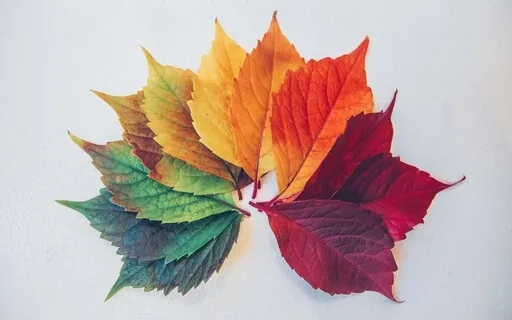
And then like two weeks ago everything was changing colors.
There were these bright yellows,
Bright reds,
Oranges,
Some browns coming in and noticing the leaf cover on the forest floor.
And then I just went on a hike again yesterday and as I was walking I noticed over the hill there was this house that I had never seen before and I was like how have I never seen that before and I'm like oh yeah because now the trees are bare the trees they've almost all lost their leaves and I can see through to see what's on the other side and all the leaves on the forest floor now are brown and crunchy and starting to decompose and it's been really lovely to be in that transition just over the last month and noticing that.
So we are here,
We're going to chat a bit about the Wheel of the Year.
I first want to just sort of recognize the name called the Wheel of the Year.
It was sort of adopted by some witchy druid folks in the 1950s and the Wiccan community has made it more well known in the past few decades or so.
And some of it they have adopted from a more historical standpoint and some of them are newer and have names on them because there's not a lot of history to the points on the Wheel of the Year.
So I'll talk about each one of those and which ones are which.
So we're just going to go through each one of them and we'll sort of see what the thread is that moves through the Wheel of the Year and then we'll talk at the end a little bit about how to live in alignment with the seasons.
What that may look like for you.
So this is the concept of the Wheel of the Year is very Eurocentric but I do know that the same concept is in many other places around the world so do look at your own culture,
Your own cultural heritage to see if there are sort of like festivals or marking points along the year that would be sort of like your own cultural Wheel of the Year instead of like what I'm sharing today comes out of a more Eurocentric world view and that's based on my own heritage of my English,
Scottish,
German,
Swedish heritage that I have.
So just saying that so if you come from a different cultural background do look into your own and see what these sort of festivals hold for you.
What has been known in history is that the Anglo-Saxon people were more focused on celebrating the solstices and the equinox and the Celtic people were more interested in celebrating what they call the cross quarter days which would be the days in between the solstices and equinoxes and they're also known as the Four Fire Festivals and so with those you know both the equinoxes,
Both the solstices and all of the cross quarter days that creates eight points along the Wheel of the Year.
I wish I had like an image to show you.
The only thing I did have is just last week I did a year ahead tarot spread along the Wheel of the Year and I drew a little image for it so I will show you that just to give you an idea but you'll also see my tarot spread as well.
So this is it.
So you'll see I've got like the summer solstice and the winter solstice.
We've got the spring equinox,
The autumn equinox then the cross quarter days are Beltina,
Lunassa,
Samhain which we just had and Imbolc and so then you know this is the year that we move through every year and you sort of see I drew some images.
You know we have the snowflakes and the pine trees and then the seed growing roots and growing stronger than the flowers,
The sunflower.
Beltina is one of the largest fire festivals as well as Samhain so they've got the bonfire,
The sun then we move over into like the wheat harvest.
This is the beginning of harvest season.
The berries,
The apples,
The leaves,
The pumpkins,
You know all of that.
So that's just a little image.
Here in the center you'll see I drew half in the sun and half in the dark moon,
Just the light in the dark and we're going to start exploring with Samhain and it is the beginning of the dark half of the year as the Celtic people saw it.
And a lot of people talk about it being also like a new year,
A new year for people that follow along with the wheel of the year because the Celtic people thought that everything starts with darkness and then moves towards the light and then back to dark again.
But the beginning is beginning in the dark.
What I will say is the two solstices in the two equinoxes have a fixed point.
They have a fixed point exactly when on the equinoxes when the light and dark is equal that day and night and the solstices when the winter solstice with the longest night and the summer solstice with the longest day.
So those are fixed points on the wheel.
Now the four cross-quarter days can be celebrated more as like seasons that can be a bit longer than just one day.
They can also be celebrated what a lot of people I've heard talk about celebrated around the dark moon that's closest to the in-between both the solstice and the equinox.
Whatever dark moon is in the midpoint can celebrate the cross-quarter day on that day.
Some people have put it more calendar-wise,
You know,
Where Samhain would be October 31st into November 1st.
The other important thing is you always celebrate the night before into the day as well so it usually encompasses two days.
So October 31st into November 1st.
Some people wait until they notice a physical change in the world around them,
In the land around them to sort of enter into that next seasonal energy instead of trying not to be so fixed to the Gregorian calendar which I really appreciate.
So we'll begin with Samhain,
Also known as Halloween,
Right?
All Souls Day if you're in the Christian culture.
There's the Day of the Dead,
There is Diwali is also this time,
Like my spouse is Hindu and so we celebrated Diwali along with Samhain in honoring both of our ancestors and carrying the light into the darkness the dark half of the year ahead.
And it is the last harvest festival,
So it's sort of the end of harvest.
Everybody gathered all of your things from the fields and it's time to prepare for the winter.
This is also the time that farming people in the Celtic region would have brought their cattle and their animals from the winter,
Or from the summer.
From the summer fields they would have brought them down towards the winter stables.
And what they did during this time would light large bonfires.
So both Samhain and Beltina are known as the two strongest fires in the Wheel of the Year.
So they would light these bonfires and they would walk the cattle through the bonfires as a way of a sign of protection for them going into the winter and like a blessing so that the people could survive through the winter with what these animals could provide for them.
So this time I'm sure you've heard somebody say,
You know,
Like the veil is thin at Samhain.
And the idea is just that it's a liminal space because it's transitioning.
Samhain is a transition from autumn to winter and it is a transition where it's easier to access the what is in the Celtic world is called the Otherworld or you can call it the Spirit World the divine consciousness,
Whatever you want to put whatever words work for you on that.
And so there's a lot of work with ancestors and people do a lot of divination at this time.
That's when I did my year ahead tarot spread was right after Samhain.
And this is also a time for me personally I reflect back on the past year.
It's sort of that big transition between reflecting back what am I gathering in from my harvest from last year and then like I said I did my tarot spread to look forward.
So it was reflecting back and looking forward.
And I'll share with you during the winter solstice I do some dreaming envisioning for the year ahead and I make a wish jar we actually do that every year in my coven the Sacred Cycles coven we make wish jars and then at Samhain is when I open my wish jar and I reflect on those wishes that I had from last year.
So moving into the winter solstice which can also be called midwinter or yule or in the druid calendar it's called Albin-Arthon and this is obviously the longest night of the year and the shortest day.
And transitioning after the winter solstice to the days becoming longer and the light growing from there.
So yeah each point is sort of like a transition marker where you can mark okay here I am in the darkest point of the year but I know every day after this the light continues to grow right?
The evergreen tree you know which has been carried over into Christmas traditions was chosen as a symbol for the power of life to survive through every season of the year.
And so sort of like that energy of light over darkness and bringing that into the home is symbolizing you know like we have the power to survive anything that comes in any season of our life.
And so that's sort of a ritual that you can do when you get,
If you get a Christmas tree and you bring your Christmas tree into the house maybe wanting to make some sort of ritual or marking of noticing that this is how I have survived so far up to this point and I will continue to survive with what life hands me.
So that can be a beautiful thing to bring in.
Also you've got you know like the yule log so you like keep your yule log and then you light the fire that will start the new year coming forward.
Yeah so like I said for me like the winter solstice is the time that I dream forward.
I vision for you know the next year and for those of us in the northern hemisphere you know it aligns pretty nicely with the new year and I know a lot of people do dreaming and visioning into the new year.
I just move that forward a little bit and dreaming into the new year beginning at the winter solstice and like I said we make those wish jars at the winter solstice and then I keep it closed all year round until I get back to Samhain.
So the next point along the year is in bulk.
So just bringing you back to my spread here.
So we talked about Samhain being the beginning of the dark half of the year.
The winter solstice you know we've got the longest night moving gradually into in bulk which is the transition between winter and spring.
And with in bulk the name means different things you'll hear at different places but I've often heard it referred to as in the belly.
And this is a reference to pregnant sheep that would have you know that this is the time that most of the sheep would be pregnant in their you know fertility cycle.
And so it brings back this hope of like life to come right?
But it's still very much like a waiting period because in a lot of places you know this is around in the northern hemisphere around the end of January beginning of February in the southern hemisphere this would be the end of July beginning of August and so it's very much still like okay we're still waiting,
Still waiting for the life to come but it kindles that sort of fire of hope.
And having like the first signs of spring like for those that are in places that get like snow drops you know where the flowers push up through the snow and give us some sign of like life to come which is you know one of the symbols for in bulk.
This festival,
Our marking of the year has become very closely associated with breach or Bridget or Saint Bridget depending on how you see her and being a time of like healing,
A time of that like inner fire the inner fire that is associated with breach and making sort of like pledges or affirmations that you're like putting the seeds right?
The seeds are planted during this time.
This would be a time that people would start planting seeds indoor around this season that then will be transferred you know once the snow has thawed out and also that energy of like spring cleaning,
Of like getting ready,
Preparing,
Preparing for the new life to come.
So putting it back in like the pregnancy terms right?
Thinking about that time of nesting or you're getting everything ready,
Putting everything in place so that when the spring finally arrives like everything is in order and everything's ready,
Ready to go for the new life to come.
Yeah,
The other names for in bulk are you know so in the Christian tradition we have candle mass so you know the Christians took a lot of the festivals and markings of the wheel of the year from the Celts and the Anglo-Saxons whenever they were dominating at that time,
Colonizing at that time and so that turned into candle mass if you're familiar with that.
And then we also have this tradition of Groundhog Day if any of you are familiar with Groundhog Day you know I grew up about 10 miles away from Punxsutawney where Groundhog Day takes place but it came from Germany as a way to mark this time of year,
Mark this transition and to see is the winter going to conquer the spring or is the spring going to conquer the winter?
Is there six more weeks of winter or is the spring coming around the corner?
So it's sort of like this divination as you know wildly as you think it may be right?
This groundhog is divining whether the winter or the spring is going to win out in the coming,
In the weeks after in bulk leading up into the spring equinox.
Okay so moving forward we went through Samhain,
We went through the winter solstice,
Went through in bulk,
Now we come to the spring equinox right?
So equal day and night the druid name is known as Albin Alir if you are a druid or interested in that and this obviously is now we're here,
Arrived at the spring time this is the time of like the dawn,
The early morning you know we talked about fertility starting like you know the gestational time of fertility starting in bulk and now spring is the time that okay things are coming to life,
Things are being birthed and so that's why you know around Easter which is comes around the same time has a lot of cultural symbols with like eggs and rabbits right?
So we have these two symbols,
Eggs being a symbol of fertility,
Rabbits being a symbol of fertility because they have they have two uteri that they can continually get pregnant between back and forth between their two uteri and so that's why they are known for being very fertile right?
And so a lot of things like rebirth,
Renewal and like being you know coming into life again.
So that is the spring equinox yeah I don't know what else to share really about the spring equinox,
It's interesting because that's like my birthday lands on the spring equinox around the spring equinox like two days after the spring equinox and well if you study astrology that's also the beginning of the astrological calendar as well with Aries season so that's another alignment that if you want to enter into you know the wheel of the astrological calender you can implement that as well.
Okay and then we have and then we have the other transition point,
The beginning of the light half of the year.
So we just went through these ones and now we're back to Beltana.
So Samhain and Beltana were seen as like the two biggest festivals.
Samhain into the dark half Beltana into the light half.
And so Beltana also lands around the time of May Day if you know May Day and this the beginning of May that time of year.
Again beginning the light half of the year,
Beginning of the summer or some people see it as you know the transition space between spring and summer.
It's like a full on celebration now.
We're fully celebrating the light,
We're fully celebrating fertility this was a time where a lot of people were handfast or were married in the you know in the Celtic yearly rituals.
This was a time known where unions were coming together and celebrating you know life together now.
And again this was when they built two like a lot of bonfires but there would have been people would have built these two large bonfires to take their cattle and their livestock again from the winter stables and now up into the summer pastures.
And so that was like one of the main marking points to walk your cattle through these bonfires as protection and blessing that they would you know flourish and be well nourished on the summer in the summer pastures.
And there's lots of dancing,
There's a lot of sexual energy during Beltana.
We've got the Maypole if you're familiar with the Maypole that happened at Beltana.
And also you know I talked about it so when the veil being thin between human world and the other world or the spirit world it happens again at Beltana which people don't talk about as much because it's not as sort of like dark and spooky it's more like happy and light but something that comes through at this time is really like the fey folk so especially like around hawthorn trees and wells are very important like spring wells that are in the ground this would be a time where you like hang what's called like a kudi which you would hang on the trees near a well making wishes and making offerings like to the the fey folk so that they wouldn't they can be a little bit trickster-esh however you say that.
And so doing things to sort of like appease them so they did that they didn't come and like dwell in your home or things and like cause things to break and things to happen.
And so Beltana also again that time to ask for protection against some of these sort of spirits or tricksters that want to create some challenges in your life but also like blessings for the life and the fertility that you have.
So then we're fully fully into the light half of the year coming into of course the summer solstice which some people have called Leta or Midsummer in the druid world is called Albun Hethin and again this is the longest day of the year in the shortest night.
And there is a lot of just again continuing sort of with the energy of Beltana but a marking of the light and lots of feasting right being outdoors gathering community having barbecues and eating fresh fruits and sweets and lots of flowers.
Often see flower crowns being a symbol that people wear for the summer solstice.
And just really really honoring that light the lightness the lightness and the light in the sky right at the summer solstice.
There is also I didn't mention on the winter solstice but in some mythology there is a story between sort of like a battle that goes on between the holly king and the oak king so thinking about like the holly bushes or trees and the oak tree right.
And so they say at the summer solstice the holly king has triumphed over the oak king in their battle and so that's recognizing that like from here moving forward the darkness is growing as the holly king is reigning over that half of the year.
And then at the winter solstice the oak king triumphs over the holly king and grows in strength as it moves as you move forward from that point.
And so you can you know that was just a myth that people came up with by observing right observing the world around them.
So maybe there is something in your environment that could symbolize this as well like what happens at the summer solstice what marks like okay now the nights are getting longer and the day is getting less or at the winter solstice what is marking this time in my environment saying and showing that the light is growing from here.
Alexandra,
Do I know much about the green man?
I'm always interested in hearing people's perspective and stories of him I can never find anything straightforward regarding him.
Alexandra,
I do not.
I mean I'm familiar with the green man and you know the horned god and sometimes they are the same sometimes they are different it's like I hear it different places different you know different stories different places which I'm sure is what you're pointing to.
And so I really feel like things like the green man similar to what I said is like it has probably been that idea has been adapted that myth that folk has been adapted by people depending on their own personal environment or like by communities by their own environment around them and so that's probably why it's hard to find any sort of like you know definitive like this is how it is.
Like when we're talking about myth and folk you know and like I I've studied with Sharon Blackie if any of you are familiar with her you know as a mythologist and the idea that like actually myths and folk like should be living like they shouldn't be you know dead in that time in that place right?
They have a life to them and they change and they adapt and they move depending on the environments that we're in.
And that's why I think it's like you know we can talk about cultural appropriation when we talk about this right?
Like there are myths and folk that are just made for that place that are just made for that land for that people because that is their experience.
And then wherever you live it's going to be different and it could be flavored right?
By whatever this you know this person across the world understood you know you know the light half of the year and the dark half of the year this way.
And here I understand that I do have a light half of the year and a dark half of the year but in my environment like here's the story that comes from that.
And so I really I really appreciate you know Sharon Blackie talks about that a bit.
You know she's based in in the UK in Wales right now and has a lot of her you know her a lot of her learning has been in Celtic mythology right?
And she did live here in the US for some time and realized that the you know the gods and goddesses that are in Celtic mythology are show up like very similar energy in like Native American mythology.
They just they have different names and they have different expressions but it's sort of like the same energy as being expressed through different gods and goddesses and so that's why it's like I think it's really beautiful that like we can learn from other cultures and learn sort of like the underlying archetypes right?
The universal archetypes that we all experience but when we take on something ourselves like let's take it on for our own experience like the land we are on,
The life we are in and like let's not be afraid to create our own myths and our own folk stories that describe our own unique experience right?
So that was a very long side note to say that like I say take what you've learned about the green man and adapt it to your own understanding and the land that you are actually in and maybe there's like some specific tree that represents the green man for you and like notice that tree as it goes throughout all of the seasons and what that could tell you about who the green man is right?
Something like that.
Yeah.
Carole,
Very interesting.
I grew up in Egypt.
A lot of the symbols and folk are related to harvest and springtime and the cold and the story time of the year.
Beautiful.
The Christian experience in Egypt has a lot of the Eastern folk intertwined.
Yep.
I didn't know anything about the holly and the ivy and all these symbols when I was in Egypt.
Yeah.
It's very interesting and you'll there are threads of like when we're talking about here we're talking about the Celtic wheel of the year mainly and like I said in the beginning it's very Eurocentric.
Mainly in the Celtic tradition and Anglo-Saxon tradition and but you'll see a lot of this carried over into the Christian traditions when they were you know colonizing the Celtic peoples and so noticing that whenever colonization happens wherever in the world there is going to be some things that the colonizers I mean they steal right?
Colonizers steal.
So the steal from the peoples the native peoples of that land and centuries and centuries later you will see those show up in the current place right?
So that's sort of like the whole idea I'm sharing like let's try and not be you know culturally appropriating from somebody else and you know becoming holding that like colonizer archetype archetypal energy within us when we're connecting to our you know our spirituality or how we connect to life.
Yeah.
Side note.
Okay.
We've got two more left along the wheel.
We just did the summer solstice and after the summer solstice we come into the harvest season.
So the first harvest season known as Lunassa or Lamass if that's also the Christian name for what Lunassa was before the Christians arrived there.
And so this is the first of the harvest festivals mainly for wheat and grains and I love that they're harvested first because those are sort of like the foundation of the you know the foundational base of our you know of our meals of our food.
You know whether you eat wheat and grains or not I can't eat wheat but I still love that sort of energy like the first things we harvest are the things that are like the staples of the diet.
And around you know Lunassa was named this by the god Lu and in an Irish myth and folk Lu's mother gave her life for the land in the harvest and so there's sort of like this dual energy between celebrating and also like honouring the beginning of like things are dying.
Like this is the beginning of things starting to decay and decompose and also we are gathering what is still useful and nourishing for us.
So there's a bit of this dual energy that comes in in the harvest season right?
So we are harvesting everything that we want to take with us and we are letting go of the stocks that are still left in the field to decay and compost into what will be fertile soil for next year.
And so yeah there's a lot of like you know baking bread,
Making corn dollies,
Like those sort of things happen here at Lunassa.
It's still very much like summertime energy,
You know in the northern hemisphere it'd be the end of July beginning of August and the southern hemisphere this would be the end of January beginning of February.
So still like the warmth,
Lots of like golden colours,
Orange oranges,
Those type of colours and first harvesting you know the staples of our diets wheat and grains and rice and all of that.
And then the last one on the wheel is the autumn equinox.
What is known in the druid calendar is alb and alfid and this is the second harvest festival mainly things like apples right,
This is the time you know it's equal day and light usually towards the end of September.
So we've got apples,
Berries,
Squash and root vegetables are coming around now and this is actually the time that I celebrate Thanksgiving.
So for those of you that are in the states and getting ready for you know like the American Thanksgiving that you know has a whole other story of colonization with it that I'm not going to get into but like for those of you that want to honour like the wheel of the year calendar like the autumn equinox would be the time to have the Thanksgiving.
It's like the biggest harvest time it's the second one where you can both you know still have the grains from the first harvest and really like make a lovely table and meal with all of the all of the vegetables and fruits that can be harvested during the autumn equinox and spend some time in Thanksgiving and gratitude because then going into the next point of the wheel right from the autumn equinox moving down to Samhain is then the beginning of the dark half of the year again.
So this is a time it's like that last celebration to like really give thanks and gratitude before preparing yourself to go into the dark half of the year.
Those are the eight points that we have along the year.
So I yeah let's talk about just like in general living in alignment with these different seasons and like I shared I just did my year ahead tarot but I didn't do it a lot of people do year ahead tarot spreads based on the month like they'll do one in January and pull a card for each month.
I did mine for each season right so between now and the winter solstice I've got the ten of cups which has been really lovely to have.
Very interesting at this time of year but like I'm feeling into the ten of cups right now you know and so like each season I've decided to focus on a different card and really step away again from that from the Gregorian calendar that we seemed to be so enmeshed with in a lot of our lives right and step into a more seasonal calendar.
So that's something you could do if you're interested in doing a tarot spread year ahead looking at the seasons instead of looking at the months.
You could also do it based on the again the astrological wheel because that would also be going seasonally connected you know more to the lunar cycle than to the calendar months.
Something is you know eating seasonally is something that is a really beautiful practice especially if you have access to things that are local,
That are you know grown by your local farmers or in your backyard right if that is available for you.
It's something I'm interested in doing more of but you know we're still setting up our rhythms here and coming here you know right before winter has not been ideal but I have been looking for like farm co-ops that do you know that do produce boxes and you know those will change throughout the seasons depending on what is available at the farm.
So and my parents and my sister have been doing that for a while at the local farm where I grew up which has been really really lovely to see that and to see them eating seasonally so that's something I'm definitely interested in.
Let me know if you are too.
Yeah and like doing seasonal rituals like I've been here on Insight Timer since I started I think the very first ritual I did a live session on was Beltana and not last year but the year before.
Gosh has it been that long?
I've been here like a year and a half.
Yeah so Beltana of 2021 yeah was the first ritual I held here and I've held all eight rituals every year so far since I've been here and will be back again for the winter solstice coming up in December if you want to join with me in marking the seasons and doing a little ritual together.
Obviously you can do it on your own as well.
I usually do a personal ritual I do a ritual that's free or by donation here on Insight Timer and I do a ritual for those in my coven the Sacred Cycles coven we do a ritual together.
So usually like those times of the year,
Yeah they're very full.
Sometimes a little overwhelming but usually just very beautiful and full with all of the different rituals and things going on with that energy.
It makes it a lot easier to connect in with the world,
Right?
Connect in with the land and then connect in with yourself and how you are in relationship with the world around you with those seasons.
So that is something beautiful that if you're invited into that you can do.
And I mean like I think just a simple thing it's just observing,
Right?
Like we shared in the very beginning those of you that were here early just observing what you've been noticing in the world around you.
And I was saying that I have been I've been hiking about three or four times a week since I've moved here four weeks ago and noticing in that part of the woods the change that has happened in the last four weeks from green and like full of life like lush,
You know it wasn't as lush as it would have been earlier in the summer but still quite lush in mid-October to like all the leaves changing reds and purples and yellows and oranges and to I just went hiking again yesterday almost everything was bare and I said like I noticed there was a house on a hill right behind the woods where I walked and I never noticed it before and I was like oh that's new and like oh no it's not new it's just I can see it because there's no leaves now like covering it and so I can notice it more and all of the leaves now being very brown and crunchy on the ground when I go walking and so that's been really beautiful just to like I just consciously marked that.
Almost every time I go hiking I'm consciously marking what is different,
What is changing here and that's like not only like is it a beautiful practice to connect into the spirit of land but I'm also thinking about like my body and my nervous system right because you know going through transitions can be difficult and especially if transitions in your life have been really difficult but the more we can bring in some conscious awareness of like the consistent not consistent but like the being more consistent in marking those changes,
Marking those transitions it's like a slow process right.
We're inviting in more slowness to the process instead of you know if you're unconsciously going about your day you know and you arrive and there's snow on the ground and you're like what like what just happened and you're like I didn't even like I didn't even like notice it was that time of the year I didn't even notice that like and then you might have like a bit of a shock like how is it already winter?
Like how are we already here?
Like oh it feels like I've you know I've missed out I've missed out on the time you know and so I have found that very soothing to just spend time outside on the land and just noticing what is changing,
What is what is moving,
Where is the life flowing,
Where is the life decaying one of my favorite things that I found was this like skeleton of a leaf that I found about a week and a half ago maybe two right around Samhain I found it and like this just like having this reminder right that like life goes in a cycle and it decays and it becomes a skeleton and like but yet seeing the beauty in that like this leaf is beautiful and like it's sitting on my altar right now because it's so beautiful to me and this reminder that you know everything that we go through is going to go through a cycle in that the decay and the death is a part of it all and not one side or the other side of the cycle is better or worse right?
It all is just is yeah hmm okay the other thing the other thing I wanted to share is just connecting this to connecting this to like the creative cycle and your work potentially if it's possible for you because seasonal living there are larger overarching themes with each season that you move through and if you've been with me in my talks about menstrual cycle awareness you'll sort of know what these are but the time of winter and this is why I was sharing the winter solstice is my time to dream and vision because that's what winter is about in the creative cycle.
Winter is about it actually has two energies.
Going into winter is the time to rest,
The time to be,
It's actually the time like not to do anything,
Separate yourself from the outside world which can be difficult if you have like large family gatherings for you know the holidays,
The end of the year but you know just bringing that conscious awareness there like moving into winter,
Time to pause and just be.
The second half of winter is visioning and dreaming you know creating those seeds that can be planted right?
And then moving into the spring is when the seeds start to you know they grow roots and they start to become little seedlings moving up from the dark soil and so this is a time creatively to like play and explore and sort of see where is the best soil for these roots to grow into so that they can really like grow strong.
Which seeds didn't get roots and that's okay and maybe that seed needs to be let go for this season and you know it will become something new for next season.
So recognizing that as you're just kind of being curious and playing around with it through the spring time.
The summer you know is a time then where the plants have fully blossomed the crops are fully you know in their fullness,
I can't think of another word for that and this is the time to manifest right?
So it's a time to like those seeds,
Those dreams that you had in winter those seeds you planted and rooted into the spring coming into the summer let them come,
Let them come to fullness let them be realized in the world and this is also the time you know summer brings the time of like interacting and being social with others and around so that aligns pretty beautifully if you're in the southern hemisphere right and you have sort of like Christmas end of the year traditions because that would be around the summer solstice time so I can imagine that I always thought growing up that would be really weird because Christmas in my mind is so associated with winter but when you align it to the creative cycle I'm like oh that'd be actually kind of really lovely to have like a Christmas,
New Year's type of energy gatherings around the summer solstice because that is the energy of gatherings,
Being social,
Focusing on collective energy and then moving into the autumn time and so for those of you that are in autumn now moving into the winter this is the time where you get to reflect right?
Harvest and gratitude so like looking back over the last year really harvesting what the gratitude and the joys that you want to carry with you,
Want to remember and then letting go what did not work for you like what didn't work for you this year or where are you on your path that just doesn't feel right right?
Where are you out of alignment in noticing and becoming aware of like those things you can let go of that you don't want to take into the next cycle and then once you're able to like let go separate yourself from the outside world again and then come back into that rest and just being for the beginning of winter so if there is like any sort of projects you have or you just want to sort of like play with this creative energy you could make that an intention for this next year and like I said just a couple weeks ago at Samhain that's when I did my reflection time,
My big reflection time of like what I'm letting go of,
What wasn't working this year that I want to let go of that belief or that thought or that action that I was doing and then coming into the winter solstice I'm going to enter into some dreaming time but then I actually like I don't,
Ideally I like to take six weeks off between the winter solstice and Imbolc,
Take six weeks off from my business when I have the capacity to do that because that's my time to just rest and be and dream into what I want the next year to look like and so thinking about your own dynamics your own,
You know it might not even be your work,
You might not be able to be that flexible but maybe it is just in a rhythm in your house with your family or something like that that you can bring in some of these seasonal energies throughout this next year and really just taking time to honour the spirit of the land you're on,
You know so it may look very different from what I just shared because like I did say this is very it's very Eurocentric and has been adopted and come over to North America more but like in India where I lived it looked very different,
Like the seasons looked very different and but still like looking at the cultural celebrations and markings of the season,
Very similar in nature and how because there was a archetypal energy to a lot of these seasons so just be with where you are like lean into where you are and asking those questions like what am I noticing in the world,
How can I become more aware of this,
The spirit of this land and be more connected in a way that I can honour that and live a more sustainable life like that's ideally we can live more sustainable lives when we're moving at the same pace of our environment right,
You know I talk about that a lot with menstrual cycle awareness as well or if you want to connect into the lunar cycle if you don't have a menstrual cycle right,
Learning these rhythms of rest and being and then of action and giving right,
So finding that cyclical flow,
That cyclical balance that is often times shown to us in the world around us all we gotta do is be aware and bring in some conscious,
Consciousness to that alright lovely people,
Hopefully I'll see you again soon and make sure you're following along so you can get updates when my next lives go,
Alright sending you all lots of love,
Many blessings,
Hope you have a wonderful night afternoon morning wherever you are in the world,
See you next time