What I wanted to talk about is faith as a spiritual power.
What is faith in the context of Buddhist practice?
What is it as a faculty?
What is it that we should aspire to have faith in?
Some nice thoughts to contemplate.
Sometimes faith these days is understood as a kind of a conviction in the teachings.
Sometimes it's translated as confidence.
One has confidence in the Buddhist teachings,
They make sense,
One trusts them,
Nothing harmful in them.
Living in Southeast Asia,
As I do,
And having practiced in a lot of traditional Buddhist holy sites,
Faith for Buddhists is a lot more than that.
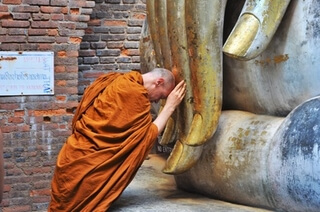
Traditional Buddhists bring a quality of heart and a quality of deep devotion to their practice.
When we start talking about qualities like devotion and love,
Then obviously it's important that this is balanced with.
.
.
If we're going to give our whole heart to something,
We need to understand what we're giving our heart to,
What we're giving our trust to,
What we are loving.
I thought I'd talk a little bit about that.
Faith does need to be balanced with wisdom.
At the same time,
Too much wisdom with not enough of that warm,
Full faith quality is a little dry.
One of the things we need to do in our practice,
One of the benefits of deepening faith,
Bolstering faith,
Is that it leads to the next of the spiritual powers,
The arising of energy,
A good amount of good quality energy.
We need this.
A lot of people,
Particularly a few years into practice after the initial inspiration,
Things can get a bit dry.
People can feel a bit stuck.
Practice almost seems as though it plateaus.
People can look back on previous peaks in practice and wondering why they're not getting similar results.
This is an area where faith can be very helpful in stimulating more energy.
What is wise?
What is skillful to have faith in?
How should we understand faith?
In the suttas,
Lord Buddha talks about right view,
Conventional right view,
And ultimate right view.
These are the things that Lord Buddha is explaining as skillful to believe in.
One of those things is karma,
A belief in karma.
Good deeds bring future happiness,
Future benefits,
Future supports.
Unskillful deeds bring challenges,
Difficulty,
Suffering.
We need to understand this on a very profound level.
If our life can be informed by this,
This will be of tremendous benefit to us,
To really believe in the value of good karma and to have concern about the dangers of bad karma.
This will incline us to make more and more good karma.
Another thing Lord Buddha describes as being a matter of fact with regards to conventional right view is a belief in past lives and a belief in future lives,
A belief in this world and a belief in the other world,
Meaning parallel realms,
Hells,
Ghost realms,
The animal realms,
And deva realms.
Why do we need to believe that?
Why is it skillful to believe in these things?
If we understand that there are implications to each of our thoughts,
Each of our words,
Each of our actions,
All of our speech,
That all of these things have implications for ourselves in the future,
This is going to help us to become much more circumspect and much more careful,
Much more skillful.
We develop two qualities which Lord Buddha describes as protectors of the world or guardians,
Ahiri and otapa,
A sense of conscience and moral shame,
So a wholesome sense of concern for consequences for oneself and others.
The ultimate right view is understanding emptiness,
Emptiness of self,
Emptiness of permanence,
The ultimate emptiness of conventional reality.
As part of conventional right view,
We believe that Nibbana exists.
Lord Buddha did attain enlightenment.
Nibbana exists.
Then very importantly,
A very important aspect of faith is that we have the same potential to realize ultimate reality,
To realize our potential,
That the forces of greed,
Hatred and delusion are dark qualities that obscure a deeper reality of having an enlightenment potential,
Buddha potential,
The capacity to realize Nibbana and be liberated from greed,
Hatred and delusion by doing so.
So having a deep faith in this is helpful.
We shouldn't just brush over this,
Oh yeah,
I have faith in that and think that we have faith in it.
It's good to really consider it and really deeply have faith in it because the degree to which you can have faith in Nibbana,
Understanding that if this is your goal,
The thing that you really want to realize,
Then it's good to invest some time and energy and thought,
Practice into contemplating that it really is real and that it really is your potential and feel very confident about that.
It's good to do a little bit of investigation.
Is there a part of you that suspects maybe you can't do it?
Maybe it's the potential of the Buddhas and the Arahants,
But maybe it's not my potential.
Maybe I'm the one being in the whole of conditioned reality that's utterly evil and completely beyond redemption.
Some people do have these deep seated,
Self-loathing,
Withholding of metta challenges.
Sometimes when we're reminding ourselves of our ultimate potential,
It's like shining a light in there and seeing what comes up.
If you do doubt that Nibbana is the potential of the Buddha or the potential of all conscious beings,
Then we have to challenge that or at least consider how is it possible that there are previous Buddhas,
A current Buddha,
A future Buddha?
How is it possible that there are foremost disciples,
Chief disciples,
Laymen and laywomen,
Liberated disciples,
Pachaka Buddhas,
Devas who when listening to teachers also attain to enlightenment?
We have to consider this deeply so that we understand this is true.
This is the potential of having these five khandhas,
A body and a mind affected by greed,
Hatred and delusion.
The potential within that situation is to purify the mind of greed,
Hatred and delusion.
And so these qualities of a deeper conviction and then what I'm also suggesting qualities of when our faith becomes more full-hearted,
Fully rounded,
Deeply devotional,
We're not devoted in a deluded way.
We're devoted to the epitome of goodness.
We're devoted to the very symbol of our ultimate potential.
So these are things that there's no danger in being devoted to the ultimate goodness,
Ultimate potential,
Ultimate purity.
That's a very,
Very wholesome thing to feel devotion towards.
And then understanding that when we take refuge in Lord Buddha,
We're also taking refuge in our potential.
And I consider Buddhists to be extremely fortunate among religious practitioners because we don't have to pray to an external force.
We don't have to feel like an inferior entity that depends upon a superior entity to benefit,
To better ourselves.
We look at beings who have realized their potential through practicing the Eightfold Path,
Having insights into the Four Noble Truths,
And we understand that's my potential too.
If I walk this path,
If I cultivate this path,
That is going to be the outcome.
And then once we have that as a kind of a foundation,
The basic right view,
Understanding our potential,
Developing some confidence in it,
Qualities like love and gratitude can be beneficial in different ways.
Conscious beings,
Human beings,
Faith is a faculty.
And so we have to cultivate it to become a power.
In the beginning it's not a power,
It's a faculty.
And if we don't put it in the right place,
It will find other objects.
And you'll notice this,
For example,
On the walls of teenagers' bedrooms,
What they have loving devotion towards,
Pop stars and fashion icons and trendsetters.
And oftentimes those people don't have an ethical or moral standard and are bad examples.
But that faculty that people have to want to have a sense of loving devotion towards something will function in human beings' minds.
And so we need to recognize that it's a faculty and train ourselves to place it on the appropriate object that will be empowering to us.
When I was a 15-year-old schoolboy myself,
Showing my age now,
There was a singer called George Michael,
And he released a single,
Faith.
And there's a couple of other middle-aged monks chuckling at the moment.
And from what I gather,
What George Michael was singing about was he had to find faith in finding a partner who was more than just sexy.
That was as best as I understood the song.
Of course he made a lot of money out of that song,
But I don't think he helped anybody to be more wise.
And this is popular culture.
Popular culture will suggest that hedonism,
Sensuality,
Peak sensual experience is what life is all about.
And there's a lot of people who've experimented with that and ended up quite miserable,
Not in a happy destination.
And so we're very lucky.
We know about the Lord Buddha.
We know about the Dhamma.
We know about the Arahants.
We know about our potential.
Thinking about what the Bodhisattva did before he became a Buddha,
For example,
Our Buddha,
Gautama Buddha,
Spent four asankhyas.
Asankhya means incalculable period.
Only Buddhas can actually calculate how long an asankhya is.
It's an enormously long time.
If you understand that one eon,
The time from the Big Bang,
Then the universe expands and then contracts and burns up.
That's one eon.
So Bodhisattvas have to practice for four asankhyas plus a hundred thousand eons.
We need to understand that the hundred thousand eons is the small part at the end.
The four asankhyas is an impossibly long amount of time to consider,
But they really do do it for that long.
The Bodhisattvas who have the wisdom approach to building parami,
Those are the ones for whom it only takes four asankhyas.
That was our Gautama Buddha.
He has the wisdom approach of the Bodhisattva path.
Those Bodhisattvas,
When they become Buddhas,
Will be enlightened at a time that's called the degenerating age.
That's where we are now.
You can see that even in the time of the Buddha there was famine,
There was pestilence,
There was war.
These are some of the symptoms of the degenerating age.
I think these days there's about 500 million Buddhists in a population of over 7 billion,
So not everybody is a Buddhist.
Apparently in the time of Maitreya,
The next Buddha,
Everybody will be Buddhists in the whole world and there will be no famine,
No pestilence,
No wars,
And people will have a lifespan of 80,
000 years.
That's because he spent 16 asankhyas building virtues,
Four times as long as Gautama Buddha.
When we consider these things,
Just acknowledge the.
.
.
Sometimes it's too much to imagine,
So just shrink it a bit.
Just imagine the 100,
000 eons as a start.
Understanding that since the time the Bodhisattva could have been an Arahant,
When he met a Buddha and received his prediction of future Buddhahood,
Since that time,
Four asankhyas plus 100,
000 eons.
We think of that and we understand that that being had the potential to be liberated from all suffering and never have anything to do with conditioned reality ever again.
They saw the wonderfulness of the Buddha before them.
Oftentimes they're also recognizing their potential.
Apparently when they get to the stage where they meet a Buddha and they're about to receive a prediction,
They already have accumulated virtue to the point where they could become an Arahant.
They probably have jhana samadhi.
They may have some psychic powers.
They've begun to glimpse what an incredible thing a mind is when it's significantly purified and trained.
They develop a certain kind of a courage.
They're going to do something to help other beings realize their potential as well,
Not just be pushed around and lost in the darkness,
Like slaves to the kilesas.
But when we think about that,
Think about how much time Gautama Buddha spent.
They don't just perfect their own qualities.
If it was just a matter of perfecting qualities,
They would have become Buddhas much,
Much,
Much,
Much sooner.
It's also about making the karmic connection with the beings who they will liberate.
It's also about accumulating absolutely vast amounts of merit so that,
For example,
The sasana will last for 5,
000 years.
It's the qualities and the merit.
And then,
Oftentimes,
From what I've heard,
There's a lot of bodhisattvas who are quite highly developed.
And sometimes people wonder,
Why don't these great bodhisattvas come down and become liberated or teach more people or whatever?
And what people don't realize is that the bodhisattvas can only help beings who have the merit to meet them.
And so one of the reasons there's a long queue to become a Buddha is they also have to wait for their disciples to be ready.
And conscious beings can be a bit stubborn,
Going from the heaven realms to hell realms and human realms to animal realms and up and down the game of snakes and ladders.
But we consider what the bodhisattvas invested to be the Buddha,
And we feel grateful.
And it's good to spend some time really feeling that.
It's not a you should be grateful.
Here really is an example of an extraordinary being that did something truly wonderful and incredibly selfless.
And when we think about that,
Sometimes tears can come to our eyes of gratitude.
Wow,
Another being did that because they wanted to help me.
How wonderful.
And to spend some time,
I would suggest,
Feeling blessed.
But how often do we have miserable,
Depressed,
Dejected mind states when we focus on unskillful things?
This is one of the values of the Anusati Samatha practices.
When we train ourselves to think about skillful things,
I think,
Wow,
The Buddha delayed his own enlightenment for millions of lives so that he could help me.
And I have the merit to have met the teachings.
I have the skillful means before me.
I can commit to this training and benefit myself.
And to feel grateful,
To feel blessed,
And what a wonderful foundation then to try to develop some insight.
The mind will be somewhat bright and somewhat happy,
Experience some contentment.
These are qualities that incline the mind to experiencing more Samadhi.
An overactive fault-finding mind does not incline the mind towards Samadhi.
Going to hassle yourself,
You broke that precept again,
You slept in again,
You didn't do good enough there,
Blah,
Blah,
Blah,
Blah.
That's not going to incline the mind to Samadhi.
We do have to recognize when we're falling short.
We do need to keep improving our practice.
But if the critical fault-finding mind is too harsh and heavy,
The mind will not be glad,
It will not be content,
It will not incline towards Samadhi.
So this is where things like feeling blessed,
Recognizing our opportunity,
Rejoicing in the virtues of the Buddhas and the Arahants,
Learning how to gladden and brighten the mind,
Can be truly and deeply nourishing.
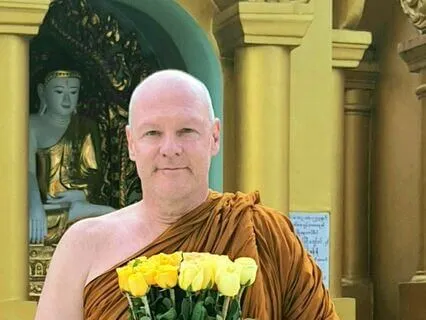
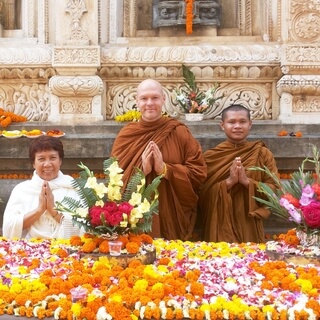
Recently I went to the Shwedagon Pagoda in Myanmar in a city called Yangon.
For many years people who have also been there have told me,
Arjunachala,
You will love the Shwedagon,
It's beautiful,
It's really holy,
It's really wonderful.
And for whatever reason I didn't get around to going until recently.
Because I have lived in Southeast Asia for 25 years,
And because I do have more of a faithy,
Devotional character than many other Western monks,
As do many of my students,
I have had opportunities to practice in holy sites,
Many of them,
And sometimes for long periods.
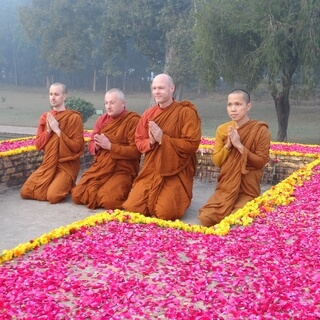
Many people know that I've spent 4,
000 hours meditating under the Bodhi tree in Bodhgaya on 17 separate trips,
Oftentimes spending a month to six weeks.
And I think that's part of the reason I didn't go to the Shwedagon,
Is because if you can go to Bodhgaya,
The seat of enlightenment,
Bodhgaya is very special because the previous three Buddhas of this eon,
Plus Gautama,
Plus Maitreya,
They all get enlightened in that place.
It's the most holy place in the universe,
The Vajraasana,
Seat of enlightenment.
So it's like if you can go there,
The mother of all holy sites,
Why would you go somewhere else?
And I had some thoughts as to why I didn't go to the Shwedagon,
Because I was told,
As to why you might go somewhere else.
Every time I go to Bodhgaya,
I usually get food poisoning and a chest infection,
As well as having an opportunity to practice a lot of meditation and experience some nice samadhi.
And Yangon has a very similar environment,
Weather-wise,
And is cleaner than modern-day Bihar.
And I had a shorter amount of time,
Some lay students were available for a two-week period,
And they asked me what I wanted to do.
And so we went there,
I went with Ajahn Janakko,
A good friend of mine,
Ajahn Stuart,
Here from Wat Marb Chan,
And we spent two weeks.
So I'll just say a little bit about the pagoda itself.
Pagoda is the Burmese word for chedi,
Or stupa.
So the Mahabodhi temple is 54 metres,
Mahabodhi Chedi.
The Shwedagon pagoda is 105 metres tall.
And the Shwedagon pagoda is not gold-leafed,
But gold-plated.
And they say that there's somewhere between 30 and 60 tonne of gold on the Shwedagon pagoda.
Now personally,
I don't get that excited about gold until recently.
I like stone,
Bricks,
Wood,
Serene things.
But when you see all of this precious element,
The most precious element on the planet,
Offered to the Buddha out of gratitude and love and respect,
It is very touching,
It is very moving.
Another thing that was very interesting about observing a gold-plated chedi,
Which is very tall,
Is that in every type of weather it always looked beautiful.
In dark,
Cloudy weather,
It still reflects light.
However much light there is,
It reflects it.
Even when it's raining,
The chedi looks beautiful.
Much more so at night when it's lit up.
It's like a symbol.
Chedis are symbols of enlightenment.
They're monuments to recollect the enlightenment of the Buddhas.
So at the Shwedagon pagoda there are four viharas,
North,
South,
East and west,
Which are devoted to the three previous Buddhas and Gautama Buddha.
Kakusanda Buddha,
Konnagamana Buddha,
Kasava Buddha and Gautama Buddha.
It was very wonderful to have the opportunity to pay respects in these viharas day after day.
I was going to explore how would one practice pilgrimage or devotional practice in this site.
I decided to sit for an hour and a quarter in each of those viharas each day.
So sitting five hours of meditation plus the circumambulations there.
Circumference is about 430 meters.
Going around it three times takes about half an hour.
But sitting in front of the images of Kakusanda Buddha,
Konnagamana Buddha and Kasava Buddha,
It brought to mind the existence of these previous Buddhas.
I have a lot of faith already in general,
But I always enjoy when another facet of a beautiful quality of faith opens up.
I just really enjoyed feeling grateful.
It was one day when I was meditating in front of the Kasava Buddha statue that I had a kind of an intuition that I felt perhaps I met him.
The fact that I'd been able to pay respects to him was one of the factors in why I attained a human birth and was able to become a bhikkhu in this lifetime.
And then naturally there's that sense of feeling grateful and wanting to thank the previous Buddhas,
Thank you so much.
And I would suggest that that's the case for all of us.
If we haven't paid respects to the actual teaching Buddhas,
The Sammasambuddhas,
We have paid respects to their well-practiced disciples.
We have practiced teachings that they laid down.
And that's how we accumulated the karmic affinity and the merits to meet this Buddha's teachings in this time.
And so it was quite a really wonderful opportunity to experience some expansive mind states of gratitude.
And gratitude is really beautiful quality,
Very close to mudita brahmavihara.
Just when we feel grateful,
When we generally deeply feel grateful in our hearts,
There's a lot of joy.
One literally feels blessed.
And a lot of people will tend to think of Maitreya Buddha,
But very few people think about the previous three Buddhas and the Buddhas that came before them.
And so it's nice to have had an opportunity to do a bit of a focused period of practice for two weeks and recollect the example of those previous Buddhas and to feel that depth of gratitude.
Another thing of course that happens is the recognition that Myanmar,
Burma,
Was another country that had many arahants,
Two millennia of Buddhist practice,
So hundreds of thousands,
Millions of Buddhist practitioners.
It was almost like visiting some long lost relatives and getting a bit of a sense for one's ancestors and extended family,
And feeling nourished by all of their faith,
All of their practice,
A sense of having a lot of friends on this journey.
And that's another thing,
Isn't it?
We can feel isolated,
We can feel alone sometimes.
And that's where these anusati practices,
Recollecting the Buddhas,
Recollecting the Arya Sangha,
Recollecting our Kalyanamittas,
Recollecting the devas who are established in enlightenment or who have very virtuous qualities.
When we recollect these things we don't feel lonely,
We don't feel isolated.
And this is something that we all need to do,
We all need to train our minds to think skillfully.
This Yoniso Manisakara,
Wise reflection,
Gives birth to wisdom.
So we often hear about the body contemplation,
We often hear about the death meditation.
These are clearly fundamentally important,
Particularly in training the mind to have the liberating insights.
But in terms of the foundation that will support that process,
It's really good to develop a sense of deep gratitude,
A sense of love,
A sense of devotion to purity,
One's potential,
Truth.
Because when one has that in place,
One can have a lot of conviction,
A lot of deep faith,
A lot of good energy.
Now you can have conviction,
I really am going to stick to my daily practice,
I really am going to keep those precepts.
And it's coming from an empowered,
Blessed,
Nourished space that wants to realize its potential.
Other anusati practices,
Or brahmavihara practices,
Which are very helpful of course is the metta practice.
Often times when people are in the meditation retreats,
It can get a bit tense at times.
Thalajanananda used to recommend that I would do ten minutes of metta meditation at the beginning of my sit,
When I was a much younger monk.
It's trying really,
Really hard,
Sometimes getting good results,
And then getting grumpy the next day.
And I asked Thalajanananda what was going on,
And he actually said,
Well you're trying too hard.
And what you need to learn to do is put forth the right amount of effort and be consistent.
Not like that sense of,
I think it's quite normal for young men,
Inspired,
Good teacher,
Good monastery,
Good opportunity,
Practice really hard.
But we have a modern sense of attention span and instant gratification,
Kind of hoping that you'll be enlightened by the end of the week.
And it doesn't work that way for most of us.
In Thai it was,
You don't need to practice au ching au chang,
You have to practice po di po di.
It has to be the right amount,
And it has to be consistent.
And I think this is probably one of the most difficult aspects of Buddhist practice.
I think we're all very good at putting forth a good effort for a period of time,
And then we're all very good at slacking off again.
And this is a problem,
Because it doesn't take that much intelligence to understand that one step forward and one step backwards isn't actually going anywhere.
And so this is where the commitment to my daily sitting,
If possible increase it to two sittings,
And like plotting,
I would recommend a plotting approach,
Which is,
Don't want to sound too intimidating here,
But a plotting approach which is absolutely ruthless.
I am going to do five more minutes a day.
Come hell or high water,
I'm doing five more minutes.
As you increase your abilities,
Increase your capacity,
Increase your commitment,
Now that you have deep,
Deep,
Deep faith,
I am going to add a second session or a third session,
Even if it's just five minutes before sleeping,
Because when we add the extra practice,
We can keep adding.
This month I added five minutes before sleeping,
Next month I'm making it ten minutes,
In six months it becomes fifteen minutes.
You really see the benefit of establishing a greater sense of clarity.
I recommend meditating at the beginning of the day,
So that when you set your resolution to bring your clarity and your presence of mind into your daily activities,
That you have actually established that presence of mind and clarity.
Don't look at your portable device,
Put it on flight mode,
You are not attending to the world,
You are going on a trip inside.
After your meditation you can turn on the device,
But first thing in the morning you make it about establishing clarity,
Generating mindfulness,
And then you set the resolution to bring that into your day.
You will notice when you do that,
That you notice when your thoughts are wholesome,
Unskillful or neutral,
You notice more quickly.
You are able to stop yourself halfway through unskillful sentences.
But if you don't meditate in the morning,
You might know vaguely that it's unwholesome,
But you can't quite stop yourself sometimes.
We need to make our mindfulness powerful,
So that it has the power to resist the negativity,
The chelases,
The negative qualities.
And then ultimately I would hope that we can all aspire to sitting every morning,
Every afternoon,
Every evening.
It doesn't have to be sitting,
It can be walking,
It can be chanting,
It can be listening to a dharma practice,
But doing something in a formal sense that establishes clarity,
Reminds us of our goals and the central teachings and the training,
Brightens the mind,
Clarifies the mind,
And also restrains us from attending to unskillful things.
These days it's so easy with the devices to be lost in unskillful media or just useless kind of shallow conversation and comments on all sorts of things,
Sending the mind out into the world constantly,
Reacting constantly.
So when we make a commitment to periods of time where we do practice,
Do formal practice,
We're not doing that other stuff.
This is very helpful.
You're not bringing the darkness of the world into the mind,
You're generating the radiance of mindfulness and bathing your body and mind in that and bringing that into the world.
Certain things you can do,
It's all very easy for me to speak here sitting in Arjuna Nun's monastery living in Thailand about pilgrimage sites,
Holy sites,
Devotional practices for people who live a long way away.
You might be wondering,
How do I do that?
What do I do?
And so this is where Thangkajananun recommends his practices like chanting the praises of the Buddha,
The Ittipisotra,
Doing it 108 times.
I think it can be really helpful.
I know not everyone's a faith type,
But I do think everybody can benefit from deepening their faith.
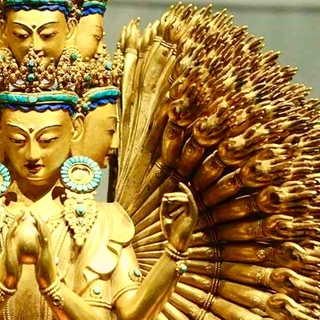
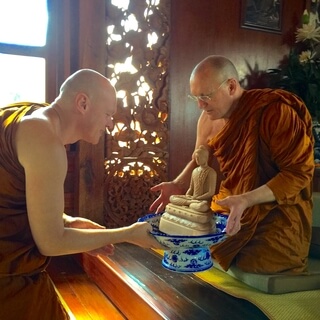
And so things like having a nice Buddha statue,
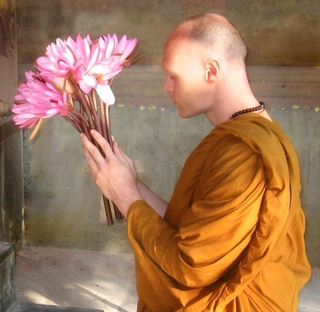
Making the effort to offer fresh flowers at least once a week,
Like having some kind of a loving devotional relationship with this object of refuge which is a mirror of your potential.
Maybe offering some essential oils or a non-toxic incense,
Whatever.
You find a way to express your gratitude and your devotion because it brightens your mind.
You don't do it for the Buddha statue,
You do it for yourself.
It was one of the wonderful things in Burma,
Was seeing so many of the local people,
Even younger people,
All turning up with a beautiful bunch of flowers in lovely colors,
These roses that are grown in Burma,
And wearing their traditional outfits,
The men wearing their sarongs from their waist down to their ankles,
The women also,
Everybody dressed very modestly but very elegantly,
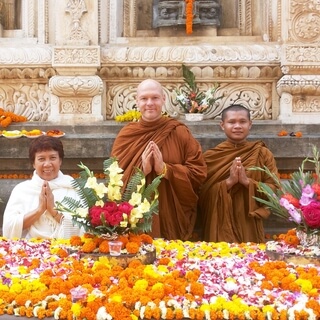
Everybody arriving with a bunch of flowers or a string of jasmine,
Offering to the various shrines,
Very moving.
But we can do that at home wherever we are.
Get a Buddha statue that speaks to you about a quality of the Buddha that you respect,
Whether it's the purity,
Whether it's the peacefulness,
Whether it's the kindness.
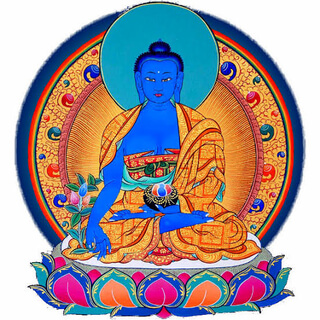
You find an image that speaks to us,
Or a thangka,
A painting.
And then doing this itti bhi so,
So we try to generate it,
Don't just force yourself to do it because it can feel really,
Really tedious.
Spend some time thinking about why you are grateful to the Buddha,
How he demonstrated the potential,
And how you're so grateful that he explained that that's your potential.
Get some feelings of gratitude going,
And then start chanting and try to increase those feelings.
Some people need to chant faster,
Some people need to chant slower.
If you make a commitment to doing a hundred and eighty itti bhi so verses a day,
You might do thirty-six in the morning,
Thirty-six in the afternoon,
Thirty-six in the evening if you like to chant it a bit slower.
Other people might do it one session a day.
I had a close student who unfortunately recently passed from breast cancer,
But for the last two years of her life she did do a hundred and eighty itti bhi so's on an amber mala that I gave to her as one of her teachers.
We recently cremated her body and I said to her sister,
Please cremate her with that mala.
It's a reminder to keep practicing,
Just in case if she was a lost ghost she would see her mala and remember to practice.
But I have some special connections with special abilities and that lady is not a ghost,
That's what I heard.
She didn't need the mala.
But at the very least the amber mala was a fragrance puja to her goodness.
Several people said when the body was burning that it smelled like incense.
That was one of my little fragrance puja to one of my dear friends this lifetime.
It doesn't have to be the hundred and eighty itti bhi so's.
Whatever it is to you,
What chant speaks to your heart,
What chant encapsulates why you think the Buddha is a refuge and wonderful and why you're grateful.
What chant is it?
It might be the verses of the Mangala Sutta,
It might be the Metta Sutta,
It might be the Dhammacakka Sutta,
It might be the Anatalaka Sutta.
If there's a chant that you particularly love you can make that a practice,
Do it more often,
Do it in a set.
If there's a mantra that you appreciate,
Just do it.
Developing more of a facility to do Samatha practice,
Deliberately and intentionally brightening the mind,
Deliberately and intentionally accessing this faculty of faith and bolstering it,
Empowering it.
Then using the energy that you get from that to be consistent with your mindfulness and understanding that that is what's going to incline the mind to Samadhi.
We have all of these things in place of course,
That's where the insight occurs.
To find the energy and the resolve to be consistent,
Which is as I said earlier I think our biggest challenge.
When we have deep and good faith and a lot of energy we can develop the conviction,
We can do things like determinations,
Make determinations.
Because we have the conviction we can do it,
We can follow through,
We can fulfill it.
When I first completed a thousand hours of formal meditation at the Mahabodhi,
Under the Bodhi tree in India,
I was kind of in awe that I could actually do that.
I was like wow,
Ajala Bhikkhu somehow managed to do that.
Then in a moment of ecstatic fervor I determined to do another two thousand hours,
Being so happy with the effort.
A thousand hours for the Buddha,
A thousand hours for Dhamma,
A thousand hours for the Sangha under the Bodhi tree.
Practice puja,
Patipati puja,
Offering of the practice in gratitude.
And then I remember getting to the two thousand hours point and feeling like that might have been enough,
This is getting hard.
But then I,
This is where our Kalyanamittas can be very helpful.
My friend Ajahn Janaka was passing through Bogai and I asked him,
Could you please sit the last thousand hours with me?
That would be very helpful if I could have a friend.
And he agreed.
We did manage to complete three thousand hours under the Bodhi tree of formal sitting.
Another year or two went by and I kind of thought,
Okay that's enough of that.
And you know what happened?
To do that,
To plug away,
To be able to count your meditations in thousands,
You actually have to do about ten hours a day for it to be practical.
So that's what we got up to,
Ten hours a day for six weeks,
Twice a year.
I had a break from it for a couple of years and then the thought arose,
I want to keep doing it.
I want to stop this practice.
It's become an important part of my life and it's something that I can do now and something that I really appreciate.
So I went back and did another thousand.
And so being a monk for 26 years now,
Looking back at that,
I understand that it was,
From what I was saying earlier,
Having a determination to keep plodding and increase your efforts when you can and then not letting it slip back.
And another story I often tell is that when I was a novice at Wat Nanachat,
26 years ago,
27 years ago,
On average six days a week I wanted to disrobe.
The reason I didn't was that one day a week.
So it's like people can look at senior monks,
Hear them talking about meditating ten hours a day for more than a month and kind of project onto them that's what he's like.
No it's not.
That's what he became like after a lot of patience,
Endurance and struggle and quite a few tears.
But not giving up.
Having faith in Buddhas and having faith in our potential,
Having faith in our teachers and keeping on going.
So I hope that something I may have said may be helpful to you.
I appreciate your practice.
I wish that you may all grow in Dhamma.
We may all grow in Dhamma together.
Be well.