You are listening to The Adventures of Saraputa and Mogulana.
I'm your host,
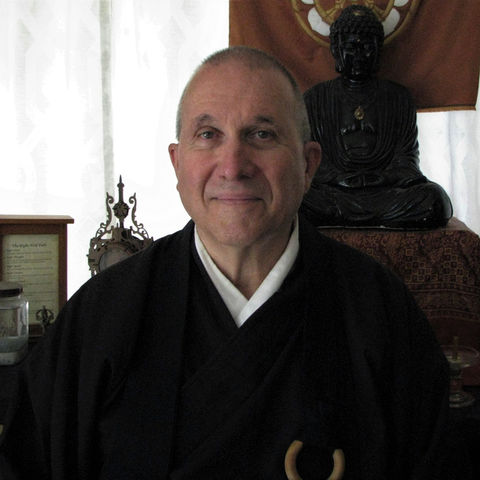
Morris Sullivan.
Today I'll share with you a talk that I gave at White Sands Buddhist Center about how to be as astounding as Superman.
But first,
Let me tell you how the Buddha reacted to some of Mogulana's highly refined superpowers.
But one time,
The Buddha and some monks were staying in a region where there was a famine.
And since they were dependent on support from the laity,
And the laity couldn't get enough food,
The monks couldn't get enough to eat.
Mogulana realized that there was plenty of food available underground.
Now the commentaries don't explain this in any detail,
But I suppose what he meant was that there were edible roots and things like that.
And so he asked the Buddha,
Can I open up the earth so that everybody can get to those things?
The Buddha said no,
That to do that would cause the death of many living beings that burrow in the soil.
So Mogulana said,
Well,
Can I create a magical road to the land of Uttarakuru?
And the monks can go there for alms.
So this land appears in the mythology of Hinduism,
Jainism,
And Buddhism.
Some scholars suggested it might have referred to an actual region on the other side of the Himalayas,
But its significance here is mythic.
It was said to be a heavenly continent to the north of the sacred mountain that lie at the center of the spiritual universe and a place of infinite abundance.
So the Buddha said no to this too.
The monks all survived the famine,
But this was one of the few recorded times that the Buddha refused that kind of help from Mogulana.
The commentary on this story doesn't say much about why the Buddha turned down the idea of opening up a magical road,
But here's what I think might be the case.
Mogulana's supernatural skills were impressive,
And we can admire his compassion in wanting to spare the Buddha and the other monks the suffering of hunger.
But the Buddha was wise to turn this down.
All humans are born into a world in which there is suffering,
And if we're to transcend that,
We need to be able to experience it and accept it and live with it.
If we take the easy way out,
If we rely on some special magic to avoid hunger,
For example,
We don't really experience life in an authentic way.
As uncomfortable as it sometimes is,
The only way to be truly free from suffering is to be present with it.
So I talked about a similar situation recently where Superman in a comic embodied a principle very similar to this while saving someone's life.
Some of you know I have a podcast which I started when we started meeting here in person so that people could hear my Dharma talks.
When I was thinking about what to call it,
I was thinking about the Buddha's two chief disciples,
And so I entitled it The Adventures of Saraputa and Mogulana.
And then the subtitle is Dharma for Superheroes.
Well the concept was inspired largely by these stories about the Buddha's key disciples who had very developed spiritual powers,
But also by this comic that I read once.
And it's online.
If you want to find it,
It's easy to find if you search Superman and the Jumper.
It's a really nice story.
So the police have asked Superman to rescue a woman who is in crisis,
And she's threatening to jump off a building.
And so he flies up to where she is on this ledge,
But he doesn't just grab her and fly her down to safety and hand her off to the police down on the ground,
Which he could easily do with his superpowers.
But he knows that that wouldn't really resolve her suffering.
So instead he offers her kindness and compassion and patience and wisdom,
And he helps her come to the realization for herself that although life can be very difficult,
There's a lot of good in it.
So he quite likely helped her live much more happily into the future.
And it occurred to me as I read that that we all have the capacity to develop that kind of superpowers.
And those powers,
Compassion,
Patience,
Wisdom,
Things like that,
Were actually the superpowers that he needed to bring to that moment.
And so even if we're not rich or great looking or a world leader or an elite athlete or a superhero,
Each of us has the capacity to be surprisingly impressive and notable if we just develop those skills.
So the Buddha talked about this once,
And he laid out sort of a blueprint for developing what it takes to be astounding.
And at the time he was staying in a monastery outside a city state called Alavi,
And there was a prince there named Hataka.
And the Buddha was talking to a group of monks,
And he mentioned this prince,
And he said,
Remember this man is being endowed with seven amazing,
Astounding qualities.
And then he went on to list them.
He said this prince is endowed with conviction.
He is virtuous.
He has a sense of conscience.
He has a sense of concern for the consequences of his actions.
He is learned.
He is generous,
And he is discerning.
So he saw those seven qualities as being astounding,
As being incredibly wonderful characteristics for a person to have.
And so at daybreak the next day,
One of the monks who had heard this picked up his robes and put them on and picked up his alms bowl and went into town for alms.
And he ended up at Hataka's palace,
Where he was invited to come in and rest,
And he was offered a meal.
And so Hataka,
The prince,
Came to see the monk and to talk with him.
And the monk said to him,
Friend,
The Buddha has described you as being endowed with seven amazing,
Astounding qualities.
He said you have conviction and virtue.
You have a sense of conscience and concern,
And that you are learned,
Generous,
And discerning.
And Hataka hears this,
And he says,
I hope,
Monk,
That there were no white-clad householders there.
So let me explain that,
Because otherwise that won't make any sense.
White-clad householders are lay people who had gone to the monastery to study and practice and meditate and things like that intently.
And so this still happens today if you go to retreat at a Theravada temple or something like that.
It's still customary to wear white.
And so when he was talking about these white-clad householders,
He meant earnest followers of the Buddha,
Who,
Like him,
Were steeped in the practice and very committed to their spiritual lives,
But they hadn't ordained.
So the monk said,
No,
No,
Friend,
There were no white-clad householders there.
And Hataka was very relieved by this.
He was glad.
Now,
You might think that someone of renown,
That a wealthy prince might want others to know that the Buddha himself had praised him,
But Hataka didn't want his spiritual accomplishments to be praised that way.
And so when the monk returned to the monastery and told the Buddha what had happened,
The Buddha said,
Oh,
That's good,
That's very good,
That he is modest and doesn't want others to know about these skillful qualities present in him.
In that case,
Remember Hataka of Alavi as being endowed with an eighth strength,
Modesty.
So the Buddha said that to find these qualities in such a person is especially amazing.
So then,
As now,
People of wealth and power mainly tended to spend a lot of effort amassing more wealth and more power,
But instead this prince was putting effort into being really a better person.
And these first seven characteristics that the Buddha attributed to him are referred to in Buddhism as the seven treasures because they're so precious.
They're skillful qualities.
The Buddha called them that.
And you don't have to just be born with these things.
You can't buy them.
Nobody can sell you virtue or discernment,
But you can learn and develop these as skills,
Just like you might learn to play a musical instrument or something like that.
And once you do that,
Once you develop those,
Whether you're rich or poor,
Famous or obscure,
Beautiful or not so,
Mighty or feeble,
You have a wealth that no one can take away from you.
So the first of these amazing,
Astounding qualities is conviction.
When the Buddha spoke of conviction,
He meant conviction about practicing the enlightened way.
If you have conviction that a better,
More authentic way of living is possible and that there's a path to that way of life,
Then you're there.
You're doing that.
Conviction is not dogma.
It's not just a belief.
It's a commitment to a strong value.
People talk about having the courage of their convictions,
And that's a good way of looking at it.
It's a lot like combining faith in your values with diligent effort,
And that's conviction.
So I want to tell you a story to illustrate that one.
This is from the Jataka tales,
Which are sort of folk tales that are kind of attributed to the Buddha in previous existences.
There was a bamboo forest,
And it had gotten very dry,
And so a fire started.
And it spread very quickly because it was dry and because there was a strong wind.
And so the flames were just swallowing up everything in this forest and was about to wipe away all the lives there.
Well,
There was a parrot living there,
And it was very disheartened to see all the living beings that had no way of escaping.
And so it flew to a sea nearby and dove down,
Wet its wings with the seawater,
And then flew back over to spray the drops of water over the flames.
And it was flying back and forth and back and forth endlessly,
Becoming weaker and weaker from the effort,
But still doing it.
And its determination and its this sincere,
Compassionate act moved the heavenly king Indra.
And Indra said,
Parrot,
With your tiny body,
How do you think that you can put out such a raging fire?
And the parrot said,
My intention is even broader than the fire.
If I'm not able to extinguish it in this life,
I vow to continue it and put it out in my next life.
And Indra was so moved by this that he manifested his miraculous power and created a great rain that poured down over the forest and put out the fire.
And so all the beings in the forest were saved.
So sometimes our practice is very hard,
But if we prioritize it and if we commit to it,
We can keep going even when it seems impossible to be kind to somebody who's really annoying maybe or to meditate when we're feeling restless.
But if we can develop that conviction,
That ability is a valuable treasure.
And that skill helps us to develop the other skillful qualities.
And part of this,
By the way,
Is to recognize that we're not alone in our efforts.
The parrot got help from Indra,
And like him,
We can get help from our spiritual community,
From the Buddha,
From our faith in Amitabha and Avalokitesvara,
From practicing together and being there for one another.
So virtue refers to the five precepts,
The guidelines for living.
Basically it means living compassionately.
So we try to reduce the amount of harm that our own actions cause and therefore spare suffering to others.
The next superhuman quality,
Conscience,
Follows from virtue.
When you've forgotten your resolve to act out of compassion and have engaged in harmful conduct,
You become aware of it and you want to correct it.
This is really a mindfulness practice.
We talk about mindfulness a lot.
This is part of it.
You practice being aware of the actions that you've done and remember your desire to not cause harm.
And then you're aware of it when you don't live up to that standard.
And that's not so you can beat up on yourself.
It's so you can learn from what has happened and try differently next time.
And related to that is concern,
Specifically being conscientious about suffering that might result from our actions of body,
Speech,
Or mind.
So this involves being aware of our actions,
What we do,
And the potential karmic consequences.
And to develop that quality,
You ask yourself,
This thing that I'm doing,
This action of body,
Speech,
Or mind,
Is it harmful to myself or others?
If you're concerned about the outcome from your actions,
Then that concern can spare you the need for regret and labor.
So the Buddha said that hataka was learned.
And in the discourse where these qualities are referred to as treasures,
This is sometimes translated as listening.
So by saying he was learned,
The Buddha meant that hataka had listened carefully to what was said and used those teachings skillfully.
So to become learned,
We don't just hear a lecture.
We don't need to memorize sutras and things like that.
We listen to make sure that we understand what is being said and its significance to our own lives.
If a teaching is valuable through and through,
If it's clear,
If we understand its meaning and its significance to us,
Then we absorb it and make it part of our life.
So being learned doesn't just mean being able to recite stuff.
It means opening up to the deeper meaning offered by the teachings and applying them to our lives.
For some reason,
A lot of people these days like to regard advice from experts and things like that.
And it is important to develop our own wisdom.
Dogen,
The founder of the Soto School of Zen,
Once wrote about this exchange between a legendary master and a novice.
The master asked this young monk,
He said,
Do you come to realize the truth through reading scripture or through requesting personal instruction?
Well,
This novice seemed to be wary of a trap.
And so he replied,
I did not come to realize the truth through reading scripture or through requesting personal instruction.
And the master said,
Oh,
Well,
There are many people who do not read scriptures or seek instruction.
How come they have not realized the truth?
The novice was pretty smart.
He said,
They have not dared let themselves experience it.
So reading scriptures and seeking instruction are basically the tools of spiritual practice.
We use those in order to know what it is to do.
But in order to realize the benefits,
We have to put those things into practice.
And that's how we embody the teachings,
Which is how we have our own wisdom.
One of the best ways to do this is through the sixth astounding quality,
Generosity.
When we practice generosity,
We benefit from that at the same time.
If we're kind to someone,
We make ourselves kinder,
More caring people.
And we help our community be a kinder place.
And it affects our mind in positive ways.
We're happier.
The Buddha once said that if one truly understood the benefits of generosity,
One would never take a meal without sharing.
This understanding has been a part of Buddhism for 2,
500 years or more.
And contemporary research bears it out.
When we're kind,
We experience a greater mental and physical well-being.
When we're mean or stingy,
We steal those benefits from ourselves.
The last of these seven amazing qualities was discernment.
And by this,
The Buddha met the wisdom to see what truly leads to stress and suffering and what truly causes it to end.
And that brings us back full circle to the first,
To conviction.
Once we know what ends suffering,
We're more determined to act according to that understanding.
And then the Buddha added an eighth amazing astounding quality,
Modesty.
We should develop these skillful abilities without looking for recognition for them.
If you have this kind of wealth,
You can enjoy the fruits of your own amazing astounding character by having greater happiness and living a more authentic,
Fulfilling life.
You don't need a cape.
You don't need anyone calling you great or amazing.
But that said,
Thank you for your attention and thanks for being amazing and astounding.
Thank you for joining me for another episode of the Adventures of Saraputa and Moggallana.
If you want to read the comic,
It's online in a number of places under the title Superman and the Jumper,
Although it's not its original title.
Superman is published by DC Comics and I'd love to cite this one properly,
But I came across it by happenstance.
I can't find who wrote it,
Drew it,
Or where it originally appeared.
So if you know,
You are welcome to contact me.
To make it easy for you to find,
It's on my website,
Which is listed on my teacher profile here on Insight Timer.
I hope that this has inspired you to develop your own superpowers.
Now go save the world.