Hello,
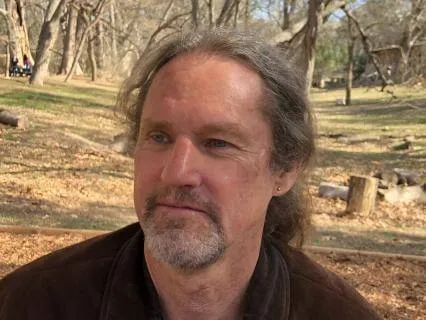
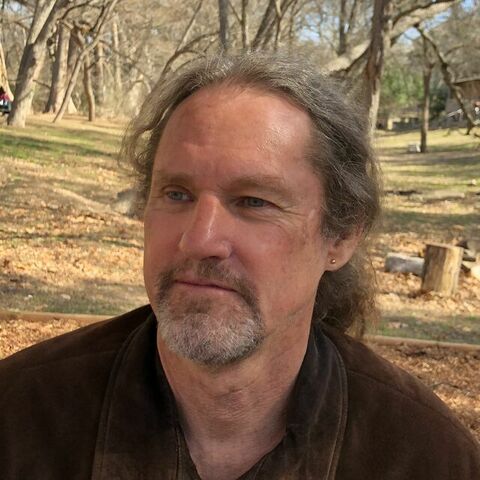
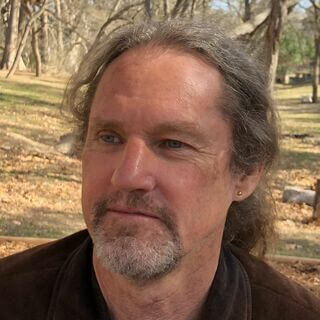
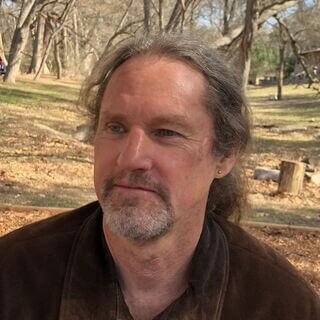
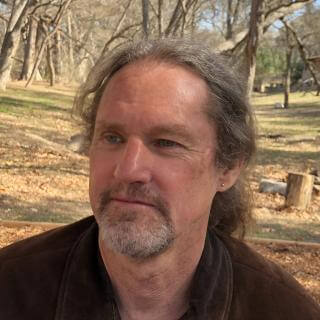
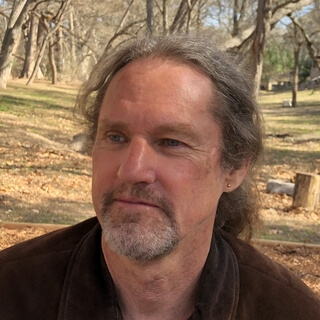
This is William Cooper.
Welcome to Awakening Together.
I trust you're doing well.
Why do people get stuck?
Why do we get stuck?
Have you ever wondered about that?
Have you ever wondered why somebody could meditate for decades and not awaken?
Or somebody could be radiantly awakened,
That is experiencing the light and love and bliss and well-being of their being,
Fully and explosively,
In a beautiful way,
And at the same time be completely depressed,
Anxious,
Hurting very deeply in so many emotional ways?
Lots of us in our culture are like that,
Maybe all over the world.
I know I've experienced those conditions.
Why?
Why do we experience the stuckness where we just can't awaken fully no matter what we do,
Where emotions and troubles and pains just won't release?
Well,
There are a number of reasons why this can happen.
We've talked about many of them already.
But what I'd like to focus on in this podcast is something that we really haven't spoken of very deeply.
And it's something that's overlooked in most Eastern and Western spiritual approaches.
So we're left clueless and stuck.
It's kind of like if you have a muscle cramp in your calf,
No amount of meditating is going to help,
Or other spiritual practices.
You could do mantras all day long or breathe pranayama all day long,
And you'll still have that muscle cramp.
It requires a different technique.
So because this area is overlooked and not seen,
We're stuck.
We're stuck doing the same old things that don't work in this particular situation.
They work in many situations,
But not in this particular situation.
This is such a specific subject that it's really going to take a number of podcasts to cover in the way that we need to cover it.
And even that's just a beginning.
But I think you're going to have enough tools to move forward if you are stuck.
And if you need more tools,
I'll reference ways that you can get those.
But for most of you,
I think what we're going to talk about will be sufficient.
So what am I talking about?
Most of us or many of us have PTSD,
And we're not aware of it.
Post Traumatic Stress Syndrome.
We think it requires a large trauma.
And yes,
Large traumas can create PTSD.
But also we can bring old traumas that could be repeated small traumas.
Isn't that the definition of childhood?
Maybe that's repeated big traumas,
Too.
I don't know.
We could bring these traumas from past lives.
We could have an incident that at the time we did not think much of in this life,
Like a relationship,
A car wreck,
A surgery,
All sorts of things.
And we carry with us the imprints of this.
And no matter what we can do,
It doesn't release.
Try as we might.
It just doesn't release.
Let me explain a little bit about it.
And then we're going to look at normal awakening processes and how they're different from having PTSD.
Then we're going to look at specific ways to release our PTSD.
Or if you prefer,
We could just call it those stuck places inside of us that just haven't let go and somehow just don't seem like they will let go.
We can call that whatever we want,
But those kind of things.
So I think you're going to find that some of these methods will apply to many of us,
Possibly you,
In a way that will move you forward in your awakening process very,
Very quickly.
Though we'll get in it much more deeply later.
What happens in PTSD is a trauma,
Either small repeated pains and hurts or a large one or multiple large ones or a combination.
Some of these traumas affect our nervous system.
We all have different nervous systems.
Some of us are more sensitive than others.
It's not one size fits all.
It's not only about war,
Only about large traumas.
It can be very small traumas.
But when we have these traumas,
Something happens called kindling.
And when this kindling happens,
Our brain and our nervous system,
Our biology freezes up.
It's like it goes into a cramp.
It just literally freezes.
It becomes frozen.
And no matter what you do,
It's stuck.
It's stuck shut.
You can meditate until you're blue in the face.
You can do mantras until the cows come home.
You can do pranayama or breathing exercises.
And still,
It's a biological problem and it doesn't respond to all the spiritual techniques that work so well in other cases.
You could meditate all you want or read all the spiritual books you want.
But if you've got a cramp in your calf,
It requires a different kind of technique,
A different kind of work.
So this is about maintaining awareness and using what technique works with various parts of your process and various parts of you.
The same as we would employ with any spiritual technique.
I hope you wouldn't do it rote-ly and rigidly,
But rather listen,
Is this working for me?
Maybe it works now,
But maybe now I've outgrown it.
Or maybe it worked for a time.
Or maybe it doesn't work at all.
Or maybe it didn't used to work,
But it does work now.
We stay aware and we use what does work.
So some of these PTSD techniques will have great application to our spiritual progress.
Before we get into those though,
I'd like to look at the normal awakening process.
So what is awakening?
We make such a big deal out of it.
Awakening is simply being our normal self without covering it up.
It's our natural state.
We are light.
We are a radiant light.
It's explosive like an atomic bomb.
And that light is felt as bliss and love and well-being.
And it shines.
It radiates explosively in a quiet but powerful,
Beautiful,
Beautiful way.
All beauty is made of the same awakened material.
All nature is.
You are.
Everything is.
This is what we would normally feel like.
Radiant bliss.
But why don't we feel like that all the time?
Well,
We're covering ourselves up.
We've put a big thick covering over us.
What are we covered with?
What have we done?
Well,
We cover ourselves with hallucinations or another word for them are thoughts and emotions.
What do I mean by that?
This light of being,
Our being,
Does not require thinking.
Thinking is a tool,
But it's not required.
In fact,
We often can flow through intuition.
But we can also use thinking.
We can choose to hallucinate.
And that is a helpful tool.
For instance,
We might want to plan for the day.
So we make a picture in our head,
A hallucination of what the day might look like.
Or we might want to invent something or paint something.
And so we'll hallucinate about it first.
The way hallucinations work is the bright light of our being shines through a negative in a sense,
Like a clear film strip.
Say if you go to the movie theater,
There might be a projector shining light through a through movie negatives.
So those negatives are blocking the clear light.
And because they're blocking them,
They're forming images on the screen.
That's how thoughts work by blocking every thought that you think is a block.
Some thoughts are thick blocks and they will project nothing.
No light will get through them.
Like in a movie theater,
If you want to have a night scene,
You need a negative that will really block the light and make it appear black on the white screen.
So that's a thick negative.
Nothing can get through.
The same with our own thoughts.
If we put a thick thought or a thick hallucination,
Nothing can get through.
So we feel depressed and anxious.
We don't feel our love and our light and our well-being.
We're cut off from ourselves.
That's a thick thought.
But any thought still blocks even thin thoughts.
But sometimes as a baby step,
We need to find a way out of our thick thoughts or our thick hallucinations.
So we will listen to guided hallucinations or guided meditations,
We call them.
And these are the kind of meditations that substitute our thick thoughts for much lighter thoughts,
At least temporarily.
They might say,
Picture a beautiful day.
You're in a wonderful,
Beautiful park.
The sky is blue and the grass is green and the birds are singing.
You can hear the babbling brook in the background.
Well,
These are nice thoughts.
It's nature.
So they're much thinner.
And because they're thin,
More light shines through and we feel better.
So as a baby step,
Sometimes we find ways to get better thoughts.
We might watch a TV show that has better hallucinations than the ones that we're making in our mind.
Or we might watch a movie that has better hallucinations or thoughts.
But they're stories,
They're thoughts,
Just like we make stories.
The story of our life is a thought.
We put together a lot of thoughts and make the movie of our life.
When our stories are not very good,
We feel really bad.
So one kind of therapy is that you rewrite your story.
You keep slowly,
Slowly altering the story of your life until it gets better and better and you start to focus on all the positive things that happen.
And so your hallucinations start to let more light out and you feel better.
So that's our normal condition.
We take that as normal because everybody's doing it.
That's what everybody does.
That's our culture.
Cult.
Culture.
That's where we are.
Well,
Awakening is dropping all of that,
Those thoughts and emotions.
Not requiring a good story to feel happy,
But just feeling your essence and feeling your innate joy.
Just radiant.
And because it's not covered,
I can't emphasize.
It's explosive.
It's electric.
That's you.
You don't have to become this way.
You are this way all the time already.
The problem is that we've covered it up and we've lost sight.
We don't always realize who we are because we've bought the movie that we've created or our culture has created and that we've accepted or some combination of those two things.
So there we are trying very hard to be awake.
But all we have to do is stop.
Stop making up stuff.
Let it go.
Well,
Why can't we stop then?
That sounds pretty easy,
Right?
Well,
Here's what happens.
When we get stuck in one of our movies and our thought sphere that we've created,
We're obviously separated from ourselves because we're lost in our hallucinations.
We're distracted and we're also cut off from ourselves because these thoughts are thick.
So in those two ways,
The thoughts are thick.
They cut us off from ourselves.
And even if they weren't,
We're distracted by them.
Even if they're lovely thoughts,
We're distracted by them and we're looking through the thoughts instead of feeling ourselves and not leaving ourselves.
So either way,
We're cut off from ourselves.
When we're cut off from ourselves,
We experience separation,
Separation anxiety,
Which is the basis of all of our fears and panic attacks and troubles.
We feel abandoned.
We've abandoned ourselves.
So that's the source of so much hurt.
And we also feel frustrated,
Angry.
We're angry that we're cut off from ourselves.
We don't quite know what's wrong,
But we don't feel good.
So we're in a lot of pain.
And as you look around,
Isn't that our society?
Isn't that our culture for the most part?
We cover it up.
We make the best of it.
But really,
Isn't that what's going on?
Yes.
So here we are all covered up.
And so what do we do?
We're suffering.
Well,
When people suffer,
They look for pleasure to get their minds off of their suffering,
To get their feelings off of their suffering.
So they look for pleasures.
They like to drink or watch movies or TV or go for a jog or take drugs.
All of these can be addictive.
Even the healthy things can be addictive.
When it's something that you have to keep doing in order to get away from your suffering and not resolve your suffering,
But rather get lost in the bottle or get lost in your drugs or even get lost in too much exercise or TV.
This is an addiction.
So we become addicted.
And because we're in this cycle of addiction with alcohol or TV or exercise,
We become more and more distracted by the thing,
By this pleasure that's addicting us.
So now we're really separate.
We're really out there on the limb.
And deep down,
We're suffering.
So we finally decide to meditate.
We sit down.
And when we sit down,
We can't distract ourselves.
And it's so painful to feel what we've done to ourselves that we can't stand it and we can only meditate for a short period of time.
But as we work at it and use baby steps,
We can take longer and longer.
That's what mantras help us to do or breathing exercises or yoga.
So many practices can help us to do this.
Reading can keep us focused.
Yana yoga,
Deep wisdom and insight can help us see through things and stick with it.
And when we stick with it,
What can we do?
We can sit still.
And when we sit still,
We watch all these thoughts and emotions begin to dissolve and unwind.
And they do.
And that's good.
Except sometimes they don't.
And why don't they?
They don't because this class of emotions and thoughts are stuck and no amount of watching them is going to release them.
They're the muscle cramp that I was referring to.
They are the PTSD.
They have kindled and they have stuck in our body.
So we could read and talk and do all sorts of things.
Even therapy.
Most therapists are not that familiar with PTSD.
I'm a therapist.
I wasn't familiar with it.
And I know my colleagues.
Most of them are not familiar with PTSD in the depth that you need to have to be successful with it.
And though everything we're doing here is not therapy,
Nothing is therapy that we're doing.
We can talk about some things that you can try and see if they work.
And for most of you,
They will.
Or at least they'll move you in a direction that will be helpful.
If you need deeper therapy or therapy at all,
You can find a therapist.
Find one.
If it's about PTSD,
Of course,
Find one that knows about PTSD.
So I know this is not a normal meditation kind of talk.
But if you really want to awaken,
I think we have to cover this material and you evaluate whether it's relevant to you or not.
What we're going to do is in the next podcast,
Begin to look at one method of releasing these old hurts and thoughts and feelings that is very effective.
And we'll spend that podcast looking at it from that direction.
After that podcast,
We're going to look at it from a different direction,
Another direction to work with PTSD and see what we can find in that direction.
And later,
We're going to meld this together with regular practices to continue your awakening process.
Remember,
You really are awake.
Everything really is OK.
It's just that it's covered up and all we're doing is looking at different ways to let go.
This is one of those ways.
OK.
I enjoy talking with you and I look forward to our next podcast.
Take care.
Bye.