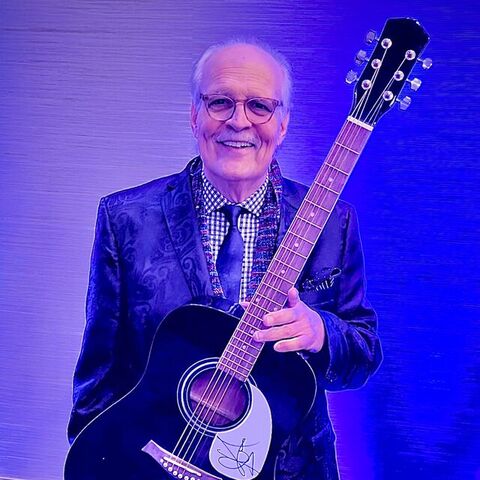
Good evening and welcome to this episode of Confessions of a Mid-Centurion.
My name is Richard and it's December 20th,
2024.
And the title of tonight's episode is The Forgotten Gift or The Christmas Saga of Greta and George.
And we go back 350 years to 1674.
It's the year that New Amsterdam was officially and permanently renamed New York City.
And in that year of 1674,
Two separate families unknown to each other in that small settlement in what is now Lower Manhattan of about 7,
000 people then,
Greta and George were born to separate families.
They didn't meet until they were about 12 years old at a social gathering where they both kind of said hello to each other.
And as things happened then and now,
Young people fall in love at first sight on occasion if they're lucky.
And Greta and George were lucky and they fell in love at the age of 12.
And in 1674,
When they were born,
People got married easily before they were 20 years old almost all the time.
So their romance began and flourished.
And in 1698,
When they were 24 years old,
They got married in the brand new Trinity Church,
An Anglican church built in Lower Manhattan,
Still there to this day,
Even though it was burned down and destroyed by snow several times in its history.
And Trinity Church was facing the Hudson River on Wall Street facing west.
And they were married there.
In 1698,
They began simple construction,
Only took a matter of days,
Of a one-room wooden framed home on Stone Street,
Named because it was the first paved street in the history of New York City.
And it was paved back in 1658 when it was still New Amsterdam.
It was cobblestone.
George was working as an apprentice class clerk for a prosperous fur trader.
And in New York City,
In the late 1690s,
There really was no currency.
Furs were the predominant trading currency.
And young couples being who they are,
George and Greta were blessed in 1700 with a beautiful baby daughter whom they named Sarah.
George was not ambitious,
But he was a proud young man and he wanted to do the best he could.
And he looked around his growing community,
Which was now about 7,
000 people,
And he saw some of the illnesses that were sitting in.
There was no sanitized water.
There was no running water.
There really wasn't any plumbing.
Heating was rudimentary at best,
Firewood if you had it.
Disease was starting to come in with other people as well.
And they were having all matter of not epidemics because they were too small to count and didn't really have any knowledge about how to do that.
But there was scarlet fever and smallpox and measles and diphtheria and tuberculosis and all of them mixed together and very little medicine and no doctors really to speak of.
There was no hospital in America until 1736,
Almost 35,
36 years later.
And that was Bellevue,
Which was built on top of an almshouse,
What we would call a poor house,
I guess,
Back in the day.
And it was only six beds.
And that was almost 40 years later.
So there was no healthcare to speak of,
But there was disease and there was contagion.
And being a forward-thinking man,
Young man,
George went to his fur trader,
Prosperous fur trader boss and said,
Can you appeal to the mayor?
And the mayor back then was a British fellow named Thomas and Noel.
And he,
George was able to get his fur trader boss to appeal to the mayor,
Mayor Noel,
To sponsor George to go study medicine,
Such as it was at the most prestigious medical college or university.
And one of the few in all of Europe,
Leiden University in Amsterdam in the Netherlands.
And Mayor Noel was a forward-thinking mayor.
He realized that his city to grow had to be a healthy city.
And so he sponsored what really would,
We would call a full boat scholarship for George to go become a doctor,
Such as it was,
And study at Leiden University in Amsterdam.
So with a heavy heart,
But with a warm intent,
George kissed his lovely bride,
Greta,
And his young daughter,
Sarah,
Goodbye,
And set sail for the Netherlands and was there for three years and all told four years door to door.
And he studied what was then the regime to become a man of medicine.
He studied anatomy.
He studied botanicals.
Almost all of the medicines administered to the ill around the 1700s were plant-based.
And even today,
The Rxs that we take in modern America are still about 25% plant-based.
So they had some good ideas.
They had no diagnostic capabilities whatsoever.
And he studied everything.
He studied the philosophy because they thought that botanicals was God's way of providing medicine to humanity.
And probably there's a lot of truth in that,
No doubt.
And he came back a man of medicine and started to practice under the new mayor at the time,
Who was Mr.
William Peartree.
And it's about 1705 now,
And he's starting his practice.
And while charging what he could charge,
I guess,
In furs and barter,
Et cetera,
Foods and livestock,
And maybe some household goods as well as furs,
He was able to build a slightly bigger home for his folks,
Just up the street a little bit.
And they moved from Stone Street to South Williams.
And there they built a lovely home around 1707 or so.
And he worked his practice,
And he became prosperous.
And he tried to balance his family and his work,
Which was important for the growing city,
Which is now up to about 9,
000,
10,
000 people.
And when he was betrothed to Greta,
As a young apprentice for a fur trader,
He had no wherewithal whatsoever.
And for a engagement ring,
If you will,
He pretty much just gave her a little silver band that had no precious stones in it.
And back then,
Precious stones could have been jade,
Rubies,
Pearl settings.
Diamonds were very,
Very rare.
And not for his class,
Even as a doctor,
More for the aristocracy and the elites.
Again,
We're at a time when New York City had indentured slaves,
People under contract,
Indentured servants,
And actual,
What we would call slaves back in the day.
He was a free person,
And he was trying his very best.
But in the beginning,
He had nothing,
And it was a very thin,
Almost the width of a couple of hair follicles,
A slight silver band that he put on Greta's hand at their wedding ceremony at the brand new Trinity Church.
So now about 17,
17,
They've been married about 19 years.
Young Sarah is now 17 years old with the blossom of beautiful youth upon her.
And suddenly,
Out of a blue sky,
So to speak,
Greta takes ill.
And again,
Diagnostically,
They could not tell the difference between scarlet fever and smallpox and dyspheria and measles and tuberculosis and a variety of other ailments as well.
But he had helped lots of people with his botanicals and had in his new home on South William a little cooking station near the fireplace where he was able to create both simple botanicals,
Which is really one ingredient,
An herb,
Perhaps,
And also very compound tinctures,
Which required soaking certain plants in alcohol under certain heat,
All of the disciplines he learned in creating botanicals.
Again,
There were no pharmacies and apothecaries were just about starting to be considered in England and not yet an idea in the United States.
So he really was the diagnostic and the pharmaceutical and the practicing physician to try to heal his beloved Greta from whatever was ailing her.
And she had a lot of symptoms and was rapid onset and he couldn't quite figure it out.
And he tried everything he could.
He was feverishly up all night working.
Sarah,
Who now was working herself in a millinery place and making some clothing,
Sewing by hand,
Would come visit from time to time.
And within 40 days of her first symptoms,
No matter what he did feverishly,
At Christmas time,
Greta went into a coma.
And,
As we've mentioned,
George's fortunes,
Because of his medical practice,
Had improved and he had gone to a nearby metallurgic place,
Jeweler,
We would call them today,
Who also did some engraving.
Engraving goes back,
Heck,
To the Egyptians.
And he had gotten a lovely gold ring embedded with pearls,
Emeralds,
Lapis lazuli,
Jade,
In a lovely ornate heart-shaped pinpoint of precious and semi-precious stones.
And it was in a lovely box.
And at Christmas time,
Christmas,
As the Dutch would have called it then,
And Père Noël,
As the French would call it,
And Kris Kringle,
Father Christmas,
As the UK folks would call it,
The Anglicans followed what we now know in the song to be the 12 days of Christmas,
Which is from Christmas Eve until January 6th,
Which is the epiphany.
And in the tradition that they developed over their 17 or 18 years of marriage,
Greta and George honored that with little gifts,
Even if it was a chestnut,
Or a piece of citrus fruit,
Or one piece of chocolate,
Or some sweet candied raisins,
Every day,
For both Sarah and George.
And George thought it would be a great idea for this Christmas to save the lovely ring that he was able to finally put together for Greta and give it to her at the end of the 12th day of Christmas,
January 6th.
And he had hidden it behind a cricket on their fireplace hearth for that day.
Greta took ill and went into a coma somewhere right around New Year's,
And never came out of that coma and passed away.
And as anybody who knows of the loss,
He was heartbroken.
Sarah was heartbroken.
They went through the process of getting everybody buried,
Etc.
And again,
He was buried at the same church they were married at,
Trinity Church,
Lower Manhattan.
And he kind of went into a funk,
As happens when you're grieving the loss of your loved one.
And after about a month of kind of looking at his hands and going through his practices as best he could,
But not really being there spiritually or emotionally because he was dealing with a wound,
A deep wound,
The loss of his beloved wife of almost 20 years,
Greta,
He was in his home and just kind of sitting and staring.
And suddenly he remembered that somewhere behind the cricket on the hearth was this small box that had this relatively expensive and definitely beautiful and one-of-a-kind ring that he was going to present to his beloved Greta,
Removed a thin little silver band that he betrothed her with when he had very little back in 1700 in Trinity Church.
And he held it in his hand,
He sat down,
Had himself a good cry,
Said,
What do I do with this thing?
And like folks who sometimes talk to what we call the dead,
He decided to ask Greta,
Wherever she might have been in the universe,
Her body was buried,
Wracked with disease,
What he should do with this ring.
He went to bed tearfully,
Woke up in the morning and he knew what to do.
He went to an engraver and asked the engraver to engrave the ring.
It took a couple of days for that to happen.
It was very meticulous work.
And he came back,
Went to Sarah's house,
Knocked on Sarah's door and presented her with the ring.
She opened it,
Looked at the engraving and the engraving said,
When you wear this ring,
I will be near.
Love you,
Mother.
The forgotten gift has not been forgotten over 350 years later.
And if there's any message that we can carry forward to Christmas time,
Holiday time 2024,
Is no gift is ever forever forgotten and all gifts given with intent of purpose and sweetness are forever remembered.
So in this last weekend,
As we run up to the holiday season coming to its culminations for all of us,
I wish you the very best.
Another episode will drop on Monday.
Like,
Subscribe,
Share,
Comment,
Talk about it.
And thank you again.
And this episode of Confessions of a Mid-Centurion is out.
I'm taking some risks to connect with you here.
We don't know how we got on this ship.
No gift is forgotten.
This juggernaut of excess is a sloppy lip joint.
This is no landing field.
The journey is the point.
Sarah wore that ring the rest of her life.
Don't you understand?
This ain't no opening number and I ain't no headline band.
So go slow,
Slow enough to know that the smallest things are the biggest things and this is still not,
This is still not everything.
Oh no,
Not everything.
Oh no.
The smallest things are the biggest things,
So go on your lap stings.
Granted,
His grandchildren and great-grandchildren still wear that ring.
And go slow,
Slow enough to know that the smallest things are the biggest things and this is still not,
This is still not everything.