King William Island.
Latitude unmentionable.
But I'm not the first here.
They preceded me.
They marked the way with bones.
White as the ice is,
Whiter maybe.
The white of death,
Of purity.
But it was almost a century ago,
And sometimes I find their bodies,
Like shattered compasses,
Like sciences,
Gone mad,
Pointing in a hundred directions at once.
The last whirling graph of their agony.
How could they know what I know?
A century later,
My pockets stuffed with comfortable maps.
This was,
After all,
An island that the ice can camouflage the straits and drive men into false chants.
Drive men.
How could they know?
Even stand back and see the nature of the place they stood on.
When no man can,
No man knows where he stands until he leaves his place,
Looks back,
And knows.
Franklin,
I would like to find you.
Now your body spread eagled like a star.
A human constellation in the snow.
The earth insists.
There is but one geography.
But then,
There is another still.
The complex,
Crushed geography of men.
You carried all maps within you.
Land masses moved in relation to you,
As though you created the passage by willing it to be.
Ah,
Franklin,
To follow you,
One does not need geography.
At least not totally.
But more of that.
Instrumental knowledge.
The bones have their limits,
Their measurings.
The eye creates the horizon.
The ear invents the wind.
The hand reaching out from a parka sleeve.
By touch demands that the touched thing be.
So I followed you here,
Like a dozen others,
Looking for relics of your ships,
Your men.
Here to this awful monastery,
Where you died,
And all the men with you who died.
Seeking a passage from imagination to reality.
Seeking a passage from land to land by sea.
Now,
In the arctic night,
I can almost suppose you did not die,
But are somewhere walking between the icons of ice,
Pensively,
Like a priest,
Wrapped in the cold holiness of snow,
Of your own memory.
Franklin.
I brought them here.
129 men led them into this bottleneck.
This white asylum.
I chose the wrong channel.
And the ice folded in around us.
Gnashing its jaws folded in around us.
The ice clamps and will not open.
For a year,
It has not opened.
Though we bash against it,
Like lunatics at padded walls.
My ships,
The terror,
The Arribas are learning the meanings of their names.
What madman christened them?
The ships of terror and of hell.
In open salty sea.
They did four knots.
Here,
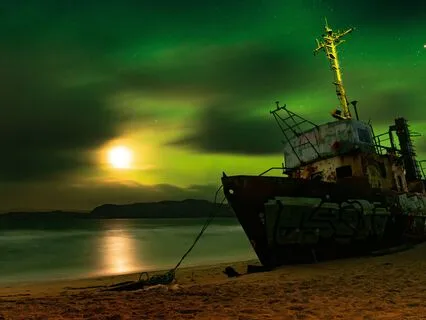
They rot and cannot move at all.
Another winter in the ice.
The second one for us folds in.
Latitude 70 degrees north.
November 25th,
1846.
The sun has vanished.
Rasmussen.
Nothing then but to sit out the darkness.
The second sterile year and wait for spring.
And pray the straits would crack open and the dash begin again.
Pray you could drive the ships through the yielding,
Melting flows.
Drive and press on down into the giant,
Virginal strait of Victoria.
But perhaps she might not yield.
She might not let you enter.
But might grip and hold you crushed forever in her stubborn loins.
Her white asylum in an ugly marriage.
I told him.
I told Crozier.
The spring is coming.
But it's wrong somehow.
Even in summer,
The ice may not open.
It may not open.
Some of the men have scurvy,
Crozier.
Their faces,
The sick ones.
Their faces reflect their minds.
I can read the disease in their souls.
It's a mildew chart on their flesh.
But this is no place to talk of souls here.
The soul becomes the flesh.
I may have to send men on foot to where the passage is.
To prove it.
To prove it is there.
That Simpson joins Victoria.
That there is a meaning,
A pattern imposed on this chaos.
A conjunction of waters.
A kind of meaning.
Even here.
Even in this place.
Rasmussen A kind of meaning.
Even here.
Even in this place.
Yes.
Yes.
We are men.
We demand that the world be logical.
Don't we?
But eight of your men went over land and saw it and proved it.
Proved the waters found each other as you said.
Saw the one flowing into the other.
Saw the conjunction,
The synthesis of faith.
There in the white metallic cold.
And returned to tell you Franklin and found you dying in a rebus.
In the hell of your body.
The last ship of your senses.
June 11 1847.
Rasmussen Crozier took command.
A scientist understanding magnetism.
The pull of elements.
But the laws which attract and as easily repel could not pull him from the hell of his science.
Crozier.
What laws govern this final tug of war between life and death?
The human polarities.
What laws govern these?
The ice.
It's its own argument.
Crozier.
It is September.
The end of summer.
Summer there was no summer.
Funny how you go on using the same old terms.
Even when they've lost all meaning.
Two summers and the ice has not melted.
Has the globe tipped?
The axis slipped?
Is there no sense of season anywhere?
September 1847.
We wait our third winter on the ice.
Rasmussen But the ice,
Wasn't it drifting south?
Itself like a ship.
A ship within a ship.
Crozier The ice is drifting south,
But not fast enough.
It has time.
It has more time than we have time.
It has eternity to drift south.
Ice doesn't eat.
Ice doesn't get scurvy.
Doesn't die like my men are dying.
Crozier April 1848.
The winter is over.
Supplies to last three months only.
We are leaving the ships for good.
Rasmussen You went over land then.
Over land.
An ironic word.
How can you call this land?
It's the white teeth of a giant saw.
And men crawl through it like ants through an upright comb.
Over land.
You set out from the ships in a kind of horrible birth.
A forced expulsion from those two wombs.
Solid at least.
Three dimensional smelling of wood and metal and familiar things.
Rasmussen Thirty good men.
On the way back,
All of them but five died.
Knelt before the sun for the last time and died.
Knelt like priests in the whiteness and died.
On their knees died.
Or stretched straight out.
Or sitting in a brief stop which never ended.
Died.
It does not matter how.
Five made it back to the ships and there in the womb,
In the wooden hulls,
Died.
Five who could not go back.
Who could not a second time bear the birth.
The going out.
The expulsion.
The flesh and hair bleaches out.
We are cast in plaster.
The ice cannot bear the flesh of men.
The sun will not tolerate coloring.
We begin already.
To move into the ice.
To mimic it.
Our father who art in heaven.
Our father.
Our father.
One night we saw Eskimos.
And they were afraid.
They gave us a seal.
They ran away at night.
Crozier.
Crozier.
We have come 200 miles from the ships.
200 miles.
It is the end.
It is.
The end.
We scattered our instruments behind us.
And left them where they fell.
Like pieces of our bodies.
Like limbs.
We no longer had need for.
Compasses.
Tins.
Tools.
All of them.
Now we come to the end of science.
Now we leave ciphers in the snow.
We leave our instruments in the snow.
It is the end of science.
What magnet do I know of?
Which will pull us south?
None.
None but the last inevitable one.
Death who draws.
Rasmussen.
No,
Crozier.
The sun cannot read.
And the snow cannot either.
But men can.
Men like me.
Who come.
To find your traces.
The pieces of your pain.
Scattered in the white vaults of the snow.
Men like me.
Who come.
And stand.
And learn.
The agony.
How the body is bleached.
And the brain itself.
Turns.
A kind of pure.
Purged.
White.
And what has happened to the ships.
It hurts to talk of.
The Eskimo knows.
Let him tell of it.
I remember the day.
When our fathers found a ship.
They were hunting seals.
And it was spring.
And the snow.
Melted around.
The holes where the seals breathed.
Far away on the ice.
My father saw a strange ship.
A black shape.
Too great to be seals.
They ran home.
And told all the men.
In the village.
And the next day.
All came to see.
This strange thing.
As though.
Into another world.
Understanding nothing.
They cut the lines.
Of that little boat.
Which hung from the ship.
And it fell broken.
To the ice.
They found guns.
In the ship.
And did not understand.
And they broke the guns.
And used them.
For harpoons.
And they did not understand.
They went into the little houses.
On the deck of the ships.
And found dead people.
In beds.
Who had lain there.
For a long time.
Then they went down.
Down.
Into the hull of the great ship.
And it was dark.
And they did not understand the dark.
Rasmussen.
And the papers.
Franklin's papers.
The ship's logs.
The reports.
Papers.
Oh yes.
The little children.
Found papers.
In the great ship.
But they did not understand papers.
They played with them.
They ripped them up.
They threw them into the wind.
Like birds.
Rasmussen.
Laughing bitterly.
Maybe they were right.
What would papers mean to them?
Cryptic marks.
Latitudes.
Signatures.
Journals.
Diaries of despair.
Official reports.
Nobody needs to read.
I've seen the real journals.
You left us.
You Franklin.
I've seen the skulls of your men.
In the snow.
Their sterile bones.
Arranged like compasses.
Making out all the latitudes.
And longitudes.
Of men.
Now.
The great passage is open.
The one you dreamed of Franklin.
The great white ships.
Plow through it.
Over.
And over again.
Packed.
With cargo.
And carefree men.
It's as though.
No one had to prove it.
Because the passage.
Was always there.
Or is it that you.
Cannot know.
Can never know.
Where the passage lies.
Between.
Conjecture.
And reality.