Sense and Sensibility by Jane Austen Chapter 18 Elinor saw with great uneasiness the low spirits of her friend.
It was evident he was unhappy.
She wished it were equally evident he still distinguished her by the same affection,
Which once she had no doubt of inspiring.
But the reservedness of his manner towards her contradicted one moment what a more animated look had intimated the preceding one.
He joined her and Marianne in the breakfast room the next morning before the others were down,
And Marianne,
Who was always eager to promote their happiness as far as she could,
Soon left them to themselves.
But before she was halfway upstairs,
She heard the parlour door open,
And turning around,
Was astonished to see Edward himself come out.
I am going into the village to see my horses,
Said he.
I shall be back again presently.
Edward returned to them with fresh admiration of the surrounding country.
In his walk to the village he had seen many parts of the valley to advantage.
This was a subject which ensured Marianne's attention,
And she was beginning to describe her own admiration of these scenes,
When Edward interrupted her by saying,
You must not inquire too far,
Marianne.
Remember,
I have no knowledge in the picturesque,
And I shall offend you by my ignorance and want of taste if we come to particulars.
You must be satisfied with such admiration I can honestly give.
I call it a very fine country.
The hills are steep,
The woods seem full of fine timber,
And the valley looks comfortable and snug.
I can easily believe it to be full of rocks and promontories,
Grey moss and brush wood,
But these are all lost on me.
I know nothing of the picturesque.
I am afraid it is all but too true,
Said Marianne.
But why should you boast of it?
I suspect,
Said Eleanor,
That Edward believes many people pretend to more admiration of the beauties of nature than they really feel,
And is disgusted with such pretensions,
So he affects greater indifference and less discrimination in viewing them himself than he possesses.
It is very true,
Said Marianne,
That admiration of landscape scenery is become a mere jargon.
Sometimes I have kept my feelings to myself because I could find no language to describe them in but what was worn and hackneyed out of all sense and meaning.
I am convinced,
Said Edward,
That you really feel all the delight in a fine prospect which you profess to feel.
I like a fine prospect,
But not on picturesque principles.
I do not like crooked,
Twisted,
Blasted trees.
I admire them much more if they are tall,
Straight and flourishing.
I do not like ruined,
Tattered cottages and a troop of tidy,
Happy villagers please me better than the finest bandit in the world.
The subject was continued no further and Marianne remained thoughtfully silent until a new object suddenly engaged her attention.
She was sitting by Edward and in taking his tea from Mrs Dashwood his hand passed so directly before her as to make a ring with a plait of hair in the centre very conspicuous on one of his fingers.
I never saw you wear a ring before,
Edward,
She cried.
Is that Fanny's hair?
He coloured very deeply and giving a momentary glance at Eleanor replied Yes,
It is my sister's hair.
The setting always casts a different shade on it,
You know.
Eleanor had met his eye and looked conscious likewise.
That the hair was her own she instantaneously felt as well satisfied as Marianne.
The only difference in their conclusions was that what Marianne considered as a free gift from her sister Eleanor was conscious must have been procured by some theft or contrivance unknown to herself.
She was not in a humour,
However,
To regard it as an affront and affected to take no notice of what passed by instantly talking of something else.
Edward was particularly grave the whole morning.
Marianne severely censured herself for what she had said but her own forgiveness might have been more speedy had she known how little offence it had given her sister.
Before the middle of the day they were visited by Sir John and Mrs Jennings who came to take a survey of the guest.
With the assistance of his mother-in-law Sir John was not long in discovering the name of Ferris began with an F and this prepared a future mile of railway against the devoted Eleanor which nothing but the newness of their acquaintance with Edward could have prevented from being immediately sprung.
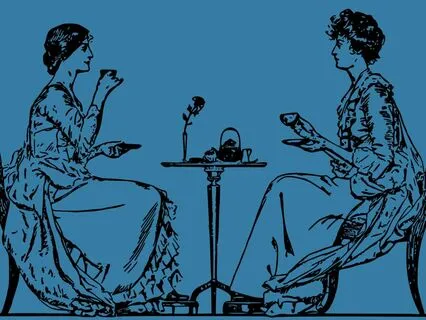
You must drink tea with us tonight,
Said Sir John for we shall be quite alone and tomorrow you must absolutely dine with us for we shall be a large party.
Mrs Jennings enforced the necessity.
And who knows but you may raise a dance,
Said she and that will tempt you Miss Marianne.
A dance?
Cried Marianne.
Impossible,
Who is to dance?
Who?
Why yourselves and the Carries and Whittakers to be sure.
What,
You thought nobody could dance because a certain person that shall remain nameless is gone?
I wish with all my soul that Willoughby were amongst us again cried Sir John.
This and Marianne's blushing gave new suspicions to Edward.
And who is Willoughby?
Said he in a low voice to Miss Dashwood by whom he was sitting.
She gave him a brief reply.
Edward saw enough to comprehend not only the meaning of others but such of Marianne's expressions as had puzzled him before.
And when their visitors left he went immediately round to her and said in a whisper I have been guessing.
Shall I tell you my guess?
Certainly.
Well then,
I guess that Mr Willoughby hunts.
Marianne was surprised and confused yet she could not help smiling at the quiet archness of his manner.
And after a moment's silence she said Oh Edward,
How can you?
But the time will come,
I hope.
I'm sure you will like him.
I do not doubt it,
Replied he.
Chapter 19 Edward remained a week at the cottage.
He was earnestly pressed by Mrs Dashwood to stay longer but he seemed resolved to be gone when his enjoyment among his friends was at the height.
His spirits during the last two or three days were greatly improved.
He grew more and more partial to the house and the Vierons never spoke of going away without a sigh.
But still go he must.
He valued their kindness beyond anything and his greatest happiness was in being with them.
Yet he must leave them at the end of the week in spite of their wishes and his own and without any restraint on his time.
Eleanor placed all that was astounding in this way of acting to his mother's account and it was happy for her he had a mother whose character was so imperfectly known to her as to be the general excuse for everything strange on the part of her son.
His want of spirits,
Of openness and of consistency were most usually attributed to his want of independence and his better knowledge of Mrs Ferrer's disposition and designs.
The old well-established grievance of duty against will,
Parent against child was the cause of all.
She would have been glad to know when these difficulties were to cease.
When Mrs Ferrer's would be reformed and her son had liberty to be happy.
But from such vain wishes Eleanor was forced to turn for comfort to the renewal of her confidence in Edward's affection.
I think,
Edward,
Said Mrs Dashwood as they were at breakfast the last morning,
You would be a happier man if you had any profession to engage your time and give you an interest to your plans and actions.
Some inconvenience to your friends indeed might result from it.
You would not be able to give them so much of your time.
But you would know where to go when you left them.
I do assure you,
He replied,
I have long thought on this point as you think now.
It has been and probably will always be a heavy misfortune to me.
I have had no necessary business to engage.
No profession to give me employment or afford me anything like independence.
I always preferred the church as I still do.
But that was not smart enough for my family.
They recommended the army.
That was a great deal too smart for me.
The law was allowed to be genteel enough.
But I had no inclination for the law.
Even in the lesser true study of it with which my family approved.
I was therefore entered at Oxford and have been properly idle ever since.
The consequence of which I suppose will be,
Said Mrs Dashwood,
That your sons will be brought up to as many pursuits,
Employments,
Professions and trades as columnellers.
They will be brought up,
Said he in a serious accent,
To be as unlike myself as it is possible.
Come,
Come,
Edward.
You are in a melancholy humour and fancy that anyone unlike yourself must be happy.
But remember,
The pain of parting from friends will be felt by everybody at times,
Whatever be their education or state.
Know your own happiness.
Your mother will secure to you in time that independence you're so anxious for.
How much may not a few months do?
And I think,
Replied Edward,
That I may defy many months to produce any good to me.
This desponding turn of mind gave additional pain to them all in the parting,
Which shortly took place and left an uncomfortable impression on Eleanor's feelings,
Especially which required some trouble and time to subdue.
But she did not adopt the method so judiciously employed by Marianne on a similar occasion to augment and fix her sorrow by seeking silence,
Solitude and idleness.
Eleanor sat down to her drawing table as soon as he was out of the house,
Busily employed herself the whole day,
Appearing to interest herself almost as much as ever in the general concerns of the family.
And if by this conduct she did not lessen her own grief,
It was at least prevented from unnecessary increase,
And her mother and sisters were spared much solicitude on her account.
Without shutting herself off from her family or leaving the house and determined solitude to avoid them,
Eleanor found every day afforded her leisure enough to think of Edward and of Edward's behaviour in every possible variety which the different state of her spirits at different times could produce,
With tenderness,
Pity,
Approbation,
Censure and doubt.
Her thoughts could not be chained elsewhere and the past and the future on a subject so interesting must force her attention and engross her memory,
Her reflection and her fancy.
From a reverie of this kind,
As she sat at her drawing table,
She was roused one morning soon after Edward's leaving them by the arrival of company.
The closing of the little gate drew her eyes to the window and she saw a large party walking up to the door.
Amongst them were Sir John and Lady Middleton and Mrs Jennings.
But there were two others,
A gentleman and lady who were quite unknown to her.
As soon as Sir John perceived her he left the rest of the party to the ceremony of knocking at the door,
And stepping across the turf obliged her to open the casement to speak to him.
"'Well,
' said he,
"'we have brought you some strangers.
How do you like them?
' "'Hush,
They will hear you.
' "'Never mind if they do.
It's only the Palmers.
"'Charlotte is very pretty,
I can tell you.
"'You may see her if you look this way.
' They were now joined by Mrs Jennings who came hallowing to the window.
"'How do you do,
My dear?
How does Mrs Dashwood do?
"'And where are your sisters?
' "'What,
All alone?
"'You will be glad of a little company to sit with you.
"'I've brought my other son and daughter to see you.
"'I thought I heard a carriage last night while we were drinking our tea,
"'but it never entered my head it could be them.
' "'I said to Sir John,
"'I do think I hear a carriage.
Perhaps is Colonel Brandon come back again?
' Eleanor was obliged to turn from her in the middle of her story to receive the rest of the party.
Mrs Palmer was several years younger than Lady Middleton and totally unlike her in every respect.
She was short and plump,
Had a very pretty face and the finest expression of good humour in it that could possibly be.
She came in with a smile,
Smiled all the time of her visits except when she laughed,
And smiled when she went away.
Her husband was a grave-looking young man of five or six and twenty.
He entered the room with a look of self-consequence,
Slightly bowed to the ladies without speaking a word,
And after briefly surveying them in their apartments,
Took up a newspaper from the table and continued to read as long as he stayed.
Mrs Palmer,
On the contrary,
Was hardly seated before her admiration of the parlour and everything in it burst forth.
Oh,
What a delightful room this is!
I never saw anything so charming.
Only look,
Sister,
How delightful everything is!
How I should like a house for myself,
Should you not,
Mr Palmer?
Mr Palmer made her no answer and did not even raise his eyes from the newspaper.
Mrs Jennings,
In the meantime,
Called on as loud as she could and continued her account of their surprise the evening before without ceasing till everything was told.
Mrs Palmer laughed heartily at the recollection of their astonishment and everybody agreed,
Two or three times over,
That it had been quite an agreeable surprise.
You may believe how glad we all were to see them,
Added Mrs Jennings,
Nodding significantly and pointing to her daughter.
It was wrong in her situation.
I wanted her to stay home and rest this morning,
But she would come with us.
She longed so much to see you all.
Mrs Palmer laughed and said it would not do her any harm.
She expects to be confined in February,
Continued Mrs Jennings.
Here comes Marianne,
Cried Sir John.
Now,
Palmer,
You shall see a monstrous pretty girl.
He immediately went into the passage,
Opened the front door and ushered her in himself.
Mr Palmer looked up upon her entering the room,
Stared at her some minutes and then returned to his newspaper.
Mrs Palmer's eye was now caught by the drawings which hung around the room.
Oh dear,
How beautiful these are!
Do but look,
Mama,
How sweet!
I could look at them forever.
And then sitting down again,
She very soon forgot there were any such things in the room.
When Lady Middleton rose to go away,
Mr Palmer rose also,
Laid down the newspaper,
Stretched himself and looked at them all round.
My love,
Have you been asleep?
Said his wife,
Laughing.
Then he made his bow and departed with the rest.
Sir John had been very urgent with them all to spend the next day at the park.
Mrs Dashwood absolutely refused on her own account.
But her daughters might do as they pleased.
They attempted likewise to excuse themselves.
The weather was uncertain and not likely to be good.
But Sir John would not be satisfied.
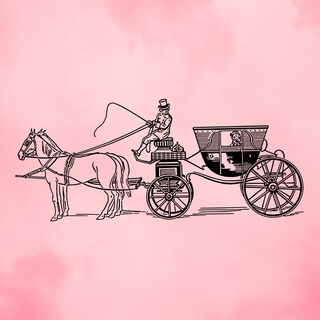
The carriage should be sent and they must come.
Lady Middleton too,
Though she did not press their mother,
Pressed them.
Mrs Jennings and Mrs Palmer joined their entreaties,
All seemed equally anxious to avoid a family party.
And the young ladies were obliged to yield.
Why should they ask us?
Said Marianne as soon as they were gone.
The rent of this cottage is said to be low,
But we have it on very hard terms We are to dine at the park whenever anyone is staying,
Either with them or with us.
They mean no less to be civil and kind to us now,
By these frequent invitations than by those we received from them a few weeks ago.
The alteration is not in them if their parties are grown tedious and dull.
We must look for the change elsewhere.