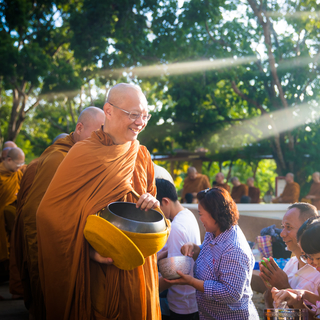
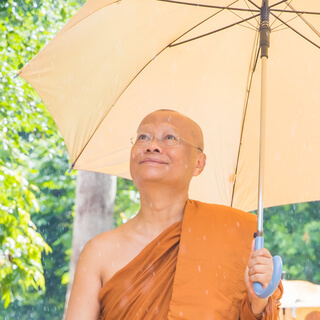
The ending of the vasa,
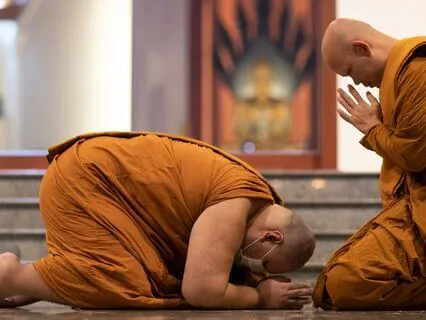
The three-month rains retreat,
Is called the day of maha-bhavarana.
Maha means great,
Bhavarana means invitation of admonishment to each other,
Asking for forgiveness from each other.
This is something the Buddha laid down.
Usually on the lunar observance days,
The 15th full moon or the 14th or 15th waning moons,
The monks will chant the patimokkha,
The 227 precepts,
To go over their sila.
But on the bhavarana day,
There will be the chanting of maha-bhavarana.
There is a formal motion before the sangha,
And after,
Each sangha member will do a formal sangha act by chanting sangham bhante bhavaremi,
Ditenawa,
Sutenawa,
Parisankhayawa,
And so on.
The meaning is,
To the sangha,
I invite you to tell me,
Out of compassion,
If you have seen,
Heard,
Or suspected any offence that I have committed by body,
Speech,
Or mind.
This is humbling oneself and giving forgiveness to one another,
And it is merit and building bhavaremi,
Spiritual virtues,
And to humble oneself is a rare quality and is contained in the 38 highest blessings.
The nature of the mind is that it is an element which receives,
It cognizes.
The mind is actually not one's self,
It is a natural element.
But the trait of delusion takes it all as one's self.
The ignorance is me,
The mind is me,
The body is me,
And when we have this me,
Then we have many things.
My child,
My grandchild,
My father,
Mother,
Older and younger sibling,
My relatives,
My society I live in,
My country,
Nationality,
And others.
If we have the feeling of me at a normal and ordinary level,
Then there is no problem.
But if it's a me that harms others,
That does things for oneself,
Then it's a self that harms others.
So we can see that we have a sense of self,
But we want to have greed and desire.
The mind doesn't actually want to have greed,
But as the mind is a slave to the quality of ignorance,
A vijja,
So it is ignorance that leads the mind to keep continuing on having greed coming up.
Greed rolls on,
And greed grows in our mind.
Then we give greed to others as well,
And so it's all a mess.
We call it not having enough,
And not sharing.
So can we see that sharing is not a small thing?
We make merit and give dana through not cheating others,
And so our wealth is pure.
See,
If we cheat others with a wrong greed,
And then we make offerings,
Then we'll have all sorts of problems.
So even though we use the money to make merit,
The merit we get is small.
But one with wealth that is pure,
Who takes it to make merit,
Then they get a lot of merit,
And it's safe as well,
Because we are not greedy.
And having made merit,
And wanting to gain the result of merit,
We still get merit.
But having made merit,
And cultivating our minds to a higher level,
Then we don't want the result of merit.
We say,
May this be a cause for going to Nibbana.
We want to give up greed,
Because this greed makes us suffer.
It doesn't know about having enough.
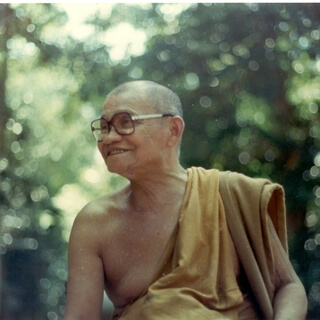
So Venerable Ajahn Chah said,
Whether one has a little or a lot,
It doesn't mean that one has peace.
But one who has enough,
Is one who has peace.
That is having enough in everything.
There are those who are highly educated,
And they will keep on studying.
They are 60 years old,
And have two PhDs already.
And they are diligent,
And want to keep on learning.
But it is said that it never ends.
We learn in this life,
And then die.
Being born into the next life,
And then learning once again.
To learn all the knowledge of this world,
It will never end.
We will keep dying.
Being born and dying,
Born and die.
It's not worth it for the price.
There is just continual suffering.
So may we learn the Dhamma.
Learn about the truth.
This is a subject that can end.
Because the cycle of saṃsāra,
Of continued birth and death,
It reduces.
Though it doesn't end all at once,
By becoming an Arahant,
But it may get smaller.
How does it get smaller?
When you can know and see the Dhamma.
And this is one who has a lot of spiritual development.
So we have received Dhamma teachings over many years.
And in this year,
We continue to receive teachings.
Sometimes we go to the monastery,
And we experience some things that we are pleased with.
And some things that we are not pleased with.
There are all sorts of things that come up when us people come together.
Even if we stay by ourselves,
We are not pleased with ourselves at all.
There are troubles within our own heart.
Like for Venerable Ajahn Chah.
He was troubled with his friends.
Because he thought they didn't practice.
So he evaded them.
And thought he would be better off to be by himself.
And being by himself for a while,
He thought.
Actually,
One novice monk would be good to have around.
Then they could offer this or that to me.
Then he said,
Hey,
Before you said it's all disturbing.
But now that I am by myself,
I want a novice around already.
So we have sati,
Mindfulness.
To know things in time as they arise.
So knowing enough,
And knowing how to forgive each other.
This is something good to the heart.
Because our heart gets pleased,
It gets displeased.
These are worldly conditions.
There is what is not pleasing.
And so some days we will have anger.
Have ill will.
Have hatred.
Have more confusion.
This is what we are like.
But if we can give forgiveness,
Then we'll be at ease and relieved.
Sometimes Dhamma practitioners don't like the actions of other people at all.
If it's a monk,
They don't like this monk or that lay person.
We think that they don't get along with us at all.
But then we sit meditation and spread metta,
Goodwill.
And the mind is at ease.
Oh,
The heart was all troubled because of dosa,
Ill will and anger in the heart.
Now it's very at ease.
The mind is at ease.
We have rapture and bliss and give our forgiveness.
Why?
Because we see there's no self,
No me.
Ignorance is what proliferates their minds and our minds.
But now we are at ease.
But when the eye sees a form again,
There is a sense of self coming up.
When the eye sees a form and our mindfulness is not in time with it,
There is a self arising.
We are the ones seeing.
We see someone we don't like and then we suffer.
We see someone we like and we are happy.
So the eye sees forms,
Ear hears sounds,
Nose smells odors,
Tongue tastes flavors,
Body touches tangible objects or the mental objects that arise in the mind.
We have to be careful right here.
The gilases,
The mental defilements arise here at passa,
Sense contact.
Venerable Ajahn Chah compared this well to a lemon that has a sour taste but if it doesn't contact the tongue then we don't feel anything.
Or a rock is five kilograms heavy but if we don't pick it up then we don't feel heavy.
The heaviness of five kilograms is just sitting there but we don't feel its heaviness of five kilograms.
Whenever we have attachment then it's heavy.
Our heart is like that.
Whenever we attach to something then we are heavy then.
So when we see someone we don't like then ill will arises.
So we continue sitting meditation and it may take many days to overcome it until we can win over it.
Till we can get past the feeling of it,
Get past the disliking and then to have metta towards them.
It is hard to do.
So they taught us to have metta to ourselves first,
To forgive ourselves first.
Don't put yourselves down too much,
That's no good.
When we act unskillfully and then we punish ourselves too much then the heart gets lowered.
So give forgiveness to yourself and may you have no ill will towards anyone at all.
We are determined that in the life that we have left,
With the breath remaining,
That we should build a lot of goodness.
When the breath ends then it ends.
So we try to build the path that will make the heart go to heaven.
It's like we can think that if we die where will we go?
If we die we want to go to heaven.
It's happiness.
It's a temporary resting place.
Being born as a human for many years is suffering.
So we can go to heaven and the body doesn't have hunger at all and has happiness.
One can rest for a while.
But have we built the path to heaven?
In our daily life is our mind at ease,
Like in a state of heaven?
Do we chant?
Do we sit meditation?
Do we learn dhamma?
Do we help those who are unfortunate?
Do we do the causes to make the mind to be as if in heaven in the present moment?
King Sakka,
The head of the devas,
The heavenly beings,
In the past had built roads,
Paths and built a resting place for others.
So the suffering they experienced would be reduced.
He helped those affected by floods and fires.
This is building the path to heaven.
It's like there are many people who see others in suffering and in troubles and they go to help them.
This is practicing to build merit and goodness to go to heaven.
In reality heaven is in the heart.
We help and we feel at ease.
We are inwardly happy and full of heart.
We make merit and then we are happy and joyous.
Here if we have built a lot of good causes,
Then when the body breaks up we go according to those causes.
If we build causes that make us suffer in the present,
Then we don't want to be born in hell at all.
We don't want to be born as a hungry ghost.
But having greed and the opportunity to be born as a hungry ghost or an animal is easy.
But if we have no greed then we can close that off.
We see these five moral precepts as having lots of benefits.
It can close off our mind to not go to the lower realms.
It is the foundation that we will gain the dhamma and we will go to heaven when it's already in the heart.
Sometimes we can see devas.
Humans want to see devas.
A deva is one who is excellent.
They have the virtues of hiri and ottappa,
Being afraid of wrongdoing,
Of bad karma,
And so not doing that bad karma.
Doing it and it is a bad unskillful act.
If we have lots of greed we think that one day we will get lots of money,
Be it a few million or many millions,
And we think about it more and more as well.
This year it's 10 million and in 10 years we'll have tens of millions and we'll have lots of happiness.
But we never think that where does that tens of millions come from.
It comes from the tears of people,
From the sufferings and hardships of people.
We never think about that.
We think just of how happy we will be and we think about only getting it all for oneself.
We never think at all about when bad karma gives its results what will we do.
We will have to go to jail and one's name is disgraced as well.
We get into trouble with the law and can go to jail.
We will get dangers from this in this human realm.
That's so scary.
So we have fear of the bad results of karma that we would receive.
We don't want to do that greedy action,
To follow that greed.
We feel ashamed because we have a good name and are recognized in society like actors,
Singers or famous people.
And if we did that bad action we would lose our good name that we have built for a long time.
If we do it we would go badly.
So then one doesn't do it.
So this is having virtue,
Having hiri,
A sense of moral shame and otapa,
Fear of the results of wrongdoing.
So we don't do that action and having this restraint and we can control over the bad actions with our sila.
We build goodness and then we will go to heaven.
And I've seen it as well.
There are some actors who have built their name and image for 20 years and they wouldn't go to advertise some product because they think there may be something bad about it so they don't do it.
Even if they can get money from it but they may lose their reputation.
They aren't sure about it and so think it's better not to do it and then they can avoid a bad situation.
So this is one example.
So hold on to your virtue and goodness.
Hold on to your sila,
Your good moral conduct.
Be firmly established in it.
Sila has great benefits.
We will see the dhamma because of this sila.
We will go to heaven.
The mind is like this in the present moment and in the future because of this sila.
So be determined in keeping the five precepts and those who have strength keep the eight precepts.
So all through the rains retreat you kept the eight precepts and then outside of the retreat you will continue to have the five and eight precepts and be determined to continue your meditation.
The monks are determined to continue their meditation.
They don't stop because we can't stop.
The greed,
Hatred,
Delusion is focusing on us already.
They will take control over our hearts.
So may you be determined.
May you be intent to forgive others,
To be free from ill will and grudges.
Like we chant the spreading of metta and our minds will develop and grow more and more and one day we will be able to see all things as emptiness and it's amazing.
So keep sila,
Keep meditating,
Listening to dhamma and one day the mind gathers together and oh in this world there is nothing at all.
All the wealth,
Goods,
Things,
They are anatta,
Not self.
Why would we attach and cling to anything as me or mine?
We can't attach to it.
When we can't attach to it we must let go.
Letting go it's empty.
It belongs to the world.
Then the heart goes to freedom which we call nibbana.
May you set your hearts on this.
May you grow in blessings.