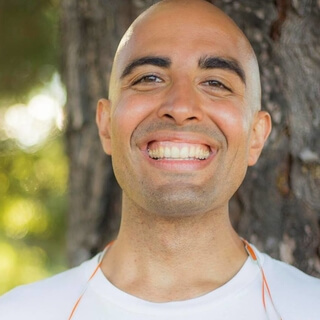
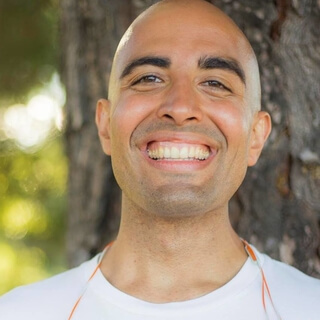
So Simon Wade and Ben Irvine are coming together here in Melbourne,
Actually in the heart of Melbourne,
Uh,
Meltham,
In Melbourne in a beautiful place called Eltham.
And what they're building is an intentional community.
Now I've heard of like remote rural intentional communities,
But they're actually building one here in the heart of Melbourne.
Melbourne's a gorgeous city for those tuning in.
It's the home of the Inspired Evolution and the insane sense of community here that we already have gave birth to this vibrant rich podcast that we have here called the Inspired Evolution.
And these brothers are harnessing some of that to actually build an intentional community.
So we dive deep into what is their vision for it,
How they're going to manage some of the power dynamics and struggles that may come up from that,
What were their inspirations,
What are some of their key resources and guiding them on their way through this journey.
And one of my favorite topics was that we discussed how important it is to break bread together in an intentional community.
So if you've ever thought about establishing an intentional community or just wondered what it might be to live outside of the normal paradigm that we now call the normal,
Which is,
You know,
Just our families of three or four,
You know,
Mum and dad and the two kids,
Tune into this episode.
It's really,
Really inspiring.
Yeah.
Community has been something that consistently having interviewed so many people from so many different parts of the world on so many different topics,
Somehow there's always this undercurrent of like how important community is for mental health and wellbeing,
Emotional health,
Longevity,
Finding your purpose,
Finding a sense of service.
It's incredible,
Right?
So these guys are coming together and having multiple generations of families live together here in the heart of Melbourne.
I think they've said it was about 40 adults,
26 dwellings.
Yeah,
Yeah.
Really,
Really intriguing,
Really,
Really intriguing.
So tune in and is always just a humble little request.
If you're enjoying this episode,
Please,
I'd love it if you could just give it a quick little thumbs up at that point where it goes,
Oh,
Gold.
When you had that moment,
Give us a thumbs up.
Truly appreciate it.
And yeah,
Always here to stay,
To inspire you to stay inspired and keep evolving.
Let me know what you think about this episode in the comments below.
Ciao.
Welcome to the Inspired Evolution,
A show dedicated to helping you actually live the life that you love.
I'm your host,
Amrit Sandhu,
International speaker,
Global coach and loving podcaster.
As a gift for tuning into this podcast,
I have something really special just for you.
My premium short course,
Which can teach you how to meditate in just seven days.
You can download it now at www.
Inspiredevolution.
Com forward slash learn.
That's www.
Inspiredevolution.
Com forward slash learn,
Learn how to meditate in just seven days.
Sit back,
Relax and enjoy this powerfully insightful conversation.
Don't forget to hit subscribe so you don't miss any of the latest episodes launching every Monday designed to help you live the life you love and keep you inspired to evolve.
I think it's all angel just walk by.
Welcome to the Inspired Evolution and it is a treat to be here today.
We have with us Simon Wade and Ben Irvine,
Two for the price of one.
I'm Indian,
I love a good deal.
So welcome to both of you.
It's such a good squeal.
It's not a squeal,
It's a scream anyway.
For those tuning in Ben and Simon.
Yeah,
We I know you guys from the Melbourne community.
It is such a pleasure to have you today.
I wanted to tune in because I recently found out that you two are part of setting up establishing something really cool here in Eltham,
Here in Melbourne,
Here in Victoria.
And in the heart of Eltham,
These two brothers are part of,
Now when I asked the question,
It was are you guys setting up an intentional community?
The answer was that's a really interesting question.
So I'd love to ask the question,
What is it that you guys see what you're doing as?
Intentional community I think fits it pretty well,
But it's nice to sometimes qualify that for people.
Yeah.
Because they can make assumptions about what that means.
What does it mean to you Ben?
Well intentional and community just like really what the words sound like,
But not adding extra hidden ideologies in it.
Not complicating it with putting too many expectations on the way things should work.
Maybe if we could add a word in there,
It's intentional community,
But also like organic community,
Like natural community,
Allowing the natural community dynamics to come out by creating a space for it.
I love that.
Thank you so much.
Is that similar to your sentiment Simon,
In terms of what's been burst out there?
Yeah,
Definitely.
It's an interesting point because I love the concept of intentional communities.
And I think it's a really important thing that's emerging at the moment and an important technology.
But then at the same time,
I feel a little bit uncomfortable with it as well.
Uncomfortable is not the right word,
But I think Ben made a good point,
Which is that there's a distinction here,
Which is that there is no intention for our community to be founded on ideology.
There is no kind of like ideology that underpins this.
And I think the term that Ben used was organic and I like that as well.
So the intention of the community is to build a village where people live in community together and where close bonds are formed.
But then,
Where people are free to have their own beliefs,
Have their own ways of being and have different ways of relating to that community as well.
I'm always at pains to say it's not a commune.
Because you mentioned cohousing,
Most people don't really know what that means.
And so there's an assumption there that it's some kind of commune,
That it's some kind of share house or something like that.
And so I've got to be really clear that it's not a commune.
It's not about an idea.
It's not about an ideology.
It's about living together in a village.
Right.
Got it.
So I should probably hang out this podcast now because my secret agenda was to be your cult leader.
So yeah,
Thanks for coming guys.
I'm kidding.
Beautiful.
So yeah,
I'd love to tune in because there's two of you here and there's how many people are we going to have in this community?
I think when I last tuned in,
It was about 60.
Is that what you were inspiring for?
Or have I got the number right?
Up to 40,
I think.
Oh,
There we go.
Cool.
Yep,
Beautiful.
We're aiming for 26 dwellings.
So yeah,
It's good to establish that we're,
This is,
We haven't lived in one of these before.
We're kind of hoping to experience it,
But following our instincts and our intuitions into what we hope will be a wonderful way to live.
But so we're currently a little bit further down the line than we were.
We're aiming for 26 dwellings and it should be around 30,
35 adults were the current numbers.
We can talk a little bit more about practically where we're at with our project,
If you like.
Yeah,
I'd love to.
Before we dive into there,
I'd love to sort of tune in to both of your visions.
For what,
Like,
What is it that you see as the vision for the community,
Ben,
And potentially after that,
What you see as the vision for the community,
Simon?
And I'm sure that there's going to be similarities,
But then some differences for us to potentially just feel into,
Yeah,
Just how that comes together.
So vision for the community.
I actually think it more begins with a vision for what I was wanting for myself and my family.
Yeah,
It seems like to me that there has been a sort of a lack of the kind of community that I would like to have around me for,
Yeah,
In my life.
I think that's part of what a lot of people feel drawn to co-housing.
Why is that sense that things could be a bit more flowing?
Things could be a bit more supportive,
They could be more colourful and less lonely and separated.
So I guess my vision for this project was driven by that sense that things could be better.
And I think partly that's just instinctual.
I feel that sometimes when I'm getting bored of cooking the same food and I'm just not getting the same food,
I feel like I'm just not getting the same food every day.
It's just going,
Hey,
Shouldn't there be a community here to create some vibrancy in this?
Other people have it,
Other cultures have it,
But we've kind of had it trained out of us a bit.
But yeah,
In more recent years,
I started reading more,
Researching more and started realising actually that I think there are some options,
There's some viable things we could do.
And my visions for the community have come a lot more just from that research rather than something that I dreamed of myself.
I love that.
And what were some of your inspirations feeling into it?
Because I got there were some Scandinavian models that you've picked into there Ben.
What was the crux of your research?
Well,
The crux of the research was that there's an American architect called Charles Dyratt who came to Australia.
He's come here multiple times,
But he came in about 2016 and my mum was really taken with him,
Intellectually of course.
And I thought it was his presentation at UniSA where she was studying her PhD at the time in planning and affordable housing.
So she's an expert in this kind of area as well.
I hope to be an expert,
She is an expert.
He came and did a presentation,
Actually sent it to you.
It's a great sort of hour or so introduction to the way that his experience of bringing Charles Dyratt was the person who brought Danish co-housing to the States.
He's created about 50 projects over there,
Or been involved in 50.
And he wrote a book about it that just kind of,
It was the thing that,
It was the biggest piece of the puzzle so far in finding that book.
And I started reading it and I went,
Oh good,
This I can vibe with,
This is very practical,
This is something that makes sense in it.
And it's not too prescriptive,
It's not like I've been to a lot of meetings over the years where people wanted to create something and often it would start with,
So what should we do?
We'll buy land I guess and work it out from there.
These kinds of potential groups or movements would fall away pretty rapidly without a sense of all the steps that are required.
So finding that connection there to,
And reading that book,
Watching his presentation,
Listening to him,
I just really vibe with the guy.
I vibe with his model,
Just his personality too.
I think he's similar,
He starts off sometimes in his interviews being a bit kind of stumbling and scattered,
Which I can do,
And gets really focused and gets really,
Starts to really create this great picture of what's possible.
And it's from experience,
Like he's done 50 of them in the States,
He lived in Denmark for a decade as well.
So that was a major catalyst for us.
Wow,
Beautiful.
Amazing.
Simon,
Does that align to,
What was your vision for all of this?
It does,
Yeah.
I think this whole project has really begun with vision,
Which is,
I find really interesting.
This is a project that's been done for a long time,
And I think it's really interesting.
This is the concept,
The ideas of vision and mission and purpose are really interesting to me.
And so I love that this whole project has started with a clarity of vision.
And really it's been a North Star throughout the process as well as we've been navigating it.
When we find ourselves faced with a decision or some kind of conflict or tension or something like that,
It's been really useful to just come back to the vision.
And it's one of the first things that we wrote.
We wrote down a document about,
Okay,
What are we trying to create here?
And so that's been really useful as a kind of orienting principle.
And I remember Ben and I had been talking about this,
I mean,
Basically Ben had been talking at me about this idea for a few years.
I was like,
Yeah,
Yeah,
That's really interesting,
But never kind of felt a calling towards it,
More of a kind of intellectual interest.
And then I remember I was up in the Central Coast,
New South Wales,
Kind of in a period of recovery right after the first lockdown in Melbourne.
And I realised that I really needed to get out of Melbourne.
And I went up and I stayed with some friends and I swam in the ocean in the winter and kind of recovered.
I came back to living in,
Came back to connection with nature and did a lot of resting and bushwalking and that kind of stuff.
And I remember so clearly being on the phone to Ben.
And once again,
He spoke about his interest in this idea.
And I just kind of checked in with myself.
And I was like,
Oh,
Yeah,
Yeah,
Yeah.
Okay.
I mean,
Yes.
And so we chatted about it a little bit and we were sort of talking about what the next steps might be.
And we're like,
Well,
Probably forming a circle,
Probably forming a group that comes together and we just meet once a month,
You know,
Once a month or once a week or something like this.
And this is a model that we've used before.
So Ben and I are also interested in an event,
A men's gathering called Menergy,
Which is held every year in Victoria.
And we found,
You know,
The amazing power of just coming together frequently,
You know,
You just put it in your calendar,
You come together,
Even if you don't really know what you're doing,
You just get to get together and talk about it.
And as long as there's a kind of clarity of vision,
And there's a sense of mission about it.
The universe will conspire.
That's right.
Things will emerge,
Right?
Yeah.
And so I checked in with myself on that.
Do I want to enter into another project with Ben here?
And I was like,
Oh,
Yes,
Yes,
Definitely yes.
You know.
And so for me,
It kind of began there.
I think that sense of brothership with Ben was kind of right at the centre.
But then as I started thinking about it,
Really the sense that longing for community,
That longing for an ability to live in deeper connection,
Really started to come through.
And as a response to isolation,
You know,
Like we live,
We live in a society where isolation is kind of baked into the structure of this society.
You know what I mean?
Everybody lives in their own little atomic unit,
Their own little home,
Their own little home,
Often quite disconnected from the people around them.
You know,
And raising their families and going through trials and tribulations and feeling like we've got to do it all ourselves.
You know,
And,
You know,
I think,
And that's certainly,
You know,
That's that's kind of the model that I've grown up with.
And then over the last kind of five or six years,
Finding a connection with a bigger community and starting to really appreciate how wonderful that is,
You know,
And wanting to deepen that,
You know,
Wanting to see like,
How can I bring,
How can I re-imagine my life to put more of that community at the centre?
And also,
How can I do that in a way that I can then invite my parents into that,
You know,
With my parents coming into retirement?
And,
You know,
And that all of the isolation that can come with that.
Yeah,
The people at the head,
The way we treat our elders in this society is,
Yeah,
Yeah,
It's really interesting,
Isn't it?
Yeah.
Yeah.
And so that was,
You know,
As soon as I started thinking about,
Oh,
I could invite my parents,
Like,
I would be so happy for my parents to be living in community as they come into retirement.
You know,
Wouldn't that be a beautiful thing?
And thinking about it from the point of view of my children?
Yeah.
You know,
As my children grow up,
Yeah,
My children,
You know,
My children growing up and,
You know,
They'll be teenagers by the time this project is completed.
I want to have my beautiful friends around them.
You know,
I don't want them growing up in isolation where they've only got me and their mother to come to,
You know,
I want to have a community of beautiful people around me.
I love that.
Thank you so much for sharing that.
And yeah,
Feeling into what both of you have shared,
I think the essence of,
Yeah,
I think it's really interesting,
Just the,
And I think I shared this with you,
You know,
Like,
You asked me what was the inspiration of,
You know,
Having this conversation with you guys today.
It's been quite remarkable feeling into all the disparate sort of types of podcasting conversations,
All these different people that have had,
And somehow there's this recurring theme and I can't say it's in 100% of the episodes,
But it's in at least 30% of them.
And sometimes it's for mental health,
Sometimes it's for productivity,
Sometimes it's for,
You know,
Like just all these different types of sorts of things.
And it's like,
It comes back to this essence of community.
And it's like,
Wait,
Like,
What is going on there?
Like longevity,
Community,
Right?
And it's just like,
How is it such that,
You know,
This thing that is at the heart of so many things is so,
Yeah,
It just seems a little bit more foreign than it once was in today's day and age,
I guess.
I think the online version of us,
Like,
You know,
There's plenty of opportunities to connect online and maybe we get some level of that experience and we get those needs somewhat met,
But I think it's quite different to when you can actually touch someone's face or hug them,
You know,
It's just that,
There's that palpable sort of difference.
And I think co-living,
Like actually living with people is quite the,
Yeah,
Is quite the extent of community.
I think it's quite remarkable that your families are coming to join you,
Not least because of what you just described there,
Simon,
As well.
Yeah,
Just the essence of,
Yeah,
Just what ends up for a lot of our wisdom keepers,
Our elders,
You know,
They end up in these isolated rooms in nursing homes and,
You know,
People basically come to see them if,
You know,
Once a week sort of thing.
And that's quite a tragedy in my humble opinion.
Yeah,
I wanted to feel into from there,
How like maybe,
And maybe the gentleman from the States,
Drew,
Has a has an idea around this,
But how do you guys intend to,
There's no light way of putting this,
But like,
And I know that it's going to be very organic,
But how do you intend to power share?
Because there's going to be the dynamic of so many different people invested in a community.
How does that,
Like,
Is there a model?
Is there a thinking?
Is there a,
Like,
Is there a,
How do you navigate something like that without an ideology?
I'd be really happy to speak to that.
Ben?
Yep,
You could speak to that and I could put some content in.
Look at you two power sharing already!
Pardon me,
Please.
Go Simon.
Yeah,
I mean,
This is one of the things that I just find so fascinating about this is the sort of area of,
You know,
Governance is a bit of a clumsy term because it's not,
Doesn't really refer to what it is that we see when we look at this,
But that's kind of what we're talking about.
And one of the really central pieces here for me is the concept of a circle,
Right?
And the concept of a sharing circle really is kind of right at the centre of this,
You know,
And also eating together as well,
Kind of right at the centre of how we intend to do this.
So just very briefly,
At a super high level,
The model is everybody's got their own private home,
Just like a housing development that I'm living in in Footscray here,
Right?
Like rows of townhouses that are owned privately by individuals,
Right?
The difference is that we also have shared facilities,
Right?
So that the grounds,
The yard,
Then the grounds are shared facilities.
Yeah,
And then there's a common house as well,
Which similarly is a shared facility.
And one of the central insights,
The Danish model is that people eat together,
Right?
So you've all got your own private homes,
Come and go as you please.
If you don't feel like eating together,
That's fine.
You can eat in your own home,
You got your kitchen there.
But in general,
You're encouraged to eat together.
And the experience with the Danish model and with the Darit model is that eating together is the critical factor,
Right?
That's the thing that provides the community cohesion,
Right,
And provides the relationality within the community,
Right?
It sort of allows the relational space within the community to be healthy and to be continuously nourished.
And so those things and putting sharing circles at the centre of a lot of the deliberation,
A lot of the deliberative practices,
We intend to have sharing circles at the centre of that.
And so that for me is critical.
Like this is critical technology for how it is that we want this to work.
So,
For example,
At the moment,
We're still in formation,
But every time we've had a founding circle from the beginning,
You know,
Which is the group of people who come together,
We're meeting every week to try to make this happen.
And every single meeting,
We've begun with a sharing circle,
You know.
And even when we were real busy,
You know,
We had lots on the agenda,
We always came together and begun with a share.
And I think that's critical.
I think that's a really critical part because what happens is,
It allows everybody to kind of come into a resonant space together.
So it's sort of an opportunity for a we space to kind of be creatives.
And for people to come into harmonious relationship with each other at the beginning,
You know,
And time and time again,
I've come away going,
Wow,
That was,
There was some difficult topics there.
There was some challenging things and all,
You know,
I came into that meeting feeling a particular way and I didn't know if I was going to be able to do that.
But then being able to sit and share and say,
I'm actually feeling conflicted at the moment,
You know,
I'm feeling this tension and I'm,
I'm worried about this thing and having the people in that space,
Sit in noble silence and hold space for that has been really critical,
You know,
So,
So that for me is right at the centre.
There's some other stuff which I'm,
Which I could speak about around governance,
Agreements and self-management.
But for me,
That relational space,
I think is kind of at the centre.
I've been talking for a while,
So I might let Ben talk.
Thanks Simon.
No,
Everything that Simon said,
Yeah,
I really agree with and that,
Yeah,
This idea,
We brought this idea of sharing from this other project we worked on,
Menagee,
That was a changing experience to learn what it is to just have a sharing circle,
To learn how to listen to each other and to come into a sense of,
I hear this word kicking around,
Co-regulation can happen better when people kind of clear out the,
Clear everything out before,
Before a meeting.
I guess,
But,
And then when it comes to,
So the original question is around power dynamics.
And I,
One of the things that really struck me from the reading the,
The Dharit book,
And I think he has a really good grasp on how community dynamics have worked and what's,
What's made them work is that,
That there is a kind of an innate ability or an instinct towards community dynamics that kind of will come out.
And he,
He raises the idea of consensus and consensus in different stages of my life has been a bit of a big pain in the ass.
Come to consensus in certain projects and it can be a way it can get really bog things down.
And yet,
In this context of people living,
Particularly people living together long-term,
Where this is now your village and you're going to be there potentially till you die and your future generations will live on there,
That suddenly the consensus makes a lot more sense.
If you can't come to come to consensus or if you know,
If there's,
If you're making a decision between having a vote on something which is challenging or coming to consensus,
Well,
There's more opportunity in coming to a consensus because there's people that can be brought into a deeper sense of shared decision-making rather than over-rolling people with a vote.
And that's difficult when so much of what we do is workplace decision-making,
Share house decision-making,
It's still,
It's,
There's relationships there,
But they're not quite as long-term.
So I feel like,
Yeah,
That's a big part of what I'm drawn to in this project is having,
Well,
You know,
Relates to the ideology too,
Is I don't want to have an ideology on how things should,
Should work.
I want the community dynamics to decide that for us.
But in,
At this stage,
We're doing a lot of structure and creating a space,
But I'm already feeling a shift because that's,
That's kind of at the stage we're in with this project that a lot of that founding work has been done and we're moving into a different phase where the community is really starting to activate and it's great stepping back and watching that happen.
Tell us a little bit about what you're up to now Ben.
Where have you been and where are you up to and where are you going?
So in terms of stages of this?
Stages.
Well,
First stage was me researching and I remember thinking really clearly before I wanted to really try to recruit people and share it is I wanted to have a pretty good practical plan of how to move forward.
Some of the final chapters of that book,
Creating Co-Housing by Charles Darrow,
Third edition.
In the final chapters,
He talks about the most successful,
The most,
The easiest path to getting one of these projects up is partnering with usually a developer,
Someone who's really experienced in creating similar,
They don't have to have done co-housing before,
But if they have created a similar sized construction development project,
Then it gives you a lot more of a sense of how to move through it and you don't have to become an expert.
So that's what we've been working on.
Just before Simon got his full body,
Yes,
And that was a huge step too.
I had come across a group in Melbourne called Property Collectives and they're development managers.
So they're not developers.
What they'd been doing for the last 10 years is empowering groups to become their own developers by managing all of the complexity of constructing and designing,
Doing all the council approvals that are required.
It's a very complex process.
They were keen and they actually had a similar co-housing project,
Which they'd launched about a year before.
They tried to launch that group is on hold now because they didn't get the land that they were looking at.
So that felt like a big step is having a clear understanding of who to partner with in our professional team and we've been working on with Property Collectives for over a year.
It was about six months ago that this great site in Eltham came up and I think we're quite lucky it came up really early.
Quite lucky,
Like dude you're in the heart of Eltham,
What the shit.
Sorry,
Part of my French.
Yeah,
And the timing was uncanny as well.
It was really like,
Okay well,
You know,
We probably should start looking for a piece of land now.
Does that serendipity indicate to both of you that you're on the right path,
Doing the right thing?
Yeah,
We've had our concerns about the property,
But they seem to have slowly been ironed out and we've just got the sense of,
Well definitely this year I keep getting the sense that,
You know,
Now this project is definitely bigger than me and I'm happy to just be sometimes a passenger in it.
Yeah,
I mean in terms of stages I think there is a critical shift that took place a little while ago,
Maybe two months ago,
Where I remember being on a call with Ben and we're like,
Something's shifted here.
I'm not pushing anymore.
Yeah.
You know,
We're not supplying the energy now,
We're holding on.
Yeah,
It's got its own momentum now.
But where we're at is that we've signed a contract on that property,
This property in Eltham's beautiful place.
We've got a feasibility study done,
We've seen how it looks with apartments for most of the dwellings and I think originally we might have preferred townhouses,
But that's a compromise I'm having.
And another big thing which is happening,
It seems like 100% locked in,
Is that we are getting very good signs from a potential partner,
I think more than potential now that we're working with a housing not-for-profit,
A Victorian housing not-for-profit,
Which is going to help to support some of our members into the project,
Not by subsidising them but helping them with different financial instruments,
I guess you call them,
To help people into getting over some of the humps that are required in terms of upfront capital that's required.
Often things that block people from getting into housing.
And activating this sort of stuff.
Yeah,
That's awesome.
How come Eltham's a dream?
It's actually quite,
When you think about Melbourne and outer suburbs Melbourne and the suburbs of Melbourne,
It's actually quite a beautiful place to be.
It's actually one of the most beautiful places to be in Melbourne.
Was there ever,
Did you ever think about going out further,
Having more land and changing up the dynamics?
Or was it,
Was being central in Melbourne still quite important to everybody to maintain the current lifestyle that everybody lives as well?
What were some of the deciding factors in terms of,
Obviously the universe presented something very timely and very perfect,
So maybe it was just like it landed in your lap,
Or it just kind of just kind of went away.
Maybe it was just like it landed in your lap,
But was there a little bit of intentionality behind the location?
Oh,
I think the first dream was to be on land just outside of,
I guess,
The urban boundary of Melbourne.
And it was interesting because it didn't take that long after researching to realise that that's not something that you can easily do.
You can't just buy a property and start putting townhouses on it.
It needs to be zoned for that.
And there's a lot of beautiful properties,
But you can't,
Yeah,
You're very much not going to get approval to build multi-residential structures on there.
So it needs to be,
What we realised is it needs to be within the Melbourne urban growth boundary,
Which Council has used to help design zoning.
And so that urban growth boundary in the area we were looking,
Covered the whole area,
The Council of Nilimbuk.
There were other areas we were looking at,
Like Diamond Creek,
Trying to think of the names,
Kangaroo Ground,
Warrandyte.
And it's interesting though,
That when this property came up in Eltham,
We very much wanted to still feel like we're in Melbourne,
Though,
Rather than being a satellite of Melbourne,
So that people could tap into the vibrancy and the culture of Melbourne.
I want that,
I don't want to sort of lose connection to Melbourne.
And then this site came up and it was very much within the area we're looking at,
It was about as close as it could be to actual Melbourne.
Fascinating,
I love that.
You mentioned a little bit earlier,
Simon,
About agreements.
And I remember tuning into something you shared about,
You know,
The agreements that we hold in place consciously for,
You know,
Some time,
Or maybe it was you Ben,
Will dissolve and just become second nature over time,
You're hoping.
And that down the track,
You know,
More agreements will be placed.
And it was interesting to feel into the essence of which you guys were talking about agreements,
Because it didn't feel very like lock and key heavy,
It was just like this,
You know,
Like an understanding that,
You know,
You hold as an intention for some time,
And then that becomes part of your DNA,
And because it works,
And then,
You know,
You evolve,
And then you can,
You know,
Have the capacity to do more with that.
And the word that really sat for me when you guys were discussing agreements between each other was this idea of really just respect,
Is what I really heard.
What's your interpretation on agreements?
I think this is such a fascinating area.
And I think this is really for me,
This is like,
Right at the forefront of what's emerging in society at the moment,
You know,
Is the,
I'm really interested in the conversations that are happening around game B,
You know,
So game B is like,
If the civilization that we have now is game A,
Right?
Yeah,
With all of its,
With all of its wonders,
And its horrors,
Right?
And,
You know,
Observing the game A is likely self-terminating,
Right?
What comes next?
What is the thing that comes next,
You know?
And so that's a really interesting movement for me.
And I think,
You know,
One of the things that we're seeing is that it's likely to be more decentralized,
And it's likely to be more bottom up.
It's going to be less top down hierarchies of command and control,
And much more bottom up decision making,
Decentralized sensing and acting.
And so a lot of the thinking that I'm bringing to this project,
To the community,
Actually comes from like,
You know,
That sort of philosophy,
And also from what we're seeing emerging in business as well,
You know,
So,
For example,
There's this whole fascinating movement around self-management,
Right,
Which is basically businesses that don't have a hierarchy.
So the whole,
You know,
There's various different models of this,
But essentially,
They have they have common elements,
Right?
And,
You know,
One is that everybody's empowered to make any decision.
It's usually,
It's usually tempered with what they call the advice process,
Which is where you're allowed to make any decision.
But the expectation is that you will consult and seek the advice of anybody who's affected by that decision.
So if that decision affects your team,
You got to consult with your team.
If that affects the whole company,
You probably got to go and speak to the head of the company,
You probably got to find a way of doing a sort of deliberative sensemaking with the whole company and all this kind of stuff.
But ultimately,
Everybody's empowered to do this to make any decision.
Which sounds crazy,
You know,
I mean,
Coming from the paradigm that we're used to,
We're like,
That just sounds like mayhem.
Yeah,
Anarchy.
Anarchy,
Right?
That's,
Surely that would just devolve into chaos,
Right?
Well,
It turns out it doesn't,
Right?
And there are preconditions for that.
So another one is the evolutionary purpose,
Right?
So every company that's been a case study for this,
They've had a sense of purpose and a sense of that purpose being greater than the company itself.
So there's this sort of evolutionary purpose element to it.
And I think there's some other sort of critical factors,
But this is really interesting to me,
You know,
And there's one of the ideas in this space is called holacracy as well,
Which is sort of a quite a structured way of a set of processes and structures to do self management.
And so all of this is really fascinating to me from a business point of view.
And I'm really interested to understand what these kind of concepts would look like in a community point of view as well.
So I really liked the idea of having a community where people are empowered to do things,
You know,
With their power,
Empowered to act with autonomy,
Autonomy and responsibility,
You know,
So you have autonomy to do things and you also have responsibility for the,
For the effects of the things that you choose to do,
You know,
And wanting to really embrace bottom up decision making,
Decentralised sense making,
You know,
So the idea that anybody could be like,
I'm interested in this crazy thing,
I'm going to get some other people,
We're going to form a circle,
We're going to do that crazy thing.
And we don't need to ask anybody's permission to do this.
We do need to engage with the people who are affected by that.
And it's an interesting one,
Because in a community,
Most people are affected by most things,
Right?
So how do we,
How do we support that?
How do we help people to feel that sense of autonomy,
That sense of empowerment,
In a way that also supports them to engage and to be considerate of the wishes of others as well.
And it does run the risk of sounding a bit formal when you describe it that way.
But in the back of my head,
What I'm visualising is you're breaking bread together most nights,
Anyway.
So you're sort of sitting around and shooting the shoot at the dinner table.
And these things are naturally going to be discussed as part of what comes up.
I grew up in a restaurant.
So I'm very partial to this idea of growing up,
Sharing community around food.
It's,
Yeah,
It definitely is a thing that in my life,
Yeah,
I was very blessed with a lot of community in my life,
Thanks to my parents owning a restaurant.
But yeah,
I really see the power of just that,
The softness of that container,
You know,
Just the dinner table,
And just the community space that you guys have and just what that affords in terms of some of these,
Yeah,
Like if you know,
A bunch of people have a random idea to grow a veggie patch,
Let's just say,
In a certain point,
You know,
It's like these ideas and even just the potential of what ideas will be birthed around the dinner table as well.
So yeah,
Yeah,
Really beautiful to feel into that.
Yeah,
So I want to tune into at the heart of it,
Before I let both of you go.
And we've been dancing around this,
And we've answered it in a few different ways today.
But I'd love to hear from both of you in terms of why is community specifically so important for you?
Is it a wellness agenda?
Is it a longevity agenda?
Is it just not having to go out to nightclubs to make friends anymore?
What is at the heart of it?
Is it wellness for both of you?
Is it family?
What's at the,
Like,
In a word,
What would you describe the importance of community for you specifically as?
And then maybe potentially elaborating on that a little bit for us.
Happy to start with,
Do you want to go first,
Ben?
Sure.
Yeah,
I mean,
Things like just thriving.
Communities just feels like the thing that we're needing to learn how to do again after being in this modern world for such a long time.
The more independent,
Individual driven world of getting what you need by yourself.
I feel like it's,
You know,
The idea of sense making that Simon just touched on just feels like it's what's next for us,
Learning how to harmonize because the problems that we're facing,
Whether they're individual or global or whatever scale,
They're a bit too much for one person to handle.
So we have to work out ways to come into harmony with each other.
And yeah,
It feels like this is one more piece of that puzzle.
I love that.
Simon,
For you?
Yeah,
I think it's a great question.
And what does community mean for me?
I mean,
It means everything.
You know,
If I sort of unpack that a little bit,
What I hear there is about,
What I see there is about relationality.
You know,
Like,
How do I get into the world?
And in a way,
What I'm learning is that I live only in relationship to others and the world.
You know,
That who I am actually exists in that space of relationality.
And I love the,
I've recently been really interested in the relationship between myself and the dry and the numbers,
But I can't relate to the way I feel.
And I recognize the beauty of it when I try toville in contact with others.
I think that'self,
In this think of a different world after that.
I like to kind of draw that with some Cameraman White Cameron because for a modern world,
You know.
And man,
We could do a whole episode just on the stuff that I've been learning from Tyson Yooka Boda.
But anyway,
One thing that he talks about is this idea of beautifying the relational space in which you live,
You know.
And recognizing that who I am is a being that lives in relationship,
Right.
I live in relationship with the earth on which I stand.
I live in relationship with my family and my friends and all of my loved ones.
And who I am kind of exists in that,
You know.
And so community for me is about really acknowledging that and really embracing that and elevating that,
You know,
And seeking to really live in a way that does beautify that relational space in which I live.
And to be supported by the environment,
Supported by the people that I live with.
And for my children,
You know,
For my children and my family,
For them to grow up with a sense of that,
That we're doing it together,
You know,
In a way that I didn't really have growing up,
You know,
Like I grew up,
I grew up with with an atomic family,
And with a set of friends,
And I was well supported,
But I never had the sense of having a village around me.
Yeah,
And,
And so I think this is important,
You know,
I think this is really important.
Like Ben said,
You know,
It feels like this is,
This is what we're being invited to learn at the moment to,
To relearn to remember how to live in deeper relationship with,
With each other and with the world.
Yeah,
Perfect.
I love that.
Gentlemen,
Thank you so much for your time,
Your energy,
Your abundance of wisdom and just honestly just yeah,
Your hearts really,
Just to be able to follow your hearts.
I get the sense that Ben has been persistent in the endeavor of being a warrior of the heart in this space,
To really,
Really try and yeah,
Just band together an amazing sense of community around a vision that,
You know,
Saw was possible.
And I think he's really blessed to have community around him,
Such as yourself,
Simon,
And as a brother of yours,
I think this is just really an honor of mine to be able to share this with people here today,
Just so that they can feel into that,
You know,
The nuclear families that we live in,
You know,
A lot of good has come of it.
But you know,
There is a lot of challenges to it as well.
If I can sort of steal some airtime from both of you.
I literally had a baby.
Literally,
I don't know why I said that word.
But anyway,
I had a baby two weeks ago.
Literally my wife actually had.
But anyway,
We won't go there.
And it's just been really remarkable.
Like a sense of community has always been present at the inspired evolution.
You know,
We've got a Facebook group,
Which is the inspired evolution tribe,
And people are often sharing,
You know,
Like,
Things that are really deep and vulnerable in that space.
And it's an honor to just,
You know,
Be part of this community,
Really.
And you know,
As I had my,
As my son has come into this world,
It's,
You know,
Even just the thought of,
Oh,
In our culture,
We don't have godparents.
But growing up in a Western society,
We were like,
You know what,
Actually,
We should probably just,
You know,
Feel into this idea of godparents,
Because,
God forbid,
Should anything happen to us,
Who's going to be around to support,
You know,
This blessed being that is our son touchwood.
And then further than that,
Like,
We've actually spent the last,
You know,
Few months and we into the intention for the next,
You know,
Another three to six months to be actually living with my wife's parents,
Where,
You know,
We've moved in,
Just,
And,
You know,
We've,
We bought our own home,
And it's sitting there waiting for us,
But we've,
We're intentionally living,
You know,
Multi generationally through this period.
And,
You know,
It's been interesting to be,
You know,
To be transparent about it,
But it's also been such a blessing because,
You know,
It takes,
It takes a village to raise a kid,
It takes a village for so many things.
And realizing just,
You know,
Like,
You know,
Someone can leave the dishes and someone else will do them,
You know,
Some days you do all the dishes and someday someone else will pick up your dishes for you.
And you think it's,
You know,
Going to be like people stepping on each other's toes,
But over time,
Like you definitely figure it out.
And there's so much beauty in it.
There's so much beauty in it.
And even just the opportunity that my wife gets an extra couple of hours of sleep at this really challenging time for her because,
You know,
Her sister's around,
Her mother's around,
Her father's around,
You know,
It's just really beautiful to feel into potentially what that on steroids can look like at your end in what you guys are birthing and seeding together there.
So it's an absolute honor to be able to share and inspire potentially those that are tuning into this episode to just feel into what it may look like.
Yeah,
You know,
Living life differently and living with community as you shared Simon at the center of your life.
Thank you,
Brother,
So much for doing this today.
Thanks for having us,
Everett.
Thank you,
Amrit.
Lovely to chat to you.
Thanks for listening in to another amazing episode of the inspired evolution.
If you're loving these episodes,
Make your way across to YouTube.
Click subscribe.
Fresh episodes are launched every Monday with highlights being released throughout the week.
Thank you so much.
And hey,
Guys,
Just so you know,
A lot of love,
Heart,
Soul and work goes into these episodes.
So if you could please leave us a five star review and comment on iTunes.
I love reading your positive feedback.
It bans the flames of the passion to continue to create and help you live the life that you love.
Thank you so much for your wonderful feedback.
I can't wait to see you again in the next episode.
Big love from Amrit.
And remember to stay inspired to evolve.