Welcome to In the Deep.
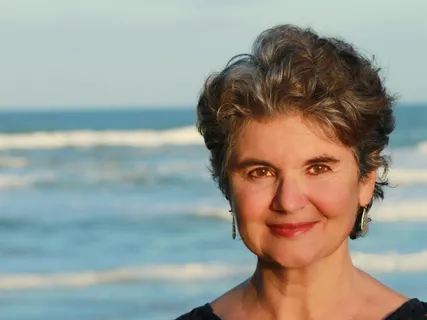
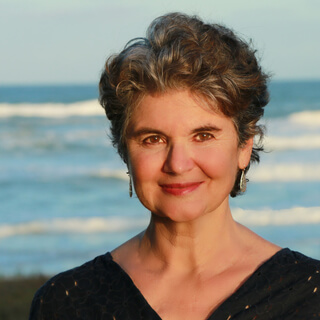
I'm your host,
Katherine Ingram.
The following is excerpted from a session of Dharma Dialogues held in Lenox Head,
Australia in April of 2018.
It's called The First Noble Truth.
As probably most of you know,
The first noble truth in Buddhism is the truth of suffering or the truth of unsatisfactoriness.
The premise being there can't be full satisfactoriness in conditions that are impermanent.
You can't have permanent satisfactoriness.
And in addition,
As the Buddha pointed out,
You'll be separated from everything you love,
Everything you hold dear.
So there's inherent in this understanding suffering.
One of my Buddhist friends,
Buddhist Jewish friend,
By the way,
As you also probably know there are lots of Bujus,
As they're known,
Because there's a kind of simpatico between Jewish understanding and the first noble truth of Buddhism.
But he had this adorable little poem that he used to say,
And it went like this,
Oi ve,
Another day.
And we just had one yesterday.
So some people's conditioning is that their mind is scanning for the oi ve,
Right?
It's kind of the program,
The fixation.
Scanning for what's wrong,
What's missing,
What should have been and isn't.
Oi ve.
Very,
Very strong conditioning,
Unpleasant conditioning.
It leaves you in a constant state of unsatisfactoriness,
Even when there might be some good days.
Now on the flip side of that,
Another kind of conditioning,
In a way the opposite,
Is what one might call a Pollyannish conditioning.
And as we also know very popular in our various spiritual cultures is this fixation on happiness.
Happiness programs,
Being happy,
And it's almost a little bit of an embarrassment if you're not reporting yourself as happy.
And some people just have the conditioning that tends to put a kind of shiny spin on everything,
Even when that's a bit inappropriate.
And this is yet another type of conditioning that we watch out for.
The presentation of oneself,
As always,
In some exalted state.
And we've met people like that,
Haven't we?
Where they're always spinning it as though they're having this fabulous life.
And by the way,
Some people might always feel that about their lives.
But I would also point out that it's probably a little indelicate to constantly present that way,
Especially as you might be sometimes presenting to someone who isn't having such a grand old time.
So it might be time to tempt that down in those circumstances,
Being sensitive and empathic,
And understanding that also no matter how grand a time you're having,
Your turn is probably going to come for the Oy Vey Day.
But what if we had,
What if we transcended our conditioning in either direction into a realism,
Or you could say an openness or a willingness to be with what is,
To have a sense of welcoming or spaciousness that allows whatever the experience,
Joy,
Beauty,
Kindness,
Mercy,
Insight,
Understanding,
Delight,
All flowing through,
And also loss,
Difficulty,
Disappointment,
Unkindness,
And destruction.
That we have to witness.
I read a line the other day by Aldo Leopold,
The penalty of an ecological education is that you find yourself alone in a wounded world.
And that's true of all kinds of education of the heart,
Isn't it?
When you open your eyes you see more and more.
So is it possible in our own case to let all of this be rolling through as it does,
The joys,
The sorrows,
The disappointments,
The highs,
The lows,
All of it.
And you don't have to present anything other than what's actually true in any given moment.
So sometimes it's fair enough to say,
I'm having a hard day,
Or this is a hard time,
Or this thing just happened and it's really painful.
And other days when you say,
It's been really great,
It's been a blast.
More and more living in an authenticity and one that is just allowing or welcoming or even just being willing to experience whatever is true for you.
I was just reflecting when you were sharing about that swing between the ouve of the dissatisfaction and the polyanorish.
And there's also this heavy identity that many of us are involved in with being busy.
The glorification of being busy.
And so much of that,
What I notice in myself is really somehow avoiding just to be with what is.
A lot of it's about having to be someone or having to generate some kind of idea about justifying a meaningful existence.
I have no idea.
There's so many stories and justifications for it.
Appearing to have a full life.
Yeah.
It's like,
I'm busy.
Right.
Yeah.
I'm happening.
So,
But to the extent that it's avoiding what is.
A lot of it actually is that.
Just avoiding to be with what is.
And it just scatters everything into the realms of all the things that it could be if I had time.
But to drop into this space where there is time just to be with what is in the midst of all that.
It puts such a different skew on this dissatisfaction.
Yeah.
It's really inherent in that churning.
Yes.
And some of what happens is a detangling from the ego needs to be somebody at all.
Like fill in the blanks.
Just the ego need of being somehow.
You've heard me say many times that one of our torments is our imagining of what other people think of us and how we appear.
You know,
When in fact mostly they're not thinking of us.
Right?
They're busy with thinking about themselves or wondering what other people are thinking about them.
Right?
And so when you start to untangle these kinds of knots of how am I being seen?
What do I think of my life and myself?
Right?
Some kind of self-judgment that goes on.
Some kind of proving in the world.
And we live in cultures that really have that kind of conditioning,
Very much so in terms of valuing what the culture values.
And so we get caught up naturally in that kind of wave,
That kind of stream of thought or of impulse.
And you have to really,
It's almost an act of will to step out of it.
But the more one does,
The easier life becomes and the more sweet and the more you realize you're getting by perfectly fine without having to be a big somebody out there.
You know,
All the better.
And weirdly,
All the things that one was hoping to have in the being somebody come more easily to you when you're not even playing that game anymore.
You know,
I think you've probably heard me a hundred times tell this story,
But for those who haven't,
About my niece Alicia,
Who just came into the world,
Kind of angelic,
Really angelic,
And has remained so in her now late thirties.
And when she was a little girl,
Her older sister told us a story at the dinner table how at school that day there had been a fight in the lunchroom as to whose turn it was to sit next to Alicia.
And Alicia was very embarrassed by this story being told in front of the whole family.
And she's sitting next to me and she whispers in my ear,
She's only like eight or nine years old,
And she whispers in my ear,
I don't know why,
I'm not nobody.
That's how she said it,
I'm not nobody.
It was like an apology almost,
You know.
And that's how she's always been.
And yet,
You know,
She's kind of like our whole family's favorite person,
You know,
And everyone who knows her.
And,
You know,
There's just this fragrance about her and about people like that,
You know,
Who just they're not doing anything.
They're just hanging.
And it gives you permission to just be.
You don't have to prove anything to them.
Right.
But I think that given how strong the cultural conditioning is,
Even when you yourself have these inclinations,
And I would dare say everyone in this room does,
It's still you're kind of swimming upstream or something,
You know,
It's against the stream of the conditioning,
Which is the power of having community like this,
Whereby the value is really clear.
And the intention is also very clear.
Yeah,
I'm so grateful for those who I feel that sense of just being okay just to be and to be amused at the whole shenanigans.
Yes,
To be amused.
Exactly.
Yes.
Yes.
So grateful for that.
Yeah.
I'm reflecting on what you spoke about in terms of authenticity.
And I often find that my,
It might be an oy ve attitude,
But I think it's real also,
That if I am having a rough day or am going through some rough things,
That generalisation,
I know that people don't know how to be present to it.
And present to me and to what I'm going through and my feelings and giving some empathy.
And I find it challenging to kind of accept what is if I'm in need of some empathy or some listening.
Yeah.
And they're not giving it.
You're finding it challenging that you have that expectation or hope.
A hope rather than an expectation.
And so,
Yeah,
If I could let go of that,
But then it still feels like a superficial connection rather than,
Well,
We are friends or we're acquaintances or whatever,
And this is really what's going on for me.
So yeah,
There's no deeper connection if I'm not being heard or felt or if the other is not sharing also authentically.
So I'm just kind of reflecting on my difficulty accepting what is in that situation.
Yeah.
I mean,
As I know you've heard me say,
But it just becomes more and more true as I go along is that the deeper waters that you live in,
In your being,
The thinner the crowd around you,
Right?
It just is that way inevitably.
So you often find yourself in a position of offering understanding and not necessarily being understood back.
So that is a real test in accepting what is.
It is.
It's kind of a booby prize for going deep,
You know,
But it's just how it is.
There's nothing you can do about it,
You know.
It's like Trump or Rinpoche,
I once heard him say that falling in love with the Dharma is like getting on a train you're not allowed to get off.
You just have to keep going.
And you know,
It's that the,
You know,
The unpeeling of the layers of identity and conditioning and of all of that stuff and expectations and hopes and people should be and they aren't and it just keeps on going that way.
And you're in the position a lot of having to keep adjusting to the reality of it.
And there's something that's coming up for me now about,
Well,
That situation does create suffering for me when I'm being authentic and not heard or not received.
Yes,
Well,
Frankly,
One gets better about even having,
Even bothering to have the conversation.
That's right.
So obviously discernment at with whom to share things.
But it's kind of coming up for me about self-sufficiency,
Which,
You know,
I like to live in community.
So it's kind of a fine balance there.
Of course.
And some days we're more,
I'm more needy than other days.
And some days I don't need anyone there.
So,
Yeah,
It's just a juggle.
But working with the accepting what is.
Yeah.
And it's fair enough.
It's a very human thing to want to be understood,
To want to be met,
To want to have a kind word or someone just to touch your hand and say,
My goodness,
That must be hard,
You know.
And we don't always get that,
Do we?
Yeah.
Just important not to kind of go into those stories of everyone's like that or nobody cares.
Yes.
Because I did grow up in a family with my mother was very Oive,
She was very negative.
Yeah.
So I can easily kind of slip into that.
Yes.
Certainly notice it in others,
Like like a flashlight.
Yes.
But in myself,
I can have to monitor it.
Yeah.
And to really,
You know,
You use the phrase self-sufficiency.
And I'm not suggesting to isolate yourself or expect that you have to do everything for yourself at all.
I'm not suggesting that.
But that it is the case that you have to fall on your own resources a lot.
You know,
I mean,
We do.
And no one can know exactly what it's like to be you.
You hardly know it.
True.
Very true.
I mean,
We are mysteries to ourselves.
You know,
We as we go along,
You like who I am in this very moment is unrecognizable to myself at a younger age and even not that long ago.
Right.
And I look at photographs of myself as a child.
I mean,
It's just like a different human being,
You know.
I even one time,
Years after the fact,
I found in my father's attic an old pocketbook of notes that I had written to friends and like when I was in grade school.
And I even had a different handwriting.
Right.
And there were only a few clues to me that I had actually written those notes,
But I had.
But there was just nothing about it that I could relate to as anything about myself.
Right.
So I began to,
That and a thousand other things began to make me suspicious about this idea of this me that I refer to a lot.
And that,
You know,
There has been an appearance of consistency only just in a physicality.
Right.
But the internality keeps shifting and is it kind of more and more mysterious to me?
Really.
You know.
Which is wonderful,
Really.
It is wonderful,
Of course.
And it's what I started out this whole talk about,
You know,
That to just sit in a kind of openness or in a mystery or in the unknown or let things come and you find yourself new in the circumstance that perhaps you had imagined was going to be completely different.
Right.
And so to really that's your sanctuary,
That's your safe home base.
That's where you can breathe.
Because depending on anyone else,
Even if they stay solid for you,
There's no guarantee they're going to live.
Right.
There's no guarantee that the beloved who you're counting on and was always there is going to be there,
You know,
Even when you have that partner in life.
So you know,
To really and again,
I'm not saying be isolationist.
I hear you loud and clear about community.
I love community as well.
And I feel very,
You know,
It's very sustaining in so many ways to feel that you have friends around or a listening ear when you need it or someone who's going to,
You know,
If you break your legs,
Someone will bring you a quiche,
You know.
But that's all wonderful.
And moreover,
To have Dharma conversation,
To have deathbed conversation,
You know.
But truth be told,
We don't always have that.
It's a lot of time.
It's really,
It's you with you.
And how are you using the attention?
And my recommendation always is to let it be this kind of spacious,
Simple awareness.
Right.
Welcoming what comes or at the very least being willing to experience what comes.
Before I came here,
I just finished moving house about half an hour before.
It's been quite stressful and came to relax.
But what you said triggered a lot of reflection in me.
So I've moved to a house that I've bought.
It feels like my forever house.
So stability,
It represents a lot of positive things to me at a very,
Very deep level.
And yet it's been quite stressful.
And this week,
I lost myself in that and felt quite challenged.
And it was interesting because I found that others' expectations of how I should feel were placed on me.
And then there was guilt from me that I'm not going,
Oh,
Yeah,
This is wonderful,
You know.
How lucky am I?
I was actually feeling pretty bad.
And then I felt guilty because I was not being grateful,
When really I felt pretty bad.
So I've been reflecting on this in regard to what you said and how complicated it is.
And,
You know,
I think that a lot of the time I try and be true to myself in my authenticity and the reflection of moving out of that during a stressful period and going into the guilt because I've lost my centre through a stressful experience.
And so it's like the reflection of isn't that interesting because you lose your centre,
You lose that place in yourself,
For want of better words,
In times of stress,
And then go back into the old patterns of trying to meet others' expectations.
And then my guilt,
Which is,
You know,
That's the old pattern of maybe not being grateful when in fact it just is.
Yeah,
Right.
And,
You know,
Part of the lack of self-referencing and checking constantly to see how you're doing or how you appear to be doing for others or whatever is that you don't really mind that you have these kind of phases of,
You know,
Not quite living up to even your own expectations of yourself.
Are you following me?
Like,
In other words,
Your authenticity becomes stronger and stronger in that you just are as you are and you're not grading yourself.
You don't think you're getting somewhere.
You have no goal of big self-improvement any longer.
Right?
And the more that is released,
Right,
The simpler,
The more sweet you become to yourself.
Yeah,
That's a really good reflection.
And I,
For me as well,
It's,
There's something about having time to self to come back into that grounded place.
Yeah.
And then in the stress of not having that time and how it takes you away from that place.
Right.
Yeah.
But it's also,
It's also really not about,
I mean,
It is helpful to have times of quiet to just really have a strong immersion,
But also to know that even in the midst of busyness and a swirl of complication,
As you say,
You can have a touchstone to that place of authenticity that really isn't buying into any kind of program that says it should be other than as it is,
Or I should feel any way differently than I do,
No matter what anyone else says.
So it's again,
As I said to Sally,
It's a kind of detangling from the entire,
The story of me.
Right?
The story of me.
Because most people are living in these stories,
Right?
The story of me is the primary story that's going on in their head.
And it's almost like everything else is just being fed in as almost side stories to the primary story of me.
And that is the one I'm saying you become less interested in.
That's the one that is always going to be a torment,
Even when things are going well for the character.
If there's any intelligence whatsoever,
You know that it can all turn around,
It can all be lost in a minute.
Right?
Things can go not well.
And so you're just buffered and battered around by the winds of fate living in this story.
And a presentation that becomes so tedious,
And so to the degree one starts to really embrace that or see through it,
Or ascertain that this is just pure exhaustion.
And made up,
As I'm saying also,
It's just completely made up.
It's constantly revisited,
Like I was saying about myself when I was young.
The me,
The person of that character of that time is unrecognizable to this new one.
Right?
So I have a light,
A much more light relationship to the me story,
To the me character,
To the history.
I don't really think about it a lot.
I use it in conversation,
But left to my own devices,
In my own daily thought stream.
It is not a strong story.
So if I were in some similar circumstance,
And have been,
I have something happening.
I realize there's a cost to it.
There's a stress in it.
Somebody else might be saying,
Oh,
How lucky you are.
And internally I'm realizing,
Well,
In part,
Yes,
There's something good about this circumstance,
But also I'm aware of the cost of it that the other person may not be.
And I just notice that.
Right?
Giving out the story.
Yeah.
Just having it not be such a huge predominant,
Taking up the whole screen of awareness.
Right?
It makes me think about my own expectations when you say that.
Yes.
Yes.
A lot of strong.
They were.
Sorry.
Yeah.
How strong your expectations of yourself?
Well,
I was thinking of the situation as well.
Yeah.
Of having a new house or what do you mean?
Yeah,
Maybe myself.
Yeah.
The expectation of enjoying.
Yes.
So it has to be.
It has to be.
Yeah.
Well,
That'll be very interesting.
Homeownership is definitely a double edged sword,
Honestly.
It's like suddenly,
Do you possess it or does it possess you?
A lot of your time,
A lot of your energy and your resources will now be poured into this property.
And it was very interesting to me the first time I owned a house.
I was in my 40s.
And always I had rented before that.
And I always felt that it was such a kind of,
It was a drag that I had to keep paying rent.
Right?
And that I felt so sort of envious of people who could own their own homes.
And it wasn't until I owned a home that I realized this isn't as great as I thought at all.
Right?
You know,
I mean,
It worked out only because the property went up in value,
But that's not always a guarantee either.
And that's the only reason it really worked out is that it paid off eventually.
But the amount of work it took and the,
You know,
There was my very first house,
For instance,
Not long after purchasing it,
I discovered that the roofed material that had been put on that house was completely inappropriate for Portland,
Oregon,
Where the house was.
It was made for like a desert kind of dwelling.
So it tended to get waterlogged and rot because of the material,
This composite,
Like,
Cardboard that it was made of in a place that rains a lot of the time.
So the whole entire roof had to be replaced.
And so things like that,
Where suddenly you've got to come up with $30,
000 to replace a roof.
Things like that would happen,
You know?
So I quickly learned from that very direct experience,
You know,
It's kind of careful what you wish for.
Or another way to look at it is just to be content with how you're living now,
You know?
So to really know,
I congratulate you for having a new home that is now so-called yours.
By the way,
You're just caretaking,
Right?
That's all we're doing.
We're caretaking the space.
We get the privilege of caretaking it.
But to also know that,
Yeah,
It can all switch around and I'll be happy,
I'll be as content as I can be here caretaking and do whatever I can to keep this place up.
And if it switches,
So be it.
Right?
I'll enjoy that.
And it'll have other advantages.
Again,
To unhook the identity of being a homeowner now,
Right?
The story that says I should own a home.
I know a lot of people who are kind of my age or even younger who live with a certain self-denigration that they don't own a home.
And I always tell them my story.
It's like it's not all that it's cracked up to be.
I really appreciate this deeper lesson and the need to let go,
As you say.
But I wonder what you say about what I generally wish for myself and advise others to look for,
Is that ways to find like-minded souls so that you could say to someone who says,
Oh,
Why aren't you happier?
Well,
Actually,
I've experienced a lot of stress.
Or you could be saying to others,
You know,
Seek out within alertness and discernment,
Seek out other deep souls.
Because I do think in terms of the history of the world and different cultures,
There's this clear pattern where people who are more connected to others,
Who have more deep,
Authentic friendship and community are happier,
Even though there's this kind of cyclical relationship there,
Because that allows you to rest and just be who you are.
And so it gives you the right to relax more and let go of the story.
So you agree with that?
Completely agree.
Completely agree.
And it's the power of Sangha,
Really,
You know,
It's the power of,
You know,
That you are,
That you can be with friends who understand that even if in this moment,
You're grumbling about something,
They understand that there's this deeper quiet stream that you're hanging out on,
And that you're sharing and that at some point it'll be their turn to be,
You know,
And that you share your joys as well.
So,
You know,
Again,
Back to the authenticity that we have permission to really be honest with each other,
You know,
And not feel judged.
And I think we really need to be aware that with technology that life is getting faster and faster.
And the busyness that we experience is,
We shouldn't take on this personal guilt of,
You know,
Why am I moving so fast?
Because there are huge pressures on us.
So we also have to be aware of that and allow ourselves in there too to be imperfect.
But I think the most scary thing I see is that in this incredibly speedy environment,
Especially younger people are now using Instagram and Facebook as well to create this hardened aura of perfection,
Which is the absolute enemy of happiness and connection.
And so we need to also be really aware to try to help them connect face to face and put the thing away,
Because they'll often be sitting literally face to face and sending images to one another virtually without looking at the real person.
And the image is,
Oh,
I was looking so sexy and I was having so much fun at that party and,
You know,
And the other person is made to feel.
Right.
And there's now all this evidence that's showing the more time that young people spend on social media,
The more unhappy they are.
And there's a ton of evidence now,
A ton of studies that are showing this.
So my cousin is here who's very young.
What do you think,
Her?
No,
I think that's totally valid.
I mean,
I have friends and no friends of friends and acquaintances who have actually been on trips with people who you go and,
You know,
You want to go to the beach or go for a hike or do something kind of outside.
And some people really do get hung up on,
Well,
Take my picture here.
And then you're standing there waiting,
Kind of looking around to actually go do what it is you wanted to do.
And like I said,
I've been on trips where,
You know,
People sit there and take pictures and then sit there and edit them and then decide which one's better than the other.
And you're just kind of like,
Why are we here?
You could be at home doing the same thing.
You know,
It's this whole people are,
I want to go travel the world.
And it's like,
Well,
Do you really want to travel the world?
Or do you just want some pictures?
Yeah,
Of me traveling the world.
Here's me again.
So yeah,
I mean,
There's a balance.
Those are both kind of extremes,
But they exist more than the balanced person does,
I would say.
I'm happy to report that my cousin here is one of the ones who's pretty unplugged.
In fact,
She was just up five weeks up in the wet Sundays,
Staying in this remote farmhouse kind of jungly place with no Wi-Fi and just kind of sailing.
Yeah,
I mean,
It's a thing.
Even my family kind of was like,
We haven't heard from you.
We haven't seen anything.
Are you still alive?
Are you okay?
I was like,
Yeah,
That's really,
Really good.
But I have heard whispers that there's now a trend of the more kind of hip kids are starting to unplug and get off.
Yeah.
I'm just finding more and more that if I just drop everything,
You know,
The pain of losing tons and whatever,
I'm very fortunate to have a great family and I get very involved in supporting them,
Doing events for them,
Birthdays and engagement parties or whatever.
And then,
And now that used to be a bit stressful,
Wanting to do it perfectly.
And now somehow it just happens.
And then I can't wait for them all to go.
And then it's like,
And then after what happened,
You know,
Where's everyone?
And then it's like,
Oh,
But this is what I wanted just to be on my own.
And then I just accepted it.
I walked outside this morning and got up early,
Fed the cats.
They wake me to feed them.
And I walked outside and I just had such a feeling of joy in my own backyard.
You know,
It was like totally unexpected,
Just came like that.
And I guess being 80 and I've done so much in my life and a lot that I used to regret and now I think,
But that was me then.
You know,
And a lot of it was really good times too.
But no,
It's just so,
Just dropping everything and caring about what people think or what I should be doing or,
You know,
It's just like,
It unfolds and that's all it can do.
It's wonderful for me to come here and sit and say thank you.
I'm so happy to be here and with you all.
Beautiful.
This has been In The Deep.
You can find the entire list of In The Deep podcasts at katherineingram.
Com where you can also book a private session by phone or Skype and see my upcoming events such as our New Year's retreat at the ocean near Lenox Head,
Australia,
Or our residential retreat in New Zealand in May of 2019.
If you're a regular listener,
Please consider making either a one time or recurring tax deductible donation in any amount that's comfortable for you.
Or you could give us a review wherever you're getting your podcasts.
Till next time.