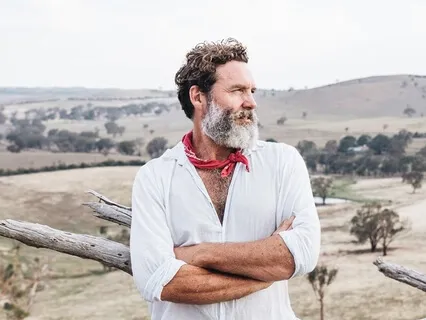
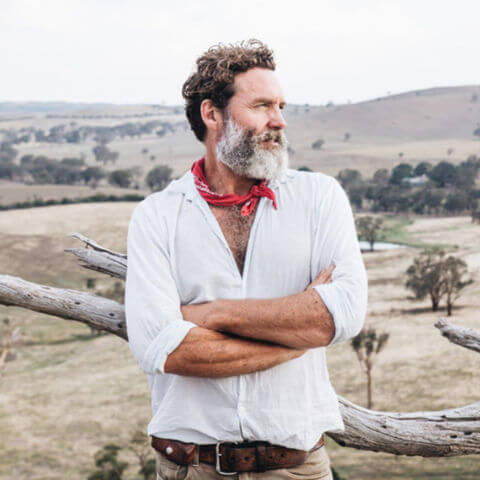
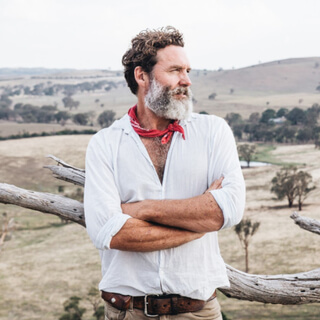
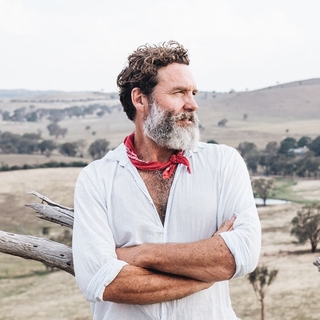
Regenerative agriculture is saying we have no more frontier land to rape and pillage.
And excitingly,
We have an opportunity now to build soil carbon,
Build biodiversity,
Which cannot but produce healthy food.
And that's half the cause of most of all our ADD and all those problems that we're seeing in humanity now.
That was Martin Royds and you're listening to The Regenerative Journey.
We acknowledge the traditional custodians of country throughout Australia and internationally and their continuing connection to culture,
Community,
Land,
Sea and sky.
And we pay our respects to elders past,
Present and future.
G'day,
I'm your host,
Charlie Arnott.
And in this podcast series,
I'll be uncovering the world of regenerative agriculture,
Its people,
Practices and principles and empowering you to apply their learnings and experience to your business and life.
I'm an eighth generation Australian farmer who transitioned my family farm from industrial methods to holistic regenerative practices.
Join me as I dive deep into the regenerative journeys of other farmers,
Chefs,
Health practitioners and anyone else who's up for a yarn and find out why and how they transition to a more regenerative way of life.
Welcome to The Regenerative Journey with Charlie Arnott.
G'day,
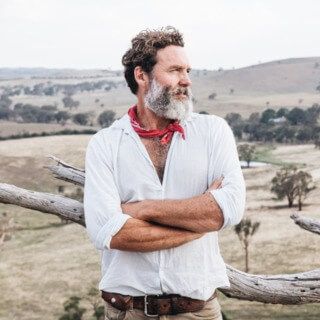
Very excited about sharing with you this interview this week with Martin Royds.
I actually interviewed Martin last year,
May in 2019 at the Nutrisoil Sustainable Abundance Conference there just out of Albury.
I had the honour of sharing the stage with Joel Salatin,
Many other wonderful speakers there and Martin was the front and centre.
So I pounced on him,
He was an early victim of mine.
And we had a fantastic,
Fantastic yarn.
Martin's a fifth generation farmer from Braidwood.
He was an early adopter of regenerative practices way before they were probably even called regenerative,
An early adopter of natural sequence farming.
Peter Andrews was actually one of his mentors.
He's doing some wonderful things down there.
I was back at Jillamatong in March this year to see for myself the impact that Martin's having on the hydrology of that landscape.
And my goodness,
It was absolutely telling coming out of a drought how much the landscape was healing at that time and also had actually got through that pretty dry period.
Relatively unscathed,
Except for some massive bushfires that had been through a couple of months before,
Of course.
But Martin took that all on the chin as he does.
So look,
I'm really stoked about finally getting this one out into the world.
And I hope you look forward to listening to my interview with Martin Royds.
G'day,
I'm here with Martin Royds.
Martin,
Welcome to the show.
Thank you,
Charlie.
Martin and I have been circling around each other for some time.
We keep on bumping into each other really briefly at events and functions.
So it's wonderful to actually spend some time with you and really dig deep into your life.
Team,
Are you ready?
It sounds dangerous.
No,
I'll be gentle.
Martin.
You'll find some interesting things down there.
I will.
I'm a bit scared,
Actually.
We've been talking about fungi and all that sort of stuff.
Yes,
Subsurface stuff.
Let's do it.
Martin,
Can we start with your journey?
Where are your sort of journey into agriculture and to this point?
Right.
I'll give you the shortened version.
I was always very interested in growing things,
Even at boarding school.
I had a little veggie patch and I went out and for some reason I always felt that the economics I'd learned at school was that our terms of trade were dropping and our costs of production were rising and my fear was that those two lines would cross.
And I felt that agricultural training,
The ag courses and that sort of stuff,
Wouldn't probably give me the answers to that.
So I went and did an applied science degree at what's now Canberra University and took that back home.
From the time I got home after that to the 1982 drought,
And I'd been helping on the farm during the weekends and things like that over that period,
But that's when I was really thrown in the deep end.
I saw 10 centimetres of topsoil blow away off our hills.
We flogged our country with set stocking and so we lost all our pasture.
We ended up at the end of the drought with some very skinny cows and poor sheep.
My father had burnt out by then and my brother had racked off overseas so they were sort of left holding the can and thought,
Well,
Let's never let that happen again as landscapes wash away.
And then as with most droughts,
They end with a flood and we ended up with what hadn't been blown away,
Washed into the dams or off the farm.
And this is at Braidwood?
In Braidwood,
Yes.
So on the family farms,
Jingle Money,
Vadaville,
Maira Farm and that.
And so I took over running the farms.
I didn't realise at that time my father had actually had Pierre Yeoman's book from the 50s.
He gave it to me,
A signed Pierre Yeoman's book from 1954.
But yeah,
I got into agri-ploughing and all that sort of stuff and then I ended up in a long tour ripping and direct seeding and those sort of things.
And the new chemical that had come out that sounded fantastic,
You know,
Ploughing was not something I thought was a good idea.
I'd learnt at university about soil structure and that sort of thing and thought,
Well,
If I can avoid that and avoid.
.
.
And I did have a bad experience where I ploughed a paddock and a big storm came and I washed away.
So this new chemical that you could just spray on and sow an hour later sounded fantastic.
And if it got on you,
You just picked up some soil and rubbed the soil into your hands and it became inert.
And I believed all that.
And so I set up a business actually doing direct seeding and spraying,
Contract spraying.
And I did experiment with other chemicals as well,
MCPA O'Hman.
I found that I could spray a fifth of what they recommended,
Change the plant structure from the carbohydrates into sugars and use sheep to eat the thistles in that case.
So went racing down this chemical experiment and thought I was doing some great stuff and then turned up at home one day looking like a Michelin man and I'd poisoned myself and was.
.
.
Yeah.
And ever since then,
I can't go near any poisons.
We're coming out in a rash and yeah,
So it was sort of a crash learning on getting off the chemical experiment.
And strangely enough,
I sort of looked at organics and biodynamics and all that sort of stuff in the early years or permaculture and those sort of things.
So what age were you?
What time of year?
I would have been in my early 20s.
I handed over the running of the family farms and I was about 26 or something like that.
I went off,
Did some businesses overseas to make some money so I could buy my own farms and came back and got into that running my own farms,
But on an organic system.
And at the same time that I was doing this chemical spraying and that I had a mate of mine,
Rob Gordon,
Who'd.
.
.
He used to employ me to come and spray his tussocks and he rang up and said,
What's the cost of spraying solar pasture?
And that was back then was $260 a hectare.
And then he said,
How long does it last?
And we were all still set stockers.
And I said,
That's five,
Seven years if we're lucky.
And he said,
Guess how long it takes to get our money back?
I said,
Oh,
I've never done that.
And he said,
And Rob was right into his computers well ahead of his time.
And he says,
10 to 12 years.
So he used an expletive to explain where we were up to.
And I went,
Whoa,
We are in trouble.
But just that week I'd read in the paper that in Goulburn one night there was Stan Parsons was coming to talk about.
.
.
Sorry,
Cut for a second.
Oh,
It's Gillian.
Yeah.
We better.
.
.
Yeah.
Hey Gillian.
Are you.
.
.
Where was I?
Yeah.
So Rob said 12 years to make our money back.
So technically we're all going slowly break.
In our grazing systems that we were using at that time,
Stan Parsons was giving a talk in Goulburn about holistic management.
In those days he sort of went on to do the RCS programs.
It was more on grazing management.
And Rob came up out of there with his hands in the air.
He went in really glum and saying,
We're all stuffed.
But walked out going,
Hallelujah.
And he turned his 10,
000 acres of country into masses of electric fences,
Mobbed his sheep into 3,
000,
4,
000 head and started doing that.
He went and did the course.
I think it was 2,
000 bucks back in,
This would have been the early 90s.
And I didn't think I could afford that at the time.
But I'd already started using big mobs of weathers to control or get rid of power tussling actually.
And I was sort of winning myself off the chemicals.
So I was sort of that re-interrated that I didn't need the chemicals anymore.
And I went organic.
And later on I knew Hamish Makhaya.
He grew up the road from me.
So when I first met him,
He was massaging water and doing all this stuff.
And I thought he was on a pretty good whoopee wee.
But now I can see that it's a good program.
And I've been doing that on and off for 20 years.
That being biodynamics?
Biodynamics,
Yeah.
So I mix everything up.
So I suppose that was the epiphany was watching your land blowing away and thinking you need to do something different.
Tried something different.
And then that was even worse.
That would be the chemical experiment.
And then the holistic management showed me a way of making decisions eventually when I did do the course.
And I didn't finally do a proper course until only a few years ago.
But did bits and pieces of holistic management.
And then changed my decision making process and then changed my farming.
For 20 odd years I've been time controlled grazing.
And then experimenting with all forms of building soil biology.
Or biodiversity in my soil,
My pasture and my stock.
And you're using other tools?
I'm using every tool I can find.
I believe in absolute biodiversity in everything.
In the way you're thinking,
The way on the farm.
So for instance,
For people to understand biodiversity,
I used to spray out our pastures when they headed to weeds and kill everything with a good dose of that chemical.
Are we going to say that?
I think everybody knows it.
It's a gross poison that there's I think a kilo for every human on the planet at the moment has been used.
Really?
Wow.
Which is scary stuff.
And I think we will look back on it.
Wow.
Ancestors will look back and say,
How on earth did you think that pouring that onto the country was a good idea?
What were we thinking?
We clearly weren't.
No,
Most of the time we look at short term and we look at and it's the whole industry is everything.
Political thing is a three year cycle.
Sometimes corporations are looking at six month bonuses.
And when you're working on those timescales,
You miss the damage that something might do in two or three years time.
Talking about economics,
Martin,
What are some of the skills that farmers need,
In your view,
Need today now that they either need to learn or have to sort of to find their way through the economic maze or to actually be relevant in today's economic world and this,
I guess,
Corporatisation of ag or the current state of the nation?
I think Australian farmers have been extremely good at surviving in decreasing income and increasing cost scenario that we've been in since the 50s.
And we've survived and struggled and fought.
And we've survived and struggled and fought against weeds and fires and all those things.
The difference I've found now is setting a goal of where I want to be financially,
Environmentally,
Socially,
And then making every decision back towards that.
And another point is probably double entry bookkeeping has caused the problem in that most double entry bookkeeping has never had an ecological part of it.
So it's just looked at what's the cost of putting our pasture in and what's our income coming back.
OK,
That looks good.
When Rob came up with,
Oh,
It takes us longer to get our money back,
That was one thing.
But none of us looked at what's happening environmentally and how much are we mining out of the soil to keep our farm going.
And one of the things that we've learned through these days that we've just been here with them,
Nutrisoil is the importance of soil biology,
Soil carbon and things like that.
And most of our soils had 3% carbon just generally.
And we mined it back to 1%.
And you hear many,
Most people at my soil got back to the ones.
And you can actually use double entry bookkeeping to fix that problem as soon as you add in environmental capital.
And once you've added in that,
Then you go,
OK,
My cost of sowing the pasture is not only the lost time or the paddocks empty,
The cost of actually buying the product.
It's the amount that I've taken out of the soil and the biology that I've lost.
And so in those pastures where I used to spray everything out and sow three grasses and two clovers,
There was a very little biodiversity there to have resilience in a dry time or an insect attack or anything like that.
And bang,
I could lose half my species.
Now I've got 80 different herbs and grasses across my pasture.
And when I do sowing now,
I never put in less than eight species.
And so there's always a resilience there that you've built up that different roots that go down deeper,
The surface roots,
The deep roots,
The fat roots,
The thin roots,
The tops have all got,
You know,
We all learn about how much different plants have got different minerals in them.
And now I watch my cattle go into a paddock and if they're short in a different mineral,
They'll eat that species.
And if it's Paterson's curse that I used to think was a weed and they're short of copper,
Then bang,
All my Paterson's curse has gone out.
And I don't have a weed problem anymore.
So and I always suggest to people that we don't have weeds either.
You know,
They're messengers,
They're doing one or a few different things.
They're covering the land,
They're putting a tent peg into the land so they're busting up a hard pan,
Or they're accumulating a mineral and they're improving that biology as well.
While we're on the economics,
What are sort of,
What are some of the,
I guess the benefits of what you're doing economically in terms of,
You know,
Whether it's cost savings or production numbers or,
You know,
What,
Because I think what's really important is to identify,
You know,
For people who are looking to transition to,
You know,
What we're doing,
Regenerative agriculture and that sort of reasonably broad term,
You know,
Okay,
Well,
What's economically,
How's it different?
Why would I do that?
I think a lot of farmers are not very good.
I mean,
We've got to do so much paperwork anyway.
We're not good at sitting down and going actually,
What is our cost of production?
This dry period we've just gone through in the last 18 months,
So many people just said,
Well,
I'm going to keep my cows and so I buy the hay and they don't sit down and go,
How much is that going to cost?
On all levels,
Not just the truck of hay coming in,
How much is it going to cost in the pasture that I'm flogging the ground,
The soil structure that I'm compounding,
Et cetera,
Et cetera.
And mental cost as well.
Yeah,
Yeah,
Yeah,
Yeah,
Absolutely.
So when you do a whole analysis of that,
Many people wouldn't have fed.
And now,
Unfortunately,
Most of the people have exhausted their finances and we're going into another dry winter and people are just selling cattle and they're as cheap as chips.
Now I sold all my cattle a year ago and I've got grass.
And so I can buy cattle very cheaply and if it breaks in the spring,
Then I'll have a new herd of cattle and.
.
.
Are you buying now?
Is that your.
.
.
I started buying a few months ago.
I was very tempted last Friday.
I just bought a 30 or so,
But yeah,
I've bought a couple of hundred over the last couple of sales.
And tell me,
What were some of the hurdles that you found,
Martin,
Sort of getting,
Changing from what you were doing and moving into a more regenerative approach to your farming?
All right,
So it's always the ache between your ears has been well documented by Charlie,
I think,
And Cole to say that.
That's Charlie Massey as well.
I thought that's who you were referring to.
Lots of Charlie there,
Yeah.
Yeah,
So sorry,
What was the question?
The hurdles.
The hurdles,
Yeah.
So it's,
Yeah,
It's the change in thinking.
It's bizarre.
I'd poison myself.
I'd put some of the drums of poison that I was still using just in the shed a couple of years later,
Had some bare paddocks,
But I'd ripped some seed in and I couldn't spray it,
But I got a contractor in to use the chemical sitting in the shed.
And I sprayed these,
I only had enough to spray one or two paddocks and I drilled four paddocks.
Now the paddocks I sprayed,
Everything died,
Had lovely lines of new pasture put in there and it all looked pretty.
The ones that I didn't spray,
I drilled in at the same time and it was hard to see what I drilled in.
The next year the paddocks I sprayed came up with a mess of thistles and in the good old days I would have raced out and sprayed them again.
The paddocks I hadn't sprayed came up beautiful pasture and then they got better and better.
The other ones took nearly four years to catch up.
So it was relearning those lessons that I've learned and that comes,
I think most farmers who've been generational,
I'm a fifth generation farmer.
It's so hard to get out of,
This is what my father did or my grandfather did or this is what the agronomist in town tell you to do.
So it's changing your way of doing things and the beauty now is that there's a critical mass of regenerative farmers around and it's sort of now becoming trendy rather than people looking over the fence thinking I was crazy.
Was there social,
Was there a social hurdle to what you were doing?
Because I'm just personally,
I'm quite happy with my own skin and so didn't mind when blokes joked and laughed at me in the pub.
I'd laugh with them and they'd all stand around,
Especially when I started spraying out biodynamic preps at night and they'd be saying that I was driving up the paddock flat out in the dark and what was I doing?
And I said,
Well,
It was a full moon.
I could see where I was going and they said,
Yeah.
But how could you know exactly where you're spraying us?
Well,
This stuff doesn't need to go in exactly the same lines.
When I was a contract sprayer,
If I missed four inches,
The person was pissed off.
But with BD,
You can throw it out everywhere.
And then it's very easy to just go,
Well,
Listen,
You know,
The biodynamic preps need to be mixed with the nubile naked girl.
And the reason we sprayed at night on a full moon is because you want to be able to see what you're doing.
And most of the blokes have then sort of had that quizzical look and thinking,
He's mad,
But I like what I want to be.
Maybe I'll join him at the next full moon.
But I did have,
Yeah,
I suppose some people,
Even my father at one stage,
I remember he said,
So you're saying everything I did was wrong.
And I went,
Dad,
Listen,
You know,
I ploughed.
I did all what you did.
And you,
He was a leader in his field in that he brought in clovers in super phosphate into our area.
Clovers,
Myxomatosis was one of the,
He was one of the first early adopters of that for rabbits.
And yeah,
I just said,
Listen,
You know,
We're learning.
There's change.
But yeah,
That's the hardest thing when you're family.
My brother is still a conventional or industrial farmer and he,
Dad had dragged him along to some of my talks and he just,
In the background telling everybody what stuff I was doing.
And talking about regenerative agriculture,
Martin,
Maybe we should,
We should talk about,
I mean,
Well,
I'll ask you your,
Your definition of regenerative agriculture.
It's sort of a reasonably new concept or phrase,
Which encompasses things that have been around for decades,
Centuries even.
I mean,
How,
How,
How would you explain that to,
To our listeners?
Well,
In,
In some of my circles,
When we came up with regenerative,
We thought we were the people leading the field because sustainable and we can't sustain a system that's,
That's failed.
And it was right down the bottom of the pit.
You know,
When you've taken your biodiversity down to five and you've taken your soil carbon from three to one,
Sustaining that's not a good option.
So regenerating is building all those back up again.
And I actually probably question you on whether we've been regenerative in the past.
I don't think there's many surviving civilisations that have been regenerative.
Sadly,
A few that were,
Mulch farmers and that got,
They were in tune with their land,
But they got beaten up by the Huns or whoever.
But if you look back over 5,
000 at least years of agriculture,
We've left sand behind.
You know,
The,
The Romans,
Their Tunisia and all that part of Northern Africa was their wheat bowl.
And it's now what we call the Sahara Desert.
So,
And I mean,
I look at television clips of Afghanistan and all those areas that were the centre of civilisation and they could not be the deserts they are now for humanity to have grown and prospered as they obviously did to build all those magnificent cities.
I think sadly,
Humans have,
Are one of the few species that leave the land behind them in a worse state over time.
I guess history,
History tells us that's definitely been the case.
So regenerative agriculture is saying we have no more frontier land to rape and pillage.
And excitingly,
We have an opportunity now to build soil carbon,
Build biodiversity,
Which cannot but produce healthy food.
And that's half the cause of most of all our ADD and all those problems that we're seeing in humanity now,
Mental health as well.
Well,
Let's talk about health for a second,
Or a little while even,
Because it is absolutely important.
I mean,
How can,
I mean,
There's farming and there's food and then there's health and they're also related,
But there seems to be gaps,
You know,
There's this disconnect,
You know,
How can we bridge those gaps?
How can farmers engage in and influence the current food system?
Well,
It's like we've been educated and we've changed because we see it.
And I really do think,
You know,
When I first started,
You'd stand up in front of a group of farmers and go,
You know,
Who here wants to leave the land in a better state?
And every farmer puts his hand up,
Particularly to turn up to something where they're trying to learn.
But they all put their hand up and say,
Yeah,
We want to leave our land in a better state.
But in the past,
We were told that we had to clear the trees,
That,
You know,
Weeds were bad.
So everyone that pokes its head up,
We should kill it.
And anything green on the paddock should be poisoned because it's sucking water out of the system.
Now we can get educated really easily by pointing on our phone and find out that maybe there's another way of doing it.
And what I find is a lot of farmers,
When you start explaining what we're doing,
They go,
Oh,
I thought things were feeling bad.
I didn't think this was sitting right with me.
That sounds so good.
And they turn so quickly.
Now then with the human health and mental health and all those things,
You talk to city people and we had a great example this weekend.
I was the one who made a comment to Rachelle that normally after two days sitting down,
You and I are not used to doing that.
We like to be out farming and running around doing things.
And to sit two days in a conference after lunch,
We're all nodding our heads down,
Feeling like we want to have a snooze.
But I didn't hear.
And I think it was the quality of the food that came out.
And it was the type of food too that the bush goddess made for us.
Penny Scott,
Your legend.
With love and everything and local food and all that.
But it was very little carbohydrates,
Very little sugar.
For most people who look in there and go,
This is mainly meat.
And then I sat there alert all afternoon and I looked around,
Nobody was nodding.
And that's very rare.
It might have been the quality of the speakers.
That could have something to do with Charlie.
That's right.
You were speaking weren't you?
Yes.
Definitely a combination.
I didn't have a combination.
But yeah.
No,
I totally agree.
It was very different to normal food at a conference,
Even on farm type stuff.
And you're right,
Not having a heap of carbs and just having enough and the quality.
And Penny did say,
Look,
When you're eating the food,
Just be mindful.
Yes.
The intent and the mindfulness and all that.
And you came out thinking,
I want to be awake.
And you started your talk off saying,
Oh,
I've got to keep you awake.
And everybody was bright eyed and yeah,
Nobody wanted to fall asleep.
So your job was easy.
It was.
It was.
It was an easy gig.
Easy gig,
Martin.
It was a lot of fun,
I have to say.
Still on,
I guess,
The health and the other end of the spectrum,
That food system,
Actually I don't like calling it a food system.
It sounds too sort of mechanical,
Doesn't it?
The food flow or this,
You know,
I guess the pathway or the journey that food takes.
How would you suggest eaters,
As I call them?
We're feeders and we have lots of eaters.
How would you suggest that they become more engaged with their food?
And also,
Probably more importantly,
How do they make a tangible impact,
Positive impact on the environment,
The planet?
Great question.
Because they are the critical people.
They are the voters with their money,
With their taste buds and that.
And most people in the city,
When you talk to them and start,
A lot of people don't understand about nutrient density.
And as soon as you explain that to them,
They go,
Oh,
That's why the carrot tastes like kerosene or chlorine rather than that beautiful one.
Yeah.
And when you say that carrot has got 81 parts per million of carotene in it and this healthy organic one's got 20,
000 parts and the people are going,
Oh,
Right.
So if I see one in a shop at five dollars a kilo and it's got 20,
000 parts and another one at 80 parts and it's a dollar.
The five dollar one's actually cheaper and that a lot of people are struggling when they've got their budget and they're going,
I can't afford to buy the organics.
When they look at that,
They go,
I can't afford to buy the chemical stuff because that stuff's poisoning and my kids are going to get sick and my health bill is going to be problem,
Et cetera.
And this one's going to make me feel good,
Keep me alert and bright at school and all those sort of things.
That makes it a lot easier.
And as soon as people and my goal is that the supermarkets have to put above their products the amount of nutrients in those products and ultimately that could lead on to the amount of chemicals used on those.
So if you've got this one has got 20,
000 parts per kilo in it and this one has been sprayed with 15 different chemicals over its five week life cycle,
Then people would be going,
Oh,
My God,
I'm not going to buy that crap anymore.
So that's one thing.
And what we discussed today,
This is hot off the press,
Ideas for saving the planet.
The consumer could use the Airbnb platform to look at their food and swipe right or left,
Whether it's good.
And so if we get our QI code on all our foods,
They can easily do that and go Charlie Arnott's food is a bloody good stuff made me feel good.
I feel revitalized.
I feel healthy.
I haven't been the doctor for six months.
This is heaven.
And if it's not good,
They can swipe left.
And then the next step is farmers that talking about Joel Salatin mentioned that a program that relies on the farmer paying for the accreditation process.
And I've just paid a large amount of money to accreditation process will never work,
Is his words.
And I thought,
Yeah,
You're right.
It might work while we're all young and enthusiastic,
But,
You know,
10,
20 years down the track,
They nearly all fail.
And he had a great example of the organics in America that's run by the government and is grossly failing.
So if we use the new platforms going back to as Joel nicely put it,
They're going back to the old village system where everybody in the village knew who the crook was,
Who produced a good food.
We can now use this platform of Airbnb type system to swipe left or right or what is it at Tinder?
I don't know what that even means.
I've heard the term.
Apparently.
I've had interns sitting there just going swipe,
Swipe,
Swipe.
What are you doing?
They said,
No good.
No good.
You hardly given the guy a second.
So I don't know if I want to be decided on that quickly,
But farmers,
I think,
Could accredit and we've actually mentioned this in the program that I'm in now with the HM group where verifying is your neighbours come in and swipe left or right.
Land to market.
Yes.
Yes.
Yeah.
And I think that land to market program,
Which at the moment we've got really good people coming in and verifying it could be added to if it had a tick process for your peers because we're not going to tick somebody if they're going to pull a whole group down.
We're going to say,
Listen,
Charlie,
You were really good.
However,
You're just slipping a bit there.
Pick your game up.
We're giving you a four star now.
Well,
It goes back to Joel's comments about the guilds and that sort of self-regulation,
Isn't it?
Which is wonderful.
Yeah.
And it's a great program.
We got involved last year.
We had our first soil and pasture assessments done a couple of months ago.
So I'm really excited about joining it and methodically documenting those measurements,
You know,
Plant populations and biodiversity and soil.
And it is brilliant because I've been onto my second round now and they're coming back going,
Whoa,
You've got so many species here,
So much soil carbon,
So much your infiltrations,
You know,
Really good.
It's good to have a rigorous scientific approach that validating what you're feeling.
At arm's length.
Yeah.
Done.
Yeah.
And then the consumer can see their tick and go,
Right,
I know that not only is this food healthy,
In fact,
It can't be healthy if it's can't not be healthy.
If it's not,
If it's leaving the land in a better state,
If it's building biodiversity,
If it's building soil carbon,
Then the food has to have a complex array of nutrients in it.
And therefore it has to be healthy for you.
And I guess that,
I mean,
That's the,
That's the amazing thing about,
You know,
Regenerative agriculture,
Or I guess the consequence of,
Of sequestering carbon,
Which is essentially what most or all of regenerative agriculture practices do in some way.
The consequence of that soil,
That carbon being put back into the soil,
It's growing,
As you say,
Nutritionally dense food,
Whether that be grass for cattle or carrots for people.
And so when you stand back from that and look at,
Look at the massive problems we have in the world,
And in my view,
It's the environment and the planetary health and it's the health of mankind,
This is really a dual solution.
To me it just fixes everything,
Droughts,
Floods,
You know,
If you've built soil carbon,
You can,
What was Joel mentioned yesterday,
It was 77,
000 litres per acre for every 1% of carbon,
You know,
The figures are mind boggling and you can hold that water there by just building your soil carbon,
Which you do by building your biodiversity.
And then you've got the resilience there for a drought,
For a flood.
You know,
I don't,
Since I put in a lot of the natural sequence farming programs through my farm,
We haven't had a flood,
10 years,
I haven't had to fix a fence.
I haven't had a drought.
You're not exporting water.
The,
Well,
I don't have a flash flood and then a drought.
I've got a constant flow of water and that was really hammered into me when I first built the weirs in 2007,
We had a rain event mid winter.
Now a lot of the fear with Peter's programs is that you're stealing water from downstream.
Now this,
Weirs were built in a drought of 2007 and this rain event we had in June 2007 was 200 mils over a few weeks period and snow.
And it filled the whole system,
One rain event.
Now the Shoalhaven River flooded and was running thick brown mud down into Talawah Dam,
Which supplies 10% of Sydney's water and over the top.
And I rang them up and said how much water went over the dam wall and it was 430,
000 megalitres of water.
It was just a phenomenal amount of water.
Went out and polluted the ocean.
My system didn't overflow till day five of the rain event.
That water didn't get to the dam until day eight.
By then the flood peak had already dropped down.
Your contribution would have been pretty clear water I imagine.
Absolutely clear.
But the rain event off brand new dams,
It ran off clear.
Now the big thing was that in 2009,
18 months later,
The Shoalhaven River stopped flowing.
Talawah Dam was down to some very low event.
Sydney was panicking.
Warragamba was down.
They went and spent $2 billion building their desal plant.
Desal,
Yeah.
And thinking that they were going to run out of water.
My system was still flowing a trickle of water.
In fact,
That trickle really changes and it's just a constant flow.
And that trickle is trickling out of your system into the neighbour's system.
So it's actually like a regulatory measure that's actually a benefit for everyone downstream,
Not just on your- So the Shoalhaven River had stopped flowing.
The Braedward water supply comes out of the Shoalhaven.
They changed the weirs to try and get more water.
Then they ran out and they were panicking.
They only had three months supply of water.
And then they were out.
All the tributaries into Shoalhaven had stopped flowing and mine was still trickling in.
My neighbours said in the pub,
Oh,
Our creek's still flowing.
And everybody said,
Shit,
What Martin's done there must be working.
And then the council came and had a look at my weirs and went,
You got more water in these weirs than we've got in our storage.
Can we pump out of here?
I went,
Sure.
I was going to charge them,
But just before they started doing that,
It rained.
But the fact was that I'd,
On just a two kilometre stretch of erosion gully,
Stored more water than the Shoalhaven River was flowing.
Wow.
And the potential,
If they'd spent that $2 billion dollars re-fixing all the system up,
Because the history of the Shoalhaven River is that back in the 70s,
When they were thinking of building another dam on the river,
An engineer said,
Let's clear the river of all the rubbish.
There was blackberries and willows and eucalypts and tea tree and everything growing in the middle of the river.
Let's clear all this out so then when we build our dam,
It won't fill up with rubbish.
So they put two D9s,
That's a 45 tonne dozer,
At the top of the headwaters of the Shoalhaven River and they drove them all the way down.
Cleared it out.
Cleared it out.
Nice little drainage system right there.
1974 flood.
It took everything.
Everything.
Bridges,
Power lines,
Phone lines,
Everything got washed away and it hit the bedrock and we ended up with an erosion gully like that.
And that's why the Shoalhaven River went dry in 18 months after a flood.
The desal is a great example,
$2 billion dollars.
And it cost millions to keep running a day.
Even if it's not operating.
I mean,
It hasn't operated too much,
I don't think,
But that's a great example of,
I mean,
The first misuse of public funds but.
.
.
I've been told.
It's a great example of,
I guess,
Misuse of public funds and just a clear misunderstanding or ignorance of the system.
An engineering solution to a biological problem.
Yeah,
Doesn't work.
One last question,
Martin,
Because we can sit here all day but you've got to go.
What is your purpose in the world?
I actually feel that my best skill is I've been at heart for going and finding all the people who have been the changers.
The Peter Andrews,
The Christine Jones,
The Elan Inghams,
Walter Yaney,
Martin Stapper,
Joel Salatin,
I've gone and,
And Ellen Savio,
I've gone and met all of them.
And some,
Quite,
Most of them I've had the farm and I've just said,
Listen,
Tell me everything you've learnt,
But you can't just go and say,
Tell me everything.
You've got to read about them,
Learn about them and go through the process until they get a bit of respect for you and then they're happy to share and learn with you.
So I've managed to get all those people to help me make my farm better.
And now I open the farm,
Jill Matong,
Up to the public to come and have a look at what's the potential using all those ideas on my farm in my situation for me.
And they can come and take those ideas back to their own situation,
Their own farms and use them there.
And we do a lot of training courses now through Tombara where we do four day trainings and then there's six week HM trainings,
But natural sequence farming trainings and those sorts of things.
We had a great fungal training the other day with Alison Pulut.
And that was fascinating.
The amount of fungi we found on the place,
20 different fungi just around Tombara.
And you know,
The importance of all of those.
So I see myself continually learning and looking at ways that we can change,
Maybe using some economic skills in coming up with solutions,
Getting,
Connecting the city and the country back together again.
I think the city want to have a connection back to the land.
And if they can,
You know,
Even if it's just swiping left and right,
They can do that.
That would make me happy.
Well Martin,
It's been wonderful to speak and keep up the great work because you're clearly an aggregator of people and ideas and concepts and practices.
And I look forward to getting to your home,
Your properties there and having to look around.
Love to do that.
Thank you for your advice today,
Charlie.
That was,
I learned a lot from you today on my pond idea that I'm going to put into action at Tombara.
Pleasure.
Thanks.
Thanks Martin.
So many inspirational quotes and just words of wisdom there from Martin.
I hadn't listened to it for some time being recorded May last year.
And when I did,
I was again,
Mind blowing.
Lovely fellow,
A big user of biodynamics there too is Martin.
He's a great,
Great associate of ours and a really lovely fellow.
Talking about lovely fellows,
Next week,
Peter Windrum,
The bearded wonder from Crinklewood Vineyard,
Winery,
Mecca,
The beautiful estate,
I think I would call it estate,
Pete,
Down there in the Hunter Valley,
Which recently changed hands after years of Rod and Peter.
Rod is Peter's father,
Putting love,
Sweat and tears into a wonderful part of the world there,
Using biodynamics to produce some of the most beautiful wine you'll pour into a vessel.
Fantastic chat with Pete at the farm at Byron Bay.
We talk all sorts of cool stuff.
Biodynamics,
Wine,
Life,
The journey of,
And I'm really looking forward to releasing my interview next week with Pete Windrum.
This podcast is produced by Rhys Jones at Jager Media.
If you enjoyed this episode,
Please feel free to subscribe,
Share,
Rate and review.
For more episode information,
Please head over to www.
Charlianet.
Com.
Au.
Thanks.