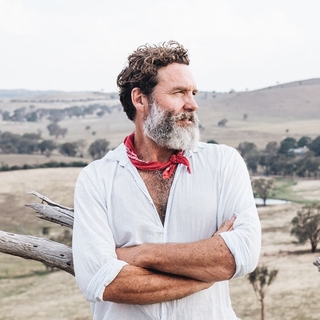
I guess I'm an example of where it's not a crisis.
I'm an example of someone who was just searching for something else.
And so I'd like people to know that it's not all about having those major events in your life.
It can be about you just looking for something else,
Something purposeful,
Something bigger than you.
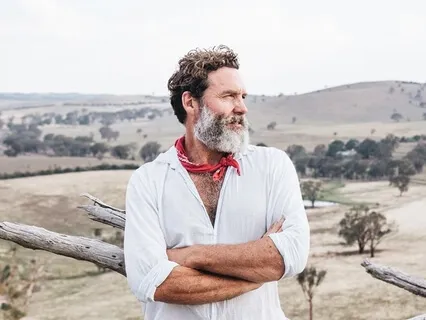
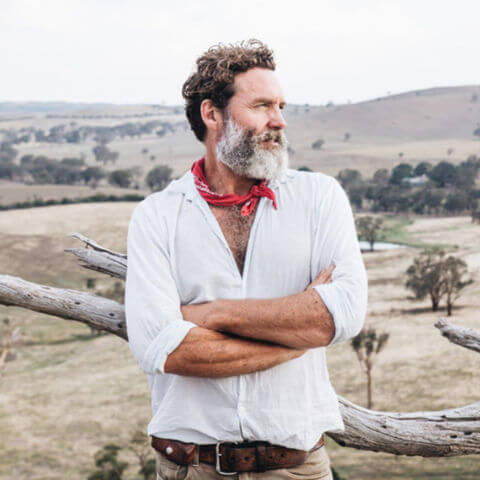
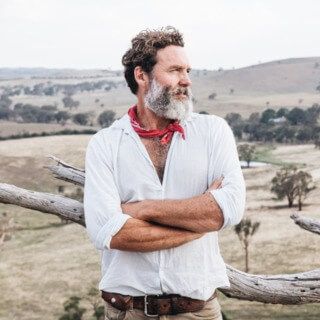
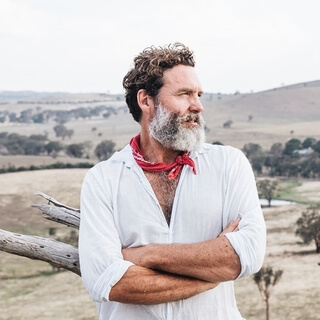
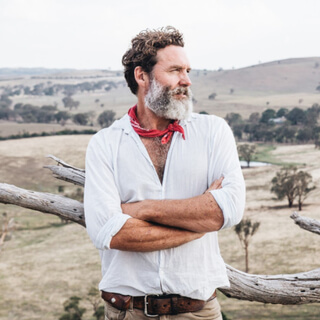
That was Murray Pryor,
And you're listening to The Regenerative Journey.
We acknowledge the traditional custodians of country throughout Australia and internationally,
And their continuing connection to culture,
Community,
Land,
Sea and sky.
And we pay our respects to elders past,
Present and future.
G'day,
I'm your host Charlie Arnott,
And in this podcast series,
I'll be uncovering the world of regenerative agriculture,
Its people,
Practices and principles,
And empowering you to apply their learnings and experience to your business and life.
I'm an eighth generation Australian farmer who transitioned my family farm from industrial methods to holistic regenerative practices.
Join me as I dive deep into the regenerative journeys of other farmers,
Chefs,
Health practitioners and anyone else who's up for yarn,
And find out why and how they transition to a more regenerative way of life.
Welcome to The Regenerative Journey with Charlie Arnott.
Our next guest is Murray Pryor,
A wonderful fellow I met 18 months ago,
And he came to Hanaminota to suss us out,
Because he was on his own regenerative journey into the world of farming,
Being a new farm owner and launching himself into biodynamics.
We had a lovely chat here at Nuru,
I'm going to get that pronunciation wrong.
However,
Here on the Yash River at Gundaroo,
New South Wales,
Overlooking the beautiful Galloway cattle he's got here.
Murray,
The important thing for me,
Which we captured together was his journey from corporate life into the world of regenerative agriculture.
He has a farm here that he's basically,
It's his palette,
It's his ways expressing himself,
It's his new life,
His family living here.
And he's digging deep into the history,
The indigenous culture that is here,
Was here,
And he's bringing that to life.
We touched on so many different topics,
Succession,
Corporate world,
Finding purpose,
And everything down at planting trees with his daughters.
So I can't tell you how excited I was to be here with Murray,
And really enjoyed our session with Murray Pryor.
Murray,
We're on.
Hello,
Charlie.
Welcome to your living room.
Thank you very much.
Here at Neegundaroo,
At Nuru,
Can you pronunciate that correctly,
The name of your property?
Sure,
I can.
So the local indigenous people would call it Wooroo,
And it's been named for us as a word which means camp in Ngunnawal language.
And it recognises the many camps that were in this part of the world down through the ages.
And as a place to eat and to sit around and tell stories,
And we just think it's an appropriate kind of name for the farm that we're running.
And the farm you're running,
We're looking at here,
We're on the Yass River,
Beautiful Yass River.
You gave me a bit of a heads up on some of the plantings that have been done,
Some you've done,
Some others have done before you.
It is a beautiful part of the world.
I've been watching you,
Stalking you on,
We met about 18 months ago,
Didn't we?
We did.
And watching you on your Instagram account.
And fascinating to see,
You know,
Just from that forum,
As it were,
Your growth,
Your development,
You know,
What you're doing here.
And before we get into that,
Tell me what this means to you.
We're sitting here,
There's the Yass River in front of us,
There's some trees that are some years old and there's some fresh ones just up the hill there.
Your belted galloways are grazing gracefully on the hill over there.
What does it mean to be here,
To be sitting here and looking at that?
It's a question that I often think about,
Actually.
It's something that has been in the pipeline for a long time and we can get into that.
But,
You know,
Sitting right near here today,
I'm kind of,
On the one hand,
I'm very proud of what we've got,
But on the other hand,
I feel like the clock ticks.
And,
You know,
Whilst ever there's not a plant in the ground,
Then I get a little anxious about that.
And so,
You know,
I have that sort of emotion of wanting to get on and wanting to see more and more things done.
I think every farmer probably feels that way.
But,
Yeah,
Just a very beautiful landscape,
A wonderful place to bring kids up.
And just probably an overwhelming sense of responsibility for looking after it.
Let's get into your regenerative journey,
Murray,
Because truth be known,
I hit you up yesterday for this interview.
You'd been on my list for some time and the window of opportunity opened for me,
At least.
And so,
As I said to you yesterday,
Charlie Massey wasn't available.
So I thought,
Who's the next best person?
That was Murray.
Well,
Murray's only an hour and a half from Boorowa,
So it was an easy drive.
And I knew that I was keen to sort of put another interview in the bag,
As it were.
And you were a bit dubious,
I guess,
But absolutely you didn't hesitate.
The text came back pretty quick,
Which is a wonderful thing.
So,
As I said,
I've been watching your journey over the last at least 18 months since I've known you.
Tell me,
You know,
How did you get to be – what were you doing before you landed here?
Tell me a bit about the back story,
Just to give us a sense of who Murray Pryor was before he is today.
So,
First of all,
I didn't come from any kind of family,
Family background at all.
I had a very typical Australian suburban upbringing.
I'm the son of a career policeman and a stay-at-home mum.
And we had a suburban experience,
If you like,
In Canberra.
And I met my wife in the – oh,
Probably the mid-1990s.
We were working together in hospitality.
We then – events took over and we ended up leaving Canberra and we ended up working in corporates,
If you like,
In Sydney.
And then that sort of work has taken me all around the world for the last 20 years.
And I guess how the farming thing evolved is that I found myself too many times on a weekend in a hotel somewhere in some part of the world by myself,
Starting to wonder,
Is this it?
Is this all that I'm meant to be doing?
Was that with a family back at home?
Like,
You know,
At least a wife at home?
Yeah,
Wife and kids at home and just starting – that feeling of being unfulfilled was starting to gnaw away at me.
And,
You know,
I love my main job and I still do it,
But I always had this sense that there was more out there.
And I've always been pretty handy with my hands and so I always thought that,
You know,
I could turn myself to things.
Then we got back to Sydney in 2010 and I think we were only in Sydney maybe a dozen weeks and I said to Michelle,
Let's go and look at farms.
And we kicked the tires on many farms and I had this sort of crazy idea that I could commute every day from a farm into the middle of Sydney.
So therefore,
In my mind,
It had to be 100 acres and it had to have a nice house on it and we had to be able to commute every day.
And of course,
That's really hard to find and it probably needs some serious dollars to get that.
And then of course,
Kids' ages,
You know,
They were getting more advanced in their young years in school and we kind of reached that point where we said,
You know,
It's now or never.
Not now or never,
But now or when you retire.
And that thought of waiting till I retire just horrified me.
And I said to Michelle,
Well,
It's going to be now.
So we drew a much bigger circle around Sydney and we started looking in earnest and this place came up fairly early in our search.
And we came to an arrangement in relation to how I would kind of balance things.
But in those first few years,
My wife and kids were here and I was commuting backwards and forwards and really happy that these days I'm based here full time.
So COVID has sort of,
We were saying before,
Propelled you into that,
Fortuitously,
Into a new,
Well,
Probably quicker than you thought you would.
You're full time here now,
Working from home,
As many other people are finding themselves and doing it well and going,
Why didn't I do it before?
So just to give people a sense of what you're actually doing,
Your vocation before turning your hand to farming,
Essentially,
What were you doing basically?
You're with a law firm?
Yeah,
I work in a very large law firm,
Which has offices all around the world.
And my job is to support the business in relation to some of its commercial activities.
So I'm not a lawyer,
But I have sort of skills and experience in business development,
Communications,
Marketing and those sorts of things.
So it's a classic desk job with a lot of travel in it and get to meet a lot of interesting people and interesting clients and all that sort of thing.
But,
You know,
As I say,
There was that sort of searching for some sort of higher purpose,
Something that we could get involved in,
Which frankly even went past our own lifetimes.
What could we be doing that would take us into that space?
Was there any,
Can you remember Murray,
If there was a particular hotel lobby bar you were sitting in or a flight you were taking or an email you read?
Was there a particular moment where you just thought,
You know what,
Stuff it,
I'm just going to do this.
I am just going to have that conversation with Michelle?
It probably played out a little differently to that.
It was more that we were kicking tires on farms and getting frustrated because I wanted the farm to fit into a particular box,
Which it was never going to fit into.
Michelle was getting cranky because,
You know,
We're wasting weekends here.
And it was the moment in time was really,
Well,
When is the right time to do this?
And,
You know,
Kids are a big consideration in all of that.
And moving kids is a difficult thing.
And the older they get,
The more difficult it becomes.
And so we just kind of reached that moment where it was like,
We really need to do this.
Otherwise,
Just stop doing it.
So it was more that.
Was there,
I mean,
Is,
I want to drill down into sort of that,
The thinking or the decision making around that,
Because I think,
You know,
I get a lot of inquiry from people going,
I want to buy a farm or I'm even on a farm.
What do I do now?
But more the,
You know,
I want to find myself a farm.
Is it,
Is there,
You know,
Will I ever find the perfect farm?
No,
Not at all.
I mean,
My vision of it was incredibly rudimentary.
I didn't really think a lot about what it was other than I thought it would be green.
I thought I'd have a tractor.
I thought I'd be plowing things.
I thought I'd be putting seed out and I thought we'd be making,
You know,
Growing food.
And that's really all I took into the purchase of the farm was just,
You know,
I just want a farm and didn't really think a whole lot more about it.
And then probably one of the really big moments was one of the partners at work has a big anger stud out at Mudgee.
He said,
Well,
Now that you've gone and done a very stupid thing and buy a farm,
You need to read this book.
This is the latest book called Caller the Read Warbler.
And so I picked it up and I'm one of the few who probably read it back to cover.
How long ago was this?
This was in the March of 2018.
And when did you bought?
Well,
We had bought in the months before that and I moved on to the block here having finished the book.
OK,
So just to get a sense of the timing,
So you had,
Because as I understand and have seen,
You know,
That was a significant moment which we'll get to reading Charlie's book.
But you'd actually gone to the point of buying a farm with an idealistic sort of notion of what that would be prior to then discovering a whole different way of farming.
Is that fair to say?
Very fair.
Yeah.
And the book was the catalyst for a sort of overwhelming sense of responsibility for what we had just done,
Which was to purchase the block.
Up until that point,
As I say,
I had that sort of vague notion of what we'd be doing and then the reality hit us.
And as Charlie so well puts it in his book,
That becoming landscape literate and being able to sort of work with nature and all these things,
All that stuff,
I had not thought of any of that.
So it was an incredibly fast learning curve from that point on.
And not long after I put the book down,
I said to Michelle,
We're going to need some help here.
So I went to the back of the book and I found that he was he had a part time seat at the ANU and I called the ANU and got put through to Mr.
Massey.
And I said,
Charlie,
This is what I've done.
I've read your book and I really need some help.
And he asked a few questions and he said,
I'll help you under two conditions.
First condition is that your wife is right behind you.
He said,
I don't I don't work with people who this is an individual pursuit.
It has to be a family pursuit.
And the second thing is I will help you because you don't come from a farming heritage.
He said,
I just find it so difficult to convert.
That was his criteria.
That was his criteria.
Good on him.
So then in the months after that,
He he came out and we spent many fantastic days out in the paddocks.
He took me under his wing and he showed me all sorts of things.
And I just I look back on that as such fondness for just the range of things that I learned.
And he's kind of he has this amazing kind of,
You know,
He's made a few words in a way,
But he just had that way of creating those kind of moments where learning happens.
And so as a result of that,
He helped us produce a farm master plan,
Which we're still working through.
And that's kind of set us on on the path from here.
I want to get back to that master plan.
I do want to I'm just stepping back a little bit to the purpose.
Your comments before about purpose.
You know,
You had a sense of not having a purpose or the potential,
Possibly being a need to find a purpose of all the things that you may have found purpose in.
Why did you what was it?
Farming?
Why wasn't it like,
I don't know,
Some other vocation,
Some other,
You know,
Buy a hotel in Moree or something?
You know,
I don't know.
What why farming?
Was it was it was it a natural thing?
We happened to be at a farm,
Your farm that is near Canberra where you grew up with a sort of a,
You know,
Sense of place here as well in the farming community.
Or was it why farming?
I don't know.
I don't know that I can put it down to a geographic descriptor.
I feel that probably the big the big moment for me,
I've told this story to a few people before.
Charlie was with me out in the paddocks and we had this kind of nice moment where we were sitting around and we were looking at different things and he was pointing at different things.
And he said to me,
He said,
You know,
You don't really own this place.
And I said,
Well,
I don't follow,
You know,
I've just my name's on the title and we've got.
What do you mean?
We've got the bank on us as well.
And he said,
Look,
He said,
You know,
See these gum trees over here,
They're a couple of hundred years old.
He said,
This sedimentary shale is millions and millions of years old.
And he just kind of left it like that.
And I got it straight away.
It was that you're not going to be here very long,
Even even in my lifetime.
That that sort of change happened instantly where I went from a sense of owning something to a sense of.
I need to look after this thing because someone else is going to take it on after me.
So that that that became that higher purpose.
It was like a transition from ownership to a to to a sense of stewardship,
Which was a pretty profound moment.
Well,
I'm glad you're farming for sure.
I mean,
Just knowing that this this piece of land is in your stewardship and you will leave a wonderful legacy here is really.
And that's why we're sitting here today at a relatively short notice,
Because I wanted to get a sense of,
You know,
How decisions that were made,
Sort of epiphanies,
Turning points that got you to this point,
Because as I said before,
There's a lot of people who want to do what you're doing.
You know,
They want to get out of a.
If it's not just Sydney and living in Sydney,
It's a job that's that's keeping them in Sydney.
And so,
You know.
What what what advice can you give to anyone that,
You know,
Is it was a is a younger Murray Pryor who's sitting in the Shangri-La at Hong Kong bar thinking,
What's my higher purpose?
I really want to go home and farm.
Like what what what are some of the advice you give them to do to step through to think about?
So the first response I've got is,
Is I think about regrets and I have I have.
I have hardly any regrets,
But I do have one.
And that is that we we didn't do this sooner.
I feel that whilst the leap,
So to speak,
What was certainly a leap,
It could have been something that we could have truncated and we could have got into this a little earlier and we could have been further down the track.
It's such an unbelievably rewarding experience,
Both at a physical level,
You're active and you're doing things and you're you're busy.
At a mental level,
It's a wonderful balance to corporate life where you know,
You need to kind of use a different part of your brain when you when you're managing a landscape.
And then probably the biggest thing for me is the spirituality part of it.
I'm not I'm not a religious person in a traditional sense,
But but tapping into a sense of spirituality for,
You know,
The landscape and the the indigenous people who had it before us and,
You know,
Just to kind of get into the feel of the place,
The vibe of it.
I've found exploring that side of me has been incredibly rewarding as well.
And same for the family.
Before we get into that,
Because I do want to get into that because you're very conscious of your,
I guess,
Responsibility in the and the history that that you are really somewhat stewarding,
But you're you're almost caretaking in some way of the history and you're unearthing a lot of things.
What are some of the sort of decisions or the questions perhaps that you would suggest to people thinking about moving out of the city,
You know,
Bring their family to a farm and buying it,
Getting on with a different purpose?
What are some of the questions you you would suggest that they might ask themselves?
I think people need to think about the the reason that they're getting into farming.
I think that if you can identify with,
You know,
Healthy soils and healthy food,
And if you've got an interest in those things or if you've got an interest in landscape management,
If you've got an interest in even in human health,
Those sorts of things and identifying with why you want to go farming.
I think if you can find that in yourselves and in your family,
That that's an incredibly powerful driver.
I wouldn't recommend my approach,
Which was to sort of think about it in terms of green fields and orange tractor and those sorts of things.
It's red tractor.
Orange.
What's orange?
What's what's what brand is orange?
Capoda.
Capoda.
You've got a capoda.
We're case people.
Anyway,
We won't have to fight about that.
Just now.
We won't.
No,
Not worth fighting about.
Look,
I just I do think that if you can if you can do that work up front and work out why you want to do it.
And if you are of the mindset to find a project that might be bigger than you and bigger than your family and,
You know,
Will take you in those sorts of directions,
That for me is the starting point.
The rest of it becomes quite mechanical from that point on.
You know,
Where will it be and where's the schools and how does all of those sorts of things work?
But I wouldn't start there.
I'd start much more at that level of,
You know,
Why do we want to do this when you say bigger than you?
What do you mean?
Like you sort of suggesting what you mean by that?
I think I know,
But I want you to explore that a bit.
Yes.
I mean,
Some of the changes that we're making here have a lot to do with the creation of habitat and and building biodiversity on the farm and those sorts of things.
They take a long time to come to fruition.
You know,
We're putting in seedling tube stock of big trees and,
You know,
I'm sort of 48 years old now and I'm thinking,
You know,
When this tree is a big tree,
That's going to be near the end of my time on the planet.
And it's that sort of bigger than me concept,
Which is,
You know,
I'm probably not going to see this farm at its peak.
Someone else is going to see this farm at its peak.
But that in and of itself is a driver to do more.
So that's kind of what I mean by bigger than me.
I think that's really important,
You know,
Because I think,
As you say,
And you got into your farm with the orange tractor and ploughing or whatever else that was.
But it is a massive responsibility and it is,
You know,
I guess I'm just highlighting this for the listeners and those,
Especially you're thinking about getting into farming.
It is bigger than you because it is a responsibility.
It is a living,
Breathing organism that needs management because we've sort of got things to a point where they do need to be managed.
Once upon a time used to manage itself.
But,
You know,
It is it's not just about having a pretty house and nice green paddocks.
You know,
There is,
As you say,
This habitat,
This hydrology function in the landscape.
There's,
You know,
Mineral cycling,
There's the biological aspect of it.
And there's,
You know,
There's all those different levels.
And there's also the people.
There's the people.
It's just not like I'm going to turn up to a farm and there's some cows and,
You know,
It's all going to be fine.
It's the spirit of the people and the spirit of the history,
The literally indigenous spirit that is,
It's a whole nother.
It's just people want it.
You probably appreciate that until I sit in a country,
In country,
On country and and understand that.
What just on the people side of things,
You know,
Charlie mentioned about family and the importance of,
You know,
Michelle coming along for the ride,
As it were.
What does it meant for your family?
And,
You know,
Probably as much,
Really importantly,
The girls,
You know,
To be,
Do you think,
Do you feel that it is to now be living on a farm?
So one of the things I've always been big on is,
Is understanding where your food comes from.
And I had an upbringing where my dad and I and my brother,
We'd often go hunting and we do,
We do those sorts of pursuits.
And so from a young age,
I had always had this idea of,
You know,
If you're going to take a life,
Then you will,
You need to give that the respect of consuming it and consuming all of it.
And so,
You know,
I kind of wanted the girls to understand that,
You know,
Food doesn't come in a polystyrene tray with a glad wrap on it.
That it was a living,
Breathing thing and that that life cycle needs to be understood and that can be quite hard to get across in the city.
And so,
You know,
One of the big changes in our girls has been that on a farm,
Things are born all the time and things are dying.
And,
You know,
They love when things are born and of course they shed a tear or two when things pass on,
But it's that you can see their personal growth in understanding that.
And,
You know,
When we put on something on the table,
Like,
For example,
Lunch later on today,
That's going to be a.
.
.
What are we having,
Murray?
We have a couple of steaks from one of our steers.
From here?
Yeah,
And,
You know,
That's a great thing for anybody to appreciate.
And there's a certain.
.
.
It's almost an indescribable set of mixed emotions that you have when you're consuming,
You know,
Food from animals that you've looked after yourself.
So I see big changes in the way in which our family has sort of evolved and adapted to farm life like that.
What about health?
I mean,
How much has health,
You know,
Individual family health sort of played a part in that or what impact has there been?
Or has there been?
Yeah,
Michelle's always been very conscious of eating well and eating clean.
I guess I was a little tone deaf to that,
Like a lot of the blokes are.
You know,
You just shovel anything you can in your mouth.
It's fuel.
Fuel.
Somebody's from Tucker.
Yeah,
And so I kind of came around to this very late in the piece.
And so I guess I'm an example to others out there listening,
Particularly men,
That,
You know,
Human health's important and it has a direct link to the quality of what you're putting in your mouth.
And now that we've been able to be a part of the food system and we start to peel that onion back and understand the layers of that big food system,
We've been,
You know,
Pretty surprised and at times pretty shocked at the way in which a lot of food gets produced.
And now that we see that and we see the difference between how we're trying to do it here,
Feeding ourselves and feeding our friends and,
You know,
Ultimately feeding the village will be where we want to go.
And I think that will have a big knock-on effect on,
You know,
The health of not only us but of our community in time to come.
I want to get back to that.
Your long-term plans.
So that's a question on notice.
Got it.
Let's get back to the Indigenous overlay,
If we can,
Because again,
I've noticed,
You know,
Your emphasis on that,
Which is fantastic,
Because I think it's really important for those who are custodians right now and for those who will be and for those that were,
You know.
With that acknowledgement.
Tell me how that journey sort of played out in your sort of appreciation of that responsibility,
You know,
Particularly the Indigenous history here.
And,
You know,
Charlie Massey made those comments that day he was here.
But how has that sort of played out?
Well,
We're not dissimilar to a lot of places in Australia where European settlement came through in the early to mid-1800s.
And the relationship between that and the First Nations people is a very sad one.
And when I made the decision with Michelle that we were going to,
You know,
Have a red hot go at regenerative ag,
We sort of straightaway had this sense that if a fair portion of European agriculture practice in Australia has been less than positive,
Then how are we going to,
Having turned up on the farm,
You know,
With 2.
5 seconds of experience,
How are we going to do regenerative ag without turning to those who've always known?
And so it took us a little while to get into the Indigenous community.
It's not an easy path to follow.
But we have some guidance and support through a good friend,
Paul House,
Who's a Ngunnawal elder who has direct connections to this part of the Southern Tablelands.
And,
You know,
When he comes out and he has the opportunity to get on country,
It's a pretty moving experience.
He has an innate sense of this land,
Which is so much deeper than what we can even contemplate.
And,
You know,
He'll walk around and he'll touch things and he'll pick things up and he'll instinctively go to things.
And,
You know,
He's very emotional about it.
And he sheds a tear and we shed a tear.
And,
You know,
For us,
There's an enormous amount of gratitude for looking after something that,
You know,
He cares so deeply about.
But there's also a sadness that a lot of countries locked up in private ownership.
And I think as a family,
We struggle with that.
We struggle with owning an important part of someone else's heritage.
And so,
You know,
We're starting to turn our mind to how we might think about sharing the farm and sharing land and trying to,
You know,
Get back to a proper collaboration.
That's kind of where we're at.
Because I know that Paul's been out here a number of times and,
You know,
What are some of the,
I guess,
Some of the rituals or the sort of the – I guess what are the practices of reverence that Paul is teaching you?
So one of the things he does when he comes out is he'll often go and grab some eucalypt,
Some fresh green eucalypt,
And he'll pull that off as a sort of a branch.
And then he'll teach our girls that,
You know,
He'll rub that under one armpit and then he'll rub it on the ground and then he'll do the other armpit and he'll rub it on the ground.
And that's his way of communicating with his ancestors.
He's putting himself on the ground and he's putting the ground on himself.
And it's a lovely way of kind of him announcing himself that he's now on country.
And then,
You know,
We'll see the black cockatoos or we'll see the kangaroos and he'll talk to them and he's taught us to talk to the land and to talk to the animals and the birds because,
You know,
In his tradition and custom they are his ancestors.
And so he sees them as that.
He doesn't see them as,
You know,
Just a simple thing like we do.
So he does those things.
We had a lovely smoking ceremony here about a month ago where he sort of creates a communication vessel,
If you like,
For his ancestors through fire and smoke.
And then he basically wards off bad spirit from the house and encourages the girls to kind of get involved with that.
And we kind of cleanse ourselves with smoke.
And then we sit around and he teaches us Aboriginal words and we try to string a few words together.
And that's just a lovely kind of thing to do at that level.
But,
You know,
Trying to take it,
I think where we're at is we're trying to take it to another level.
And that can only be done if you're prepared to go into that world of sharing.
And,
You know,
I accept that that's a challenging idea for a lot of farmers.
But I can assure listeners that it's incredibly rewarding to take yourself into that paradigm of,
Well,
Yes,
I might own this thing,
But what's the right thing to do here?
How do we open our minds,
Open ourselves and open the farm gate to the original owners and the original custodians who have so much to offer in terms of regenerative ag?
Do you think there's a sense in generally in the farming community of,
You know,
What's not being open,
You know,
Their country up to the First Nations people?
What is it?
Is it a sort of protective mechanism?
Is there fear around,
Oh,
They might find something and then I'm going to be,
I don't know,
Have to give land back?
I mean,
What's your experience?
I mean,
I have my experience as a farmer.
What's been your experience as a new farmer in this sort of space?
Look,
I have,
I won't deny that,
You know,
I had biases like a lot of people do on this topic that I had inherited that have been part of a systemic Australian culture of teaching a particular view of how all of this played out.
Of course,
The more you get involved in it and the more that you talk to Indigenous people and you feel that sense of dislocation and the sense of loss,
You start to realise that the biases that you carry are exactly that.
And you need to kind of set them to one side and you need to look at these things on face value and see that there is actually a whole other truth here that's playing out for a group of people which,
If you're open to it,
Then,
You know,
It creates a,
I think,
Frankly,
A wonderful opportunity for change.
And the amount of people that we've talked to and have had here on the farmers visitors,
I have a lot of confidence in grassroots support for a much deeper reconciliation with Indigenous people.
I think that,
You know,
We obviously have problems at a governmental level and policy level,
But I think the winds of change are really blowing and it's the young people who are less tolerant of the traditional views on this topic.
I was pleased and grateful to be part of a webinar that you put together there some weeks ago now,
Back in the end of May,
I think it was,
With one of the speakers was Bruce Pascoe.
And I remember him saying something about,
We don't want reconciliation,
We want,
And there's a word and it was so profound and we'll have to go back to the transcript,
Murray,
That'll be our co homework.
But I remember sitting there thinking it was so pertinent that,
And then I pulled a quote out of his talk there that was so profound.
And I should have actually got it with me here now.
But,
You know,
What a wonderful representative of that culture,
Of that time,
Of,
And the good news is,
He's a writer.
He can put this stuff on paper and he's produced dark emu,
He's done a dark emu for children as well,
Which I absolutely,
Dorse is not the right word,
But I strongly encourage people,
You know,
Mums and dads to go and buy that book,
Read the adult one for yourself and then give the kids the other one,
Read it with them because it is such a compelling story.
Can you tell us,
For those listeners who aren't familiar with Bruce and his work and dark emu,
Can you give us a bit of a snapshot of that?
Yeah,
So,
So Bruce has done a really deep and quality piece of research on the truth around indigenous culture and indigenous practice before white settlement.
And he's done that through analysis of the diaries of the early explorers.
So these are first hand white people accounts of what they saw when they first opened up the interior of Australia.
And of course,
What they saw was,
You know,
Large scale agriculture in different sorts of ways.
They saw the harvesting of grain,
They saw bread making,
They saw sophisticated fish traps.
They saw also that they saw a lot of storage,
A lot of storage of agriculture commodity product,
As we would know it today.
Graineries.
Graineries.
Quite extraordinary.
And of course,
You know,
None of that was taught to us.
You know,
We were all taught that this was just simply a nomadic existence where indigenous people moved through country.
And so therefore,
They never really had anything,
They never really owned anything.
And so that suited our way of opening up the country.
Invading.
Invading,
Exactly.
So the book,
You know,
Paints an incredibly different picture to what everyone was taught in school.
And as a result of that,
I think that,
You know,
That's been probably the seminal piece of the decade in terms of challenging that notion of who are our First Nations people and what were they doing here before white people came.
Murray,
How did you get in touch with Paul House as an example?
How would you advise people to,
If they were looking to sort of get in touch with indigenous,
Whether it's elders or just representatives in a community,
Was there a particular way you did it or is it sort of you fall into your lap?
It's kind of none of those things.
This is not a group of people who are,
You know,
Well organised through particular shopfront entry points.
They all have their own roles,
They're all doing different things.
Sometimes I find that it can be a bit hard and a bit opaque as to work out where things are at.
And there are,
I think the best starting point is that a lot of Australian communities will have indigenous elder councils.
These will be people who have been,
You know,
Appointed by their own people and by governments to play that elder role in communities.
And that's kind of where I started.
I must say that it took some jumping around before I was able to sort of,
You know,
Get to meet Paul.
It's not an easy path.
I suspect that might be just my experience.
And then in different parts of Australia,
Things might be more accessible,
Things might be more easy.
But certainly,
Yeah,
Not quite so straightforward here.
I'd really encourage anyone who's listening out there,
I mean,
And this doesn't apply to people living in the country.
I mean,
There's people living in the city,
You know,
Knowing where the nation,
The mob that inhabited and hopefully still does in your metropolitan areas is a really,
You know,
I think important thing to be aware of,
Just to have that reverence and have that understanding and that appreciation.
So I totally encourage people to track that down.
We will have in the show notes maybe a couple of indigenous land councils.
I'm not sure whether they operate in state levels or sort of federal,
But I know that they exist.
And I think that might be one way in.
Just back to Charlie Massey Murray.
And you mentioned,
We sort of laughed about,
Well,
I certainly laughed about his criteria of making sure that you weren't a farmer already.
Why do you think that was one of his criteria?
Look,
You know,
He writes about it a little bit in his book,
But he also talks about it a lot.
He's just the mindsets which are ingrained in the father to son or grandfather to father to son concepts,
Particularly if those intergenerations are living on the one property,
Quite difficult to sort of break new ground,
So to speak,
And try different things.
It's an incredibly traditional type of occupation in many ways.
And,
You know,
You only need to go to an ag shop and buy some things at an ag shop to realise how incredibly traditional the approach is.
It's always based on what came before.
And so I think that Charlie talks a lot about sort of crisis being the point at which people will turn to a different way of doing things,
Whether that's financial crisis or personal crisis or other sorts of events.
I guess I'm an example of where it's not a crisis.
You know,
I'm an example of someone who was just searching for something else.
And so I'd like people to know that it's not all about having those major events in your life.
It can be about you just looking for something else,
Something purposeful,
Something bigger than you.
That's fantastic.
And often I think it is,
And I've been talking to a number of people in this sort of COVID couple of months,
And a lot of them are saying just that,
That it hasn't actually been a crisis point.
Yes,
COVID might have stuffed around some business and so on.
But it's more been like the door just opened.
There was a thought,
There was an understanding,
It wasn't a crisis and it wasn't like a beam of light came down from the sky.
It was just like,
Oh,
My God,
That's actually what I want to do now,
Which is fantastic.
And it's a really good thing to highlight because a lot of farmers,
As we were saying,
It is a crisis.
It is a succession debacle.
It is financial problems.
It is paddocks blowing away in the wind.
And that's crisis point.
And that's fine because that's the situation they're in.
If that's what it takes to get them there,
Then I think that's just the way it is.
But I think it's,
As David Marr said,
Not being a farmer already and moving to a farm could be one of the biggest assets they have.
Not having that legacy.
Let's talk some more about that,
Murray.
Your point of view,
Your perspective on farm succession,
You're sort of touching on it.
What is it for you to be a steward of this land in terms of,
I'm not necessarily asking you what your succession plan is here,
But the importance of succession and how does that sort of line up against a traditional,
What you've seen as a traditional succession plan or lack of?
That's a good question.
Look,
We are focused at the moment entirely on bringing health back to the landscape.
So we're not producing lots of food.
We're not dropping lots of lambs and we're not carving and we're not pushing at all.
And as you can see there,
You can hardly see an animal as Charlie looks out the window.
I can see there's a couple of those Galloway heifers on the hill there.
Yeah,
There's a few there.
But really what we're trying to do is to play it forward,
Put some big investments down,
Investments in terms of labour really,
In making this a much more nature-driven farm.
And so that for us is a big long-term play.
In terms of succession,
For me,
I'm sort of just focused really on trying to get this place as far down that path as possible.
I'm not going to be a household name in terms of people coming and buying food.
You already are.
With the barn there,
I'm just going to give the barn a plug.
You better hurry up.
It's pretty much booked out.
The Airbnb,
Well not Airbnb,
It's a beautiful little barn,
Little cottage here.
Yeah.
Yeah.
Look,
In all seriousness,
It's not going to be a big production house,
But it will be,
Hopefully if we live long enough,
It will be a return to its former glory.
And former glory was really that this was a mixed woodland and grassland place,
And it's over-cleared and it's got challenges,
Albeit that they're not as severe as a lot of environmental challenges in this district.
But nevertheless,
This place,
If I can leave it with something that's functioning much better than when I walked onto it,
That for me is a really positive thing.
It was sheep country,
I imagine,
Here?
It was.
This place was part of a bigger sheep station,
And the whole district was,
I guess it was Australia's first economic boom,
Really,
The sheep's back.
And Australia made a fortune out of it,
The meat for the growing colony and the wool for the mills of Europe,
But it came at a cost.
And we're looking at the cost,
And we're dealing with the cost.
Still paying for it now.
Still paying for it now.
So it's going to be here for a while,
In your hands,
Which is really good news.
The girls are going to understand it,
Grow up here and have experiences here.
How important is that for you in terms of their identity,
Their individuality?
Yeah.
They have,
Like all kids,
They're not super impressed with the things that Mum and Dad are really impressed with.
Could you get them out there planting trees?
Oh,
Absolutely.
We've normalised a lot of these things.
We talk about climate change a lot,
And we talk about landscape function,
We talk about biodiversity.
And for them,
When they're hearing it and doing it firsthand,
It's not a thing.
It's just what we're doing on the weekend,
Whereas we see it as more of an event-driven exercise.
I suspect that they'll go through their cycles,
But I hope one day,
In the fullness of time,
They'll come back,
Either physically or they'll come back in a different capacity and see that what we were doing there at the time was kind of what we needed to do.
One of my big fears is that if the girls found out we knew and we did nothing about it,
That wouldn't sit well with me.
That wouldn't forgive you?
Yeah.
And look,
For that age group,
Things are,
In terms of the environment,
In terms of climate change,
Things are going to be a lot tougher for them than it was for us.
So it's really incumbent on landscape managers to do stuff now.
It's a great point,
And I always refer at most occasions back to Dr.
Zach Bush,
And he talks about the connection between human health,
Not just like health as in physical health,
But mental health,
Spiritual health,
And landscape,
And food,
And farming.
And it's the management of that landscape that ultimately impacts and affects the most important things in our lives,
Our children and the development of them,
Whether it be exposure to chemical or whether it's exposure to,
In a good way,
The landscape and its essence.
And I think your girls will thank you one day.
I am sure that you gave them the opportunity to be part of what's happening here,
And it be part of them,
And they will,
I have no doubt,
Because this seems to happen,
They will go out into the world,
And as I say,
They'll probably come back,
And they go out to the world with this foundational appreciation.
I think that's one of our most important jobs,
Isn't it,
As parents?
Yeah,
I think so.
And normalising it for them so that they don't see it as an activity or an event or a thing,
I feel that's the most important thing.
So whilst I don't get a lot of gratitude from them coming back my way,
That's not the important thing.
The important thing is that they connect the activity with the meaning behind it and that in the fullness of time,
They'll see why we do these things.
Murray,
Talking about in the fullness of time,
What's the peak?
You mentioned about you don't think you'll see the peak of this farm.
What do you think you will see it being at your peak before you drop off the perch,
As my mother's is?
What do you want to see?
What's your vision?
So what we're going to do over the next sort of four or five years is implement Charlie's Master Plan,
And that really involves,
At its core,
A lot of paddock subdivision.
And the first challenge there is getting water from down low to up high so that we can get the water points for all of this subdivision.
And then with the support of grazing animals and the biodiversity that we're trying to put into the place,
I'd love to get it to a point where it's holistically working with really minimal interventions.
That's where I'd love it to be,
Where you can really start to feel that you've got that solar function,
That water function,
That nutrient cycling function,
All of those things really working,
And the biodiversity helping us with pest and weed management and all the rest of it.
That for me would be a real thrill to see that.
So that's essentially working with nature,
Yeah?
How do you see,
What's your role,
What's your role as a partner with nature here,
Do you think?
So one of the things that Charlie taught me,
And in fact when he put me on to you and I came out to see Hanamino,
I for the first time really started to understand the skills that you guys have got in the powers of observation.
And I think for a lot of people who are coming on to land,
That's a really big issue,
Because all you're seeing as a novice,
You're just seeing bush,
You're not seeing anything else.
And I notice when I have my guests come onto the farm and I take them around and we talk about things,
And I start pointing things out and they say,
I didn't see it like that,
I didn't see erosion,
For example,
As being something that shouldn't be there.
I just thought that incised creek was just how it was,
Until I explained to them that it never used to be like that.
So I think for a lot of novices,
That powers of observation and acquiring those skills is a really big important first step.
So to answer your question in terms of working with nature,
Being able to understand what you're looking at is really key.
Then for me it's about making sure that we're as light on the land as possible.
This country's pretty light and I feel that it's fragile and it needs a very deft touch to manage it.
It wouldn't take much to take it backwards.
So for me there's that part and then there's also a part about getting out of its way,
Getting out of what nature's way.
I've planted thousands of trees but there's natural regen going on all the time and if you can spot that and see it and then protect it and nurture it,
Then nature's doing a lot of my heavy lifting for me.
But all of that comes back to your ability to observe and respond,
Which I'm still on a very steep curve for but I sense the importance of it.
How does one develop those skills to observe?
Because I absolutely agree it's one of the necessary skills of farming generally.
I think it should be in farming generally and it probably is,
But in a regenerative approach it is one of the most valuable skills.
How does one hone that skill?
Well,
First of all,
Call of the reed warbler is a good start for understanding those big functional cycles and understanding those things.
Then I feel it's about getting down on your hands and knees and looking properly at things,
Looking at species,
Identifying those species,
Looking at what's being grazed and what hasn't been grazed.
I'm also pretty interested in how water moves and watching water and I love getting out in the rain and watching water move.
I can,
For the first time,
Start to identify where I think erosion problems are starting rather than waiting for them to be six feet high.
So it's sort of getting a grounding in the fundamentals,
But then getting your boots on,
Getting your raincoat on,
And getting out there and really looking at what you're seeing.
I find that it's,
And you've mentioned before your responsibility,
It's a great,
I've found a great catalyst for honing one's observation skills because when you become responsible for the outcome of what you're looking at,
Then you can't but want to know more.
Whether it's about being preemptive about erosion or seeing red grass seed in head and going,
Wow,
I can harvest that.
That's what I find is once you have that responsibility,
You have a responsibility to observe and then you will,
Because if you don't,
That's when you get the erosion that's happening.
That's when you miss those opportunities to harvest native seed.
That's when you see cattle dead in a paddock.
That's when you see,
Well,
You don't see,
You observe.
Observing also means not seeing things.
You don't see birds in a landscape anymore.
So I think that for one to really hone those skills,
To have a sense of responsibility is absolutely necessary.
Let's talk about mentoring.
You mentioned Charlie there before.
I reckon he's probably a mentor.
He's certainly a mentor of mine insofar as,
Call the Reed Warbler,
His general presence in the space,
The regenerative ag space,
And what a lovely bloke to look up to and to follow.
How important have mentors been to you,
Murray?
Enormously helpful.
I mean,
I can't begin to even understand where we would be without them.
And I need to put you in the same box here.
And this is not a love-in,
So to speak.
Oh,
Murray.
No,
Let it be.
It's fine.
I don't get it often,
So let's max out.
True.
I mean,
I just think that for those who have experience and for those who've got things to say and for those who can communicate and tell stories,
I think you guys don't understand the enormous impact you can have on individuals by just giving them a little bit of your time.
And when I rang you 18 months ago and said,
I'm thinking about getting into biodynamics,
And could I just come and could you talk to me a little bit about it?
I mean,
That couple of hours at your place was massive for us in terms of the reverberations of that visit still kind of ricochet around the farm here in terms of what we learned and what we saw.
And I kind of look at your place in even,
I think it was pretty dry at the time,
But it was.
.
.
It was the end of it.
It was like,
Oh,
You know what it was?
It was about the 9th of January because we had a shitload of a storm that afternoon.
That's right,
I remember.
It blew even trees down.
There was a certain rude health to what I saw there.
And when you sunk your hands into that soil and I was just really taken with what I was seeing.
But in terms of a small investment from you gave us a really big leg up in terms of where we want to go.
And I think that giving back like that and that's something that I'm aspiring to do as well even though that we have far less experience.
We are running little experiments and we're doing little things that perhaps for first timers they might find that interesting or maybe for people who've been ploughing a particular furrow for a long time,
Maybe looking at different ways to do things.
And storytelling is a critical component of it,
Of course.
But yeah,
Mentors are a really,
Really disproportionate impact on us.
Tell me,
I have to congratulate yourself and Michelle and the girls for the impact you're making not just on this land,
But via social media.
That's where I see a lot of it.
The way you've embraced wholeheartedly a new way,
Well,
It's a new life because the farm's not just an asset you've bought to just run some cows on and look nice.
You've really invested your life into this and I have to,
Again,
Congratulate you for doing that because you're really setting,
And this is why we're sitting here today,
My intention for this is it becomes a story,
A piece,
A picture for people to understand that it can be done.
And everyone has their own story,
Their own background,
Their own stuff.
But in terms of embracing a way of being,
Embracing the responsibility,
Embracing the opportunity and it takes courage to do that.
Were there some people who might have gone,
Murray's lost his marbles,
He's bought this bloody bit of dirt down at Gundaroo?
Did that happen?
Not that we heard directly.
Well,
I heard,
Let me tell you.
I'm sure there might have been a bit of that.
But look,
I think it's,
Well,
I'd like to think that it speaks for itself.
I'd like to think that.
Yes,
There's some things that we're doing here that don't probably sit comfortably with a traditional agricultural community in terms of we're pretty input light.
And that's a bit of a weird thing down here.
And we just have different views on the balance between making money off this sort of substrate and making sure that nothing pays a penalty for doing that.
And that's a bit of a weird concept as well.
So I'm sure it goes on.
But we plough forward.
I'd like to think that,
As I say,
It stands on its own two feet.
But I think you're better off focusing on what you can do.
And we get a lot of inspiration from our online farming community.
There's some absolutely outstanding farming operations,
People farming with purpose that we just get inspiration from every day.
And social media has become a wonderful thing for getting inspiration,
Getting learnings,
And then being able to sort of hopefully help people a little bit in return.
Anyone you'd like to plug that you see,
You may not have even been to their farming,
But just you go,
Wow,
They're doing great stuff.
Is there sort of any inspiring people in Australia or overseas that you follow with gusto?
Yeah,
Look,
I'm nervous to answer that because inevitably I'm going to forget somebody.
Well,
You just have to caveat.
Murray may forget mentioning,
So it's like a wedding speech.
You forget to think that someone.
Look,
There's some terrific examples around here,
Around Braidwood,
Around Bungendore,
Even sort of up Yas and Weejaspa Way.
There's some beautiful truffle trees that we're seeing,
Wonderful fruit and veg being made in these sort of cooler climates.
So I love sort of following those sort of close to home.
I guess the landscapes look a little similar.
And so I can kind of identify with the challenges of trying to do something on a sort of fairly harsh environment like this.
I follow all the big boys as well who've got big operations and I get inspiration from sort of the scale of what they're doing.
And some of those are in the US and in the UK as well.
But yeah,
Too many to mention.
Murray,
You mentioned inputs before and you also referenced biodynamics.
You came to visit us at Tannamino there 18 months ago and you came to one day,
I think in May that same year,
You came to a one day at Glenmore House,
Mickey Robertson there.
And anyone who wants to visit,
Go online,
Buy her book,
It's amazing,
Very historic house that she's done up,
An amazing kitchen garden and garden and orchard set up there.
She's one of our favourites is Mickey.
Murray,
What are some of the biodynamic sort of practices you're implementing here as a,
Again,
Just to give people a sense of,
I guess,
What you're doing and that maybe it's not that hard.
If someone like you Murray can do it.
Yeah,
Exactly.
And more importantly,
If someone like I can do it,
It must be anyone can do it.
Yeah,
Yeah.
So,
Yeah,
Based on,
We made a decision to be chemical free right up front.
Why?
Look,
Michelle was dead against it from day one and always has been.
So,
We've been eating organic food long before the farm came along.
So,
The idea of chemicals was just an absolute zero chance from day one.
But I guess when you have to look after a block of land bigger than a house block,
You are then,
The scale of it can be a little overwhelming in terms of how do I manage its fertility and how do I manage the things that can go in the wrong way.
So,
That's when Charlie said,
Well,
There's a range of different ways to do that,
But you should talk to Mr.
Arnott.
So,
Off the back of that,
What we could easily adapt here was a sort of,
The mainstay for us is cow manure concentrate preps,
BD preps,
And we do those following the lunar cycles and we get them out onto pasture.
We're kind of feeding that soil biology.
These are all native pastures.
It's predominantly red grass and kangaroo grass.
We have a little bit of phalaris on the flats,
But essentially it's all native and what we're trying to do there is graze livestock using that native pasture because what we love about it is its drought tolerance.
It's really tough and hangs in there.
Sure,
You can't drive huge production off it,
But it has its own benefit,
Which we feel is appropriate for us.
And biodynamics has really kicked it along and helped.
We're seeing stronger and stronger seed set each year.
We're going to do a cover crop renovation of this paddock over here on the left-hand side.
At the top there?
Yeah,
We're going to put in some annuals,
Like that conversation that we were having the other day.
I think we're going to put some annuals in and then I'm going to drop that and just leave that and see if we can lift that organic carbon content and then maybe a perennial set thereafter.
And biodynamics will feature in all of that as we move through that renovation project.
And you were making your cow and your concentrate here.
I saw your very smart pit and you got your manure.
Did you get your manure from elsewhere?
No,
We just bring the cows up to the yards and then we just have them in there for a couple of days,
Enough to fill the pit.
Have you got them trained?
They actually back up to the pit and just dump the soil in?
That would be great.
Well,
Actually I should say into the cement mixer.
Murray,
Lessons.
I want to finish on,
I'll give you two more questions.
Lessons you've learnt that,
And I don't like calling them mistakes,
Well,
They may have been framed up as a mistake or look like a mistake,
But what have you learnt from those mistakes?
What are some of the things you can impart to our listeners so that they may save them?
This is a big responsibility,
Murray.
You may save so many of our listeners from making the same mistake depending on what you tell them right now.
I think that being relatively new,
You don't have the memory bank of seasons.
And when you don't have a memory bank of seasons,
Whilst you might have some landscape literacy,
You don't really have season literacy.
So what we didn't see that easily was that build of that big dry from 18 onwards.
We came in 18,
So our paradigm started in what we now know was to be quite a big dry,
But we walked onto it thinking that was normal,
That was the beginning.
And so that kind of crept up on us,
And we were lucky enough to finish our Angus herd just in time.
We got those to live weight,
But that whole seasonal thing was a bit of a scare for us.
And we feel like we got out of it in the nick of time,
But I think we could easily have gone pretty backwards at that point.
So that was one thing,
And of course the knock on there is that our grass inventory was pretty low,
And therefore what then happened was we started to get a bit of bare ground.
And so what I would have liked to have done with the benefit of hindsight was to have seen that a little earlier.
And then you might have sold those a little earlier?
Yeah,
Probably.
Okay.
I was obsessed with finishing my own cows.
Totally.
And we do,
We love our cows more than our grass,
As a general rule.
That's certainly what I used to do,
And then turn that on its head.
Any other lessons you've learnt?
Oh,
There's lots of little lessons,
Like weeds grow faster than vegetables.
But weeds are also edible generally.
Weeds are edible,
And as you taught me,
The weeds are there as messengers,
And that's a great way to think about them.
I don't see any weeds out here at all,
Murray.
No,
None at all.
That might be cape weed out there,
But it's not a weed.
Not at all.
It's telling you something,
Isn't it?
Look,
The other one that I have painfully learned from is that I always wanted to have all permanent fencing.
And I've got permanent fencing that runs down to the Yass River,
And what I didn't realise is that the Yass River floods about three or four times a year.
And for the first almost two years,
I just kept going back and putting permanent fencing up until I just gave up and thought,
This is just never going to work.
So you've learnt how to build a flood gate now.
Exactly.
Well,
Murray,
That's been,
I did have a question for you.
When I was reading your job title there,
It was international leader.
I was at BD&M.
I was going,
What's BD&M?
Sounds a bit adult.
Well,
It could be biodynamic.
It could be.
No,
It's business development,
So business development by marketing.
And marketing.
I thought it was going to be something much more exciting than that.
Yeah,
No,
Sorry.
Murray,
That has been wonderful.
Thank you so much.
And it's a unique interview because it's with you and it's,
As I said,
I wanted to dig into how you got to this point and sharing your lessons,
Sharing your experiences and sharing the insights that I'm finding more and more people are wanting to understand because they're stepping in.
And it's a big career.
It's not just a career change.
It's a life change.
As farmers,
We roll on from generation to generation farming.
We don't necessarily have to confront those changes.
And so for people to listen and to understand and learn and sort of understand,
Yes,
There's courage that's required,
But it's not impossible and that people are doing it and have done it and are doing it really well is wonderful.
That people can understand and appreciate that.
And I also trust that people are listening to this,
That I say farmers understand things from your perspective as well,
From terms of succession,
In terms of you're a newbie.
And thank God there are people coming on to and being farmers and buying land like you because,
As I said,
David Marss,
It's one of the greatest assets the industry has is people coming into the industry with new ideas,
New perspectives,
And that's really healthy.
So thank you for contributing in such a wonderful way.
Well,
Thank you,
Charlie,
And thank you for the opportunity.
As I said to you on the text,
I feel very underdone being on this show,
Given the quality of the people you've had on before.
But,
Look,
If I can,
Through my story,
Help someone who's not on the land yet get onto the land and do something with it,
Then this will be worth it.
Mario,
Standing shoulder to shoulder with – I mean,
You even got on before Charlie Massey,
So – You're too kind.
And Terry McOsker,
Charlie and Terry,
I'm coming after you.
I did say months ago I was going to grab them,
But with COVID it was just a bit hard to get to them.
I like to do the face-to-face.
And it's been wonderful doing the face-to-face here,
Overlooking the Yass River here on this beautiful landscape,
Murray.
So thank you.
On cue,
The Galloway Heifers are just coming over the top of that hill there,
Grazing their way back down this way.
Well done.
Thank you.
Thanks,
Murray.
Thank you.
Well,
There you go.
I had such a lovely time sitting there beside the Yass River,
Chatting with Murray Pryor,
And just really keen to follow Murray's journey,
Who's really setting somewhat of a standard,
I guess,
For sort of transitioning to regenerative farming,
And just doing it with reverence and grace and respect to the landscape,
And using – you know,
A very resourceful guy,
Too,
Is Murray.
So looking forward to watching his journey unfold.
Talking about unfolding,
I had a really interesting interview with Dr Ron Ehrlich,
A Sydney-based holistic dentist and health advocate,
Who I met through Vicki Poulter,
Actually,
And some years ago – and I did a podcast with Dr Ron.
A few months ago now – it might have been the end of last year,
Ron,
I think it might have been.
And I really enjoyed it,
Actually.
Just because I wasn't talking initially farming,
We were talking a lot of health,
And him not being a farmer,
The questions he was asking were actually really interesting in themselves,
Coming from his perspective,
His holistic sort of health perspective.
So it really got me thinking,
And I thought,
I'd better interview Dr Ron.
And I did.
So I look forward to that next week.
And I just wanted to use this opportunity to let everyone know,
Let our listeners know,
That we are running a couple more biodynamic workshops this spring in New South Wales.
It's a two-day introduction to biodynamics course,
Where you'll learn all about the principles and practices and philosophy over those two days.
Get your hands dirty,
But also get your minds full of the good stuff for two days.
Now,
First one is on the 9th and 10th of November in the Southern Highlands.
That's only a couple of hours out of Sydney,
Southwest of Sydney.
Busy time of year,
Busy part of the world too.
So make sure you book your accommodation and get yourself sorted.
Booking details for our workshop will be on the website,
Charliearnett.
Com.
Au.
Just check that out.
And also on the 16th and 17th of November,
We'll be back near Byron Bay at Binnaburra,
Just out of Bangalore,
All the bees there,
For the 16th and 17th of November.
That's a Monday,
Tuesday.
The other one,
The 9th and the 10th is a Monday,
Tuesday as well.
So you'll find both those booking details on our website,
Charliearnett.
Com.
Au.
And as a bit of a primer to get you excited about booking in,
On the 21st of October,
That's not far away,
11.
30 we'll be running an introduction to biodynamics webinar.
It's a free webinar.
I go for about an hour.
You'll find a registration link on the website as well.
Check out my social media pages at Facebook and Instagram as well for links to obviously the podcast,
But also to the webinar on the 21st of October.
Anyone can join that one introduction to biodynamics webinar about an hour.
And also the booking details for the two spring workshops that I just mentioned,
The 9th and 10th of November and the 16th and 17th of November.
So really happy and thrilled that we could put those on before the end of the year.
And as a fair chance,
Early November,
We'll be doing a one-day preparation-making workshop at Boora as well.
Date to be confirmed.
It'll be a one-day prep-making for those who've already been to the course.
That's really for you guys to make compost preparations and other cool stuff.
So there you go.
I hope that all makes sense and really looking forward to seeing as many of my listeners as possible at the next couple of workshops,
Because you won't regret it.
This podcast is produced by Rhys Jones at Jager Media.
If you enjoyed this episode,
Please feel free to subscribe,
Share,
Rate and review.
For more episode information,
Please head over to www.
Charlianet.
Com.
Au.
.