Invite the bell to sound.
The bell is invited.
So welcome,
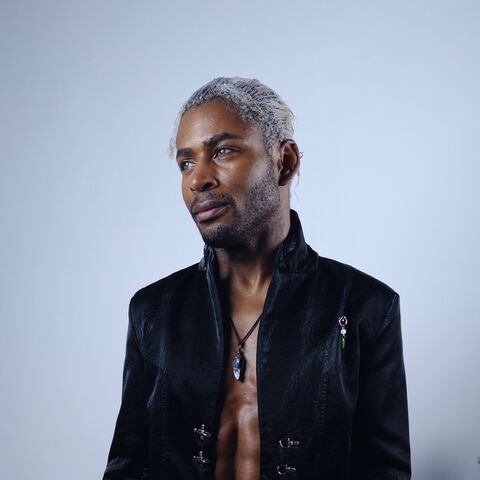
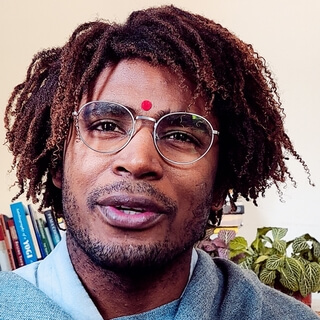
It's Christian Fan Li.
So today I wanted to talk about being at home in the world.
And we can start off by talking about smiling at fear.
It's kind of another way to put it.
And first let's talk about what it means to be at home.
What is home?
So home for us usually means a place where we find a sense of belonging,
A sense of security,
A unconditional trust.
It's like when we go home,
It's a place where we don't have to dress up.
We don't have to put on airs.
We don't have to put on our many masks.
It's the place where we can allow the mask to fall and where we are unconditionally accepted.
And for lots of us,
What home means to us is the place where we go to let go and to feel this inner sense of solitude that doesn't come from the outside.
So we can say in a way that home,
Coming home is a mindset.
It is a experience that we have and it is grounded in the internal.
But a lot of us we end up reaching for home in places where we can never find it,
Places that are conditional.
And this is where fear is spread.
So I'll tell you a little bit about my search for home and then we'll talk about that.
So I grew up,
I was born in a place I've never seen before and I haven't seen since.
I was born in Corpus Christi,
Was it?
Christi,
Corpus,
Texas and that is on the seaside or the coast and I don't know how long I was there,
But by the time I was probably two years old I was orphaned or I usually say orphan-like and eventually went into various foster homes.
By the time I was in my early 20s I had lived in at least eight families,
Maybe a little more.
And so throughout that,
My childhood,
I hadn't learned a sense of the traditional or conventional home we usually find ourselves talking about.
The home that is the place you grew up or where your family is or these sort of conditions.
Maybe if you don't have a family,
Maybe it's where your mother or your father or even your grandmother or grandfather or something,
We tend to connect this with a literal sense of home.
To my,
Just to the way things worked out,
I experienced,
I wasn't,
I was lucky enough in some ways and we don't know if this was lucky or not because we don't know what the alternative would have been.
But what I do know is I did not experience home and then was then ripped away from my home or at least that's not the experience I am aware of.
Instead,
I moved from home.
So the first,
Some of the first homes I moved into,
And all these were temporary,
I moved into them.
And I don't remember having the thought that this is home.
And to kind of paint the picture and to use convenient language,
The families I lived with there was can be explained across various dimensions.
I have lived with poor families,
Moderate income families,
And rich families.
I have also lived with culturally diverse families.
I've lived with a British family or a white family.
I've lived with an African-American family,
A Indian family,
Recently a Chinese family,
A Filipino family,
I already said Indian family.
And so I lived in all these different homes and every time,
Each time I lived in a different one,
I would try to become like them.
In a sense,
Becoming them.
And what I noticed was that I was able to become like them.
And I was able to become them.
And what I noticed is,
As I would try to become,
I would try to pick up their practices.
I would learn about their cultures.
I would be reading.
What did African-American people go through?
What did Indian people go through?
What did white people go through?
Or what's the history and where they come from?
And all of these attributes and things that books said about them.
And said about how they be.
And I would find consistently that that didn't match what was happening.
Instead,
In each family,
I found as much more similarity than I did difference.
And I noticed that each family saw other cultures or or heritages as very different from them.
They would say,
You know,
We Mazzucans are different from the white people.
And we white people are different from the black people.
After I would tell them,
You know,
Here's the places I've lived.
And in one place,
Eating with my hands was perfectly fine.
In another place,
It was barbaric.
So for me,
I found that there wasn't a stable ground at which I could come home to.
Instead,
I seemed to be this mixed-up kid full of Indian practices,
Black practices,
White practices,
Mexican practices,
Filipino practices,
Chinese practices.
And I found myself often lost when someone asked me,
Where are you from?
Where are you going?
Or what do you like?
What do you not like?
Because I started to see that in each of these families,
My preferences would vastly change as I became influenced by them.
And and as I tried to fit in with them,
I still didn't develop any preference for any one of them.
Although certain families wanted me to take preference.
So I signed on different scantrons.
I would sign a different race,
Whatever race I was in.
And I would sign my name differently depending on what they called me.
And so when I was young,
I started to cultivate this sense of no self.
And this is happened to be a breakthrough.
And so what happened was I found out that the people whose houses I went to that had stable families,
That some of them that I hung out with did not have this sense of self.
They were trying to differentiate themselves and there was this sense of,
There was still this sense of uncertainty.
So I wasn't blemished or in comparison to them.
Because I had seen that the biological children did not have an easier time than the non-biological.
And that's because I was looking deeply.
I wasn't looking at the surface attribute levels,
But really being with them.
I was with this Mexican family who became very rich off of their business and I worked in their business for most of,
For quite a few summers.
And the son was suffering so much because he was expected to be the best.
The best in school,
The best at sports,
The best son,
A high achiever.
His sisters were also the same.
They were ballerinas,
They did gymnastics,
They did cheer all over the country,
And they were expected to do the very best.
And so living there,
Living there,
I felt that they were not at home.
At home,
Although they were at home.
And I would hang out with them,
Go and walk with them,
And I could feel this sense of,
I need to change.
I'm not good enough,
You know,
Walking around the neighborhood.
I'm feeling this sense of unease and this grasping for things.
And just as I had done,
I had the son would,
In order to do that,
He would ask his parents for lots of money,
To buy material things,
To show everyone that he was good,
That he was excellent.
He was excellent.
And then in turn,
When he received that money,
They would deepen their expectations of him.
And so he was in a double bind.
He was in a bind to where he needed to get away from this high achievement and not feeling at home,
To buying and grasping things out in the world so that he could feel at home and of value.
And then becoming indebted to his parents,
Who would only raise their expectations.
Now,
Of course,
That wasn't the whole story.
There's a lot more nuance there.
But because we'll be short on time,
It would be best to conclude that was in each family.
No matter the children there were foster or not,
Being at home was a rarity.
And I saw that.
And what I had saw was that these identifications,
These deep identifications,
Blocked myself and other individuals from finding home.
I am this type of person.
I am this type of gender.
I am this type of race.
I have these standards.
I have all of these different things.
These deep identifications means that you create a barrier between who you are now and who you ought to be.
And since you contain multitudes,
You are going to unquestionably contradict it time and time again.
But,
And we actually think we need those identifications.
And so slowly,
As I moved from home to home,
I started going from identifying myself with the family to slowly beginning to identify myself with none of it.
When they asked if I was a gender,
I put no.
When they asked if I was a race,
I put no.
When they asked if I was an age,
I did that.
And I thought that was less controversial through all of the family.
So I had a,
I felt like I had a better understanding.
But more and more,
I feel less compelled to do so.
But what was happening is I was starting to find that I didn't need any stable identification.
In order to feel stable,
In order to feel home.
And I felt that in any environment,
The environment could change.
But yet I could remain still.
I could remain peaceful.
That slowly I began,
Through this experience,
Which was at some points excruciating,
I had learned that you can be at home in the world without committing violence to yourself.
That I could not be grasping for things.
And when you are at home in the world,
A lot happens.
One,
Because I was given this ability,
This experience,
And it turned out the way it turned out,
I was able to find that one can be at home without changing the external circumstances.
So it meant that no matter where I was,
I was connected.
So in all the places I went,
Family after family,
I would find even more family amongst friends or amongst other families that would take me in.
So a lot of my moving around happened to be not just with the family I was assigned to legally,
But actually families that wanted,
Invited me into their house and to become family.
And I found myself with no discrimination.
Neither choosing the family I was in,
Or not choosing the other family.
I didn't see a sense of better.
I saw differences.
But I was okay when the external circumstances changed.
And as external circumstances change,
I began to study to find a sense of stability in discovering that I could be at home within myself,
No matter where I was.
And that was after having to unlearn the need to change the temperature.
Because what we often do to find home is,
Home isn't home until we set all the attributes of the home correctly.
It's almost like you want to take a bath.
And there's this story that Michael McCord has spoken about.
It's like,
Well,
You become at home when,
You know,
You could ask someone,
You know,
At what point you're at home.
And one person might say,
Well,
It's when the spa or when I've started running the bath water.
It's very hot water.
And I put soap in it.
And maybe it would be even homier if I added candles.
Hot bath.
Got the soap.
Got the suds going.
How about some candles?
Okay.
A little wine.
Just add a little bit of wine.
And that might make the situation even better.
And so now we've got wine.
And maybe,
Well,
Wine goes well with cheese,
Doesn't it?
Let's have some more of that.
And then you get your cheese.
And you've got the whole situation.
And maybe if you take it even further,
You're like,
Well,
I really want to watch that show.
And so you bring in a chair and you put it on a laptop and now you're watching this show.
And,
You know,
The water's almost done.
And you've got everything sorted.
And you think,
Huh,
Well,
This is going to be really nice.
Maybe I can put on,
What is that called?
Put on some music in the background.
Maybe some good music while I take my shower and wash up.
And,
Oh,
I've got to use that one brush that has that organic feeling to it and allows me to scrub in these places.
And then someone knocks on the door.
And all you can think about is,
I hope this is going to be quick because the hot water won't be hot for long.
And you have all these things that are conditioned.
And they're conditioned to go,
To eventually pass into different forms.
But nonetheless,
Not the forms you want,
Let's say.
So we know the hot water is going to become cold.
We know that the show is dependent,
Watching the show in this case was highly dependent on there being a nice image of you taking a bath watching it.
And the wine,
You know,
Because it's aged and it's special,
You don't really want to waste that wine.
So it should be for one of these moments.
And so you go to the person,
I mean,
You go and check who's at the door and you find out,
Well,
It's a person and they actually need help lifting something or putting something away.
And of course,
You cannot be present for them because you want to get back to that place,
That place you call home.
And so it becomes quite an issue to go and help them.
And they can sense there's a little bit of negativity with you and they wonder,
Oh,
This person doesn't actually want to help me.
And it is this grasping,
This finding out that we don't have what we need or feeling like we don't have what we need.
And so the breakthrough for me was finding out that it wasn't going to be in moving to England,
That I was going to find home even though I tried to,
I mean,
Even though I did.
And it wasn't going to be having the right job or having the right amount of money that I was going to be finally at home in the world.
Finally,
I'm at home in the world.
Finally,
If I could only connect with this family or that family.
And I found that the truth is these things will always change.
And they will never be optimal.
And at times they may have a good moment but that moment will eventually fall and I will suffer because I held on to that moment and wish that it didn't leave me.
And that is the nature of suffering is to attach ourselves.
And so the first thing that I want to attest to here as a teaching is non-discrimination.
And so in order for you to have home wherever you are,
You cannot discriminate.
And that doesn't mean discriminating the social activists sort of frame framework,
It's just,
Let's be more simple about it.
Non-discrimination is not picking and choosing.
There's a Zen statement is like,
The way is easy for those who are,
Who don't pick and choose.
And so it's the idea that you.
.
.
In my world,
There is no discrimination from when I lived in China and from when I lived here.
I don't see Chinese people as fundamentally different from American people.
Because my experience of living with so many families tells me,
Not always so,
It tells me that these images we make in our heads of people do not match who they are and their multitudes.
So in order to understand non-discrimination,
We must first understand the interbeing.
And what is interbeing?
So I want you to hold up something very simple.
So look in your environment for something to hold up.
So what I'll hold up is this book.
And so this book is called Not Always So.
So if I look at the book,
And I pick a paper,
Or sorry,
A chapter,
And I actually picked the chapter,
There's also a title,
There's the name of the book,
And it says,
Real freedom is to not feel limited when wearing this end robe,
This troublesome formal robe.
Similarly,
In our busy life,
We should wear this civilization without being bothered by it,
Without ignoring it,
Without being copied,
Caught up by it.
This was nice.
Now let's just focus on this single page.
And interbeing can also be maybe translated,
Or as a practice,
Could be called deep looking.
And so when I see this paper,
Just given my perception,
I'm not really seeing the paper,
I'm seeing an image in my head.
I don't know if it exists in the external world.
In fact,
It's very,
Very difficult,
If not impossible,
To know if this exists in the external world.
But what I do know much more certainly is that it exists as an image in my mind.
So there's some sort of light reflection that's going into my retina,
And that's being processed,
And it's being processed through my visual cortex,
And eventually it comes out with an image.
And this is the image that I see.
And so it's a form.
So even before I experience,
Even before I've even looked at this,
I mean,
As soon as I've looked at this,
It's transformed.
My mind has transformed.
So whatever it is in the external world is regardless.
So now we know we have an image of this that has been constructed,
That has been filtered,
That has been fragmented and processed by our minds.
And so the first thing to know is that we perceive things as form,
But they are not really form.
Within this book,
This single page,
If we look deeply,
We can see the sun.
When we look deeply,
We can see water.
When we look deeply,
We can see soil.
We can see insects.
We can see animals.
We can see ourselves.
And if we keep going back to the tree that this came from as an object and we break down the tree,
And we see even before there were trees,
We see,
We can go back all the way until,
Let's say,
The beginningless time,
Where maybe at the Big Bang,
This was just a small fragment cut across all of this as minerals,
Let's say.
And that's all in this book,
In this single page.
And in fact,
If I go to a single fraction of this page,
I will find the same.
So it appears to me that in the absolute that this page contains everything but a page,
Meaning a page is made up of non-page elements.
So within this is everything else.
So when we look really deeply,
We can now take the same deep looking and apply it to the person.
So by default,
You may look at this person and decide that they are a man,
A person wearing robes,
And I've inferred that.
I also have knowledge of that.
So a monk,
A Japanese man.
But this is conventional looking.
This is shallow looking.
This is convenient looking.
But when we look deeply,
What I see in him is non-Japanese elements.
Non-man elements.
So therefore,
Woman.
So therefore,
American.
And so even looking at the Japanese race,
It's made up of a bunch of Japanese,
A bunch of non-Japanese races,
And that goes for every race,
Every gender,
Anything for smart,
Dumb,
Wherever it is,
You cannot have one without the other.
That's non-duality.
And so in this person,
I can start to see the stars.
If I look really deeply,
All the way,
It's not just the lineage of their mother and father because so much has affected how this form,
What I'm perceiving as a form,
Has come into being.
And in him,
I can see that everything exists.
That there are reasons,
There are things that exist in this person that I would call bad.
And there are things that exist in this person that I would call good.
And I would be wrong about both of those.
And so this is the power of interbeing.
It's the reality beyond our small perception that actually a cup is made up of non-cup elements.
When we look at a color,
We are not seeing,
The color doesn't actually exist.
This cup as orange is literally a figment of our imagination.
When in fact,
We know that there is nothing intrinsic about this.
And so there is emptiness.
But staying with interbeing,
It means that we are unconditionally connected to each other.
That means within you,
I am.
Within me,
You are.
And there is nothing I can do about this truth.
It is absolutely true.
So within the victim is the perpetrator.
Within the perpetrator is the victim.
And it's bizarre because we want to live in a world where everything is black and white.
But unfortunately,
Things are very gray indeed.
And so when we look through the eyes of interbeing,
We see that a simple flower is made up of everything in the cosmos,
Including us.
And it isn't some nice talk,
Oh yeah,
Flowery words.
It's actually true.
And our perception has deluded us into thinking that there is an actual distinction between ourselves and the other.
And I came to this insight before I knew about interbeing through living with the families.
I saw the connections of how this family made itself and was intertwined with these other families or these other cultures that they found themselves to be very different from.
And so I could not take a side.
So when you're in a situation,
A lot of times being at home means not being in one place and being in the other.
The basis for that is fragmentation.
Identification is discrimination.
So when you say you're not at home,
You're discriminating and you have not learned the wisdom of non-discrimination and the wisdom of interbeing.
When you cut to the root of all this,
When you break down interbeing,
You find one root,
One home.
So it's almost as if we cannot see the root and we only see the shoots.
And we imagine that the shoots have their own roots and that they are fundamentally different than the shoots next to them,
Not realizing that we all come from the same root.
And when we miss that,
That is when we get into trouble.
That is when we begin to discriminate and feel like we are not at home in the world.
We do it not just to others but to ourselves.
We say,
I am not this person.
Well,
This person is so different and distinct from this person,
Not related.
So why did I do that bad thing?
Not seeing that the bad thing is interrelated to the good thing that we want to be.
It's intertwined,
Meaning you cannot have one without the other.
And when you can see that,
The idea that you are distinct and so different from those people or these people,
It dissolves.
And so that means wherever you go,
You are unconditionally connected.
You're at home because you see that connection.
Even if others do not see that connection,
You see that connection.
When someone does something bad to you,
You see that it is not this difference between a good guy and a bad guy.
But it is that you,
That person,
Suffers in some way,
Causing them to be deluded in some way and to act that way.
And that you too have also been that way and will be that way.
And when you see that,
You are deeply empathetic.
And so once you figure out that there is only one root with different shoots,
You will find that if you abide in the root,
That you will be at home in the world.
The next part I want to talk about is fear and attachment.
Now,
This talk was originally titled,
How to Smile at Fear.
And fear is very important here.
And attachment is just as important.
When we are not at home,
Often it is,
We carry over feelings that we label as fear.
We fear not being valued,
Not being loved.
We fear something bad is going to happen to us or someone we love.
We have these deep fears.
We fear we won't be pretty enough,
Strong enough,
Smart enough,
Successful enough.
We have all of these fears that are driving our neurotic behavior.
And so when we have these fears,
Initially we don't know how to go back to original mind.
Right?
And so we attach ourselves to things in the world.
So when I say attachment,
I don't really mean in the typical,
No,
I guess,
When I say attachment,
I mean when we see something good happen and we want to hold on to it longer.
We don't want to let it go.
We develop a fear.
So there are sayings in Zen that go,
Suffering is getting what you don't want,
But it is also the pain of getting what you do want.
And that's,
It sounds kind of backwards,
But the basic idea there is that when you get what you do want,
You want to keep it,
You want to hold on to it.
And then you suffer because things are conditioned,
Meaning things are conditioned to be here for a limited amount of time.
So you may get the boyfriend you want,
And then immediately after you get it,
So you have the pleasure of getting what you don't want,
Of getting what you do want,
And the pain comes up almost immediately about the fear of losing it.
But if you didn't have it,
There would be no fear and there would be also no pleasure.
But maybe there would be pain from thinking about yourself as not having it.
And so this attachment comes from this feeling of lack,
The fear that we lack,
And not realizing that we do not lack anything.
When we find home,
This unconditional home,
We don't need to consume.
So it's not that,
What I used to experiment with was like I gave away my phone,
And I gave up a lot of things.
And that is not what we're talking about here when we're talking about coming home.
We're talking that as actually a result of when you let go of fear,
You don't feel the need to constantly be consuming,
Because it's utterly joyful to be you.
You're light as a feather,
So you're not,
It's almost like sometimes what we do is constantly consume.
One thing after another.
And that's because we're not at home in the world.
And so we consume because there's a feeling of lack that we're not contented.
It's not like being at home where we feel everything is fine,
Everything is alright.
And it's not saying that we shouldn't consume.
It's saying that a lot of consumption is driven by lack,
Which is driven by the idea that we're not at home in ourselves.
And by the feeling of that.
And so when we let go of that attachment,
When we really allow ourselves to let go,
And that means that when something good happens,
We take it as good and we take that experience as good,
As good.
But we do not attach ourselves to it.
We let it go.
And then when something bad happens,
We do not run away from it.
We stand in the middle of it.
And we let it go.
This is the practice of non-attachment.
It is not this cold practice of,
Oh no,
I don't have any feelings.
That is not the practice.
The practice is to be with the feelings so intimately that you know it and you know how to let it go.
So if anger arises,
To be completely with anger.
Not running away from anger.
Not even watching anger.
Actually being anger.
And then figuring out that it can't even be labeled anger because the experience defies description.
And when we do that,
We learn how painful it is to live in a world where we don't feel at home.
Because we have to attach ourselves so much to the external things.
So what happens when we come home to ourselves?
What is that experience like?
And it is different for everyone.
But in general,
What it means is that in general there is a lightness,
There is a tranquility in you that is present most of the time.
And even when it is not present,
You become acutely aware when you are not at home.
And you are reminded and then usually for me it is coming back to the breath.
Seeing that you can handle anything.
Because you are not discriminating between only wanting the good and not wanting the bad.
That you see the interconnection,
The interbeing that you are unconditionally connected with everything.
Dropping the small identities.
Seeing the one root that we all come from.
The one home.
And from there,
Coming home as we let go of attachment and fear.
So what that feels like is it feels like being connected to everything.
You look outside and there is a bird by your window.
You not only find the singing delightful,
But you see that bird is fundamentally connected to you.
Like family.
And at the same time a mosquito comes in and lands on your skin and you do not kill it.
You realize in that moment that it too thrives to live,
Wants to live.
And I had the experience of allowing,
Not allowing,
But staying as the mosquito was there and my fear was rising.
I stayed with the fear,
I stayed with the mosquito.
And it did what it needed to do.
And I felt as if a gift,
I was giving a gift to this mosquito because it was giving the gift of fearlessness to me.
So we can come home to ourselves by seeing that we do not need to compare ourselves to others.
That there is not really a difference between self and other.
That that is an illusion that we find out through practice.
And coming home is to be joyful,
To ride the waves of samsara,
Of the ups and downs,
And to be present in each moment.
Being exactly there with whatever is there.
And so lastly the mindfulness practices.
So the mindfulness practices that I recommend for developing a home within yourself are as follows.
So the first one is just the mindfulness that most of us know.
We sit there and we remain silent.
We allow thoughts to rise.
We see our mind almost as a river.
And thoughts and feelings are going through our minds.
And we allow them each to pass.
And this is really,
I'd like to call it the practice of non-discrimination.
Because for every thought,
No matter how clever the thought we think,
How clever we think the thought is,
Or how disgusting the thought or image is,
Or heavy the feeling is,
We treat them all the same.
We acknowledge that they are there and we let them come and go as they please.
But we do not get involved or hooked.
And that is the practice of non-discrimination.
Now with that,
Once you have your basis in that non-discriminatory practice,
You can move to other practices.
One practice that I particularly like is mindfulness of emotions.
And that's when at the higher levels you literally bring in something that is extremely alive for you.
So you go,
Okay,
I have a real conflict right now with my father.
So you bring in your father and you literally try to bring back those experiences where you felt tight,
Where you felt angry,
Where you felt frustrated,
And you invite those emotions in.
And then with those emotions you become aware that you,
How you identify with them.
And you allow yourself to abide in the emotion,
Abide in your awareness of that emotion and also as the emotion.
And you learn how to,
Instead of acting,
Because what we usually want to do is something comes up and then we want to act on it.
In fact,
That's what emotions or feelings are kind of for.
But we end up getting a lot of habitual patterns that are not nourishing to us from that process of learning how to act from our emotions.
So fear comes up,
We react very quickly,
Defensively,
Or we reach out for something externally.
So that practice of non-discrimination gives us the basis to stay.
And then the practice of dealing with those emotions one by one or however we'd like,
Or as they come up,
Allows us to take on those emotions in a specialized way.
And then the last practice is the practices on interbeing.
That means you can do a kind of,
I guess,
Insight meditation where you bring something up,
Like an object of meditation,
And it doesn't need to be a literal object,
It could literally be you bring this piece of wood up and you begin to meditate and to do deep looking.
So see what you see at the shallow level,
This wood,
The circular,
I mean it's not circular,
Sorry.
You see the brown,
You see the color,
You see the gradation,
You see all the things that your mind is projecting,
Right?
The image that exists inside your head.
Then you start to look deeper,
What is this made up of?
Wood.
And all the things you keep continuing to go back,
Wood,
A tree,
Soil,
Dirt,
Sunshine,
Rain,
All the components that is actually made up of everything except wood.
Or everything except stick.
And you do that for 30 minutes.
So I encourage you to take up this practice.
This practice has been life changing for me.
And my certain experiences of life have confirmed why some of these things that we do,
Some of these attributes you will develop just through your life.
Other ones you have to really cultivate,
Right?
It's almost like the way we have a dichotomy between talent and hard work.
Some people,
Like in my life,
I felt like I was,
I quickly learned how to understand interbeing and non-discrimination through living with these families.
And then I've been cultivating that practice of compassion,
The practice of mindfulness of emotions and learning to come home from myself.
And so doing these practices daily,
Starting with non-discrimination,
That's just again,
Your mind is a river.
Thoughts,
Feelings,
Sensations,
Perceptions,
Allowing them to just pass,
Treating them all equally the same or trying to at least.
And that's the base of your practice.
And as you do that,
You'll begin to feel as if you can stay with things in your life without grasping or attaching yourself to something,
Without having fear come up as a reaction.
So thank you.
Namaste.
And take care of yourselves.