Aloha,
I'm Reverend Cindy Palos and there's a lot of wonderful,
Deeper symbolism in our Christmas traditions than we may be aware of.
Some of these traditions go way,
Way,
Way back.
Times of Egypt,
Times of the Druids,
Times that go back thousands of years.
And I wanted to take some time to go into some of the symbolism of our Christmas traditions.
I'm taking this from my book,
The Christmas Gift.
I did a chapter on Christmas traditions.
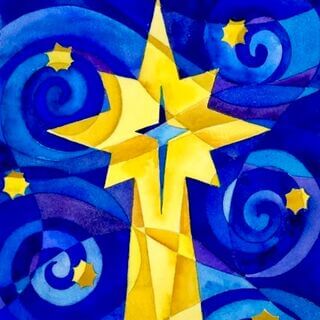
Let's start with the tradition and symbolism of the star.
That star of wonder,
That star that we hear sung about in so many Christmas carols.
The star guided the Magi and it was assigned to the shepherds at the side of the birth of Christ.
The symbolism and mystical meaning of the star has some very deep mystical inner meanings.
The five-pointed star is used at the top of the Christmas tree and on many decorations and even in lights for the house.
Most people do not know that the star has some very deep symbolic meanings.
It represents the star of wonder that shone over the stable the night of the birth of Christ.
And it also has a deeper meaning.
The Christian initiates and the higher masters have been said to have the light of a star over their head.
So just as the Christmas tree might have a star at the very top of the tree,
There is that star of wonder that we achieve when we go into the higher levels of consciousness.
And I also have some meditations where I bring that star right down into the symbolic energy of your body from your head,
Starting the top of the star down to your hips,
Making a triangle from your legs and knees on back up to the head and makes a star as well.
So a lot of meanings to the star.
Another one we always see are the three wise men or the Magi who are masters who brought the gifts to Jesus.
The wise men represent those advanced souls who brought together their common purpose from different parts of the world,
Traveled far.
Their gifts were really recognizing the significance of the human beings who faculties enter into the process of manifestation.
They are led by that glorious star to the place of birth,
The birth of Christ,
Which also can represent the birth of our own Christ consciousness in us.
The Magi brought gifts of gold.
The gold represent the gift of the divine wisdom of the highest value.
Gold was considered to be very precious.
It still is.
And it carries very high energy.
There was also that gift of frankincense,
Which is one of the richest perfumes and is still used to this day in many cathedrals around the world.
It represents the transformation of material things to spirit.
The sense of smell,
Of course,
And the incense is one that can lift and clear the energy.
Where it's burnt.
Frankincense has also been used for medicinal purposes.
The third gift the Magi brought was myrrh.
And myrrh represents the power of love.
You know,
God told Moses to use myrrh,
Myrrh,
To anoint the tabernacle.
And the tabernacle represents the body through the wisdom of the mind.
Let's talk about the symbolism of the Christ born in a manger.
A true interpretation of the Christmas legend necessitates an understanding of the birth of the Christ child in that manger.
The stable among the animals symbolizes the faint upspringing of the Christ consciousness in the animal man,
The lower nature coming to be birthed to the higher consciousness of the Christ consciousness.
The presence of God in every structure built.
When we think of Christmas,
We think of Jesus in the manger.
Grace to find your presence today in the ordinariness of your life.
Your regular,
Everyday material presence can still have that light of the Christ energy.
The ego self has taken note of the expressing vehicle,
The personal man,
And it has been brought from the lower consciousness of the animal nature to the manger feeding place of the animal faculties.
The babe Christ Jesus is born from that,
From the manger cradle to the highest light.
The Christ child is a place of sanctuary in the stable.
Another truth that is represented is that Jewish religion would not allow a woman to give birth in the upper area of an inn.
So we hear that there was no place in the inn.
Well,
If you went knocking on the door of a Jewish household,
They would not wish to have that person in the upper room because the belief that a woman's blood would make the house unclean and it would have to be not used for living for,
I think it's 30 days for a while.
So Mary would have had to have gone to a lower area of the house or a stable to give birth.
Didn't know that,
Huh?
Let's talk about the burning of the Yule log.
This is a wonderful tradition that goes back to the earliest days of the Druids.
The custom of that Yule log brought in to be lit on the darkest night of the year.
And this tradition is bringing,
Of course,
The light to the darkest time.
When we go from darkness to light.
Large candles were lit on Christmas Eve and the oak log was laid upon the fire to illuminate the house.
You know,
It was thought that if you actually kept that fire burning for as long as you could,
Maybe throughout the year,
The remains of the Yule log would protect the house from fire and lightning.
Let's talk about the symbolism in the Christmas tree.
The Christmas tree is one of the fun symbols of Christmas that's very beloved.
There's an interesting history of the Christmas tree that goes back through the connection of bringing evergreen into a dwelling during winter.
This can be tracked back to ancient Egypt.
Worshippers of the sun god Ra placed green palm fronds in their homes.
In December,
The Romans had a festival.
Also in December,
It was dedicated to the followers of Saturn.
However,
The tradition of their Christmas tree,
As we know it,
Is now first brought forth by the Germans.
Martin Luther is often credited as one of the first people to decorate an evergreen with lit candles after he noticed how pretty the stars look twinkling through the branches of the pines.
Now,
Prince Albert,
Queen Victoria's consort,
Is usually credited with having brought from Germany and introduced that Christmas tree into England in 1840.
The truth is,
Queen Charlotte,
Who was married to George III,
Brought the first Christmas tree to the Queen's Lodge in Windsor as far back as December 1800.
The Christmas tree became very popular in the upper classes at that time.
It was brought into the house for the purpose with candlelit.
It was lit by candles and decorated with trinkets and surrounded by piles of presents as we do today.
But in December 1840,
Prince Albert imported several spruce firs from his native place,
Coburg in Germany,
To serve as Christmas trees.
Now,
What was interesting at that time is he took the Christmas trees and hung them around his palace upside down.
And the general public carried on the tradition when indeed some of the people from England moved to America.
They brought that tradition with them.
Where does Santa and gift-giving come from?
That goes back to the legends of Saint Nicholas,
Who wandered through the country helping those less fortunate after being left a considerable sum of money.
He had wealthy parents.
And December 6 marks the anniversary of Nicholas's death.
By the time of the Renaissance,
Saint Nicholas was the most popular saint in Europe because he gave away all that money.
European immigrants brought Saint Nicholas holiday tradition to America.
At the end of the 18th century,
Saint Nicholas was recognized by the American culture.
In December of 1773 and 1774,
It was reported that a group of Dutch families in New York gathered to honor the anniversary of Nicholas's death.
The name Santa Claus was started to evolve from Nick,
The Dutch nickname Sinterklaas,
A shortened form of Saint Nicholas,
Which is translated as the Dutch name for Saint Nicholas.
And by 1841,
A lot of children traveled to Philadelphia to see the life-size Santa model.
The Salvation Army in the early 1890s started sending unemployed men in Santa suits to solicit donations for needy families to provide them with Christian meals,
Christmas meals.
He didn't begin to really become the jolly old soul we know until about 1900s,
Maybe 1930.
Coca-Cola commissioned an illustrator named Hayden Sundblom to paint Santa for Christmas,
Advertising their Coca-Cola product.
Those paintings established Santa as a warm,
Happy character with human features including rosy cheeks,
A white beard,
Twinkling eyes,
And laughter.
So that was the inspiration from an 1822 poem by Clement Clarke Moore called A Visit from Saint Nicholas,
Commonly known as Twas the Night Before Christmas.
Now the holly and the berries,
What's the tradition there?
The use of the holly as the Christmas symbol goes back to the Roman times.
It reflects the winter solstice,
And then they'd bring in that green with the berry and the holly to remind them that spring would be coming.
It also represents the crown of thorns that Jesus wore at his time of transition.
Oh,
And our red poinsettia plants.
Poinsettia plants are native to Central America and Mexico,
And they're known as Taxco de Alacón.
They were the flower used during many times because it came out in winter.
Poinsettia was made famous by a man called Joel Roberts,
And his last name was Point,
P-O-N-S-E-T-T,
Joel Roberts Poinsett,
And that's why we call them poinsettias.
He was the first ambassador from the USA to Mexico in 1825.
Poinsett had some greenhouses on his plantations in Southern Carolina,
And he sent some of the plants from Mexico back to South Carolina,
Where he began growing the plants and sending them to friends.
In the early 1900s,
They were sold as whole plants for landscaping and potted plants.
The Eck family from Southern California are one of the first groups to sell them as whole plants,
And they are still the main producer of the plants in the USA.
It is thought that they became known as poinsettia in the 1830s when people found out who had first brought them from America to America from Mexico.
What about those Christmas carols?
Where does that tradition come from?
Well,
There were pre-Christian pagan songs sung at the winter solstice.
It was done at solstice celebrations as people danced around stone circles on the 22nd of December.
The word carol actually means dance or a song of praise and joy.
Carols used to be written and sung during all four seasons,
But only the tradition of singing them at Christmas has really survived.
Christmas is remembering the birth of Jesus Christ that started to use the celebration at the same time as the solstice,
So the early Christians started singing Christian songs instead of pre-Christian pagan ones.
By the time of the Middle Ages,
Around the 1200s,
Most people had lost interest in celebrating Christmas altogether,
But St.
Francis of Assisi started doing nativity plays in 1223.
The people in the play sang songs or canticles that told the story of the plays.
The new carols spread to France,
Spain,
Germany,
And other European countries.
The earliest carol in this style was written in 1410.
Only a small fragment of that one still exists.
The Puritans put a stop to singing carols,
But some took to pubs to sing.
Then came the waits who sang in service on Christmas Eve.
Eventually,
Christmas became popular to celebrate in England,
And caroling picked up again.
Oh,
Where do those candy canes come from?
Well,
Candy canes are reminiscent of the shepherd's staff.
Think of how a candy cane looks.
The staff has a crook,
As do the candy canes.
The hook would lead lost sheep back to the fold.
Christ has been called the Good Shepherd.
They can remind us of the staffs carried by the shepherds who visited Jesus at his birth.
During Christ's time,
A shepherd's staff often had a crook,
Or that bend at the top that was used to hook sheep by the neck.
So,
That's part of the candy cane.
Another tradition,
Hanging Christmas stockings.
Where did that one come from?
The tradition of Christmas stockings comes from an old legend.
It's said to take a long time.
A long time ago,
A poor man had three daughters and could not afford to give them a dowry.
In those days,
It was extremely hard for a woman to get married without a dowry.
A Christian bishop named Nicholas,
Yes,
Like Saint Nicholas,
Heard about the problem and wanted to help,
But the man refused to accept money.
One night,
Nicholas threw three balls made of pure gold through the open window of the man's house.
Each one landed in a stocking hung by the fire.
The next morning,
Each daughter found a gold ball in her stocking.
With this bounty,
They were able to get married.
And Santa Claus coming down the chimney.
Where does that come from?
Well,
The U.
S.
Writer and historian describes Saint Nicholas as a man who is seen riding jolly among the treetops among the treetops over the roofs of the houses.
And he was bringing forth magnificent presents from his breeches pockets or dropping them down the chimney of his favorites.
That from a U.
S.
Writer who actually said that.
And he did not get the idea to have Santa drop the gifts down the chimneys out of the thin air.
The concept that the magical creatures enter the homes through the chimneys actually comes from the 1400s when there was widespread belief that fear that was present of witches.
And they thought witches could pass through solid objects to enter any residence or anything like a chimney that was open to help ease the public's anxiety.
Kramer and Sprenger wrote that witches instead entered houses through the chimneys or windows.
Since then,
The chimney has been a common symbol within European folklore,
Linking the earthly world with the supernatural.
In a Scottish legend,
The brownie is a creature who enters through the chimney and aids in household chores while families are sleeping.
In Irish lore,
There is a barash,
An evil creature who slips in through the chimney to kidnap children.
And in Italian folklore,
There's la befana,
Who rides on a broomstick to deliver candy to good children entering their homes through a chimney.
Nicholas rattling down the chimney was then popularized in 1823 from that poem,
A Visit of St.
Nicholas,
Known again as Twas the Night Before Christmas.
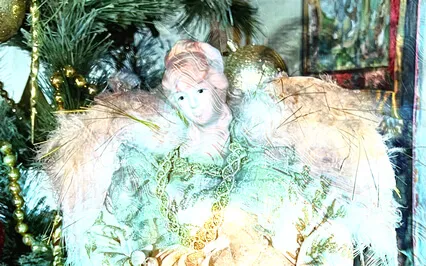
Angels.
Why are angels so important and so popular?
Well,
Of course,
We've always seen angels playing an important role in spirituality.
Of course,
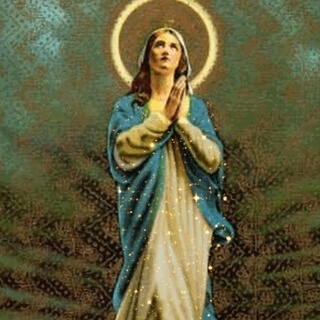
That goes back to the words in the Bible about Mary being visited by Archangel Gabriel.
The angel Gabriel was sent from God to a town of Galilee called the Nazareth to a virgin betrothed,
A man named Joseph,
Of course,
From the house of David.
The virgin's name was Mary and coming to her he said,
Hail Mary,
Full of grace,
The Lord is with you.
But she was greatly troubled at what was said and pondered what sort of greeting this might be.
Then the angel said to her,
Do not be afraid,
Mary,
For you have found favor with God.
Behold,
You will conceive in your womb and bear a son and you shall name him Jesus.
So the angels have played a role since that part.
And of course,
We have all the wonderful stories with the children singing at Christmas time and their carols on stage.
And we see them all playing the role of the angels.
And we have seen,
Of course,
Now the angels placed on top of the Christmas tree.
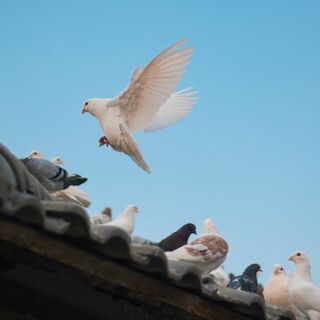
And the last one here is about the doves.
You know,
We've seen many Christmas cards,
The dove of peace.
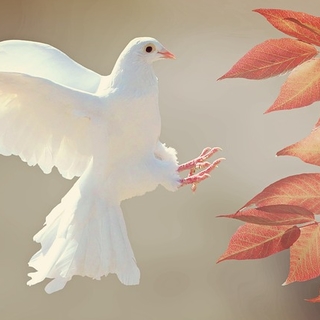
And there's sometimes doves on top of the trees or on the Christmas trees that decorate it as symbols of peace,
Purity,
Love,
And the Holy Spirit,
Which is referenced frequently in the Bible.
The history of the doves is a Christmas time special,
Is a tree ornament intricately linked with the history of the Christmas tree itself.
When Jesus was baptized,
Scripture records that the Holy Spirit descended on him in boldly form,
Like a bodily form as a dove.
And scripture records that the Holy Spirit descended in him like that.
And you are my son who I love with you.
I am well pleased.
Since then,
The peace of the Holy Spirit has been represented by the dove with images of dove used as a reminder of the peace and goodwill at Christmas time.
That's a little deeper look into what you might have thought or known about the history of the symbolism of Christmas.
And may all your Christmases be merry and bright.
And as we say in Hawaii,
Mele kalikimaka.