[" demented This is Kabbalah 99.
I'm Deborah Sophia.
Today we are having a conversation with astrophysicist Sufi guide and author Surawati William Gebel.
He has published two books,
Root Speaks to Bud,
Fulfilling the Purpose of Life,
And the one that we're going to discuss today,
Nature's Hidden Dimension,
Envisioning the Inner Life of the Universe.
Welcome,
Surawati.
Thank you.
Well,
As a young man,
How did you decide to become an astrophysicist?
Well,
My initial interest was in science fiction,
And I think that just broadened my horizons.
And my father was very interested in having me become a physicist or a scientist.
So I pursued my interest in science fiction and started to read popular books about cosmology.
And that got me very interested in science.
And I had some inspiring teachers along the way.
And I did my graduate work at the University of Wisconsin,
Where during the time I was a graduate student there,
They hired a cosmologist,
Which was kind of unusual in those days.
It wasn't a big field.
So I had a chance to talk with him.
And what I came away with from that was realizing that cosmology,
Which was kind of my ultimate goal in studying science,
Was really kind of a speculative field at that time.
It wasn't very well developed.
And so I was a little disillusioned by that.
And at the same time that I started my career in astrophysics,
I had a psychological breakthrough.
I had some therapy.
And it really opened my life up and opened my mind up.
And it helped me to pursue an interest that was just budding in spiritual path.
So I examined many spiritual paths at that time.
And what led you to become a Sufi mystic?
Well,
As I said,
I went to many different groups to find out what they were like.
And some of them I just felt,
Well,
Some of them were very Eastern.
And I had to put my science mind at the door when I went in there in order not to be too critical and judgmental.
But when I went to the Sufi group for the first time,
I just immediately felt at home.
I felt like these were people like me,
Western people,
Had interest in science,
A kind of open mind,
And had found something in spirituality that really was meaningful to them.
And what kinds of questions were you trying to answer with this exploration?
Well,
I always had these big questions in mind.
Where did the universe come from?
What are we doing here?
What's the meaning of being here?
What's the meaning of.
.
.
Does any of it have any meaning?
So those are the questions I was pursuing and I could see that cosmology wasn't going to answer those questions very well.
Do the two disciplines work together to inform your view of the universe and man's place in it?
Well,
On the surface,
No,
They don't work very well together.
And there's been a lot of effort,
I think,
On the part of,
Well,
People who are interested in bringing them together to try to bridge science and religion or science and spirituality.
And that's what inspired me to write the book Nature's Hidden Dimension.
So what I realized was there was some very interesting writings by an astrophysicist who wrote popular books for the public,
Especially about Einstein's relativity.
And he was also a man of faith and felt that there was some sort of natural boundary between the areas of study that were appropriate for science and appropriate for religion or for spirituality.
But his speculations about that at the time were not very well accepted,
Widely accepted,
Especially by scientists.
And I felt that I was getting a different take on his idea of what might be the appropriate realms of study for science and spirituality.
So that's what I wrote about in that book,
Saying that science is the best method of study for the outer life of the universe.
And mystics are the ones that are best equipped to study the inner life of the universe.
Now,
Scientists have learned so much about the universe.
And they've been so successful that I think that they've come to the point where many scientists are very skeptical about any other methods of knowledge besides empiricism.
But empiricism entails measurement.
In order to determine whether something is true or not,
You need to have some way of measuring it.
And the inner life doesn't allow for measurement very easily.
So it's not a place where science can make much progress.
But on the other hand,
Mystics put themselves through a great deal of discipline in order to be able to understand the inner life.
And that's what is required is a mental discipline.
And so they have the best tools for exploring the inner life.
And besides,
Mystics of many different cultures and many different periods of time in the history of the world have come up with very similar ideas about the inner life of the universe.
And so that suggests that there's something real,
That their view of the inner life has a reality to it that doesn't require scientific confirmation.
Well,
You've said a lot there,
Sir Wylie.
First of all,
That there is such a thing as an inner life.
And I certainly know I have an inner life.
I have feelings and I have thoughts that I don't share with people.
But I suspect when you say inner life,
You're meaning something more than just my individual emotions.
Yes.
Well,
The inner life has a great deal to do with consciousness.
And that's something that science is attempting to understand,
But really is just in the infancy of its study of consciousness.
And what mystics have discovered is that consciousness is something fundamental.
It's not something that arises out of matter the way that scientists would expect.
But it's something that has always existed.
And in fact,
Matter arises out of consciousness,
According to the mystics.
It's very interesting.
So my brain doesn't create my mind?
Well,
Brain and mind.
So the scientists might say,
Yes,
The mind arises out of the brain.
My mind is a product of the brain.
But the mystic would say,
The mind is an instrument of the consciousness,
That the consciousness has always existed.
And it takes on an instrument for its expression for its activity in the world.
So you say,
Brain,
I like that word instrument,
Because it's almost like we think of like a radio,
And you tune into a frequency and you have certain thoughts and tune to a different frequency,
Maybe you may be paying more attention to the dinner you're going to make and another maybe you feel like you're in love and it's a whole different kind of thinking.
So that's all inside my head.
But you're saying that the capacity to do that existed before I did?
Yes,
The life,
The consciousness that is involved in mental activity existed before the brain.
And it makes use of the capacities of the brain in order to function in the world.
That's really different from what most people are thinking.
So that's great.
I'm glad you made that so clear.
And so the other thing that you said that stands out is that there's a lot of agreement among mystics.
Do you mean like Suki mystics come to the same conclusions?
Are you saying that Suki mystics and Hindu mystics,
Like the Vedanta mystics come to the same conclusion?
Is it across different religions?
Yes.
Well,
It could include Jewish mystics and Christian mystics,
Hindu mystics,
Buddhist mystics.
They all,
You know,
In details,
Maybe they have differences,
But in their overall picture of reality,
Let's say the reality behind existence,
They pretty much agree.
They agree that the nature of reality is unity,
That there is that ultimately are multitude of different consciousnesses,
You know,
All the consciousnesses of human beings.
And we could say that animals also have some degree of consciousness that all of these consciousnesses resolve themselves into a single root consciousness or source consciousness.
That like your book root speaks to bud.
Is that that same idea that you're trying to convey?
Yes.
Well,
That book is about purpose in life.
The idea that everyone has a purpose in life and that that purpose is an unfolding of a deeper purpose that goes back to the root or the source.
So okay,
Here's a big question.
What is the purpose and meaning of life?
Okay,
Well,
That is a topic that I addressed in this book Nature's Hidden Dimension and it has to do with the seven leading names,
Which is something I think we're going to be talking about.
So I would say that a way of explaining it,
Which I think is accessible,
Widely accessible to people without a lot of knowledge about mysticism is a saying from the Prophet Muhammad and his sayings are collected in something called the Hadith.
Hadith in Arabic means sayings and there are particular ones of these sayings which called Hadith Qudsi and these are special sayings that occurred according to the history when Muhammad was forgetting himself and speaking as though God was speaking through him.
So in this particular case,
This Hadith Qudsi is,
I was a hidden treasure and I longed to be known,
So I created the world that I might be known.
Can you say that again?
That's really interesting.
I was a hidden treasure and I longed to be known,
So I created the world or the universe that I might be known.
Who is this I?
So the I is this unitary being,
The only being,
The root of consciousness that expresses itself through every brain and through every being,
Every created being.
Every blade of grass,
So to speak?
Yes,
Yes,
But especially through those beings that have apparent consciousness like human beings and animals and who knows what in the whole universe.
We were just confined to our little planet somewhere in the far flung corner of the universe.
There may be unimaginable varieties of conscious beings throughout the universe.
So we're not alone.
I like that.
Now you mentioned earlier about the seven leading names.
I caught my ear.
What do you mean by the seven leading names?
Well,
In a particular mystical tradition in Islam,
There are 99 names,
Names of God,
Which are really divine qualities or perfect qualities like compassion and love and light.
And among those 99 names,
There are seven which are considered to be primary names.
And these names are understood to be initial names or names that developed in a sequence at the beginning of the awakening of consciousness.
This is something I talk about in the book,
The mystics view of cosmology,
Because I have always had this interest in cosmology.
And I wanted to know what mystics had to say about it.
So I took a particular version of mystical cosmology called metaphysics.
And this version is from Sufi tradition.
And these seven leading names play a role in the initial awakening of consciousness from what could be called a sleep consciousness,
A sleep.
It's not exactly like our sleep,
But that's a helpful way to understand it.
Is that like stillness?
Yes,
Stillness,
Peace.
And then out of that stillness and peace,
There came an impulse to,
Well,
Maybe it's the impulse of that hadith kudsi I just mentioned.
The impulse,
I was hidden treasure and I long to be known.
So there was some dawning of the idea in this sleeping consciousness that there's something to be known.
And so it had the impulse to discover what is it that there is to be known that is enticing because it's a hidden treasure.
I wish to know this treasure.
So you're saying the seven leading names are the process by which this world came into being step by step,
Like progressively?
From the point of view of the inner life of the universe,
Not the outer life.
So it's interesting that it has some seeming correspondence with what scientists understand about the outer beginning of the universe,
The big bang and the expansion of the universe.
So in the metaphysical version,
There's a contraction of consciousness,
Which is spread out and has no focus.
It's just uniformly spread out everywhere,
But it begins to contract.
Sort of like pulling itself together the way if you were waking up from sleep.
In sleep,
You might feel sort of expanded.
You're not in your usual confined consciousness.
And then when you wake up,
You pull yourself together.
You pull yourself,
You center yourself.
So in this way,
By metaphor,
You could say that the universe,
The uniform consciousness spread out everywhere,
Asleep,
Is centering itself,
Pulling itself together.
It almost sounds like a breath,
Inhale and exhale.
That's one way it's described,
Yes,
As a breath.
This is interesting.
I know there's seven,
So we're just starting.
But in the Kabbalah,
There are seven qualities that are accessible to human beings.
There are some qualities that are beyond our capacity.
But the first one that is accessible to us is also a quality of expansion.
It's loving kindness.
It's that loving expression that flows out,
Unbounded,
Totally unbounded,
Unending.
But then if that's all there was,
Nothing would ever form.
So there also has to be the contraction.
And that's Guburah,
Or can be translated as severity or judgment,
But it is a feeling of bringing it back in,
Like a contraction.
So there even Kabbalah,
There's the same pattern right there.
So that's interesting.
So that's first and second.
Yes,
I would say in this particular form,
The seven leading names,
That flowing of love that you talked about really doesn't come until the fourth leading name.
The first leading name is simply the awareness of existence.
Okay.
What is the name?
Can you tell me?
Well,
The Arabic name is Hay,
H-A-Y-Y.
There's a similar word in Hebrew.
Rechaim,
Rechaim.
Rechaim,
Rechaim.
So it means the awareness of existence.
And in fact,
This condensing of the consciousness into a center also forms the first or primal sense of self.
So that awareness,
That awakening to existence comes in the form of I exist.
And what's the name for that?
Same name,
Hay,
I exist.
And the second name is Aleem,
Which means knowing.
So the second awakening is awakening to the capacity to know.
I know I exist.
And then the third capacity that awakens is the capacity of agency,
The capacity to act.
I can act.
I can do something.
I not only can know things,
But I can do things.
That word is kadr.
That's an Arabic word,
Kadr,
Which also means power,
The power to act.
But at that point,
There's no motivation yet to act.
Why act?
Usually as humans,
We only act because we're motivated to do something.
We don't just spontaneously do something without any motivation.
So the motivation comes in the fourth leading name,
Which is Murid.
And that means desire,
The capacity to have desire.
I desire something.
And out of desire comes love,
Or let's say love is behind desire.
I desire because I love.
I love something.
And then the fifth?
The fifth is a capacity to see,
And that's basir.
And it's stimulated by the existence of light.
So the initial existence,
Which is a capacity,
Well,
Let's say an aspect of consciousness.
Consciousness has its aspect of existence.
It also has the aspect of light or intelligence.
And it has the aspect of energy.
So the capacity to perceive the light is this fifth capacity that awakens,
Basir.
And then correspondingly,
The capacity to detect vibration is the sixth leading name,
And that is sami,
Capacity to hear.
Now,
We think of hearing in terms of sound,
But this is a more generalized hearing that is capacity to perceive energy.
And the last of the leading names is the one that's required to fulfill that purpose of the universe in the Hadith Kudsi.
I was a hidden treasure,
And I longed to be known,
So I created the world that I might be known.
But so that the root consciousness can only know itself through expression,
The expression of those qualities,
The hidden treasure qualities.
And that's what the last leading name is,
Expression,
Capacity to express.
And that Arabic word is kalim.
That's very beautiful.
I could see where scientists might not,
Strict empiricism might not find this to correspond exactly with what they're finding at this time.
Yes.
Well,
As I say,
Metaphorically,
There's a resemblance between this process and the Big Bang and the expansion of the universe,
But it doesn't go much beyond that first impression of correspondence.
There's not really a detailed correspondence.
I understand that you're having music written to express those seven leading names?
Yes.
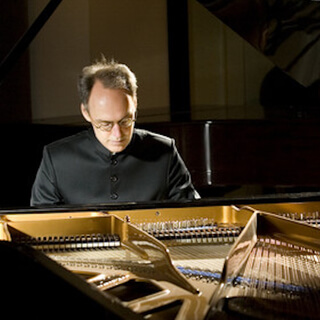
There's a composition called Seven Lady Names by composer Michael Harrison.
He is someone that I have known for a number of years before writing the book.
And when I wrote the book and I wrote about the seven leading names,
I thought that words can describe these names to a certain degree.
And I've tried to describe them to you just now with words.
But these are concepts and concepts are very limited.
But I thought it would be better if I could have some nonverbal or pre-verbal way to get an impression of these seven leading names that goes beyond concepts.
It's more of a direct experience.
So what you just described to me is a concept,
It's a mental concept.
But if we take all the thinking away and just get to sound,
Which is more subtle,
Then maybe it would awaken something in me if I listened to it?
Yes.
Well,
I think it's helpful to have the concepts first,
To have some framework.
But then when you listen to it,
The concept can come alive.
It can be more real to you.
It can be something,
An impression that you feel and not just something you turn around in your mind,
Which you can believe in or not believe in.
You can doubt.
But when you feel it,
Then it's something beyond the concept and it has more meaning.
Now,
Is this music instrumental or vocal?
Can you describe it a bit?
Yes.
Well,
I chose Michael Harrison for this music because two things.
Well,
First of all,
He has a good knowledge of Sufism.
He was taught by the same teacher that I was taught by,
Peerville Ayatt.
So he has a very similar context for understanding these seven leading names.
And the second thing is that Michael Harrison is a pioneer musician who has attempted to bridge Eastern and Western music,
Indian Raga music and Western music.
And he's done that in a very original and novel way.
And one way he's done that is to retune piano to the scale that the Indians use.
And that's a natural scale.
In the West,
We use a scale that's a compromise.
It's called a well-tempered scale.
And this was demonstrated by Bach in the well-tempered Clavier to show how it could work.
But the pure scale,
The natural scale of relationship between notes is the one that the Indians use.
And Michael Harrison has retuned a piano to reflect that natural scale.
And he calls it just intonation.
Right.
What I understand with the tempered scale is that there were different instruments and they had to all be able to play together.
So they kind of found notes that were close enough to be the same.
But it's not the pure vibrational note.
It's slightly changed.
It's a compromise for practicality in music.
It's a more practical scale.
Michael's gone back to the original tuning,
I think you'd say.
Yes.
And that gives the piano a different sound.
It's very resonant.
And to me,
It sounds a bit like a harp.
Oh,
Lovely.
I can't wait to hear it.
I'm so looking forward to it.
And when you listen to it,
How does it make you feel?
What kind of effect does it have on you?
Well,
First,
I want to say that Michael composes for a number of different modes of music.
So this music for just intonation piano is one type of music that he writes.
And another type is music for individuals,
Voices like soloists or for whole choirs.
And he also does music for groups of instruments like quartets.
So this seven leading names composition includes a variety of these different forms of music.
So some piano,
Some voice?
Yes.
Okay.
Fabulous.
I'm so looking forward to hearing it.
So you asked me what effect does it have on me when I listen to it?
Some of it I find is very abstract and it's very appropriate for those first stages of awakening of the consciousness.
It's very pure.
And it conveys to me the simplicity and the innocence of those early stages of the awakening of consciousness.
And then some of it is very touching.
It's very heart centered music.
And I think that's very appropriate for the later stages of this awakening after the read the awakening of desire.
Beautiful touching music is very appropriate.
And for those two awakenings that I mentioned for seeing and hearing,
I find that his music is very magical.
Something about seeing that,
You know,
Pervalai called it the aha moment.
When you get an insight,
You see something and then suddenly it resolves in you.
What might look chaotic comes into order and surprises you.
So there's something of that in the music for Basir,
The capacity to see.
And in the capacity to hear,
There's something magical about the sounds in that.
It's a little hard to describe,
But kind of bell like sounds and ringing sounds and celestial sounds I would say.
I imagine after I listened to the whole series,
I might feel very awake.
And does it make me feel like there's a reason for being by listening to it?
I mean,
Or is that stretching it too far?
I think if you grasp the whole import of the seven leading names and listen to his music as a sequence of awakening,
It can be inspiring personally as a parallel to your own awakening.
And the awakening to this idea of I was a hidden treasure and I long to be known and that I myself as an individual am a unique combination of these hidden treasure names.
And it's my purpose in life to live them fully,
To express them fully.
In doing that,
I'm also contributing to the purpose of the whole universe.
Wow.
You said a lot right there.
I'm going to have to think about that.
That's tremendous.
And what do you hope will be the impact of this book and music?
Well on the one hand,
I hope that it will be read by scientists with an open mind and that they will consider other forms of knowledge besides empiricism as having some validity.
And that ultimately I think there's a possibility that scientists and mystics could cooperate and collaborate at the boundaries where the outer life and the inner life come close together and maybe they can help each other to understand better the nature of reality.
It sounds like at the level of kalim,
Of expression,
The world is being expressed and the scientists can see that world and express their truths,
But mystics can work their way backwards towards pure awareness.
Yes,
I also think that science,
While it leads to a wonderful appreciation of the way the world works,
Which can be very inspiring,
Also leaves one with a feeling that for human beings at least,
There doesn't seem to be a great deal of meaning in the world.
Things just happen according to physical law,
But it's not clear what's the point of being a human being,
Having a human life.
It may be just an outcome of physical laws and it doesn't have any meaning beyond that.
So I'm hoping that this book will give people a feeling that yes,
There is further meaning and can be found in the inner life and it compliments the understanding that scientists have come to.
It's a wonderful,
Intricate,
Complex world has behind it something that is very inspiring and meaningful.
That's I think what the world needs right now with the stress and despair that a lot of people are expressing because things are changing so rapidly.
Whenever there's rapid change and uncertainty,
A lot of distress and by being able to dig deeper people maybe can find peace and calmness despite the surface turbulence.
Is there anything else you'd like to share with me about yourself or your book or the music?
Well I have been working on another book and it kind of grows out of the first two books.
In the book Nature's Hidden Dimension,
I deliberately tried to avoid using the word God because I know that that word is controversial.
Well there's a growing movement among scientists to question the idea of God,
The atheist movement.
I thought that it would be important to take that seriously from a spiritual point of view and to look into what meanings can be found for God that are relevant to our contemporary life and our scientifically informed life.
So that's what my next book is exploring.
Well I'll be sure to look for that.
It sounds like you're being very bold and courageous as a career astrophysicist but also as a mystic to blend the two awarenesses together.
Do you find there's a clear distinction between the inner and outer life?
Yes I think there's a very clear distinction.
And I hope that sometimes there's a feeling of antagonism between scientists and people in the spiritual field or the religious field and I'm hoping that in the future there can be more mutual understanding and this feeling of tension and conflict and having to debate each other can change to a more friendly relationship.
Yes in this arena and in all arenas it seems we've become quite polarized and maybe we're on the edge of developing a new human capacity to listen to each other and synthesize rather than to take positions.
I hope so.
It's been very helpful and I appreciate very much you coming on and talking with us and I wish you all the best with your books and your own inner explorations.
Thank you.
Thanks for having me.
Bye for now.
Bye bye.