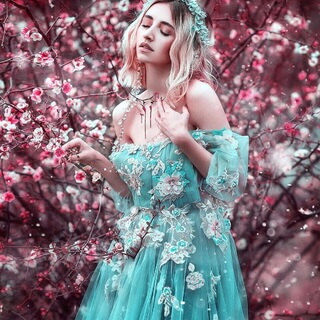
The Welsh fairies hold a meeting.
In the ancient gatherings the druids,
Poets,
Prophets,
Seers and singers all had a part.
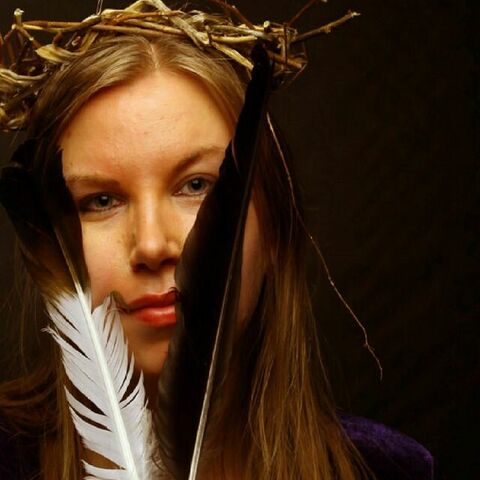
The one most honoured as the president of the meeting was crowned and garlanded.
Then he was led in honour and sat in the chair of state.
They called this great occasion a steffof,
Or sitting.
Now it happens that the fairies in every land usually follow the customs of the mortals among whom they live,
The Swiss,
The Dutch,
The Belgian,
The Japanese and Korean fairies.
As we all know,
Although they are much alike in many things,
Are as different from each other as the countries in which they live and play.
So when the Welsh fairies all met together they resolved to have songs and harp music and make the piper play his tunes.
The Gimbrick fairies of our days have had many troubles to complain of.
They were disgusted with so much coal smoke,
The poisoning of the air by chemical fuels and the blackening of the landscape from so many factory chimneys.
They had other grievances also.
So the Queen Mab,
Who had a Welsh name and another fairy,
Called Pocca,
Or in English King Puck,
Sent out invitations into every part of Wales for a gathering on the hills near the great rock called Dina's Seat,
This rocky chair formed by nature.
They also included in their calls those parts of western and southern England,
Such are still Welsh and spiritually almost a part of Wales.
In fact Cornwall was the outland in which the Kimri had first landed when coming from over the sea.
The meeting was to be held on a moonlight night and far away from any houses,
Lest the merry-making,
Dancing and singing of the fairies should keep the farmers awake.
This was something of which the men of the plough often complained.
They could not sleep while the fairies were having their parties.
Now among the Welsh fairies of every sort,
Size,
Dress and behaviour,
Some were good,
Others were bad,
But most of them were only full of fun and midchief.
One of these was the lively little fellow,
Puck,
Who lived in Puck Valley in Breconshire.
Now it had been an old custom which had come down from the days of the cavemen,
That when anyone died,
The people,
Friends and relatives sat up all night with the corpse.
The custom arose at first with the idea of protection against wild beasts,
And later from insult by enemies.
This was called a wake.
The watcher swept and wailed at first and then fell to eating and drinking.
Sometimes they got to be very lively,
The young folks even looked on awake,
After the first hour or two,
As fine fun.
Strong liquor was too plentiful,
And it often happened that growls broke out,
When heads were thus fuddled.
Men saw or thought they saw many uncanny things,
Like leather birds,
Cave eagles and the like.
But all these fantastic things and creatures,
Such as foolish people talk about,
And with which they frighten children,
Such as corpse-scandals,
Demons and imps,
Were ruled out and not invited to the fairy meeting.
Some other objects,
Which ignorant folks believe in,
Were not to be allowed in the company.
The door-keeper was notified not to admit the eagles of darkness,
That live in a cave which is never lightened up,
Or the weird,
Featherless bird of leather from the land of illusion and fantasy,
That brushes its wing against windows when a funeral is soon to take place,
Or the greedy dog with silver eyes,
None of these would be permitted to show themselves,
Even if they came and tried to get in.
Some other creatures,
Not recognized in the good society of fairyland,
Were also barred out.
To these gatherings only the bright and lively fairies were welcome,
Some of the best-natured among the big creatures,
And especially giants and dragons might pay a visit,
If they wanted to do so,
But all the bad ones,
Such as lake-hags,
Wrets,
Sellers of liquids for wigs who made men drunk,
And all who,
Under the guise of fairies,
Were only agents for undertakers,
Were ruled out.
The night-dog of the wicked hunter,
The monster Eyfang,
Catwalader's goats,
And various crew-goblins and ogres,
Living in the ponds and that put cattle down to eat them up,
And the immodest mermaids,
Whose bad behavior was so well known,
Were crossed off the list of invitations.
Now ugly brats,
Such as wicked fairies,
Were in the habit of putting in the cradles of mortal mothers,
When they stole away their babies,
Were allowed to be present,
Even if they should come with their mothers.
This was to be a perfectly respectable company,
And no bawling,
Squealing,
Crying,
Or blubbering was to be permitted.
When they had all gathered together,
At the evening hour,
They were seen in the moonlight,
The funniest of creatures that one could imagine,
But all were neatly dressed and well-behaved,
Quite a large number of the famous fair family,
That moved only in the best society of fairyland.
Fathers,
Mothers,
Cousins,
Uncles and aunts were on hand,
In fact some of them had thought it was to be awake,
And were ready for whatever might turn up.
Whether solemn or frivolous,
These were dressed in variety of costumes.
Queen Mab,
Who above all else was a Welsh fairy,
Was present in all her glory.
When they saw her,
Several learned fairies,
Who had come from distance,
Fell at once into conversation on this subject,
One remarked,
How would the queen like to add another syllable to her name?
Then we should call her Mabgat,
Which means a kitten,
Or a little puss.
Well not so bad,
However,
Because many mortal daddies,
Who have a daughter,
Call her puss,
It is a term of affection.
With them aunt the little girl never seemed to be offended.
Oh,
Suppose that in talking to each other we call our queen Mabgar?
What then?
Asked another with a roguish twinkle in the eye.
It depends on how you use it,
Said a wise one dryly,
This fairy was a strickler for the correct use of every word.
If you meant babyish or childish,
She or her friends might demur.
But if you use the term love of children,
What better name for a fairy queen?
None.
There could not be any.
They shouted all at once,
But let us ask our old friend the harper.
Now such a thing as inquiring into each other's ages was not common in fairyland.
Very few ever asked such a question,
For it was not thought to be polite,
For though we hear of ugly fairy brats being put into cradles in a place of pretty children,
No one ever heard either of fairies being born or dying or having clocks or watchers or looking to see what time it was,
Nor did doctors or the census clerks or directory people ever trouble the fairy ladies to ask their age.
Occasionally,
However,
There was one fairy so wise,
So learned,
And so able to tell what was going to happen tomorrow or next year that the other fairies looked up to such a fairy with respect and aive.
Yet these honourables would hardly know what you were talking about if you asked any of them how old they might be or spoke of old or young,
If by any chance fairy did use the word old in talking of their number.
It would be for honour or dignity,
And they would mean it for a compliment.
The fact was that many of the most lively fairies showed their frivolous disposition at once.
These were of the kind that,
Like kittens,
Cubs or babies,
Wanted to play all the time,
Yes,
Every moment.
Already hundreds of them were tripping from flower to flower,
Riding on the backs of fireflies or harnessing nightmoths or any winged creatures they could saddle for flight through the air,
Or they were waltzing with glowworms or playing ring-around-the-rosy or dancing in circles.
They could not keep still one moment.
In fact,
When a great crowd of the frolicsome creatures got singing together,
They made such a noise that a squad of fairy policemen,
Dressed in club-masks and armed with pistols,
Was sent to warn them not to raise their voices too high,
Lest the farmers,
Especially those that were kind to the fairies,
Should be awakened and feel in bad humour.
So the knoth of learned fairies had a quiet time to talk and when able to hear their own words,
The harper,
Who was very learned,
Answered their questions about Queen Mab as follows.
Well,
You know the famous children's storybook in which Mootus read about us,
At which they say they enjoy so much,
Is named Mabinjoon,
That is,
The young folks' treasury of Gimbrick stories.
It is well named,
Said another fairy summoned,
Since Queen Mab is the only fairy that waits on men,
She inspires their dreams,
When these are born in their brains.
The talk now turned on Pak,
Who was to be the president of the meeting.
They were expected to show much dignity in his presence,
But some feared he would,
As usual,
Play his pranks,
Before he arrived in his chariot,
Which was drawn by dragonflies.
Some of his neighbours that lived in the valley near,
Chatted about him,
Until the gossip became quite personal.
Just for the fun of it,
And the amusement of the crowd,
They wanted Pak to give an exhibition offhand of all his very varied accomplishments,
For he could beat all rivals in his special variety,
Or as musicians say,
His repertoire.
No,
Would it be too much like a Mary Andrews,
Or a Buffoon's sideshow,
Where the freaks of all sorts are gathered,
Such as they have at those county fairs,
Which the mortals get To which are gathered great crowds,
The charge of admission is a sixpence,
Well for the very reason that Pak can beat the rest of us at spells and transformations.
I should like to see him do for us as many stunts as he can.
I have heard from a mortal,
Named Shakespeare,
That in one performance,
Pak could be a horse,
A hound,
A hawk,
A bear without a head,
And even kindle himself into a fire,
While his vocal powers,
As we know are endless,
He can neigh,
Bark,
Grunt,
Roar,
And even burn up things.
No,
I should like to see the fairy that could beat him at tricks.
It was Pak himself,
Who taught the world,
That he was in the habit of doing all these things,
And I want to see whether he was boasting.
No,
Don't talk that way about our king,
Said a fourth fairy.
All this was only chaff and fun,
For all the fairies were in good humor.
They were only talking to fill up the interval until the music began.
Now the canny Welsh fairies had learned the trick of catching four things,
Pennies and sixpences,
From the folks who have more curiosity in them than even fairies do.
These human beings,
Cunning fellows that they are,
Let the curtain fall on a show just at the most interesting part.
Then they tell you to come next day and find out what is to happen,
Or as they say in a story paper,
To be continued in our next.
For worse than all,
The storyteller stops at some very exciting episode,
And then passes the hat or collection box around to get the copper or silver of his listeners before he will go on.
This time,
However,
It was Pak himself who came forward and declared that,
Unless every one of the fairies would promise to attend the next meeting,
There should be no music,
Nor a meeting of the Welshery,
Whether fairies or human,
Without music was a thing not to be thought of.
At first some fairies grumbled and held back,
And were quite sulky about it,
Even muttering other grumpy words.
They at last all agreed,
And Pak sent for the fiddler to make music for the dance.
The end.
Thank you for listening.