It was just about this time that some people arrived and told Jesus about the Galileans whose blood Pilate had mingled with that of their sacrifices.
At this he said to them,
Do you suppose these Galileans who suffered like that were greater sinners than any other Galileans?
They were not,
I tell you,
No.
But unless you repent,
You will all perish as they did.
Or those eighteen on whom the tower at Siloam fell and killed them,
Do you suppose that they were more guilty than all the other people living in Jerusalem?
They were not,
I tell you,
No.
But unless you repent,
You will all perish as they did.
He told this parable,
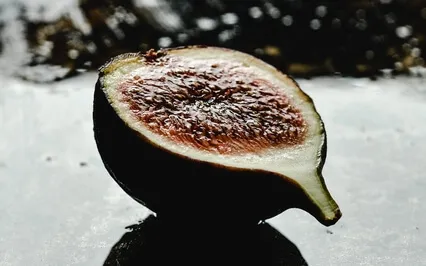
A man had a fig tree planted in his vineyard,
And he came looking for fruit on it,
But found none.
He said to the man who looked after the vineyard,
Look here,
For three years now I have been coming to look for fruit on this fig tree and finding none.
Cut it down.
Why should it be taking up the ground?
So the man replied,
Leave it one more year and give me time to dig around it and manure it.
It may bear fruit next year.
If not,
Then you can cut it down.
The gospel of the Lord.
Praise to you,
Lord Jesus Christ.
I couldn't help but think while reading this gospel of St.
Luke of the current war that is being fought and of the utterances of one of the patriarchs on saying that it is because of sin and a sinful country that they are being attacked.
And yet here we see the words of our Lord.
We see the words of Christ.
Do you suppose that they were more guilty than all the other people?
They were not.
I tell you,
And seeing that together,
I can already see this message going into fire and brimstone.
Repent,
Repent,
Repent.
Yeah,
Maybe that is what we need to do.
And then Jesus tells this parable.
Now,
I love gardening and I am blessed to have some space for plants and it's not much,
But there is some space.
And I'm all for planting functional plants,
Planting food.
What an amazing,
Amazing blessing,
Isn't it?
To be able to plant your own food.
And so because I don't have masses of space,
What I tend to do sometimes is to get overexcited.
And I plant many different things close together.
And when I see plant them so far apart,
I will half that because what do other people know?
So a couple of times now,
I've tried to plant cabbage,
Easy to grow.
And the plants come up beautifully,
But they never turn into cabbage.
They grow yay high,
But they never become cabbages that I can pick and I can make food out of because I don't look after it properly.
I don't follow the guidelines as I should.
I think that I know better than people who have studied plants for many,
Many,
Many years.
And I think my garden will be different.
My garden is one where I can half the distance between the plants,
Easy.
And then I get upset when the plants don't grow as expected.
And I've had to reach a stage where when these cabbages grow in completely different forms than expected,
I then have to make this decision of they're not doing me any good.
Cut them out.
So I know very,
Very well how this farmer feels.
But of course,
Jesus told this as a parable.
God said to his son,
His son,
The keeper of the vineyard of his people,
These people are not living lives that I want them to.
Their lives are not bearing the fruits of love.
Now,
This is a very interesting thing to say,
Because let's not put this into context.
At that moment,
The Roman Empire was spreading all across the world as they knew it.
And Pilate spilled blood and the Romans had spilled a lot of blood.
So I don't think the Jewish nations,
The Galileans or the Jewish sects were really interested in much love at that very moment.
And up until that moment,
We must also remember that.
As an Abrahamic tradition and an Abrahamic religion,
The Jewish people didn't necessarily get to God through love.
They got to God through obeying the law of Moses.
And it's beautiful and it's difficult,
But God expected fruits of love and he didn't see that.
And so he said to the keeper of the vineyard,
To Christ maybe,
They must go.
They are not,
After everything,
After all this time,
They are not bearing the fruit that I expect.
And it's interesting here because we expect God to know everything and God does.
But they go through these moments and discussions to make things understandable for us,
Where the keeper of the vineyard,
Jesus says to God,
Leave it one more year.
Give me time to dig around and to manure it.
It may be fruit next year.
If not,
Then you can cut it down.
Send me father.
Let me try and nourish them.
Because isn't that what we do if we put manure in the ground?
We nourish the ground.
We nourish the plants that grow in that ground so that they can jump up and grow to be beautiful and strong and to bear fruit.
My mother brought me a couple of sacks of chicken manure that had been dried and fermented in the free state and I strew it all over the garden.
And wow,
My cabbages still didn't carry,
Become cabbages,
They just grew taller.
But the garden came alive and those plants that were planted properly,
Sometimes I do listen a little bit,
Bore the most amazing fruit.
And in this parable,
We see that we have an opportunity to go and to bear this beautiful fruit.
And then what happens then?
What if?
What then?
What then?
Why should it matter?
Because we see in the beginning of this parable,
The man came looking for fruit.
He wanted to enjoy the figs of the fig tree.
God wants to enjoy the love that we share with each other.
The love that we have for God.
And Jesus came to take us out of this strict rule based system of belief and to show us another way.
And as Christians,
We believe that Jesus fulfilled everything,
All the commandments in the Old Testament to bring us the two new commandments.
Love God,
Love your neighbor as yourself,
Just that.
And in this,
We see the parable in a different light.
Jesus digging around us,
Clearing space for us,
Taking out the weeds maybe,
And allowing us the opportunity to grow and not just to grow,
But because we have this extra space to bear the fruit that God expects us to bear.
But let's leave this very,
Very,
Very clearly.
And we have to acknowledge this.
Jesus doesn't force us to bear this fruit and Jesus doesn't bear the fruit for us.
Jesus allows us the opportunity to bear fruit.
We have free will.
Jesus offers us the opportunity to heaven,
To be in communion with God and not necessarily something way down in time,
When we're very old and we pass away,
Now.
The kingdom of God is here now.
And when we can start to experience that God is in each one of us,
And we can start and honor God inside of each person,
And we can honor God inside of us,
And we can honor God as all,
As I am,
As God said to Moses,
Not I am God,
I am,
God is.
When that realization fills us,
Everything changes.
And for brief moments in time,
We can be in full communion with God and we can experience heaven right now.
And then we can also share the message of Psalm 102,
The Lord is compassion and love.
So as we go into this week,
Difficult as it may be,
Rather than the usual weekly challenge,
As we want to call it,
Where we see God in each of us,
In every other person,
Why don't we change that up slightly?
And when we meet another person,
Let's go in,
And as we meet them,
As we greet them silently to ourselves,
Let's say,
Let me see the compassion and love in you,
Lord.
Amen.