Welcome,
And today I'm really excited about today's conversation.
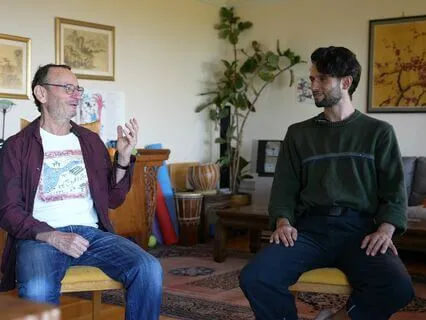
We have the philosopher Jeremy Lent,
Who is an integrator of many different disciplines,
Bringing together a holistic and empowering worldview of who we are as individuals,
Ideas that can help us find a sense of meaning,
And also help us understand some of the big challenges facing humanity today.
And so it's a really interesting synthesis.
And Jeremy,
Thank you so much for being with us.
Oh,
George,
I'm so happy to be in conversation with you here today.
Looking forward to it.
Amazing.
So let's start.
I mean,
There's so much we can talk about.
And what I will want to get into later is the relationship between how we understand ourselves and what's happening in the world,
Which I think you really powerfully talk about.
But the listeners and viewers on my channel,
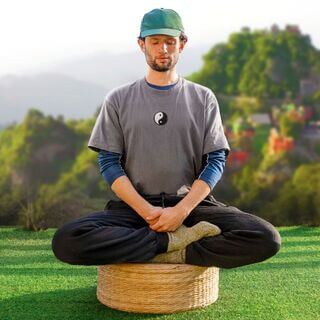
We've been exploring Taoism,
This ancient Chinese philosophy.
The yin-yang is often most associated with it.
And one of the key concepts in the ancient philosophical world of China is wu-wei.
Effortless action is this concept of sages effortlessly gliding through life without any conflict or problems.
And it seems that there is something about us human beings that find it hard just to relax and spontaneously live our lives as compared to the other species that share this planet with us.
So it'd be good to maybe just start there with why have you found out in your explorations,
Do human beings find it difficult just to relax into enjoying their lives?
Yeah,
Yeah.
Well,
You know what's so interesting is I think the Taoists are the source of exploring this.
So even though we can explore it from all modern perspectives,
Like neuroscience and stuff.
In fact,
One of the best places is to look at how the Taoists ask this question because like you say,
They looked at the rest of the world acting in wu-wei.
And when they looked at humans,
What they saw was with the exception of people like Cook,
Ding and the swimming,
You know,
These people who are like superhuman almost who transcended the normal human place.
They saw that they acted with something they called yu-wei which is the kind of the opposites of wu-wei.
So wu-wei means like action without a purpose and yu-wei is purpose of action.
So they described yu-wei as things like if you use some pump to pump water up a hill,
That's kind of going against the flow of nature.
And of course,
This is the quandary because that's what civilization is all about.
Everything that is human technology,
Human activity does seem to go against the nature,
Whatever is uniquely human.
And they saw the source of that in like a different kind of consciousness.
Like they saw language as being like the one of the fundamental things that separated us from the Tao.
And in fact,
You know,
The Tao Te Ching begins like,
You know,
The Tao that can be spoken is not the true Tao because as soon as you put it into language,
You lose something.
And that's what's so fascinating is what modern neuroscience has shown.
It kind of validates exactly that Taoist view of our human condition.
That we have what nowadays we can think of as like an animate consciousness or an animate intelligence,
Which is like that wu-wei,
The same kind of intelligence that all other creatures have.
And it's the intelligence of our body,
The ability when we get into the flow and we just lose that thinking capacity and we just go with whatever we're doing.
And we have a conceptual consciousness that which is the very part that enables us to have language,
To develop technologies,
To develop civilization.
And that's what separates us from the Tao.
So what's interesting is that the Taoists saw like the path to sort of try to get back to wu-wei.
And when we look at it nowadays from this point of view of this kind of split consciousness,
We can take that as an inspiration to develop what I call an integrative consciousness.
One where we don't say like a wu-wei is better than yu-wei,
Like there's something bad about us humans because we have this cognitive capability.
But then,
But rather,
How can we actually integrate the two into one big holistic whole?
How fascinating,
Yeah.
And something that your work has helped me understand is that whole array of consciousness that is on this planet,
Not as if human beings are just dispersed here,
Dropped by parachute into a dead alien planet.
But in fact,
We come out of this planet and that consciousness flows through all the species on this planet.
And so then this kind of separate conceptual consciousness,
Making in language that then separates us and makes it difficult for us to just relax into enjoying ourselves.
Is that a fair understanding of the kind of the difference between us and the other species on this planet?
I think it is.
And what's interesting is that in the Western tradition,
The last few hundred years,
There's this idea developed that intelligence,
That there's a kind of a certain human intelligence that we measure with IQ and stuff like that.
And that's true intelligence.
And oftentimes mainstream old school biologists will say,
Well,
Animals don't really have true intelligence.
They just,
They might look intelligent,
But it's just kind of a program that their genes have programmed them to act.
And there are basically all kinds of zombies just doing what their genes tell them.
But actually what more recent science shows is what the Daoists understood,
That there's this deep intelligence within nature.
The Daoists called it De,
Like this kind of intrinsic knowledge or power of nature.
That's where the title Dao De Qing,
That's the De in that title.
And what we can then see is that animate consciousness that we all have as human beings,
Rather than denying it,
We can recognize it's our bridge with the intelligence of all life,
The intelligence of life itself that's evolved over billions of years.
So much so that,
You know,
It's an interesting thought experiment,
But if some alien civilization were to like discover earth and come and land and want to make contact with the intelligent species on this earth,
We just assume obviously,
Oh,
Well,
Of course it would be humanity that they'd want to talk to.
But maybe they'd look and they'd say,
Well,
Look at,
You know,
Basically 80% of the biomass of the species is vegetation that has like multiple senses and can actually network in this amazingly profound ways.
They might consider trees and forests and vegetation to be the true intelligent species on this earth for all we know,
Or fungal mycelial networks.
There's this amazing distributed intelligence that animate intelligence really is superbly specialized in that we can access also as human beings by doing that kind of moving towards that Wu way by feeling into our own animate consciousness.
Beautiful.
Yeah.
Evolution can be a controversial subject,
Which is interesting.
And to me,
When I learned about this kind of new understanding of evolution,
Which isn't as cold,
Calculating,
Materialistic and atheistic,
You know,
Just we're blind,
Genetic,
Dumb robots governed by our genetics.
And yeah,
That's a very cold and depressing understanding of ourselves,
Which is why I imagine so many people reject evolution.
But my understanding is that that isn't actually how evolution is found to work with the latest science.
Is that correct?
Yes,
You know,
That's the thing.
And I went through this process myself.
I spent years of my life in the kind of middle of my life,
Really looking for meaning.
And I was determined to not reject what intellectual understanding told me.
So I didn't want to just kind of do a leap of faith and just believe in some God or some spirit or whatever that was unscientific.
And for years,
I got stuck in this place.
Well,
Richard Dawkins,
Selfish gene,
Everyone seems to believe that's true.
And and everyone.
And these scientists tell us actually the universe ultimately is meaningless,
Just billiard balls hitting each other.
I guess I better accept that.
And then I discovered system sciences and I discovered that they showed us this deep importance of interconnection and actually intersected with the great wisdom traditions,
Like indigenous knowledge or Daoism or Buddhism.
And that led me to this different understanding,
Which as then I began to go deep into biology and evolution.
And I found there was this whole different way,
A much more profound way of understanding how evolution actually works.
In fact,
We can see it more rather than that.
We're driven by selfish genes.
We can see this kind of consider life itself as a process.
Now,
This is not,
Again,
Trying to make some divinity and say,
Oh,
There's this God called life.
But it's more that once we get to recognize this self-organized process that began on this earth billions of years ago,
And it's basically this miracle of taking entropy out there and putting it into this organized,
Unfolding stuff that is coherent and makes sense.
We can see that actually it's as if life itself discovered genes as a really powerful way of encoding its own intelligence and passing it on to the next generation,
Which is done now for billions of years.
And each of us are really,
We're not separate from life.
And we're actually part of this amazing unfolding intelligence that really is Gaia,
This kind of incredible process that integrates both the planet Earth with life's process of unfolding in a way that is so,
It's just mind blowing.
Once we get to realize that,
We get to see the evolution itself is this incredible unfolding,
Really like this miracle that's given us this abundance of richness of diversity that we have on the earth today.
Yeah,
And celebrating the actual creativity of the organisms themselves,
Because they're kind of the old Dawkins model just assumes,
Okay,
We're blind biological machines.
So any sort of success of an organism within their lifetime is just the credit goes to the genes rather than the creativity of the organism.
An example that I read from our evolutionary story is fire.
So yeah,
We found ashes close to the fossils of our hominid ancestors from 500,
000 years ago,
Even as late to a million years ago.
And you can imagine that our ancestors,
There was a lightning storm,
Fire started and our ancestors kept this flame alive.
And over generations passed down this knowledge and started cooking food.
And we can see in our biology and our guts that the fact that we cooked food,
It unlocked this whole new level of energy for us.
And so the biology reflected the creativity and problem solving of our distant ancestors.
Yeah,
And that is a beautiful way of getting into this whole complex process of evolution,
Which is that it's a bunch of feedback loops.
Basically,
We need to understand evolution like so many,
Essentially,
Any complex,
Emergent,
Big concept,
Whether it's mind or life or consciousness and evolution.
Similarly,
As the emergent process of complex,
Reinforcing feedback loops.
So in your sense,
There was this from our social intelligence,
Like humans had to develop this intelligence to sort of work together collectively when they found themselves in the savannah some millions of years ago.
And they developed this way of understanding things that led them to see the power of fire.
But then,
Like you say,
The fire itself,
The use of fire allowed them to evolve in terms of how they digested food,
Which then allowed those parts of the brain to actually get even bigger and more effective.
So you get these reinforcing feedback effects,
Which is known nowadays in evolutionary circles as niche construction.
And what scientists now show is that it's not just humans that do this.
All animals do this.
When birds build nests,
They create this niche of the nest.
And so the eggs evolve in certain ways that they are optimized for that nest.
And so in each case,
Whether it's spiders with their webs or beavers with their dams,
They actually are co-creating their environment and with the natural world,
Which leads to all these amazing complexities that we see on the Earth today.
And to me,
That's such a much more inspiring and invigorating understanding of the unfolding story of intelligence on this planet.
It's not just dumb biological machines denying the consciousness and creativity of all species.
But actually,
Yeah,
We are part of this unfolding complexity.
And that complexity unfolds not only through this blind natural selection,
Which obviously is an important factor,
But also through birds working out how to make nests and over generations getting better at it.
Yeah.
And so in this kind of post-truth world,
Cliche sentence,
I mean,
There's kind of,
Are there any go-to things that you would recommend for viewers to look at evolution?
And just because there is so much evidence for it,
But and yet it is still so controversial.
So I don't know if you have any recommendations,
Because even in the spiritual world,
There's kind of this often denial of evolution and feeling it doesn't match people's spiritual intuitions.
Are there anything that you would guide people towards looking at to try and understand the facts behind the story of evolution?
Well,
There's some incredible,
Powerful books that explore that in really,
Really great ways.
There's the author Lynn Margulis,
Who was one of the leading thinkers over the last few decades and explaining how,
In her words,
Evolution didn't get the way it got to through competition,
But through networking.
And yeah,
She's co-written a couple of books that we can put down in the notes of this conversation that people can research.
And there's this beautiful book called The Dance of Life by somebody called Dennis Noble,
Who looks at how we can understand life,
Not in terms of these ways of these machine-like genes and robots and all this nonsense,
Basically,
But how we connect.
The best metaphor to understand life itself is a dance,
Is the way in which everything interacts in this beautiful,
Complex ways with other things to create the world that we have today.
And I think that what is critical to understand is that rejecting this reductionist approach to whether it's evolution or science in general does not mean rejecting science.
This is a journey I went on for a number of years before I really got to understand it fully,
Because science is not actually reductionism.
I mean,
And even though there's a big overlap between them,
Because reductionism- Could you define reductionism?
Sure,
Yes.
Exactly.
That's what I was thinking.
It really began with the scientific revolution back in the 17th century with people like Descartes and Francis Bacon and even Galileo,
Those great scientists of those times.
And Descartes was the one who actually defined reductionism.
He basically said,
We kind of get to see that if we separate out the object of study into smaller and smaller pieces and just really study that hard,
We can understand a lot more about life and about understanding.
And it was powerful.
In fact,
It was such a great project.
It led to not just the scientific revolution,
But all the technology we have today.
It's understanding all the little parts that give us the ability to understand,
Say,
Basic things like the germ theory of disease or electricity or the Internet allowing us to talk to each other over thousands of miles right now.
So reductionism,
Wonderful.
It's one of the greatest triumphs of the human brain,
Basically.
But it was so powerful that a lot of scientists got to think reductionism didn't just explain a lot of stuff,
But it explained everything,
The entire universe.
And there was no other way to explain that.
And that's what led to this mechanistic version of the universe saying that it's all just like a bunch of separate things hitting each other.
In fact,
There's a very equally scientific,
Rigorous way of looking at things that looks at the connections between things rather than just how they're broken down into their different parts.
And that's basically,
You can think of that as systems thinking.
Anything like complexity science,
Systems biology,
Chaos theory,
All these things are scientific ways of looking at how things interconnect.
And that doesn't,
Those sciences don't reject reductionism.
They just say,
In addition to looking at those separate parts,
We need to look at the complex ways in which things relate to truly understand them at different levels of understanding.
So it's not like an either or thing.
It's a yes and thing,
But it's really the reductionist approach to evolution is what gets stuck in these little selfish genes.
And it's been shown now over decades to be just way too limited in understanding to be correct.
And this systems understanding,
Look at how things interact in these complex ways.
Don't just explain evolution and life better.
They also show that the distinction that we think is,
Needs to be made between science and spiritual understanding is actually a false distinction because these systems ways of understanding the world naturally lead to the sense of this deep connection within ourselves with the mystery of what's unfolding.
And this recognition that it can't all be predetermined,
That it's not just a fixed,
Meaningless set of stuff,
Which leads to a whole set of implications with very deep spiritual meaning to them.
Yeah,
And I think that's so powerful and important,
Taking that perspective to see like,
Who am I?
Where do we come from?
These are some of the key questions that you ask in your book,
The Web of Meaning.
And because when we have that understanding of ourselves,
It gives that perspective from which then we can begin to evaluate the sort of options that are available to us and the sort of things that are deemed important,
Celebrity culture and soccer.
Meanwhile,
The planet burns.
So,
Yeah,
It's because,
You know,
For example,
We'll get into more kind of human systems later.
But I studied economics at uni and we were taught that economics in Greek means household management.
But we become so preoccupied of how to make the kitchen as efficient as possible and what's happening in the bathroom that we forgot to take a step out of the economic household and just look at it and see that it's resting and held up by the earth.
All of our prosperity depends upon the earth,
Upon which we all stand and all of our natural resources come from.
And yet in my three years of study,
My professors never even stopped to think about where all the stuff that we buy comes from.
And so,
Yeah,
That kind of the lack of taking a holistic point of view.
Another really interesting emergent system is consciousness and something that emerges out of us.
And a question that one of the audience had was around meditation.
And you've been doing your kind of explorations of consciousness.
And yeah,
When we are meditating and we are observing our thoughts,
Could you talk a bit about what's going on there?
Like who's doing the observing?
Zen Buddhism talks about two minds.
Yeah.
Try and help us understand what's going on there.
Yeah,
I know that's it is a wonderful area to explore.
And maybe a good place to begin looking at it is from what we were talking about earlier,
That notion of what the Taoists understood,
That split human consciousness,
That animate and that conceptual consciousness.
And when we look at who we are as human beings,
Even our normal language shows that we all kind of intuitively recognize that we have a split consciousness.
Like I can talk to you about how,
Yeah,
You know,
That thing I did yesterday,
I was really mad at myself.
I was so,
I'm really beating myself up about it.
And you know what I'm saying.
It's not like I've gone totally nuts,
Right?
But then if you just stop and think for a minute,
You say,
Wait a minute,
I was beating myself up about it.
Well,
Who is I and who is myself?
And this is this wonderful way of leading into this question about consciousness and meditation.
If we look at that Taoist split,
Or that split between the conceptual and the animate consciousness,
That maps somewhat into when I say I,
I'm usually referring to that conceptual consciousness,
That sense of this recognition that I am a separate self,
That I have a separate agency.
I have a history.
I have a future.
I have values.
And then I have a self.
And myself is more like this animate consciousness.
It might change moment to moment.
That self might be hungry one moment or scared another moment or.
And so I relate to myself and I go,
You know,
I'm talking to George right now,
So I don't need,
I don't need to,
You know,
Scratch my ear or whatever.
I can,
I can hold that up.
So I sort of,
I'm having this ongoing dialogue with myself at all different times.
Now,
When we meditate,
You know,
We're told by a meditation teacher,
Just be aware of what arises,
Right?
So you don't judge.
Just be aware.
So as I'm doing that,
Who's being aware and what is rising?
Well,
This is where the I in the self gets to have play this part that I am aware that the self has a thought that runs through or the self has a,
My leg is itchy or all these different things.
Or there's a part of me goes,
When am I going to be done meditating?
And then I try to learn to not judge and just be aware of this unfolding like flow,
This amazing river of consciousness that is just continually unfolding.
And when we don't judge it,
It's what an amazing thing happens because it's as if a new layer of consciousness emerges.
So rather than being just the I in the self,
There's this greater being,
Which we can almost conceive of as Buddha nature from a Buddhist standpoint,
Or you can just kind of consider it in other ways.
It's basically just a greater self or consciousness itself or whatever.
We can begin to look at the I and the self from this greater perspective.
And when we do that,
It enables in a way,
Some of those barriers to get to dissolve.
And so then we actually begin to sense a more of a connection with everything else around us too.
Connection with the past,
With the future,
With all of life,
And with just the field of energy itself,
Like connecting almost with some layer of some greater consciousness of the universe.
All these things become available to us when we can just develop this faculty of just pure awareness.
Yeah.
One of the most powerful practices in my own journey with meditation and trying to understand who I am is sitting quietly in nature and just allowing to see what comes up and connecting with that point of awareness that all of my thoughts that I construct to create the story of George all flow past this point of consciousness and to then try and relax into it.
And the Taoists have wonderful stories about letting go of that kind of ego and the I and the self and just being one with the Tao,
Being relaxing into just kind of being that awareness without having to kind of compartmentalize it or contain it.
Maybe we could take that consciousness even further.
I'd be interested to see what you think about this.
So,
You know,
Cells are a self-organizing system,
No boss,
No blueprints.
And we found in the conversation we've explored so far that we too,
Human beings,
Are part of this unfolding story of intelligence,
Self-organizing,
Spontaneous,
No boss,
No blueprints.
We are conscious,
Highly evolved consciousness.
The earth has a magnetic field,
It has atmosphere,
It has all of these incredible qualities.
It's a self-organizing system.
The sun,
Although it's the one constant we can rely on,
Comes up every morning.
It itself is in perpetual flux and all the way to the universe.
So if fractally embedded from the astonishingly small atom to the universe itself,
It's all self-organizing systems all the way up,
Is the universe alive in the same way that we are alive?
What's your thoughts on how the consciousness then manifests itself in bigger and bigger systems?
Yeah,
I know.
These are profound questions.
And there's this concept of panpsychism,
Which basically sort of answers what you're saying by saying,
Yes,
In fact,
The universe itself is conscious.
And every little atom and every little sub-particle system within the atom is to some degree conscious.
And in fact,
There are some very serious scientists.
There's one guy called Giulio Tononi,
One of the leading scientists in neuroscience and systems understanding of neuroscience,
Who has developed what he calls an integrated information theory of consciousness,
Which leads scientifically to this notion that you can define consciousness as being the sort of coherent meaning arising from a system over and above just what the parts themselves can do.
And under that scenario,
Everything is conscious.
And so most clearly then the universe itself is.
Now,
Personally,
I look at that and I get that,
And I don't disagree with it in the slightest.
But to me,
I ask myself,
What is the implication of that?
What's the meaning of that?
Because it's a little bit like we can think of consciousness then like a spectrum.
So maybe there is an experience or a consciousness that is in that atom,
Or maybe this glass itself,
Not even the water,
Just a glass,
Has a certain level of consciousness.
But what does that really mean?
I mean,
We know that if I smash that glass,
I don't think the glass is going to suffer.
It's not,
I mean,
I'll suffer because it'll feel bad to break the coherence in something of beauty or whatever,
But it won't actually sort of do something.
But to me,
Even if I accept that everything,
There's a level of consciousness everywhere.
To me,
The most miraculous stage increase in that spectrum is when life emerges.
Because life takes that layer of consciousness and it brings it to a whole different reality where even the tiniest little cell,
Even the first proto cells on earth,
Billions of years ago,
They developed something else.
They developed a sense of value.
And even the tiniest little cell at the earliest stage was said,
This chemical,
This molecule is good for me because it enables me to keep catalyzing other things and take the energies of the sun and keep growing.
That one's not good for me.
It kind of blows my system up.
So I choose this and I don't choose that.
And that's where basically a different layer of intentionality,
That's where value really first enters into the universe at that moment.
And of course,
We can expect that very likely that layer,
That quantum leap in consciousness probably exists in many places around the universe.
I don't believe the earth is the only place at all where that is the case,
But it's the only one we know of.
And that's where life on this place,
On this earth is so miraculous because I think what we can accept is the universe in itself organized capacity,
Set the conditions for life to occur.
In that sense,
We can revere the glory of this incredible unfolding massive and sort of this reality,
This manifestation that is so far beyond what our brains can even begin to comprehend.
And all we can do ultimately in my mind is just feel a reverence for that glory.
And then we can recognize there's a certain,
I call it divinity that arises with life itself.
This way in which something emerged of which we are part,
Which is so much bigger than us and which really connects,
Really enables the universe to kind of reflect on itself through our own human consciousness.
And that to me,
When we see that we're part of this thing,
We realize the divinity is there within each of us.
We can look in the mirror and we can see that God,
We can see the universe itself looking back at us.
Wow,
So powerful.
And yeah,
So much of that resonates with how I understand myself.
I mean,
My journey with,
Yeah,
I grew up as an atheist and then came to all of this world by mistake.
And yet I realized that in my own life and it does seem to me more generally,
There's this kind of great longing to reconnect with who we are.
We kind of have this surface level,
A kind of association but actually just to revere ourselves and to celebrate ourselves and to realize that,
And if we look to what's true about human beings in general or nature in general,
That there's this immense capacity of creativity and resilience and beauty.
And so,
Yeah,
We can kind of rely on that perspective.
When we kind of beat ourselves up and maybe think we're this,
We actually remember that we're so much more.
Something that was new to me when I read your book was the Neo-Confucian understanding of the universe,
Which I think is super powerful and powerful for its simplicity.
I was wondering if you could talk to us about that.
Yeah,
And the Neo-Confucians were another discovery that I just kind of stumbled on in my own journey of exploration over a number of years.
And when I came across them,
I was going,
Why do people not know about them?
I mean,
People who explore non-Western ways of thinking,
They may easily come across Buddhism,
Which thankfully is now quite well understood in many parts of the West.
And then if you kind of go further,
You come across Taoism and you go,
Wow,
This is so cool.
But nobody ever hears about Neo-Confucianism.
And if you do,
It sounds so scholastic.
It's like,
Oh,
Isn't that something that gets studied in some Chinese graduate school or something?
And yet the Neo-Confucians were this group of sages and philosophers from about a thousand years ago and during the Song Dynasty in China,
Who I feel did the most incredible job of actually synthesizing the three great thoughts,
Traditions in China at that time,
Which were Taoism and Buddhism,
Which had entered from India and Confucianism,
Which was obviously a part of Chinese thought for over a thousand years.
And what they did,
Interestingly,
At that time,
They thought that Taoism and Buddhism had too much power over Chinese culture.
So their whole project was to try to get a new Neo-Confucianism and reject Taoism and Buddhism.
But they actually called themselves the school of the Tao,
In fact.
But they weren't trying to do Taoism.
They were trying to show that Confucianism really was understanding the Tao.
So it's kind of interesting.
But what they did,
Because these ideas of Taoism and Buddhism were so infused in consciousness at that time,
That rather than refuting them,
They ended up creating a synthesis of those traditions,
Which I feel is not just so powerful and explanatory,
But also aligns perfectly with our system's understanding of the world right now.
And when they looked at the entire universe,
They were basically trying to refute the Buddhist notion of like sort of no existence.
Like they just hated this Buddhist idea to say,
The whole of,
And ultimately it's all about emptiness.
And they were saying,
No,
It's not emptiness.
There's stuff all around.
This is like life.
So it was kind of interesting.
But,
And they looked at the universe and they said,
Actually,
Everything is qi,
Which we can think of nowadays as like matter and or energy.
So qi could be anything from just energy forces or like stuff like stones or human beings,
Whatever it might be.
And of course,
Nowadays we know ever since Einstein,
That energy,
You know,
His whole great equation,
Energy equals mass times the speed of light squared.
So he actually showed that matter and energy were different parts of the same underlying reality.
They're not separate from each other.
So that's qi.
But then they said,
But the qi is organized in a certain way.
And this was what was so key in their understanding.
They said the principles of organization of all this qi,
They called li,
Which basically just can be translated as patterns of organization.
The original word came from the pattern of jade,
All the beautiful pattern you see on a piece of jade or whatever,
And that was li.
And what they said is that nothing exists without the qi and the li.
You can't have one without the other.
Matter has to be organized in a certain way.
And organization itself can't exist without stuff that is actually organized.
So this is a profound way to understand the universe because then you realize that it's not enough just to look at the stuff.
You need to also understand the ways in which these things relate to each other.
So from a modern perspective,
It's as though we can look at reductionism and say,
Well,
What they do a really great job of is looking at the qi,
The actual stuff,
But they don't look at the li.
In fact,
They actually pretend or they argue there is no such thing as li,
That you just look at the qi.
But when you add systems understanding to that,
That's looking at the actual ways in which that matter relates,
Which gives you a fuller explanation of the universe.
But what's so crucial to understand that is this becomes the gateway to looking at this intersection of science and spirituality.
Because to the Neo-Confucians,
There was nothing unspiritual about that.
They understood the ultimate pattern of patterns being the Tao.
And even before the Tao itself,
They saw a concept they called the supreme ultimate,
Which we can think of almost like the holographic condition for the way in which pattern manifests in the universe,
Which we can think of as the Tao.
And so to them,
Every little tiny blade of grass contained the entire universe,
The entire supreme ultimate within it.
So it was the sense of coherence that their notion was,
And there's like one li,
Like the li of one little blade of grass is the same as the li of the entire universe,
Which we can think of nowadays as fractality.
The recognition that patterns of self-organization show themselves at different layers through all different scales throughout the universe.
And that leads you to this reverence for the universe.
Ultimately leads you to the sense of pantheism,
The sense that that divinity of the universe,
That supreme ultimate is in everything that we touch,
Everything we relate to.
It's a profound way to like understand how we exist within this incredible universe itself.
So powerful.
I love so much of that.
And yeah,
Like to really understand that li,
I love how you go into the micro and the macro.
So for example,
People will know about the facts.
We share 99% of our DNA with bonobos,
60% with trees even.
And okay,
That's a nice fact.
Can't really understand it.
But then you look at how a plant cell works versus ours.
And obviously they photosynthesize to create their sugars,
But they still need the mitochondria to convert the sugars into energy that the cell can use.
So how is it that every plant and animal and every human being has this little mitochondria?
And,
You know,
Back in the evolutionary story that we were on,
But this idea that,
Yeah,
We are embedded in this kind of this sea of li and the same sort of patterns repeat and we are interconnected.
The thing that I continually come back to is 99% of the air that we breathe was made by plants.
All the oxygen that powers our being was made by plants.
So we're completely inseparable from it.
And the process I find really fascinating,
For example,
Understanding ourselves,
Like I used to just consider myself as a consciousness trapped in a bag of skin,
Just like a discreet,
Boring billiard ball type thing with hard edges.
But actually we're so much more than that,
Aren't we?
We're unfolding processes rather than boring static things.
Yes,
And that's what is so fascinating is that whenever we look at any of these big things as like our identity or life or who am I,
We realize that actually all these things are in fact processes.
Life itself is a process.
We are unfolding processes,
Which gets us back to that meditation question you were asking before,
Because that deep realization,
That sort of embodied experience of realizing ourselves as these unfolding processes leads to this dissolution of the boundaries between ourselves and everything else around us.
We realize that we're deeply connected with our past.
We realize that actually of my very identity,
My sense of who I am,
The way I think,
Actually come into me from those around me,
From culture I've inherited,
From the people I'm close to,
From the way I grew up,
All these different elements,
Which leads us to even understand,
We can even understand the very notion of spirit like this,
Like what is so fascinating when we kind of see this,
Our whole existence being this interplay of patterns,
This interplay of Lee.
We realize that actually every moment,
Every conversation we're having,
Everything I'm doing in life,
I'm actually putting out these ripples of my own spirit out into the universe.
It's like,
We can imagine like,
Say like a pond of water,
Very still pond,
And you take a stone,
You throw it in,
And you see the ripples emanate.
And then you maybe take a second stone,
Throw it close to the first one.
And you see those ripples start to intersect and these complex new ripples emerging.
And that's what we're doing in every single interaction we're having with others around us.
We're putting out these Lee ripples,
Which also gives a sense almost like this immortality of ourselves.
We don't have to look to some Christian notion of an immortal soul or whatever to realize that after each of us die,
Actually we continue to exist in those Lee ripples that we've put out into the world.
It's like our spirit is still there in each other.
Some of your spirit now exists within me.
And like part of George is there within my consciousness.
And this keeps going on and on in these incredible complex ways.
And then we get to see identity itself is really this kind of web of meaning or there's this beautiful concept of Indra's web,
Of this idea of this kind of ancient God that had this fantastic place where he had a web of connections of different jewels,
Beautiful jewels.
And each jewel in this web was so perfectly faceted that it reflected all of the other jewels in this web.
And it did so perfectly that didn't just reflect all the other jewels but then the reflections of all the other jewels were in that jewel.
So every single jewel had this deep,
Almost this infinite layer of reflections of everything else around it.
That basically is what our universe really is.
Well,
Mind blowing.
I think that'll take the viewers and listeners some time to contemplate.
And yeah,
One of the great principles,
So in Taoism,
Lao Tzu in chapter 57,
I think,
Talks about he has three treasures,
Compassion,
Humility,
And moderation.
And yeah,
Humility is a kind of a big concept in Taoism because once you realize who you are,
The idea that you can be that boastful of your own successes,
Quite apart from the fact of the doctors and nurses working in the hospitals and the people cleaning the roads for you and keeping the electricity on,
In our human world are so interdependent and our success relies on one another.
Then of course,
That is all embedded within the natural systems upon which we depend.
And so yeah,
There's much to celebrate about that interconnection and what we've done,
But also that need for humility just to take that perspective.
And one thing that big waves that are being made in our times and the kind of the challenge of our times is resource depletion and runaway climate breakdown.
So we've done so much as humanity and there's so much to celebrate,
But also we are rapidly destroying our ability to live on this planet.
And so what we've talked about is this kind of we are nature,
Wow,
Like just to understand who we are and we can find that through meditation and through reading books like your own.
But that isn't the kind of dominant worldview that is around today.
So I was wondering if you could talk about a bit of your understanding of what is the current dominant worldview and perhaps why it's failing us.
Yeah,
I know.
I mean,
Basically what you say is so profoundly important because we've been focusing a lot on just the glory of recognizing this deep interconnectedness and that we are part of life.
But then along with that wonderful recognition comes this recognition that life itself is under attack from this dominant worldview.
And that the more we identify with all of life,
The more difficult and painful that is to really experience.
Because this dominant worldview to your question is one that sees itself as separate from nature.
It's basically a worldview based on separation.
It's a worldview that came from that same scientific revolution that led to the triumph of reductionism.
And it's a worldview that basically sees humans as separate from nature.
Humans are separate from each other,
Like separate individuals,
Like adamantine kind of separate hard boundaries.
And also even humans are separate from ourselves.
Like we have a mind that is our true existence and our body is really just like this machine,
Like you were saying before,
Like this kind of bag of skin and bones that is kind of imprisons our true consciousness.
All this stuff.
And in fact,
Those layers of separation led,
It's no surprise that the same period that we saw the beginning of the scientific revolution,
We also saw the beginning of capitalism.
We saw the beginning of imperialism coming from Western Europe.
The beginning of like the sense of white supremacy.
Many of these dominant ways in which our world works now came from this way of looking at existence.
And it's a worldview based on,
When you see the rest of nature as separate and not even having its own intrinsic existence,
Just basically being a machine,
Then it's natural to see it just as a resource to exploit.
And then through the separation,
The European worldview got to see other non-white Europeans as also a resource to exploit.
So our system of capitalism essentially,
Which has now just become the global system that everything is based on,
Is a system of exploitation,
Extraction,
And continual growth in the returns that are required for more and more exploitation and extraction.
And that's what has led to this incredible imbalance today.
And the reality is that at the current rate,
We are headed towards a precipice where essentially we're going,
Just like some sort of cancer,
The system eats on itself and will end up,
It can only end up with,
In a sense of a total collapse without some redirection.
So we're looking at an ecological collapse.
We're looking at climate breakdown,
Which itself is just one symptom of the deeper ecological devastation.
We're looking at inequalities in our human society that is so extreme that pulling our society apart.
And when we do have this deeper identity of connecting with all of life,
The only way we can respond to that is to say,
We've got to,
Like,
We've got to respond.
We've got to relate to it.
We can't just watch it as this is happening to somebody else.
And because once I see myself in the words of Albert Schweitzer,
This 20th century,
Great humanitarian,
He said,
I am a life that wills to live.
In the midst of life that wills to live.
And once we see ourselves in this way,
When we see life under destruction,
It's as if somebody is coming at me and hitting me and attacking me.
I'm going to do something.
I can't just think about it intellectually and say,
Well,
I wonder if I should get involved in this.
It's like,
No,
This is,
I am under attack in this way.
And we've got to respond to this.
It doesn't mean that the people who are causing this devastation are themselves bad or the enemy.
It just means that they've been so manipulated by this system of destruction and extraction that they are unwitting agents of this destruction,
Oftentimes at the expense of their own sense of wellbeing.
But it does mean that we have to stand up and get engaged to try to turn the civilization around before it's too late.
Hmm,
Powerful.
And yeah,
We are having to come to face the reality that we're not separate from nature.
We are nature.
This,
Yeah,
The economic story told about the household,
You know,
It's just like,
Yeah,
You can get obsessed with what's happening in the kitchen and make robots clean the clothes,
But you need to step outside and see that there's a lot going on.
And so we are being forced to at least wake up.
And yeah,
I want to talk a bit about how your work in Systems View can fill this kind of gap of this deep need for new ideas to help us run society.
But a quick note on Taoism and Buddhism.
So they're kind of the,
These are two of the powerful disciplines and schools that help us understand the world and give us this kind of complimentary,
But different view of reality to what's so dominant in the West.
One criticism that can be put on Taoism is that it only gives you a method to navigate the status quo.
You know,
Acceptance is one of these key qualities.
It's like meditate through all your challenges,
Bombard you from the outside and find your inner peace and inner harmony connected with your divine consciousness and enjoy your life.
I think there is some validity to that criticism that the Taoist kind of just got on with life while their kind of civilizations changed every 50 or 100 years or so.
But clearly there is a real urgency to have energy and motivation to act.
Do you see Taoism and Buddhism as a source of motivation or do you think that these kinds of ideas of acceptance make them maybe a bit flimsier than they could be?
Yeah,
Well,
I see them definitely as inspiring a drive towards action.
And if you look back at the original context of where Buddhism and Taoism emerged,
It's more reasonable that those early masters of thought and those early sages would be less focused on trying to change systems.
Because,
Well,
For starters,
The human activity on the earth was nowhere close,
Not even a tiniest bit fraction as destructive as it is right now.
We're in a whole different reality right now where human activity has literally become a force for massive destruction on the earth itself.
So that's one thing.
There was less of an understanding of the ways in which systems worked and the ways in which we can proactively shift our own and really create conditions for well-being.
So I don't think it's fair to put too much on the expectation of what the Buddha or Lao Tzu or Changsha should have been thinking about in terms of our understanding.
I think what we can do is take the principles that they express so clearly and so powerfully and then ask,
How do these principles manifest in the world that we exist in today?
And that's where you get to things like engage Buddhism.
There's this very powerful modern interpretation of Buddhism which actually looks specifically at taking that and actually moving it towards action.
There's this notion of compassion in Buddhism,
This profound concept of metta,
Where you can develop whole schools of meditation,
Compassion meditation.
It's not just about feeling or sensing the suffering of others and then wishing that they'd be happier and then moving on to your own thing.
It's an orientation towards action.
It's an orientation towards moving these others in the world away from that place of suffering.
There's this profound concept in Buddhism of the Bodhisattva who actually has achieved this level of enlightenment so much that they're actually able to break the cycles of samsara,
Of reincarnation and just become in this eternal place of nirvana.
And they turn away from that rather than like the Christian soul who wants to go to heaven and to hell with anybody else who didn't make it.
And the concept there is the Bodhisattva says,
No,
I want to go back into the world and I will not rest.
There's this thing called a Bodhisattva vow.
And they say,
I will not rest until the suffering of every sentient being on this earth has been alleviated until every being has entered the path towards getting past their own dukkha,
Their own suffering.
Now that can be turned into activism.
There's a great Buddhist writer called David Loy has written a book called Bodhisattva Activism,
Which is this notion of relating to the world in that way.
And it's beautiful and powerful because it's not like a politically polarizing thing that says,
You know,
Socialism is good and capitalism is bad.
We hate those capitalist pigs.
We're going to like shooting down the exact opposite.
It's actually bringing that sense of love and connectedness to all of society and bringing it so powerfully that it actually becomes this force of its own that is more powerful than even those other forces of separation.
Wow.
Powerful motivation.
Yeah.
And in Taoism,
There's a quote in the Tao Te Ching where Lao Tzu talks about,
You shouldn't be happy to be in warfare.
You shouldn't be celebrating every death.
But,
You know,
If you need to defend oneself,
And as you said,
This kind of expanded identity of actually we are all of this and life itself is under attack right now,
Then that can give a deep sense of motivation to celebrate and respect nature as something that has intrinsic value.
And we're coming to the end of our conversation and just want to hear your thoughts on what systems thinking can provide.
So we talked about how,
You know,
The current dominant worldview is literally pulling the rug under the carpet of civilization and prosperity and let alone for all the other species in this planet.
So,
And we've also talked about this connected worldview.
For the listeners and viewers watching,
How is their understanding of themselves related to what's happening in the world?
And what can we do as individuals to be part of the change that celebrates and protects nature?
Yeah.
Crucial questions.
Thank you for asking that.
And,
Well,
I think that it really starts from that deep systems understanding that we've been exploring in this conversation,
Which is seeing ourselves as part of this incredibly complex interconnected web leads both to a sense of kind of responsibility and empowerment when we think through the implications of that.
Because when we look at that deep connectivity,
That everything I do has all these implications,
I don't even know how they'll unfold past my own direct relations with somebody.
We take that and then we look at what's going on,
How this civilization headed for destruction.
Well,
The simplistic way of responding to that is like,
It's all going to hell.
There's nothing I can do.
I'm just one person.
So it's doom and gloom.
Like,
Let's just kind of accept that and just deal with it.
And how do I look after my own and all that kind of stuff.
But then when we look at this interconnectedness around it,
We see that it's not like a spectator sport.
It's not like I'm here and the world is out there.
And whatever happens is like,
Which team is going to win?
We realized that I'm actually part of the actual unfolding of that future.
We can even think of the future itself,
Not like as a noun,
But as a verb,
As basically a process of co-creation that each of us is actually doing right now.
What all of us are doing day by day,
It's futuring essentially in all the actions we take.
So the responsibility that comes with that is this realization that actually everything I do matters.
If I have a conversation with somebody and I shut them down and say,
Oh,
Screw it,
There's nothing we can do about that.
Yeah,
Forget it.
And they go,
Oh,
Okay,
Well,
I was kind of thinking about it.
Maybe I won't.
And that has implications.
So in that sense,
We're actually,
In that conversation,
We're adding a little bit towards this velocity of our civilization towards destruction.
And quite the opposite.
If we have a conversation with somebody where we get them enlivened and excited about the possibility of something,
We're shifting the trajectory of our civilization in a healthier way.
Everything matters.
And at the same time,
That feels like a terrible burden to bear.
But then the beauty of this,
There's a certain liberation when we realize that none of us alone is actually going to make the changes that are needed.
So it's really us as part of this complex system towards transformation that has the power,
Which then leads to an implication for what we do for ourselves.
Like one way to think about that is to realize that each of us actually can follow what really matters to us.
What's our skill base?
What makes us want to come alive each day and get engaged in that way?
But also,
How can I amplify the work that other people are doing around me?
If we think of this network as being basically the power of it as a function of the connections within the network,
But only to the extent that each of those connections get amplified in energy when those connections are made.
So then we need to start thinking,
Not just what can I do to make my own project successful,
But how can I be spending my time to make what others are doing around me successful?
And when we approach things with that orientation,
The whole system itself can begin to transform in a very powerful way.
Hmm.
Yeah,
I sense a lot of love coming from you,
Jeremy.
And I think that's such an important emotion because,
Yeah,
Hopefully we're getting past the false dichotomies of the baddies being over there and the goodies being over there.
Because when we realize that we are all divine miracles,
Walking,
Talking,
Breathing,
Thinking,
Laughing,
Dancing miracles of nature,
Then the idea that some of them are offside doesn't make much sense.
But when we kind of,
Yeah,
Act from love,
Then we create the space and the energy in which people can come.
And I really like that idea of not only having your own project,
But also making sure that you're enabling other people's projects to resonate through the system because we are interconnected.
And so we all matter.
And if I could recommend one book for the listeners and viewers,
Jeremy Lentz,
Web of Meaning,
Heads and Shoulders,
The best book I read last year.
It really has transformed the way that I see the world,
Both understanding myself and my sense of meaning in the world,
But also what's happening in the world and what I can do to be part of the movement for change,
For healing.
So Jeremy,
What a conversation.
Thank you so much for your time.
Really grateful.
Thank you,
George.
Just great to talk with you.
Thank you so much for all that you do.