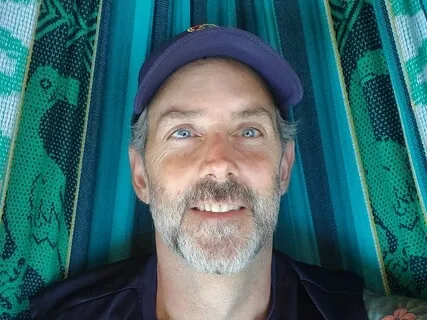
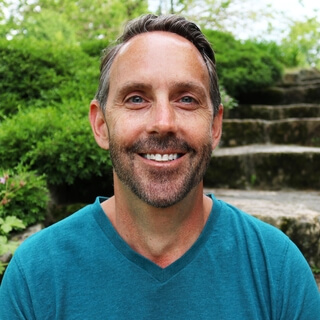
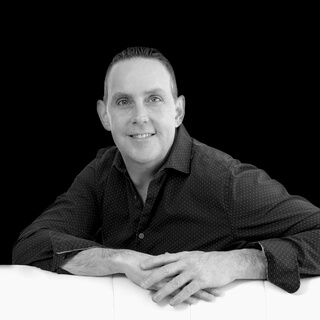
Welcome to Life,
Lessons and Laughter with your host,
Glenn Andrus.
Hello,
Everybody.
I'll be there in a moment.
There I am.
Hey,
Everybody.
What's happening?
Welcome to the special episode.
So today,
It's a Wednesday instead of a Thursday because I'm having some internet issues at my new place up in the mountains of the Dominican Republic.
So I am in town,
Actually at my old place,
Using this as an office.
And I'm going to so I figured I'd do my life here while I was here.
So today we're talking about all things parenting.
So,
You know,
There's this is something that comes up fairly often,
Of course.
It's the dynamics.
You know,
The dynamics of just kind of clicking some comments.
So if you guys have some questions or anything that you want to throw out there.
I'll put this ticker out.
There we go.
That way I can see them.
So,
Yeah.
So we're going to be talking about some parenting and the dynamics.
You know,
The dynamics are based in spiritual law,
Just like everything else is based in spiritual law that actually works.
So,
You know,
Even if you don't have kids,
If you're trying to figure out.
You know how to deal with co-workers,
If you're a boss and you're trying to figure out how to work with work,
Deal with workers,
Sometimes family members or friends can actually,
You know,
This type of mentality can help with people like that.
So the you know,
What we're talking about is dynamics.
And change,
And you're going to see as we go further and further that if you pay attention to the dynamics,
This is something that they they taught us in recovery very early on.
They taught us to identify,
Don't compare.
So if you're listening to this and you're going,
Oh,
He's talking about parenting,
My kids are older or this doesn't really apply to me.
Pay attention to the dynamics.
You know,
Don't compare what's coming out of my mouth with your life to see if they match up.
You know,
Try to identify with what I'm saying and the dynamics.
And if you focus on the dynamics and identifying,
Understanding what I'm saying,
Then automatically your brain will find other scenarios in your life that will match up to what I'm saying.
You know,
So if if you're listening to this,
Of course,
Sometimes you click on something and you're like,
Screw this,
I'm going to click on something else.
That's cool.
But as a general rule,
If you're tuning into this,
Especially on a different day and time,
Like Sarah just said.
Hi,
Sarah.
Thanks for joining.
You know,
There's a reason why you're here.
So if you're paying attention to the different dynamics,
Then you're going to pay attention.
Then,
You know,
You're you're going to get something that you're going to be able to use in your life.
So so the the parenting aspect of this.
Or like I just said,
The dynamics of parenting is we got to to understand things.
You have to take a giant step back to gain perspective.
And I think we can see I think the kids of this generation are really much better than we give them credit for.
That being said,
They have a learning curve,
Just like every other generation did.
You know,
Think back.
Every generation thinks that their generation was good and the one coming up is just going to destroy the world.
You know,
It's that I mean,
Our great grandparents generation looked at their children and went,
Oh,
My God,
What's this world coming to?
And there,
You know,
They looked at our parents generation went,
Oh,
My God,
These these kids are going to screw everything up.
And then our generation is saying the same thing.
So it's you know,
It's always been said.
We have to relax a little bit.
I think we're going to be really impressed with what this generation does as it comes up.
But like I said,
They do have a learning curve,
Just like every generation does.
And their learning curve is tied into the learning curve of the generation that's before it,
Which is ours.
You know,
We are the bosses now in corporate America or around the world.
We are the parents.
You know,
Our generation is the one that is is leading all this stuff.
And think of what bosses and and managers and parents,
You know,
What is your job?
Your job is to basically be in control of the scenarios and monitor them.
So the first thing you have to understand is if you're having difficulty with your kids,
Of course,
Some of it is natural and it's going to happen.
But if especially if your kids are young,
If the dynamic is off in your house with your children,
That's your fault.
Because you're the one in control.
And this is you know,
We love to blame everybody else.
This is part of our generation.
We blame everybody for everything.
And we never solve anything that way because we don't have control over anybody but ourselves.
We have to start looking within when whenever I had my good parenting moments and I didn't have all good parenting moments,
I dropped the ball many times because I'm a human being and that's what we do.
So but when I had my good parenting moments,
It was only it was always when I got frustrated enough to stop pointing the finger at my son and said,
Pointing the finger at myself and going,
OK,
Wait a minute.
Now,
If he's not doing what he's supposed to be doing,
Then there's a problem with me because it's my house.
It's my rules.
I'm in control of the dynamics that happen here.
So if I'm in control of what's supposed to be transpiring in my house and what I do and I don't like what's transpiring in my house,
Then there's a problem with what I'm doing.
You know,
We can't let the chickens run the roost and then wonder why everything's all out of whack.
And this is a big problem in the work world,
Too.
We're too busy pointing the finger at these young kids going,
They don't they're not the same as we were.
They function differently.
And we also romanticize stuff that is complete BS about when we were younger,
Like how responsible we were.
We weren't responsible.
I know I wasn't.
And I know some people,
There were many people that were more responsible than I was in my generation.
But the reason we didn't take tons of time off and talk back to our bosses and all that stuff was not because we were responsible.
It was because we knew that there was a consequence for it.
That's why we didn't do it.
Be honest.
That's why we didn't do it,
Because there would have been a consequence because it wasn't allowed.
And then we're the ones that are in charge.
We're allowing it.
We're allowing people to disrespect us.
We're allowing people to talk down to us.
We're allowing our children to behave in ways that are inappropriate.
And then we're wondering why they do it.
It's because we're allowing it.
That's why.
So when we take responsibility for being in control and leading,
You know,
That's when we're really going to make some ground.
And it's just like every other area of our life.
This is spiritual law.
Spiritual law says that we are in control of our own peace,
Our own happiness,
Our own experiences.
This is our life.
We have to be in control of it.
If we keep shifting the blame and pointing the finger at other people,
It's never going to work.
So the biggest shift that we're going through,
Generations,
And of course it's not just one generation.
They bleed into the others.
But if you take a,
You know,
Giant step back and you look at a couple generations ago,
Generally beating the crap out of your kids and scaring them was the way to control them.
That's hot.
That's just the way society was.
It's what you did for the most part.
I mean,
You know,
It was it was controlled by fear,
Physical,
Emotional,
Mental.
Our parents and our generation started seeing that that might not be the healthiest way to be doing things.
We started changing.
We were like,
Maybe we shouldn't beat the crap out of our kids.
Maybe we shouldn't make them feel like crap about themselves.
It really affects their self-esteem.
So we found what we didn't like about what the previous generations were doing.
And we started pulling away from that,
Which is good.
That's natural evolution.
The problem is,
Is we didn't replace it with anything.
We're like,
This is bad and this is bad.
Emotional abuse and mental abuse and physical abuse is bad.
So we're not going to do that.
But we didn't replace it with anything,
You know.
And like I said,
This is parenting as well as people in the workforce.
We never replaced a way to get our point across.
Like basically what we did is when we stopped mentally,
Emotionally and physically abusing people,
We just took our hands off and we went,
Oh,
Everything I do is going to upset you.
So I'm not going to do any of that.
And I'll just try to explain stuff to you and hope that you get it.
And I'll explain it in an adult way to a child.
And there's a big gap there,
Man.
It was never meant,
We were never meant to attempt to parent or to lead like this because we'd like at some point,
There needs to be a leader like there are only so many sheep and so many shepherds,
You know.
And and a lot of times some of the sheep are the shepherds and in certain dynamics,
Especially with their kids,
You know.
So we all have to learn how to lead and be responsible.
And the thing that we're missing is consequences.
Consequences and understanding the dynamics of consequences.
This is our learning curve in our generation,
And it's certainly bleeding over into the younger generation because they they're just running around with no consequences.
So they're but but the problem is,
Is us.
We're not giving them any consequences,
You know.
So what we have to understand is the dynamic of things.
So I go back to nature,
Go back to the natural law,
Universal law,
Just spiritual law.
How do things work out there?
You know,
Like,
Why does why does an animal go hunting every day?
Why do people like that that many generations ago go hunting for berries every day?
Like what motivated them to do things?
What still motivates animals and and people when you strip away all the BS,
Socialization and dynamics that were taught to us?
When you strip all that away and you start getting to what's really motivating people in a healthy way,
What you see is it's natural consequences.
They're everywhere.
We don't have to make them up.
We don't have to we don't have to try to control people or our children through punishment.
It doesn't work.
There's countless studies in science that prove that negative reinforcement does not change negative behavior.
Only positive reinforcement does that.
So why are we still I mean,
I mean,
I understand why society is still.
Doing things the way they are,
Because,
You know,
We come to these conclusions and nobody implements them because people go,
Oh,
Well,
Like,
Well,
We can't get rid of all of the prisons because we'd have criminals running around all over the place,
Which is true.
We need to implement a new system.
So we should be implementing a new system,
Which we're basically not.
So that's a shortcoming on our end.
But we can do it in our personal lives.
We can do it with our children.
We can do it when we're parenting,
Understanding that punishment does not.
It doesn't curb other children's behavior or other people's behavior.
So the reason it doesn't is because they have no choice in it.
They're not choosing it.
They're being made to do it.
And it's me versus whoever is punishing me.
If it's a school that's punishing them.
If it's a parent that's punishing them.
It's them versus the entity.
And that's the problem.
They're feeling that it's them versus the entity.
And it can't be it like because they're never going to.
They're just going to be like,
You're I'm going to fight against you.
You're going to fight against me.
And that's the dynamic.
And that's a very unhealthy dynamic.
So when you have people fighting against each other as the dynamic.
They just get defensive and they block down whatever lesson is trying to be taught to them.
So it's really we're actually not that far off.
Consequences and punishment are actually very close,
But there's a different dynamic to them.
There's a different energy to them.
And that's what we need to understand.
So punishment says,
If you do this,
I'm going to punish you.
And,
You know,
If you have a parent that's trying to be open or enlightened or kind or whatever the hell you want to call it,
They might be like,
Because I want to teach you something or I'm punishing you.
So you'll learn this.
And that's not enough.
It's not enough to to clearly show the dynamic to the children.
So they feel it.
And we have to feel it first.
We have to come from a different energy.
Punishment comes from control.
I'm going to control you.
If you don't do what I say,
I'm going to punish you.
So that is that's the energy in which it comes from.
It's manipulation.
It's control energy.
And I understand that the intentions are good,
But this is what is meant.
I say this all the time.
You know,
The the the path to hell is paved with good intentions.
We can have good intentions,
But that doesn't mean we're doing the right thing or with the right energy.
So we have to let go of this dynamic of of the energy being from control and understand that if the energy is from natural consequences,
It's just you're just trying to teach children or employees or whoever it may be.
You're just trying to teach natural order so that it's understood so that your children can succeed in the world.
So that your employees can succeed at their jobs or the world.
So we are just teaching natural order.
It's the way the world works.
It has nothing to do with the kid or even the act,
Per se.
It's just natural order.
It's the way things work in this world.
And as a parent or as a leader,
This is my job is to teach you this,
Because if you don't understand it,
You are going to be suffering tremendously.
So once you understand natural order and natural consequences,
Then you can understand that what I'm trying to do is teach you how to be responsible for your own life,
Because ultimately your life is up to you.
And as children,
Like we don't wake up on our birthday at 18 and go,
Oh,
I'm responsible now.
I can handle all life's responsibilities because now I'm an adult.
You know,
That's not how it happens.
We have to learn responsibility as we grow.
So as you know,
As we can start this as parents teaching our children,
I'm what I'm trying to do is show you responsibility.
I'm trying to teach you responsibility little by little as you grow.
When you are young,
You can't handle the responsibilities.
You don't understand the dynamics of it.
You don't understand how it works.
You're not you're just kind of flying around doing stuff.
And you have to learn how society functions to some degree so you can use that knowledge to get what you want.
Acquire what you want.
Live the life that you want.
You know,
We have to be clear on what the point of parenting is.
It's not,
You know,
I'm not even going to go into what it's not.
It is about teaching our children how to be responsible for their own lives and how to understand natural order and natural consequences.
So they can create whatever world they want to.
So they can.
So they so they understand how things work in this world so they can live a happy,
Productive life and they can have whatever they want.
We need to teach them that.
We need to teach them that responsibility little by little by little,
You know.
And of course,
You're on a stop saying this because I'm starting to annoy myself.
I'm just going to go with the parenting theme.
Just know that when I'm talking about this,
Use your head and figure out what it means.
If you're an employer talking with an employee,
You know,
You're OK.
You're not teaching them the baby,
You know,
Responsibilities.
You're teaching them responsibilities at whatever level they're at and going from there.
But when you're you,
You know,
I told my son this all growing up,
I'm like,
I'm giving you responsibilities and I'm teaching you little by little by little by little.
So this is this is how you understand consequences.
Natural order.
It is not personal.
When I gave my son consequences,
I always made sure he knew that it was not a punishment.
I am not punishing you.
I'm not.
And I and I made sure I didn't have any of that energy.
I didn't think I was punishing him and then just used a different word to trick him because that's more manipulation energy.
We have to be clear with this stuff within ourselves so we can present it in a loving energy because they'll feel that.
Kids feel our energy.
People feel our energy more than we know.
This is why I can say stuff to people all the time without them getting offended,
Because they can tell that I'm coming from a place of love and I'm trying to help them.
I'm not trying to hurt them.
So we have to come from that energy.
So you have to fully understand this dynamic.
You are not punishing your children.
You are giving them natural consequences.
You are showing you were teaching them because they have a brain that can get in the way sometime and you're showing them natural order.
This is just the way it is.
You know,
If a cheetah doesn't go hunting one day or a few days in a row because it doesn't feel like it,
Well then it might die because it starves to death.
That's not a punishment.
That's just natural law.
There's nothing personal about it.
The cheetah parent didn't come in and say,
You shall die now because you didn't hunt.
That's your punishment.
No,
Nobody's inflicting it on them.
It just happens.
It's natural.
You know,
Everything's like that.
Life is like that.
It's like that in the natural world and it's like that in our world,
Because whatever works is foundationally spiritual,
Even in society.
So foundationally,
There is spiritual law within our society and it kind of looks like if you don't go to work,
Then you get fired,
You lose your job and you don't have a roof over your head or you can't eat.
That's just natural consequences.
That's not a punishment.
You didn't get punished for not showing up for work.
You just experienced the natural consequences of not showing up for work.
Nothing personal in it.
This is the dynamic we have to understand and we have to start implementing.
It's not us versus them.
We have to get rid of that dynamic.
Kids are going to want to have that anyway,
Especially as they come into their teenage years because they're trying to really anchor into who they are as a person.
And sometimes they feel they have to break away from the adult and use their own brain to think to do this.
This minimizes that because what you're doing is you're giving them freedom of choice at a very young age or wherever they are in life.
Give them choice.
Because then it's not them versus you.
So I told my son this one day.
I said,
You know,
You're making bad choices and you're experiencing negative consequences because of those choices.
But it's just your choices.
You can choose to do whatever you want.
Like at school,
If the rule is don't put your hands on another kid and you put your hands on another kid,
It doesn't matter if the other kid started it or he took your hat.
It doesn't matter.
The law doesn't say don't put your hands on another kid unless he touches your hat.
So when he took your hat,
You had a choice to make and you either chose to use your words and talk to the teacher or you chose to put your hands on a kid.
You chose poorly.
You put your hands on a kid.
Now you're in trouble.
And how does that make you feel?
You know,
This is the next step of it.
And I'm going to go right into it because the story goes right into it.
So the first part is the dynamic of understanding.
Hey,
You have the freedom of choice.
You can choose whatever you want to do.
But I'm not even going to argue with you.
I would like to see you choose good things.
I want you to choose good things because then you'll have more joy and fun in your life because you'll be able to do whatever you want.
And you won't be in trouble all the time by these natural consequences that keep slamming you in the face when you make poor choices.
But if you want to make poor choices,
Go ahead and you'll suffer.
I'll be OK.
I mean,
I don't want you to I don't want you to make poor choices because I love you and I don't like you experiencing negative consequences.
But at the end of the day,
It's your choice.
I gave my son the freedom of choice when he was in second grade.
Go ahead.
Choose it.
I mean,
If that's what you want.
I don't know why you would want that.
I won't.
I don't want it for you.
I would like you to make good choices because when you make good choices,
You enjoy your life more.
Natural.
It's just very natural.
But it's your choice.
That way,
If he chooses to rebel and make a bad choice,
He's not rebelling against me.
He's rebelling against himself.
You know,
So it's tougher to point the finger at me and go,
It's me against him because I'm not doing anything.
I'm just sitting here.
Sometimes I provide natural consequences.
Sometimes school does.
But I'm just pointing out that this is natural law and this is how things work.
And it's always going to work this way.
And once that there's no parent around to to give the natural consequences,
Nature nature will take care of it or the police will take care of it or a judge will take care of it.
You can't escape natural law.
It's everywhere.
If you make poor choices that are going to diminish your capabilities and your responsibilities and your enhancement of life,
If you make poor choices against yourself,
Your life is going to get worse.
So,
Yeah,
I felt I needed to just kind of finish that aspect up and clarify before I went into the other part of the story.
So the story here is something that is really deep and effective is not only did I explain that dynamic to him,
But I showed him how he was responsible for his own feelings at this point.
So I was going.
I said,
Listen,
You know,
How do you feel right now?
So he had gotten in trouble for putting his hands on on another kid at school and said,
How do you feel right now?
And he said,
Mad.
What else?
Angry.
OK,
So you're feeling mad and angry inside of your body,
Inside of you.
Like that.
Do you like those feelings?
He said,
No.
Right.
Because they're yucky.
It's no fun feeling anger and and frustration and all these yucky feelings.
It's not fun feeling those.
It's not fun having those in your body.
So.
So.
If you know,
If you don't like feeling those things.
Then maybe you should have made a better choice because the reason that you're feeling those is your fault.
That's you are the reason that you're feeling those feelings inside that you don't like.
And you know,
I'm not it's the teacher's fault.
No,
The teacher didn't.
The teacher did not make a bad choice.
Teacher didn't do that.
So therefore,
The teacher is not feeling yucky feelings.
The teacher is at home,
Probably with her family,
Having dinner,
Chatting,
Laughing,
Having a great time,
Because she didn't make any poor choices today that would make her feel yucky inside.
She made good choices.
Now,
There was natural.
Well,
She got me in trouble.
I said,
No,
You got you in trouble.
You made the choice.
You had the choice of using your words or using your hands.
You chose to use your hands.
And that's why you're feeling yucky.
And he did not like that at all.
So he ran off to his room.
And so I kept reinforcing it.
You know,
He'd come home and he'd be upset with something that happened.
I go,
How does that make you feel?
Bad,
Mad,
Angry,
Sad.
Oh,
Well,
That doesn't.
I wouldn't want to feel that.
Do you do you like feeling that way?
No.
Well,
Maybe you should have made a different choice.
And I said,
Teaching him that he was in charge of the way he felt inside.
That's empowering once a kid gets it.
At first,
He resisted it.
No,
It's their fault.
You know,
Just like because he by second grade,
He already learned that everything is their fault because all of society is running that way right now.
We have to stop the victim mode,
Stop blaming everybody and start taking responsibility for our own lives,
How we feel inside.
And then when he would do something good,
He'd be like,
Dad,
I got to A on a test.
I did really good.
I'm like,
Wow,
That's great.
How do you feel?
He'd be like,
What?
Like,
How do you feel inside?
Happy.
Good.
You feel proud of yourself?
Yes,
I do.
Oh,
You did that.
You did that because last night you had a choice to make.
You could have either studied for this test or not studied for this test.
You chose to study for this test.
And because you made that choice,
You get to feel all these good feelings inside.
So do you see how you just empower them to make their own choices for their own life?
And you can do this at any stage of their life.
Show them how they have the power of choice.
Don't strip it away or try to control it.
Give them the power of choice.
Draw the line to how they are responsible to how they feel,
Especially when they're younger,
You know,
Or and or draw the line to the natural consequence.
Hey,
This isn't I'm not doing this because I want to punish you.
I'm doing this just because I'm trying to teach you responsibility.
And there are natural consequences for everything we do in life.
And if you don't understand that,
You are going to suffer immensely.
And I love you.
And this is like a key to life.
And as my parent,
It's my job to teach you this.
As as an employer,
It's my job to teach you this.
You can do whatever you want if you're willing to pay the consequences for it.
That's all your life and your happiness is in your hands.
You know,
We need to teach people this.
This is you know,
I kind of was exposed to this dynamic,
Although I didn't draw all the lines to it like this.
But basically,
This is the same way you work with an addict.
What you do is you teach them that they have consequences for their actions because they don't get that.
That's why that's why addicts are very likable.
Most of them and they're very manipulative.
And these types of traits are enhanced and in addicts and alcoholics often,
Because what they do is they learn to manipulate situations so their life doesn't get too bad.
Like a lot of times they should have been fired many times from their job,
But their boss likes them.
They're really capable of doing their job excellent while they are not drunk or messed up.
So there's always there's always reasons they don't get thrown out of the house because they're very personable.
Like,
You know,
That does that they just kind of squeak by.
So to get to get an addict towards the place where they finally choose to get help or to stop going to their drug of choice,
Which can be anything,
By the way,
Is going consequence,
Action,
Consequence,
Action,
Consequence,
Action,
Consequence.
And it's a great way to go back to the parenting thing,
Doing like a three strikes and you're out rule,
You know,
Going,
Listen,
We got to work on this and you got to understand that there are consequences and they get work.
They get more extreme the more times you do something.
If you don't eat one day,
You go a little hungry,
You don't eat two days.
You know,
Your your organs can start having problems.
You don't eat for five days.
Like you could die.
That's natural consequences.
Well,
This is how consequences are here,
Too.
So with an addict or with a child,
It's like teaching them the first consequence doesn't have to be that bad.
It's just they're probably not used to having consequences.
So you have to be very,
Very,
Very consistent.
You tell them what their consequences are ahead of time and you go,
You know,
Whenever possible and you can even help them or allow them to help create the consequences.
That works really well because now they're in on the creative solution,
Which makes them it's even difficult to rebel,
More difficult to rebel against because they help create the solution.
I used to ask my son what the consequences should be all the time.
And he nine times out of ten,
He he would give me worse consequences and I'd have to pull him back a little bit.
Like,
That's a little extreme.
Until one day,
He figured out that,
You know,
I was listening to him and he had some control in this dynamic.
So he made them really easy.
And I was like,
Come on,
Dude.
Like,
I know you're trying to play me.
I'm doing this because I'm trying to include you.
If you if you want to be smart about it,
I'll just I'll just make the consequences up myself.
I don't have to ask you.
I mean,
I am the parent here,
You know.
And he was like,
Oh,
No,
No,
No,
No.
I was just kidding.
I'll I'll make some serious consequences,
You know.
And then he get he he would come up with some better consequences.
And you can do it with addicts,
Too,
If you happen to be in that dynamic.
But you go,
You know,
The first one is just to capture your attention.
I'm not here to punish you.
I mean,
I'm just trying to get you to see that if you do this stuff that you don't like happens.
It's all just so you see natural consequences.
And then part two is a little bit more of an extreme consequence.
And then a lot of times what happens is if you have three or four consequences before the real bad one,
They'll test you on the first one just to see if you're going to follow through,
Because you don't usually.
Quite honestly,
Most people don't.
And then they might even test you on the second one because they're like,
Maybe they're just they're really committed this time and they're really trying to follow through.
But then you follow through on the second or the third one.
They're like,
Wait a minute,
I'm starting to see a pattern here.
Every time I do this,
Life gets worse.
And they're actually going to follow through with the really bad consequences coming up.
And I can't talk them out of it.
I can't manipulate.
I can't rationalize.
I can't.
There's no wiggle room here.
And as soon as there's no wiggle room,
It's just boom,
Boom,
Boom,
Consistent action,
Consequence,
Action,
Consequence,
Action,
Consequence.
They start understanding the natural order of things,
Because that is the natural order of things,
Folks.
That is the natural order of things.
This is how nature works.
This is how the universe works.
There is no punishment.
You just,
If you shoot up into the ozone or into outer space and you take off your space helmet,
You die.
That's not a punishment.
It's just natural law.
It's just how things work.
You know,
So and we're actually starting to see this collectively.
We've been going against nature for many generations now.
And we're starting to see what happens when you go against nature.
We think we've been outsmarting nature for the last,
You know,
30 generations or so.
We're not outsmarting anybody.
We're not outdoing natural law,
Man.
Natural law is coming back to kick us right in the ass and it's happening now and it's going to get worse until we change,
Which is fine.
You know,
That's it.
It's not a punishment.
It's natural law.
So we need to abide by look at nature,
See what it does and do that.
And if you don't,
There's going to be a consequence.
It's that simple.
So this is I talked about being teaching kids how to be responsible for their own happiness or unhappiness.
Do both sides of that.
I talked about the dynamics of of consequences.
Natural law people.
Matter of fact,
Talk,
Loving talk.
So,
You know,
This is I'm going to I'm going to answer this question.
Well,
First,
I'm going to say hi to Buddy.
Hey,
Buddy,
Thanks for tuning in.
And Abby,
Thanks for saying hi,
Abby,
And tuning in.
And Sarah asks,
So how do you define the main difference between punishment versus consequences?
So the main difference is energy.
It's the main difference of everything.
If I say I am I'm the best man,
I am just better than everybody.
I'm just awesome.
That's egoic.
If I say I'm really good at what I do.
That is.
Matter of fact,
Self-love.
Big difference there.
Big difference in the energy.
I use different words,
But it's mainly the energy.
So that's just kind of an example that I use a lot of times.
I'm like when we go like I got it.
I'm trying to get my energy to the right place.
So give me a second.
If I go.
I'm awesome.
That's egoic because I was trying to feel the energy of I'm awesome and I'm better than other people.
But if I sit there and I just go.
I'm awesome.
Now,
That's self-love.
Same words,
But that's self-love because I was just thinking about me and how I love myself.
And I like a lot of things about myself.
And that makes me awesome.
And that's OK.
That's make me think that I'm better than somebody else.
So it's not egoic.
It's OK to love yourself.
We have to.
So that's energy.
This is what I'm talking about.
Everything is like that.
If you talk to somebody out of frustration,
You've got to stop doing that.
That it comes across in bad energy and it very rarely works.
And that's how most people talk to other people.
If we talk from self-love,
This just doesn't work for me.
I changed the words there to show it even more.
It's about me.
It's not about them.
Frustration is about them.
Self-love is about me.
So that is energy based.
So to take those examples and bring it into punishment versus consequences.
Punishment is I'm controlling you.
You didn't do what I said you should do.
You didn't do what I think is best.
So it's me against you.
You're punished because I have control over you and I can do that.
That's what punishment is.
It's manipulation and control energy.
Consequences are.
This is just natural consequences.
All of life is like this.
I'm teaching you this because I love you and I want you to understand the law,
Natural law of consequences,
Because it's everywhere all the time,
Always.
And you can't escape it.
And if you don't understand that there are natural consequences for your choices and for your actions,
You are going to be suffering and not in control of your own peace and your own happiness for the rest of your life.
I'm doing this so you understand natural law and order and natural consequences.
So you can take responsibility for your own choices and you can choose whatever you want.
Now,
At the end of the day,
If you understand that your life is going to get worse,
If you continue to make bad choices and you want to make bad choices,
Be my guest.
You have the right to do that.
It's your life.
You can choose bad things.
And I love you,
So I'm going to love you either way.
It's probably going to hurt a little bit because I'd like you to experience happiness as opposed to misery.
But I have no control over that.
It's your choice.
Give them the power to control their own reality.
And choose the things that are going to enhance their life as opposed to be a detriment.
So like everything else,
It's all energy people.
So there I think that's it.
That kind of feels complete.
And Sarah got it.
Thank you for the clarification.
You're very welcome.
Thank you for the question.
That was a perfect example of a great question because do you see like I would not have done that if it wasn't for Sarah.
So getting her question come in brought me right to the three different examples of energy.
So you can understand this better for clarification.
That's one of the reasons why I'm doing these live.
Because it's helpful not only to Sarah for getting it,
But I'm sure other people listening for the clarity.
So that's one of the benefits of these lives.
I can feed off the energy of you guys and you guys can participate and make this what it is.
So thank you.
Thank you for that.
Please keep tuning in and listening and or and or watching if you're watching this on YouTube or Facebook or my Facebook business page or wherever you are.
So these go out as life lessons and laughter podcasts too so you can listen to them all over the place,
Including insight timer,
Which is a great meditation app if you're looking.
So that's going to do it for tonight.
So thank you guys for tuning in at this special day and time.
I do not plan to do one tomorrow because of this.
And I think that's going to do it.
I'm going to say goodbye to Buddy.
Thanks,
Glenn.
Love it.
Great as usual.
Thank you,
Buddy.
I love seeing people I know and I don't I get as much of a kick.
See Buddy I grew up with.
So I get a kick that he's watching.
And then Sarah,
I just met through the life coaching mentality in my podcast and I get a kick out of her listening.
You know,
So I get a kick out of both sides.
I just get kicks.
It's a beautiful thing.
All right,
Everybody.
I'm going to end this.
I'm going to wrap it up.
Thank you for watching.
And listening and I will talk with you soon.
Looking for more?
Check out over 200 episodes of life lessons and laughter or click the link in the description of this episode to connect with Glenn directly.