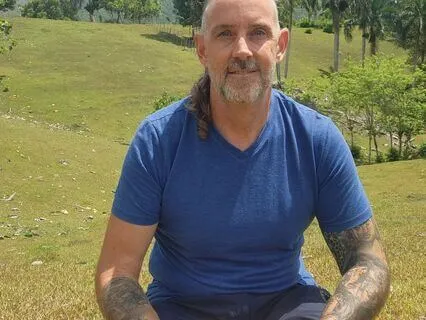
Welcome to Life Lessons and Laughter with your host Glenn Ambrose.
Hey there people.
Welcome,
Welcome,
Welcome.
Welcome to the show.
So tonight,
Today,
Whenever you're watching this I'm going to talk about something that I think is very important and I don't think we talk about it enough.
It's kind of an odd perspective.
I first learned about it in recovery 21 years ago.
And it makes a big difference.
So it's based on a principle of forgiveness.
Most people are familiar with forgiveness kind of a newer understanding of forgiveness.
Why it's important.
It's not about letting the other person off the hook or saying what they did was right.
It's about letting go of the resentment towards them.
So we're not walking around with the anger inside of us carrying that around and it being destructive to our lives.
If you're not familiar with that just go check out a previous podcast of mine about forgiveness.
It's extremely important and when you're going through the 12 steps of recovery they take you through your fourth step is writing all your resentments down which is in three other categories.
They call resentments the number one offender in recovery because it's the number one thing that drags people down back into drinking.
Why is that?
Because I talk about recovery because it's part of my story but also because I've learned so much through that process and then once I got on for lack of a better term on the other side of that process once I have recovered and I no longer live in a hopeless state of mind and body then I noticed that everybody struggles with the same thing.
If resentments are dangerous for an alcoholic or a drug addict they are dangerous for people without addiction problems.
The only difference is that an alcoholic if they get triggered they might go out and drink again whereas a normal person will just possibly carry around that anger indefinitely and that poison inside of them and it'll come out in other ways often less obvious.
Staying busy,
Distracting ourselves,
Getting addicted to social media or shopping or relationships or whatever.
If there's crap inside of us it's coming out.
It's going to show itself.
A lot of times it shows itself as disease.
We are at disease.
If our body is at disease if we're walking around carrying a bunch of resentments it's going to eventually show itself in our physical body with problems.
That's the overview of forgiveness resentment in general.
I'm pretty sure I've probably done a podcast on resentment too.
You can probably check that one out.
I'm going to look.
Maybe I haven't.
Maybe I need to do one on that.
The thing of it is resentments and anger and all that stuff a lot of times if somebody is working on themselves they will direct their attention to working on forgiveness and resentments which is wonderful but it's usually geared towards another person.
Sometimes maybe even a small group of people but rarely do I see people apply the same mentality and forgiveness about resentments to a broader scale.
A resentment is a resentment.
I don't care if it is about a friend or if it is about the government or if it's about anything else.
It doesn't matter what it's about.
A resentment is a resentment.
It's the same energy.
If you're angry towards something then you're angry towards something.
That's what the problem is.
It's the same dynamic.
It has the same solution.
If it's the same problem it has the same solution.
It doesn't matter if you're talking about a person or an institution.
It's the same process.
I think now more than ever we need to start doing this.
There's a part of me that's surprised I haven't done this podcast earlier but then the other part of me says no the timing is just right because we weren't ready for it before.
Before there was just so much anger and I'm not saying there isn't a lot of anger right now towards institutions like governments,
Mass media,
Businesses,
Pharmaceutical industries,
All that stuff.
There's tons of anger towards those entities right now because the truth is being revealed.
What's been transpiring for hundreds of years in some cases is coming up to the surface and we're actually seeing that it's rotten to its core.
At some point it became okay to put just small amounts of poisonous stuff into food because they probably figured it wouldn't add up to much and it's not that big of a deal.
Your body will work through some of that stuff and it's going to be fine.
They passed it and then 50 years later they passed a million other things that have a little bit of poison in them.
Now our bodies are polluted and it's like what's going on here?
It's gotten worse over the years,
Of course.
Then the first time maybe some deaths were accidental with a pharmaceutical company or something and then they get sued and then they're like,
Well,
This isn't too bad.
We made $100 billion and we only had to pay $20 billion in fines so we made a profit of $80 billion.
Our stockholders are happy.
This is just business and they rationalize their behavior and it goes on and on and on.
There's lots of this stuff that everybody is angry about globally and I think rightfully so.
I think that that's the normal reaction when it comes up and we start seeing this stuff and going,
Huh?
There's a lot of that right now but it's like any anger.
What are you going to do with it?
I don't think we ask ourselves this when it comes to institutions like this.
Maybe because it seems too big or maybe because where most people haven't been exposed to the concept that you can forgive and you can work through resentments against institutions just like people.
Most people probably don't know that but in recovery it's part of it.
It's literally listed.
When you're writing down your resentments institutions is one of the categories.
I'm going to be honest with you.
I think one of the reasons why I'm a little bit maybe a little more excited than normal to do this podcast is this is one that I need.
As I'm talking about it,
I'm healing too because I still have some resentments towards this.
There's work I need to do on this specific subject as well.
I've done some of it but I just know myself.
I know that there's more in there.
There's more work to do even though I understand these concepts and even though I've implemented them here and there,
I need to implement them deeper which is cool because I get to talk about it and heal at the same time.
Where to begin?
I guess where to begin is just getting clear on like I said,
It's the same dynamic when you're forgiving people.
It's not about letting them off the hook.
The first thing you've got to do is calm your ego.
I've told you that you're going to be listening to a podcast about forgiving institutions and stuff.
It's like that doesn't feel good.
We want to be angry with them.
I'm going to shut my window here.
Hang on a sec.
There we go.
We got a little bit of music in the background.
I want to block it out a little bit.
Hopefully,
That's cool with you guys.
It's Independence Day here in the Dominican Republic.
Not that they need an excuse to play music.
Yeah.
The forgiveness that we're talking about,
Just to set the ego at peace a little bit and to calm the anger that bubbles up.
When somebody says,
You need to forgive somebody and your brain is focused on the harm that they've done,
Our first instinct is like,
Heck no.
We've got to calm that and just keep an open mind and listen.
You don't have to do anything you don't want to do.
I'm just going to talk about it.
You don't have to defend yourself while you're listening to this.
Just open your mind and take in the information.
Maybe you'll agree with some or all of it.
Maybe you won't.
That's fine.
You do whatever you feel is right.
The forgiveness is not about letting these institutions or anybody off the hook.
It's just about getting that anger outside of us and reframing some stuff can help that.
Ignorance is to blame in situations.
Before I go into that,
I'm not saying that these people shouldn't have consequences or these institutions shouldn't have consequences.
That's the other thing that the ego is going to throw up there.
I agree that consequences should happen.
That's a big piece for you to keep an open mind because as I'm talking,
If you think that I'm saying we should have let these institutions off the hook and there should be no consequences for their actions,
Then that's not what I'm saying.
You're misunderstanding.
That's not what I'm saying.
Absolutely,
They need consequences.
My God,
Yes.
Huge fan of consequences.
Just not a huge fan of walking around with anger inside of me.
That's all.
Just to be clear on that.
Yes,
On consequences.
When we're talking about blame,
The only thing that's ever really to blame in situations is ignorance.
The reason that is,
Is because when people do things that are bad,
They need to rationalize their behavior to think that it's not bad or to think that it's acceptable or that there's no other way or blah,
Blah,
Blah.
They have to rationalize their behavior.
Otherwise,
How can they sleep at night?
Nobody's walking around thinking they're a bad person.
Of course,
There's a very small percentage.
Maybe 1% of the population is walking around thinking they're a bad person.
As a general rule,
Nobody thinks they're a bad person because we all rationalize our behaviors.
It's these thought forms.
I understand that they might sound silly to you,
But you're not the one rationalizing one at this particular moment.
I guarantee everybody,
Including me,
If we were to go back and look at some of the things that we rationalized maybe quickly and didn't even think too much about and really brought them to the light and went,
Does this make sense?
We'd be like,
Oh my god,
That doesn't even make sense.
How could I lie to myself like that?
We all do it,
Especially in this day and age when we're moving so quickly.
Nobody slows down to think about anything.
To rationalize our behavior is just much easier.
We come up with something that makes enough sense so we don't feel like a jerk and then we just adopt it and go on our way very quickly.
Everybody does it.
This is the hard part.
I have to explain the dynamics to you guys and how this works.
I know,
Man,
Because my mind does the same thing.
My mind wants to poke holes in all this stuff and go,
Yeah,
But,
Yeah,
But.
It's already done that.
I already understand all the yeah buts.
It's rationalization.
Again,
It doesn't mean that they get no consequences.
It's just to understand just a little bit how people are doing what they're doing so we can maybe have a little bit less anger and understand that it's ignorance.
If somebody votes to approve a medicine that they know that is going to kill somebody in a boardroom or something or that there's probably going to be some fatalities,
They have to rationalize that some way.
They have to say,
Well,
Yeah,
But it's good for the masses.
We've been doing this for millennia.
This is what war is about.
We literally send people off to get killed in war and it's just like their lives don't mean anything.
How do we rationalize that?
We go,
Well,
We have to let them die so most of us have some level of freedom.
Now,
Is that true?
Most cases,
No.
Is that true in a general rule?
No,
It's not true.
You can't fight for peace.
It's like screwing for virginity.
You can't do it.
We rationalize our behaviors.
We don't have to think that what these people did was right.
We don't have to agree with their rationalizations.
I don't,
But it doesn't mean that I can't use some information to come to just a little bit of understanding.
See,
That's when I start feeling at peace.
When I can come to some level of understanding of what is going on and why it's happening,
Not necessarily the 100% truth because I don't have access to most information like everybody,
But just some kind of logical mindset is like,
Okay,
That's what they're doing.
All right.
I disagree with what they're doing,
But I understand why they're doing it.
I understand their logic line.
I understand their way of thinking.
It's wrong in my opinion,
But I see how they got there because I do a similar thing over here.
It's not as wrong and I rationalize little behaviors every once in a while and they don't really hurt other people.
They just do it in a different situation,
But it's the same thing.
This is what we need to try to come to.
We need to try to come to some level of understanding,
Not agreement,
Understanding because once we understand a little bit,
Then we can have a little bit of compassion and just not think that people are evil because they're not.
As a general rule,
People are not evil,
Even the ones that do bad things.
There are things going on inside of them and circumstances and peer pressure and all kinds of things that are transpiring that are pushing them in a direction to do these things and they do them.
Have you ever seen well,
I think most people nowadays you've seen it on the news or whatever like riots.
There's a collective energy in a riot that people feed off of and people do things in riots that they would never do in any other situation.
It's a collective energy that gets intensely destructive and good people can do really bad things in that scenario.
That's why they're so dangerous.
It's kind of like that.
There's lots of circumstances,
Again,
Not to let them off the hook,
But there's lots of circumstances that come into them being able to rationalize probably decades of them working and living and surrounding themselves around certain types of people that all think a particular way and that has an effect.
When everybody else is rationalizing stuff,
After a while you start going,
Well,
I guess I can too.
This is what happens with the institutions,
All institutions,
Governmental,
Private business,
Religious sometimes,
All kinds of huge institutions.
It's just little by little you get indoctrinated and what is acceptable starts to shift.
A lot of times it's because they rationalize.
What they'll do is they'll say the end justifies the means,
Which it doesn't.
To me,
That's a spiritual law.
That's a lie.
The end never justifies the means because we are a series of our actions.
If we lie,
Cheat,
And steal and say it's to make something good happen,
Well,
We're just a bunch of liars and thieves.
There's no happy destination at the end of an unhappy road.
You can't do a bunch of bad things to get good.
You just can't.
You can't throw negative energy out and expect to get something positive back.
It just doesn't work that way.
People believe that,
Especially over time,
Especially being surrounded by a bunch of other people that believe that.
Think about somebody that gets into political office and they're really idealistic.
You can actually see it in TV and movies.
A lot of times they'll show the young idealist politician get in and then they get around all the people that have been there for a while.
They're like,
Dude,
You've got to let go of that idealistic attitude.
That's just not how things work here.
They beat it out of them.
That's the reality of the culture that they're in.
It's unfortunate that it's so inundated in these cultures.
As a general rule,
It's been going on for tens of thousands of years.
But then more specifically,
It just gets worse and worse and worse.
It's because more people buy into it and they play that game and it gets worse.
The rationalizations get worse.
Them saying,
Well,
I have to make a deal with this person over here so that I can do good for these people over here.
If I give this contract to this construction company,
They'll give me $10 million for my campaign.
I can't do any good if I don't get into office.
I have to get into office.
Then I can do a bunch of good stuff for the people.
I'm going to illegally give this construction company these contracts.
They'll give me the $10 million so I can run a campaign,
So I can get into office,
So I can help people.
That's the type of stuff that goes on all the time.
They just call it the game.
That's the game.
That's how it's played.
No,
It's not.
It never ends.
Once you get into office,
You've got to make deals with other people to do other things.
You lose a little bit of what you wanted to gain to maybe gain a little bit more.
It's just this one big convoluted mess.
At this point,
Nothing ever gets done because it's all corrupt.
Everybody's just too busy doing favors,
Trying to pretend to get another favor that never really comes through.
It's just a nightmare.
It's understanding these.
Like I said,
I don't like it.
I don't like that it's like that.
I think that they should have consequences.
I think it cannot continue to be like this and all that stuff.
I understand it.
I'm not sitting there going,
Oh my God,
This person is evil.
Well,
When I'm upset,
Sometimes I'll think stuff like that.
That's the point.
We can't stay there.
We can't sit there thinking that there's so much.
.
.
It's oversimplified.
It's simply not true.
Most of the time,
There are exceptions.
There are evil people.
Or at least what we would perceive as evil.
But the majority are not.
They just buy into the game.
I see it in sports now,
Which is unfortunate.
It's unfortunate.
It's one of the reasons why I think hockey is getting more popular right now.
Because that's one of the last sports that hasn't crept into.
Soccer is notorious for football,
Is notorious for faking fouls.
And it's crept its way into other sports.
Now it's in American football,
Where people are faking to try to get a penalty called on the other side.
It's spreading out into other sports,
Which is unfortunate.
Because before,
Athletes didn't do that.
When I was a kid,
You didn't have athletes doing that.
Maybe in football.
I didn't watch football.
I mean soccer,
Football.
I didn't watch that when I was young.
So I don't know when that all started.
But I'm pretty sure it's been happening for at least 30,
40,
50 years.
I don't know.
I'm guessing.
But the other sports,
When I was a kid,
Never.
Because you didn't want to look like you were weak.
You had to be strong.
You didn't want to fake an injury or fake like somebody hit you and you were hurt so that the refs would.
.
.
You tried to shake it off and pretend it didn't bother you,
If anything.
But now it's like.
.
.
And I liked it that way,
Honestly.
I liked that.
That's how I grew up and that's how I like it.
Because to me,
It's cheating.
To me,
It's cheating.
If you fake like you're hurt,
Then what you're trying to do is deceive.
And actually,
I think I looked this up a couple weeks ago.
Definition of cheating.
Yeah,
I did.
So this is what I found.
I looked up the definition of cheating because I was seeing it in sports and I'm like,
Is this just me or am I looking at it a particular way or is there some logic in what I'm saying?
Is it an emotional decision I'm making or is there some logic in what I'm saying?
So I was checking on myself.
So I looked up the definition of the word cheat and it says act dishonestly or unfairly in order to gain an advantage,
Especially in a game or examination.
Act dishonestly in order to gain an advantage.
So when all these people are faking fouls in all these sports,
They're cheating.
It's literally the definition of cheating.
They're acting dishonestly in order to gain an advantage.
But they don't see it that way because what they do is they go,
Well,
I will win at any cost,
Even cheating.
Oh,
No,
It's not cheating.
Yeah,
It literally is cheating.
It's literally the definition of cheating.
Well,
No,
But see,
They rationalize it.
This is what I'm talking about.
Actually,
I'm glad I ended up talking about sports a little bit because I really don't think that the athletes that I'm seeing do it.
Most of them,
I don't.
The majority of them,
I don't think that they're bad people.
And I don't think that they consider themselves cheaters.
And I don't believe that they consider what they're doing cheating.
Right?
So what is that?
That's ignorance and rationalization,
Which is another form of ignorance.
So they're rationalizing their behavior.
Oh,
That's not cheating.
That's just part of the game.
Are you being dishonest?
Are you pretending something happened that didn't happen?
That's dishonesty.
Yeah.
And if it works,
Do you gain an advantage?
Yup.
Okay,
Then you're cheating.
That's literally the definition.
Football players,
Soccer players do it.
And then it starts bleeding into American football and starts bleeding into basketball and it bleeds into baseball and hockey.
And you see this coming in and becoming acceptable.
Why?
Because one person does it and they get the benefit of a call a couple times and it turns the tide of a game.
And then now it's like,
Well,
This is part of the game.
Well,
It's not part of the game.
It's part of cheating in the game.
But they rationalize their behavior.
So do you see when you look at things like this and when you come from a place of understanding,
That's where compassion can come from.
So you look at them and they go,
Oh,
Okay.
So they're just rationalizing their behavior.
More and more people are doing it.
And they just decided,
Hey,
Other people are doing it.
I'm going to do it too.
And maybe they didn't think deeply enough about it.
Or maybe they had a conversation with somebody about it that explained it in a way that made it sound like it was okay or whatever.
I don't know.
I don't know what transpired for them to end up believing this.
But I don't think they're a bad person.
And quite honestly,
I don't think they consider it cheating.
It is.
But I don't think they consider it that.
Because if they considered it that,
They probably wouldn't do it.
So that's exactly what I'm talking about.
So if we understand that and say,
Okay,
Well,
Should there be consequences?
In my opinion,
Yes.
There should be consequences for all of what I'm talking about.
Specifically in sports.
Yes,
I think that they should get a penalty called on them if they try to fake a call.
Some sports are trying to do that with embellishment calls.
So I think,
Which is good.
Because then there's a consequence for it.
So there should be consequences.
But I'm not sitting there thinking that this person is a bad person or they're evil or they're what's wrong with the world or nothing like that.
I come from a place of understanding and go,
Okay,
I understand why they've decided to adopt this into their game.
I disagree with it.
I don't think that they should.
But that's just my opinion.
Now,
If somebody comes along and says,
Glen,
We're creating new rules for all sports and we want you to be on the board and vote your opinion.
Oh,
Okay.
Well,
I vote they should have consequences for doing that because it's cheating.
If that ever happens,
That'll be my vote.
Until then,
I'm not going to walk around with resentments with everybody that I see doing it because it doesn't hurt them.
All it does is hurt me walking around with another resentment.
You see?
So that's kind of a smaller scale or a medium scale.
And we just have to take that same dynamic and blow it out into a bigger scale with the government and stuff like this.
I watched this movie years ago.
What was it?
It was one of the,
I can't remember the name of it,
But anyway,
Message me.
I'll get you the name.
But I watched this movie years ago,
And it was all about kind of things going on behind the scenes and this idea of like a world government and the richest families in the world trying to take over and all this stuff.
And towards the end,
What I found really interesting was they kind of stopped.
It was kind of like,
Oh my God,
Do you believe this is happening and all this proof and all this stuff?
And like,
Wow,
Wow,
Wow.
And then towards the end,
They stopped,
Which I loved.
I loved this because to me,
It's the difference between going down a rabbit hole or conspiracy theory that has no merit and keeping your feet on the ground and exploring the possibilities of this type of stuff happening.
And the difference is when people don't have their feet on the ground at all,
It's like,
Oh my God,
These people are all bad.
It's like,
You know,
That's not really true.
I mean,
It's easy to say,
But is it really true?
No.
There's not,
Like I was saying,
There's not tons of people that are just evil and know they're evil and are trying to do evil.
They're rationalizing their behavior somehow.
So when this movie stopped for a moment and went,
Let's take a moment to try to understand what's happening with these people.
So they were talking about these insanely rich families.
And I'm talking about the families that have been rich for six,
Seven,
Eight,
Ten,
Maybe more generations.
Insanely rich.
People you've never even met because nobody's really met them,
Except people in their circles.
These people that were like just billions and billions and billions of dollars generations ago.
And their kids don't go to normal school.
They don't associate with normal kids or what we would consider normal,
Most of us.
They're guaranteed to go into the Ivy League schools.
They're guaranteed to have businesses handed to them or whatever.
They just don't have lives like most people have.
And they all associate with one another.
And they're in charge of everything.
They just make whatever happens happen.
These are the types of people that can say it's been 15 years since a housing crash happened.
So let's induce the housing crash.
And then they do what's necessary to that.
Or they'll play with the stock market by just pulling some money out,
Freaking everybody out,
And then causing a crash there.
And then everything going into a depression.
Then they go buy everything up because they just have so much money on hand that they just go take everything over.
And then all of a sudden the economy comes back up.
And now all of a sudden they just got 20% more of the world.
Stuff like that.
These types of people.
They've been able to do how they wanted,
Whatever they wanted,
In any way they wanted for hundreds of years.
So much so that they don't even know anything different.
So what would it be like growing up and living in those circles?
This is a theory.
And I think that there is some truth to it.
I don't know if it's all true.
But here's just one hypothetical theory.
When you have people like that,
That live like that,
They can't even relate to what we would consider normal people in society because they just don't interact with them.
They just sit back controlling everything and then they watch us react foolishly.
And they're like,
Oh my god,
These people don't know what the heck they're doing.
Sometimes we even tell them what we're doing and they don't even believe it.
They're just sheep.
And we're the shepherds.
And it's just how it is.
Sheep need shepherds.
So we are here to control the world.
If these lower level people,
75% of the people,
Or maybe 90% of the people on the planet,
If they were allowed to run things,
Look,
They can't even handle their own lives.
It's up to us.
We need to determine.
We are the smart ones.
We are the ones who control society.
We are the ones that have to make decisions so the future for these poor sheep down here,
We have to make the decisions so that they have some sort of a life.
I think they really think like that.
In my opinion,
They're wrong.
I think they're driving everything into the ground and it's going to be a problem.
It's starting to be a problem already.
But they can't even conceive that.
There's an aspect of greed energy that's in it.
They just know more.
They've just been taking more for the last 100,
200,
300 years.
That's just what they do.
They can't comprehend that there's a limit.
Because that's not what greed energy does.
Especially when you believe in it and you believe it to be right.
It's just more.
It's just more.
After a while,
You're pretty sure that the sheep aren't going to stand up against you.
If they did,
It'd be a big problem.
But they're like,
That's not going to happen.
Look at us.
We have everything.
It works too well.
They actually think that they're doing good for the sheep.
They think they're actually taking care of us.
I disagree,
But I understand.
If I was just sitting there going,
All the negativity.
These people are starting wars where they know people are going to get killed.
Approving medicines that they know that people are going to get killed.
Sterilizing people without their knowledge.
All this stuff.
You look at that and it enrages you.
You get angry,
But we can't stay there.
We have to make some sort of logical sense.
To me,
I'm like,
Okay,
I can see that.
I can see how they got drunk on their own power and they just don't live in a world like we live in.
You can see it with other people.
Again,
Famous athletes.
Performance artists.
Music and film and sports stars.
That group of people that have tens of millions and hundreds of millions of dollars and live in certain circles and live certain ways.
It affects the way they think.
This is one of the examples where this is how I understand it.
When you see these athletes or musicians or whatever,
All of a sudden they hit it big when they're in their early 20s.
Especially athletes.
The reason I say that is because I grew up playing a lot of sports and I've seen really good athletes that didn't have a chance to make it to the professional level.
For the most part.
I'm one of those guys that thinks anything is possible.
Is it possible?
Maybe.
If they had the right coaches.
If they just locked on to that.
It's what their dream was.
There are exceptions to the rule,
But as a general rule,
I've known many athletes that were so much better than me that it was jaw-dropping.
We weren't even in the same ballpark.
I'd see them play,
And you can start picking them out by eight years old.
These are people that didn't even have a chance to make it to the pros,
Let alone the ones that are able to make it to the pros.
I played football,
American football,
Against one person that made it to the pros.
The speed that this person had,
I've never seen anything like it.
He's head and shoulders above everybody else in the league.
It wasn't even close.
My point is when these kids are growing up at eight years old,
Ten years old,
Fifteen years old,
Everybody in town,
Everybody around them knows that they're special.
They know that there's a good chance that they're going to be rich someday.
They're getting free pizzas when they're thirteen,
Man.
In a little town pizza hall.
The adults are saying hello to them when they're eleven,
Where they don't say hello to any other kid.
Everybody knows who these people are,
So they're treated very differently from an early age.
Then they hit college,
And the girls want to be with them,
The guys want to hang out with them,
Or whatever,
Or vice versa if it's a female athlete.
My point is the attention that they get,
The way they get treated on a daily basis is completely different.
Teachers will pass them to move them on to the next grade.
Special treatment everywhere.
Then they hit twenty-three years old or something,
And they get a ten million dollar signing bonus,
And they go get arrested or do something stupid,
And everybody's like,
I can't believe they did that.
Why can't you believe they did that?
Well,
They have everything.
They had the world handed to them.
Oh,
Yeah?
That's what you think creates reality and strength,
Being treated like you're special,
And everybody saying,
Being yes men or yes women around you your whole life?
You think that that gives you a realistic outlook on society?
No,
It doesn't.
It makes you think that you can do anything and get away with anything,
Because you have.
No wonder why.
I'm shocked that there aren't more kids dead from drug overdoses and car accidents than there are that are in professional sports,
Because I don't know how the heck they handle it.
It's a miracle that more of them aren't more messed up.
And that's one generation.
Right?
That's just one kid.
One generation.
From ages 8 to 21,
It affects his mind.
He starts looking at society differently and himself differently within that society.
So can you imagine living a life that is a thousand times more intense than that for generations,
Hundreds of years?
You think that isn't going to affect the way they think and the way they look at the world?
Of course it is.
Right?
And it's not to excuse it or to avoid consequences.
It's just to understand it,
Because once I go oh,
Okay,
So I can see how that affected them.
All right.
So from there I can have compassion and go oh,
They're just lost.
I'm not going to excuse their behavior.
They need to learn but they're just confused.
It's ignorance.
They don't look at the world in a healthy way in my opinion.
Oh,
Okay.
So now all of a sudden what that does,
Once you have some understanding and some compassion,
It brings the humanity back.
And we need to keep humanity if we're going to live in this world.
We run around stripping the humanity out of people all the time and we think it has no consequences and it does.
The way we think,
The way we interact with people,
If we're not viewing them as human beings with feelings and thoughts,
That's when things get really warped and we have to start doing that.
This is why it's so important.
So we can interact with them.
Think about to me Nelson Mandela was such a good example.
MLK Jr.
Was such a good example.
Gandhi was such a good example because they didn't argue with their oppressors.
They tried but it didn't work.
Later on when they actually made the social changes necessary what they did is they stopped arguing.
They stopped butting heads with their oppressors.
And they started having calm human to human conversations with them going,
Why do you feel the way you feel?
Why do you think the way you think?
And then the other side would explain it and they go,
Wow,
Okay.
Okay.
I don't agree with you but I understand you.
Okay,
Let me do you mind if I explain my way of thinking?
Why I'm saying the things that I'm saying.
I'm saying the things I'm saying because of this.
And then the other side goes,
Oh,
And then the humanness comes back.
Right?
Now it's human talking to human.
It's not oppressor talking to oppressee.
Nothing gets solved there because there's no humanity in it.
It's just us versus them.
Us versus them.
Nobody wins in a war.
Nobody wins when it's one versus another.
We come to solutions when we come together as human beings.
Because we all want peace.
We all want prosperity.
We all want happiness.
We all want love.
We all want the same things.
And if we meet in the human energy and work our way through the problems,
We're human way down at the bottom.
We have to meet in our humanness and then work up together towards the solutions.
And it's just not healthy carrying all this stuff around.
So if you can just come to a level of compassion.
And I got to just touch on this a little bit more.
I said stripping the humanity out of people.
We do that.
Please,
Please,
Please recognize that you do it.
This is why war happens.
This is why,
You know,
Like one of the one of my things,
To me this is important.
Understanding humans.
It's like all religions say thou shall not kill.
But then religions have killed more people than anything.
So how can you rationalize that?
Thou shall not kill,
But we're going to go have a holy war.
The way they can do that is by stripping the humanity.
Well,
No,
These are non-believers and people don't understand when you say I'm a believer and this is a non-believer so I can kill a non-believer.
Yeah,
But they're human though.
Well,
No,
They're a non-believer.
They're a threat.
But they're a human first and you can't kill humans.
Your God said so.
This is what we do.
We've been doing it for thousands of years and we're still doing it.
We strip the humanity.
We don't realize we're doing it because if anybody says to us well,
Do you realize they're a human being?
We go,
Of course I know they're a human being.
But no,
You don't.
Not on a deep level.
Not if you think it's okay to go kill somebody,
Then you have dehumanized them.
Not if you think that,
Like if you don't see them,
We're all thinking entities.
If you don't think that people have rationalized their behavior in certain ways and there's ignorance to play in the decisions that they're making and don't get me wrong,
Some of them know what they're doing.
They just rationalize that it's necessary.
If you don't think any of this stuff is going on,
It's because you stripped the humanity out of them.
You don't really think of them as humans.
They're jerks.
But if somebody says,
Well,
Do you understand that the jerk is a human being?
You go,
Of course I will.
Of course I know they're human.
But no,
You don't.
When you label them as something,
It goes higher than the humanity in them.
And now they become that.
And I'm talking on an unconscious level.
You're not aware of it.
I know that we're not aware that we're doing this,
But this is what's happening on an unconscious level.
And this is why good people end up rationalizing poor behavior.
Because we're like,
Well,
I have to because they're evil.
But no,
They're a human being.
So,
This is all what I'm talking about.
It's important for us to start looking at these institutions,
The governments,
And understanding why they're doing what they're doing to some degree.
Hypothetically,
You don't need to know exactly why they're doing it.
And you don't have to have proof that that's why they're doing it.
And you would never get it if you wanted that.
Because most of the stuff is on an unconscious level.
You just have to come to a hypothetical point.
Because I know that I don't know.
I'm just looking for things that kind of make sense.
And it makes sense to me that human beings are human.
And they're all thinking.
And we all rationalize our behaviors.
And this is where this stuff comes from.
Why?
Because I see it at every level of humanity.
Everybody I know does it.
So,
Why wouldn't they do it?
And then you align it with their behaviors,
And it makes perfect sense.
So,
To me,
It's pretty logical that this is what's transpiring.
At least to some degree.
With some evil sprinkled in there.
So,
Once we do that,
And we can understand that they're human beings,
And we can have a little bit of compassion,
Then we're not acting out of anger.
Then we can at least enter into a conversation in calm.
See,
This is like I was saying with Mandela,
Right?
Mandela was very aggressive when he was younger,
Before he got to this point.
After many years in prison,
I guess,
He worked through some of this stuff.
And he laid down his sword,
To some degree.
And he stopped just arguing and fighting with the oppressors,
And just started having.
.
.
But he has to do the internal work first.
You can't be filled with anger and hatred towards the other side,
And then go have a civil conversation,
And come to a solution with them.
You can't.
Because the anger is going to be driving the way you say things,
And the energy in which you say them.
So,
You're not going to come to any solutions that way.
So,
You have to do the inside work first.
Then,
Once you do the inside work,
You practice some forgiveness.
You bring the humanity back into these people that you have deemed your enemy.
And let go of that enemy label,
And just be like,
They're just people that see things differently.
And then,
Once you do that inner work,
And practice some forgiveness,
Then you can actually have a conversation with them.
And it can actually go somewhere.
Because you can meet them human to human.
If they're capable of it,
Of course.
This is all I'm trying to get to.
And this is how we come to solutions.
I've said it tons of times.
If you want to find out how to solve social issues,
Look at social issues in the past that have been solved.
Not ones that got a bone thrown to them every once in a while.
Actually solved.
And for those,
I look at mainly,
Solved,
Solved.
I look at Gandhi and I look at Nelson Mandela.
Now,
I use MLK because of the way he was doing things.
Now,
Did he solve the total racism?
No.
There's still racism going on.
But boy,
He made larger leaps forward than anybody else has.
And those three men all did the same thing.
They brought the humanity back into the conversation through understanding and forgiveness and had calm discussions,
Discussing and sharing outlooks and worked towards a solution with their oppressor.
So,
I'm not saying that we're going to do that.
Maybe you and I aren't going to go sit down and have a conversation with the oppressor.
But hey,
Maybe we will.
Maybe we won't.
But it doesn't matter.
Like,
If you practice this forgiveness,
You're going to get rid of a ton of poison and anger that you're carrying around.
Because all that stuff,
Every time you see a little feed on your social media or something blips up on your screen and you go,
That's anger inside of you.
That's poison inside of you.
Releasing negative toxins throughout your body,
Causing disease,
Causing stress,
All that stuff.
And you're walking around with that unconsciously every day.
And that just got triggered by whatever you just saw.
It's extremely unhealthy for us to be walking around like this.
Angry and upset all the time.
And it doesn't lend itself to any solutions.
So,
Hopefully I explained that well.
So,
Forgive.
Forgive.
Not as an end game,
But as a leaping off point.
Because once you forgive,
Then your energy is calm and you can actually have rational conversations without just doing the blame game.
You're bad.
You're bad.
You're this.
You're that.
You're a jerk.
Nothing ever gets solved that way.
But that's what we all run around spending our time doing.
So,
Maybe we can just practice some forgiveness.
Forgiveness on the government.
Forgiveness on big business.
Not to lessen consequences.
We can double down on the consequences as far as I'm concerned.
But to lessen the anger inside of our heart because we're just hurting ourselves.
Alright.
Hopefully that made sense.
Let me know if I can help.
Thanks for listening there,
Buddy.
And I will talk with you soon.
Peace.