Hi,
I'm Grace Bryant,
And I'm honored to offer you a short introduction to classical Indian tantra,
An embodied living path of liberation,
Rooted in historical context and lived experience.
When people hear the word tantra,
They may assume that they know what it means,
But most of us don't.
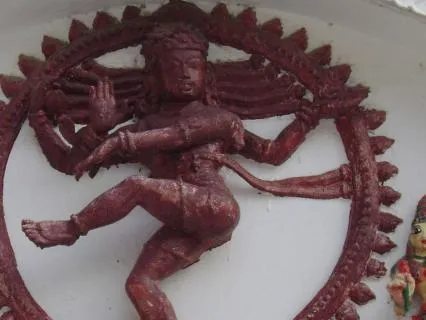
Tantra refers to a set of Indian spiritual traditions that emerged around 500 CE,
So around 1500 years ago.
And from the beginning,
Tantra asked a radical question.
How might freedom—moksha—be realized within our embodied life,
Rather than withdrawing from it?
At its core,
Tantra works with the conditions that we actually live in—this body,
This breath,
Our emotions,
Our thoughts,
Even our relationships.
Not as obstacles to liberation,
But as the very ground from where we practice.
From the tantric perspective,
Ordinary life is not something to escape,
And suffering is not something to bypass.
Instead,
Our practice involves learning how to meet our every day,
Every moment experience with clarity,
With care,
With self-compassion,
And with a greater sense of awareness.
And this is one central tenet of tantric practice.
The awareness both of what we might be experiencing—a sensation in our body,
A breath,
A sound,
A taste—but also the awareness of that awareness.
And this might be called the self,
The witness,
Consciousness,
The source of my experience.
This insight,
The awareness of the awareness,
Was termed recognition—pratabhigna—in later tantric traditions of India.
The recognition that you already are that infinite self.
You already are the unconditionally loving presence that experiences this moment.
And so our practices are to decondition,
To pull away the filters,
Identities,
Projections that we put on this moment where we experience ourselves as separate.
And in this way,
Our recognition practices help us to remember who we are.
The classical Indian tradition lasted around 700 years.
It began around the year 500 and continued and became more and more sophisticated and transcribed and really flourished in some parts of India until about 1200,
Until around the 13th century.
And then it started to fade,
Move away from the public for a lot of complex cultural,
Economic,
And political reasons.
And of course tantra moved up into Tibet during this time period and then insulated itself and grew as a beautiful tradition,
The tantric Tibetan Buddhist tradition,
Which grew its own practices.
So tantric Buddhism shares a lineage and a history with Indian tantra,
But also is its own practice.
But then during the 19th and 20th centuries,
These Indian traditions were brought to the West,
Often by Westerners from Europe specifically,
Then from the US and Canada.
And they were selectively adapted for new cultural contexts.
And so here is where we have what's now called neo-tantra,
Practices that were said to be taken from tantra and then turned into personal growth,
Practices that really emphasize pleasure,
Sensual and sexual connection.
And while there's nothing wrong with these practices,
And they may very well be what a lot of us need to learn how to inhabit our body,
To learn how to reclaim our inner trust and inner awareness,
They are in contrast to traditional classical tantra from India.
From a tantric perspective,
Practice is everything.
And practice means cultivating our awareness,
Both in the quiet spaces we can take on our mat,
On our cushion,
In the woods,
As well as our daily life practice,
Bringing the inner attitudes of liberation forward into our life.
And this also includes the awareness of collective liberation,
A radical interruption of oppression,
A radical interruption of the isms that surround us.
So tantra has been both culturally relevant,
But also counter culture,
Interrupting the ways that we stay quiet and small and captivated in our lives and opens us up from the inside out to experience more and more and more individual and collective freedom.
And this is why tantra is perfect for today,
An embodied liberatory spiritual tradition,
Which invites us to live our life fully,
To awaken within each moment and to hold precious this life that we have,
Including all of our surroundings,
All of our opportunities,
All of our liberatory potential.
We conclude our time together with an offering.
May this knowledge,
This curiosity and inspiration from a 1500 year old tradition bring more freedom,
Liberation and joy to all beings everywhere,
Including ourselves.