Hold this.
Welcome.
This is Josh.
Integrating Presence,
Inner Skill.
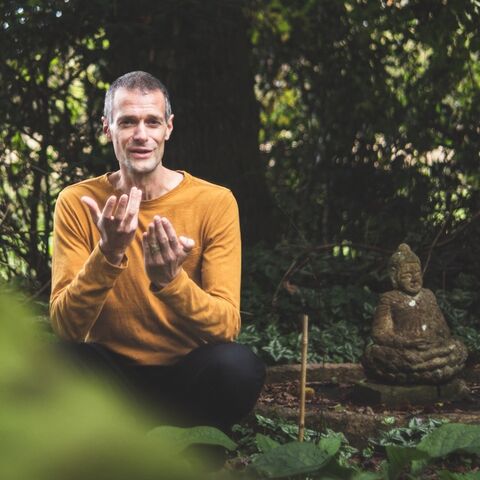
Today I have Brian Newman with me.
Brian,
What's going on today?
Great to see you,
Josh.
Like I was just saying,
Nothing I enjoy more than talking Dharma and Jhanas with a practitioner.
It's pretty cool.
When I think of all the things we can do in this pretty much brief life,
I really haven't come across much better than what we're doing here.
And this is a big part of the path,
I would say,
And it can open up a lot of the other parts of the path,
In a way of putting it.
So to get us started here with my classic question,
Who's Brian Newman?
What kind of work does he do?
That's a funny way to ask it.
All right.
Yeah.
Yeah.
Yeah.
Who's Brian Newman?
He doesn't seem to be in control of his show,
So I hesitate to speak from his voice,
But let's go ahead and do that anyway because it's a conventional way to talk.
I'm in my early 50s,
And I've been an executive coach going on about 15 years now.
I do pretty exclusively business-to-business.
What that means is I work with large public companies throughout the world,
And I do one-on-one coaching for senior leaders,
And I also do group leadership development programs.
So my sort of forte is long duration,
About a year developmental work in a corporate context,
Which can be very,
Very dry,
But Josh,
The truth is,
And hopefully those people won't listen to this podcast,
They probably won't find it,
I'm teaching dharma in corporate context,
And I'm using different words.
I have taught the six yogas in corporate context using different words,
And people get it.
They understand what it feels like to be in a god realm,
They know what it feels like to be in a hell realm.
We're in that like six times a day.
And so what I take as a great point of joy and pride in my work is I'm sort of Trojan horsing deep spiritual concepts into modern language,
And it works,
Which is evidenced by the fact that my clients keep tapping me back year after year to run the same programs over and over.
How did you get interested in this,
And then we'll get into the dharma,
That's what I really want to talk about.
And then,
If you don't mind,
Like maybe a common criticism might be,
Okay,
These are really high influential people.
Are they just like maybe appropriating these concepts and making them into more than they actually are,
And just using it more to boost ego,
To boost power,
Like maybe criticisms like that.
Are they really sincere?
What's their level of sincerity,
Authenticity,
And how might that interfere or not with,
I guess,
Well,
I mean,
We can get into whole ethics things,
Which is huge,
But anyway,
I think that's enough.
I don't want to gloss over this,
But I don't want to spend a lot of time either on it because I want to,
We would talk more dharma here.
Yeah,
I think the appropriation isn't so much of a challenge,
I think,
Because I'm actually not using dharma concepts,
And I'm never saying dharma,
I don't say Buddha,
I don't say meditation.
So there's nothing to appropriate from that sort of cultural perspective,
I guess,
With the Buddhist cosmology perspective.
It's really about finding a way to talk to people that resonates,
That isn't too spiritual so that it turns them off.
So if we speak to a CRO,
Which is a Chief Revenue Officer,
Which means he probably runs,
He or she probably runs a several hundred person team that is focused on generating revenue every day of the week,
They don't have time for that.
They don't want to hear it.
And so what's the way,
How can we get into their ears?
And so it's a really,
It's a difficult thing,
And I think there's probably a few people who can sort of have one foot in the spiritual camp,
And then one foot in the,
I can talk to a Chief Revenue Officer camp and not be off-putting.
So that's kind of the line I'm trying to toe there.
Well,
Right on.
Yeah.
And I've come across your work on a particular podcast,
And I appreciate hearing this.
And one of the things I wanted to reach out to you,
And this is the Anapana series I'm doing,
I have several episodes now,
So we'll get,
I'm going to spin the crux on that.
And in particular,
Tell us,
Tell the audience about the background of your practice.
One of the reasons I reached out is because you're familiar with the Pa'ak lineage,
Which is what I'm in now,
Studying and practicing for the most part,
And yeah.
It's tied up with what I just said about becoming a coach.
So I was around,
I was in my later 30s,
And I'd been a salesperson for a long time,
Which leads to certain good behavioral qualities,
Good listening,
Good questions,
Stuff like that.
But I became a coach,
And the demands on me were really different.
I needed to show up with full presence with someone,
Perfect,
Beautiful presence.
That meant that,
Joshua,
That meant I needed to stop drinking.
It wasn't going to be okay to ever show up to somebody hungover,
I realized,
Really quickly when I became a coach.
Then I started to think,
Well,
I thought I was a good listener,
But there's a lot of things happening in my head when I'm trying to hear this person talk.
And I had this idea that maybe if I sort of looked at the mind,
And I had some,
I did martial arts for a long time,
So it wasn't totally foreign to me,
The idea of meditation.
I had this idea that maybe I could quiet the mind,
And that would be,
That would make me a better coach.
And it wasn't that I was aiming to be a better coach,
I was aiming to be a better service to the people that I was coaching.
And I went to a Go Inca retreat.
So I was like,
Let's go do this.
It was actually part of my coaching school.
The coaching school that I went to said,
You need to start meditating 10 minutes a day.
And I'm like,
It's my personalities,
We'll probably find out here in a few minutes.
And I thought,
Well,
If 10 minutes is good,
30 is probably better.
And so I did 30.
And then I think if 30 was good,
I think I quickly went to an hour.
And then I was like,
Well,
Maybe I should go on a Go Inca retreat.
And this did nothing to quiet the mind,
It just made me see how loud it was.
And that was the start of the whole thing.
So once the loudness can be seen,
Maybe from sort of a witness perspective,
It's like,
Whoa,
That ain't okay,
Let's do something about that.
And that started a 15 year long journey of first,
You know,
Really practical,
Can I quiet the mind?
Can I be really present with my clients?
Can I have a spacious presence that allows them to speak into freely?
It's going to really be supportive for them so much so that they're almost like they're talking to themselves,
Almost like they're getting themselves reflected back at them as if they were talking to a mirror.
And that was something that can be accomplished,
That can be done in maybe not such a long time.
But then I started to read the books,
And then things started to happen.
And the things that started to happen,
Josh,
The book from 2,
500 years ago said it was going to happen.
And I was like,
What?
That actually works?
And then I realized that the second thing worked,
And the third thing worked.
And if all those things worked,
The cities must work too.
It has to all be true,
Right?
What's not true?
Are we going to start cherry picking the things that don't work,
Or maybe it just all works?
And so there was a moment of faith for me,
Which was,
Faith is a belief that something's going to happen even though it hasn't happened yet.
And the Dharma calls for faith,
As do all spiritual traditions,
Christianity calls for deep faith,
Doesn't it?
We have to have the faith that we're going to be in heaven after we die.
And so I really sort of,
I think I had wonderful teachers that allowed me to have faith,
And I had faith in myself because my practice was going well,
And I just wrote that faith to incredible,
Incredible practice,
Incredible.
I was tempted to say attainments,
But it wasn't about the attainments,
It was about the experiences and the outcomes of those experiences that let me see myself,
The world,
And others in a really different way.
Well,
That's beautiful.
And teacher reminds me of that now,
Especially when doing Samatha practices,
How important faith is,
And this word is kind of tainted,
I think,
In the West as well,
In some sense.
So it's,
I like the word trust,
Right?
And this confidence,
Confidence in our ability to do the practice,
Confidence in the Buddha and that it's legit,
And that whole thing.
And then the object itself,
That's the one I hadn't heard so much about,
But whatever the meditation object is itself,
Having confidence that that will actually do what,
I mean,
Through verified,
Right?
And this is not a blind faith either,
This is things that will be verified for ourselves.
So yeah,
It's utterly important,
I feel,
Especially in the West for these practices.
Yeah,
We're kind of like to just jump to the wisdom,
Some of us right away,
And then you would have to be balanced out with faith for sure.
Yeah.
Okay.
I hadn't heard that about the object,
But that's a really beautiful thing to say.
Right?
Yeah.
Yeah.
Faith that the earth casino will actually take me into,
John,
Is a really powerful thing.
I'd also like to point out that faith is the opposite of one of the primary hindrances.
So it's probably a good idea to hold that in our hand instead of having skeptical doubt.
Maybe we could anchor on the faith instead,
And let that take us through,
And then we'll never have to worry about that hindrance.
Skeptical doubt,
As you said,
Is a lot about doubting ourselves,
Which is a confidence issue.
My thing,
In the Palo tradition,
Josh,
It said that only one in a million could ever,
It's not in the Palo tradition,
In the Visuddhimagga,
Only one in a million could ever attain jhana.
You've seen the quote,
One in this and one in that,
Turns out to one in a million.
The thing is,
If you showed up in my jhana class,
And you're one of the 20 people,
That's a lot of the ones in one room.
It's one in a million of the whole world,
But it's not one in a million of the 20 people that showed up to learn jhana because they have past life paramitas,
They got them there.
And I'm using past life paramitas loosely,
That could mean when they were eight,
Or when they were 14,
Or it could mean when they were four lifetimes ago,
They've done the practice,
They know how to do the practice,
And they will be able to do the practice.
Really good point.
And I mean,
There's trillions of people,
I mean,
Not to get into silly odds and stuff,
But all the amount of people on the earth too now.
So,
But that brings me to a good point.
We mentioned before the show that my primary object has changed,
Earth Casina.
So this,
I'll be wrapping up this series somewhat,
But I want to,
Of course,
Get into anapana here.
The other thing,
Though,
That you mentioned here a couple responses ago is the relationship to the mind and thinking.
I mean,
This is a classic one in meditation.
So on a conventional sense,
Just what is your view on this?
I know it's really interesting.
I see some teachers say,
Oh,
It's not a problem.
It's not,
But then they go into this basically micromanaged neurotic,
Yeah,
Neurotic micromanaging of,
You know,
Here to do.
So like,
If that's the case,
Then why are you like so intimately involved in all this micro levels of how to have all these micro strategies of what to do,
You know?
So I don't know.
I mean,
I think that can be helpful too.
It's just,
It's just this kind of weird,
I don't know,
Paradox,
Or I don't know if you'd call denial or what,
But whatever it is or isn't,
How do you deal with the thinking mind?
I know some of us are more visual thinkers and some of us are more language-based thinkers.
Yeah.
What's,
What's the proper view in relationship to thinking and meditation,
How you teach it?
No thought is a thing that can happen.
And if we do somata practice,
You've done it for a long time.
So,
You know,
When we go to look for thoughts,
Sometimes they're just not there.
And it's actually happening quite a bit.
I think in somata practice,
Sort of momentarily,
Even at the very beginning of the practice.
That being said,
I'm not aware of any meditation tradition.
It could be wrong.
I'm not aware of any meditation tradition that teaches the suppression of thought.
Maybe there's something like weird,
Something old school Indian yoga tradition or something like that,
But I'm not aware of any tradition that teaches the suppression of thought.
So this idea that most,
Almost all non-meditators,
Beginning meditators come into the practice with is I'm here to make my thinking go away.
So right away,
We're in failure mode because the thinking ain't going away.
And so in that first,
Those first three or four days,
That person will definitively pin down the fact that they're a horrible meditator due to all their thoughts,
Because this is a no thought thing,
Right?
And so this,
You can see how that just destroys the practice.
So thoughts are a natural thing.
You know,
Thich Nhat Hanh says,
Josh,
And we do somata practice,
Sound can get really annoying at a certain stage of the practice.
Thich Nhat Hanh says,
Sound is a natural thing.
That should just resolve all that for us,
Right?
So in the same way,
Thought is a natural thing.
It's a natural thing.
No thought is wonderful,
And non-knowing experiences are wonderful,
And it does something really deep and purifying to the mind.
But I'm not aware of any,
I don't know any meditation teachers that say think less or suppress that thought.
Yeah,
It's a good,
It's a good point.
I think there's common,
I have heard some teachers say that they want to get people more towards,
You know,
Not having any thoughts,
But it's really rare,
You know,
It seems to quiet down naturally.
And like you said,
We need to think throughout our lives,
You know,
And in fact,
I would say some people are afraid,
They don't want to do any critical thinking either.
They just kind of want to be handed their opinions and get in line.
And I can understand because there are some thoughts that are just repetitive,
Redundant,
Looping,
That are harmful,
That are,
You know,
Are potentially harmful in a way.
But then it's a brilliance machine too.
The thinking mind can,
You know,
Be a genius machine,
But it's not the only tool for the job,
Right?
It depends what it is.
And so,
Yeah,
It's a classic one.
So let's get going.
If I could say real quick on that,
There's personal convictions around thought that I've learned through the coaching practice,
Not through my meditation practice.
I've coached for thousands and thousands of hours and,
You know,
Hundreds and hundreds of people,
Maybe thousands.
And what I've learned is some people are prone to Papancha and some are not.
Papancha being the spinning of the mind.
You know what,
Josh,
I've come to see,
Because I do a lot of psychometric assessments with people,
So we get to see sort of personality traits built into that.
It has a lot to do with confidence.
It has a lot to do with innate confidence and people that do not have that innate confidence on certain personality assessments like Gallup,
StrengthsFinder that would rate your self-assurance level,
They're more prone to self-questioning,
Discursive thinking,
Spinning out,
Insomnia.
So they're really sort of,
I almost want to say a physiological,
Maybe even a genetic component to how our thinking mind works.
Yeah,
That's fascinating.
And to muddy the waters further,
I mean,
When I was struggling with self-confidence,
Where I was at at the time,
The examples I had of people that had self-confidence were completely egotistical,
Almost egomaniacal,
I wonder.
You know,
So I was conflating the two and they're completely different,
But it's understandable that I was confusing them for a while.
But yeah,
When we get really healthy examples and can see and study people with really beneficial self-confidence,
There's not any of that type of egotism around.
So I just throw that in there.
Yeah,
Thank you.
Yeah.
So let's get into anapana.
This is one of the ones that helps calm and subdue the mind too,
And can be very pleasant.
I mean,
It's not for everyone,
But this is the,
I would say,
One of the most common objects taught,
Especially in Samatha.
And I think in the Pahak,
They try to start most people there that can do it,
Right?
In Samatha,
From what I understand.
Yeah.
So yeah,
Just talk about anapana and how you teach it and how you've practiced it.
And I guess I'll just leave it kind of more open to see where you want to go with this.
Yeah,
And please chip in,
You know,
Follow any threads that are interesting to you.
So maybe I'll just talk a little bit about the Pahak path,
As I understand it.
My primary teacher for this is Sayali Susila,
Who was Pahak's chief attendant for something like 15 years,
I believe,
Serving him in Burma and also in Sri Lanka.
She would travel to him and she cooked his food.
So she's the lady behind the curtains,
So to speak.
She would see everything,
The direct line to his teaching.
So she was my primary source for that.
She was in Penang.
I was living in Hong Kong at the time.
I can't remember how I found her,
Perhaps through a search on Google.
She doesn't go out there advertising herself.
She doesn't really want anybody to come by unless they're extremely serious.
The name of her retreat center,
Josh,
It's this beautiful,
I almost want to say like a villa on a hill on the mountains in Penang,
Looking over the entire city.
It takes like an hour to get there.
It's just unbelievable,
Unbelievable place.
I've never been somewhere like this.
There's a Buddha in the hall as big as a house.
And I'll be the only one in the hall because there's nobody there.
It could hold 300 people and I'd be the only meditator for weeks on end.
So she was the one that introduced me to the Pahak.
I showed up to her having a little bit of practice.
I guess I'd worked with Tina Rasmussen and Stephen Snyder.
I'd been to a retreat with them.
Back then,
This is like 15 years ago,
There wasn't many jhana teachers around.
And so I was looking for everybody.
So you had Lee Brasington.
I read his book.
We had Tina and Stephen did a retreat with them.
And you had Shaila Catherine,
Who'd come out of Burma.
And she'd written that book as well.
So I took into Shaila.
And I found Saila Susilo.
I got to go to her.
She's close.
And she was with Pahaks.
I'm going to go train with her.
So I showed up to her having some Mahasi style Vipassana noting and some jhana stuff.
But I was really keen on the jhana practice.
I decided that I was going to get my jhana as good as I could get before I really got seriously into Vipassana at the beginning of my meditation journey.
So for some reason,
The gradual training settled to me really well.
It just seemed like an obvious way to practice.
And I was fortunate to have read about that or something and decided that would be a good way to practice.
So I was going to,
At the very minimum,
I was going to get first jhana.
And then I would begin my Vipassana practice.
So I showed up to her.
And I knew a little bit of Vipassana and not much about,
A little bit about jhana too.
The first thing she says is,
She'd practiced with the Mahasi center for a very long time as well.
And she's like,
Well,
We don't do that kind of Vipassana here.
You're going to be doing the four elements.
So she had me on the four elements meditation right away.
I just want to clarify for your listeners here.
The path of powwow is a path leading towards Abhidhamma style Vipassana.
And you know this,
Josh,
I'm kind of preaching to the choir here.
But ultimately,
We need the mind so concentrated that we're going to be analyzing subatomic particles,
Ultimate reality,
Ultimate mentality,
Past lives.
And that's why they're going for that incredibly concentrated visuddhimagga type jhana,
Which is called an absorption.
And one is absorbed into the nimitta,
Which forms through a long period of practice.
And it's a sign of concentration.
And then once one is absorbed,
It's essentially,
You know,
It's said in the tradition that any sound wouldn't bring you out of this state.
It's so,
So hard.
You could call it perhaps.
And so in that tradition,
It is true that not everybody will be able to practice to the point of getting the nimitta.
And I encourage you to speak to teachers like Tina.
I encourage everybody to speak to teachers like Tina like that.
Because when I was speaking to her the other day,
She said,
I had a student who was unsuccessful getting jhana for three years,
Kept at it,
Did two and a half months worth of silent retreat,
And got it on her final retreat.
I just celebrate the persistence and patience.
This is a practice.
The Pali tradition is a practice of waiting and letting the jhana find you.
And not many people in the modern world have the time to wait to let the jhana find them.
So it teaches grit and stamina and persistence and all these beautiful things.
So you're offered these two paths.
And I believe everybody starts with the jhana path.
And you kind of grind at that as either successful if you're not.
And if you're not,
You're very politely kind of ushered over to the four elements path.
The four elements path,
Although it's kind of a body scan vipassana thing,
It's also said to be a concentration practice.
So it's this beautiful blend.
And that's enough.
So if you can get to the attainment of the four elements,
Which is the body either dissolves or turns into this sort of white,
Icy-like material that you're kind of observing as a witness,
That's the attainment.
And then you're given the rubber stamp.
OK,
You can go ahead and go start your vipassana practice now.
On the jhana side,
You're going to have to go through all the jhanas,
All the kasinas,
All the jhanas.
This is a multi-month or multi-year process simply because you have to sit in each one for three hours to get the stamp of approval.
Although I have heard that that was changed to two hours.
So it's like the bar was going down.
But when I was doing it,
It was a three-hour sit.
And the three hours was one sits,
One makes a resolution to exit the jhana at a certain time later.
There's no timers involved here.
And then you exit exactly at that time.
And that's the attainment.
This is how the practice is done.
And that sounds very magical.
And people in this listening will think,
Well,
This is the way that happens.
It happens over and over when one trains the mind.
When the mind is pliant,
Malleable,
And wieldy,
It happens over and over.
It's something that can be done.
It's something that can be taken into your own life.
And you can just kind of set the mental alarm and wake up at 530 whenever you want to.
We start to learn how to work the mind that way.
Fortunately,
I have the ability to get the nimitta arose for me.
It doesn't for everybody,
Which was a sign that I would be able to get absorbed.
And I was a mid-30s,
Strong young man,
And I was going for it.
And so I was going to get the whole thing.
And just for me,
This wasn't really a tranquility practice.
The way that it's played out for me,
So I've been doing this for,
Say,
15 years or something now,
It's much more a tranquility practice for me now than it was back then.
Back then,
It was,
I'm going to wake up,
And I'm going to be with the breath all day long.
And I'm going to sit as much as possible,
Three-hour sits every single time on every sit until I pass out and go to sleep.
And if I have any energy left,
I'm going to stare at a fire flame.
I'm going to stare at the fire casino just to get a little bit more concentration when I'm totally exhausted.
And to be totally frank,
With a householder life right now and a wife and a job and everything,
And if I didn't have that,
I'm not sure I have the energy to go and do the same thing again.
And to be totally clear,
Although my teacher in Malaysia did validate my jhanas,
I didn't do the whole practice.
I have not completed that practice.
I didn't do every single kasina and all eight jhanas in every single kasina,
Nor did I go and do the other 40,
39 samatha meditation objects.
So in spite of me,
I think if you look at the Westerners in the West,
Very few people have probably gone on the samatha path as far as I have.
And I'm just there at kind of the very beginning.
It's kind of hilarious.
Well,
I haven't even gotten nimitta yet,
So I'm getting lights and stuff like that.
I'm prepared for the long haul.
The way I've been telling people is,
The dhamma has helped me out so much in other traditions,
But at the end of the day,
It's conceptual,
Right?
And some people are really good with concepts,
And then some people are really good applying concepts,
And that's when it's really helpful.
And I'm forever grateful for how much they've transformed my life,
Utterly turned it around 180.
Now I'm at a point,
Though,
That I'm not seeing ultimate materiality,
Ultimate mentality.
And the question becomes,
How much depth is in comprehension and completeness is needed to see Dukkha Nityananda in order for it to be effective?
I mean,
Because I think of it back in my life sometimes about,
Oh,
Yeah,
I had these concepts,
And I thought that was the case,
But it's like a relative level.
Yeah,
It was,
But then there's something else comes along.
And it's even kind of more true,
Or however you want to say that,
More and more.
So like this,
From what I understand,
Ultimate mentality,
Ultimate materiality,
That's as far as you can take,
There's no more concept left.
You know,
You've deconstructed it down to as far as it can be deconstructed.
And like you're saying,
So I'm a little bit confused on this path,
Though,
Too.
So you had the teacher,
They started you on the dry insight right away,
But then you later went back and started doing Samatha again.
And from what I understand,
There's five Jhanic masteries,
Too,
In each one.
And there's certain Samatha objects that will only take you to access,
And some that will go up to a certain level of Jhana,
And some that will go all through all eight Jhanas and stuff like that.
And so I guess,
How do you reconcile this?
And what do your teachers say about that?
I'm just curious,
And then how do you feel about that?
Because,
Yeah,
I'm curious,
Because I haven't heard of this,
I don't think yet.
You haven't heard of that dual path approach to getting into the… No,
I have.
But usually,
I thought,
Once someone starts on dry insight,
Then you're not supposed to go back,
And not supposed to,
You know what I mean?
Like,
Go back and then go do the Samatha approach.
You're supposed to go,
Got it?
So,
Yeah.
Yeah,
In Burma,
I'm not sure what they do.
I have not been to Burma.
So what my teacher told me at the time,
She knew I was there to do Jhana.
It was very,
Very clear.
My goals were explicit.
She was absolutely in sync with me in a very beautiful,
Beautiful way,
As you know,
The teacher-student relationship runs deep and is profound.
And she was very much in sync with me.
And the way that,
The way that,
The reason that she taught me Four Elements was she wanted me to have the ability to do something other than Jhana when I needed to during the day,
Actually.
So in her,
This is a really interesting thing,
Man.
We don't hear about this in the U.
S.
It's a thing amongst the monastic communities that doing the Four Elements practice keeps one very,
Very healthy.
I've heard things like you will never get prostate cancer if you're scanning the genitals persistently with the Four Elements.
And I believe this,
Actually.
I think that leaving things out of our awareness can cause real problems.
And so she gave that to me as a health practice.
And she wanted,
She just wanted me to kind of build the practice out.
She knew that I had strong concentration and didn't need that.
She knew I was going to be able to take the Jhana path.
But I was very,
Very grateful.
So what my practice would look like was I would probably do sort of two shorter sits during the day when I was training very hard with her of Four Elements.
The other interesting,
Well,
Four Elements is sort of an unknown practice in the West.
And I'm kind of at the point now where I think I want to start teaching it,
Because I think it's beautiful and important.
You can note elements that are not in your own body.
So you can note birds flying by as earth wind.
And you can infer,
You can infer things.
You can infer the heat of the bird's blood.
What this does,
Josh,
Is it brings us,
It's like shamanistic Theravada.
Because you're walking through the world and it's like,
You move the arm and it's like,
Whoa,
On a 14 day retreat,
This becomes very pronounced.
So there's something mystical,
Magical.
I have some,
I have a deep love for the Peruvian shamana traditions as well.
And it sort of crossed that,
Sort of like that middle road.
It made me feel like maybe this is like real early Buddhism,
Almost like emerging from shamanism.
Well,
It's incredible.
And I've practiced Four Elements a little bit,
Not much.
From what I understand,
Some people say that some of the psychic powers is basically mastery over the elements.
You're perceiving something as an entire element,
Right?
I think somebody said like the walking on water is basically having such powers of perception and not interference,
Let's just say,
To perceive it as not water,
Perceive it all as earth.
And so you literally turn the water casino into an earth casino because you're so used to doing that in your practice.
And then you walk on it.
We know how powerful,
Well,
Yeah.
I'm not saying yes or no,
But that's what the tradition says.
Exactly.
And we just think on a conventional level,
How important perception is and how people will orient their whole lives around like a narrative of how they perceive the world.
And that's how the story of reality is basically their reality.
So much of us live in a story about reality instead of reality.
And as you could probably know,
There's so much when you get into the Vipassana about all these micro,
Minute,
Mind moment by mind moment.
And perception is just one little thing amongst so many.
But yeah,
The elements,
And sometimes I will,
You know,
Even just scanning through the body with our inner sight,
If there's some kind of issue.
And then going into that with the four elements,
I've noticed quite interesting experiences just doing certain problem areas in the body with four elements in that.
And I won't go into that now,
But yeah.
So it just seems to me like on a conceptual level,
That's as much as we can kind of strip down perception in the physical world without any extra ideas or concepts or,
You know,
And even,
You know,
It's said in Ultimate Materiality,
Able to discern the four elements within a kalapa amongst other things,
You know.
So it's just,
So I know,
And I am practicing.
Are you drawn to that?
Like,
Would you like to have a mind so pliant that that would be accessible?
Well,
I'm practicing now in a group where there are several people that are at this level already.
And it just blows my mind to see how kind of pedestrian,
I mean,
That's not the right way to put it,
That when they go into like five past lives as part of discernment process to discern other things,
And they're discerning materiality of various devas and stuff like that,
You know.
And,
You know,
So seeing subtle materiality,
It's just the,
To me,
I get so enthusiastic about that.
So that's probably,
You know,
But there's just,
It's just another part of the process.
You know,
Some people might think,
Oh,
This is,
But it's just so deep and profound.
And it just,
It hurts me in a way to think that a lot of people just blow off Vasudhimagga and Abhidhamma without actually being able to see and know it for themselves.
I mean,
At the very least,
I have to be able to see and know this for myself in order to say,
Oh,
This isn't relevant,
It's too much,
It's not needed.
You know what I mean?
So I think the Abhidhamma feels to me a lot like the manual to my car,
Which is something that I never open it up unless something's kind of like broken or like I'm on a retreat.
And then when I open up in the retreat,
I'm like,
Oh,
This is so clear.
And then I take it back into my lay life,
You know,
Three months out of retreat,
I'm like,
What?
But the mind moments are clear when the mind is sharp.
So that was my,
That was the reason I never got further is I couldn't see myself having the time with the attention that I wanted to give to it to be able to get to that level.
And to be totally frank,
Josh,
It actually wasn't attractive to me.
I was ready to go.
How can I frame that in a way that's generous to the system?
I didn't feel like I needed that level of vipassana to be able to achieve the awakening that I hoped for.
Maybe that's what I could say.
Yeah,
And that's a great way to put it.
And the jury's still out for me,
You know?
So you're right.
It seems like where I'm at now,
It would take lifetimes.
Then again,
You know,
To possibly,
You know,
Do that.
But that's okay because I really can't think of much else worthy of my time and attention as this path.
And,
You know,
Still exploring all these different areas as well.
But anyway,
You know,
Let's talk about this,
This jhanic spectrum,
Let's just call it.
You know,
The nimittas that some people get triggered out by this,
You know,
And then,
Yeah,
Whether it's,
You're referring to soft or hard jhana,
And then some people might say suta jhana,
Vasudhimagga jhana,
And this whole spectrum that seems to be a hot topic.
And yeah,
Like,
I think,
Well,
Yeah,
Let's just get into that.
But also set the stage.
What do you think about in America where,
In some of the traditions,
Maybe I'm thinking maybe insight tradition,
And some of these others where they just shy away from really getting deep,
Deep,
Deep into the jhanas first,
And kind of what the attitudes around what informed that kind of milieu,
I guess.
And yeah,
But now we see it actually being taught more and more,
I think,
And more mainstream United States dhamma circles,
If there's any such thing like that.
It's definitely having a resurgence,
I would say.
I think this is true that the Buddha said somewhere in the suttas that the,
You know,
Sort of the end of times will be known when people stop practicing shamatha,
You're aware of that.
And so this idea that there's sort of jhana wars,
And everybody's sort of saying their jhana is the best,
Which is a really typical thing to do.
Every meditation teacher should think their thing is the best in some way,
Perhaps.
Maybe that's going to make for good teaching.
But I appreciate that because the jhana war means that we're doing jhana,
And we're talking about jhana.
And that's the whole point.
That means we're not at the end of times.
How reassuring.
Why the IMS or maybe others didn't emphasize that sort of the practice?
I'm not sure.
It's curious,
Isn't it?
Because they certainly knew about the gradual training,
And they certainly emphasized sila and vipassana.
So I don't know,
You know,
Were they shying away from magical stuff?
Deepamala said to have magical powers.
Did they not want to bring that into the US?
I'm not quite sure.
But you also have wonderful stories like Christine Feldman,
Known to be a Siddhis practitioner.
She's this lovely,
Sweet lady.
You can go look her up in the guy house.
She looks like somebody's grandmother,
Known to be a super hardcore Siddhis practitioner.
Daniel Ingram,
The author of a fairly famous book,
Goes to see her to learn how to do the Siddhis.
And he got this on advice.
I believe Joseph Goldstein told him at IMS,
You should go talk to Christina Feldman,
Because I have no idea what you're talking about.
She's the one that did all that stuff.
So he goes to see her.
Do you know this story?
Have you heard about this?
It's in a.
.
.
No,
I've actually practiced at guy house.
I've reapplied.
I saw that she might be teaching a.
.
.
I can't remember.
I haven't looked at the schedule in depth,
But I'm going to be doing a service retreat.
And no,
I know of her,
But I didn't know this about the Siddhis.
Of course,
Deepamala,
I knew.
And Mrinendraji,
Who is her teacher and stuff like that.
So Ingram hears she's the.
.
.
Christine Feldman is apparently the Siddhis master.
Maybe this is like secret info.
Be careful.
Who knows?
People are going to hear this and start bothering her.
Please don't bother Christine Feldman.
So he goes to her,
And apparently he's being a total brat in the interview because he flies across the pond to go to like a month long.
And he gets.
.
.
I think he had like 15 minutes with her all in.
So he has to get what he needs in the 15 minutes.
So he goes in as a total brat on his own description.
And he's like,
I need to learn the Siddhis.
How do I get the Siddhis?
And she goes,
Whoa,
Whoa,
Whoa,
Whoa,
Whoa.
What's your connection with your breath right now?
She's kind of like trying to bring it back to reality.
He's like,
No,
You don't understand.
I'm an Arahant.
I flew across the ocean.
I need to know how to do this.
Maybe he said,
I'm an origami or something.
And she's just not having it.
And they're like fighting back and forth until there's like two minutes left in the interview.
And she gets pissed.
He says,
She goes full Dharma wrath.
And he said it was super impressive.
Like this was an impressive thing to see a Dharma teacher go full Dharma wrath.
And she goes,
You really want to know?
You really want to know?
And she shoves her hand out in his face.
And she goes,
It's the nimitta.
Put all your attention on the nimitta.
Wow,
That's incredible.
Here I've heard that there's like a list of 14 things of,
You know,
Jhanic mastery is supposedly just five different,
But there's way more different steps as the preliminary to psychic powers.
But yeah,
It's commonly known that Jhana that has something to do,
But that's real interesting.
And yeah,
It's funny.
Teacher in Denmark just recently did a retreat with Daniel in Florida,
You know,
Doing fire casino and being hooked up to all this,
Whatever machines and stuff.
So I haven't heard how it went.
He started a new podcast,
Just a plug there,
But I haven't mentioned a name.
So you'll have to find that yourself listeners.
But yeah,
And we know that he's a magical practitioner too,
Daniel and quite a controversial figure,
But also has contributed,
I would say quite a bit to practice and the Dharma and many other fields too.
So yeah,
Very interesting figure.
And I love that story.
It's real cool.
Yeah,
Thank you for sharing that.
Yeah,
It just kind of gives me goosebumps.
So like,
Oh,
If you dig hard enough,
It's there.
And so you mentioned the 14 ways.
I think that's,
I'll talk about this Jhana spectrum,
But this 14 ways is so fascinating to me.
So if you want to know how to do the magical powers of the cities,
We're kind of talking about that.
So it's kind of on my mind.
I'm actually teaching the fourth Jhana cities this week.
I'm not teaching cities,
I'm talking about cities.
There's a recipe for it.
It's in the Visuddhimagga,
It's called the 14 ways.
And so I think somebody that went on a Beth Upton retreat told me that Beth actually teaches the 14 ways.
It's very clear.
Essentially,
You just move the mind all around.
Like you go to the first and then you jump to the eighth and then you go to the eighth and you blend them together and you do this and you do that.
So Josh,
The 14 ways is fucking bullshit.
There's no 14 ways.
There's incredibly intense practice that must be done to make the mind pliant,
Malleable and wieldy and imperturbable.
And that doesn't have to be 14 ways or six ways or 40 ways,
But you got to figure out yourself how to move the mind back and forth,
Do all the jhanas,
Switch the earth casino to the water casino.
And that's really important.
So I'm taking the 14 ways as almost a simile,
Go do the hard work,
Get super,
Super concentrated to be able to move the mind in all these different ways.
You're nodding there,
Does that resonate with you?
Well,
Yeah,
It does.
And I mean,
It's just,
If people are really methodical and want something,
You know,
That on paper basically.
But yeah,
I get the sentiment,
Of course.
Limited guessing here is that,
You know,
You talk about really advanced practitioners,
And we talk about getting it to the realm of the occult or esoteric.
Just think about different attacks on the mind.
You have to be able to,
Anything coming at you,
You have to be able to go beyond it or- Defend in 23 ways.
Yeah,
Yeah.
So,
And I was listening to a talk on this too,
About some of the specifics on this,
Where if something like if,
Is it an object that's manifest by another practitioner and you can't pass through it,
Or something like this.
So I'll have to maybe give you the,
See if I can give you this talk that my teacher gave about the specifics of these different types of all the different stuff into it.
And it really,
We're speaking about Li,
And we talked about,
We said really good things about Li at the beginning.
It's just,
I just wonder though,
He's not open to these things at all,
Right?
He writes it off as,
Oh,
This is just,
The standard scientific thing.
So anything I think outside the established scientific framework,
It's not on the table for him really.
He's,
You have to prove it for him.
So that's okay.
I respect that because he's done so many good things.
But for those of us who just either have had experiences or just kind of into it,
That maybe there's a little bit going on besides just the standard scientific paradigm that can be measured with instruments,
You know?
I mean,
It's just- Maybe a little,
Yeah.
My thing is,
Even if,
You still have to be open to it,
Right?
Because he can't really,
Of course,
Nobody's coming up to him to prove it anyway.
I don't think any master would,
Might be a little bit turned off to do that,
But at least be open to being a possibility too.
So,
I mean,
The reason I'm a little bit on the other side of where,
Because of the over-scientific materialism,
I think,
And the scientism,
Which is also a religion now.
So,
And a lot of this stuff has been vilified,
Demonized,
Made fun of.
And so just to balance out the scales a little bit,
I think it's really something to look at.
And we look at the Yirupata Vivanga Sutta,
I spent some time with,
And,
You know,
The Buddha praised these things actually.
Of course,
It is also said that it's to get to the miracle of instruction.
That's the whole point of these.
And even that though is so mind-blowing because how commonplace has instruction become now?
You know,
Like if we had the instruction of the Buddha,
Then all we really need is the proper instruction and persistent effort and enough time and anything is really achievable.
But like the notion of instruction has been so commonplace and so watered down that people don't see it as miraculous anymore.
You know,
How many courses can I buy online?
How many videos are instructing me how to do things?
But I don't think that's exactly what this means,
But,
You know,
It's said that some of these psychic powers were exercised in order to bring them to the Dhamma and to get them on the right path.
So yes,
We don't wanna use this as a distraction,
But as far as a teacher,
I mean,
The one that can be really relatable now,
I feel is mind reading because we're such a mind-based society.
So if someone can intuit someone's mind,
It's really helpful,
I think,
In a teaching,
You know,
In a teaching capacity,
If these type of things.
Let's just say we wanna be a little more safer here that the powers of it or the practice of intuition can be really helpful when trying to see and assess what one should be more focused on or,
You know,
Pointing out instructions or,
You know,
On and on.
Yeah.
And I think we can hold the definitions a little bit loosely too.
I don't know about you,
But if one goes really deep into Samatha practice where you're getting nimittas and things are happening,
The divine ear is gonna happen.
You're gonna start hearing voices talk,
Whether that's true or not,
You know,
Everybody needs to decide that for themselves.
You're gonna get.
.
.
Here's my teacher in Malaysia,
Which they have things like,
Yeah,
In the first jhana,
Your pity will get so strong,
You'll start to float away.
Was she speaking to me metaphorically or not?
I didn't check.
I didn't want to check.
I would like to preserve the magic of that.
I have had pity so dramatic,
I felt like I was floating.
I did not open my eyes to check.
I don't want to know.
I would like to kind of hold the idea that maybe I was.
It makes me feel cool.
It's like a fun thing.
You know,
And I was with Lee this week.
I was with him for the last few weeks.
And I love Lee.
He's just such a profoundly wonderful dharma teacher in person.
And it's really interesting how he accepts all the training except for that part of the cities.
But Lee also says things like,
Sometimes when I'm really concentrated and I'm hanging out in the sixth jhana of infinite consciousness,
I notice some other infinite consciousnesses in there.
What is that,
Josh?
It's like,
So that he's really like,
Not like in some of the cities,
But he's open to some,
You know,
Some great stuff.
So I think that,
You know,
We all kind of like pick and choose what we're acceptable.
But,
You know,
It kind of leads to a Lee quote.
So Lee's often,
Some people will say he's sort of the lighter end of the spectrum with his teachings,
His Ayya Khmer teachings,
Which I actually don't think that's the case.
I think he's at least sort of middle higher and he says the same thing.
But he had this quote I wanted to share with you that I thought would kind of put a pin on the spectrum wars,
Which is this.
Let me read this to you.
Okay.
Most teachers of jhana tend to regard all jhana methods with concentration levels weaker than their own as not authentic,
Not real jhana.
And they tend to regard all methods with concentration levels stronger than their own as indulging and not useful.
I think that's the heart of the matter.
I think it nails it.
That's really good.
I mean,
That puts things into perspective,
Doesn't it really?
And we look at maybe our own attitudes and views toward this,
Maybe some of the teachers that we've done,
Some of the practitioners we've been around,
And we can see immediately how this quote resonates,
Right?
So what do we do about it though?
Well,
So I love this.
I think I'm just talking to you for an hour.
I feel you and I are somewhat aligned.
I believe that perhaps the most wholesome way we could approach this is we know the whole spectrum and we teach according to the needs.
And so the way to do that,
Josh,
For people like you and I is we need to learn powwow because that's the highest bar.
And so if you get the highest bar,
Then everything else should be available to you.
Lee taught for four weeks in our jhana community recently.
It is not difficult at all if you have powwow jhanas to go completely bliss out in his instructions for first,
Second,
And third.
Fantastic,
Precise,
Works right away out of the box for everybody almost.
And so even though I promote myself as someone who is advertising the sort of most absorbed jhanas,
I'm coming to really appreciate that I actually would like to be the person who has the only thing that has zero dogmatism except about the fact that I'm.
.
.
The only dogmatism I would like to have is about being non-dogmatic.
So just holding the whole spectrum and really light for this person and give them a little bit.
.
.
I come here,
Lee Brasington here,
And oh,
You're one of those people,
Which I get about one in 50 is like,
We're going for it and we're gonna get the nimitta.
And they want instructions about the retreat two months before it starts.
And my instructions will be the exact same instructions that Tina Rasmussen gave me two months before my first jhana retreat,
Which was you will stop watching TV.
You will stop watching all movies.
You will not read any news or magazines.
And the only books you will read are dharma books.
I follow that to a letter.
It worked out well for me.
Not many people want to do that.
I can't second that enough.
You know,
I got rid of my TV years ago.
Beautiful.
Yeah.
And then,
You know,
If you just do that,
And then,
Yeah,
For longer and longer periods,
You go back and so resensitized to that stuff.
Tell me your recipe again.
You said those three things.
And that was like,
I think this podcast should be called that.
You said,
Like correct instruction.
Oh,
Yeah,
Yeah,
That's right.
So like with the proper instruction.
Proper instruction.
Patient persistence.
Anything is achievable,
You know,
And given enough time,
Of course.
Yeah.
So that's why it's kind of built in patient persistence.
Yeah,
Yeah,
Yeah.
That's the message for every hardcore jhana practitioner that's really going.
Absolutely.
So we need a discernment to know what is the right instruction.
And that's a whole part of it,
Too.
And then the patient persistence,
Because we don't want to do so gung-ho.
Well,
Some people need to be more of that.
And,
You know,
So it's a balanced effort,
Patient persistence and keeping out,
As you know,
With jhana,
Keeping the object long periods of time,
Like you mentioned,
Is another good way,
Right?
So let me ask you one specific question before we wrap up here.
I heard you say about these eye postures and how you mentioned them to your teacher.
And then I'm just wondering,
You seem to infer her response without actually asking her if that was what she meant.
So I challenge you to actually ask her and make sure that's the case.
So I just wanted to say that.
I like to infer because I don't want to know the answer a lot of the time.
Okay,
So fair enough.
It's kind of like not getting your heart checked at the doctor because you think you might have heart disease.
But let me just say one thing on eye postures.
So the dilemma of the pawak tradition and why it's such a difficult path for many people is because it's a path of waiting and allowing the jhana to come to you.
And so just sitting in the first until you get to the second is not really what people want to hear.
And what that means is it has a strong engine,
Which is the anapanasati,
But it lacks a steering wheel.
We don't really get to steer.
And we have to be able to steer.
At a certain place on the spectrum,
When we're not on a deep retreat for three months and we're going hard for this pawak things,
We have to be able to steer a little bit.
And Lee is just an expert at giving steering instructions,
As is my root teacher Kenneth Folk at giving steering instructions.
And the primary steering instructions that seem to work for most people are the way that we hold the eyes in certain jhanas.
And so I realize it's a really provocative thing to say,
But please come learn this from me,
Because if I teach you this,
I guarantee it's gonna super.
.
.
I'm not saying that to you,
Just anybody.
I guarantee it will have some supercharged effect on your practice.
Whether you think you're doing jhana or something else,
I'll leave that up to you.
But I have really strong conviction that what my teacher taught me about the jhana guy postures that I do and then vetted with various people along the years,
And coded stuff as well.
If you go look at like Dzogchen texts,
There's all this coded stuff about the eyes.
Lama Lama,
The Tibetan teacher talks about a lot of these things.
Why would you put a rock in front of you in Shina in Tibetan Buddhism and stare at it unless it had to do with the way you're holding the eyes?
There's something to that,
I think.
How do we hold our eyes when we stand on one foot and we're trying to be concentrated?
But we would hold them steady and look at a point on the wall where we're gonna fall down.
The trick here is,
You need to do the same thing with the eyes closed when you're practicing jhana.
There's a way to hold that brings stability.
And so this is probably the most like out there,
Iconoclastic thing for me to say coming from the power of tradition.
This is actually the most important thing I can teach anybody about jhanas.
Wow,
Yeah,
This is fascinating.
I just immediately,
I need a lot more contemplation and practice.
So if we do another one,
Maybe we'll get into this.
Maybe I'll have a little bit of practice behind me on this or whatever.
But anything else you wanna draw attention to and then a final message.
Yeah,
I really appreciate that.
I'm not out there advertising myself as a dharma teacher.
I'm shoulder tapped and I respond to that because I love this practice and I love to share with people and I wish happiness and well-being for all beings.
Well,
Beautiful,
Brian.
Thanks so much for doing this.
And may all beings everywhere realize awakening and be free.