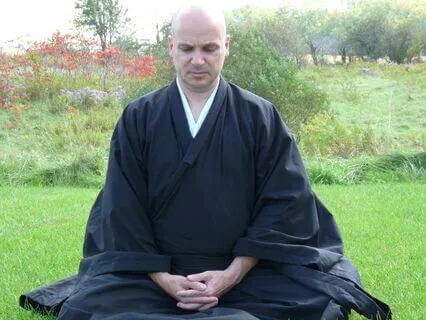
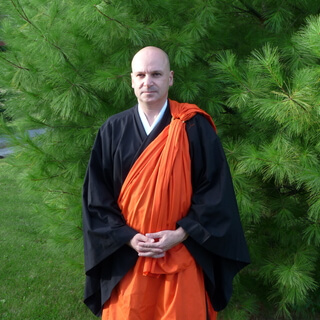
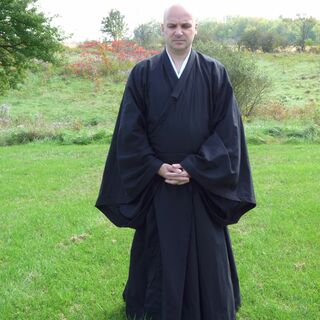
Hello,
It's me,
Joe,
The Autistic Buddhist,
And today I would like to talk about the concept of sharing.
It tends to be something we like doing,
And in this context I'm not speaking of sharing material things,
I'm speaking more about sharing beliefs.
When we discover something that works well for us,
Or that we benefit from,
We want to tell this to others,
Like,
I read this really good book,
You should read it.
Or,
I went to this really nice place,
You should go there too.
And,
I have discovered a way to make me happier,
You should try it.
And so,
It is only natural that if we discover a way out of suffering,
Or find a way to increase our happiness,
Even by just a little bit,
We like to recommend it to others.
When you think about it,
It makes sense.
We have found a way to be less negative,
Less afflicted by our emotions,
And more content overall.
Who wouldn't want to share that?
And,
Our excitement,
And what we did to improve ourselves,
Is apparent.
We present as enthusiastic when telling people that we found a path that works.
And so,
The desire to bring this method of increased happiness to others makes sense.
For example,
If you were on a riverbank,
And someone was drowning,
And there was a lifejacket on the shore,
Wouldn't you throw it towards that person?
Of course you would.
But,
There are different ways to share our beliefs and ideas.
And,
As we know,
Some are quite unpopular.
There is a way to share our path with others though,
That does not involve telling someone about what works for us,
But by doing what works for us.
Let me explain.
Once,
A long time ago,
I was going through a hard time,
And a person I had recently met was a devout Christian.
They knew that I was not a Christian myself.
When this person became aware that I was struggling,
They approached me and said,
Joe,
I'm going to pray for you,
So things can get better.
I was deeply touched by this incredible act of sharing.
They were not telling me what to do,
Or how to do it,
But rather accessing their own path to help me on mine.
Here is a person who is from a different religion than me,
Recognizing that I am struggling,
And they're going to take time out of their lives,
And in all solemnity,
Ask God to help me.
What an incredible spiritual gift.
This act demonstrated to me that I can share the benefits of my beliefs without giving instructions,
Or advising people what to do.
I can say to someone who I wish to assist by sharing,
That next time I meditate,
I will take some time afterward to think about them,
And wish them well.
Or next time I feel the wonder or beauty of the world around me,
I will include that person in my thoughts,
Hoping that someday they can experience the sense of calm as well.
We know,
However,
That over time,
Some people have gained a negative reputation for sharing,
Because they're not trying to share,
They're trying to convert.
For me,
The difference between sharing and conversion is that conversion suggests that the path the other person is following is wrong,
And that if they don't stop following that path,
Then they will be condemned to some form of extended or intensified suffering.
This does not seem helpful to me,
And I kindly avoid those types of individuals.
Trying to convince others of the benefits of your spiritual practice is not a positive approach.
Some people become suspicious of our intent,
And therefore quickly dismiss our beliefs.
One of the questions I get occasionally asked goes something like this.
How do I get my friend or family member to start meditating?
Or,
How do I get my friend or family member to start doing the spiritual practice that has helped me in my life journey?
The answer that I give is,
You don't.
It's not that sharing is a negative thing,
It's how we share that we need to be aware of.
The best way to share is to follow your path and reap the benefits of it.
You can certainly answer questions about your practice and provide feedback when it is requested,
But let people see how you have benefited from it,
As opposed to how they can benefit.
Sometimes,
When something negative happens and I don't react in a way that often some others do,
I get asked how I can remain calm,
Or fail to react,
Or even if I take the situation seriously.
Many years ago,
I took my car to an auto shop to get repaired.
When the job was done,
I noticed that the repair was not made,
As the car was exhibiting the same issues as before I took it in.
I called the auto shop and explained the situation.
I brought my car in to get repaired,
I paid for the repair,
And it wasn't repaired.
The manager was very apologetic and asked me to bring the car back so that it could be repaired right away.
He stated that he would check the repair himself when it was done to ensure it was done properly.
Then he paused for a while and asked me how I could be so calm about the situation.
He said that in similar situations,
He has been yelled at and threatened with lawsuits.
But most customers don't react this way,
To which I replied,
But some others do.
I knew that our exchange left him thinking and made his day a little easier.
Even if he didn't know it,
I had shared with him what my spiritual path had given me,
The striving to make a situation better,
Not only for myself but for others,
And to avoid making it worse.
This also applies to the notion of sharing while not sharing,
Which is simply not saying or acting in response to circumstances.
As I heard the main character,
A Buddhist from one of my favorite TV shows say once,
When one's words are no better than silence,
One should remain silent.
There are two things that are important to remember when sharing.
The first is that the ego can seize the idea of sharing very quickly,
And when it does,
We are no longer sharing,
We are telling.
In sharing,
The ego is a wolf in hiding,
Waiting for the right moment to pounce.
And when it does,
You need to be careful.
Here's an example from my own life.
I know someone who is stressed all the time.
Even at times when there is really nothing to worry about,
This person will find something to worry about,
Something to occupy their mind,
And cause them anxiety.
When talking to this person one day,
I suggested meditation.
She was opposed to it and critical of the idea that by sitting down,
Doing nothing,
And experiencing awareness was going to help her.
She thought the idea was ridiculous.
As she was talking,
My ego arrived.
It told me that obviously she was wrong and I was right.
Who is she to question the benefits of meditation?
She's never done it.
She was being pretty critical of a beneficial practice only because she was stupid.
I became aware of what my ego was trying to do.
It was trying to turn sharing into arguing.
I recognized the ego,
Thanked it for its thoughts,
And I told it that I don't really need it to interfere right now.
Once my friend finished her criticism of meditation,
I just said,
You're right,
It's not for everyone.
This brings me to the other point of sharing.
What if we're wrong?
I believe in the benefits of meditation and how leading a more attentive and spiritual life can relieve one of much suffering.
I believe that wholeheartedly.
But what if I'm wrong?
I have heard that in becoming a Buddhist,
I must always hold on to three things.
Great faith,
Great effort,
And great doubt.
Effort and faith make sense,
But doubt?
Doubt is an important part of our journey.
Doubt stops the ego from convincing us that there's only one way to liberation,
That we have found it and everyone else should try it,
Or they just can keep on suffering.
I have met people from different faiths and practices who I consider liberated or very close to it.
Liberation is a great awakening and I'm sure there are different ways to obtain it.
One of my favorite sayings that makes this point perfectly is from a book written by a Zen priest named Brad Warner who spoke of the idea of us being certain about our beliefs but also leaving a little room for doubt.
He said something like this,
I don't believe in God but I hope he doesn't hold it against me.
And that's what I'd like to say about sharing.
I hope you have the opportunity in your life to share with others so they can see how well you're doing and how well you've done based on the spiritual path you've taken.
Thank you very much for your time and for listening to this session.
Goodbye.