Hello,
Welcome back to the Meditation for Beginners series.
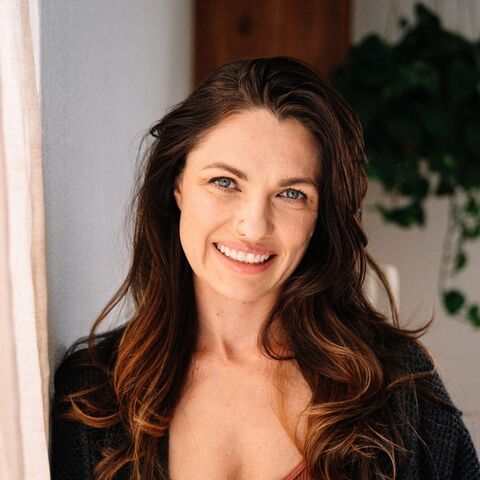
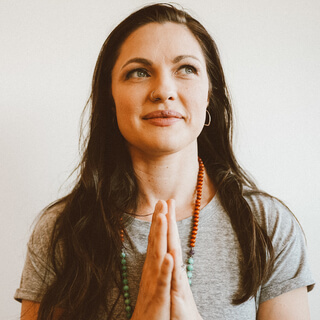
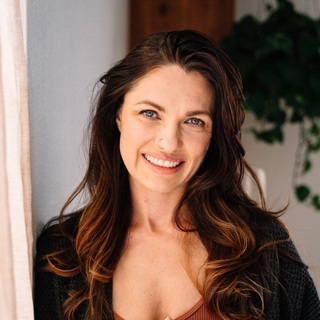
I'm Kelly Villarreal.
Whether you are new to your meditation practice or just returning after some time away,
This series is here to help you explore different meditation practices and techniques.
We begin by finding a comfortable seated position,
Any comfortable way to orient the body,
And then allowing yourself a moment to settle into stillness.
Feel free to make any shifts or adjustments that would allow you to be just a little bit more comfortable.
Let the spine grow tall.
The tops of the shoulders soften away from your ears.
And take a few full,
Deep rounds of breath in and out.
Close your eyes.
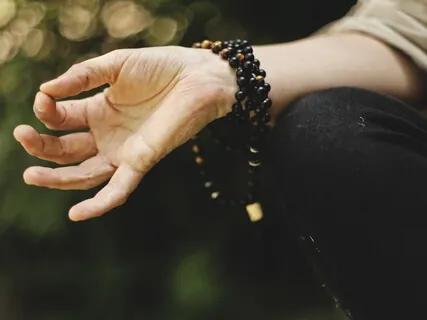
Today's meditation practice will guide you through the use of a simple mantra and the use of a mudra or a hand gesture.
Mudras are commonly used with pranayama or breath practices,
Breath restraint.
And these mudras are intended to help channel the flow of prana or the life force energy in the body.
Today we'll begin with a mudra that might be familiar,
The gesture of Gyan Mudra.
It'll allow your hands to rest comfortably in your lap with your palms facing up.
Using the pad of your thumb and your first finger to touch in a circle.
And let your remaining fingers on each hand stay gently outstretched.
Sometimes referred to as the mudra of knowledge,
Gyan Mudra is used in meditation to help direct your energy and maintain your focus.
Draw your awareness down into the lowest part of your belly,
The space below your navel.
Allow the low belly to soften completely and spill out against the container of your clothing.
For a few rounds,
Watch your breath move in and back out.
And see if you can notice the sensation of the diaphragm,
The main breathing muscle moving in your body.
Notice if as the breath deepens,
If you can draw this breathing muscle into its full range of motion.
As you inhale,
Draw the breath all the way down the lowest part of the belly and allow the belly to expand.
As you exhale the breath,
Notice the diaphragm draw up toward the space under your low ribs and allow the belly to softly deplete.
Watch the breath move the belly.
Your rib cage expand and soften with the breath.
Notice your chest rise and fall.
We'll begin now to add a simple mantra to the breath.
This mantra,
So,
Om,
Meaning I am,
With each inhale,
Silently say or hear the sound so.
With each exhale,
Silently say or hear the sound om.
So,
Om.
I am.
So,
Om.
I am.
So,
Let the sound of my voice go quiet for the next few moments.
Continue with this mantra.
Om.
Om.
Om.
You haven't already.
You might choose now to let your mantra become quiet and watch the breath in its natural rhythm.
If you could draw your awareness gently up to the top of your head.
And as you find this next inhale,
Imagine your body filling from the crown of your head all the way to the soles of your feet.
As you empty the breath,
Imagine the body releasing from the soles of the feet to the crown of the head.
On inhale,
The body fills from top to bottom.
As you exhale,
Watch the body empty from the feet to the head.
Inhale,
Body fills,
Crown to feet.
Exhale,
Body empties,
Feet to crown.
Just a few more rounds of breath like this.
I thank you for your attention and your practice today and I look forward to sharing time with you in the future.
Om.