Hello everyone,
This is a live podcast being broadcast on Facebook and KOSHI radio.
This is KOSHI radio fresh,
A fresh perspective of the teaching of Ramana Maharshi,
The teaching that sets you free from all forms of suffering,
Fear,
Self-hatred,
Sadness,
Anger,
Frustration,
Anxiety.
These are just a few examples of what we can experience on a daily basis as we face the circumstances,
The events of our life that unfold from moment to moment.
So this podcast is about Dharma.
What is the word Dharma?
What does it mean in the context of Ramana Maharshi?
What is the power that it represents,
The power of presence?
So if you look up Dharma online,
There's multiple meanings.
There's no single word that describes or defines Dharma.
When we hear that word we often think of Buddha.
The teaching of Buddha is Dharma and sometimes that's viewed as right action.
But the deeper meaning is the law of the universe or a universal law.
It's the vast unseen intelligence of the entire universe.
So when you align your consciousness with the law of the universe,
It leads to enlightenment,
Moksha,
Liberation,
Salvation,
Redemption.
These are all words that we've heard,
Right?
And certainly through social media we've seen many quotes from Ramana Maharshi,
Quotes from the Buddha,
From the Vedas,
The Upanishads.
The heart is the only reality is the famous quote of Ramana Maharshi.
But what does that actually mean?
What does it take to liberate yourself from the power of your mind,
The power of your ego,
Which is an immense power?
Through your mind and ego you have the capacity to imagine,
To create,
To pursue,
To discern,
To understand,
To open.
And really the teaching of Ramana is an opening to discover,
An opening to discover something deep inside of you and all around you.
So Dharma is the power of presence and the teaching of Ramana is the practice of presence,
The practice of presence.
That's what this teaching is all about.
So what does the practice of presence mean in the context of Dharma,
The universal law?
What is the law of suffering?
It is the nature of suffering and how do you transcend that,
Right?
So Dharma is associated with Buddha because of his primary teaching,
The Four Noble Truths,
Right?
You have to first realize that life is suffering,
That death is suffering,
Disease,
Emotional reactions to life is suffering.
You have to realize that life is suffering and the nature of suffering,
Which is the second Noble Truth,
Is all those things,
Disease,
Discomfort,
Pain,
Fear,
Sadness,
Self-hatred.
And then the third Noble Truth is that there is a way out of suffering,
Right?
This is the Dharma of the Buddha,
Which is a practice of presence,
Right?
So the way out of suffering is the middle way,
Right action,
Right speech,
Right livelihood,
The eight aspects of the Buddhist path.
That is a perspective of Dharma,
The universal law,
The law of the universe,
The intelligent presence.
So the teaching of Ramana is the practice of presence,
Right?
So when you practice presence,
What does that actually mean?
And does it align with the Buddha?
And it does align with the Buddha because it is the absolute.
Absolute is true for everyone,
Regardless if your perspective is Buddhist or Christian or atheist.
Absolute truth is true for everyone.
Relative truth is only true for you based on your experience,
Based on what you think,
Your point of view,
Right?
That's the relative truth,
Which might be true for you and a few others,
But it's not true for everyone.
This is the difference between absolute and relative truth.
So the pursuit of enlightenment is absolute.
It's looking for the absolute.
The Dharma of the Buddha is the practice that sets you free from eons of suffering.
The practice of presence sets you free from eons upon eons of suffering.
The hell realm of samsara,
Multiple incarnations that goes on and on and on.
So the practice of presence begins when you realize the world does not give you lasting happiness.
You might have moments of happiness if you're leading a blessed life.
But the essential disillusionment with life is to recognize the first noble truth that life is suffering.
That's the nature of life in the world where you're chasing after happiness through relationship,
Through the pursuit of power,
Through sex,
Drugs,
Distractions.
So the practice of presence is to focus on the vast unseen presence that the Buddha called sunyata,
Which is beyond emptiness,
Beyond stillness,
Beyond peace,
Beyond understanding.
And in the context of Ramana,
It's the tiriya-tita state.
Beyond the fourth state of tiriya is tiriya-tita.
Ramana himself was a tiriya-tita beyond the experiencer.
There's absolutely no words in the realm of tiriya-tita.
So the practice of presence begins when you realize that happiness does not live in your circumstances which are constantly changing.
It doesn't live in the world of money,
Power,
Sex.
It doesn't,
You won't find it there.
The path of enlightenment is stop.
That is the path of enlightenment.
The path of moksha lives in that single word,
Stop.
The third noble truth is really the command to stop,
To realize the first two noble truths are true,
Absolutely true,
And that there is a way out of this endless suffering.
But it lives in the word stop.
You have to stop long enough to notice what's actually going on inside of you.
What is going on inside of you?
What is your mind telling you right now?
What is your inner conversation with yourself?
Who are you talking to?
What is this neurotic conversation you have with yourself about people,
Events,
Politics?
Who is this person that you're talking to?
This voice in your head?
So noticing that there's this ongoing dialogue begins with stop.
You start to notice,
Yeah,
I do have this conversation.
I'm talking to myself.
Well,
What is this self that you're talking to?
And where does it come from,
This voice in your head?
This is the nature of aligning or practicing presence which lives in self-inquiry,
Vichara.
This is the dharma of Ramana Maharshi,
Is vichara,
Inquiring,
Investigating.
Where does this voice in your head come from?
Who is the me that you think you are?
This is the nature of self-inquiry and for him it took three primary forms.
The practice of presence is questioning the ego,
Questioning the me,
Which is the deep physical feeling that you are your body.
It's questioning this me.
That's the nature of self-inquiry.
It is not an intellectual question where you get an answer.
And this is why it falls down for so many people because people think that who am I is a question that you get the answer and that the answer is presence or the answer is peace or the answer is divine love or divine purpose.
You're looking for the solution to your suffering in the mind and that's like looking or holding up a mirror to a mirror.
There's no end to the reflections,
Right?
Your mind is reflective consciousness,
Ego is reflective consciousness.
You will never find the answer there.
The answer doesn't live in your mind.
The answer lives in the presence,
The invisible presence.
And to actually shift your attention you have to confront the me.
Who is this me that's telling the story of your life over and over and over again,
Causing all kinds of suffering,
All kinds of drama,
All kinds of fights,
Fights at work,
Fights with your friends,
Agreement with friends.
That's the polarity.
But how do you see through all of that,
Right?
How do you shift your perspective and it begins with confronting the ego.
What is this me?
What is it?
Who is it that is experiencing anything?
Pleasure,
Pain,
Who is this me?
What is it?
What is the me?
This is the nature of self-inquiry.
And your ego is reflective consciousness.
This is something that most people don't know.
Reflective consciousness.
This is something that must be emphasized and understood.
It's reflecting everything you perceive through your five senses.
On one side it's like a double sided mirror.
The other side it's reflecting the vast light of the self.
It's an invisible light force alive in your heart.
So the ego is reflecting everything you smell,
You see,
You taste,
You touch,
You hear.
And this is why we and what you think,
What you remember,
What you imagine,
What you project,
All of this stuff is going on in your mind.
But if you look to your mind for freedom you will not find it there.
The mind is a distraction from the presence.
It's an illusion of you,
Your past,
Your present,
Your future.
So moksha is transcendence of the you that you think you are.
The dharma,
The universal law,
Is the way of moksha,
Is the way of the heart.
The way of moksha is the way of your heart.
So ego is not the nemesis that it's made out to be,
The big adversary that blocks you from your own direct realization of moksha or enlightenment.
It is the gateway.
You need ego in the world to survive.
That is its primary purpose.
But for moksha it is the gateway.
The me that you feel you are lives in your heart,
Not the physical heart but the heart center.
Which is part of the electromagnetic energy that runs your entire body.
Right?
So when you turn and dive through the me as a gateway through the reflective consciousness,
You begin to see the me as a gateway through the reflective consciousness.
As a gateway through the reflective consciousness you begin to align with presence.
So self-inquiry confronts ego.
But for Ramana everything was self-inquiry.
Meditation was self-inquiry.
Mantra self-inquiry.
Pranava self-inquiry.
It was using the sound,
The seed letters of Om to guide your attention into the heart,
To develop the skill to go through the heart and reside as the presence.
The practice of presence is being present as presence.
The vast indescribable presence alive in your heart.
So meditation is the practice of presence.
What happens when you sit down to meditate?
If you're a beginner meditate your mind goes absolutely nuts.
Most people on the planet don't even spend five minutes a day in silence.
They're distracted by social media,
The news,
Music,
Entertainment,
Video,
All the stuff that's running 24-7 is a huge distraction from the presence.
The law,
The universal law of moksha is that presence sets you free.
Presence itself sets you free which is vast,
Intelligent,
Beyond human understanding,
The quantum field,
Sunyata,
Beyond all ideas,
Duryatita,
Beyond all experiencers,
All doers,
Right?
There's no words that can describe presence,
The presence of the universe,
Presence of God.
God is not a deity in human form which is when we hear that word we tend to personify God.
We run to God with our problems and this is something the mind can relate to.
We can relate to Arunachala Shiva,
The mountain.
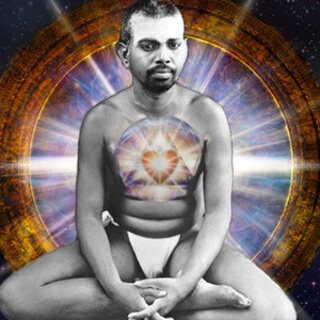
We can relate to the beautiful images of Ramana Maharshi until you really think,
Wait a minute,
Ramana is dead.
Ramana is dead.
He's been dead since 1950.
So why is it that so many people have Ramana on their lips and in their hearts and in their minds and are pursuing moksha on the mountain path?
Ramana left his body a long time ago.
So who is Ramana?
He is the presence,
Right?
There was no ego in him.
He was the radiant presence of Arunachala Shiva,
The radiant presence of the formless presence of God,
The unseen intelligence of the universe.
And he is the code breaker.
He unlocks the teaching of Buddha,
The secret code contained within the sutras of Buddha are unlocked.
The secret teaching of Jesus is unlocked by the presence of Ramana Maharshi.
What did Ramana do?
He aligned his consciousness with the presence through the practice of vachara,
Self-inquiry,
Through silence,
The power of silence.
So the presence of the universe is a power beyond human comprehension.
And when you stop and you are still and you are quiet and you actually apply the teaching in everyday life,
In satsang,
In a formal meeting,
Yes,
But in your everyday life you apply the teaching,
You inquire who is angry,
Who is frustrated,
Who's stressed,
Who's anxious,
Who is this who.
Not looking for the intellectual but recognizing who am I is a power.
It is a power.
It is an energy of presence that annihilates the questioner.
And this is horrifying to the mind.
It's like,
Wait a minute,
I don't want to be annihilated.
I want moksha.
That's what I want but it's not here,
It's somewhere else.
I have to go get it.
And it's the striving to get moksha that keeps moksha out of your reach forever,
Forever.
Forever.
Because moksha lives in stop in that single word.
When you stop running towards moksha or seeking bliss or seeking to avoid the mess of life and you stop and you totally welcome what is in this moment and you look inside to see what is free of it all.
And the power of presence removes the veils of consciousness that keep moksha from your direct experience.
And moksha is liberation,
Enlightenment,
Nirvana,
Tariya and then beyond all of that sunyata,
Tariyatita.
Right?
It is no small task to stop,
To not be distracted by the world,
Not be distracted by your mind and the instant agreements with whatever you think about your past,
About your future,
About what's happening in your life right now.
It's no small thing to align with the presence.
You have to be willing to stop.
You have to be willing to let go.
You have to be willing to surrender to your heart.
Surrender to the presence.
Ask Ramana for his help.
So part of surrender is I can't do this on my own.
It's the humility to say I can't do it.
I can't see through my mind.
My memories are too strong.
I'm in too much pain.
So dharma is surrender to the presence,
The universal law,
The absolute saying please saying please God help me.
I'm tired of suffering.
I'm tired of the pain.
I'm tired of the fear.
I'm tired of the endless sadness.
I'm tired of being worthless.
I'm afraid.
Help.
So stop and help is the beginning of the practice of presence.
Help me to stop.
Help me to be still.
And you can call on Ramana which is the presence or you can call on Buddha,
Lord Buddha help me.
Lord Jesus help me to align with the presence because the mind can relate to that or Arunachala,
Arunachala,
Shiva help me.
I'm tired of being miserable.
I'm tired of just the moments,
The fleeting moments of happiness.
Help me.
I want to be free.
I want to be liberated.
Now help me please.
I beg you.
I beg you.
This is the humility humbling your mind and then the intelligence of the universe will use the image of Ramana Maharshi or Jesus or Buddha to help because the intelligence of the universe knows you need the help but you first have to stop and ask for that help.
This is the nature of surrender.
This is the nature of prayer.
And sometimes prayer is rejected.
It's seen as dualistic but in the relative sense you do feel separate from everyone and everything so this is part of the humbling of your mind and ego is to recognize that and say God help me please.
I'm tired.
I'm tired of the mess of life.
I'm tired of the roller coaster of emotions.
I'm tired of having bliss one moment and then suffering the next.
I'm sick and tired of it.
Help me God please.
And this opens the mind and the heart to the presence which is the intelligence of the entire universe.
It is vast and supremely intelligent and it ignites a sacred holy fire inside of you and it's that holy fire.
The moment of surrender is the spark that ignites the sacred blaze that burns away all of the illusions and there are a lot of illusions inside of you.
Most of which is completely unconscious.
Just the power of memory can lead you back to the past and the past is the graveyard of suffering.
Stop.
Don't keep digging in the graveyard looking for happiness or trying to fix or change what happened or trying to fix or change your life.
Stop all that and go in and go in to your heart.
Surrender to the love in the core and ask God,
Ramana,
Buddha,
Jesus,
Help me.
Pull me into your divine presence.
Set me free from the hell realm of suffering.
And then it's through the power of presence that after a period of time and it can be a long time,
Years of practicing the presence,
There's deeper and deeper realizations that come naturally.
Ramana's teaching is Sanatana Dharma,
The eternal natural way,
Transcendent of time,
Transcendent of space,
Transcendent of egoic reflective consciousness is transcendent.
But the transformation begins with you,
Your willingness to stop,
Your willingness to face yourself.
And in that stopping you can discover intimately for yourself this vast eternal presence,
Eternally free of it all.
Om shanti shanti shanti om.
Om shanti shanti shanti.