Hey there,
My name is Lisa,
And welcome to your Clean With Me Soucha session for the dishes.
This is inspired actually by many Clean With Me podcasts,
Tutorials,
And things like that.
I find that,
Especially now at the time of this recording,
It's seasonal affective disorder time,
It's right before the holidays,
And it's like that time period where we are either very excited to like clean and organize and have a fresh start,
Or it's the last thing on our mind and we want to rest,
We want to Netflix and chill,
We want to watch the Hallmark Holiday Romance movies.
So this is a little bit of an invitation that if you need a little bit of inspiration or maybe just someone with you in spirit on the journey of you just cleaning your dishes,
Washing your dishes,
Cleaning your dishes,
Washing your dishes,
This is for you.
I will share my tips and tricks,
My personal story when it comes to Soucha and cleaning and what is Soucha and yoga philosophy and things like that.
And so with that,
Feel free to let's go ahead and let's get into it.
I always love to start with lighting a candle or incense,
Tying my hair up,
Maybe some of us even want to pause and maybe take a shower,
But there is a prep to the cleaning.
There is almost this asana,
This pose,
I'm going to get really geeky and woo-woo with this wellness cleaning,
So bear with me,
But there is this energy around starting,
You know,
Beginning.
And I always feel like putting my hair up in a bun and lighting a candle or incense.
I also have a candle warmer,
So starting that candle warmer,
I got my clove,
I got my clove candle scent,
I think it's called Christmas or holiday cheer or something like that,
Smells like cloves and a little bit of,
Just smells like Christmas in a candle.
So I have that going with the holiday warmer and this is kind of the start.
So really quickly,
Let's go ahead and I'm going to play some ASMR like sound effect dishwashing in the background for you,
So it's like it feels like it's immersive,
It's an immersive experience.
And then for those of you who like to practice with a little bit of music,
I got some holiday jazz music playing in the background.
This is the first time that I'm sharing something like this,
So I hope that it's helpful.
I'm very pragmatic and practical when it comes to wellness tools and something I've been really getting into is healing my relationship with my space,
My environment and cleaning.
So practically,
Before we get into the philosophy and we get into the rhythm of it,
Let's just take a moment to just,
Yeah,
Like rinse off or give our dishes a little water,
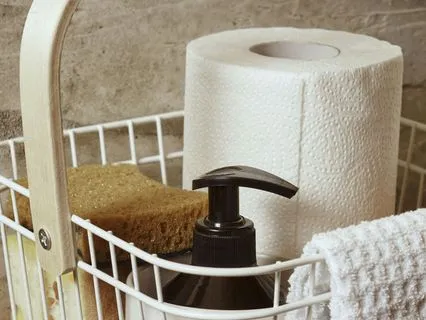
Maybe take a little bit of that non-dish soap or your favorite dish soap and just kind of squeeze a little onto that sponge,
Lather up the sponge.
I'm trying to get good sound effects for you,
But with that,
We begin.
Sometimes we have what the Clean With Me podcast with,
I believe it's with Ronnie and her daughter.
I love Ronnie,
She's so spicy,
But that's a resource and a tool you can lean on.
And she always kind of talks a little bit about disasters,
You know,
Where it's like the dishes,
Let's be for real,
Sometimes the dishes are all the way up and above the rim of that sink.
So if we have a counter near us or even just like the table or any kind of surface,
Even if like there's a little bit of stuff,
Just clear it off,
Create a little space.
I like to put it on the stove because a lot of the times I have like a dirty pan that needs to be washed.
So I'll take a couple of bowls and plates and things that just create space,
Maybe containers and just put it on that pan or put it on that surface with maybe like a paper towel or a towel underneath,
Just to give yourself some space so that there's not water splashing everywhere.
It's not overwhelming.
And we're just going to put that to the side for now.
We're just going to ignore that for now.
And then we're going to start my favorite.
So I don't have a dishwasher,
But I got a dish rack.
So if you're similar to me and you live in an apartment setting where it doesn't come with a dishwasher,
I'll show you both ways or we'll like go through both ways.
But I start with,
Of course,
The plates as well as the bowls and I start giving them a scrub down and just putting them in the rack,
Putting them in the rack one at a time,
Getting into that rhythm of it all.
And it gets easier,
I promise you.
Like once you get into the rhythm of it,
You're like,
Okay,
I'm here.
It's kind of like running or exercising or yoga.
The hardest part is beginning.
So you already did the hardest part within this first like five minutes of this recording.
So you're already here,
You're present,
You're washing them dishes,
You're getting into it.
We have the music in the background,
Or maybe you got some more music playing in the background.
And we're just allowing ourselves to slowly bowls,
Plates,
Small and large Tupperware.
And of course,
Those mugs and those glasses,
We just putting them away.
Sometimes you have like the forks just sitting on the top.
And if you want to make space,
Yeah,
Like grab some forks to start and some spoons and knives,
Some cutlery,
Some cutlery and just start rubbing them down.
My favorite tools for washing dishes is of course,
Dawn dish soap and the scrub people,
The scrub mommies,
The scrub daddies.
Right now,
Currently I have a holiday scrub tree,
Like a scrub Christmas tree,
A scrub star,
A scrub snowflake,
I love,
I mean,
And they last forever.
It's probably not the healthiest for the environment,
But we're not going to try to overdo it.
We're not going to try to overwhelm ourselves with that.
Right now,
We just got to get our dishes done.
And for those of you who have a dishwasher,
Just put them in,
Put them in that rack.
It is easy.
Some of us,
It's a little bit easier.
I'm the type that if I have like pasta or there's something cakey,
I like to give it a scrub and a rinse before I put it in because sometimes the dishwasher isn't that effective.
But for those of you who have an amazing dishwasher,
Yeah,
Just throw them in,
Rinse them off,
Throw them in.
But a lot of people subscribe by the idea of like scrub and then you put it in the dishwasher.
So,
What is saucha?
So,
Back way back when during my yoga training and a lot of people's yoga trainings,
You learn about the yamas and the niyamas.
The yamas are about things you can do.
They're like an action verb.
So they are called moral restraints,
Right?
We're getting really esoteric,
But for those of us who just kind of need the practicality and just kind of bringing it down to earth,
Yamas is an action.
So ahimsa,
The practice of nonviolence,
Or satya,
Telling the truth,
Right?
And niyamas are like these observances,
This internal self-discipline or this internal practice,
Or just observing.
So tapas,
Do your best.
Saucha,
Cleanliness on the inside as well as the outside.
So we're doing a little bit of outside cleanliness right now.
Or ishvara pranidhanam,
Learning how to trust,
How to let go.
So there are,
And I like this very much in terms of washing the dishes in a spiritual way because for the holiday seasons,
Especially in the start of the year,
It just feels so good to start with an external and internal fresh start.
A lot of us,
We talk about new year,
New me,
But currently I believe percentage-wise,
Around 50 to 60% of homes in the US are cluttered,
Are completely cluttered.
Not organized,
Not having a space to just kind of think and be.
So I'm saying this to kind of normalize the fact that 50 to 60% of us have a hard time doing the dishes.
50 to 60% of us have a hard time organizing.
That includes me.
I am part of those 50 to 60%.
This has been a long practice.
If you come to my apartment,
You're like,
Oh my God,
It's so clean.
It's so beautiful.
It's because at one point,
It wasn't.
Like 2020,
Guys,
I had to get my stuff together.
It was very challenging.
And we still have challenges,
Especially because we live in an apartment.
So we end up running out of storage.
So we end up putting shoes underneath the bed.
And then before I know it,
The bed has 12 shoes underneath.
And I'm like,
Okay.
And the cats are like one with the shoes.
And I'm like,
That's not,
I mean,
That's a vibe,
But it may not be the healthiest thing.
So I begin with dishes because dishes is the kind of easiest,
Most accessible thing.
A,
We need dishes to eat,
Just to nourish our bodies and nourish ourselves.
But on top of that,
They're just so easy.
Soap and water.
It's so easy.
And then when you get the dishes done,
It is like the biggest sense of accomplishment.
I don't know.
That and making your bed.
For some of us,
I made this around half an hour because I think like on average,
Like it could take us half an hour to maybe an hour to do our dishes,
Depending on how big of a family and how big of a home we have.
So some of you may be surprised by that number,
Like an hour to do your dishes.
First of all,
You could just have a disaster.
It could just be because some people,
Especially in the United States,
Were taught like,
You know what,
Let's just buy another plate,
Which is crazy because it's so much easier just to clean the plate.
But I have also been there where I'm like,
Oh,
But this like at Marshall's or HomeGoods is like,
You know,
$5 for a new pack of cutlery.
And then before you know it,
You have all these,
These,
You know,
Dishes and spoons and all these things and you have more than you need.
My husband and I had to downgrade.
We ended up getting extra like plates and cups and things.
So sometimes it's just like you have a lot of cutlery and sometimes you have a giant family.
Like my good friend,
She has 60 chickens,
4 cats,
6 cats,
2 dogs.
Sorry,
4 kids,
6 cats,
2 dogs.
There it is.
60 chickens,
4 kids,
6 cats,
2 dogs.
So she is actually,
She has a type of obsessive compulsive disorder.
So she literally runs her farm like a ship,
A very tight ship.
She keeps tight ship on it.
She also has someone come I think like bi-weekly or monthly to help her out as well.
So if you have a big family,
Yeah,
You probably have a lot of dishes.
But again,
If you're like my friend who's very,
Very strict,
It's like no one needs 3 plates.
Every person needs 1 plate.
She's very particular.
I need a little bit of that in my life because I'm the type that's like,
Yeah,
We could have like 6 plates per person.
I'm good.
And then before you know it,
You have a mountain of dishes.
So yeah,
It could take you an hour.
You may have like a disaster.
You may just have been behind on the dishes and that's okay.
And we're not going to like shame or judge.
That's another big thing that's part of this Saocha journey.
It's very interesting,
Saocha,
Because you kind of think to yourself,
Okay,
Saocha means cleanliness.
And forgive,
You know,
My cat singing to the song to her people in the background,
But I feel like it brings the reality of all of this into your cleaning space.
But yeah,
Speaking of non-judgment,
That's exactly it.
I want this to be as raw and real as possible because I want a little bit of the non-judgment coming on in.
I want a little bit of intentionality when it comes to this.
So you get a little window into my everyday world and then it makes us feel less alone.
Okay,
So as my cat continues,
Hopefully she stops singing the song to her people because I don't want it to be too distracting for you guys,
But maybe it's soothing.
Maybe you too have a cat that sings the song to their people.
She's also deaf,
So she's a little bit louder than she realizes.
She's 19 years old.
So she just lost hearing over time.
But with that,
Okay,
So eventually we're hitting close to 15 minutes and I also like this timer because it also keeps us accountable,
Like how efficient because some of us will be like,
Oh,
Like let me try to get it perfect and I get it.
You want to get like the crusties off and things like that.
But if you realize like the dish is clean,
The soap is washed off,
Honey,
Put it in the rack,
Put it in the rack,
Move on to the next one.
Eventually,
Maybe that first half of your dishes,
You may almost be done or that first half,
If your dishes were piled really high,
Could already be taken care of.
So you can have a choice.
You can put the dishes that were to the side,
You could put them in the sink and start going from there.
Or you can keep going until you hit the bottom of the sink.
The key for this is we're going to try to hit the bottom of the sink.
Another habit that we can get is you do half the dishes and you're like,
I'll do the other half later and then the other half never gets done.
So for this exercise in practice,
We are going to get to empty sink territory.
If you are like my dishwasher or my dish rack is running out of space,
What I like to do is I like to take a towel or a paper towel.
I know not very environmentally friendly,
But whatever works,
We're talking about what works for your space right now.
Because we can't get too environmental friendly if we're not good in our home,
And we're not good in our mind.
So really quickly placing a towel and just putting,
Maybe laying the forks out and knives out flat,
Or we could do cups and glasses and mugs that we can lie on out.
So that also could work as well.
But if we're going to try to aim to finish things,
I want to actually aim to finish some things.
So let's create some space for ourselves.
And for those of you,
I mean,
For those of you who are graduates,
Like we're like,
I'm about to graduate with this dish thing,
And I'm about to graduate early and we're halfway through and you're almost done.
Feel free to look at your counter space.
Feel free to look around at the table or the biggest eyesore.
It could even be your mail,
Like how many of us see the mail and we haven't looked through it.
And maybe there's something important in there.
So start maybe going through your mail,
Start clearing a little bit of that eyesore clutter,
Something that you can just look at and be like,
Oh,
Okay,
That is annoying to my mind.
That's like very obnoxious.
Some of us are a little desensitized and it's like,
But that's been there.
That giant thing has been there.
So but if a key is if you if you see it right away,
Like if it's blaring at you right away,
That's a great sign to maybe see what can be organized and what can be looked through.
I know currently my office space really needs a decluttering badly.
We also have to sell a lot of stuff on Facebook marketplace.
So,
Yeah,
That's that's another aspect.
So before we continue on with diving on into a little bit more of the philosophy of Saocha,
I want us to play around with the psychology.
So there was a study,
I believe,
I believe it was UCLA and I believe it was published in the Journal of Mindfulness.
There were studies on those who had a very clean environment versus a very cluttered environment or messy environment or dirty environment.
You know,
The dust,
The grime,
It can add up,
Especially if you have animals.
Oh,
My goodness,
Especially if you have animals.
So the study showed that 63 to 72 percent of people were more productive in a clean space.
63 to 72 percent.
That's incredible.
58 percent of people saw a reduction in depression.
So for those of you who right now are getting this recording and it's in the midst of the winter and this holiday season,
That's 60 percent of people who reduced just through their environment,
Which is incredible.
66 percent said that it improved their mood.
70 percent,
Of course,
Gave them a sense of accomplishment.
80 percent of people felt more relaxed in a clean space.
So all those numbers are insane because they're above,
They're 50 percent and above,
Which is wild.
And also 20 percent were able to critically think better.
Now,
Why is this neuroscience wise?
And the reality is visual overwhelm or visual noise forces our brain to work harder.
So when we clean,
We're filtering out irrelevant information.
It's kind of like a lot of us talk about social media and how there's so much clutter and noise.
And it's like we're having conversations with six different people.
Or one moment we can be laughing at a video and the next moment we could be desperately hysterically crying because we saw something awful.
That is kind of what creates that cognitive overload within the mind,
So says neuroscience.
So the feel good chemicals,
The sense of control,
The sense of being able to think clearly can be affected by that visual noise,
According to neuroscientists.
So fascinating,
Right?
In Saochao,
What I find most interesting in yoga philosophy is these principles are pretty much like,
Hey,
If you do these things,
You may live a way happier and healthier life.
If you do these yamas and niyamas,
You will live most likely a happier and healthier life.
And it doesn't matter how you do it.
It just matters that you play with the practice.
So,
You know,
The practice of telling the truth,
The practice of protecting your energy,
Brahmacharya,
Boundaries is a huge practice for that.
But the practice of non-attachment,
We're not going to attach the results,
We're not going to attach to a sense of success or perfection or even attach to things,
Right?
Non-attachment and then papas,
Like doing your best and Saochao,
Cleaning.
All of this,
Pretty much these ancient yogi philosophers and these mystics have said this improves your happiness.
This improves your life.
My curiosity is why do we resist it so much?
When I was getting into my journey,
And I promised I'd share a little bit of my story,
Like I shared in 2020,
I realized it was so much clutter.
Shoes and books and clothes that I didn't need.
And then on top of that,
You have the dishes and the dusting.
And there's just so much.
Right now,
And I'm noticing seasonally,
There needs a decluttering.
So every season,
I will have a declutter party with my husband and we'll just be like,
Did we use this?
No,
Did we use this?
No.
The other beautiful practice to that is recognizing the over consumerism that we may be participating in.
So these little knickknacks and things like do I really need like 20 crystals?
If I don't have the space for the 20 crystals,
I may not need the 20 crystals,
Unless I create space for it in a way that again,
Isn't visual noise.
So shelves,
Storage,
All that's important.
But then when our things start to,
We start to kind of Mary Poppins it.
What I mean by that is shove it all in a specific storage space,
Shove everything,
Every eyesore into a specific storage space,
And the things about to burst.
My favorite scene is from Confessions of a Shopaholic.
The main character can't get rid of her stuff,
Like things she shopped,
Her Gucci,
Her Louis Vuitton,
Her Merced.
She cannot get rid of it.
That movie speaks to me on so many different levels.
It's one of those feel good,
Ridiculous movies.
It's ridiculous.
It's not meant to be like a huge Oscar winning movie.
It's just fun.
It's just meant to be a decompressor and fun.
And the character,
Of course,
Is a shopaholic.
And what makes that movie so lovable and so good is she's very identifiable,
Right?
I think in some,
I didn't realize this was a trigger for some individuals,
But some individuals,
Especially in the US,
Get very triggered when I use words like consumerism or capitalism.
And I don't mean that in a negative way or to downplay things.
I mean it in a way of we are very much conditioned culturally to shop to make your life better,
To have things to make yourself feel good and be presentable.
And there's a little truth to that.
Don't get me wrong.
Like some of my skin products,
They do make my skin and make me feel a little bit more pampered and a little better.
I just said it myself.
My scrub daddies,
My scrub mommies,
The dish soap and the holiday theme of it,
Adorable.
Gives me a little oomph when I do chores.
So there is some beauty to that.
And I don't want to knock the ability to shop and to spend and to gift give and to gift give to yourself.
But what this movie speaks about that I love so much is when you do it to feel good and the world becomes brighter and more beautiful until it doesn't.
And then you got to do it again.
And there's no purpose to it.
There's no intention to it.
You're just buying and chasing this dopamine high.
So that's why I feel like we got to be careful.
We got to be balanced because a commercial may say,
You need this.
You need this.
It will make your life better.
And for a lot of us,
That's the truth.
And I don't want to knock that,
Especially.
I mean,
Yeah,
I completely get it.
I've been the recipient of that where I was like,
Yes,
This does make my life feel a little bit more beautiful and a little bit shinier and a little bit better.
But we also have to recognize that emptiness at the end,
Recognizing all that book or that those new shoes or the clothes or the T-shirt or the car really made me feel that dopamine high.
But I still have all these problems.
I still feel vulnerable at times.
I still feel insecure.
I still feel lonely.
I still feel disconnected.
All those things.
Unfortunately,
A new pair of shoes or a bag can't or a car can't fix that,
Right?
It could just give you a little umph,
A little like,
This is lovely.
But can a car make your life significantly better?
Of course it can.
Of course.
Trying not to market that.
But yeah,
For those of us,
I have a client of mine who just bought her first car.
She's in her 60s.
She lived in the city majority of her life.
And she moved to Vermont.
And she bought herself a car.
And again,
It's not meant to be,
It's not about luxury or anything.
It's meant to be about transportation and self-sufficiency and independence.
And that car was such a symbolism for her.
And yes,
The car comes with responsibilities and things like that.
But in that moment,
It's a symbolism of empowerment.
So don't get me wrong.
There are certain things that Marie Kondo says bring us such joy.
And in that sense,
It's okay.
We can love those things.
We can cherish those things.
We can nurture those things.
But then there are these things that are just things.
They're just like a moment,
Like a one-night stand of a moment.
You know,
It's lovely in the moment.
And then the moment does pass and it's like back to reality.
Like nothing else,
There's no substance.
There's nothing else there,
You know?
It's like going on a date with a very beautiful human being that you are attracted to.
To find out that,
You know,
There's really nothing in common.
Like they're beautiful human beings,
But there's no connection.
Nothing to connect you,
Nothing there.
So sometimes we do that with our things.
And that's what I mean by over-consumerism.
And sometimes some markets out there don't care if you're living in Hoarderville.
They don't care if your credit card is way maxed out and you're delinquent.
They don't care.
They just care about their own journey and their own credit card and their own house and their own stuff.
They just need to make that sale.
They're like,
Well,
That's your responsibility.
So we can fall into that trap really easily.
It is a double-edged sword.
So that's what I mean by that.
So,
Yes.
Maybe you can identify with that.
Let me know in the comments if you do.
But we're heading towards the end of our dish washing.
Now,
Usually when this happens and I have a disaster,
I start to freak.
I start to go like,
Oh my God.
Oh my God,
I'm not even done.
I'm not even done.
I still need half an hour.
Give me one more.
Give me half an hour.
But no,
This is your encouragement.
This is your opportunity to keep going.
Keep going,
My friend.
Keep going.
You've already done half an hour of dishes.
So if it takes you another half an hour,
You know you can do it.
So we're going to continue.
I'm going to stick with you.
Don't worry.
I'm not going yet.
For those of us who are actually maybe almost done around the time period,
Then I'm like,
Oh my gosh,
Yeah,
I'm just about finished up.
Can you recognize like,
Oh,
Wow,
It only took this time.
But maybe it feels a little bit faster with someone.
Maybe you learn something like,
Oh,
This feels a little bit faster.
This feels like I'm not in it alone.
This normalizes everyday life.
This normalizes the practice of saucha.
So diving a little bit deeper into the practice of saucha,
Maybe closing on that practice.
What needs to be cleansed emotionally,
Environment-wise,
Maybe physically,
Hey,
You know,
The washing of the hair,
Brushing of the teeth,
Flossing,
All of that jazz.
What in your life right now just needs a little cleansing?
And once you're cleansed,
How's it feel after?
Is it a sense of accomplishment or you can think a little bit clearer?
There's not so much visual noise and whatnot.
So I find that to be very important and a tool that we may have resisted,
But in fact,
It's a gift.
It's an opportunity.
We may resist movement,
Right?
That's a great one.
We may resist the walk or the half an hour of cardio that the doctor suggests or whatever the case is,
And then when we do it,
All of these beautiful gifts follow after.
So the decision or the resistance becomes an opportunity because if we know we resist things that are really beneficial to us,
Then we know the resistance is an opportunity to build a practice for something long-lasting.
Same thing with our environment and the sauté practice.
If we resist it,
It's a beautiful opportunity.
Ooh,
We're resisting.
This is an opportunity.
That means a lot of good stuff is going to come from this after.
So not to shame ourselves or guilt ourselves or say,
What's wrong with me or why do I keep falling in these traps?
You know,
My husband just said that.
He said,
Oh,
You know,
He had a benign tumor removed and for his recovery space,
The space was very,
Very zen clean,
If that makes sense.
Like if you go into a Buddhist monastery,
It's like it's very zen clean.
And,
You know,
He's healing,
He's going to the gym,
Movement,
Working again,
Movement,
And all of a sudden there's the extra books and that we bought,
You know,
While he was recovering that are kind of thrown about and the extra clothes that have kind of ended,
Their season has ended or,
You know,
All these little extras.
And one begins to think,
Okay,
It's time.
It's time again.
He was kind of beating himself up.
He's like,
I don't want it to be every season will be declutter.
I want it to be that I live in a space of minimal clutter consistently.
And I'm like,
That's beautiful.
I know for me,
I'll give myself the patience for that season,
Those seasons.
But for him,
His goal is where he won't need the seasons.
Eventually he can let that go.
So that is important to also recognize in you.
In terms of a saucha,
In terms of the saucha practice,
What is the practice of saucha for you?
What does your life look like in alignment with the practice of saucha and cleanliness?
That's something to think about,
Maybe journal on,
Maybe have a conversation with the self out loud about.
What does my life look like in alignment with the complete energy of saucha?
How can I begin to plant those seeds using resistance as the invitation,
Using resistance as the clue to an opportunity to be formed later.
So with that,
My friends,
We are on 31 minutes of doing this.
You may have finished a while ago and you may have moved on to something else.
And you may be in the rhythm now,
Which happens to happen.
You may be like,
Oh,
I'm over it.
I'm done.
I'm going to Netflix and chill,
Which you are allowed and amazing.
And you did it.
And what a sense of accomplishment.
Notice if there's any feelings of accomplishment in the body.
Notice how your body may feel staring at an empty sink.
How does your body feel?
It could be cathartic.
It could be a release.
It could be rage.
It could be,
Why didn't I just do this?
You know,
It could be so many feelings,
But the beauty is you did it.
You did it.
And maybe last but not least,
If you are still working on things,
Meditating on that,
What does life look like in the element,
In alignment with the energy of saucha?
And if you have fully completed,
Maybe moisturize your hands,
Those hands.
If you don't have gloves,
I have my gloves.
Oh,
I forgot to say,
Yeah,
I have my gloves,
My $0.
99 store gloves that I wash the dishes with.
But maybe if you don't have that or you don't need it,
You're like,
I don't need it.
Maybe put some lotion,
Some hand lotion or petroleum jelly or aquaphor on those hands,
Give them some love.
Maybe just dry the hands and thank the hands for what they've done.
Putting a little bit more intentionality and a little bit of love.
These little practices,
I promise you,
They may sound wild,
But they make a huge difference.
So with that,
My friend,
Thank you so much for joining me.
Let me know how you found the practice.
Let me know if you would like more practices like this.
If this does really well in terms of how it's received,
I will go into the next part of the house,
Which is a room,
Maybe a guest room.
My next part I think is decluttering.
I think decluttering is really important or a laundry,
Someone to walk with you or be with you in the laundry.
I might just be inspired to do that on my own,
Regardless of how this is received.
But if this helped you in any way,
Please feel free to let me know.
It keeps me encouraged and it keeps – I'm very much service-oriented.
So if I feel like something doesn't serve a person,
I'm like,
Well,
Then what's the point,
Right?
Kind of the juices,
Kind of.
It's fun,
But I also want to make sure that this serves you.
So please feel free to let me know and what more you may want to see or hear from.
And I wish you an amazing rest of your 24-hour period,
Your day,
Your night.
And I will see you next time.
Bye for now.