Hello there,
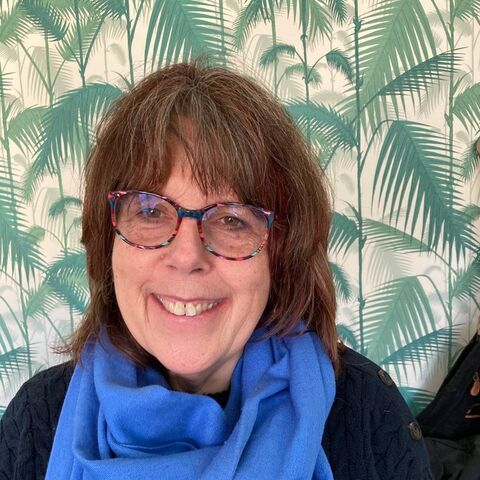
My name's Mandy.
Welcome to Ted the Shed.
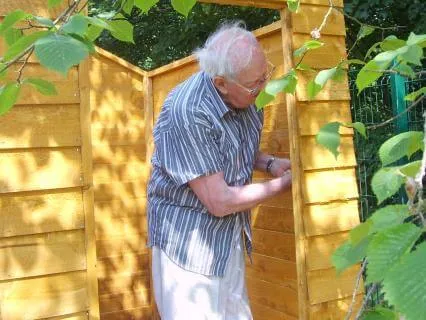
Ted the Shed tells the story of my dad and the allotment he got when he was aged 87.
The book was published in the summer of 2024.
But before we start,
Please go right on ahead and make yourself really comfortable.
Settle down into your chair or your bed,
Relax your hands,
Soften your shoulders and release your jaw.
That's great.
So if you're feeling comfortable,
Then I shall begin.
Late April 2010,
Quids in.
It all begins the day Dad rings me on the landline with shocking news.
He is the only person we know who still uses the landline,
So we keep it despite the expense.
We've been offered an allotment,
He shouts without saying hello.
I understand his surprise.
He put his name on the parish council's waiting list on his 80th birthday nearly seven years ago.
He had probably forgotten all about it.
It was just after he and Mum moved north to be near me.
What do you mean we?
I say,
Glancing out of the kitchen window at the tiny backyard of the house I share with Mr Mandy Sutter.
It is spring and dandelions have come up in all my plant pots.
That is the level of gardening I am comfortable with.
He ignores my question.
There's only one snag,
He says.
It hasn't been cultivated for 10 years or more.
It's very overgrown.
That does sound like a snag,
I say,
Aiming for gentle discouragement.
Never mind the fact that he is now prone to funny turns,
Has a bad toe that makes it difficult to walk and has never had an allotment before,
Just a vegetable patch in his Cotswolds garden that brought him nothing but misery.
But the fervour of a possible new venture is on him.
Dad loves nothing more than a project.
We'll go and take a look at it,
Shall we?
The plot is in a newly reclaimed area next to a well-established allotment community on the edge of our small town.
It has been funded by lottery money to try and reduce the 180 strong waiting list.
Dad tells me this as we walk and stumble the maze of narrow uneven paths,
Passing impressive examples of recycling.
Ancient ceramic baths planted with potatoes,
A greenhouse made entirely of windows,
A shed made entirely of doors.
How do you know which one to open to go in?
Asks Dad.
Rotting planks standing,
Leaning and lying for no apparent reason at all.
There are animals.
Chickens cluck,
Geese squawk and goats stand silently chewing.
We reach our potential plot.
I stare at a chest-high thicket of nettles,
Two quite sizeable trees and something I will later find described on the Royal Horticultural Society's website as a major weed problem,
Himalayan balsam.
I am mildly horrified.
Faced with the reality,
Dad will decide to turn the offer down,
Surely.
He stands teetering slightly.
Looks like a lot of hard work,
I say.
He grins.
That's the beauty of it.
What?
It's in such a state they're letting us have it free for the first year.
It's a beautiful spot,
Isn't it?
The river is just on the other side of that fence and is that a blackcurrant bush in the middle?
I peer but see only the powdery green hue of flowering nettles.
Dad,
Taken out of school at 14 and set to work because his own father had lost his job,
Is thrifty to a fault and I am sure his appreciation of beauty is less to do with the river and more to do with the fact it isn't going to cost him a penny.
And there's that word,
Us,
Again.
He goes on.
Even if all we ever do is pick blackcurrants,
We'll still be quids in.
Now is the time to make my position clear.
I have neither the time nor the inclination to take on a project like this.
The only vegetables I recognise in growing form are potatoes and peas.
Mr Mandy Sutter has zero interest in becoming a man of the soil so we can't count on him for help.
But somehow these words,
Although perfectly formed in my mind,
Don't come out of my mouth.
The thing is,
I haven't seen Dad so enthusiastic about anything for ages.
Soon after making their new start up north,
Mum,
Disorientated in the unfamiliar flat,
Had a bad fall.
She was never the same and died two years later.
It was a terrible blow for Dad and me.
I have no siblings.
But today,
Dad looks almost happy.
And as for me,
A heady,
Reckless feeling is on me,
A known accompaniment to any doomed new project.
I'm in my fifties now and the last time Dad and I did anything horticultural together was at five when I made him garden salads from grass,
Leaves and flowers,
Insisting that he ate them and watching to make sure he swallowed.
Is it time this relationship moved on?
I find myself turning to him and smiling.
It is a beautiful spot.
A week later,
The council say we're welcome to start work on our new plot.
The first job is to see if there's anything of value on it,
Horticulturally speaking.
I slash through the nettle jungle with a scythe,
A vicious looking thing from the local tool shop.
My hands tingle and throb despite my new gardening gauntlets.
Even my stings have stings.
Dad and Mr Mandy Sutter look on.
They seem to be discussing the price of the scythe.
Ten quid for that,
Says Dad.
I wouldn't give you 99 pence for it.
He tells Mr MS that yesterday he made his own rake by hammering some spare four inch nails into a piece of wood and attaching it to an old broom handle.
Mr MS is clearly awestruck by the idea of anyone having spare four inch nails lying around,
Let alone doing anything with them.
But Dad,
Brilliant with his hands,
Lives for making things.
Soon after I was born,
He took a physics degree as a mature student and went on to become a geophysicist,
Troubleshooting on oil rigs all over the world.
Fired up by figuring out better ways of doing things,
He invented and patented several devices for the company he worked for.
In early retirement,
He and Mum bought a Cotswolds house with a tumble-down cottage in the garden and he restored it single-handedly,
Learning each skill,
Bricklaying,
Plastering,
As he went.
In old age,
Although his projects have been smaller scale,
They have been impressive in their own way.
A few months ago he made a reading lamp out of a front incisor fell out,
Decided not to consult the dentist but the local stationer.
He bought an eraser and with his scalpel cut a rubber tooth to slot between his remaining ones.
He soaked it in tea and red wine for a week to get the colour right.
When family friends came to tea recently,
His main preoccupation was to stop it falling out.
He could only pretend to eat his biscuit and drink his tea.
I think I got away with that,
He said,
Almost before they were out of the door.
His triumph about his invention,
Trumping everything,
In a way I found at once charming and chilling.
Back at the allotment,
I go on hacking while Dad and Mr MS survey the two trees.
They are at the back of the plot,
Near the fence.
I could get those down in 10 minutes if I could get hold of a good bow saw,
Says Dad.
But all talk of tools is suddenly abandoned.
All talk of past glories and future triumphs is put aside as the last sentinel ring of nettles falls and a fragrant-leaved centre of fruit bushes is revealed.
Gooseberries and blackcurrants,
Which we recognise and love,
And redcurrants,
Which we identify later and could surely come to love if only we could find out what to do with them.
The berries are still green,
But their tight forms show among the leaves like pirate treasure.
Later,
A knowledgeable friend-adversary will tell me that the bushes are so old and the berry-to-bush ratio so pitifully small that I should dig them out.
But for the moment,
We all just turn to each other and grin.
Wow,
Says Mr MS.
Blackcurrant jam,
I coo.
Stewed fruit,
Replies Dad.
There's nothing like it with a dollop of Cornish ice cream on top,
Nice and soft.
Mr MS slides me a look.
I know he's thinking that stewed blackcurrants and ice cream might be the one thing Dad can eat with his rubber tooth.
Mid-May 2010.
Do not cut down this tree.
Hello love,
Says Dad on the phone on random occasions.
I'm just setting off for the plot.
Dad's style of communication,
While very direct on some matters,
Is indirect on others.
The above declaration is his way of asking me to join him.
It's lovely to be asked,
Of course,
Even indirectly.
But it's so long since Dad last had a job that he forgets other people still have to work for a living.
Even with a half-baked job like freelance writing,
I can't always drop everything to join him.
I try turning the tables and inviting him,
But this doesn't work.
Perhaps it's because,
A,
He likes to be the inviter,
Not the invitee,
And B,
He has reached an age where one event per day is enough.
Oh no love,
He'll say.
I'm thinking of going to Tesco's that day.
The upshot is that for the next two or even three weeks,
We don't manage to visit the plot at the same time.
This isn't my vision of a shared endeavour.
I work mainly on clearing and weeding the central area where the fruit bushes are.
I can't always tell what Dad has been doing and he tends not to let on,
Even when asked.
I remember his dislike of being questioned.
Then work takes me away for a few nights.
When I leave,
There are two trees on the allotment.
When I come back,
There are one and a half.
I shouldn't really be surprised.
In the gaps in every conversation since he got the plot,
And even when there haven't been gaps,
Dad has been saying that ash has got to come down,
Don't you think?
Mr.
M.
S.
Tells me the full story.
Dad,
After a brief consultation with the parish councillor in charge of allotments,
Fell the tree with a small handsaw,
Then cut it into short lengths,
All unaided.
Don't look at me like that,
Adds Mr.
M.
S.
I offered to help,
But he pretended he couldn't hear.
It's true that Dad's hearing aid,
Bending his ears forward with his cupped hands,
Doesn't always work.
I was worried he'd have one of his turns,
Mr.
M.
S.
Goes on.
His face got redder and redder.
Having witnessed Dad's phenomenal work ethic my entire life,
I can imagine this only too well.
When I fell single 30 years ago and had to move house,
He insisted on installing my new kitchen.
Not the distressed pine one I liked,
But the oak one he said was better wood,
In one weekend.
He worked,
Grim-faced,
While Mum and I stood by anxiously,
Unable to help,
But unable to go and do anything else either.
Oh dear,
My mum said when they left,
And it was meant to be a nice weekend.
Now that Dad's in his late 80s,
There's an added stressor.
He has started saying things like,
This will probably kill me.
It makes for a nerve-wracking watch.
The intimation of frailty that would make some people take it easy,
Only serves to goad him into ever more extreme acts of DIY.
I feel sorry for Mr.
M.
S.
Never mind,
I say.
Now,
Why don't you pop to the kitchen and make me a nice cup of tea?
He trundles off,
Calmer already.
But there's more.
At the allotment a few days later,
I'm shocked to see a cardboard sign on the tree that is still standing.
Do not cut down this tree,
It says.
In smaller writing,
It says,
The other tree should not have been cut down either.
I'm both offended and mortified.
That exclamation mark,
Those capital letters.
But looking at it again,
The cut tree does look awful.
Dad has lopped it off at chest height,
Making it look somehow more cut down than if he'd taken it off at the root.
It looks like an unpardonable allotment crime.
I stare at the notice some more.
Who has put it there?
The writing is neat and it has been dated,
Which speaks of officialdom.
But it's unsigned,
And the anonymity is unsettling.
Perhaps one of our allotment's neighbours has written it,
Or perhaps a group of them.
I walk home slowly,
The gardening idyll souring with every step.
I imagine a future of frosty looks,
Trashed cabbages,
A dead rabbit hung from the remaining tree,
Allotment vigilantes armed with standing over us until we pack up our bargain B&Q fork and trowel set and go.
At home,
Mr.
M.
S.
Is in his favourite armchair,
Reading the paper.
Who wrote the notice,
I beg him?
Who,
Who,
Who?
I don't know,
He says,
Turning the pages.
What's for tea?
But it's all right.
The sign turns out to be from the council,
And the next morning,
Dad gets a letter saying so.
The letter is much more polite than the sign,
Focusing on the importance of conservation.
Dad writes an equally civil letter back,
Explaining that he is very deaf and must have misheard the councillor when he said the trees should stay.
I am profoundly relieved.
I can go back to smiling and saying good morning to everyone at the allotments without fear of turned backs or dark mutterings,
And our plot looks better with just the one tree.
We have shade and we also have sun.
I consider moving the council's sign to the stump of the cut down tree,
A joke I think Dad will appreciate.
But unexpectedly,
He vetoes it.
We don't want to get anyone's back up,
Do we?
He says.
You may be wondering what possessed an elderly man to leave the comfort,
Civilisation and creamy stonework of his birthplace in the Cotswolds and move to Yorkshire,
Land of millstone grit and gale force winds.
The answer is my mother.
Dad,
Like many men of his generation,
Had an anything-for-an-easy-life philosophy.
A few months after I'd met Mr.
M.
S.
And moved him into my house to make an honest man out of him,
Mum decided she'd like to live near us and Dad,
Despite reservations,
Went along with it.
Mum and Dad were installed up here within the year in a flat with amazing views on the posh side of town.
I was a little worried.
I felt pressured to make my new relationship with Mr.
M.
S.
Work and thought Mum and Dad had underestimated the loneliness of living with no friends nearby.
But on the plus side,
We could see each other easily and regularly without the pressure of having to stay in each other's houses for an entire weekend.
Dad,
Always the loner,
Didn't seem to need any friends.
But it was different for Mum.
Unfamiliar with the layout of their new flat,
She got up to go for a pee one night and came a cropper in the bathroom.
Following that,
With the flat a mile out of town and up a steep hill,
She couldn't get out and about independently.
She began to feel lonely and to look forward to a time when she'd be admitted to a care home and have people to talk to.
She bought a set of nylon nighters in anticipation.
They'll be easy to wash and dry when I whittle myself,
She said.
She lived for another two years,
Then was taken by a stroke.
Dad blamed the move north.
Old school in his thinking about children and parents,
He didn't understand my grief.
But you left home years ago,
He kept saying.
He also wouldn't tolerate my maternal clucking around him.
I don't need you to pop round here every five minutes.
I've got to sit here on my own until I get used to it.
As an only child,
I'd often felt outnumbered by my parents,
But now Mum was gone and it was Dad who was outnumbered by Mr.
MS and me.
We did our best not to gang up on him,
But sometimes he felt it anyway,
Accusing us of being against him.
He mentioned suicide.
I worried,
But my GP told me not to fret unless Dad's proposed methodology became detailed and included timings.
Please just get a gun and shoot me was apparently nothing to worry about.
Besides,
Elderly people had a dozen different ways to end their lives,
The GP added,
From leaving rumpled rugs at the top of stairs to climbing step ladders in ill-fitting slippers.
I didn't know how to take all this.
Was it supposed to comfort me?
The funny thing was that it did,
While at the same time scaring the hell out of me.
I wished,
Not for the first time,
That I had children of my own to focus on.
It would have helped Dad too,
I think.
Mr.
MS's children would have done it a pinch,
But he had none either.
At least we had Dog MS though,
Beloved by all.
Mr.
MS's and my fledgling union did its best to blossom in these circumstances.
Against a backdrop of grief,
Love,
Difficulty,
Misunderstanding and thwarted longing stood the advent of the allotment.
No wonder Dad grabbed the opportunity with both hands,
Plus all the forks,
Spades,
Trowels and mysterious little pointy tools that he could muster.
No wonder I grabbed it too.
We need somewhere to keep our tools,
Dad announces one morning on the phone.
Stop them getting pinched.
Somewhere for when it rains,
So we can sit and watch all the other devils get soaked.
His robust view of things startles me,
But a quick internet search reveals a shed for sale at B&Q for just £100.
I ring Dad back,
But suddenly he is cool.
Let's play it by ear,
There's no hurry.
I'm surprised then when he rings the next morning to tell me he spent yesterday afternoon driving around DIY warehouses and ended up ordering the B&Q shed.
He likes going out in his tiny new red Peugeot.
Ditching his old car was a wrench,
Because he and Mum had driven as far as the moon together in it.
But a £2,
000 scrappage allowance swung it.
When he talks about his new car,
As he often does,
He says,
It's a pretty flimsy affair,
But what do you expect when you buy a vehicle for £5,
000?
And I must say at 87,
I never thought I'd be driving a car said to have cheeky looks.
Ready-made items rarely satisfy Dad.
He usually modifies the things he buys.
Cheeky looks is no exception.
He has jacked the driving seat up with a plank of wood,
Wired in an extra loud speaker and let half the air out of the tyres to create a softer ride.
But back to the shed,
Which I imagine will also be subject to modifications.
It's arriving at his flat tomorrow.
The only problem is how we get it to the allotment,
He says.
Some of the pieces are pretty big,
But they probably fit on your roof rack.
I reckon we can manage it between the three of us.
What do you think?
What I think is that our plot is a very long way from the road where we can park the car.
But guessing that Dad won't accept this objection,
Or indeed any objection,
I say nothing and hatch a plan to hire a man and a van,
Perhaps without telling anyone.
Before I can put this into action,
Mr Mandy Sutter takes charge.
He arranges for a local removal firm to shift the shed,
Giving Dad time to carry out a few reinforcements first.
Did he agree to that?
I asked Mr MS.
Of course,
Says Mr MS.
He also said the shed was a pretty flimsy affair.
But what else could you expect when you bought a shed for £100?
Council rules and regs state that huts on the new plots shall be constructed of timber and shall stand no bigger than four foot by six foot.
This rule will soon be flouted by an allotment neighbour's gargantuan pulley tunnel.
I didn't realise it was going to be that big,
He will say sheepishly.
And in the old part of the allotments,
Huts are made out of all sorts and the goat allotment shed is the size of a detached bungalow.
But I'm relieved there's an official limit.
The regs also say huts must be raised on bricks or blocks.
Apparently the allotments are prone to flooding.
Some plot holders have ignored this stipulation and raised their sheds on nothing but half inch paving stones,
Though our neighbour has raised hers on two foot stilts.
It looks like a tree house with no tree.
On the day,
The removal men manhandle the bits of shed down to the allotment and I follow with flask and flapjacks.
I see that dad has built a solid wooden base about a foot high.
The guys leave and dad proceeds to put the shed up single-handedly.
It takes hours,
But he just won't allow us to help,
No matter how anxiously we buzz around trying to.
I think about mum.
It's the new kitchen scenario all over again.
Mr.
MS has to content himself with erecting a self-assembly bench.
But the result is a smashing little shed in the dappled shade of the witch elm.
Dad finally accepts a coffee and a sit down,
Though he refuses a snack.
Mr.
MS,
Traumatised by watching an 87-year-old man put up a shed on his own,
Wolfs flapjacks silently.
As for me,
I hope it rains soon so we can sit inside and watch all the other devils get soaked.
The shed awakens something profound in dad.
A chap could live in a hut like this,
He says,
One sunny morning,
When we manage to visit the plot at the same time.
He opens the shed door.
In all this lovely peace and quiet,
I dump my rucksack on the bench.
Dad has tied twine to an eyelet on the door and winds the other end in a figure of eight around a coat hook he has fixed onto the shed front.
All you'd need is a camp bed to doss down on.
Wouldn't you miss your Sky TV?
I ask.
Not really.
I'd have all my tools around me.
Could do something useful in the evenings instead of sitting around getting brain rot.
I laugh nervously.
Much as I love the allotments,
There's an edgy feel to them after dark.
Having said that,
One of the bigger sheds near the entrance has a chimney and we often see smoke rising from it.
When mum and dad first moved up here,
I told them the story of the 18th century hermit associated with our town.
He lived in a hut up on the moors with no running water and he grew potatoes to feed himself.
He was a well-known figure and they named a local pub after him.
Mum was horrified.
And what about going to the toilet,
She asked,
And washing?
I couldn't have agreed more.
But dad was nonchalant about such niceties.
That chap had the right idea,
He said.
What about food,
I ask now.
Oh,
I don't need much these days,
Says dad.
He gets his cut-off Tesco's orange juice bottle full of screws out of the shed and starts rummaging in it.
I sit on the bench remembering a visit to mum and dad's Cotswolds home 25 years ago.
I hadn't visited for a couple of months and in that time dad had been hard at work in the attic space.
He invited me up for a look.
I picked my way carefully up the very steep wooden steps and pulled myself up through the hatch.
Wow,
Was all I could say.
Under the sloping beams on one side,
All dad's tools hung over an old workbench.
On the other side of the space stood an old toilet and a large fridge freezer.
How did you get those up here,
I asked.
With difficulty,
Said dad,
Beaming.
He went over and opened the fridge door.
Inside I saw six bottles of his homemade orange wine.
Then he opened the freezer section to show three jumbo tubs of Cornish ice cream and two trays of ice cubes.
What more could anyone want,
He said.
Care for a tipple?
I usually avoided dad's orange wine,
But on this occasion,
Even knowing it would put me out of action for the rest of the day,
I couldn't bring myself to refuse.
At lunchtime,
We went carefully back downstairs and into the kitchen where mum was busy putting food onto plates.
It's amazing what dad's done up there in the attic,
Isn't it?
I said,
Or probably slurred.
She pulled a face.
I don't know about that,
She said.
He can't hear me at all when he's up there,
No matter how loud I shout.
Poor mum.
Because she could be a nag at the time,
I thought,
No wonder.
But now in a long-term relationship myself,
I have every sympathy.
Fast forward to the allotment again,
Where dad has picked out four longish screws and laid them on the top step of the shed.
He looks over.
I'd have me air rifle,
Of course,
He says.
Of course,
I say.
It's so different now,
I think.
He lives alone,
So there's no one to get away from anymore,
And certainly no shortage of privacy.
Yet he still contemplates shed life.
His desire for self-sufficiency,
For going back to the basics,
Obviously runs deep.
I can't help wishing that mum had known that all those years ago.
Mid-June 2010.
Room to grow.
When dad first took possession of the allotment in April,
It was too overgrown to plant anything.
By the time letters about cutting down trees are sent and replied to,
And the shed is up and customised with dozens of little shelves and tool racks,
It is past peak planting time altogether.
Neighbouring allotmenteers decided from the outset that it was too late and restricted themselves to clearance.
Others went at it like crazy and planted their plots up with vegetable seedlings.
That's not gardening,
Says dad,
That's shopping.
Our approach has ended up falling somewhere in between,
Not that we've planned it.
Some might say it's characterised by indecision and disorganisation.
I prefer the word organic.
It was obvious that we'd keep the blackcurrant bushes and some of the brambles because we like blackcurrants and blackberries.
We've ended up keeping the redcurrant bushes too.
They take up quite a lot of room.
The shed is another winner in this respect,
As is the tree,
The tree stump and the bench.
I'm planning a compost heap and a water butt and Mr MS thinks it's a good idea to leave a ring of weeds and grass around the bushes because it looks a bit like a path.
But that still leaves a hell of a lot of space for growing things.
Progress here is hampered by dad's and my artistic differences.
We agreed from the get-go,
Or so I thought,
That we'd restrict ourselves to clearing and weeding until we had a better idea of the space,
Then discuss what was still good for planting and where.
Or perhaps it was just me that agreed it and only with myself.
Dad slips down one evening with 30 seed potatoes and plants them any which way along the back fence in the area I told him was ideally suited to taller plants like Jerusalem artichokes and sunflowers.
I thought it would be good to get something in the ground,
He says by way of explanation.
I mean what have we got to lose?
I fume but only inwardly because this is dad I'm dealing with and although communication can be robust on his side,
We have no history of it ever being so on mine.
I have always tended to keep quiet and vote with my feet.
I decide that if that's how it's going to be,
Then I'm going to plant some crops of my own.
Over the next week I dig a long bed at the side of the plot.
This involves levelling a mound the size and shape of a human grave,
Unnerving,
And pulling out miles of gnarled nettle root like unravelling a vast underground yellow jumper.
The afternoon the soil is finally clear.
I realise I have to plant it up before dad riddles it with more seed potatoes.
So I stay until after dark planting everlasting spinach and kale.
They are in seedling form whatever dad may say about that.
I lob in a few turnip seeds for good measure.
I ring dad tell him what I've done and express my hope that he'll share in the produce but he says he doesn't care much for spinach.
It all goes into a mulch doesn't it?
He dislikes kale too saying you can't get it out of your mouth.
I don't even mention the turnips as the seeds probably won't come up and even I consider them an acquired taste.
The next evening he rings and says he has just come back from planting 40 seed potatoes.
Home guard variety he elaborates.
What?
Where?
I almost shout.
Oh in that big area near the front.
At least he hasn't planted them in my patch but I know the spot he means.
I had started to create a path there to lead from the grass ring to a future gate.
I bet he's gone right across it.
Only a few seed potatoes left to go he says triumphant.
I fume inwardly.
How many?
Oh 20 thereabouts.
What seemed like too much planting space suddenly seems too little.
No matter how big the allotment seemed at first I begin to question whether there is room on it for two people related to each other.
I rant to Mr MS.
It's chaos down there I say and it's completely pointless what he's done.
It's too late to plant seed potatoes now.
Mr MS looks up from his book.
He has very little interest in potatoes or in the right time for planting them but he makes an effort.
Oh well he says in a kindly tone.
He's always been a bit of an individualist.
What did you expect?
One of Mr MS's chief duties is to remind me what my dad is like and to find it quaint that knowing this I allow myself to go on being irritated and infuriated by him.
I decide to perform a classic relationship preservation technique to go out of the room containing Mr MS and into another one containing nobody.
Of course it's true about dad.
He never was a team player.
As a technical troubleshooter on oil rigs he led crews but when facing a particularly different problem he would often work through the night when the other chaps were in bed to ensure the job got done right.
His thinking was more lucid alone.
His shyness no doubt came into it too.
At mum's funeral I remember telling Mr MS that I hoped to get to know dad better now he was on his own.
Of course that's exactly what's happening now and it's not quite what I imagined.
Sitting on the sofa working my way to the bottom of a tub of rum and raisin ice cream I admit to myself more honestly that I was hoping he might start to view me more as an adult less as a child.
Mind you given his opinion of most adults that might not amount to much.
You can count the people he respects on the fingers of one hand not including the thumb.
Spooning down mouthfuls of cold sweetness I realised that I'd also hoped without any evidence that he might adhere more to the softer sociable side of his nature without the frequent ding-dongs he and mum engaged in.
It strikes me now that this was wishful thinking and that in fact mum probably had a effect on him.
Without her he's free to go his own sweet way and answer to nobody especially not his daughter.
Rum and raisin ice cream dispatched I sigh and turn on the TV for a rerun of Inspector Morse.
I'm struck anew by the awkward relationship between Morse and his subordinate Lewis.
Practical,
Full of platitudes and playing it relentlessly by the book Lewis continually annoys his scornful cultured hunch-driven boss.
Their approaches couldn't be more different.
They do however manage to solve one or two crimes.
I wonder if there's some relevance here for dad and myself.
I resolve to think on't.
Though I have to admit I don't really know how to think about such things.
What I do instead is wake up in the middle of the night and ruminate unhelpfully getting myself into such a state that I wake Mr Mandy Sutter up too and he offers to make me a cup of tea.
One thing though if all dad's seed potatoes come up we're going to have one hell of a harvest later in the year.
Late June 2010.
With things at the plot feeling chaotic Mr MS and I do what couples often do when life feels unsettled and we decide to become proud parents again.
Not by getting another dog but by purchasing a wheelbarrow that we hope will be safely delivered next week.
It is a big step to take at the combined age of 105 but we're optimistic.
There was however some confusion when I rang the local hardware shop to order it.
What's it made of I asked the bloke there.
Green plastic he said with a pneumatic wheel.
A what?
You know a pumpy up jobby.
Oh I said surprised.
Does the barrow come with a pump?
No it comes with a wheel.
Mr MS standing beside me looked puzzled.
Is it an inflatable wheelbarrow he asked as I came off the phone.
I've never heard of that before.
Nor have I I said unsteadily.
But all is well when the bronco bull barrow arrives it is made of tough forest green plastic.
The wheels are smart red metal with a black tyre.
Many of the other barrows on the allotment site look a bit past it.
Some of them look as though they've spent years upside down.
They have rusty holes and wonky wheels.
This makes me feel extra proud of our new barrow which carts things about a treat barreling jauntily along on its pumpy up wheel.
One of its greatest qualities is its ability to stand totally still.
It reminds me of dog MS one minute alive in every sinew the next comatose.
Before this my only contact with wheelbarrows was when a friend persuaded me to take revenge on an ex.
We put his phone number in the local paper offering a free red wheelbarrow excellent runner to the first person who called.
We also offered his new cream sofa and a cockatiel complete with cage and accessories.
But I digress.
I now have only one worry what dad will think of the wheelbarrow.
Dad you see got rid of all his garden paraphernalia when he and mum moved up north as the flat had no garden.
He is prone to saying things like that was a lovely wheelbarrow I had at the old place.
I should never have got shot of it.
What a waste.
Of course I had no idea then that I'd be getting an allotment.
The delight of the second thought goes some way towards cancelling the sadness of the first but not all the way.
So out of respect I have been trying not to use the word wheelbarrow in front of him let alone talk about buying one.
Let alone admit that I have actually bought one.
At his flat for weekly fish and chips though I finally work up the nerve to tell him.
He looks stricken.
I suppose the day had to come he says.
Where did you get it?
Knowing that I'm making things worse I name our local and rather expensive hardware store.
His chip laden fork stops halfway to his mouth.
A bit pricey then he says with narrowed eyes.
Oh it's only a plastic one I say my voice sounding insubstantial and it was reduced.
This is true it had 10 pounds knocked off.
It was still 41.
99 though.
I stuffed my mouth with fish.
All right how much was it?
Asks dad.
I take a big slug of wine.
31.
99 I say.
I feel bad.
Giving a specific wrong figure is surely a sin of commission not omission.
But dad mishears me.
In that case is it still a lie?
I resolve to ask Mr.
MS later.
But in the meantime dad is jubilant.
21.
99 for a plastic wheelbarrow he jeers.
They saw you coming.
Early July 2010.
Weed killer.
One day I realize that we've had the allotment for several months without resorting to weed killer.
Dad fondly believes that the plot only takes an hour to clear and I have a vague prejudice against chemicals and herbicides.
I'm not going to all the bending and stretching involved in weeding will make me lose weight.
But after weeks of pulling up the same weeds from what seemed to be the same places I'm beginning to think weight loss is overrated.
Then I go to Spain for a week and while I'm away the British weather offers perfect conditions for all the little weeds left on our plot to grow six feet high.
I find this out the moment I get back.
I always ring dad the minute I'm through the front door as he worries so much about me traveling.
But his greeting though heartfelt is brief.
That allotment has turned into a right mess while you've been away he says.
There's weeds all over the shop.
What are your plans?
I stare at my case still unpacked.
I haven't even seen Mr.
Mandy Sutter yet.
I feel overwhelmed which is probably why my mind goes immediately to one thing.
Weed killer I say.
Then I remember the allotmenteers in the new section of the site are middle class unlike the rest.
Therefore we approve only of chemicals that biodegrade as soon as they touch the soil.
Roundup I qualify.
Oh you don't want to go spending money on that rubbish says dad.
I've got some old stuff you can use.
I don't like the sound of this.
Hmm what's it called?
Oh it hasn't got a name.
It's just initials Z's and X's.
Is it eco-friendly?
You what?
Is it kind to the soil?
Of course it isn't kind says dad.
It's poison.
But what does that matter?
I might drop dead tomorrow for all you know.
I'm beginning to realize that this is dad's way of saying whatever.
And so might you he adds for good measure.
I decide I'd better go straight round.
Mr.
MS is at work anyway.
The stuff is in sachets inside an ancient black and red box.
We go down to the plot and mix it in my pink watering cans.
It's a dark cloudy grey with what looks like iron filings floating in it.
There says dad.
I knew this stuff would come in handy one day.
He teeters off over the tussocky ground and sprinkles the evil potion over our plentiful clumps of weeds.
Nettles are the ones I recognize but there are other undesirables too.
I force him to leave one clump of nettles as I've been told they're a good thing in moderation.
Then as advised we settle in for a 10-day wait.
That night I toss and turn and when I finally do sleep I dream that weed killer has seeped into the water supply and killed all the children at the primary school across the road from the allotments.
Mr.
MS has to make yet another of his 3am cups of tea.
I think you're taking this too seriously he says.
Anyway he's only got six sachets.
That's only enough to take out one small pupil group.
I try to relax.
Whatever the stuff is it can't be that lethal and if it is I'll just have to lie to the other allotmenteers when all their crops die.
They won't be able to pin it on us anyway especially as we've done it midweek when there was no one around.
As it happens when dad and I walk to the plot when the time comes other people's crops look fine.
I breathe a sigh of relief.
Reaching our plot though I gasp.
It looks as though it has been torched.
Where there were tall swaying stems with green heart-shaped leaves there are blackened stalks with grey tatters hanging from them.
I didn't know you could feel sorry for a nettle.
The other weeds also look jolly poorly.
The grass path looks burnt where the evil poison must have dripped from the can.
My spinach and kale look okay as do the little green sproutings that may be incipient turnips but on the other hand I dread to think what toxins they may have absorbed.
Even dad looks shaken.
Well it's done the trick but it's a shame about the grass.
Perhaps I shouldn't have made it up double strength only I thought it looked a bit weak.
Later that evening he rings.
I've been thinking we won't use any more of that stuff on the plot.
I am delighted not least because dad is for once fighting his mania for using everything up down to the last drop no matter how aged or unsuitable.
I had a bout of food poisoning last year from eating some date expired Tesco's trifle at his flat.
He goes on.
You can do the weeding by hand can't you?
Might help you lose a bit of weight.
Besides it only takes an hour to clear the plot.
Not even that long I say.
Now that most of us new allotmenteers have equipped our plots with sheds benches barrows and varying amounts of vegetable seedlings the focus on site shifts to fences.
The fences that surround the site as a whole are jolly sturdy.
They're made of heavy gauge wire mesh but they do have a gap underneath which runs to six inches in places so they don't deter rabbits.
They don't deter Jack Russell terriers either or people outside the allotments making smart remarks.
Sometimes it's a Jack Russell owner who makes the smart remark and then it's a double whammy.
Our plot being next to the river path and its walkers we cop for it regularly.
One sunny day I arrive at the plot and am delighted to see dad there kneeling at the back in his shirt sleeves and work trousers faded cream as old as the hills and as familiar to me as anything.
He is applying chicken wire to the bottom of the external fence to close the gap and has gone halfway along already.
But when he stands up I can see he's in a bad mood.
I've not been able to get on at all this morning he grumbles.
The number of people who stood there gassing on the other side of the fence.
I had to tell one of them to go away.
I tense being the sort of person who worries excessively about falling out with others.
But the comments can annoy.
Rather you than me is a common one.
They also like to talk with relish about the flooding and the rabbits.
They don't need to tell us about the rabbits who we are all beginning to recognise as a real pest emerging nightly from their vast warren of underground chambers on the Yorkshire water site next door to feast on people's pea plants.
My spinach kale and little turnip shoots are surviving being foods that rabbits apparently don't like.
But some cabbage seedlings I put in vanished overnight like a conjuring trick.
As for the flooding a winter phenomenon we'll have to wait and see.
I put my bag down on the bench.
Dad chunters on.
Of course they're all idiots.
They can't see when a fellow's got a job to do.
He unrolls chicken wire.
His snow white comb over flops into his eyes and he pushes it aside.
They're the sort who probably wear gloves to garden in.
I delay extracting my own gardening gloves from my bag.
Oh well I say.
I'm sure they mean well.
I'm sure they're just being friendly.
I often say things like this to Dad like some sort of promoter for the general public.
I sicken myself.
I sicken Dad too.
Oh you're sure of that are you?
He snaps attacking the wire with his cutters.
But after a few minutes of silence he relents.
It's not all bad I suppose he says.
One of them was a decent enough chap.
Had an allotment here way back when.
Seemed to know what he was talking about.
Said the floods don't do the soil any harm.
Might even do it some good.
What with the river silt.
If you want to talk to people garden he adds.
I nod.
Before the allotment Dad had sometimes gone for days not speaking to a soul and had complained that he was forgetting how to talk.
I glance around the site.
Fences have been going up everywhere.
Trenches have been dug around plots and chicken mesh stapled to thick posts.
Dad has vetoed the idea of fencing our plot.
He thinks we should just put chicken wire around individual crops.
Too expensive otherwise.
I mean you don't want to start forking out serious money.
That's not the idea is it?
A plot neighbour who always wears a leather cowboy hat comes over for a chat.
He agrees with Dad about avoiding expenditure and tells us he has decided only to grow things that rabbits dislike.
Rhubarb he says.
Broad beans.
Courgettes I reply.
We have obviously both been doing our homework.
The man adds that he's written to the parish council suggesting that they supply a rabbit proof fence around the whole site.
Good luck with that says Dad rather vehemently and goes back to his task.
As if to prove that at least one of us is friendly I go on chatting to the cowboy hatted man for a lot longer than I want to.
I discover that he could talk the hind leg off a donkey let alone a rabbit.
At home later Mr MS says he thinks fences are a good idea.
He quotes sociologist Richard Sennett saying that barriers help strangers stay cordial.
But I realise that I stand with the American poet Robert Frost who says something there is that doesn't love a wall.
And it doesn't take long for Mr Frost to be proved right against Mr Sennett.
The following week one allotmenteer leans over his new fence to strim away some edge vegetation on his neighbour's plot that he regards as weeds.
The neighbour is furious saying that the first man has trespassed and that these are wild flowers taken from his late aunt's garden.
I was only trying to help the first man says but the row escalates with the neighbour threatening to set light to the other man's shed then saying that whole allotment thing has been ruined for him now.
Would this have happened if the boundary between plots was softer?
I doubt it.
Such passion says Mr MS when I tell him about it.
Of course he can't imagine anyone getting worked up about vegetation of whatever kind.
Once when a driver fell asleep at her wheel and ploughed into our front garden taking half our hedge with her his first thought was not oh no our hedge and the amelanchier has been mown down too but is anyone hurt?
Incredible.
Also he would never fall out with anyone at the allotments as his belief in courtesy dictates that he treat everyone with equal friendliness and stop for a longish chat wherever possible especially when sent back to the car to fetch a spade that means he'll have to do some digging.
As for dad everyone at the allotments thinks he's marvellous so he can probably get away with being as friendly or as unfriendly as he likes.
It all gets put down to character.
How is your father people ask continually.
Fancy getting an allotment at age 87.
They don't make them like that anymore.
I can only agree.
Early August 2010.
Watering.
For a true gardener I'm told there's no such thing as bad weather.
I ponder this one weekend as Mr MS and I sit in a Welsh field watching water pour glutinously down the windows of our camper van.
At least the plot will get watered I think remembering long hot hours the previous week spent carrying water to parched ground over considerable distance.
But it's hard to focus on this benefit when living at close quarters with a sodden beast not to mention the dog.
We get back and I discover that in Yorkshire it has hardly rained at all.
Did I mention the distance between the allotment tap and our plot.
It's 250 yards.
That's five greenhouses one set of Arc de Triomphe and the site of three allotmenteers on the established bit watering their engorged produce with hosepipes.
The chore is made worse by being a solo job as dad now turned 88 can't walk easily on rough ground and even if he could hates the watering cans I bought.
I wouldn't be seen dead with those love he says.
Admittedly they are small and pink with black spouts.
As a child I remember dad refusing to ask a shop assistant for the ice cream I wanted because it was called a love heart.
He bought me a choc ice instead.
Would you rather I got shot of them dad I ask and buy some green ones.
Have you got money to burn he snaps.
Sometimes you just can't win but I suppose compared to a lot of other people I have got money to burn and so has he but as I've no doubt mentioned before he doesn't like spending it.
His last purchase was a spade from Poundland and even then he negotiated a discount because the handle was loose.
He doesn't like me spending either even though I've earned it myself by the sweat of my own keyboard.
So we stick with the pink cans.
At least Mr Mandy Sutter is willing to do the pink run.
Annoyingly this has enhanced his reputation at the allotments rather than detracted from it.
Lady allotmenteers clamor to fill his can with their hoses but I'm not too bothered about produce this first year.
I regard our plantings as an experiment.
Apart from dad's vast army of potato plants we only have spinach,
Kale and turnips.
I've popped in some globe artichoke seedlings for their architectural qualities but I'm not expecting to dine on them.
I've eaten some forkfuls of early spinach a tiny amount that became tinier still when cooked but I was chuffed to little mint balls.
Anything that happens from now on is a bonus.
Perhaps for once my and Mr Mandy Sutter's low expectations of life are a blessing.
A cup of berries?
God bless you Squire.
The other plot holders don't share our attitude.
The air fair bristles with a sense of middle-class entitlement.
Although I can be described as middle-class myself and so can dad and Mr MS because they went to university as mature students.
Mr MS studied philosophy and boy don't we know it.
I feel we're not from the same milieu as the other plot holders and they have been demanding to know when the new tap to serve our section is being installed.
And their pressure on the parish council bears fruit.
Men with metal detectors arrive and find the water main.
It is under the plot next to ours.
They dig a deep rectangular hole and put a red stick in it.
We rejoice briefly but the stick proves to be a red herring as well as a red stick.
When the tap appears the following week it's as far from us as it could be without being in the next town.
The cowboy hatted man resorts to filling large plastic drums with water and rolling them to his plot.
Mr MS reflects on the nature of civilisation and how humankind has always endeavoured to move water away from the places they don't want it and towards the places they do.
And dad who would like to tell the council to stuff their tap and the £17.
50 a year they propose to charge for it,
Carries on researching a water pump to dredge the river running tantalisingly close to our plot.
So far,
Including generator and ground works,
The estimated project cost stands at £2,
500.
Time is getting on and we still haven't officially signed for our plot.
The council was slow sending out the contract and dad is even slower in agreeing to sign it.
He thinks he may want to challenge some of its clauses.
At his flat one morning he lays it out on his coffee table,
A homemade item painted with yacht varnish so it shines like a conker in the leonine late summer sun and says,
Listen to this,
The plot passes back to the council on 1st of January in the year next after the death of the tenant.
I suppose that's all right.
I might stagger on till the end of the year.
On the other hand,
I might drop dead tomorrow.
I wait for the next part of this sentence.
He doesn't disappoint,
But then so might you.
He has reached an age where the old jokes are the best and improve with repetition.
If it is a joke,
That is.
Thing is,
He goes on,
We might end up doing a load of hard graft just for some other fella to cash in on it.
He hands me a faded looking letter,
Typed on his ancient computer and printed off on an even more ancient dot matrix printer.
In it he says all of the above,
More politely and therefore in a lot more words,
To the parish council.
He also claims that his health has deteriorated during the exceptionally long wait for a plot and asks whether his daughter may sign the agreement instead of him or if we can sign it jointly.
This is a shock for all sorts of reasons,
But primarily because I didn't know that his health had deteriorated.
Are you feeling unwell,
Dad?
I ask.
No,
He says,
But those devils don't have to know that.
I'm unhappy about him tempting fate,
But I hand him the letter back to sign.
Of course,
My other reservation is that I'm not sure I want joint tenancy,
But then when did dad ever consult me about anything?
He's certainly not about to start now.
A week later a letter comes back.
Dad produces it over fish and chips.
The council is saying no.
A strict rule forbids inheriting plots.
The unlawful felling of the ashtray is fresh in the council's mind,
So they throw in another ticking off about that too.
I'm surprised at how nettled I feel,
Considering that only a couple of paragraphs ago I wasn't sure I wanted joint tenancy.
How mean,
I say,
Chip laden fork descending.
Dad shrugs and munches on battered haddock.
He seems unfazed.
If I'm on my deathbed anytime soon,
He says,
I'll try and hang on till the 2nd of January.
At least that'll give you another year.
Mr.
M.
S.
Sips his tea.
Oh,
We could have you embalmed,
He says,
And prop you up inside the shed.
No one would know.
Dad sprays chewed fish all over the table.
Sometimes Mr.
M.
S.
Goes too far.
But as far as Dad is concerned,
The matter is closed.
It's his daughter who can't let it lie.
Transferring the agreement at the outset,
She thinks,
Can't be described as inheriting.
It's a technicality.
If Dad had known the rule beforehand,
He would have applied for the plot in joint names.
She decides to tackle the council herself.
The council offices are opposite the station in our little town in an imposing gritstone building.
Their motto,
Translated from the Latin,
Is through health,
Wealth.
It harks back to the Victorian era when we were a spa town.
In modern days,
It could relate to all the alternative health clinics and gyms here.
It could certainly incorporate vegetable growing.
I enter the parish clerk's office prepared,
Having memorised my points and abandoned my normal work at home outfit of stained tracksuit bottoms and toweling dressing gown in favour of a skirt and jacket.
The equally smartly dressed woman before me doesn't answer any of my points,
However,
But uses the broken record technique,
Repeating the phrases,
Long waiting list and can't make an exception,
Ad infinitum.
All I can suggest,
She says at one point,
Is that you place your own name on the waiting list for another plot.
Hard as nails,
Dad would say.
Although there's something admirable about her firmness,
My eyes fill with tears.
It's just the thought of Dad dying and my having to give up the allotment so soon afterwards,
I say,
My voice wobbling.
And his shed that he's put up and customised with lots of little shelves and things.
It is only as I speak these words that I realise their truth.
To my surprise,
Her face softens.
She says,
What I will tell you is this.
We have to act on the information we're given.
The name on the rent check doesn't always tally with the name of the tenant.
We know discrepancies,
But we don't always have time to follow them up.
I am taken aback.
You mean?
She stands up to indicate that our meeting is over.
I thank her and leave,
Unsure whether I've understood or not.
When I get home,
Mr.
MS is standing at the cooker,
Making his signature dish,
I.
E.
The only one he can make,
Of spaghetti bolognese.
I relay a garbled version of the conversation.
He is clear.
She's told you how it's done.
When people pop their clogs,
No one tells the council.
But I don't want to lie,
I bleat.
He shrugs.
So,
You'll have to enjoy the allotment for what it is now,
Then let it go.
As I may have mentioned before,
Mr.
MS is a big fan of reality and of explaining it to me.
I pull a face.
Well,
He says,
It's that,
All the embalming fluid.
I go off to lay the table.
I suppose he has a point,
But my feelings have surprised me.
Passion about the whole thing must have crept up on me,
Unawares,
While I was digging out miles of nettle root.
I don't like the proposed solution.
There's nothing I can do,
Though,
But accept it.
Early September 2010.
Protection racket.
To distract myself from the council's painful rules about inheritance,
I turn my attention to fighting a different sort of pest,
The rabbits.
Protecting crops on an individual basis is proving a bit hit and miss.
I bobbed in some lettuce seedlings last week and fenced them with chicken wire,
But the determined creatures bashed the whole makeshift arrangement down and gobbled the lot.
Having read that rabbits dislike human hair,
Dad has sprinkled some of his snow white clippings around the plot,
But that doesn't seem to be helping either.
Growing crops that rabbits don't like,
While successful up to a point,
The kale,
Spinach and turnips are now nibbled,
But only partially,
Has begun to seem limiting.
Other plot holders,
Fenced and unfenced alike,
Have been going for things that rattle on sticks.
The site fare bristles with Benicol,
Actimel and Yakult pots.
I've often wondered what that stuff was for.
Old CDs and DVDs are popular too,
Strung between poles.
Paul McKenna's Overcome Emotional Spending,
And the first series of Coast,
Swing between broad beans and further down,
Light glances off the rim of David Attenborough's The Life of Mammals,
Meat Eaters.
On the old part of the allotments stand two scarecrows.
On one plot,
A stuffed character from South Park is hoisted aloft by a pole up his rear end.
The pole is sturdy,
So when the wind blows,
Nothing moves.
It's hard to see how it would scare birds,
Though it does scare Mr Mandy Sutter.
Then there's the Rastafarian.
He doesn't move much either,
Just stands taking the breeze all day,
Though his fingers,
Made of plastic bags,
Stir occasionally.
Mr MS finds much in him to admire.
While Dad doubts that either of these gentlemen deters rabbits,
I'm not so sure.
The crops on their plots look pretty healthy.
On the new part of the site,
We're also encountering tiny beetles that turn crop leaves into doilies.
The beetles apparently were disturbed by the earthworks when the land was turned into allotments.
Word is that they will settle down next year.
Yes,
But has anyone told the beetles that?
Asked Dad,
When Mr MS and I are round at his flat for coffee one Saturday.
Mr MS nibbles at one of the Jacob's Orange Club biscuits that are endemic at Dad's flat.
The council could put up one of their strongly worded notices,
He says.
I fail to laugh.
I have some bad news for Dad.
You know the woman next door to us I manage?
The one that put her shed up on those ridiculous stilts?
Asks Dad.
Yes,
Well,
She's asking you for 30 quid.
She's hired a company to put a rabbit proof fence around her plot tomorrow,
And it'll run down one side of ours.
As I slurp my coffee,
My shoulders creep up to my ears,
Ready for a loud noise.
They aren't disappointed.
Hired a company?
Explodes Dad.
That's the wrong idea entirely.
I launch into an explanation about our plot neighbour being a single woman with a full time job.
Her dad might have helped,
I say,
But he's in hospital.
My motives for this speech are cloudy.
It's as if I believe that fence putting up is the sole preserve of males,
And furthermore,
That they are all capable and willing to do it.
Laughable.
Dad isn't listening anyway.
Surely she has a male companion who could help?
Apparently not,
I say,
And wonder for a moment whether Dad's going to offer.
She's paying the company £240,
I add.
Good Lord!
Dad bangs his mug down.
I'm making things worse.
I'm scared he'll refuse to pay,
And allotment relationships will be soured.
It's ludicrous,
He says.
I could have fenced her whole plot for 30 quid,
Or thereabouts.
I glance at Mr.
MS,
But he has immersed himself in his chocolate biscuit.
An idea forms.
I will pay her myself.
Why didn't I think of that before?
What an idiot.
I wouldn't even have had to mention it to Dad.
I begin to talk him down.
Don't worry about it,
Dad,
I say.
I'm sure she won't insist.
But he surprises me.
Oh,
I'll pay up,
Love,
Don't worry about that.
I just can't get over the idea of paying someone £240 to fence a blinking allotment.
A few days later,
Dad hands over the money,
And during the week a fence appears on our party boundary.
Dad examines it and pronounces it a load of rubbish,
Though not in our neighbour's hearing.
He seems thoughtful.
The next day he rings up.
Guess what?
I've just been out for a spin.
I found the place that manufactures the chicken wire for B&Q.
I got a great roll of it cheap.
Well great,
But what for,
Dad?
What do you mean what for?
Our fence,
That's what for.
He goes on.
We don't need enormous fence posts.
It's only an allotment.
Reckon I've got some old batons that will do.
And we don't need a gate,
Do we?
We'll just step over the fence.
It won't be that high.
I stare out of the kitchen window at our own garden gate,
Which is painted bright yellow and is one of my favourite things about the garden.
I would have liked the excuse to paint a new gate and screw a brass number into it.
But Dad is on a roll now,
And anyway it's great news that we're going to have a fence.
I'm going down there now,
He says.
I'll be in touch.
Two days later,
Our fence is up.
Mr.
MS,
Dog MS and I go down so that Dad can show us his handiwork.
Chicken wire stretches all the way around our plot,
Held up at intervals by thin but firmly secured batons.
It is flimsy compared to other fences which have thick fence posts,
Some set in concrete and gates with latches.
I have a dodgy knee at the moment and feel nervous about having to climb over the fence onto uneven ground.
But I can hardly complain about that to an 88 year old man.
And the fence is certainly serviceable.
38 quid all in,
He says.
You can't beat that,
Can you?
You certainly can't,
Says Mr.
MS,
Helping me over the fence.
Dog MS clears the fence like a gazelle and we all sit down on the bench and a folding chair to enjoy the safety of our new secure domain.
I gaze about me.
There are no scarecrows yet on the new part of the site,
So while it's true that I can't beat Dad's fence,
I may be able to complement it in my own way.
The knights will soon be drawing in.
Off-site tasks will have to be contemplated and it's high time the allotments had a female scarecrow.
And who cares whether she scares any pests away.
The point is she'll look fantastic.
One mellow early autumn day,
A chap with Mr.
Muck painted on his van delivers a gently steaming pile to a common area on the old part of the allotments.
I make inquiries.
Ah,
Manure belongs to blue can blue pick up,
Says a chap with a tartan thermos flask.
He'll likely let you have some for now.
This sounds excellent,
But it's tricky trying to pin down specific people,
Especially now it's autumn.
People don't spend as much time there and even if they do seem not to know anyone else's name or plot number.
Or perhaps they do and won't tell us till we've been there 50 years.
Him that puts up all fences is all you get about one man,
While another is described as the goat man.
I wonder what names Dad,
Mr.
M S and I go by.
Dad could be old gimmerint flat cap,
Though then again that describes half the allotment population.
I have heard Mr.
M S referred to as that chatty lad,
Even though he is nearly 60.
I don't suppose I'll ever find out what they call me,
Unless it's that reet belter with flowing brown locks.
Anyway,
I visit the allotment every day for a week,
But never see a man in a blue pick-up.
I imagine him though,
Stripped to the waist and wearing tight denims,
Roll up drooping casually from his bottom lip.
I could just text some at mook without asking,
But I'm wary of annoying anyone in the old section of the allotment.
As an incomer,
A woman and clueless,
I'm three points down already.
Plus us newbies have things to prove and I don't want to let the side down.
I decide to explore other avenues.
I've seen a lamppost in a nearby village that says bagged muck available,
F O C.
So I ring the number and the woman who answers says,
Muck will be out later.
I'm to turn right at the lamppost and drive down a ginnel between a stone wall and the house to find it behind the red van.
Another instance of no name,
No pack trail.
I thank her profusely in my suddenly ludicrously middle-class voice.
That evening I drive down a pitch dark alleyway and identify some bags of something by an old van that may or may not be red.
The bags stand open and as I left the first one into the car,
I realised they are filthy and incredibly heavy and that I should have worn flat shoes and dirty old trousers.
I load most of them,
Cracking my head on the boot of my hatchback and getting black stuff on my hob's jacket.
A four by four towing a caravan arrives behind me from which a man dismounts and silently hoists the last bag into my boot.
I begin to thank him but he holds up his hand to stop me and disappears into the house.
On the passenger seat of my car are the cans of lager I'd brought,
A note taped to them saying thank you.
It seems all wrong to leave them now though so I decide against it,
The main thing being to avoid scraping the caravan as I reverse past it in the inky darkness.
The amazing thing is that the manure doesn't smell.
I leave it in my car for a week before I take it to the plot.
During that time I drive a friend all the way to the next town and back without her suspecting a thing.
As designated filth man in our house,
Mr MS deals with the bins,
Dog MS's rear,
The gunk that collects in plug holes and fishing things out of the toilet while I stand in a corner retching.
So it's only fitting that he should help me with the horse poo.
On a damp but sunny day I drive him to the allotments.
He hefts the bags from my car to our new wheelbarrow and pushes it to the plot in a couple of loads.
I think he's going to knock off with some spurious excuse but to my amazement he stays and we upend the first bag onto the soil.
We peer at it.
It doesn't look very well rotted does it I say.
It looks like turds mixed with straw he says but it's too late now.
We spread it around the fruit bushes.
Later when he hears what we've done dad will say I shan't be eating any blackcurrants this year then.
We dig the rest of it into the beds.
Mr MS's blue handled fork is a blur.
When we finish the soil looks gorgeous like broken up chocolate cake.
We lean on our forks.
I survey our crops.
The kale plants look very healthy despite having been nibbled by the rabbits before the fence went up.
The turnip plants look as though they have now formed little turnips.
I'm happy in a lovely uncomplicated way.
You can keep your romantic dinners I say to Mr MS.
This is my idea of a date.
He laughs.
He thinks I'm joking but who needs the man in the blue pickup.
October 2010 the chain of command.
As autumn gets into chilly swing it's still unclear who is in charge down at the plot.
It certainly isn't Mr Mandy Sutter who has restricted himself solely to following orders.
He has held off from any major practical contribution too though surely making a substantial philosophical one having worked out that if he helps once a month he can stave off any major criticism.
Unfortunately the self-assembly bench he put up six months ago proves suspect.
Dad and I are down at the plot one Saturday planting overwintering broad beans and giving the manured beds another digging over.
Me and erecting a compost bin out of old pallets.
Dad.
He's had another dig at digging his potatoes but like last month and the month before there's little to show for his legions of plants and he has decided to leave them in to germinate again the following year.
The plot has a wintry feel and damp clay clings to the spade.
When we sit on the bench there's a loud crack and we drop a few inches though not completely to the ground.
Dad is surprisingly calm.
Well what do you expect when you buy a bench for 35 quid?
He sets to work immediately with the screws tools and small Toblerone shaped pieces of wood that are his stock in trade.
The bench is rescued.
Brilliant job dad I say.
It's adequate he snaps no more than that.
Praise grates on him at the best of times and I suppose I sound gushing but to me it is brilliant to be able to mend a broken bench so quickly and thoroughly.
I say no more and content myself with sitting on the bench again and enjoying a feeling of security.
Then I go back to my digging and save my hurt feelings to take out on Mr Mandy Sutter later.
The opportunity comes more or less immediately.
Home and caked in mud I find him lying on the chaise long reading the Saturday papers.
Your bench snapped in half I say by way of greeting.
Dad had to mend it.
Are you going to put preservative on it?
Mr MS a driving instructor in his spare time reacts to danger by slowing down.
He makes languorous hand movements.
It's on the list.
I know the list for the passive aggressive tool that it is but I realise I don't really want an argument.
I want a bath.
I settle for the last word.
Well it needs doing soon what with the bad weather on the way.
Later Mr MS ever the tactician says that actually the job had been on his mind and he intends putting in an hour on it tomorrow.
I am mollified and make sausage and mash for tea.
After tea I ring dad and tell him our plans for the bench.
He is dismissive.
Doesn't need treating it's made of hardwood should go a nice silvery grey in time.
Oh I say okay at least it means I can put Mr MS's proffered hour to better use but the next morning dad rings back.
Don't know why I was laying down the law about preservative.
After all it is your bench.
Anyway treating it will make it the same colour as the shed and that's no bad thing.
I take this for an apology and am touched.
Dad seems fine whatever we do I say to Mr MS.
So if it's up to me I'd assume you dug up some brambles.
Okay foreman he says it's his pet name for me.
He sets off in his wellies but 20 minutes later just as I am making myself a well-earned cuppa he rings.
Now don't get arsey with me he says but I'm going to have to go off and do a driving lesson.
I got my timings mixed up.
His voice is tinny on the mobile phone.
I squish my tea bag hard against the side of the cup.
You don't have to be Freud to work out that little slip I say.
No he concedes but there is some good news.
What?
I bellow holding the tea bag on the teaspoon.
I did really enjoy those 20 minutes.
So you'll be going down there again soon then?
Oh I glare at the phone hoping he'll sense that he's one step away from a written warning.
I lob the tea bag into the bin.
I suppose I could pop down tomorrow afternoon he says.
Good I say and hang up.
The next time dad arrives at the plot on a drizzly afternoon and sees the bench he shakes his head incredulous.
I don't understand why he hasn't painted that preservative on.
What was he thinking about leaving it untreated?
I talk about brambles and priorities.
Yes yes he says dismissive and I realise he isn't listening to me at all.
Not even making a pretense of listening to me.
I also realise that his phone call before wasn't so much an apology as a change of instructions.
Suddenly I am furious.
I don't mind him having a go at me but having a go at Mr Mandy Sutter is different.
He doesn't have to help us you know I say,
Heated.
He does have a full-time job.
Dad stares at me open mouthed.
It is very unusual for me to talk back.
Even as a teenager I rarely did.
He puts a lot of effort in considering it's something he's not in the least bit interested in.
I go on.
I wave my hand at the shed.
If you want the bench painting you know where the preservative is and the brushes.
I stalk over to the other side of the allotment and lock the heads off some sopping wet nettles then throw them onto the compost heap stinging my hands.
I am alive with anger and with the unusual sensation of having been honest.
When I finally go back over to the shed Dad seems unmoved and we talk about trivialities.
I am desperate to apologise but I manage to stop myself.
Later that evening there's a phone call.
I answer and Mr MS hears from the kitchen my sharply indrawn breath followed by a sob.
I love you too Dad I wail.
We talk a bit longer then I hang up and go into the kitchen and straight into Mr MS's arms.
He's never said that to me before I sob.
He waited until I was 53.
Better late than never says Mr MS.
I nod.
It's hard to speak.
It's not every day your world shifts on its axis.
I've always known that Dad loved me but to hear him say it is something else entirely.
The river that runs on the other side of our allotment back fence is described on Wikipedia as the most volatile and fastest rising river in the world.
It's true the river can rise and fall in moments sweeping people off the stepping stones both further up and further down the river and even drowning them.
Folks who live near rivers like this know which areas flood and in what order.
An excited Mr Mandy Sutter back from his late night walk with dog Mandy Sutter says things like the park's waterlogged but not the football pitch or the path beyond the old bridge is now underwater.
Dad likes to talk about how he might get cut off then he drives to Tesco's in cheeky looks and fills his boot with oranges cartons of orange juice and packs of Jacob's Club orange biscuits.
Since retirement his lunch has consisted of one banana and one navel orange.
He likes the navels thin-skinned and if possible slightly misshapen.
He feels that these are the juiciest and he'll go to some lengths to hunt them down even driving to other nearby towns.
He won't tolerate oranges in a net,
Satsumas or thick-skinned jaffas as Mr MS has found out to his cost.
But back to the river.
The path walkers are divided on where exactly the floodwaters enter the allotments just as none can say for sure what the land was used for before it became allotments.
Some cock their eyebrows and say one thing,
Others shake their heads and say another.
Or when pressed by a deranged looking chap in a flat cap become more vague rather than less.
So we allotmenteers don't know what to think.
You've only to see our sheds,
Some on stilts,
Some flat on the ground to realise that.
Bonfire night comes and goes and as the nights draw in it rains more often.
One day it rains very hard and goes on for nearly a week.
The river turns into a brown torrent.
Tree trunks and bloated sheep hurtle past.
Visitors and locals alike stop on all three bridges of our little town to take photos.
When the rain finally stops,
I leave it a day or two,
Then go to the allotments.
The site is covered in mud.
It's like seeing one's home after a burglary.
The mind won't immediately interpret the visuals.
Where's the DVD recorder?
It asks.
I'm sure it was under the TV.
Hey,
Where is the TV?
And why is the carpet covered in broken glass?
On our plot,
I wonder why bits of wood are strewn everywhere and why the bench is upside down.
Why is a tub of creosote lying in the middle of mud-covered spinach?
Where have the potato tops gone?
Why are dead leaves heaped in drifts against the front fence and why are the three steps up to the shed,
Made by dad out of plywood,
Black instead of light brown?
When the penny finally drops,
I phone dad straight away.
Well,
I never,
He says,
Sounding almost pleased.
I'd better bring my new wellies.
He drove 30 miles to buy the wellies in a sale and has been dying to press them into use ever since.
They make a heck of a lot of noise slapping the back of my calf,
He says about them as soon as he arrives at the plot,
As if we were midway through a conversation.
I keep turning round,
Thinking some fella's walking right behind me.
But then,
What do you expect when you buy boots for two pound fifty?
We begin the clearance.
My job is to rake and bag mud-covered leaves.
Soon,
I too am covered in mud.
Dad's job is to wonder that the water reached as high as it did and check out every inch of the shed's interior for moisture.
I glimpse once again the passion that can unite man and hut.
Dry as a bone inside,
What did I tell you?
One of our neighbours arrives,
A likable young man with a toddler in tow.
He built his shed flat to the ground and there is condensation inside his window.
Did it get in?
Dad asks.
Afraid so,
He says,
Removing the window to let air circulate.
I'm not the only one either.
He points to ground-level sheds on other plots.
They have also received interior soakings,
Judging by their windows.
Sorry to hear that,
Says Dad,
Hardly able to contain his delight.
An hour or so later,
As we walk back to our cars,
He delivers his master stroke.
I reckon our shed could do with raising a few more inches.
I have absolutely no idea how this can be done.
It sounds impossible.
But next day,
When I meet Dad on site,
He is armed with four bricks and the pristine car jack from Cheeky Looks.
Single-handedly,
He jacks the shed legs up one by one and inserts the bricks underneath.
And so the shed goes up in the world.
That should keep the weather out,
He says,
Straightening up.
Good job,
Dad,
I say,
And for once he doesn't contradict me.
Then I see he has cut a V out of the tops of both his wellies and gaffer tape the edges together to make them fit.
They look really uncomfortable.
But customising them,
I know,
Will have given him a lot more pleasure than buying a decent pair in the first place.
Dad enjoys our monthly trip to the local garden centre.
It is warm with decent toilets.
It is full of people his own age,
And you can walk for miles unobtrusively supporting yourself on a trolley.
There's no stigma attached,
Unlike a daycare centre,
And it's free,
Unlike a National Trust property.
One morning,
We walk through the Christmas decoration section.
Fairy lights,
Strings of icicles and candles of every colour,
Shimmer,
Twinkle and flick on and off in complex sequences.
It sets him off on a rant.
Who in their right mind would give that house room,
He explodes at a large glittery snowman with a black top hat.
A huge Santa waves from an illuminated sleigh that goes backwards and forwards.
Would anyone actually pay for a monstrosity like that,
He bellows.
A nearby family looks sheepish,
So I urge him on into the next section.
Bags of giant purple potpourri,
Meditainment CDs and hexagonal jars of honey are not much of an improvement,
So I stride on into the tools section to find respite among tones of wood and metal.
Dad,
However,
Is on a roll.
He examines a garden fork.
What kind of halfwit would buy this?
It'll fall to pieces inside a week.
He's probably right.
Real gardeners surely don't shop here,
Paying over the odds for concrete horse's heads and big dripper automatic watering systems.
Who needs a rain cover for their chiminea?
And if they do,
What's wrong with a black bin liner?
The garden centre is indeed a temple to shopping,
Not gardening.
Nevertheless,
We manage to spend three hours there.
We wander about dissing things,
Go into the cafe for a coffee and a mince pie,
Do the code word in the free newspaper,
Then spend almost an hour in the discount books section,
Which cheers Dad up no end.
He picks up a glossy tome about bread making.
Look at this,
He says.
I didn't know you were interested in baking,
I say.
Never mind that,
452 pages,
And look at the quality of the paper.
The thing weighs about a pound.
Now,
That's what I call good value.
By then,
It's time for a turkey and cranberry sandwich and another cuppa.
We call at the supermarket on the way home and take separate baskets.
Knowing he'll insist on paying for my shopping,
I decide just to buy a couple of items.
I'll have to come back later anyway,
As I want something from the garden centre that I didn't dare buy in front of him.
Standing by shelves containing a baffling array of toothpastes,
He watches me put three packs of paracetamol into my basket.
They won't let you buy that many,
He says.
It's two per customer.
Ridiculous,
Isn't it?
Health and safety gone mad.
Would three packs.
.
.
Oh yes,
He says,
If you washed them down with a bottle of gin.
I'm unsettled by his grasp of the subject.
He goes on,
But if that's what you were going to do,
You'd do it anyway,
Wouldn't you?
You'd just have to go to Sainsbury's and Tesco's.
They must think we're all imbeciles.
Later,
At the garden centre alone,
I make my way back around all the items we viewed earlier.
Sometimes,
When we're together,
It's as if I can't see things properly,
Let alone decide whether I want to buy them or not.
I linger by the big dripper,
Taking it in.
I begin thinking it might be useful for watering next year's seedlings when we go on holiday.
But recognising the danger of knee-jerk rebellion expenditure,
I pull myself together and head to the Christmas decorations section.
I scoop up a large box of multi-coloured fairy lights powered by a solar panel.
If those aren't frivolous and unnecessary,
I'd like to know what is.
But I can just see them down on the plot,
Festooning the shed in the gathering dark.
January 2011.
Rabbit,
Rabbit,
Rabbit.
Over Christmas and New Year,
It is too cold for Dad to venture out,
So he doesn't see the fairy lights on the shed.
It snows on and off and the lights arranged around the shed door glow unimpeded until twelfth night when I take them down.
Then the snow vanishes.
We got used to its white blanket.
I visit the plot one afternoon and notice how very brown and bare it looks.
It's amazing how contrast affects the mind,
I think,
Doing a Mr MS.
I glance around the plot and frown.
Weren't my curly kale plants over there by the fence,
Just where those brown woody stalks are now?
I remember them green and sturdy,
Like little palm trees.
With this being our first year,
I hadn't expected much from them,
But they ended up delivering a good few portions of greenery,
Contributing to our five a day all through December.
Well,
They've gone.
It gives me a pang.
Well,
It's best to be stoical about allotment ups and downs.
As Rudyard Kipling says,
You must watch the things you gave your life to broken and stoop and build them up with worn-out tools.
Those neat,
Attractive plants that survived both flood and mud were my favourites.
I think I know who done it,
Though.
A couple of weeks ago,
I saw tracks in the snow going up and down the paths and round and round inside most of the plots,
Even the ones with the sturdiest of fences.
It was like an Enid Blyton crime scene.
They'd left jobbies all over at shop,
Too,
Like the calling card of a particularly nasty psychopath.
I carry on with my plot inspection.
The globe artichoke plants look okay,
As do,
Miraculously,
The broad bean shoots that came through just before Christmas.
The everlasting spinach is surviving,
Too,
Probably because I pegged a fleece tunnel over it for protection.
And in common with others of my acquaintance,
Rabbits obviously don't get hungry enough for turnips.
Those are still lolling about the plot,
Like purple-faced boozers.
I'm not surprised.
Exciting though it was to see them grow,
We haven't managed to actually eat that many.
Since there's no kale to pick,
I go to see Dad for coffee.
He greets me at the door,
Wearing one of his Christmas presents from us,
A black sweatshirt printed with the name Ted the Shed in white.
You're wearing it,
I say.
I wasn't sure he would.
His eyes scan the pavement behind me.
Come in,
Come in,
He says.
I don't want any of the neighbours to see it.
They might get the wrong idea.
The wrong idea about what,
I ask,
Following him up the steep stairs to his flat.
I think it looks rather smart.
The lettering's a bit blinding,
He says,
And teeters off to the kitchen to make coffee.
He has cut the tops of all his socks,
Because they had grown tight,
And soft beige cotton concertinas around his ankles.
He made his coffee tray out of a piece of plywood.
It has a shallow varnished rim and is lined with bright blue sticky black plastic.
It is just the right size for two mugs of coffee and two Jacob's Orange Club biscuits.
He deposits everything on the coffee table,
Also homemade,
And sits down with a sigh of relief.
Well,
I made it past January,
He says.
You've got the allotment for another year.
Great,
I say,
And tell him about the rabbits and about how they got into all the plots,
Even the substantially fenced ones.
He is delighted.
Just goes to show you can spend all the money you like and it won't do you the slightest bit of good.
We sip our drinks.
He makes coffee at just the right strength,
More than I can say for either Mr MS or myself,
Because we guesstimate the coffee to water ratio.
Dad measures it precisely with a plimsoll line on the cafetiere and a plastic scoop he has cut down to exactly the right size.
Anyway,
He says,
We can afford to lose 10% of our produce to rabbits.
10%,
I say,
Remembering my vanished cabbage and lettuce.
What if they forget their calculators?
It is the kind of joke he might make and he laughs.
I asked everyone how high rabbits jump,
But no one knew,
He says.
Well,
Now we do.
How about catching a bit of news?
Without waiting for an answer,
He presses his remote and the screen of his gigantic TV flickers into brightly coloured life.
He has an appetite for 24-hour news coverage,
Especially when there's a natural disaster on the cards.
There's always someone worse off than yourself,
He says gratefully.
The matter of the rabbits,
I gather,
Is closed.
I screw up some tissue,
Spit on it,
And stuff it into my ears to take the edge off the news drumbeat.
While Dad's immersed in hurricane footage,
My thoughts drift back to our allotment and the most recent lesson it has taught me.
In winter,
Rabbits get hungry enough to eat even the plants they dislike.
On Valentine's Day,
I finally get around to making my scarecrow.
She is a raven,
Bin-bag-haired beauty with a striped blouse and a statement necklace of shallots.
But when I go down to the plot to install her,
The ground is too hard.
I decide to store her in the shed for a little while,
Until it's a bit warmer.
But that's my story.
She has her own take on things.
On one side of the river lie long beds of turnips and of rye.
It is used as green manure,
That's why.
And past Quick-Fit,
The road runs by from wintry Camelotment,
Where gale-force winds and snowy showers have killed off all the cauliflowers,
And where the silent shed embowers the Lady of Shallot.
Only the postie walking early down the river path to Burley,
Hears a song that echoes cheerily from the nearest shed quite clearly,
Across bewintered Camelotment.
And by the moon,
Dog-walkers weary,
Bagging turds in uplands airy,
Listening whisper,
"'Tis the Fairy Lady of Shallot.
" There she sits by night and day,
Waiting for winter to go away.
She heard the one who made her say,
Her looks will fade if she should stray out onto frozen Camelotment.
One knows not what the weather may be,
And so she sits there steadily.
But cooped up in the shed,
Feels she,
The Lady of Shallot.
Through the window,
Most unclear,
In this the winter of the year,
Men in flat caps do appear,
And there she sees the A65 near,
Winding down to Camelotment.
There the river eddy whirls,
And there the surly council churls,
And tale of dog-MS unfurls outside on Camelotment.
And then,
One day,
Near her shed eaves,
Some tools from out of a car are heaved,
And sun comes through the witch-elm leaves,
And flames upon the brazen greaves of Sir MS Lance-Allotment.
Up to the shed he boldly stumbles,
When asked to dig the earth,
He grumbles,
"'I can only stay an hour,
' he mumbles,
On this freezing Camelotment.
His furrowed brow in sunlight glows,
On burnished tyres he usually goes,
Beneath his baseball cap there flows his greying hair and rose-red nose,
On perishing Camelotment.
From the bank and from the river,
The cold air really makes him shiver,
"'It's brassic by this blinking river,
' sings Sir MS Lance-Allotment.
She leaves her seat,
She's lost her head,
She hops three paces through the shed.
A night like this she'd planned to wed,
And take unto her turnip bed,
On forsaken Camelotment.
But down she falls,
And flat she lies,
The window cracks from side to side,
"'I forgot I wasn't real,
' sighs the Lady of Shallot.
In the stormy east wind straining,
On other plots the workers waning,
The broad stream in its banks complaining,
Heavily the low sky raining,
Over lonely Camelotment.
Bold Sir MS is quite aflurried,
"'Has a bird got in that shed?
' he worries,
And to the padlocked door he hurries,
To the Lady of Shallot.
And there she gives him quite a fright,
Lying,
Robed in black and white,
That loosely blows from left to right,
Her skirt being made to catch the light,
Scare pests from Camelotment.
But undeterred he takes her hand,
And as he brings her out to stand,
He hears a crazed humming sound from the Lady of Shallot.
It's like a pop song,
Not quite holy,
Chanted loudly,
Chanted slowly.
By heck he breathes,
And holy moly,
And quickly pegs her in the lowly soil of Camelotment.
It's done,
He puts his tools away,
And lives to dig another day.
Relief,
It's been a bad spade day,
For Sir MS Lancellotment.
But he'll get over it,
Now she stands upon the parish council lands,
In rain and snow and river sands,
Holding sunlight in her hands,
On chilly Camelotment.
And though the birds poop on her dress,
And rain has made her face a mess,
She wears the smile of someone blessed,
The Lady of Shallot.
High Winds.
The Lady is happy,
We're all happy.
As early spring arrives,
She continues to lend the plot that much-needed touch of glamour.
But it's windy here in our valley,
Especially at this time of year.
One night the buffeting in our attic bedroom gets so bad that it's impossible to sleep.
Prone to forecast disaster,
A family trait,
I toss and turn into the wee small hours.
I'm concerned about the Lady,
And also about my globe artichoke plants,
Which have lots of new tender-looking stems,
Arching like splashing fountains of silver green.
More pressingly,
Next door's chimney is cracked,
And I fear it will fall through our ceiling.
Mr MS is no help.
Rather than shin up onto the roof and fix it there and then,
My preferred option,
He says things like,
We had it looked at and the builders said it was fine,
Why don't you put your earplugs in?
Eventually,
I do.
When I wake up,
I'm delighted to find that A,
It is morning,
And B,
I'm still alive.
I go down to the plot.
The Lady is beaming.
She seems to have found the wind exhilarating,
Though I have to tuck her skirt in again,
As it now leaves nothing to the imagination.
As for the globe artichokes,
Some leaves are broken,
But most are still intact.
Their edges like circular saw blades.
When I've finished fussing at ground level,
However,
Slicing the damaged leaves off at the fleshy base and putting their fleece back on,
It strikes me that there's something wrong with the sky.
I stare upwards.
It's like bumping into an old friend,
Minus glasses or beard.
It takes a few moments to figure out what's changed.
But then I see the usual tracery of branches and twigs overhead,
So reminiscent of a diagram of the human central nervous system,
Is gone.
The witch elm is down and lying prone.
I hurry over to it.
Its roots are broken on one side and torn out of the ground on the other.
Luckily,
It has fallen away from the shed.
I gaze,
Remembering the notice the parish council pinned to it last year.
Do not cut down this tree.
The wind has obviously never learnt how to read.
The tree is down now,
Whether the council likes it or not.
I can't wait to tell Dad.
But he opens the door to Mr.
MS and me that evening,
Beaming.
Have I got news for you,
He says.
Despite not having visited the plot all winter,
He happened to go down this morning to get the wood preservative from the shed and saw the slain giant.
I feel cheated,
Having looked forward to being the bearer of good news for once.
I've already drafted a letter to the council,
He says.
Anyway,
Come in.
Oh,
There's no need to involve the council,
Says Mr.
MS,
Following Dad down the hallway.
As usual,
He is innocent of the dark passions involved in his father-in-law's relationship with authority.
I'll hire a circular saw at the weekend and cut it into timber.
I stare.
If only we could use the globe artichoke leaves to cut up the tree,
I say,
Which seems every bit as likely to me as Mr.
MS operating a circular saw.
But Dad turns.
Don't you touch that tree,
He says,
Sounding a lot like the original notice would have done if it could speak.
Don't so much as break off a twig.
That tree belongs to the council.
It's up to them to dispose of it,
And that's what I've told them in no uncertain terms.
He speaks with the satisfaction of one who has lived long enough to see justice prevail,
And he doesn't want his justice interfering with.
He is indeed so satisfied that even Mr.
MS,
Who thinks well of everyone,
Is suspicious.
Did he poison it,
He asks on the way home in the car,
Or blow it up?
I think about the sachets of weed killer still in Dad's possession.
I think of his expertise with explosives during his career as a seismologist.
Everything adds up a little too neatly,
Including his visit to the plot following the tree's downfall,
Like a felon returning to the crime scene.
Even so,
I can't really imagine it.
Surely not,
I say.
Wouldn't he have told us if he had?
Mr.
MS shrugs and pulls up outside our house.
I glance up at next door's chimney.
You can't see the crack from here,
But I know it's there.
At least it isn't windy tonight,
I say.
And at least that's it now,
As far as the trees on our plot go.
There are none left standing,
So there are none to fell,
Be it by bowsaw,
Bane or boom.
Gardeners,
I'm learning,
See things differently to normal people.
An ordinary family meal is imbued with more tension than a Christmas episode of EastEnders as I watch Mr.
MS boil the everlasting spinach nurtured all through the winter in a fleece tunnel.
I can't eat that,
I cry.
You've turned it into mush.
Mr.
MS is a wily creature.
I'll eat it tomorrow.
I like cold mush.
As he well knows,
I'm out tomorrow visiting a stately home with a friend,
So whether he eats it or chucks it in the bin,
I'll never know.
But I keep quiet.
At least he's said something that saves face on both sides.
At the stately home,
The slant view of the gardener resurfaces.
Despite the fascinating history of the place,
Its Yorkshire rose windows and carved stone head of Charles I,
My friends and my interest is at best polite.
When we get to the gardens though,
Emotions run high.
The leaf shoots on the apple and pear trees look impossibly vivid and delicate against the damp,
Dark bark.
Oh,
Oh,
Cries my friend.
It's no good.
I'll have to move house.
I must have an orchard.
What arouses my passion is the compost heaps.
There are four,
Four,
All at different stages of decay.
We only have one,
Built last year by Dad out of old pallets.
Next to the heaps is a chicken wire drum of dead leaves.
I've heard tell of leaf mould and its soil enhancing properties,
And this drum with its darkening coppery strata is a vision.
I long for beauty like this on our plot.
That night I hardly sleep.
Yes,
Sad I know.
But the leaf drum,
Easily installed the next day with wire and bamboo canes,
Is magnificent.
There's something else I long for.
In Cormac McCarthy's post-apocalyptic tale,
The Road,
Father and son walk a blasted anonymous landscape armed with little more than a tarpaulin to sleep under.
Having listened to the audiobook over the winter,
I heard the tarp mentioned so often that I became mesmerised by it.
Never mind the searing insight into humans' capacity for good and evil that McCarthy offers.
What I took from the book was the desire for a tarp.
It would keep my compost heap warm.
Dad and I take our monthly trip to the local garden centre.
In the plastic greenhouse section,
Dad fingers a tarp and then sings his signature tune.
14.
99 for a sheet of ruddy plastic?
You've got to be joking.
He enjoys complaining,
I'm beginning to realise.
And anyway,
In his defence,
He hasn't read the book,
Nor is he likely to.
The garden centre has a camping section,
So we go there to see if the price of the ground sheets is more acceptable.
It isn't.
Let's go for a coffee,
I say.
I can always come back another day.
If I want to,
That is.
I half agree with Dad.
But on the way out of the camping shop,
I notice something interesting in a waste bin.
I fish it out.
It's a large piece of thick plastic that has obviously been used to wrap something big.
Look at this,
Dad,
I say.
He grins.
That's more like it.
We go back up to the sales desk.
Can we have this,
Please?
We've already told the chap there about the allotment and my plans for the compost heap.
That's 48 pounds,
Please,
He says.
How much?
Dad's mouth falls open.
Go on,
Take it,
Says the chap.
We deliver a shocked laugh and a thank you,
Then scarper with our plucky prize before he changes his mind.
In the coffee shop,
We take a window table.
Wasn't it nice of him to let us have it for nothing,
I say.
My gratitude is genuine,
But I realise too late that yet again I'm trying to manipulate Dad into showing warmth towards his fellow human.
Dad,
In his turn,
Is always trying to temper my gullibility.
He pulls a face,
Makes you realise how much money they must be making on the ones they sell for 14.
99.
I sigh.
I'll go and get the coffees,
Shall I?
Hang on a minute,
Love,
Says Dad.
We'd better have some lunch.
He extracts a roll of notes from his trouser pocket and peels off two twenties.
Mine's of fish and chips with garden peas.
Have whatever you fancy.
After all,
We've saved ourselves 14.
99,
Haven't we?
Thanks,
Dad,
I say,
Feeling suddenly teary.
I think of him as stingy,
But he's not stingy about everything.
Far from it.
He bought Mr.
M.
S.
And Me a top-notch DVD player for Christmas.
Quality is worth paying for,
He said.
I join the queue at the counter.
Lunch and a tarp,
I think.
It doesn't get much better than that.
What's more,
We'll be all right when the apocalypse comes.
Late April 2011.
We begin our second calendar year of allotmenteering.
There is no fanfare from Dad or Mr.
M.
S.
,
But I decide to celebrate one Sunday by buying some six-foot garden canes and going down to the plot to erect a bean tower.
The main news at the plot is that a.
The tarp has been in place for three weeks and b.
The fallen witch elm,
As yet unattended by the parish council,
Is starting to attract attention.
The trouble is it's close enough to the fence for passing male dogs to pee on.
Passing male men would probably like to do the same,
But convention dictates that they can only eye it and ask questions.
What happened to your tree?
Asks one,
Stopping.
His female companion,
Who has walked on ahead,
Turns and sighs.
It fell down,
I reply,
Enjoying rewarding a dumb question with a dumb answer.
I'm preoccupied with thoughts of whether beans would be safe from the rabbits if I surrounded them with a double layer of chicken wire.
The loss of my kale plants in January still hurts.
The man brightens as if I've said something interesting.
He is wearing a cloth hat that begs for corks.
He continues to hover.
I relent.
It blew down,
Actually,
I offer.
The woman frowns.
She is probably wrestling with impatience.
Why does he always have to talk to people?
Has he forgotten it's Sunday and Tesco shuts at four?
But the man goes on gazing at the fallen tree.
It seems to exert a hold on him.
The woman stands where she stopped.
To drift back would be to condone his dawdling.
To move on would be rude.
Besides,
Her rationalizations will be kicking in now.
I suppose it is his walk too,
And his weekend off work.
He's got some right to do what he pleases.
I have to admit I'm on her side,
If there were sides,
That is.
So I offer no further information.
They might never get their pork chops and broccoli otherwise.
Also,
It's chilly,
And I'm busting to erect my bean tower.
But I don't move away,
Because what kind of miserable cuss can't stop for a word with a well-meaning passerby?
The three of us stand on,
Held in place by invisible force fields.
Then she glances at her watch and gives a little sigh.
It's a move I admire.
She has made herself clear without stooping to harangue him in public.
The man,
Obviously adept at decoding her gestures,
Nods and steps away from the fence.
He looks resigned.
Then he makes an extraordinary remark.
A good bushman,
That's what you need.
A good bushman would turn that tree into logs in no time.
I am thrilled by this remark,
Conjuring as it does a vision of the Australian outback.
I'm reassured to know that my sense of hat corks wasn't misplaced.
My mind skips ahead.
Perhaps the council will indeed send a bushman,
Who will whittle down some of the thicker twigs into little wooden animals,
Carve a slim branch into a flute,
And teach me to play a tune on it.
Later,
A killjoy will tell me that a bushman is a kind of saw.
But for now,
I stand lost in a dream.
Then I realise that the couple has gone.
I miss them.
I liked the unexpected window on the world that they opened.
But thoughts of the scarlet emperors of the future are waiting to rush in,
And soon I am back where I belong,
In the security of a more British fantasy about vegetables.
The following day,
Someone does come from the council.
He snips a few leaves off the fallen elm and writes to Dad to say that it has been made safe.
Seems it's up to us to shift the main bulk of the thing,
To chop it up and dispose of the wood.
I break the news to Dad over the phone,
Thinking this will provoke him into firing off another of his letters.
Fair enough,
He says.
I blink.
Before he took on this allotment,
I'd have said I knew my Dad pretty well.
But these days,
I just can't guess what will incense him and what he'll take like a lamb.
Mr.
M.
S.
Sometimes surprises too.
When told the news,
He mentions his circular saw plan again,
As if it is actually a reality.
In the event,
Dad finds a suitable saw in his toolbox,
And the following weekend,
He and Mr.
M.
S.
Form a two-man chain gang,
With Dad sawing and Mr.
M.
S.
Carting the logs to our camper van in the wheelbarrow.
Dad doesn't appear to be pushing himself too much,
Which makes the whole scenario more relaxing for idle bystanders like my good self.
I'm impressed.
I feel disloyal that I wished for a bushman,
When,
As it turns out,
Two bushed men can do the job just as well.
We stow the lovely logs in our garden shed for winter.
Then Dad and Mr.
M.
S.
Disappear from the completely.
Mr.
M.
S.
Says he is busy with work,
That old chestnut,
And Dad has a big project in hand.
To address a recently increased incidence of funny turns,
He has bought a blood pressure monitor and is taking his own readings many times a day,
Entering them on a huge spreadsheet,
And including detailed mitigating factors that he feels his GP may be interested in.
When invited onto the plot,
He says,
Hmm,
I don't know,
I've got a hell of a lot going on here.
I sympathize,
But a hell of a lot is going on at the plot also,
Mainly involving the exponential growth of weeds I thought we'd seen off for good last year.
The whole shebang will need to be dug over and weeded anew.
In Dad's absence,
And even in his presence,
I feel responsible for this.
I do a lengthy stint digging up ground,
Elder.
The task is dispiriting.
It feels like reinventing the wheel,
Alone.
In the past,
When I've mentioned the allotment to friends,
They've said things like,
Ooh,
Lucky you,
How rewarding,
Eating your own veg and all that fresh air and exercise.
You would have thought then that they'd be keen to spend a day outdoors with me,
Digging.
But no,
Despite the benefits they list,
When I ask for help,
Their nostrils flare and they come up with a variety of wafer-thin excuses.
Of course,
It's no good asking friends who do have allotments,
Or even big gardens.
All they're able to offer is a shoulder clasp in silent solidarity at this difficult time of year.
But I have a friend whose kitchen wall I helped damp-proof with bitumen 10 years ago,
The vilest act of DIY I have ever participated in.
It is time to call in the favour.
She grudgingly agrees to come round the following Sunday morning.
On the day,
She turns up an hour late,
Badly hung over and in need of breakfast.
I make her toast and coffee and assure her that the peace and tranquillity of the allotment will make her feel better.
There's rarely anyone else down there,
I say,
And the sound of birdsong is healing.
Unfortunately,
When we finally get down there,
A plot neighbour is drowning out all the birdsong by going at it with a petrol rotavator.
Sorry,
He shouts above the din,
But I've only got this contraption for 90 minutes,
So I'd better get on.
My friend shows great strength of character for the first five of these minutes,
Then says,
I can't stand this,
I need more coffee.
When we return,
After three more coffees,
Our neighbour has gone and it is lovely and quiet.
We begin clearing.
To hand it to my friend,
She does manage to turn a patch of soil to a fine tilth.
Unfortunately,
It is only two foot square,
Which,
Given the size of the allotment,
Is about as much use as a pastry spade.
Look,
I say,
Don't sweat the small stuff,
Just get the big weeds out and give it a rough digging over.
Oh,
But you know I've got a bad back,
She says.
This is the first I've heard of any bad back,
But it's a trump card.
I mutter bitter condolences and turn back to digging out dandelion roots that go halfway to Australia.
The following week,
When another friend volunteers to help,
I'm not expecting much,
But this second friend announces on arrival that of all garden tasks,
Weeding is her favourite because she loves to see cleared soil and she works like a Trojan.
We dig up nettle after nettle and rose bay willow herb after rose bay willow herb.
My friend seems to need no breaks.
I offer her tea from the plastic mug I keep in the shed for visitors.
I'd rather get on,
She says.
Her work ethic is phenomenal,
Or else she saw me empty the dead spider out of the mug.
An idea strikes me.
Would you like to get more involved,
I ask?
Take over part of the plot,
Perhaps?
Think how rewarding it would be eating your own veg and all the fresh air and exercise you'd get.
She gives it two seconds thought.
Nah,
She says.
I console myself by making a bonfire.
It produces a smoke cloak that drifts east,
Enfolding the couple diagonally opposite.
They move all around their plot to escape it and eventually leave,
Coughing.
You should have let the damp stuff dry out first,
Says my friend.
Now,
Are you going to help me dig up the rest of this nettle root or not?
That fire will keep going without you standing there watching it,
You know.
Give me a minute,
I say.
Did I ever tell you I've got a bad back?
Mid-May 2011 With the weeding and digging largely done,
I turn my attention once again to our compost heap.
Superficially,
It looks exactly as I think a compost heap should look,
But it's time to check out the state of play sub-tarp.
Unfortunately,
When I lift the lid,
Everything beneath it is dry as a crust.
It has been an unseasonably warm spring and it looks as though the tarp has been doing its job too well and acting as a giant magnifying glass for the sun.
Visiting worms and beetles must be finding it a bitter disappointment,
Like arriving at a half-built hotel.
I throw a bucket of water on the heap and stow the tarp in the shed.
As so often with this allotment lark,
I will have to think again.
On the way out of the allotments,
I notice several carpeted heaps.
Perhaps that's the way to go.
It is old school,
I know.
The princess in me shudders at carpet's tendency to harbour slime and the disciples of slime.
Then again,
A year of trying to grow things has wrought a change in me.
Before,
Ooh,
Look at that dirty,
Soggy carpet.
How vile.
Now,
Admiringly,
That carpet is keeping the heat warm while allowing rain and air in and encouraging microorganisms to break the carbon-containing waste down through aerobic respiration.
It seems I have begun to assess things by how they work rather than by how they look.
If only this process had happened years ago,
It would have saved me many painful mistakes in the romance department.
And of course,
Function and utility are among Dad's highest values.
Perhaps I am turning into him.
In the following days,
I ask around and I'm told that natural fibres are the way to go.
Over the next week on my travels here and there,
I stop at many a promising-looking skip for a rummage only to find that a deplorable lack of quality has set in nowadays as regards home furnishings.
All I can find is foam-backed carpet and some of it found in a skip outside a local pub.
It looks as though it has spent several years atop a compost heap already.
Knowing that Dad still has rolls of pure wool carpet in his spare room from the house we lived in when I was 11,
I ask him if he can spare a small square of it.
He is mortally offended.
That's decent stuff,
That is.
You might be glad of that in a few years' time.
The thought of that over-familiar swirly blue pattern covering the floor in any house I share with Mr.
M.
S.
Makes me feel unutterably depressed and as if my life has come to nothing.
But it's best not to say that.
Yes,
Dad,
I say.
You never know.
I decide to try another tack.
I go into an actual carpet shop in our small town and ask if they've any spare.
The chap serving shakes his head sadly.
But a man leaning on the counter says,
Scrap carpet?
We've tons of the stuff at our warehouse.
Tell my son his Dad sent you.
He gives me directions to a place near a level crossing outside a nearby town.
But because I think I know where it is,
I don't really listen and I end up crossing the border into Lancashire,
A state of affairs that,
As any inhabitant of Yorkshire will tell you,
Is regrettable.
I drive a bit more before admitting to myself that I am completely lost.
Suddenly it is all too much.
Tears prick my eyes.
Why am I spending time and petrol on this wild goose chase?
Composting?
I'm through with it.
What's wrong with buying a few sacks of it at the garden centre?
I decide to take the most direct route home.
Of course,
That's when I find the level crossing and the carpet warehouse.
I walk round the back and see a skip with a rug on top that looks exactly the right size.
Inside the shop,
The lad behind the till confirms that I can have it for note.
He also confirms that it's Axminster with not a trace of man-made fibre in sight.
I nearly hug him.
Down at the plot,
The rug fits perfectly.
The compost heap looks resplendent.
So now we are carp rather than tarp.
The rug lets in the rain and I'm sure that the compost will soon be coming on a treat.
It certainly should do,
Considering it now enjoys a higher quality covering than our living room floor.
The spell of good weather continues all through the month and we have some lovely sunny days.
But Dad is still compiling his blood pressure dossier and is wary of doing any work at the allotment.
While sorry about the circumstances,
I take full advantage of his absence to plant the place up with crops I like.
Everlasting spinach again,
But also chard,
Lettuce and onions.
I also decide to have another go at cabbage.
To cater for Dad's tastes,
I sow brussel sprouts in pots on the kitchen windowsill,
Plus runner beans to transfer to my bean tower later on.
We should be on for a good crop of berries this year and the potatoes Dad left in from last year are,
As hoped,
Sprouting anew.
It's with talk of this that I finally entice him down to the plot.
He thoroughly enjoys the visit,
Being delighted with his burgeoning potato tops and making full use of the chance to check his shed and his fence.
He also takes a detour on the way out to visit the three sets of chickens who live in varying degrees of squalor on nearby plots.
Influenced perhaps by hit films of yester year like Doctor Dolittle and The Horse Whisperer,
He crouches as best he can on the path by their respective coops and makes a noise like a creaking door.
I'm reminded of how much Dad loves animals.
He had a cocker spaniel as a child,
Which meant that I too had a cocker spaniel as a child.
Smudge,
A slow portly animal,
Used to disappear from our back garden on warm afternoons and come back with whole joints of meat in his slobbering flus.
He never got much of a ticking off.
Dad admired his nerve and the fact that he'd brought home the bacon,
And lamb,
And chicken,
And once a foil-wrapped pack of cheese sandwiches.
The nearby Fantail Hotel had a open larder.
That seemed unlikely,
But then so did the idea of Smudge,
A blunderbuss of a dog,
Doing anything stealthy or agile.
We came close to roasting and eating the lamb and chicken ourselves.
That's the sort of thing people did back in the 1970s,
But Mum's caution prevailed and Smudge got to polish them off by himself.
When I left home,
I got a dog of my own.
Maxie and his successor,
Dog MS,
Were both shepherd dogs.
Dad has loved them as his own,
Spending hours playing with them in the garden or sitting fondling their heads while they stain his trouser leg with dribble.
What a lovely dog he is,
He says about Dog MS,
Forgetting that she's a girl.
But slips like this don't bother her.
She reciprocates his love in full.
In fact,
She throws herself at the feet of any man in a flat cap,
Thinking they are all Dad.
Dad has previous with birds too.
At their old kitchen window in the Cotswolds,
He and Mum would take their elevenses watching sparrows,
Finches and tits of all kinds descend on his homemade feeders.
He would see squirrels off with a homemade catapult.
So perhaps it's not surprising about his new friends.
Perhaps it's not surprising either that this visit seems to break his duck and over the next couple of weeks he comes back several times to check the progress of the potatoes they're shooting up and chat to the chickens.
Interestingly,
After a couple of visits,
They start to talk back to him.
At the sound of his footsteps,
Brown,
Black and white hens rush in a feathery tide to the fence,
Clucking and pecking at each other's eyes in their hate to get to the front.
Their foreman,
The cockerel,
Doesn't join in the melee but stands at a distance looking outraged and making sudden sharp little head movements with machine precision.
Even once Dad has moved on,
The hens stay at the fence squawking.
It makes you wonder what he has said to them.
It makes him wonder too.
Let's hope they don't start flocking to the fence every time a man in a flat cap comes along.
The cockerel will have to introduce a work to rule system or egg laying production will be seriously down this year.
Early June 2011.
Early summer brings with it a slew of TV gardening programmes.
Before getting an allotment,
My eyes skipped automatically across the listings for these programmes as though they weren't there.
I knew who Alan Titchmarsh was because he was born in the next street to ours and he sometimes comes to switch on the Christmas lights.
And everyone's heard of Monty Don,
The welly wearing woman's crumpet and an eloquent speaker and writer about mental health.
But as to what either of them did when they got down and dirty,
I had no idea.
But one pleasant evening when Dad and Mr.
MS are washing up in the kitchen,
I find myself still sitting on the settee,
20 minutes into gardener's world,
The remote gone limp in my hand.
Carol Klein's segment is on.
I realise I am coming to admire her passion for her garden,
Her discernment in hiring interesting looking men to finesse bush and hedge and her roping in of the camera shy Mr.
Carol Klein for the heavy work.
I also love the scenes in her shed where she is found in the middle of the night,
Pricking out and potting seedlings and topping her pots off with a layer of grit,
Making beautiful graveled oblongs like miniature Zen gardens.
I have no idea why she does this,
But I know a pleasing ritual when I see one.
I realise that I mustn't get too carried away by TV gardening,
Of course.
It's sheer fantasy to believe that our allotment will ever look like Monty Don's vegetable garden at Longmeadow,
Even when riddled with the black gold that is currently being cooked up under our Axminster carpet lidded compost heap.
If I want relevant gardening tips,
I should probably consult one of the taciturn old gimmers down at the allotment.
Nevertheless,
I make a resolution to watch the whole series of Gardener's World.
This is dangerous territory,
I know.
I'll soon be listening to Gardener's Question Time on BBC Radio 4,
A place from which few return.
Dad and Mr.
MS come in.
Neither of them will have any truck with gardening programmes,
So I offer to change the channel.
I suppose we'd better sit through a bit of the news,
Says Dad,
Gloomily.
Mr.
MS watches the news with interest,
But it soon turns out there is nothing of relevance to Dad.
In other words,
No footage of natural disasters,
Nor any science news.
Blinking politicians,
He says,
When Gordon Brown comes on.
They're all the same.
Ordinary people trying to do a difficult job,
Mutters Mr.
MS,
Who is a member of the Labour Party.
Would you like a cup of tea,
Ted?
It's often difficult to find programmes that Dad will enjoy when he's at our house.
Unlike him,
We don't have Sky TV.
We tried an astronomy series,
But he has no time for the modern day presentation style.
Who's that idiot?
Why is he drawing a diagram of the solar system in the sand with a stick,
Then shouting over his shoulder while he runs up a hill?
And why do we have to have all that darn music?
Thank goodness for ice road truckers,
Which for some reason Dad loves,
Along with reruns of sitcoms like Porridge and Rising Damp.
But he always brightens when the weather forecast comes on.
Ah,
A bit of weather,
That's more like it.
This is what people really want to know about,
He says now.
Afterwards,
He says he doesn't know why he watches it,
As they nearly always get it wrong,
And you might as well ignore everything they say.
But he hangs on to their every word all the same.
Just as I do,
Starting to hang on to the words of Carole Klein and Monty Don.
Dad may or may not go to the allotment tomorrow,
And he may or may not take his umbrella.
I may or may not visit the garden centre to buy some grit.
But we both appreciate the fleeting feeling of being in the know,
No matter how illusory it turns out to be.
Towards the end of June,
Just when I most need to be down at the allotment,
I'm forced to take a break.
Hip bursitis strikes,
And walking is difficult,
Much less bending.
Luckily,
I managed to get a few seedlings in before it gets too bad.
Runner beans,
Cabbage,
A pumpkin plant,
And a few outdoor tomatoes planted against the fence on the west-facing side of the plot.
I'd already bobbed a few King Edwards in,
In case Dad's home guards didn't come up.
But in the event,
All the spuds are flourishing,
Covering several beds with their dark green rosettes,
And making our plot look like a going concern.
Dad's spud and chicken checking visits have tailed off though.
He finally presented his spreadsheet at the local surgery,
And has now had a 24-hour heart monitor test,
And then one that lasted three days.
These stopped him going about his normal business,
Even though the GP advised him to continue as normal.
Yes,
But I didn't quite like to,
He says.
It didn't seem right.
And neither test showed anything wrong,
Much to his disgust.
I'm afraid I had a bit of an up-and-downer with the surgery,
He admits one morning at his flat.
Oh,
I say,
Pretending to chew on a stale Jacob's Orange Club biscuit while slipping bits of it into my handbag.
Biscuit deceit is hereditary.
In British Home Store's cafe,
Mum and dad always took their own,
Breaking pieces off under the table and only swallowing when they thought no one was looking.
That darn woman is trying to put me on heart tablets,
Says dad.
What good will that do?
It's just a stab in the dark.
I told her I'd had a pre-syncope,
And she had the nerve to ask me what I understood by the term.
Then she said,
Why don't you just describe exactly what symptoms you're experiencing,
As if I was a five-year-old.
Dad hates being treated as anything less than a professional,
Even when it isn't his profession.
This isn't good for his heart,
I think,
And I say various reasonable things in a tone which strikes me as unfortunate.
Dad pounds his fist suddenly on the table,
Sending coffee jumping out of our mugs.
Whose side are you on?
I stare at him in dismay.
Yours,
Of course.
It isn't the right moment to ask him to help out on the allotment.
I walk home worrying about dad's heart and worrying too about the allotments going to rack and ruin in our absence.
As soon as I'm through the door,
I snap at Mr.
MS over a trifle,
Then burst into tears.
Mr.
MS makes me a cup of tea,
Or boil,
As we like to call it.
I'll go down to the allotment if you can tell me what needs doing,
He offers.
It's sweet of him,
But I know from previous experience that I can't let him go down there unsupervised.
Over the past year,
Although he has appeared interested when I talk about crops,
He has retained absolutely nothing I've told him,
And still can't tell the difference between parsley and grass.
It's okay,
I say.
Want one of these,
He asks,
Flourishing a packet of dark chocolate digestives.
I wave them away.
I've already had a third of an orange club biscuit today that I didn't enjoy because it was stale.
What a waste of calories.
Mr.
MS,
Who rarely exercises and lives on biscuits and full English breakfasts,
Never puts on an ounce.
I,
Who swim,
Do Pilates,
Walk the dog and play table tennis four times a week,
Have to constantly monitor my food intake.
I try and drink my boil,
But it is scalding hot.
The jobs don't really matter,
I say,
Bitter.
It's just that I miss going down there.
Suddenly I'm close to tears again.
Oh dear,
Says Mr.
MS.
Look,
Why don't you go down now?
I'll put your boil in a flask.
You could sit on the bench and just enjoy being there.
It's a reasonable enough suggestion,
I suppose,
But it makes me feel worse because I'll hate seeing all the work that needs doing and not being able to do it,
I cry.
Mr.
MS stares.
I don't know if that's because I'm shouting or because I'm expressing a viewpoint that is totally alien to him.
Sorry,
I say,
I'll give it a try.
Limping to the plot,
I see that while I've been idle,
Other creatures haven't.
The place is covered in little mounds of soil,
Very finely churned,
As if a mini rotovator has been at work.
My cry of alarm brings one of our allotment neighbours over,
The one who always wears a leather cowboy hat.
He reassures me that although Mr.
Mole,
An insectivore,
Scoots under the roots,
He won't actually munch our lunch.
Those aren't his exact words,
But that's what he means.
So it's best to do nothing.
I agree.
The physio has already said that doing nothing must become my new forte,
My new modus operandi.
Not her exact words either.
The neighbour also lends me his hoe,
Suggesting that even if I can't bend to weed,
I can lop the heads off the weeds growing around my crops.
It is very kind of him.
I thank him,
Then sit on the bench and drink my boil.
I try to just listen to the birdsong and the rustling of the leaves.
I manage it for a few seconds.
The sounds are enchanting,
And I can see a different version of myself at another time in another universe,
Sitting and idling away an hour in their company.
It would be a kind of meditation,
But here and now I just can't do it.
Lounging on the plot at the peak of summer,
I can almost see the weeds growing.
Stowing the hoe in the shed,
I decide to go for a hobble around the other plots instead.
This proves to be,
In Mr.
MS speak,
A doubler,
Something that kills two birds with one stone.
I am getting gentle exercise,
Recommended,
And gathering allotment intel at the same time.
I discover that more new creatures have arrived a few plots down,
Three pigs.
A notice on their gate says they've been brought in to clear the undergrowth.
They seem to have done that already,
Including eating their own shed door.
By the time I get home,
I'm in a far better mood.
Then Mr.
MS says he'll ring Dad and arrange to take him out for a drive later in the week.
A change of scene might help him get things back in perspective,
He says.
When you really,
I ask.
Even thinking about their trip together makes me breathe more easily.
Mr.
MS is a treasure.
Then Dad rings and it seems there has been progress on another front too.
The GP has agreed to a seven day heart monitor.
Dad will be fitted with it in a few days time.
Well,
That's good news,
I say,
Cheerily.
Dad mutters something.
While you're waiting for that to be sorted,
I add,
You can go and see the chickens.
Maybe,
Says Dad,
Darkly,
And maybe not.
I realise I am cajoling him,
Even while trying not to.
Unfortunately,
It comes to me as naturally as breathing.
I put the phone down.
I feel sorry for Dad,
Deprived of the chickens' company.
More ridiculously,
I feel sorry for the chickens,
Deprived of him.
Suddenly,
A solution presents itself.
I could take over from Dad as chief chicken visitor until he is back up and running.
I could include the pygmy goats on my rounds.
And of course,
There are now the three little pigs.
In other words,
I'll do as Dad was doing before he was derailed by his health issues,
Or more accurately,
By his reaction to his health issues.
Armed with my hoe and my new attitude,
I'll find a new way to enjoy the allotments.
I rejoice inwardly,
Especially when I remember from somewhere that pigs love courgettes,
And that I have some in the fridge that I've been wondering how to use up.
It's a doubler,
If ever there was one.
Love Among the Lettuces I spend a couple of weeks enjoying visiting our plot purely to say hello to the Lady of Shallot,
To lop the heads off one or two weeds,
Then scoot around to see the animals on the other plots.
But calling on the pigs one day,
I see that a tall,
Dark stranger has arrived on the plot opposite them.
He has broad shoulders,
A manly chest,
And an unflinching gaze.
He strikes me immediately as the strong silent type,
Seeing much and saying nought.
He wears a faded denim shirt with pockets,
Suggesting practicality.
He has proper shoes.
Even more appealing,
He is modest and plays down his obvious attractions.
Despite the impressive breadth of his chest,
He keeps his sleeves rolled down and his shirt buttoned to the neck,
Even on a hot summer's day like today.
All right,
So he wears beige slacks,
But his hands compensate for that.
Instead of the usual lumpy gloves that pass for fingers around here,
He has,
Ladies and some gentlemen may want to sit down at this point,
Multi-coloured windmills.
Oh,
How they whir in the stiff breeze,
How they intimidate the birds,
How they glitter as he looms threateningly over the broad beans,
His hands full of rainbows.
I make discreet inquiries of the human digging the soil behind him and discover that his name is Harry.
I hurry to our plot to tell the Lady of Shallott.
She has already noticed him,
It seems,
As she is beaming in his direction and occasionally rotating her head like Linda Blair in The Exorcist.
He plays it cool,
Of course,
Staring fixedly,
If thoughtfully,
At the ground.
As anyone knows who has dealt with a man like Harry,
There is doubtless a torrent of emotion raging beneath his calm exterior.
He may look uninterested,
But he is just treating them mean to keep them keen.
Or perhaps,
While tough in matters of scaring birds,
He is shy when it comes to love and only dares sneak a look at her when her head is revolving the other way.
Things look very promising.
I head home in high spirits,
Delighted on the Lady's behalf.
But within a few days it all goes horribly wrong.
You will be wondering how.
Surely you will assume a man like Harry recognizes an allotment as a long-term commitment.
Surely a man with such spectacular appendages can't be a fly-by-night.
You're right on both counts.
Harry stays,
Keeping his stolid,
Vaguely menacing vigil.
And the Lady of Shallott still grins and spins.
But the course of true love never did run smooth.
Passing Harry's plot a few days later,
I fancy that his gaze is more downcast than before.
He looks a little heartbroken even,
And then I see why.
Our immediate neighbour has erected a massive polytunnel between his plot and our plot.
I rush over to the Lady.
She is still looking over at Harry,
Trying to catch his eye.
But all she can see now is his vague shape through cloudy plastic.
I sink onto the bench.
This is a major setback.
Although in theory she could move to the front of our plot,
Where she could see him around the edge of the polytunnel,
There are no crops there to protect,
And the Lady has her pride.
I speak not from experience,
Alas,
But from the vast numbers of self-help books I read before I met Mr.
M.
S.
I suspect the Lady is made of stronger stuff than I,
Though.
I search her face for clues.
She doesn't give much away.
I reckon she's decided to leave it up to Harry to make the next move.
She could be waiting a long time.
As July wears on,
Mr.
M.
S.
Also begins visiting the allotments regularly,
Not to help on the plot or anything,
But to watch the pigs grow fatter by the second.
One morning he watches them shove each other out of the way to get at a handful of swede peelings.
They'll eat anything,
He says admiringly.
Then he presents them with some Tesco's mushrooms that have gone slimy in the fridge,
And discovers they won't.
He settles for scratching their heads through the gate.
He doesn't mind their stinking to high heaven,
Being plastered in mud and pestered by ceaseless flies.
That doesn't put other visitors off either.
Children swarm down the river path to poke pea pods through the fence.
Late July brings a definite diagnosis for Dad.
Heart failure.
He is alarmed,
But reassured by a cardiology consultant he judges to be the right age,
Not too young,
But not too old to be past it,
That a pacemaker can be fitted and will make all the difference.
It sounds promising,
But I find it impossible not to worry about him.
As a distraction,
The day before he goes in for his op,
I go and visit the pigs,
But on their plot I can find no sign of their itchy pink bodies.
I peer around the place trying to see inside their doorless shed,
Refusing to believe the obvious.
But they are gone,
And that can mean only one thing.
I walk slowly to our plot and chuck the now redundant pea pods onto the compost heap.
I imagine the visiting children's disappointment and the pathetic age-appropriate explanations given by accompanying adults.
As for me,
I am not good with death despite years of meditation.
I am soppy even about weak seedlings.
Chuck them out,
Says every gardening guru under the sun.
But I prefer to waste valuable time and windowsill space trying to nurture the half-dead back to life.
Perhaps it's the mothering instinct gone rogue.
I should have had children.
Then again,
There must be thousands of childless women in the world who aren't watering spindly Brussels sprout seedlings out of a specially made bottle every morning.
My saviour complex explains my adoption of the neurotic dog MS,
A stray in an earlier life.
On my choice of the men in my life,
Before Mr MS naturally,
I remain silent.
But back to the pigs,
And when I burst through the back door wailing,
Mr MS is at the cooker making a bacon sandwich.
Oh well,
He says on hearing my sorry tale,
We've all got to go sometime.
I shoot him a look.
I mean the pigs,
Not your dad,
He says quickly.
I forgive any insensitivity.
I know he views the op as routine and unlike me isn't one to dwell on all the things that might go wrong.
We spend the evening with dad.
I am subdued and dad,
Sombre,
Rejects all Mr MS's attempts at humour.
It's a serious thing this operation,
You know,
He snaps.
He doesn't muster a smile all night,
Even through three rising damp reruns.
It is good to find him calm the following morning when we pick him up at 6am.
He comments on the fields and the dry stone walls that go by outside the car window.
The near ones pass quickly,
The distant ones slowly,
As if we're travelling on the rim of a giant wheel.
When we arrive at the small hospital,
Dad insists on going in alone.
I watch him cross the car park in his old padded anorak and tweed cap,
Carrying his overnight bag.
As he's swallowed by the big glass double doors,
I remember how when I was a student going back up north after Christmas,
He used to drive me to King's Cross station and watch me all the way onto the train.
Mr MS squeezes my shoulder.
He'll be fine,
Don't you worry.
Yes,
But you never do worry,
Do you?
I snap.
It is nasty and on the way home I apologise and say I'll make bangers,
Mash and beans for tea.
Later there's a welcome phone call saying that the operation has been a success and the following morning when Mr MS is at work,
I drive over to the hospital in the camper van to pick dad up.
It is a lovely sunny morning.
He is in his room preparing to leave.
Hello love,
He says,
Relief written all over his face.
How do you feel?
I ask him.
Right as rain,
He says.
On the way off the ward,
He thanks everyone profusely and chooses the stairs over the lift to go down to the ground floor.
He doesn't even let me carry his overnight bag.
On the drive back in the camper van,
He regales me with a description of his operation in tremendous detail as he was allowed to watch it on the screen above the operating table.
The only thing I don't like,
He says,
Is the fact that the pacemaker is battery operated.
I mean,
What if the battery is a dud like the one that garage once sold me?
It's a fair point,
But luckily he doesn't dwell on it.
He goes back to the gory details of the op again.
I'm grateful for the rattle and creak of the camper van,
Which drown at least some of his account out.
I hope I can get him home before I pass out at the wheel.
Big Veg Over the next couple of weeks,
It is wonderful to go back to normal.
Dad has no further presyncopes or any whatever he understands by the terms either.
The topic of the op still dominates our conversations though.
How about we go back to visit to the plot later,
I say,
As he stops for breath one morning.
It's August and the leaves on the treetops outside his first floor window are scattered with yellows and reds.
Maybe,
He says,
In a few days time.
He pours the coffee.
The thing is,
I reckon that chap did a pretty decent job.
Do you know,
I asked him if at 88 I was his oldest patient.
Guess what he said?
I sigh inwardly.
What?
He said last week he'd installed a pacemaker in a man of 98.
That takes a bit of skill,
Doesn't it?
Yes,
It must do,
I say.
He passes me an orange club biscuit.
Something strange has happened to the wrapper.
It looks greasy.
When did you buy these biscuits,
Dad?
I ask.
Oh,
I forget.
Some time ago,
He says,
Unwrapping his.
Its chocolate covering has white tide marks.
He takes a bite anyway.
If it had been left to that ruddy woman at the health clinic,
He says,
Mouthful,
I'd be dead by now.
Trying to fob me off with tablets.
I'm thinking of putting in a complaint about her to the surgery.
I sigh out loud this time.
Really?
It's about time somebody did.
He screws his biscuit wrapper up and lobs it hard into the waste paper basket.
If Mr.
M.
S.
Were here,
He would pretend to agree with Dad.
It is what he generally does.
A,
For the sake of a quiet life and B,
Because Dad doesn't listen to him if he does disagree.
If I go along with Dad too much though,
I feel as if I'm perjuring my soul.
Do you really want to do that,
Dad?
I ask now.
It'll be a load of hassle and you probably won't get anywhere.
What I really mean is,
You've been given a new lease of life.
Why not try and enjoy it?
Maybe,
He says.
Maybe not.
You see,
What those doctors really want is to kill all us old folks off.
Get us off their books.
Having friends who are GPs,
I am annoyed on their behalf and decide it's best not to reply.
I sip my coffee and try to switch off a bit as he chunters on.
He mentions medical negligence and the General Medical Council.
It sounds as if he has already done some research on his computer.
I see long months of barbed letters and furious phone calls ahead and there's nothing I can do to stop it.
As I sit there trying not to listen,
It strikes me that having barners with people he regards as half-wits is at the very heart and soul of the man.
Then he surprises me.
Oh well,
He says in a different tone.
I don't suppose any of it matters very much.
I'm struck by the sadness in his voice.
But I know he's finally giving me permission to change the subject.
Permission,
Almost,
To cheer him up.
I waste no time.
No,
I don't suppose it does,
I say.
And anyway,
We should be able to dig up some of your Home Guard spuds soon from last year.
Really,
He says.
Do you think they'll be ready?
Yes,
I say.
I fertiled for them yesterday.
You did what?
Fertiled.
Dug my hand down near one of the plants and felt around.
I remember the white haired old chap at the allotment who instructed me and his smirk when I glanced at my fingernails suddenly split and grimy with Yorkshire clay which would prove nigh on impossible to completely remove.
It was worth it though to feel the cool hard subterranean forms of the potatoes.
I've never heard of fertilling,
Says Dad.
Me neither,
But it's going to be a good crop.
I knew it was a good idea to leave those taters in,
He says.
He flourishes an imaginary cigar,
Takes a puff on it,
Then taps imaginary ash onto the ground.
I laugh.
It is a gesture I've seen a million times before,
But I'm very pleased to see it now.
Over the next few days,
I dig out plenty of big healthy spuds while Dad supervises from the bench.
No,
No,
No,
You're going at it all wrong.
Dig further away from the plant or you'll put the fork through them,
He shouts.
I grit my teeth.
His pacemaker seems to be giving him a new lease of impatience as well as a new lease of life,
But I'm happy he's out and about and also happy that my hip bursitis has largely gone,
Even though little-itises are following the big one,
Like pilot fish in a whale's wake.
I unearth an enormous spud which will weigh in later at two pounds.
Dad,
Who has decided to wear two pairs of one pound reading specs,
One on top of the other,
Rather than forking out 300 quid at the opticians,
Can hardly believe the evidence of his six eyes.
Now that's a potato among potatoes,
He says.
It'll keep me going for a month.
And the spuds aren't the only oversized triumphs at the allotments.
This second year is proving more fruitful than the first for all of us newbies.
One couple who have been on holiday come back to find their cabbages big enough to appear on road maps.
I imagined that having an allotment would make us immune from vegetable gifts,
But I notice that innocent observations like cracking courgettes or beautiful beans bring hope to other allotmenteers' eyes.
Please take a few,
They plead.
It is an unfeeling person who looks into those desperate faces and says no.
And so it is with the cabbage couple.
I take delivery of a huge head of savoy.
There is method in my madness.
I'm about to go away for a few days with work.
Before that though,
I have to carry the cabbage to the car.
I struggle with its weight and bulk.
Perhaps it is already developing its own gravity system.
Mr.
M.
S.
And I have a spacious kitchen,
But the arrival of the gargantuan green makes it look small.
The legs of the kitchen table tremble and Mr.
M.
S.
Backs away across the kitchen saying,
No,
No,
No.
I ignore this.
I know how much you like cabbage,
I say cruelly.
And as you know,
I'm away from tomorrow.
So this is your project.
Luckily,
One of Mr.
M.
S.
's friends is coming to stay in my absence.
He's a vegetarian,
Which may help.
I leave for Northampton and phone home a few days later.
Mr.
M.
S.
And I manage to talk pleasantly for a while,
But we both know where the conversation is headed.
The thing is,
We haven't made much of an impact on the Savoy yet,
He says.
I tut and I'm about to launch into a ticking off when a memory from primary school surfaces.
I am sitting over a bowl of tapioca in the school canteen.
My friends have gone back to the playground.
Under Miss Borman's hard gaze,
I put a large spoonful of the foul spawn into my mouth where it goes round and round.
I try to swallow,
But there is a volcanic eruption from within.
My head jerks forwards and the tapioca descends in a vile stinging stream from my nose.
Don't worry about it,
I say to Mr.
M.
S.
Now.
It's awful being made to eat something you dislike.
Having readied himself for a ticking off,
He is astonished.
What?
I didn't say I didn't like it.
Listen,
We'll try and break through the outer atmosphere tonight,
I promise.
When I return home,
He swears they have eaten 10 leaves,
But the cabbage looks undiminished.
Perhaps it is evolving,
Learning how to replenish itself from thin air.
I ring Dad.
Remember that website you found with all those turnip recipes,
I say.
Mr.
Neep.
Did I,
He says.
Well,
If you say so.
Well,
Now we need Mrs.
Brassica.
Now that's something I can do.
Leave it with me,
Love,
He says.
Later in the evening,
He rings back.
Good news.
I found a site with 200 recipes all involving cabbage.
Great,
I say.
We may have to try them all.
Late September 2011.
Bringing in the harvest.
The gift of the massive Savoy cabbage is now safely behind us.
We ate most of it,
Mixed with mash and sprinkled with grated cheddar,
Then baked.
A simple but satisfying recipe.
From the website Dad found.
During that fortnight,
It was terrifically windy.
It was tempestuous outdoors too,
And at the allotment,
Only the crops that kept their heads down survived.
Apples and plums plummeted and there were downpours of damsons,
Like purple rain.
Brassicas were battered and sunflowers summarily beheaded by the wind's guillotine.
On our plot,
We picked some runner beans before the wind blew my tower down and then picked the rest at ground level.
Now it is only the lowriders of the fruit and veg world that remain unscathed.
Blackberries,
Potatoes,
Cabbages and tomatoes that were miraculously sheltered by the fence and the pumpkin.
Actually,
I can't imagine anything defeating the pumpkin.
The stealthy rapid way it has covered the ground all summer has been terrifying.
If you sit still and watch,
You can almost see it grow.
It seems to be heading for the A65 to Leeds.
So there is some harvesting to do.
Dad has asked to be excused,
Not just on health grounds,
But because he's not really a cabbage man.
Not much of a pumpkin man either,
He adds.
Furthermore,
He is spotted buying potatoes from Tommy Tesco's.
He ate a lot of Home Guard spuds,
But doesn't like my King Edwards.
I like a nice boiled spud,
He says,
Yours go abroad in the pan.
Then Dog MS begs off too.
There are some urgent sticks in her in tray and some long overdue barking to do,
Especially at the ironing board,
Which needs taking down a peg or two.
As harvest manager,
It's obviously not my role to do the grunt work of bending,
Picking and lugging heavy veg about.
So it gets passed down the chain to Mr Mandy Sutter.
After making protracted notes in his diary,
A prelude vital to the success of any mission,
He makes it to the plot where he loads cabbages into carrier bags and unearthed spuds of pink and golden hue.
I pick a few berries and say I need to be careful not to give myself another bursitis.
We pile all the veg into our new wheelbarrow and head back to our camper van.
On the way there,
Mr MS slows to a standstill.
He has spotted a whole hammock full of onions on a neighbour's plot.
They lounge,
Enjoying an afternoon of autumn sunshine.
He eyes them enviously.
I crack a whip across his glistening flanks.
He doesn't budge,
But I have a secret card up my sleeve.
I'm thinking of making a blackberry and apple loaf when we get home,
I say casually,
And I think there's some cream left to go on it.
His eyes flare and he moves off with his load towards the camper van.
I am triumphant.
The harvest is in.
Our substantial harvest brings tasks in its wake.
We have to figure out what to do with all the produce.
The blackberries and potatoes are easy.
The berries go straight in the freezer.
The spuds are wiped clean,
Then layered between sheets of newspaper in a sack that goes into a cubbyhole at the top of the cellar steps.
The two pumpkins go atop a kitchen cabinet.
The tomatoes and cabbage,
However,
Will take a bit more work.
Unfortunately,
Dad,
Mr MS,
Dog MS and I are all pickle averse.
Mr MS had a pickerlilly incident aged 17 and hasn't touched the stuff since.
Dog MS tried to eat a pickled onion and had a sneezing fit that nearly took her head off.
Dad is a mono-condimentalist and that condiment is HP sauce and I've not been keen since someone put some Branston pickle down the toilet as a joke.
But now that we're allotmenteers,
We must change.
The idea that fresh vegetables only last a week must be scotched.
What can't be endured must be cured.
It has been a bad year for blight,
Or a good one if you are a blighter,
And the tomatoes went straight from green to rotten,
Leaving out that useful bit in between.
But we did rescue some of the green ones before they succumbed.
I find a recipe for chutney and chop them up,
Lobbing in some red and yellow ones from the green grocers too.
They roil in the pan together like traffic light stew.
A shame it all has to turn brown in the end.
We sample it before leaving it to mature and despite being the same colour as the blighted tomatoes,
It tastes cracking.
I use it to top a bath oliver and some cave-aged Emmental.
Mr MS,
Who finds these ingredients pretentious,
Substitutes with a Jacob's Cream Cracker and a Dairy Lee Triangle.
Pickling doesn't end there.
A friend,
Hearing about our cabbage crop,
Lends me a fermenting pot.
Ideal,
He says,
For making sauerkraut.
Mr MS is suspicious.
Yes,
But what is sauerkraut exactly?
Do you eat it hot or cold and what with?
It's pickled cabbage,
I say.
You can eat it any way you want.
I don't know why I always pretend to know everything when talking to Mr MS.
I've no idea whether you can eat it hot,
But I begin reeling off different kinds of German sausage,
Unmoved by his baffled expression.
Then I relent.
Hot dogs,
I say.
Suddenly he is a different man.
Hot dogs?
Why didn't you say so before?
That's the thing with men,
Folk.
Eventually you have to speak their language.
To be accurate,
Sauerkraut doesn't involve pickling,
But fermenting.
Also,
I discover,
Watching the exceptionally long DVD that comes with the pot,
Where a German chap with massive sideburns and a joining handlebar moustache holds forth about the health benefits of fermented foods.
It's only after about an hour of exposition that he finally begins explaining how to make the actual sauerkraut.
For him,
It obviously isn't just about passing on a recipe,
It's a religion.
That's the thing about allotmenteering.
You don't have to look very far into any of its aspects before you stumble across arcane subcultures,
Peopled by evangelical folk with excess facial hair and home-knitted trousers,
Or no trousers at all in the case of World Naked Gardening Day.
There are feature film-length DVDs and books about recycling your own pee,
There are potato days,
There are scarecrow festivals,
The list goes on.
But back to the sauerkraut,
And eventually,
After a hell of a lot of shredding,
Salting,
And pressing everything down into the pot,
Where it makes its own juice,
It's ready to leave for a few weeks.
I put it on the cellar steps,
Where it should keep nice and cool.
I plan to lift the lid on it next month.
If I can get the vision of the handlebar moustache out of my mind,
I may even eat some.
Top plot.
I have always loved autumn,
But I love it more than ever in this second year of allotmenteering.
I live with the promise of a long,
Brutal winter to come that freezes the ground and makes digging impossible.
But in October,
Dad rings with strange news.
You'll never guess what.
We've been awarded a prize.
A prize?
Who by?
I ask.
Oh,
I don't know.
Some idiot or other.
But who cares?
The point is,
We've won best allotment.
What?
I say,
Wondering if he has got hold of the wrong end of some sort of stick.
It seems so unlikely.
But he goes on,
Giving a convincing level of detail.
We're invited to a presentation tea this Saturday.
We can wedge up on cucumber sarnies and cream scones.
The tea is being held at a local pottery.
Other plot holders have raised far better crops than us this year.
I suppose our allotment is laid out more prettily than some,
With its central grass ring enclosing fruit bushes.
But that's the only thing to distinguish it.
I decide it must be a mercy prize.
Oh,
Well,
That'll be lovely,
I say,
Belatedly.
I put the phone down.
Tea out with Dad,
I say to Dog MS.
God help me.
For Dad retains a schoolboy scorn for occasions,
Or indeed any event,
Where one is expected to behave politely.
He finds it all ridiculous,
And after a few red wines,
He has been known to jeer from the back.
Once,
When Mr MS and I took him to a local jazz event,
He waited for a quiet bit,
Then shouted,
This isn't jazz,
This is a ruddy racket.
There won't be music at the prize giving,
But I imagine there will be plenty of other things to object to,
Including speeches,
Which he loathes.
He has also recently jettisoned his two thousand pound hearing aid,
Because the batteries are too expensive,
Five pence each,
And taken to shouting,
Eh,
When he can't hear.
He seems to have given up on his teeth completely,
Homemade ones or otherwise.
He is therefore no oil painting.
This would matter less if he refrained from commenting unkindly on other people's weight,
Height,
Nose,
Ears,
Teeth or and hair,
Or lack of it,
In the exceptionally loud voice common to those who refuse to wear hearing aids.
I wish,
Disloyally,
That I could take a different family member to the tea,
One who has excelled at digging this year,
And eaten all the produce no one else wanted,
Like windfall apples,
Wormy potatoes and stringy runner beans.
But the invitation says dogs aren't allowed.
I ring the organisers and ask if we can bring an extra human.
If that fails,
I'll come,
Says Mr MS,
But the organisers say no.
Oh,
Never mind,
Says Mr MS,
Too quickly,
Pleased that his Saturday afternoon session in front of Match of the Day remains unthreatened.
He's your dad,
Take him,
It'll be a lovely trip out.
I remember our last lovely trip out.
We went to the garden centre,
Soon after Dad's pacemaker was fitted.
I thought a bit of gentle trolley pushing would be good exercise,
But Dad himself was anything but gentle.
When the woman in front of him hesitated in the pansy aisle,
He drove his trolley hard into hers,
Muttering,
Get on out of it.
She gave a startled cry and dropped her handbag.
He,
Of course,
Pretended it was an accident.
He gets quite leery these days,
I say.
I'm sorry,
Says Mr MS,
But if you think your dad qualifies as leery,
You've led a sheltered life.
All right,
I say quickly,
Before he can start talking about his drinking buddies back in the day,
Point taken.
He is right,
I'm being uncharitable.
I resolve to worry less what other people think and enjoy an afternoon out with my dad.
And in the event,
None of the things I worried about happen.
Dad keeps his thoughts about other people's appearance to himself.
He can't actually hear the speeches,
So he talks over them.
But it doesn't matter,
Because the speakers have microphones and he doesn't.
He keeps saying loudly that tea is all very well,
But where is the real drink?
But even a wuss like me can cope with that.
He is presented with a silvery plaque and will be its custodian for a year.
Cheap looking thing,
Isn't it?
He says loudly.
While I wonder whether,
Having won the prize and tasted the high life,
I'll now be driven to try and win it every year.
But as we leave the hotel,
Something happens that I'm not expecting.
Dad loses his footing and falls down two stone steps to land flat on his face at the bottom.
Time stands still and for several seconds I can't move to help him,
Like in a nightmare.
Then I rush forwards,
Anticipating at least a dozen broken bones.
But I'm all right,
He says again and again.
I'm all right.
But his face is puce.
Getting him back onto his feet takes enormous effort on both our parts.
We limp to a nearby bench and sit down.
Strangely,
From the moment he falls to the moment we finally get up to leave,
Which must be half an hour,
No one emerges from the hotel or passes by on the pavement.
The whole incident goes oddly unwitnessed.
He doesn't want doctors involved,
So when his face is a better colour,
I drive him home.
I don't sleep a wink all night and ring as soon as decently possible in the morning.
Me?
I'm right as rain,
Love,
He says cheerily.
Oh,
Apart from a small round bruise on my right thigh.
Oh?
My mind spins wildly in search of an explanation.
Could that be the sign of a stroke,
An embolism?
Probably caused by the pound coin in my trouser pocket,
He says.
I breathe out.
His lack of broken bones,
Wounds or serious bruises is even more miraculous than us winning the best allotment prize.
The following week,
We hear that the hotel is going bust.
Perhaps it was sued by someone who fell down its unmarked stone steps.
Earlier in the year,
You may remember that a romance at the allotments suffered a setback.
The blossoming affair between Harry and the Lady of Shalott was stymied by an unfortunate erection.
A polytunnel appearing on the plot next door to ours broke the all-important sight line between them.
Since then,
The Lady has stuck firmly to her decision not to move.
Being an old-fashioned girl,
1833,
She has decided it's up to rainbow-fingered Harry to make the next move.
Mr.
M.
S.
,
Who seems to know how Harry's mind works,
Has advised me not to hold my breath.
Incurable romantic that I am,
Though,
I find it hard to stop hoping.
But the allotments get another blast of gale-force wind,
And when I pop down to plant some overwintering broad beans and garlic,
I see something that tests my optimism to the full.
Harry is stationed on a corner.
Dog,
M.
S.
,
And I always pass him on the way to our plot.
For months,
I have searched his face for clues as to how things stand between him and the Lady,
In vain,
Because,
As noted before,
Harry is master of the poker face.
Even so,
When,
As usual,
I try to catch his eye in passing,
I am shocked to see that he has taken his stubborn unresponsiveness to a new level.
His face is now completely missing.
I peer into his plot,
Wondering if he is merely saving face,
And it is hidden nearby,
Safe and sound.
But it's nowhere to be seen.
He has obviously become so afraid of losing face that he has,
Well,
Lost his face.
My fears are all for the Lady,
And how she might be feeling,
Assuming she's able to see what's happened through the murky plastic of the polytunnel.
I hurry to our plot,
Nearly slipping on the path,
Turned to mud by the rain.
If the state of affairs on Harry's plot made me blink,
The Lady's plight makes me gasp aloud.
She has seen only too well.
She waited so patiently for things to improve,
But now the twists and turns of this fated love affair have taken their toll.
She has lost her head.
It lies a little distance from her body,
Grinning up at the merciless grey sky.
With another shock,
I see she has splintered at the waist.
It is no exaggeration to describe her as a broken woman.
It is hard to know what to do,
So I run around lamenting.
Dog MS,
Keen to contribute,
Starts chewing the Lady's head.
I shoo her away and give her a turnip to chew on instead.
I crouch down by the Lady.
She has taken off her baker foil ring,
Symbol of Harry's devotion,
And thrown it onto the compost heap,
But who can blame her?
Words are inadequate in the face of such disappointment.
Cliches are all I can summon.
He couldn't face real life.
Don't worry,
When one shed door closes,
Another opens,
And you'll come out of this better and stronger.
I'll find a thicker broomstick for your body.
Cold comfort when one's heart is broken,
I know.
But I carry her head tenderly into the shed and lodge it on one of Dad's little triangular corner shelves.
At least she's back in her bower,
And at least she still has eyes and can see out of the window.
I retrieve the baker foil ring.
It is rather tinny.
Vulgar,
My mum would have called it.
But I decide that we'll keep it,
And I pop it onto the shelf next to her head.
Who knows?
It may yet be called for.
This romance may yet get its legs back,
Even if it is only one leg each.
December 2011,
Of Gnomes and Names Although I've been looking forward to the cold weather and the excuse not to visit the plot,
Now that the winter is upon us with its indecently short days,
I keep finding little jobs to do down there.
The place must have more of a hold on me than I realise.
Perhaps it's something to do with my new camping gas stove,
Plus whistling kettle,
Mug and tea bags.
I never was one to visit the allotment,
Or indeed anywhere,
Without a thermos full of boil,
But I find that brewing up in the shed beats the flask system hands down.
It isn't just the taste of the tea.
It's the walk to the tap,
And the joy of finding that the council haven't yet turned the water off for winter.
It's the delight when damp matches finally flare against damp box.
Once the kettle's on,
It's the frequent breaks from whatever I'm doing to peer at the blue flame and rejoice that the gas hasn't run out.
The whole process is so fragile that when the boil finally arrives,
It's a miracle.
A worthy substitute for seeing things grow.
And the lack of that growth is in itself,
Paradoxically,
Motivating.
Because if crops aren't growing,
Then neither are weeds.
So a cleared,
Dug over bed stays cleared and dug over.
A nice plain chocolate brown,
Unbespattered by mother nature's green paint pot.
The third boon is the post gardening bath.
There is simply no ablution to top it,
Especially in winter.
Aching limbs are caressed by silken oiled water.
Grime floats out from under filthy fingernails.
Nettle stings are brutally revived to tingle afresh.
The spent gardener lies contentedly under bubble bath foam as a landscape lies beneath clouds.
And then,
Of course,
There's that special motivation that comes from members of one's family.
When I tell Dad I'm still visiting the plot regularly,
He says,
Can't think why.
There must be naff all to do down there at this time of year.
As for Mr.
MS,
When he pops down to find me digging a bed over,
Something I claimed only last month was unnecessary in winter,
He stares at me with a look of distaste and says,
Crikey,
Don't overdo it.
Sorry,
I can't stay.
I've just come to get the loppers.
It seems one of our neighbours needs help.
Later,
I hear that while lopping off twigs,
He also lopped the head off her garden gnome.
But I'm getting sidetracked.
I'm not the only allotment here who likes being there in winter.
And before he leaves with the loppers,
Mr.
MS strikes up a conversation with our cowboy-hatted neighbour.
Being something of a blurter,
He lets slip that Dad and I call him the farmer.
Funny that,
Says our neighbour,
Considering I'm a car mechanic.
Things have the potential to turn frosty.
But they don't.
The farmer,
As I shall persist in calling him,
Admits that he calls another neighbour,
Who we know only by the disappointing title of Ian,
Mr.
Windy.
Mr.
MS looks at me.
The farmer goes on.
He put his shed up in a Force 10 gale,
You see.
Mr.
MS titters obligingly,
But I can see he's disappointed by the explanation.
He goes off muttering something that sounds like coke and bowls.
Later,
He tells me that's indeed what it is.
A mnemonic to help him remember.
A,
To take some soft drink round to Dad's tonight,
To stop his glass being continually topped up with alcohol.
And B,
To ask Dad whether he'd consider going to the local bowls club.
Anyway,
I let Mr.
MS go,
With good grace.
After all,
It's only a matter of time before the decapitated gnomes mates come calling.
Christmas Day comes round again.
When Mum and Dad first moved up here,
Mr.
MS and I formed a routine of cooking a bird at our house and taking it round to their flat to meet up with the sprouts and potatoes.
It meant getting up early to put the turkey in,
Because Dad has always eaten at midday and wasn't about to stop now.
But since Mum died,
We've had Dad round to our house for Christmas lunch and have managed to delay it in increments.
This year,
It starts at 1pm,
Which gives us an hour's lie-in compared to the old days.
Even so,
It doesn't feel enough.
Mr.
MS picks Dad up at 11.
30.
He comes,
Complete with a Tesco's carrier bag full of clanking bottles.
First out of the bag is a Tesco's orange juice bottle containing a litre of decanted sherry.
Dad buys sherry in quantity and second comes a bottle of Moët.
Oh,
That's lovely Dad,
I say.
I'm not keen on sherry,
But Shampers always gets my vote.
I fear a third bottle,
But the other item in the bag is a hefty,
Three-foot-long adjustable spanner.
Thought that might be useful for getting the cork out,
Says Dad.
It'll double as a nutcracker.
The saying,
Using a sledgehammer to crack a nut,
Comes to mind,
But I decide not to risk getting off on the wrong foot so early in the day.
Dad sits down at the kitchen table.
Right,
We'll get stuck in,
Shall we?
He says,
Unscrewing the cap on the sherry.
We should see this off by lunchtime.
I make my calculations.
90 minutes to drink 33 centilitres of sherry each,
At 18% proof on an empty stomach.
20 or even 10 years ago,
I might have entertained this,
But age seems to have put paid to my drinking days,
And Mr.
MS always was a lightweight,
Barely able to swallow down one whiskey and coke before toppling over.
We brace ourselves.
It is pointless saying no,
Because if you do,
Dad tops your glass up when you're not looking,
In the cheery,
Firm belief that you will be secretly grateful.
Being in our own home puts us at an advantage,
Though,
And we're able to implement a strategy of gentle sipping and wafting into another room,
Where we can pour the contents of our glasses into the equivalent of the Aspidistra.
We pull our crackers and put on our Christmas hats.
An hour of steady drinking doesn't improve Dad's mood.
As the attentive reader will remember,
He despises occasions of any kind,
Even family ones.
They seem to put him under a pressure that he finds intolerable.
He has always hated Christmas,
Even before Mum died.
Back in the day,
He would refuse to buy presents for Mum and me,
Then get so embarrassed when we gave him his that he'd rush out on Boxing Day and buy the first thing he could get hold of.
One year,
There was only a garage open,
And he bought me an emergency windscreen repair kit.
These days,
He sells it with a large box of Belgian chocolate seashells with a token square cut from last year's Christmas wrapping paper sellotaped onto the front.
It is an improvement and much appreciated.
Today,
He offers to help prepare the veg.
He doesn't like roast potatoes,
So I always do some boiled ones for him.
I give him some Maris Pipers to peel.
Sadly,
Not from the allotment,
Although the King Edwards that Mr.
MS and I will enjoy were dug only yesterday.
We will all,
However,
Be eating the meagre handful of Brussels sprouts I picked.
These blew open and looked like shattered miniature cabbages on the central stalk,
And now I've taken the shredded outer leaves off.
They are tiny indeed,
But they are homegrown,
And that's what counts.
Dad,
Sitting at the kitchen table with his red paper crown akimbo,
Explodes suddenly.
I can't do this job with a knife.
Mr.
MS pulls a face at me and slips quietly into the sitting room.
Where's that peeler?
Dad goes on.
You know,
The one Mum and I gave you in 1974.
He doesn't actually say 1974,
But he has an astounding memory for everything Mum and he ever gave me.
I freeze for a moment before I remember that I do still have the peeler in the kitchen drawer and have had it there for years.
I present it to him proudly.
He straightens his crown.
Unfortunately though,
As he tackles the first maris piper,
There is more cause for complaint.
This peeler is completely blunt.
Oh,
I say.
What have you done to it?
He barks.
Well,
Nothing Dad,
I say in a reasonable voice.
To be honest,
I hardly ever use it.
I prefer you must have abused it in some way.
I can see Mr.
MS in the sitting room,
Creasing up at the thought of peeler abuse.
But I'm nettled.
I've never used the blinking thing,
Not even once.
I always use knives.
Okay,
So sometimes I might lop a fingertip off.
Get over it.
Look,
I'll do it,
I say,
Glancing at the clock.
The bird has already been resting for 30 minutes and I've got all my veg coordinated.
But Dad won't give up either the knife or the peeler and proceeds at a snail's pace,
Alternating between one and the other.
It's 12.
52 before I can get hold of the spuds to cut them up small and get them in the pan.
I put the sprouts on at the same time.
They will probably be too hard,
But never mind.
Christmas dinner will be served up at 1pm sharp.
Any slippage represents vital minutes.
I could have stayed in bed this morning,
Drinking my coffee and enjoying the sight of dog MS getting high on excess dog chews.
I get the champagne out of the fridge and put it on the kitchen table.
How about opening this,
Dad,
I say.
Now you're talking,
Says Dad,
And gets his gargantuan spanner out.
His face has brightened considerably.
I sigh inwardly,
But after a few moments of clattering pans around unnecessarily loudly,
I find myself giving up on my timings,
Otherwise known as,
If you can't beat them,
Join them.
I knock back the remains of my sherry,
Arrange the plates on the work surface and prepare to get plastered on champagne,
Whatever age I am.
January 2012.
A bleak and cold January is upon us.
It is an unrewarding month for even the most determined allotmenteer.
Dad and Mr MS stay inside as much as possible,
And the only thing I can think of to do on the plot is tidy the shed while dog MS guards the back fence,
Bristling when other dogs go past.
In theory,
I could plant sweet peas in pots at this time of year,
But even I think that's taking gardening too far.
It's a good time of year for ordering seeds though,
As all seed companies know.
Dad has collected several catalogues and I find them stacked up on his coffee table when I finish up at the plot and go round for a cup of tea and a warm-up.
He has reached an age where letters are few and far between,
And he's grateful for anything that lands on his doormat.
But before we get to the seed catalogues,
There is another kind of missive to navigate.
A brightly coloured printed letter with lots of capital letters telling him that he has won a diamond pendant,
And all he needs to do is claim it.
I think I might send off for this,
He says,
Jabbing his finger on it.
I see that he has already filled in the address box.
Is that a good idea?
I ask.
Well,
It must be legit,
He says.
They've got my name and address.
He hands me the magnifying glass he has been using to peer at it.
Have a look while I go and make the tea.
I don't really need to look.
What would you do with the pendant?
I ask him as he comes back in with the two mugs teetering on his plywood tray.
I thought you might like it.
I glance at the cheap looking item on its silvery chain.
That's a nice thought,
Dad,
I say,
A mixture of feelings roiling in my breast.
Uppermost is anger at companies that target vulnerable people like this.
Have you checked how much postage and packing you're signing up for?
Dad sits down.
What?
Well,
No,
But it can't be much for a little thing like that,
Can it?
It turns out to be 14.
99,
But Dad still isn't convinced that it's a scam.
Filling the address box out in his increasingly tiny writing must have taken a while and it has hooked him in.
Will you post it off for me,
Love,
He asks,
If I fetch you a stamp.
I consider trying to change his mind,
Then recognise that this is one of those things I probably have to let go.
He seems so chuffed about his free gift,
Which fact in itself might be worth 14.
99.
Of course,
I say.
While Dad painstakingly makes out a check for the amount,
I pick up one of the seed catalogues and begin leafing through.
I find bright colours again,
This time on flowers and vegetables,
Airbrushed and tinted to perfection.
This is almost as much of a scam as the diamond pendant.
The only difference is that when it comes to vegetables,
I am willing to be seduced.
What veg do you want to plant next year,
Dad?
I ask,
Hoping he'll allow a change of subject.
I'm in luck.
Well,
Spuds,
He says,
Folding the coupon and check together into an envelope and licking the flap.
Little beauties,
Bung them in the ground,
Do nothing,
Dig them up a few months later.
In Dad's view,
Vegetable crops are all either little beauties or blinking washouts and all spuds are little beauties.
Except,
That is,
For some Christmas potatoes he bunged in last August.
They grew nice green tops but produced nothing edible underground.
They were blinking washouts.
Any thoughts on varieties,
I ask?
Well,
Those home guard were superb,
Weren't they?
I nod and draw a red ring around the relevant seed potatoes in the catalogue.
You're not actually buying them from that catalogue,
Are you?
He asks,
Anxious.
Have you seen their prices?
Oh,
Don't worry,
I say,
It's just a visual record.
So,
What's next?
Dad takes the wrapper off his orange club and wraps it carefully around the bottom half of the biscuit.
Runners,
I reckon.
I've always liked runners because you can eat the whole bean.
I ring the scarlet emperors in the catalogue.
Onions,
I ask,
Looking at a bunch of smooth papery globes.
Dad takes a bite of his biscuit.
Not worth it.
They only cost pence to buy.
How about broad beans,
I ask?
Waste of effort,
Says Dad.
Half your labour goes into growing the pod.
You only get a handful of beans at the end of it.
Then the phone rings while you're cooking them and they get burnt to the devil.
Blinking washouts,
If you ask me.
But I love broad beans and in fact I have already planted some aqua dulce,
An overwintering variety.
When I went to tidy the shed,
I saw their first leaves poking up through the soil,
A beautiful pistachio green.
I look forward to seeing the delicate black and white flowers when they come.
I also admire their growth rate,
Moderate and steady.
They don't alarm with excess leafage like spinach,
Nor turn to marrows overnight like courgettes.
Mr MS shares my feeling about rife growth and admits to a mild dread of August because of a burgeoning quality about the plant life.
Giddying,
He calls it,
As if something is about to burst.
But back to the seed catalogue,
Where I sneak a red ring around the imperial long pods and decide that when the time comes,
I will enjoy eating them all by myself,
Slathered in butter and gobbled down in great forkfuls.
It is the ugly side of gardening.
Dad and I press on through the catalogue or rather I suggest options and he vetoes them.
Sweet corn,
Cabbage,
Peas and beetroot are all summarily dismissed with relish.
He hasn't addressed the envelope to the pendant people,
Nor got up to fetch a stamp.
I decide not to remind him.
His memory isn't what it was.
Whose is,
As he might say.
So there's every chance that if he puts the still blank white envelope to one side,
He'll forget about it altogether.
When I get home,
Mr MS is at the stove making himself a bacon,
Egg and sausage sandwich.
I decide to ask him what his favourite vegetable is.
Not counting potatoes,
I add.
This qualification stymies him for a few minutes.
Er,
Peas?
He tries.
There's no right answer,
I say.
Just say what you feel.
Fear enters his eyes,
But he rallies.
All vegetables are different and I like them all for what's individual and special about them.
For a man whose top 10 films are constantly under revision,
That surprises me,
I say.
All right,
He says,
Baked beans.
I laugh,
Not at him,
But because together the three of us have scored a hat trick.
Be they runners,
Broadies or tinned haricots,
It's clear that we all love beans.
As you'll no doubt remember,
The romance between Scarecrow lovers,
Harry and the Lady of Shalott,
Was blighted by our allotment neighbour,
Who,
In the grip of a fantasy about juicy cukes,
Erected a huge polytunnel between them.
We left the lady bodiless on a shelf in the shed.
Nevertheless,
As late winter arrives,
It is yet again very windy and I begin to hope that the polytunnel will flap away,
Born on its giant transparent wings.
But it doesn't,
And then life throws another gigantic spanner in the works.
Harry undergoes gender reassignment.
Now,
I am a modern woman.
I know that when one falls in love,
One falls in love with a person,
Not a gender.
And in that sense,
Nothing has changed.
Underneath the tiered skirt and floral jacket that I find Harry wearing one chilly morning at the plot,
His face thankfully back in place,
He is the same as ever.
His soul,
Or as some might term it,
His broomstick,
Hasn't changed.
And although the lady belongs to the century of Alfred Lord Table Tennyson,
And probably doesn't share my liberal views,
I'm sure she will come round.
She will,
I hope,
Stay in love regardless,
Despite Harry's poor fashion choices.
She might even consider a gender change herself and become the lad of shallot.
But there's a further problem.
Harry has turned into a drug addict.
The demure looking headscarf can't hide the straw poking permanently out of his left nostril.
I fumble with the padlock on our shed door,
Almost forgetting the secret combination.
How is the lady going to take this latest news?
When I finally open the door and see her head resting on its shelf,
My heart sinks.
Losing her body last year was a barrier to romance and no mistake,
But now her face is a sight too.
It's dirty,
Her hair dishevelled.
She has a deranged look.
That's probably down to the buzzing.
She shared the shed with the wasp's nest last summer and I don't think she has ever recovered.
My nerve fails.
I can't add to her troubles with this latest news.
I need to think and perhaps I need to think laterally.
I stroll around the plot in the way I do at the beginning of any visit,
Inspecting for progress or damage.
When I reach the broad beans,
Inspiration strikes.
I remember something or rather someone I saw on another plot on the way here.
Mr.
M.
S.
Is fond of quoting Aristotle's saying,
One nail knocks out another.
This is particularly true in the area of romance,
I decide.
I go back into the shed and bundle the lady's head into a bin bag.
Undignified,
Yes,
But sometimes the end justifies the means.
I march her quickly to a plot near the entrance gate and pop her head out.
I turn her eyes in the direction of the allotment site's new arrival,
Hobby horse person.
He stands between a compost bin and a water butt,
Looking handsome in a cerebral kind of way.
As we gaze on him,
It all makes sense.
You and I may see only a head on a pole.
But for the lady,
Given her current status,
I have a hunch that he'll be an inspirational figure,
Standing as he does for all those who have dispensed with their bodies and its many oppressions for good.
Having feasted our eyes,
We walk slowly back to our own plot.
When we pass Harry,
The lady doesn't so much as spare him a glance.
This is a good sign.
As I replace her head on its corner shelf next to the blood,
Fish and bone fertilizer,
Her face wears a dreamy look.
At the very least,
HHP will have given her the confidence that it's cool to go body free.
But she may actually have found a soul mate.
As I lock the shed door,
I fancy I hear a sigh.
But perhaps it's just the wind rustling through the dead leaves.
March 2012.
In early spring,
Mr.
Mandy Sutter,
Not understanding that I am the designated spiritual member of our household,
Goes on a meditation retreat.
It is something I've been urging him to do to combat the stress of his chosen hobby,
Driving instruction.
So I can't explain the strange resentment I feel when he finally goes and breaks all contact with me for 10 days,
As meditation centres urge you to do,
Though I have always disobeyed them in this.
But Mr.
MS doesn't even text.
To make matters worse,
I find myself unable to meditate while he's away.
I obviously need a distraction.
And so my thoughts turn quite naturally to the absorbing subject of humanure.
It hasn't come completely out of the blue.
One chap at our allotments is fascinated by composting.
His plot is a squirm with wormeries and a pong with buckets of soaking comfrey leaves.
He recently showed me inside his shed a ferment with nitrogen fixes and bottles of his own wee that he keeps for experimental amounts of time.
It isn't just human wee that interests him.
He is keen on dog's urine too,
And somehow manages to collect it from passing dogs to put on his compost heap.
One morning it is so sunny and fresh that I manage to persuade Dad to join me at the plot.
It is the first time he's been down in ages and he thinks he might paint some preservative on the I am delighted.
On the way there we pass compost man,
Watching his garden shredder cut all his plot waste into tiny pieces so that it composts quicker.
I find this encouraging and decide to pop the question.
Morning,
I say.
Have you ever thought about a composting toilet?
I've been reading up about it online.
All you need is a bucket and some sawdust.
The man scratches his grizzled chin.
It's composting with knobs on,
I say.
I'm sure it is,
He says.
I'll think about it.
I suspect he's just being polite.
Dad seems puzzled by our exchange.
Do you know that fellow?
He asks,
As we totter on to our own plot.
Not really,
I say.
Well,
Only to talk about bodily excreta too.
Hmm,
Says Dad.
I begin to wonder if he might consider setting up a composting toilet in the shed,
Keen as he is on DIY.
He's always been interested in chemicals,
Which is promising.
What's your view on it,
Dad?
I ask,
As I unlock the padlock on the shed,
Open the door and wind the string around the coat hook.
Dad goes into the shed and extracts an ancient paintbrush and an equally ancient tin of creosote.
My view on what?
You know,
Setting up a composting toilet in our shed.
All we'd need is a bucket and some sawdust,
I heard you.
He puts the tin down and goes round and round the rusted lid with a screwdriver to prise it off.
It's the other part of the operation I'm not so keen on.
You mean?
I mean going in a bucket.
I don't think we've come to that yet.
He dips his brush in the tin.
I'm pretty sure creosote has been banned for years,
But there's no point telling him this.
He'll get angry and use even more of it than he'd planned to,
Perhaps painting the bench and the tree into the bargain.
Also,
I'm encouraged by his use of the word yet as regards the composting toilet.
Okay,
I say,
Maybe next year then.
Dad begins daubing the shed.
I start weeding a nearby bed,
But glancing over from time to time,
I see that although he starts off clumsily,
As he works on his painting,
It becomes more fluid.
It's a treat to see him in action again.
As for me,
I recognise it's the old story.
I am trying and failing to get males to do something of my choosing,
Not theirs.
I wouldn't mind setting up the actual toilet,
But I gather that maintenance is the crucial thing and can make the difference between a toilet success and failure,
And maintenance is the bit I really don't want to do.
I must be missing Mr MS.
Luckily,
He returns the next day,
Having left the retreat a day early.
He looks radiant,
Relaxed and 10 years younger.
I am unsettled by his sudden good looks.
I've missed you,
I say.
The upstairs sink got blocked with hair and I couldn't bring myself to fish it out.
You look stressed,
He said.
You need to meditate.
How can I know that you've taken it over?
I cry.
I think you'll find there are other people in the world who meditate besides me.
I suppose he's right.
And another thing,
We do have a small shed in our backyard.
Perhaps we could have a composting toilet there.
It might be a healing thing.
I'll ask Mr MS about the maintenance aspect tomorrow.
I'll have to get him off that meditation cushion first though.
Two years go by and suddenly Dad is 90.
Well,
That crept up on me,
He says.
Mr MS buys two gigantic silver skinned helium balloons,
A nine and a zero,
Bringing them home in a black bin bag to stop them floating up into the ozone layer.
Are you mad?
I ask him.
Dad will absolutely hate those.
He'll think they're hideous and a waste of money.
Maybe,
Says Mr MS,
Mildly.
We'll see.
That afternoon when we go round with cake and card,
Dad absolutely loves the balloons and insists on multiple photos with them as the centrepiece.
He keeps them for weeks until they are collapsed silver remnants dangling from the ceiling.
A few weeks later still,
Mr MS and I move to a new plum tree.
The plum tree isn't the main reason for buying the new house,
Of course.
That would be the greenhouse,
Small and rickety with many cracked and missing panes,
But as other gardeners will understand,
Worth shelling out £300,
000 for.
There's also a little green gage tree next to the plum,
Which we're told has never borne fruit.
Another reason for moving is the garage.
I'm not interested in it from the camper van's point of view,
But from Dad's.
It offers workshop space,
Something missing from flat life.
All his old tools come out of storage and are installed along the top of a lovely old workbench that belonged to the late husband of a kind friend.
Dad gets his own key and is free to come and go as he pleases,
And come and go he does.
If I see cheeky looks parked outside,
I bob out to the garage to offer him a cuppa.
Engrossed in a project,
He's often irritated by the interruption,
But if I time it right,
He sometimes accepts.
As for the tree,
It presents us with plum upon plum.
In August,
My kitchen scales register £100 worth.
Mr.
MS teeters on a stepladder with a rake,
And I plum all my new neighbours,
Even the men who hang around the lockups at the bottom of the lane.
Via the fruit,
We get to know everyone a little more.
One neighbour,
Who is ten,
Has been gardening since he was three and has his own greenhouse.
We also discover that the people in the other half of our semi don't like plums.
What freedoms they must enjoy!
The plums also bring reflection.
How salutary it is to receive bounty that one has done nothing to earn,
Especially when weeks of back-breaking labour at the allotment often produce nothing more than a few handfuls of broad beans and some unimpressive onions.
Being my father's daughter,
The thought of waste makes me edgy,
So I find myself enslaved to picking,
Distributing,
Freezing,
Jamming and chutneying,
As well as cake,
Clafoutis and crumble-making.
Mr.
MS no longer listens to sentences that contain the word plum,
And my trousers grow tight.
Dog MS learns to eat windfalls with colourful results.
As for Dad,
He has always loved stewed fruit.
Strolling past any autumnal fruit tree that overhangs public land,
He never fails to hook the branches down with his walking stick and fill his green nylon shopper with sweet plunder.
He's therefore only too happy to receive bags of plums from our tree,
Throwing them straight into the pan with a kilo of sugar and waving aside my warnings about maggots.
Maggots won't do you any harm,
He says,
Or rather shouts.
Plums stone deaf these days,
And still a hearing aid refused Nick.
After all,
What do they eat?
Plums,
That's what.
Maggots are made entirely of plum.
If I didn't find so many maggots in our plums,
And if we didn't go round to Dad's house so regularly for tea,
I would find this view refreshing.
As it is,
When the bowl of stewed plums arrives,
Topped by what Dad calls a bolio of vanilla ice cream,
I can't help examining it for the grey crescent-shaped creatures that,
Once cooked,
Look so much like toenail clippings.
Boiled alive,
Imagine it.
As so often at Dad's,
I resort to a surreptitious approach,
Enjoying my bolio,
But transferring purple spoonfuls into Mr.
M.
S.
's bowl when Dad isn't looking.
Steady on,
Hisses Mr.
M.
S.
,
But he is nothing if not tactful,
And,
As calculated,
Stops short of exposing my misdeed.
But back to gardening.
French gardener,
Botanist and writer Gilles Clement,
Known for his design of public parks,
Wrote,
All management generates an abandoned area.
Wise words that make me wonder what area of my life is now abandoned because of obsessive plum management.
If I let the fruit rot on the tree,
Would there be benefits in other areas?
And would those areas be more or less valid?
I used to throw my hands up in horror at a local Bramley apple tree,
Gravid with apples that the owners never picked.
I wonder now if they had other areas of life they weren't prepared to abandon in service of stewed fruit.
Perhaps they were more spiritually evolved than I,
Though of course that is hard to imagine.
I resolve to ask Mr.
M.
S.
About this.
If you've ever wondered what goes on behind closed doors at our house,
It is discussions like this,
Accompanied by a nice cup of tea and a plum flapjack.
Before I have to face up to a full examination of my life's priorities though,
The plums begin to slow down.
Ah,
I can delay the moment of truth until next year.
Or can I?
Unfortunately,
The green gage tree is fruiting for the first time this year and that fruit is starting to ripen.
Projects Two years pass.
Fish and chip nights carry on,
As do regular coffees and visits to the plot,
Sometimes with Dad,
Sometimes without.
Mr.
M.
S.
Remains the only one of us who can visit the allotment for pleasure and not with a task in mind.
He achieves this by keeping himself in a state of ignorance and therefore bliss about what needs doing.
He will do as he is told,
But over the past years has resisted absorbing information permanently.
It is like dealing with a goldfish.
Even Dog M.
S.
Takes more responsibility,
Making sure always to guard the back fence and bark at the wheelbarrow.
In 2016,
I am in the running for a Literary Award.
When I make the long list,
Dad is beside himself.
He spends a frustrating hour with the photocopier in the local library,
Trying to copy newspaper mentions to send to family,
Friends and relatives.
When I'm shortlisted,
He decides to invest in a colour printer.
He spends hours fiddling with different sorts of paper,
And every time I go round for coffee,
He has new versions of the coverage.
What do you think about this one?
He urges.
The colours are a bit muted on your picture,
But the wording is easier to read.
When I am named the winner at the ceremony,
As soon as I decently can,
I dash outside to ring him.
He is ecstatic.
You won,
He keeps saying.
You actually won.
An email in capital letters goes straight out to family,
Friends and relatives.
She won.
I am delighted to win the award,
Of course,
But I am also delighted by Dad's delight.
When,
A month later,
He suffers a DVT and develops a leg ulcer and cellulitis,
To do,
We gather,
With poor circulation and his elderly heart.
I am glad we had such an exultant summer.
Walking becomes even more difficult for him than before,
Especially on uneven ground.
His leg falls to the care of the district nurses,
Who visit him regularly to bandage it.
I buy him a rollator,
Which in theory he could pop into the boot of Cheeky Looks,
Yes,
At 93,
He is still driving,
And take to the allotment gates,
As he hasn't visited the plot in ages.
He gives it a brief try,
But pronounces it too fast.
Did you use the brakes?
I ask.
I didn't realise it had brakes,
He says.
I perk up,
Thinking this new information will encourage him to try afresh,
But somehow the rollator's moment never comes again.
He also refuses to use a stick.
With his disabled parking badge,
He can park next to the trolleys at Tesco's,
And from there hang on to one all the way around the store.
Unlike the rollator,
I note,
Trolleys have no brakes,
But this doesn't seem to worry him.
Sometimes he whizzes around in their motorised chopper.
In his flat,
He works his way around by steadying himself on occasional tables.
One morning,
Finding the rollator dumped near his wheelie bin,
I realise it was a mistake to interfere.
That's primarily because,
While Dad's loss of mobility gets him down,
It has also become his new project.
He's happy to leave my projects,
Like writing,
Up to me.
By the same token,
He's not keen on me sticking my oar into his.
He prefers to steer by his own lights.
I will do well to remember that.
Later in the year,
Something happens that casts doubt on Dad's driving.
I accept a lift from him to a town about 10 miles away,
Which has a Sainsbury's.
He says their navel oranges are thinner skinned and juicier than Tesco's,
And they also have orange club biscuits on offer for one pound.
It being the right time of year for buying bulbs and overwintering onion sets,
I am happy to go along.
I might even buy something for tea.
I think it will be nice to drive with Dad for the first time in years,
But I've got another think coming.
For starters,
Dad drives with his seat unnervingly far forward,
So that his chest almost touches the steering wheel.
This cuts down his side vision,
And even his forward vision is questionable.
He peers through the windscreen as if through torrential rain.
He is also given to unpredictable,
And as far as I can see,
Unnecessary,
Braking.
I bite my tongue,
Quite literally.
By the time we arrive at Sainsbury's,
My mouth is full of blood.
Feeling queasy,
I rush to the ladies.
When I come out,
My tongue tender and lumpy,
I can see Dad unmistakable with his red face,
Tweed cap and anorak,
Having a ding-dong with a shop assistant at the store entrance.
His legendary up-and-downers are becoming more common.
In a sort of panic,
I duck back into the ladies to wash my hands again,
Soaping right up to the wrists.
I dry my hands elaborately on dozens of paper towels,
Then anoint my lips several times with lip salve.
By the time I emerge,
There's thankfully no sign of Dad.
Forgetting whatever it was I wanted to buy,
I sit behind the checkout and wait for him.
When he appears ten minutes later,
I wave,
But he doesn't see me.
As he checks his few items through the till,
A lump comes to my throat.
He looks every bit as frail and bent and shuffly as one might expect,
But more poignantly,
He seems locked inside an inner world that doesn't look much fun.
I wonder if this trip is proving too much for him.
I feel guilty and resolve to be extra helpful for the rest of the day.
My resolve crumbles almost immediately,
Not during our uneventful walk back to the car,
But during what comes after it.
Dad,
Not mentioning his argument in Sainsbury's,
Announces that he'd like to fill up Cheeky Looks at Morrison's Garage.
He has checked out the prices and their petrol is the cheapest for 20 miles around.
Good idea,
I say,
Bracing myself for another stint of terrifying passengerhood.
We manage the short drive to the garage without incident and pull up at a front pump.
I'll do this,
Dad,
I say,
Jumping out of the car before he has a chance to object.
I fill Cheeky up and go into the shop to pay.
When I come back,
The woman at the pump behind us is finishing up and crossing the forecourt to the shop.
We agreed beforehand,
Dad and I,
On a visit to a cafe I know and like,
But now he pulls a face at the idea.
I think we'll just go home,
Love,
Shall we?
We can have a cuppa there and a nice chocolate biscuit and it'll be free.
I'm surprised at how morose I suddenly feel at being denied my cappuccino.
I'm not sure whether it's Dad's increasing frailty talking or his lifelong habit of getting his own way.
Either way,
There's only one possible course of action.
Whatever you like,
I say,
Letting the comforting thought of a coffee plus crisp mini butter shortbread float away.
He nods,
Switches on the ignition and puts Cheeky into gear.
But instead of going forwards,
We kangaroo violently back.
There is one hell of a bang and we stall.
I realise we've hit the car behind.
Waiting for people to stream across the forecourt,
Shouting,
Especially the woman whose car it is,
I turn to Dad.
Dad,
I think you've.
.
.
But he is starting the car again and putting it in gear.
Stop,
I say,
You've hit that car.
He pulls away from the petrol pump with a loud squeal of tyres.
Dad,
Didn't you feel it?
I say,
We can't just.
.
.
But it's too late.
We're already turning back onto the main road,
Causing a car to break suddenly to avoid us.
I glance back at the garage.
The woman is out from the shop now,
Approaching her car.
Dad is locked again into his grim world and in the reenactment of the Sainsbury's scene,
While we speed past the garage,
I find myself trying to escape,
Sliding down in my seat and hunching my shoulders as if it really was possible to make myself invisible.
Rustic Woodwork.
Another year passes.
How they fly.
Dad limps on,
But begins to drive less.
I am heartily relieved and also glad that he doesn't dwell on the loss,
Preferring to imagine that he's going to get back behind the wheel when his leg gets better.
We are all getting on a bit now.
Mr.
MS and I seem to be talking more about ageing in ourselves.
I can't carry more than three things out to the car without dropping one of them,
Mr.
MS reveals one day,
But even more in Dad,
Now 94,
And in Dog MS,
Now 10.
Likewise,
The cheap bench that Mr.
MS assembled once upon a time and Dad mended has put in a lot of outdoor years and is looking ropey.
Rather than make another uninspiring purchase at B&Q,
I decide I'd like to make a new bench myself.
Making furniture is in my blood,
Of course.
Dad and his dad before him made all the tables,
Chairs and monstrous sideboards in their respective homes.
I mean,
How hard can it be?
I find a beginner's woodwork course running locally in November and December.
On the first day,
I'm alarmed to see that the other participants are all male and at least 30 years younger than me.
Some have care workers with them and from the way the organiser talks to me in a loud,
Slow voice,
She obviously thinks I have learning difficulties.
I should have smelt a rat when the application form asked me if the course would help me cope better with daily life.
But writers are compelled to craft careful replies to all questionnaires,
So I described in detail with examples how gardening and other practical hobbies helped me deal with stress.
There was supposed to be a waiting list for the course,
But I was offered a place immediately.
I survive the first day despite discovering a sobering fact when people treat you as though you have learning difficulties,
You start having learning difficulties.
I commit a ridiculous number of what the French term bettise.
The drill wobbles in my grasp and screws go in a slant.
I gouge ugly chunks out of my project with the chisel.
I try to use the plane upside down and wonder why no wood shavings come out.
Lovely Tom,
Roofer turned tutor,
Corrects me gently.
He is a gifted patient teacher with a sense of humour and a knack of being there just before someone lops their fingers off with the circular saw or gets dragged across the workshop floor by the belt sander.
I catch myself hoping he sees me as normal,
Whatever that means.
But in the end,
The question of who has issues and who hasn't is irrelevant.
All the group are better at woodwork than me and they are all fatherly despite their youth.
They steady planks while I saw wonkily and hold my project while I try to hammer nails in straight.
One even tries to give me the bedside cabinet he has spent five weeks making.
Tom gently discourages him.
My bench turns out well,
It is only a basic one and I have time to make an allotment gate out of old pallet wood.
Back at home the weekend after the course finishes,
I even knock up some cross supports for the raspberry canes I planted last year and install them.
They make the plot look like a site of religious pilgrimage.
We cut some chicken wire away between two of dad's uprights and Mr MS helps me hang the new gate in the gap.
Then I paint it in yellow preservative and screw a brass number two into the top.
We have a gate at last and it looks fantastic.
I feel mightily chuffed to have made some of our allotment accoutrements with my own hand and I photograph everything with plenty of close-ups to show dad the following morning.
Once the coffee has come in safely to land on the coffee table,
He scrolls through the shots on my phone.
This gate,
He says,
Jabbing his finger on the screen in a way that makes the picture zoom in,
Zoom out and then disappear.
I extract the phone from his grip and reinstate the picture.
Yes,
I say,
Readying myself for a compliment,
But he is scowling.
You've used far too many screws.
Have you got money to burn?
I am taken aback.
Well,
No,
But the screws were the only cost.
The wood came from an old pallet and cost nothing.
He isn't mollified.
So why spend everything you've saved on screws,
Especially when nails would have done the job just as well.
They only cost a few quid,
I say.
Yes,
But it's the principle of the thing,
He says.
What about the principle of your daughter wanting to follow in your footsteps,
I almost say.
Now that his approval is being withheld,
I realise that I've been hoping to impress him.
I could have done that,
He mutters and switches the BBC news channel on,
Something to which he seems increasingly addicted.
All through the loud drumbeats and potentiously spoken headlines,
My cheeks burn with injustice and disappointment.
It strikes me that Dad is viewing my woodworking efforts as an attempt to usurp his role and a poor attempt at that.
I wonder too if he feels I've defied him by installing the gate.
There is nothing to do but drink my coffee.
For a change,
I actually eat my Jacob's Club orange biscuit instead of pretending to.
I'm in luck,
It's only slightly stale.
As the news rumbles heavily on,
Doing its best to bludgeon us into despair,
I can even see that Dad is right about one thing.
My attitude is not that of a master craftswoman.
My slogan is,
That'll do.
I'm happy if people can sit on my rustic bench without getting a splinter up their backside.
By the time news gives way to weather,
I have also realised that although this is a lowly goal,
It's enough for me.
If my gate falls apart in a year,
I will make another one.
In fact,
I will enjoy making another one.
I may decide to do it slightly differently,
Though there's no way I'm going to use nails instead of screws.
Dad always makes enough coffee for me to have a second cup,
Even though he only ever drinks one himself.
I get up to fetch the cafetiere.
He sits on,
Riveted to the screen.
I enjoy a calming potter in his kitchen,
Free of the grim force field in the next room.
Then I take a few deep breaths and go back to my chair to face whatever comes next.
On the way,
I pass the sideboard that Dad made himself.
On it,
He keeps nine little blocks of different woods,
Planed and polished to show the grain.
He often stands as best he can at 93 and turns them over in his hands and smiles.
I think I am beginning to understand why.
Hot beds.
The joy of allotment-related learning has inspired me.
As soon as the dust settles on the woodwork course,
I enrol on another local offering,
Taking place at the end of January,
The ancient art of the hot bed.
We've had the allotment for seven years now,
And I could use a refreshment to my way of doing things.
We have got Christmas out of the way.
On the day,
Always difficult for Dad,
He talked at some length about how much he loathes January and February.
Perhaps many elderly people feel this way,
But his words only made me realise how much I look forward to these cold but bracing months,
All through the darkling days of November and December.
And the thought of the hot bed course makes me look forward to them even more.
To clarify,
These are not the kind of hot beds you read about in the Daily Mail.
They are the sort that people have been constructing since the year 200 BC in pursuit of the gardener's holy grail,
The extension of the growing season.
With a hot bed,
You can start growing vegetables as soon as there is a decent amount of daylight around.
In other words,
In January and February,
Instead of the more standard April and May.
The day of the course,
A perishing one,
Finally arrives.
The course is run by Jack First,
The UK's foremost hot bed expert,
Who lives amazingly in that little town 10 miles from ours.
At his extensive allotments,
Under his instruction,
Eight of us swaddled up in coats,
Gloves,
Scarves and hats,
Make a hot bed.
We take a big slatted compost bin and stuff it with fresh manure.
Jack says that when we come to make our own hot beds,
We can use anything organic that's already part rotted.
I mentally earmark some ancient cotton underpants I saw drying in Dad's bathroom and some disreputable jeans that belong to Mr.
MS.
We put a cold frame on top and fill it with compost.
Then we plant seeds.
These seeds apparently will go off like bilio,
Turbocharged with the steady warmth from the decomposing pants,
Trousers,
Manure,
Etc.
In winter,
Slugs and snails are still a slumber in the soil.
So the produce,
Lettuce in February,
Spinach in March,
Carrots in April,
Won't be attacked by pests and will come out glossy and hyper real,
Like in a TV gardening program.
And by the following winter,
The whole contents of the hot bed will have turned to compost,
Ready to be used as the growing medium in next year's hot bed.
It is a thing of beauty.
Jack leads us through a series of polytunnels,
Which he has effectively turned into hot bed houses.
Frost abounds outside,
But inside it is so warm that we all take off our woolly hats and gloves.
We drink our coffee and witness tomato and lettuce seedlings coming through.
You can almost see them growing.
I am completely sold on the idea and buy Jack's book.
The only difficulty will be procuring sufficient quantities of manure,
Heavy stuff to lug around.
I realise I will need to start grooming Mr Mandy Sutter,
Who has shown prowess in the manure department once before,
Immediately.
We could go to the allotment tomorrow,
I say,
As I walk through the front door.
How nice that would be to get out into the fresh air after being cooped up in the house all winter.
He looks up from the joyless philosophy tome he forced me to buy him for Christmas.
Cooped up is good,
He says.
Fresh air is overrated.
Is that what Schopenhauer says,
I ask.
Then I deliver the killer blow.
I think we've still got some plums in the freezer.
I could make that lovely plum hazelnut and chocolate cake.
We could have it with our flask.
His expression changes.
Oh,
Well,
If you put it like that,
He says.
The following morning,
Once he is welled up,
It is child's play to lever him into the camper van.
Inside,
He smells a rat.
What are those carrier bags for,
And that spade?
It's good to be prepared,
I say.
That's surely the kind of statement Schopenhauer makes,
Or would do,
If he had any sense.
Prepared for what?
Asks Mr MS.
I let the question hang.
The doors are locked and we are already caning it down the A65 towards the local stables.
At the stables,
We stare at sky-high piles,
Some steaming,
Some glittering with frost.
What the?
Says Mr MS.
I talk of the steaming pile he'll see in April of new potatoes slathered in butter.
I say that although Dad's status as a grower is diminishing,
His status as an eater remains strong,
And he'll love the runner beans that will climb down the sides of the bed after the early crops finish.
Mr MS looks at me.
Manipulation,
Shaming and emotional blackmail are my middle name,
He knows,
But it's his kindness that makes him go along with me.
He picks up a carrier bag.
I hand him a spade.
Get shoveling that poo,
I murmur.
He laughs.
He loves it when I talk dirty.
Late winter is here.
The hotbed is set up and I'm excited to see radish seedlings already coming up in it,
Just as Jack said they would.
On the rest of the plot,
The winter crops planted last year are still going.
We have perennial kale,
Which produces nearly all year round.
A blessing,
Of course,
But as noted elsewhere,
It's amazing how familiarity breeds contempt.
And also,
Swedes,
Which I've grown for the first time this winter,
And which are doing a bit too well for my liking.
The difficulty is getting anyone to eat either of these noble and health-giving vegetables.
This problem has got worse as the years have gone by,
The novelty of homegrown veg having now worn off completely.
Everyone has retreated back into their comfort zone.
When it's Mr.
M.
S.
's turn to cook,
He goes to Tesco's for his veg,
Just as he used to in pre-allotment days.
I find a shrink-wrapped head of broccoli on the kitchen counter,
Alongside an extortionately priced four-pack of baking potatoes.
Why buy broccoli when there's all that kale to eat?
I want to know when he comes back in.
And we've still got potatoes left in the garage.
Plus,
There's all that swede.
We need to start making inroads on it soon.
My frustration,
Naturally,
Is sharpened by fierce envy.
If only I could go to Tesco's to buy broccoli.
And Mr.
M.
S.
,
Having hoped for some brownie points for making the tea,
Looks dismayed.
He shuffles the innocent potatoes into the fridge.
The ones in the take too long to peel,
He says.
They're small and most of them are full of worms.
And where's all this kale and swede you keep talking about?
Where do you think they are?
On the allotment.
You mean I'd have to go down there and get them?
His face is a picture.
It's no good blaming the chill weather.
He was the same in summer.
Later that afternoon,
When I come back with the gigantic swede,
He's still not convinced.
But it's all covered in muck,
He exclaims.
Then he says he's forgotten how to make swede mash,
Even though I've told him countless times.
Dad is no better.
When I lifted my admittedly poor rainbow carrots last autumn,
He stared at their purple,
White and yellow hues and said,
Don't expect me to eat those.
I like my carrots orange.
And he has never eaten a single root veg from the plot,
Apart from potatoes.
Isn't that the stuff they feed cattle?
He asks when I try to slip him a swede.
Anyway,
I'm on salads at the moment.
A likely story.
Who but a raw food zealot would be eating salads in February?
I leave it a week,
Then present him with another one.
So much smaller that it is almost cute.
He eyes the knobbly form.
The thing is,
Love,
He says,
I've adopted a new regime.
I breakfast like a king,
Lunch like a lord and dine like a pauper.
Swede doesn't really fit in.
A cry escapes me.
Such is my despair that for once I'm letting my real feelings show.
He relents.
Oh,
All right,
I'll give it a go.
I suppose I could try a stew tomorrow.
Over the next week,
I make polite inquiries every time I ring.
But dad refuses to be drawn on the subject of either the stew or the swede.
It's in the fridge,
Is all he will say.
I chip bits off it now and then.
This approach may have its merits,
But it won't make much impact on the 20 fat Swedes lolling around down at the plot.
Needless to say,
Both dad and Mr.
MS enjoy swede and even kale when it has been picked,
Cleaned,
Chopped and incorporated into a delicious casserole by someone else,
Especially if gravy and dumplings are involved.
Or cream,
Which isn't my dream of allotmenteering.
Not only do I have to grow the blinking vegetables,
I have to cook them too.
Hoping for romance,
I once asked Mr.
MS what he liked best about me.
Your stews,
He said.
Another dream shattered.
Thank goodness for Dog MS,
A quick learner when it comes to food.
When offered grapes on a stalk,
She quickly learned how to pull them off one by one,
Rather gently with her teeth.
Later she discovered how to mount the settee and take the whole bunch out of the fruit bowl,
But that's another story.
With blackberries,
She watched me pick them a few times,
Then was out in the garden picking them herself.
I take her down to the plot,
Secure in the knowledge that vegetables don't have to be cooked for her to enjoy them.
They don't have to be cleaned.
They don't even have to be dug up.
She plonks herself down in the middle of my root veg bed,
Digs up a swede and wedges it between her front paws.
Then she begins grating it with her four teeth.
The sound strikes me as charming.
Interesting to reflect that if Dad or Mr.
MS were reproducing that sound at the dinner table,
I would find it infuriating.
Happily,
Dog's teeth aren't designed for swede and this relaxing sound goes on and on,
Making for a companionable hour together.
What a delight and I can't help feeling proud.
One always hopes that one's child substitute will inherit one's own values.
In for me,
In for me.
Now that the daffodils are coming out,
A joyous sight,
Dad keeps going off into a chorus of Ogden Nash.
Spring is sprung,
The grass is riz,
I wonder where the boydiz is?
Any mention of the Arab spring triggers the same response.
He is an enthusiastic custodian of old sayings and catchphrases,
Inserting them into conversation with relish,
No matter how irrelevant.
Surely some mistake,
He says,
Rerunning the old private eye joke every time the TV subtitles slip up.
At the word infamous,
He channels Kenneth Williams in Carry On Cleo.
In for me,
In for me,
They've all got it in for me.
And if anyone mentions youth,
He always says in a cod New York accent,
At my age,
Everyone's young.
Then he laughs his head off as though it's the first time anyone's ever heard it.
This isn't an age thing completely.
As long ago as his forties,
He repeated the same jokes over and over.
When we lived in Kent and I was seven,
He used to walk me to the school bus stop every morning.
Our route lay along a busy road,
And the pavement was narrow.
He would keep me on the inside,
One hand holding tight to his,
The other clutching the two pence bus fare.
This is a very dangerous pavement,
He would say,
A very,
Very dangerous pavement.
He would say it again,
Then after a short pause,
Again.
The incessant repetition was meant to be funny,
Was funny,
Though even at seven,
I remember a dutiful feeling accompanying my laughter.
Perhaps even then,
I longed for a more meaningful connection with my dad.
Mr.
Mandy Sutter,
On the other hand,
Has no problem with dad's repetitions.
For one thing,
He is more generous spirited than I am.
And for another,
He has only known dad for 20 years rather than 60.
He laughs like a drain and says afterwards that it's great to see dad enjoying himself.
It's true that we need to make the most of dad's good moods.
He is having a lot of bad ones.
Declining health is multiplying his bugbears.
He particularly hates having to stay in for the district nurses,
Who come three times a week and are never able to give an exact time.
He finds some of the nurses tolerable,
But there are two he can't stand,
And he insults them to their face,
Calling one a mountain of flesh,
And informing the other that she has great big thumbs,
Which she digs into his leg on purpose while bandaging it.
He gets her so flustered that one day she trips over and steps right onto his bad foot.
He tells her never to darken his expletive-deleted door again,
An expression coined by Benjamin Franklin in 1729.
Dog MS has a little crocodile sticker on her file at the vets,
And I suspect that the district nurses folder will now bear something similar.
So I'm beginning to come round to Mr MS's way of thinking.
If dad's in a good enough mood to crack a terrible joke,
I should be grateful.
But then Mr MS would think that way,
Since he has a fat portfolio of stock phrases himself.
One of his chief jokes is answering yes please to a question that merely requires a yes,
Such as are you going into Leeds tomorrow?
Of questions that require a no,
He often says no no no no no.
Over the years I have put in some serious graft in the smiling and laughing department,
Just as I did and still do with dad.
It has often been through gritted teeth,
As I witnessed the failure of yet another of my earnest attempts to communicate.
Of course,
When one's nearest and dearest gives joke answers,
Something is being communicated.
But let's not dwell on that.
It isn't just a gender issue.
Mum too was sidetracked by questions of language,
Though it took a different turn with her.
As a heartbroken teenager,
I'd be confiding in her about a relationship breakup,
And she'd say,
Don't use words like dumped dear.
Where do you pick up these vulgar Americanisms?
I have to say I'm not entirely innocent myself.
Whenever a pig gets referred to,
Or when I see one in real life,
I have to squeal piggy at high volume.
When the three pigs appeared at our allotments a few years ago,
This became quite debilitating,
And even the uber-tolerant Mr.
M.
S.
Counselled me to rein it in.
And,
Like mum,
I too often long to correct people's speech.
The other day a friend said something instead of something.
The effort of trying not to correct her brought me out in a muck sweat,
As dad would say,
And I totally lost the thread of the conversation.
I'm sure she was telling me something important.
And then she asked me a question.
Are you going to Leeds tomorrow?
Yes,
Please,
I replied.
Mid-spring arrives and dad's leg becomes too infected for the district nurse's liking.
They call the doctor,
Who is young and female,
And arrives wearing a summery dress and cardigan.
She examines the leg while dad sits in his armchair.
I can see him battling between old school suspicion at her youth,
Gender,
And lovely yellow flowery frock.
When she marks his leg with a black miracle marker and takes a photo of it,
Suspicion triumphs and he explodes.
Is this a joke?
No,
She says mildly,
Just a simple way to track the spread of your infection.
You know nothing,
He bellows.
How can you?
You're just a school kid.
I freeze,
But the doctor doesn't flinch,
Just very gently re-bandages his leg.
I'm so,
So sorry,
I say in dad's hallway.
He gets very worked up.
He feels powerless,
I think.
Totally understandable,
She says.
And how about you?
She touches my upper arm.
Are you coping okay?
I jump back as if I've been stung.
Is she trying to get me onto antidepressants?
I'm fine,
I say,
Far more curtly than I mean to.
As I show her out,
I thank her excessively to make up for it.
She must think we're a right pair.
When I return to the sitting room,
Dad's face is a mask of anguish.
I expect I'll lose the leg,
They'll have to amputate.
Oh,
Dad,
I say,
Squeezing his arm.
Have you been looking things up on the internet again?
I doubt it'll come to that.
I go to make him a cup of tea and give him time to calm down.
And calm down he does.
Don't worry about me,
He says gamely,
As I come back in with the tea.
My other leg is perfectly good.
I'm sure I can learn to manage with just the one.
When the doctor visits again a few days later,
The redness has travelled a good inch above the blood.
I'm sure it's just a black line.
You could do with some intravenous antibiotics,
Ted,
She says.
How would you feel about being admitted to hospital?
I can arrange an ambulance for this afternoon.
We need to get on top of this infection.
Ted,
He says,
Ted,
I'll thank you to call me by my full name.
It is a worrying development,
But my first and extremely trivial thought is that I'd better take back the early pickings of allotment lettuce I've just put into dad's fridge and we'll have it for tea tonight,
Perhaps with a nice quiche.
My second thought is that I have a work commitment this afternoon,
Which involves filming.
It isn't something I can miss.
I dither,
Then ring Mr MS,
Who is luckily free this afternoon and says he will sit with dad until the ambulance arrives.
Dad is disgusted by this plan.
Filming?
How can you go off to be filmed at a time like this?
I feel awful.
Look,
Dad,
The doctor thinks it's only a routine visit and I'll be back in three hours.
I'll come straight to the hospital.
I'll probably be dead by then,
He says.
I stare at him,
Then go out into the hall to ring Mr MS again,
Who can always be relied upon to pour oil on the He's just upset,
He says.
He'll be perfectly all right.
I'll come up now and have a word with him.
Mr MS is an absolute brick.
We change shifts and I say I'll ring him every half hour for updates.
In the event,
The ambulance takes three hours to arrive.
Filming done and dusted,
I arrive at the hospital before either of them.
I ring Mr MS from hospital reception.
He has packed dad's overnight bag and found some news coverage of a recent earthquake on Skye,
Which has calmed dad down immensely.
He's much more resigned now,
Says Mr MS.
He's even saying he supposes things like this are only to be expected when you're 93 and three quarters.
The tears that have been waiting in the background all day spring to my eyes and I have to visit the ladies for a few muted sobs and a nose blow.
Then I dry my eyes and go to get a cup of tea before the cafe closes.
Sir Dad.
Dad is kept in hospital for three weeks until the end of the month.
Turns out it's harder to get out than it was to get in.
They move him from ward to ward and finally to a rehab unit where he is encouraged to walk as much as possible and in a dummy kitchen assessed by an occupational therapist on his ability to make a cup of tea.
What a joke,
He says.
I've been making cups of tea since before she was born.
He is shepherded daily into a room to participate in armchair aerobics.
Waving your arms about,
He queries,
What good does that do anybody?
We visit him every day,
Of course.
Approaching his bed bay,
You often hear him before you see him.
What on earth do you think you're doing,
Is his battle cry.
The blue curtains around his bed tremble.
When the curtains are open and he can see the other patients in the bed bay,
He tends to voice loud opinions about them.
That poor devil over there has had his leg amputated.
He'll be lucky if he lasts the night.
The NHS is useless,
He shouts at a nurse when his painkillers are late arriving.
I can't disagree with that,
She says.
In his diary,
He's compiling a list of names under the heading incompetent staff complaint.
Mr MS and I,
Sensitive types,
Are mortified and apologetic.
We imagine he's a nightmare patient.
So it's a surprise to arrive on another visit to find a young health care assistant clasping dad's hand in hers and telling him that she loves him.
You remind me of my grandfather back in Hungary,
She says.
He too has a problem in the leg.
The feeling seems to be mutual.
My friend,
Dad tells her,
His eyes brimming.
My only ally in this terrible place.
Dad has also clicked with the young male health care assistant who is interested in astronomy and has been to NASA.
Dad asks us to bring in the old Carl Sagan book,
Cosmos,
That he's had for decades.
He presents it to the lad,
Who is very touched.
When we bump into him in the corridor later,
He says of dad,
Some patients you know you'll never forget.
This puts me in mind of something one of the district nurses told me last month.
To be honest,
We prefer a character.
Your dad tells it like it is.
Can't be doing with them as just sits there and won't say boo to a goose.
This isn't the only encouraging news.
Towards the end of dad's stay,
Following an impressive performance on the Zimmer frame,
He gets christened Speedy Ted.
Someone makes him a special cardboard sign and attaches it to his frame.
The rehab unit allows us to visit with fish and chips and to bring dog MS in up the fire escape for a pat and a saucer of milky tea.
I bring in crumble made with allotment rhubarb and it's almost like Sunday night at ours,
Except that our session in front of the TV is replaced by wheeling dad up and down eerie corridors,
Then taking him for a coffee at the in-house Costa.
He likes the thin wooden stirrers.
He breaks them in half to make them sharp,
Then hoards them in his bedside cabinet to use as toothpicks.
Nevertheless,
He is still desperate to get back home.
Before he can be discharged though,
He has one more hoop to jump through.
A mental health assessment.
After it has been done,
A young man rings me.
Ted is mentally very sharp,
He says.
We chatted about his daily three mile walks and his digging down at the allotment.
I'm taken aback.
Three miles,
I say.
Maybe that was true five years ago,
But.
.
.
And he's keen to get back behind the wheel.
He told me how much he enjoys popping to his workshop in your garage to make his furniture.
The workshop?
Right,
Though again he,
The young man interrupts.
Ted has a remarkable life for someone who's nearly 94.
Indeed he does,
I say,
With as much irony as I can inject into three words.
I don't know whether dad is misremembering his capabilities or lying on purpose.
Either way,
He's discharged the next day,
Complete with a huge white paper bag full of medication.
Once we're in the car,
I check to make sure it's all present and correct.
It wouldn't be the first time he has been given the wrong tablets,
But everything is in order.
Then I notice the label on the outside of the bag.
It says Sir Ted.
In the coming days and weeks,
The appellation Sir will also appear on medication dispensed by the local pharmacy and in the district nurse's notes.
I'm not clear as to when exactly his knighthood was conferred,
But I must say it doesn't seem out of place.
Once dad is home and back in the care of the district nurses,
I start thinking about the allotment again.
It is sunny most days and the plot is a lovely airy place to be after spending hours in stifling hospital bed bays trying not to breathe in.
I try to recruit dad for a visit,
But he says that place is the least of my worries.
I start going there at 6.
30am to brew up my morning boil and to water.
One tap serves many plots and it's in high demand from 7am onwards.
It is wonderful being there early in the season and early in the morning,
A double whammy if ever there was one.
All the crops on the plot look dew fresh and neat.
The broad beans,
Shy black and white flowers offer a delicate scent and the potato tops look perfect like crinkled dark green paper.
Later on in the season there will be rust and blight,
But let's not get real just yet.
I feel useful too,
Something I don't feel trying to help dad.
Potatoes need plenty of water and I can give it to them.
I can thereby fulfil my duty to safeguard the desperate Dan style piles of mash that Mr MS so enjoys making and eating.
But there's one crop that my watering fails to save.
For several springs now I have sown leek seeds in trays.
They germinate well but even when left for weeks never reach the pencil thick status that Monty Don recommends.
They get too spaghetti thick and stay there.
Harvesting them,
Sometimes up to a year later,
They are still hardly bigger than spring onions.
I have kept trying though because both dad and Mr MS enjoy a nice leek and I enjoy slicing them up,
So much more convenient shape-wise than onions.
In March and April this year I went the extra mile applying wood ash saved from our winter fireplace to their roots and humming Cum Rhonda to them.
Unfortunately even after all this in early May we get a few very hot days and the leeks bolt.
Their soft pale green layers,
So delicious when fried with bacon,
Are pushed outwards and finally replaced by a hard white central stalk.
I pick a few to see if there is anything to be salvaged but the pickings are slim indeed.
I'm so disappointed that I can't bring myself to talk to the leeks for a week,
Let alone sing to them.
I just pretend they aren't there and start talking to the potato plants instead.
But while my back is turned a miracle happens.
They all shoot up to five feet high and produce seed heads shaped like minarets.
So spectacular a sight they make,
Like a blue-green Istanbul,
That I waste hours of watering time sitting on my bench gazing.
I find excuses to pass among them and allow their heavy smooth heads to knock lazily against my back and shoulders.
Another allotmenteer tells me that left to their own devices leeks will naturalize.
Leeklets will spring up around their bases and seed from their flower heads will fall and germinate in situ.
Now I'm sure all gardeners would love a green crop that looks after itself the way say rhubarb does,
Producing lovely food while we stand by barely lifting a finger.
But I can't see it actually happening.
I pretend to believe it though,
Partly because you should never say never and partly because it gives me an excuse not to deal with the leek bed now.
Of course there's another crop that excels at naturalization.
Every year alongside yielding a few pounds of decent sized tubers,
Potato plants always produce a few that are too small to detect with the naked human eye.
At harvest time they slip through the tines of the garden fork back into the soil and live to sprout again.
In spring and early summer,
Making an effort to rotate your crops,
You plant out delicate beetroot and lettuce seedlings in your erstwhile potato bed.
But over the coming weeks the rufty tufty dark green rosettes break through again and again,
Shouldering aside the lettuce and beet until you give up pulling them out and settle for yet another potato bed.
This of course is their master plan.
These volunteers,
As they are apparently known,
Are sprouting like crazy in the compost heap this year too.
One early morning before the kettle boils,
I decide to dig a few up to see where they've come from.
I discover that they're sprouting not from last year's rejected spuds as I imagined,
But from a host of potato peelings Mr MS must have brought down here after preparing one of his huge pans of mash.
I had no idea potatoes were so enterprising.
I'm impressed,
I admit.
Purple pills.
When Dad said the allotment was the least of his worries,
He was right.
Later in the month he's pulled into hospital again,
Then again in early June.
By the autumn he will have notched up six hospitalizations of varying lengths as medics battle to get on top of the leg.
But back to his third evening admission when a rather striking consultant with long grey hair and a goatee beard visits his bed.
He is wearing a bright embroidered waistcoat and a red bow tie.
I wonder if he has been summoned from a posh dinner.
He examines Dad and announces,
I see before me a fit 94 year old man.
He waves his arms around.
A small problem with the leg,
Yes,
Unsurprising as it has been kept bandaged.
Is this a dagger I see before me?
He goes on.
Well,
Not really,
But he projects all his words with force as though wanting to make sure they reach even the cheapskates sitting up in the gods.
What this leg needs is air and the regular application of good old-fashioned iodine.
The two ward nurses behind him exchange glances.
Where on earth are we going to get iodine,
They're probably thinking.
I'm dismayed on a different count.
But the district nurses have been bandaging his leg for months,
I say.
Then those nurses don't know what they're doing,
He pronounces,
And swans off to get ready for his next performance.
One of the nurses lets out an exasperated huff.
He shouldn't have said that about the DNs,
He really shouldn't.
And you can't expose an open wound to air,
It's just dangerous.
But us civvies have been charmed by the extravagantly waist-coated raconteur.
His advice represents a change.
As Dad says later,
It isn't as if the bandaging is working,
Is it?
And when he's visited the next morning by a bespectacled,
Balding and far less handsome consultant who throws his hands up in horror at the idea of exposing an already infected leg to hospital germs,
None of us are impressed.
I consult Dr Internet about wound exposure protocol and,
Imagining that we're now well informed,
Make an appointment to explain ours and Dad's concerns.
However much of a flipping nuisance the ward staff find us,
They're very professional and considered and the appointment goes well.
In the coming months,
Bandaging will win hands down by the sheer token that it's the protocol the district nurses follow and they're the ones Dad sees most.
But for now,
It's agreed to go back to the advice of the first consultant and expose the leg for a week,
Bathing it not with iodine but with the more readily available potassium permanganate or PotPur.
We're all pleased.
The days go on and the leg begins to show an improvement.
But the potassium permanganate comes in tablets which are dissolved in warm water and towards the end of the week,
Dad somehow gets hold of some of these highly toxic items and tries to swallow them.
Luckily,
They taste bitter and he spits them out.
He then threatens to sue the hospital.
I am called and asked to pick him up immediately.
I cancel my day.
They tried to poison me,
He shouts as soon as I enter the bed bay.
When I ask what actually happened,
I am taken into the sister's office and fobbed off with a practised air.
I read between the lines.
A nurse was called away while doing his dressing,
I suspect,
And left the tablets unguarded on his bedside table.
The consultant's treatment proved dangerous,
Though not in the way anyone imagined.
In a different situation,
I would champion Dad,
But in this case it really doesn't seem worth it.
Feeling disloyal,
I reassure the sister that of course we won't pursue litigation.
I will be able to talk him out of it,
I say.
No harm done,
I say,
And ask for a wheelchair so that I can take him home.
As I push him finally off the ward,
He resists all staff efforts to say goodbye and instead shakes his fist.
He bellows,
You'll be hearing from my solicitor.
As a departure,
I must admit it has pizzazz.
Perhaps during that first and ridiculously long stay in hospital,
This is what he should have done,
Threatened legal action.
It certainly guarantees a quick exit.
Dad is home for the time being,
But seems disorientated.
Mr.
MS and I realise that we will have to start popping in to see him every day at the very least.
Life becomes more pressured and the amount of attention some vegetables require begins to seem ludicrous.
Take my overwintering onions.
You'd think it would be enough to grow them all winter,
Then water,
Weed and sprinkle them with wood ash all spring.
But no,
They have specific harvesting requirements too.
Once their green tops keel over in summer,
You're meant to bend over any stragglers and leave them all in the soil for another fortnight.
You must make sure to lift them on a sunny day,
Leave them on top of the soil a few more days,
Then move them to a warm,
Airy place for a few weeks,
Covered with thin cotton as a protection.
Finally,
If you have any energy left,
You plait them into a bunch.
That's more care and interest than I have going spare at the moment,
So I wait until most of the onion tops are bent over,
Then decide to just dig them up one afternoon.
It isn't exactly sunny,
But it isn't raining either.
Sadly though,
Onion after onion comes out of the ground no bigger than a shallot.
I lean on my spade.
What was the point?
50 tiny ones went into the ground last November,
And six months later,
40 only slightly larger ones come out.
Big deal,
As Dad would say.
I move on to my radishes.
These are even worse.
They have no bulbs at all.
They look like dark pink question marks.
They are so hard and fibrous that even Dad's super sharp knife from the shed can't cut through them.
What a washout.
To cheer myself up,
I decide to revisit the old family custom of home brewing and make my own fertiliser.
Into a bucket goes some nettles,
I have plenty of those,
Followed by cold water.
Then I go home,
Satisfied that at least I've done something useful.
I don't know if you've ever soaked nettles in a bucket.
Floating around the plot in my floral gardening gloves and floppy hat the next day,
Humming as I fill a basket with fragrant sweet peas,
I have no idea of the disgusting stages of filth and putrefaction I am about to witness.
Over the next few weeks,
As the nettles decay and the water turns black,
It grows white blooms which become a feeding ground,
Breeding ground,
And general seething ground for a thousand blue bottles.
I have never smelt anything so foul.
It's unfortunate that I've stood the bucket near the bench.
Even that filth-meister Mr.
MS is unable to drink his coffee in its vicinity,
But we are both scared to move it.
When the three weeks have passed and it's early July,
I plunge a Tupperware container into the vile brew,
Ready to dilute it ten parts to one in a watering can.
I hold my breath,
But I can't resist a little sniff to see if the smell is still that bad.
It is.
I nearly spew,
But press on and give the roots of everything on the plot a good dousing.
Afterwards,
I throw the decomposed gunk on the compost heap and give the bucket a thorough rinse.
I can't help noticing that the flies have reassembled around the plants I've just fed.
I give the plants a mercy drench with clean water and make a mental note not to use the Tupperware box for Mr.
MS's sandwiches.
Not unless he really annoys me.
At home,
I wave my fingers under Mr.
MS's nose,
And that's after five washes,
I say.
He blanches.
Is it admiration I see in his eyes,
Or just wind from eating homegrown cabbage?
Either way,
I decide I'll use shop-bought fertilizer in future.
I have to admit that allotmenteering is hard work,
Perhaps too much right now,
What with Dad.
I resolve to give it a break for a couple of weeks and think about whether it's time to give it up.
Not that I do think about that in my fortnight off.
I'm too busy thinking about Dad,
And about why Mr.
MS is able to eat three times as much as me without putting on an ounce.
Walking to the allotment after the break,
I steel myself for a bleak scene with weeds everywhere and wilting crops.
But the broccoli has shot up.
The courgettes have produced five impossible yellow flowers,
And the carrots have a strong feathery presence.
I also notice that my new comfrey patch is coming on.
How wonderful it is to have an allotment,
I think.
How satisfying,
How worth the effort.
And doesn't Bob Flowerdew say that comfrey makes even better fertilizer than nettles?
Apparently it smells even worse too.
But just as it's impossible now to remember wanting to give up the plot,
So it's impossible to remember bad smells.
Into the bucket go handfuls of ice green velveteen leaves and furred blue flowers,
Followed by cold water.
Then I get on with a few other jobs,
Humming as I fill my basket with fragrant sweet peas.
Well-meaning professionals.
Now that Dad is a regular at the hospital,
His home becomes a mecca for well-meaning health professionals.
They treat it as an extension of their own workplace,
Leaving folders about and striding here and there with an annoying proprietorial air.
The week Dad turns 95,
He receives two memorable visits,
Neither of which goes exactly to plan.
Concerned about his mental health these days,
I've booked him another assessment,
And a young woman comes,
Another member of the flowery dress brigade.
He's very deaf these days,
I tell her at the outset,
Noting her light,
Quiet voice.
It's best to keep things short and loud and practical.
The possessor of a light,
Quiet voice myself,
I know it's hard to change it just because someone asks you to,
But the young woman does the opposite of what I'd requested.
After a few brief questions about the alphabet,
The date,
And the Prime Minister,
Even I can barely remember who that is,
What with all the changes recently,
She crouches down in front of Dad,
And in her light,
Quiet voice,
Embarks on a seamless,
Endless spiel about the benefits of mindfulness and meditation.
She has obviously learnt it by rote.
She seems unaware that he can't hear her.
Look,
I interrupt,
Dad's a man of his time,
I don't really think.
Oh no,
You'd be amazed,
She says,
I have plenty of clients your father's age who find meditation really helps them.
They enjoy recollecting happy memories.
I picture them,
Polite elderly ladies,
Happy to think about their grandchildren for 10 minutes while whale music plays in the background.
Don't get me wrong,
As an anxiety disordered meditator myself,
I know the value of 20 minutes of calm,
But I also know that meditation ain't Dad.
But Dad's a man of action,
I say.
We both glance at him,
Marooned in his recliner,
With his heavily bandaged leg,
And dishevelled hair.
Well,
He used to be,
I qualify.
Thinking,
Perhaps,
That I am a mindfulness naysayer,
She counters by turning to Dad again and embarking on the value of gratitude lists and counting the breaths.
I go hot and cold,
Knowing that any minute Dad is going to react.
I'm just not sure how.
And then I find out.
He slumps forward violently in his chair,
Head lolling and arm dangling over the side of his recliner.
She stops talking abruptly.
She looks horrified.
Ted,
Are you OK?
She asks urgently,
Touching his arm.
I feel sorry for her.
I'm sure he's OK,
I say.
Indeed,
He comes round immediately.
I'm so sorry,
He says.
I suddenly felt very faint.
I think we'd better leave it for today,
I say,
Standing up to usher her out into the hall.
Of course,
She says.
I'll just write up my notes.
She sits down next to Dad.
Five minutes later,
She's still writing.
Can't you do that in the car,
I want to ask,
But can't,
Thanks to a lifetime of over politeness.
I do ask her to relocate onto a chair in the hall,
However.
While I make Dad a cup of tea,
I hear her shuffling papers out there and wish she would just go.
Go before Dad says something very rude about you,
I silently urge her.
But at least with Dad's deafness,
He has no idea that she is still on the premises.
The second visit is from Occupational Health.
Still refusing to use a stick,
Dad has become more adept than ever at furniture surfing.
It seems increasingly unsafe,
So I'm delighted when he entertains the idea of a Zimmer frame,
Having used one in hospital.
But the OT,
Who comes to assess him,
Stares in horror at his floor,
A flaky pastry of rugs and pieces of old carpet from the various homes that he and Mum lived in for 50 years,
All laid on top of the existing fitted carpet.
If you want the NHS to supply you with a Zimmer,
The OT tells him,
You'll have to take up these rugs.
She points at a particularly big bump on the floor.
I mean,
Look at that,
It's a health hazard.
Dad accepts this news in silence.
But the next time I go round,
He has been down on his hands and knees with a screwdriver.
Everything that ever flapped,
Overlapped or curled at the edges is screwed down into the floorboards.
In the kitchen,
Where there's a cement floor,
He has glued the rugs to the lino.
It must have half killed him.
I am at once appalled and impressed.
I ring the OT.
Following your visit,
I say,
Dad has secured all his rugs firmly to the floor.
It's a lot safer now.
How do you mean secured them?
She asks.
With screws,
I say,
And superglue.
There is a short,
Frustrated silence.
They'll all have to come up again,
I'm afraid.
You're not prepared to come and take a look,
I ask.
He's done a thorough job.
Those rugs aren't going anywhere.
That's hardly the point,
She says.
We manage another couple of exchanges before I realise that our conversation isn't going anywhere either.
So I thank her and hang up.
I've got an idea.
Five Minutes on Amazon reveals that Zimmer frames are as cheap as chips.
I buy one and take it round to Dad's flat a few days later.
I pretend it's the NHS one,
Of course.
Back at the plot,
We face a late summer heatwave.
It defeats many allotmenteers,
Especially those furthest from the taps.
Broad beans go black and onions are overpowered by the soil turning to concrete around them.
Currants and berries,
However,
Flourish to the point where harvesting and preparing them turns into a task in a fairy tale set by a tyrannical king,
Impossible to complete within the span of one human lifetime,
Especially when added to the onslaught of plums that's just starting.
I become enslaved to a group of fruit trees and soft fruit bushes.
This is by far the largest crop we have ever faced.
I resort to deliberate mental strategies to enable me to tolerate sitting night after night in the flickering blue light of the TV,
Plying my paring knife with fingers as stained as Lady Macbeth's.
First,
I tell myself that the repetition involved in topping and tailing is like a meditation.
Dad's mental health assessor would approve.
But this delusion has a limited shelf life.
Next,
I try channeling my granddad on my mother's side.
I never met him,
But he was a market gardener,
As was his father before him.
I'm getting in touch with my agrarian ancestors,
I tell myself,
As repetitive strain injury kicks in and I have to down dose after dose of ibuprofen.
Once the novelty of this thought wears off,
It's a quick plummet into good old-fashioned resentment and irritation.
Why does no one name and shame this aspect of allotmenteering for what it is?
A pain in the neck?
Could it be because most allotmenteers are men who have brainwashed their wives and children into setting two with their bowls and small knives without complaint?
But even as I formulate this nasty accusation,
I know it's rubbish because most of the plot holders on our site are women.
Perhaps they have very helpful partners,
Though in my experience,
The level of fanaticism required to sustain an allotment through all weathers tends to be an alienating factor in a relationship rather than a unifying one.
To be fair to Mr.
MS,
He is outwardly helpful,
But his preparation of plums,
Gooseberries and black,
Red and white currents is conducted at a pace so outstandingly slow that I suspect a form of passive aggression is at play.
I am reduced to shouting,
Get into the rhythm of the work,
A phrase once used to manipulate my own work rate as a fat teenager slapping joints of topside on the heat wrapping machine at Sainsbury's.
It didn't work as a motivator then and I'm sure it won't now.
I only escaped back then by showing an aptitude for the cigarette kiosk.
As for the raspberries,
They don't taste so good after freezing,
So I decide we'd better eat as many as we can fresh.
Here,
Dad's short-term memory loss comes in handy.
We sit in his living room while he munches from a full punnet.
These days it's not worth trying to talk while eating is underway.
One thing at a time and all that.
I shan't have any more,
He says,
Putting the half empty punnet down at arm's length on the windowsill or I shall be running for the toilet.
I know what you mean,
Dad,
I say.
He frowns.
What?
We go to and fro with this a couple of times.
He only gets my meaning when I shout at the top of my lungs.
I was just agreeing with you.
Well,
Why didn't you say so,
He says.
I try and start a conversation about next door's looking out from his window.
I point to a large bird sitting on a branch and wonder aloud what it is.
But as he looks out of the window,
The raspberries recapture his attention.
I'm not surprised.
They are far more interesting than anything I've got to say or rather repeat several times at high volume.
Oh,
Look,
Fresh fruit,
He says.
Nothing to beat it.
He reaches the punnet down from the windowsill and tucks in.
In deference to Dad's digestive system,
I wonder if I should intervene.
I decide not.
He's enjoying himself too much.
And anyway,
I've got three more punnets of that size in the fridge and that's only today's crop.
I need all the help I can get.
A change of scene.
In early autumn,
Dad is hospitalised a further three times.
In between,
Mr.
MS and I keep an eye on him at his flat,
As do the district nurses.
His pills are legion and their numbers are many.
To simplify things,
The pharmacy begins to deliver them in a tablet dispenser labelled with different times and different days of the week.
But Dad has begun to struggle with the concept of days and weeks.
The weekend comes along and messes the whole system up,
He complains.
Wanting a reminder that he can grasp,
When the packs arrive,
He pops all the tablets out of their blisters and lines them up on the kitchen counter or the table,
Or stows them in the pocket on his reclining chair.
One day,
Finding some in the fridge,
I begin to doubt the efficacy of his methodology and realise that Mr.
MS and I will have to pop in still more frequently to supervise.
Dad is currently on four lots of tablets a day.
As Mr.
MS and I are both still trying to hold down some kind of a job,
We work out that we can realistically only visit twice a day.
One each.
So I install a key safe and hire a local care agency to do the 8am and 10pm visits.
Their first visit is at 10pm.
It's dark and Dad's forgotten that they're coming,
So he's not best pleased.
I get a phone call.
He told me to F off and threw the tablets at me,
Says an upset sounding woman.
I'm outside the flat now,
I don't know what to do.
I realise immediately that this is a different calibre of operation from that run by the district nurses.
They are all tough as out and would never take that kind of nonsense from Dad.
I apologise profusely and ask if she's willing to try again.
His bark is worse than his bite,
I say,
Thinking of dog MS who makes a tremendous fuss about new things before settling down abruptly to accept them.
Five minutes later,
The woman calls me again.
He swallowed them down meek as a lamb.
He even thanked me for coming.
Nevertheless,
Because he threw pills,
Dad has been marked down as volatile on the file.
Carers from now on must visit in pairs,
Which is,
Naturally,
Double the fee.
A couple of weeks later,
A district nurse takes me on side and says Dad needs more care.
She cites the fact that he no longer gets dressed and has cut the bottom of his pyjama legs to ribbons.
I tell her it's because he wants to make bandaging easier.
Ever practical,
I think,
Ever unconcerned with looks,
But she sees it as a step down.
She mentions a lack of hygiene.
That's why his leg keeps getting reinfected.
In a care home,
They'll keep him clean.
She also says that Dad asked her to get a gun and shoot him.
I told him we couldn't do that,
She says.
I mean,
It's not what the NHS is all about.
That's one way of putting it,
I suppose.
Mr.
MS and I have a talk.
The district nurse has good arguments,
But knowing how much Dad,
The world's most independent man,
Would hate a care home,
We decide to hold out a little longer.
It is one of life's ironies that he finds himself in this position when Mum,
Who would always like the idea of a care home,
Some company at last,
Died suddenly from a stroke.
Towards the end of September,
A district nurse finds Dad up a stepladder in his bathroom,
Wearing just his pyjama top.
His electric drill is plugged in at the wall,
Ready to plunge into a sink full of water.
She phones me immediately.
He could have electrocuted himself.
Dad,
Furious at being prevented from carrying out his plan,
Argues that he was only having a wash.
The plug wouldn't come out.
I was drilling into it to release the airlock.
But the next day he falls asleep on his perching stool while frying bacon and eggs.
This activates the fire alarm in the care home above,
And with him being so deaf,
They can't raise him.
The police get called and barge Dad's door down.
He wakes just as they finish.
Oh,
Hello,
He says.
What can I do for you?
There is another phone call,
This time from the care home manager.
I'm afraid we must insist that your father stop cooking his own food,
She says stiffly.
This isn't her decision to make,
Of course,
But we don't want Dad burning the care home down,
However much he claims that he's at the ideal age to commit a major crime,
Since life imprisonment wouldn't amount to much.
With a heavy heart,
I begin the search for a suitable care home.
The one above Dad's flat is fiendishly expensive and doesn't have the best reputation in the world,
Nor the best report from the Care Quality Commission,
So it's not really an option.
I wish Dad and I had discussed this when he was more lucid,
But the window for two-way conversation,
Never wide open at the best of times,
Seems to have closed.
I find two care homes I like,
With no vacancies.
Then the leg flares up again,
And we realise we'll have to take what we can get if we want to avoid another hospitalisation.
A home I thought rather shabby and smelly has two rooms free.
The manager,
A kindly and straight-talking woman,
Comes to see Dad.
She catches him in a helpful mood.
He signs a form agreeing to a fortnight of respite care,
Though I'm not sure he understands what it means.
Indeed,
When the day comes for him to leave the flat,
He point-blank refuses.
We argue for an hour,
During which he accuses me of trying to drug him to get my hands on his money.
I am upset.
Mr MS sends me to the pharmacy to get Dad's tablets.
We'll talk man-to-man.
He'll come round,
You'll see.
Sometimes Mr MS amazes me.
I return half an hour later to find Dad sitting with his jacket and cap on,
And Mr MS packing his pyjamas and sponge bag into his old leather grip.
At the home,
We go upstairs to the room I chose,
Which looks out to the other side of the valley.
Do you like it,
Dad?
I ask,
Ever hopeful.
It's adequate,
Says Dad,
But the anger has left him.
Downstairs again,
We are served tea and cake.
It is lemon drizzle and tastes eye-wateringly bitter,
As though the cook has tipped the whole bottle of lemon flavouring in by accident.
Dad doesn't seem to notice,
Though.
He turns towards me in the rather elegant sitting room.
A change of scene,
He says,
And smiles.
We've advised not to visit Dad too much in his first couple of weeks at the care home,
To let him settle in.
It is difficult to comply,
But then a development at the allotments provides a diversion.
A few years ago,
You may remember that we left Harry ashen-faced and coke-addled following his gender reassignment.
The Lady of Shalott was disembodied in the shed,
Dreaming of handsome hobby horse person.
Well,
On an afternoon visit to the plot,
I notice that Harry has given birth to a daughter.
At least,
I assume that's what's happened,
As a mini Harry has appeared next to the big one on our neighbour's plot,
But there's no sign of the father.
Delightful as it is to hear the patter of tiny scarecrow feet,
Or whatever passes for them,
I'm not sure how the Lady will feel.
The loss of her entire body back in the day seriously affected her own chances of getting pregnant.
Also,
What son of a broomstick fathered Harry's daughter?
There are suspects.
First on my list is Ranking Roy,
With his rasta hat and black plastic dreads.
His relaxed demeanour is attractive,
I admit.
Second is Stan from South Park.
Stan isn't exactly a looker,
Being wider than he is tall,
But perhaps he laughed Harry into raised bed.
Before breaking the news to the Lady,
I spend a few minutes at Harry's plot,
Trying to figure things out.
He looks dowdy today,
In rubber gloves and a tired,
Teared,
Hippie skirt.
Single parenthood must be taking its toll.
Mini Harry,
On the other hand,
Looks smart in an orange pinafore dress,
Green bow tie and bright blue hat with sunflower.
She stands next to an apple tree that bears small sweet apples,
Much beloved by pigeons.
It looks as if she is being pressed into labour,
While still only knee high to a grasshopper.
I feel mildly scandalised,
But on the other hand,
I'm sure Harry could use some help.
I wonder if Mini Harry's outfit might point to the identity of her father,
But orange,
Green and blue aren't Ranking Roy's style at all,
And I don't think South Park's Stan would take any interest in dressing a child.
It was probably Harry who chose the clothes,
Or let Mini Harry pick them out herself.
Reluctantly,
I decide that clothing may not be the most reliable determinant of paternity.
But before I turn to leave,
Something strikes me anew about Mini Harry's expression.
That spooky cool,
That smile that doesn't quite reach the eyes.
Where have I seen that before?
The answer is suddenly obvious.
In Hobby Horse Person,
The lady's long-standing crush.
Oh dear,
I walk slowly back to our plot.
The lady may see this as a betrayal of some magnitude.
I wish I could have prevented it,
But how could I?
No human gardener can prevent scarecrow shenanigans.
In our presence,
They loiter and loaf,
But when we go home at night,
They are together in the dark for hours,
With just the moon for company.
Nothing interrupts them,
Bar floods,
Shed break-ins and visits from the lads who steal everyone's pears and plums.
I open the shed.
Deciding that the lady has been kept in the dark for too long,
I tell her everything.
In fact,
I carry her head to the front of the plot so that she can see for herself.
I'm expecting tears,
Despair.
But much to my amazement,
The lady's smile doesn't leave her face for a second,
Even when Mini Harry is in plain view.
In fact,
Her eyes may even take on a dreamy maternal look.
As for Big Harry,
She gazes on him in what could only be termed open admiration.
I'm surprised and not a little relieved.
Perhaps she likes him even more now that he's a father.
Perhaps his brave decision to assume the role of single parent has won her approval.
Her reaction is as admirable as it is unexpected.
And as I return her head to its shelf in the shed,
I feel sure that we haven't heard the last of this tatter-demalian love affair.
New lease of life.
At the care home,
Cleanliness is achieved,
Albeit at the expense of liberty.
Never again is Dad to see the inside of a hospital.
This is a result,
As is the fact that he's eating well and enjoying chats with some of the ladies at the dining table.
When the fortnight is up,
We ask if he can stay longer.
Dad himself has no idea how long he has been there.
When did I first start coming to these places?
He asks me.
Sometimes he says,
When am I going to get out of this hole?
I've been banged up here for years for a crime I can't remember committing.
But he enjoys the view from his room and the fact that the ensuite toilet is only a few steps away.
He is also delighted by the fact that when I visit,
Which is often,
He can push his emergency call button and ask for a tray of tea and cake.
The cakes are delicious.
The lemon drizzle overload incident was obviously a one-off.
What's more,
It's all free,
Dad crows.
Hardly,
I think.
The fees for the care home are astronomical and he gets no government subsidy.
I don't tell him that.
Talking of astronomical,
Down at the plot,
I spend £75 for someone to re-roof the leaky shed before winter comes.
This is another thing that would scandalise Dad,
Partly because the entire shed only cost £99 in the first place and partly because he'd have loved to do the job himself.
Right up until the day he left the flat,
He was still finding tasks to do.
He spent several weeks making a plywood mount to fix his phone to the sitting room radiator.
As he refused to turn the radiator down,
He paid a flat rate for his so light to have it on full blast,
Winter and summer alike.
The phone became a hotline in every sense of the word.
We discover there are no real opportunities to do tasks in care homes.
There are only contrived ones.
Would your father enjoy making a Model Eiffel Tower out of drinking straws?
Asks the activity lady.
I wheel Dad quickly out of her vicinity before he can reply.
He goes on looking for genuine projects,
Asking repeatedly for his tools.
In November,
Mr MS and I finally dare to head off on a five-night break.
Before we go,
We bring in a few tools,
Probably out of guilt.
Mid-break,
We ring Dad from our hotel room.
He says he's fine and things are going well.
He sounds very chirpy.
We're surprised and not entirely reassured.
On our return,
We're summoned to the care manager's office.
While you were away,
Dad flooded his own room and the room below,
She says,
Managing to combine sentimentality and frost in one sentence.
I must ask that you no longer bring him any tools under any circumstances.
Dad's version of the story is more detailed.
The cistern of my toilet wasn't filling properly and the handyman here is a waste of space.
All I did was take it apart to fix it.
But we're forced to confiscate his tools,
A betrayal that feels almost as bad as getting him admitted to the home in the first place.
He isn't beaten though.
In the coming weeks,
He works out that he can turn his TV on and off from his bed by aiming the remote at the mirror.
He filches various items of care home cutlery and twists and bends them until a spoon and fork work as two different kinds of screwdriver.
Then he takes his wardrobe door off.
It gets in the way.
The room works better without it and removes the safety cables from all the windows.
Let's get some air into this hole.
And that,
Says the care home manager during another tete-a-tete in her office,
Could get us closed down.
I'm sure you understand.
I nod,
Pretending I do.
Inwardly,
I stay on Dad's side.
When the handyman puts the cables back on the windows and replaces the wardrobe door,
Dad takes it surprisingly well.
But I'm irritated.
The room,
In my opinion,
Worked better without them.
The last weeks of November are quiet,
With Dad seeming more settled.
After sporadic autumn attendance at the plot,
I start visiting more regularly.
A funny time of year to do that,
Perhaps,
But as noted before,
I enjoy low season when growth,
Even of weeds,
Is slow and plants can't gang up on you to water or harvest them.
And even though I call myself an extrovert,
I love being there when no one else is around.
It is the opposite of being in the overheated care home,
Where proximity with other people is the name of the game.
I persuade Mr.
M.
S.
To take an hour off from work,
Having a cold,
Writing illegible lists in his diary,
Or whatever it is he does these days,
And come and enjoy the peace and solitude with me.
As others in long-term relationships may confirm,
Being with one's partner can be almost as nice as being on one's own.
Oh,
And while we're down there,
We might as well prune the apple trees,
I say,
To give the visit a focus.
Mr.
M.
S.
,
A kindly man,
Agrees,
Knowing from the get-go that I didn't just have his well-being at heart.
In Nigel Williams' comedy novel,
The Wimbledon Poisoner,
The main character's wife tells him,
You block me.
That's a line often repeated in our house,
Too.
But at the same time,
We're happy to spend an hour or two blocking each other outdoors.
I speed walk on the way there,
Because Mr.
M.
S.
Says he only has 90 minutes to spare,
And we've already wasted 20 of those in the garage,
Locating the pruning saw,
Which he put somewhere safe.
He ambles behind.
It's a dynamic so familiar,
We barely notice it.
But once we're down there snipping,
Good humour and enjoyment reign.
Following in Dad's footsteps,
I have recently bought a home blood pressure monitor,
So I can tell Mr.
M.
S.
All about the results they're from,
A subject that as a hypochondriac,
I find fascinating.
He parries by listing Yorkshire football grounds and the sorts of pies they serve.
The low verbal of our utterances bounces lightly off each other's eardrums,
With neither of us straining unnecessarily to hear them.
For a novice pruner,
Mr.
M.
S.
Ends up doing an excellent job.
He also finds the top set of a pair of false teeth.
I plant out my garlic and some autumn planting shallots called Giselle.
Because Mr.
M.
S.
Has his walking boots on,
He is able to firm them in.
I'm trampling Giselle,
He cries nonsensically.
So intoxicated am I by the chemicals in the soil,
That I laugh immoderately.
After he's gone,
I take a few pictures of our progress on my phone,
But all you can see is bare trees and earth.
I give up and sit on my homemade bench to drink my coffee,
And that's when the main event happens.
With a sound like a gunshot,
The bench seat splinters and I fall through it to land on the ground on my bottom,
With both legs in the air.
It's so sudden,
I don't even have time to yelp.
Questions hurtle through my mind.
One,
Am I hurt?
Two,
Why have my coffee cup and flask remained undisturbed on the bench arm?
Three,
Will I still be able to play table tennis tomorrow as planned?
Four,
Does this prove that my joinery skills are indeed as limited as Dad suspected?
Five,
What's the point of a comedy accident if it goes completely unwitnessed?
I am suddenly furious with Mr MS for having gone home.
He will be sympathetic later of course,
But what's that worth compared to the brownie points I could have scored from my ability to see the funny side of things in the face of minor injury and major indignity?
As it is,
I have to extricate myself from the bench's innards alone.
Before starting on the long hobble home,
I take a few shots on my phone camera and realise that one good thing has come out of it.
The demolished seat makes an excellent picture.
A care home Christmas.
The bench is mended by reinserting some screws,
Much to my relief.
The wood has only splintered on the edge,
Nothing is irrevocably damaged.
Back at the care home,
Dad too turns his attention to mending,
To getting the drawers in his bedside cabinet to run smoothly.
I wish I could get him down to the plot to mend my bench,
But still the drawer project keeps him going throughout December.
We are invited to the home for Christmas lunch and I think how nice it will be not to have to cook.
On the day,
Dad declines the invitation to get dressed,
So we wheel him pyjama clad to the little dining room where a tree is festooned in gold tinsel and tables are adorned with silver crackers and red serviettes.
It all looks very festive.
But there are only two other families in.
It's a cry in shame,
Says senior carer Diane,
Advancing on us with a bottle of red wine.
Her paper hat is a kimbo.
The carers are waiting on table today,
Which strikes me as an indignity.
Just a small one,
I say.
Get away with you,
She says,
Winking and filling my glass to the very brim.
She is obviously a woman after Dad's own heart.
She brings Mr.
M.
S.
A Coke and Dad a glass of sherry.
Then she brings three plates full of turkey,
Ham,
Yorkshire pudding,
Gravy,
Roast potatoes and mash.
She winks at Dad.
You like your Yorkshires,
Don't you,
Ted?
Indeed,
Dad tucks in immediately.
Mr.
M.
S.
And I wait for a minute or two for potential carrots,
Sprouts and peas.
Then,
Feeling silly,
Dig in also.
Perhaps there aren't any vegetables,
I whisper.
I try and see what the other families are eating,
But we're all at different stages of the meal.
I consider going out to the kitchen to ask,
But it feels awkward and besides,
Dad is halfway through his dinner now.
We finish our meaty platefuls.
Delicious,
Says Dad,
Patting his stomach.
As dessert arrives,
We turn our attention to the crackers.
Dad dons his crown.
Unfortunately,
He gets a pair of nail clippers in his cracker and sets to work with them immediately.
A crescent of fingernail pings into Mr.
M.
S.
's bowl of Christmas pudding.
What do you get if you cross an elephant with a fish?
We ask Dad five times at high volume.
Meal dispatched,
We wheel Dad out of the dining room and a relative calls from another table.
What do you get if you cross an elephant with a fish?
We all laugh.
Back in the room,
We put the TV on,
Ready for the Queen at 3 p.
M.
Mrs.
Queen,
Says Dad,
His old joke,
And we all laugh again.
But during her speech,
He begins fiddling with the jaws of his bedside cabinet again and continues throughout the Wallace and Gromit film that comes next.
Dad's room is hot and small and rather pungent.
All those things I can cope with,
But continuous drawer fiddling takes things to a new level of claustrophobia.
Mr.
M.
S.
Urges me to go out for a short walk.
The cold will help you calm down a bit,
He says.
It is certainly a relief to be outside in the chilly darkness,
But it's poignant gazing up other people's driveways into their uncurtained,
Jolly-looking Christmas evenings.
On my way back to Dad's room,
I sanitise my hands at the dispenser in the hall and overhear a loud conversation in the sitting room between residents Keith and Bob.
Do you want a banana?
Asks Keith.
I can't hear a word you're saying,
Says Bob.
Well,
I'm seeing a doctor on Monday,
Says Keith,
And getting my ears sorted.
Nine o'clock sharp.
Back in Dad's room,
We sit with the TV and the drawer fiddling a while longer.
Sandwiches and tea arrive,
And soon after that there is a staff shift change.
Mr.
M.
S.
Drives home to have a chat with Dog M.
S.
And feed her.
To my alarm,
He comes back with Dad's tools hidden inside a Christmas wine bag.
What if someone sees?
I hiss.
Don't worry,
The night staff don't know about the tool ban.
Dad,
For his part,
Is absolutely delighted.
With the correct tools,
He's able to prise the defective runners off his bedside cabinet and install another set,
Prized from his other chest of drawers.
The other chest of drawers is ruined,
But Dad couldn't be happier.
He downs tools and grins.
Thank God that job's done at last,
He says.
I couldn't agree more.
Attentive listeners may remember that Dad is the sole tenant of our plot,
And that years back,
My plea to the parish council to register us as joint tenants fell on deaf ears.
In the new year,
I decide it's time to have another go.
Online,
I search tenancy agreements from allotments nationwide,
Hoping to find an established protocol that I can bring to the council's attention.
I'm in luck.
Allotment regulations all the way from Barnsley to Oxford allow allotmenteers to amend their contracts to include friends and family.
I copy a few key clauses,
And boom,
A carefully worded letter is on its way to our council.
I don't have to wait long for a reply,
Though it isn't what I expect.
The council write with sincere apologies.
They changed the rules five years ago,
They say,
And are therefore now happy to accept me as a joint tenant.
I'm both relieved and annoyed.
Why didn't they tell me?
The letter and accompanying research have taken me several hours.
It's impossible for a writer to just dash a letter off,
Don't you know?
Each word,
Comma,
And full stop has to be carefully chosen.
Also,
While Dad would have relished this news as recently as a year ago,
I don't think he'll understand it now.
Fond of saying each January,
Well,
I made it through another Christmas,
We've got the allotment for another year,
This year the milestone has gone unremarked.
In fact,
He doesn't appear to remember the allotment at all.
He's literally lost the plot.
Nevertheless,
I decide to tell him.
I have taken to driving Dad's car,
Cheeky looks.
I wasn't expecting to like it,
But I do.
Thanks to Dad jacking the driver's seat up three inches with a block of wood,
It's very comfortable for someone short-waisted like me who can barely see over the dashboard in a normal car.
The sound system is beefed up by an extra speaker wired in and attached to the steering column.
The car has got a lot of poke for a tin can,
And like dog MS can turn on a sixpence.
On the road outside the care home,
I wait a few minutes to let a dino-rod lorry out,
Then drive into the grounds and park easily in a little space into which a larger car would have struggled to fit.
On my way past the manager's office,
I'm beckoned in and offered a seat.
I anticipate trouble.
I'm not disappointed.
Dad has been taking off his leg bandages and putting them down the toilet,
Says the manager.
It's very difficult for her to get the right tone for this announcement.
The incident is no one's fault.
Still,
She has had to pay for dino-rod to come out and wants to blame someone.
I'm most terribly sorry,
I say.
I really am.
This is similar to the council's apology to me.
In other words,
Not going to help much.
If anything,
The manager's expression hardens.
Down the corridor,
Dad's door is propped open.
A good sign.
He is sitting in his chair by the window,
Wearing the green and red felt elf hat he was given before Christmas,
Which he has taken a shine to.
As I go in,
A carer pokes her head around the door.
Who's a naughty little elf then,
She chortles.
Dad,
More deaf since entering the care home,
Is unable to hear but recognises that some sort of joke is being made and gives a thumbs up.
He smiles as I come in.
Another good sign.
Sometimes,
These days,
He gazes at me dispassionately and seems to forget that I'm his daughter.
He confuses me,
Perhaps,
With Mum or with some other familiar-looking but ineffectual woman who has come into his room to badger him.
It's as if the roles he has held throughout his life have begun to fall away.
That isn't surprising,
The way the care home infantilise their inmates.
Or,
Perhaps the regression is part of ageing and the care home is just responding.
Either way,
The mystery we sometimes sense at the heart of another human being seems deeper now in Dad,
More impenetrable.
But today,
He looks pleased to see me.
Hello Dad,
I beam and bend over to kiss his cheek.
Fancy a cup of tea?
He can't hear but quickly grasps a mime and says,
That's a good idea love.
What a comfort a cup of tea is and has been throughout my lifetime.
The boiling of the kettle,
The warming of the pot,
The making of the tea,
The waiting for it to cool,
The drinking of it,
Even the washing up of the cups.
All aspects provide a welcome ritual that takes the edge off life,
Much like the rolling and sealing of a pinch of tobacco in a cigarette paper.
I think of the allotment and my tea making paraphernalia there that draws the process out even longer.
I once stayed in a house in Italy with no running water,
So the ritual included fetching a bucket of water from the well.
Happy days.
Here at the care home,
It merely involves leaving Dad with the paper I've bought,
Then going into the kitchen and drawing hot water down from the vast steel urn onto two tea bags in two mugs.
But even these minimal actions are consoling.
The chef,
Alan,
Tells me that Dad has eaten cottage pie for lunch and had an ice cream,
And we agree with much enthusiasm and certainty on both sides that this is a very good thing.
Back in the room,
Dad turns the paper's pages in a slow rhythm.
I place his tea for him and wait until he has drunk some of it before trying to speak.
Remember the allotment,
Dad?
He gazes at me,
Seemingly without comprehension.
I write the words on a piece of paper and hand it to him.
Good news!
The council have granted me joint tenancy of our allotment.
But he glances at the note without appearing to read it and lays it to one side.
His eyes drift back to his paper and he starts turning the pages again.
Perhaps he is keeping my note to read later.
Perhaps not.
I smile.
Like many other things involving Dad,
I wish I'd tried to sort the tenancy out again a few years ago.
But never mind.
At least I'll be keeping the plot for now.
Early 2019.
Sir Lazarus.
Late winter is upon us.
The start of a time known in the gardener's world as the hungry gap.
Cabbages,
Broccoli and stored potatoes are largely polished off,
If not by humans,
Then by other creatures with various numbers of legs,
Or even no legs,
Or at least not legs as we know them.
And nothing is yet ready to reap in the spring garden.
The hungry gap brings an annual difficulty.
I need to go and buy vegetables in a shop.
As mentioned in previous chapters,
No self-respecting allotmenteer wants to do this.
And now that my annoyance with the council has worn off,
My pride at being a bona fide plot tenant makes me realise that a self-respecting allotmenteer is what I have become,
Despite everything.
This is a wonder.
But in the meantime,
Shopping must be countenanced if we want to eat stew,
Stews being my main attraction in Mr MS's eyes.
A bleak future,
Vegetably speaking,
Will stretch ahead of us if I can't overcome my resistance.
In the local supermarket,
I approach the carrots.
They are 10 times as orange and 20 times bigger than any carrots I have ever managed to grow,
And as clean and as pristine looking as babies.
I swallow hard,
Then transfer four of their damp,
Cool forms to my basket.
That wasn't too bad,
I think.
We haven't got the right soil for carrots anyway.
Mine always come out multi-forked,
As well as small,
A phenomenon caused,
I'm told,
By our clay soil.
Nearing the onions,
My pulse quickens.
My onions,
Too,
Always come out small,
More like shallots.
I string them up in the garage and say small onions are useful when you want to knock up a lunchtime soup for one.
But it's hard not to feel shame in the face of the supermarket's massive globes with their smooth,
Papery,
Pinky brown skins.
I swallow my pride and tumble a few into my basket.
So far,
So good.
A pack of shiitake mushrooms catches my eye,
And a whole coconut.
I could never grow those,
So perhaps I should buy some.
But what sort of a meal could I make with them?
I leave the question unanswered and go to stand in front of a display of dusty dun forms piled up and fringed with fake parsley.
This is a different order of difficulty.
We grew a lot of delicious potatoes last year.
All the varieties Dad likes,
Plus some super knobbly pink fur apple salad potatoes,
Too.
A pain to peel,
But tasting sensational.
The potatoes in front of me now are described merely as white.
They won't hold a candle to our home-grown ones.
But as potatoes are a key ingredient of stew,
I force myself to pick up a brown paper bag.
I put my hand on a potato,
But then at the last moment I realise I can't do it.
I turn away and pluck one of those pale green bombs arrested in mid-explosion.
A cauliflower from the shelf instead.
There,
That's something I have never tried to grow yet.
I pay and exit,
Feeling both relieved and silly.
Luckily I have backup.
I can send Mr MS out later since he will go to some lengths,
Like living with me for example,
To get his hands on a good stew.
I may have shouted at him in the kitchen last month for buying shot potatoes,
But now I'm grateful he's not troubled by ridiculous sensitivities.
Or at least not the same ridiculous sensitivities as me.
I'm not looking forward to asking him,
But that's one of the hallmarks of a long-term relationship.
Most of the swords are double-edged and the humble pie is free.
We skip forward.
At the care home for the past six months,
Dad has been having good days and bad days.
But his trips to the sitting room on his Zimmer frame to gaze at the papers there become less frequent.
And when August arrives,
He spends most of it in bed complaining of stomach pains.
He barely eats and begins to look very frail.
When we visit the care home,
He barely knows we're there.
One awful day at his bedside,
The doctor tells me he may not have long to live.
A hospital bed arrives and he's put on to end-of-life care.
I cry in the care home manager's office.
Back home,
I cancel normal life for the foreseeable future and am enthralled to vivid childhood memories.
I contact relatives and old friends.
The home advises me to appoint a funeral director and I do.
Their presentation pack includes two packets of forget-me-not seeds.
A nice gesture,
I think,
Though Dad would prefer King Edward potatoes as a memorial.
Mr.
M.
S.
Is a rock.
For a fortnight,
Our sleep is conditional.
Every night,
We expect to be woken in the early hours by a phone call.
We're surprised then on our next visit to the care home.
Alan,
The chef,
Accosts us in the corridor,
Beaming from ear to ear.
A shock as we've got used to the staff respectfully casting their eyes down when they see us.
He's just eaten fish and chips for lunch,
Says Alan.
What?
I stare,
Wondering if Alan is confusing Dad with someone else.
But he can't be.
It's a small care home and Alan knows everyone.
You mean he's out of bed,
I say.
Oh yes,
Says Alan.
He's had some apple crumble too with ice cream.
We hurry down the corridor to Dad's room.
We find him sitting contentedly in his chair,
Picking his teeth with a splinter from a wooden stirrer.
Ah,
Nice to see you,
He says.
I'm too shocked for nice it is.
You're out of bed,
I shout.
For once,
He hears me first time.
He shrugs,
Finding my accusation unremarkable.
But you were so poorly,
I say,
Unable to catch up with events.
You've been in bed for weeks.
This idea,
I have to repeat several times,
During which he gets extremely bored by my attempt at conversation.
I don't believe so,
He says.
Now,
I've just seen Alan go past.
I expect you could do with a nice cup of tea.
I learn later that the man in the room opposite Dad died in the night,
Totally out of the blue.
It is as if when the Grim Reaper came for Dad,
He turned left instead of right in the corridor.
The following day,
Dad reportedly eats eight Weetabix for breakfast.
He also makes it to the sitting room on his walking frame to read the paper after a month of almost complete immobility.
I take the forget-me-not seeds to the allotment.
Everything seems unreal.
I don't know whether I'm allowed to feel relieved or not.
I understand for the first time the expression,
I don't know whether I'm coming or going.
I wander around the plot until I find a shady spot.
I read the instructions on the packet.
It's too early to sow the seeds in more ways than one,
So I open the padlock on the shed.
The combination is the number of my paternal granddad's house in the 1960s,
A number I chose because neither Dad nor I were likely to forget it.
Inside,
I prop the seeds on one of the two triangular shelves that Dad made out of plywood to fit the back corners of the shed.
The Lady of Shallot's head grins from the other.
The seeds will stay there until the time comes.
I make a mental note to buy some King Edward's potatoes as well.
October 2019.
Last legs.
Talking of the Lady of Shallot,
You may have been wondering how things stand these days between her and Harry.
Well,
In recent years,
They have been pretty low with the Lady's head perched chastely inside our shed and Harry consumed by the task of bringing up his daughter several plots away.
But visiting the plot in early autumn,
I realise that something wonderful has happened.
They have run away together.
This is particularly heartening for coming completely out of the blue.
To backtrack a little,
The Lady seemed to have accepted and even begun to enjoy life without a body,
Grinning from the corner shelf in her bijou nook by the river.
Dad's creosote was looking tired,
So one day I took the liberty of painting over it and the shed became a purple bower.
The shade was at once feminine and vaguely royal,
As befits a lady.
I also installed a new window and a pink clematis to trail up over the roof.
The Lady became even more shed proud.
Every time I opened the door,
I fancied the interior looked more neat and orderly.
In between my visits,
The Lady,
I imagine,
Watched the comings and goings of allotment life.
These happened by night as well as by day.
The allotments suffered a rash of break-ins,
Though our shed always escaped.
The Lady watched with a sense of schadenfreude,
No doubt,
Other people's sheds being ransacked,
Their tools tossed about and their fruit stolen.
It was better than a soap opera.
I reported any news about Harry,
As of course the Lady couldn't see his plot directly from her window.
Harry's daughter has vanished,
I said one day.
He must have sent her off to boarding school.
They start them so early these days.
I brought news of former suitors too.
Ranking Roy's hair has come off and blown away.
He's bald as a coot.
The Lady smirked,
Safe in the knowledge that her flowing black bin bag locks were no longer exposed to the elements.
I noticed one day that something distasteful happened to Hobby Horse Person's eyes.
Perhaps they were pecked out by a bird,
Or perhaps they had washed off in the rain.
One way or another,
There were now no eyes for his smile to reach,
Even if it wanted to.
I spared the Lady that news,
Though I did tell her that his good looks were fading with age.
She seemed happy to be living life at one remove.
That's why I am so surprised to arrive at the plot this morning and find her shed door open,
The padlock burst off its fixing.
A further mystery,
With no arms nor even a body,
The Lady surely didn't have that much power busting strength.
I suspect Harry immediately.
I glance across to where he normally stands.
He is gone.
It is as I thought.
I notice now that shed doors on other plots are open too.
Allotmenteers are standing around scratching their heads.
And yes,
It is a puzzle.
Why didn't Harry go straight to the Lady's shed instead of going on the rampage?
It seems he wasn't confident which shed she lived in.
But then,
I suppose it had been two years since he last saw her,
Long enough to lose her address.
I'd have thought the purple paint was a dead giveaway,
But perhaps scarecrows are colourblind.
The farmer seems very upset by the couple's getaway.
He shouts,
If I could lay my hands on those devils I'd.
.
.
I blanch and turn away.
I check the inside of the Lady's bower.
Nothing seems to be missing.
Other plot holders say that some of their tools have been taken,
But minutes later they find them scattered on the ground.
The pair must have thought the tools would come in handy,
But then decided against it.
I conclude they've opted to travel light.
The line,
Everybody should run away once in their lifetime,
Comes to mind from an old film.
I have never run away myself,
But I can't help taking my hat off to those who have.
I imagine them living out their days in bliss together in a farmer's field somewhere in deepest,
Darkest North Yorkshire.
Good luck to them,
I say.
A month after the scarecrow lover's cheering escape comes the day I've been dreading.
Dad is taken ill with stomach pains again.
He stops eating and,
Less understandably,
Stops speaking,
Communicating only via sign language.
No one knows why,
Though in the past few weeks he has become so deaf that he now can't hear his own voice.
Can you hear me?
He has kept asking,
Refusing to believe us when we've said yes.
Entering his room one mellow morning,
I find him looking especially frail.
He gazes across at me,
Impassive,
And I'm reminded of primitive man peering out of a cave.
When I do the cup of tea mime,
However,
He gives me a weak thumbs up.
Re-entering his room with the tea,
I'm amazed to see that he has swung his legs out over the side of the bed.
I put my arm around him and support him as he sips.
He drinks the whole cup.
Despite this minor miracle,
I'm called into the manager's office on my way out and told that dad probably doesn't have much time left in this world.
Days rather than weeks,
She says.
I've been told this before,
Of course,
But how many miraculous recoveries can one man make?
I shed many tears and over the next few days Mr MS and I visit frequently.
Dad is now on a special mattress that inflates and deflates automatically to avoid pressure sores.
It lets out sudden hisses that make us jump.
Dad,
Back in bed now,
Seems unaware of it and of us.
Dad moves slowly and inexorably towards his end.
We've witnessed this process in other residents passing open bedroom doors to see them bed-bound,
Impossibly skeletal,
Yet breathing on.
It makes you wonder how much a human being can be reduced and yet still live.
One night we are sitting with dad when he suddenly sits up in bed.
When I move towards him in concern,
He takes both my hands and looks me right in the eye.
Then he falls back,
His attention going inwards again,
Returning,
I think,
To the pressing matter of dying.
I get the feeling he has just said goodbye.
We go home and sleep little.
Dad survives the night,
But the following morning looks even more frail if such a thing were possible.
I sit next to him and hold his hand and it seems to me that his breaths are growing farther and farther apart,
Like midnight waves in a lazy summer sea.
And then it happens.
He gives a surprised gasp and is still.
Despite knowing it was coming,
It is a tremendous shock.
I burst into tears.
He's gone,
I tell the carers,
Hovering at the door.
I think he's actually gone.
Kerfuffle follows as the carers elbow me aside to check his pulse,
Or lack of it,
And open the window,
Apparently to let his spirit out.
I don't remind them that this is dad we're dealing with,
So his spirit will depart in its own good time,
And not necessarily through the window,
Thank you very much.
Instead,
I think of all the things he loved,
Dogs,
Trees,
Django Reinhardt,
A good Rioja,
And wonder where those enthusiasms have gone now he is no longer around to feel them.
I call Mr.
Amass.
When he arrives,
The carers advise us that we may need counselling.
There will be no shame in it,
They say,
Not even for Mr.
Amass.
It is kindly meant,
So we take it on the chin.
Then they leave us in peace to wait for the doctor.
This is a blessing.
We are able to sit with dad in the hot,
Fetid little room that has become,
As Bones used to say to Captain Kirk,
Life,
Jim,
But not as we know it.
We gaze out across the courtyard at houses dad latterly insisted were the ones he'd looked out on as a young man working for the post office in Dursley,
Gloucestershire.
The bed goes on huffing and puffing in an unsettling manner.
In the care home kitchen,
Mr.
Amass makes us a cup of tea.
When he brings it in,
I well up.
How sad that it's only two cups,
Not three.
I could make him a cup too,
Says Mr.
Amass.
We decide not,
But note that sitting quietly drinking tea in dad's room is so similar to our recent routine,
It's as though he's still alive.
Should I do the crossword,
I ask.
It was another ritual.
I'd buy dad the paper,
Pass it over,
And he'd pull out the puzzle supplement and give it back to me.
I'd act delighted,
Except it wasn't really an act.
I decide against the crossword.
Instead,
I hold dad's hand,
Still warm.
One death reminds us of others.
Mr.
Amass and I talk about his parents' deaths,
Then my mum's.
When mum and dad first moved up north,
Dad became enchanted and irritated with the local greeting,
You're right love.
When mum was lying in her hospital bed in a coma,
He tried to bring her round by saying it loudly several times in a cod Yorkshire accent.
We didn't know whether to laugh or cry.
No greeting is going to bring dad round now though.
In a way,
It's just as well.
He'd had enough of life,
Or rather life as an infirm old man,
A state he found outrageous right to the end.
He seemed to think he should have been made exempt.
Perhaps he should have been.
We clock up a good couple of hours before the doctor arrives to certify the death.
Those hours mean everything.
In the following days,
There is plenty to do.
Dad's opinions pop into my head in his exact voice.
My first letter of condolence comes from local government.
Although they quote his national insurance number and first name correctly,
They get his surname completely wrong and refer to him as Mrs.
In my head,
He is incredulous.
Who are these idiots?
Can't they get anything right?
Every day,
He has something to say.
Look at that mountain of flesh,
He exclaims when I see someone overweight.
When someone makes a silly mistake,
He says he hasn't got much between the ears.
Screaming brats,
He says when children pipe up in coffee shops.
I don't know what to do with this voice.
I assume it's just a phase.
But my normal mild mannered self is terrified that one day his words are going to pop out of my mouth.
But if they do,
I hope people will forgive me.
I am my father's daughter after all.
And we've reached the final chapter of Ted the Shed.
If you've listened all the way along,
I'd like to thank you from the bottom of my heart because it's a special book for me to read on Insight Timer,
This one.
And I'm so grateful for all the kind words and messages I've received while I've been reading it to you.
So we've reached the end of the year in 2019.
And this chapter is called R.
I.
P.
Dad.
Dad's voice is present to me throughout his funeral.
It's a tiny affair,
But the important people come.
My two cousins and their wives drive a long way to get to the little chapel at the Undertaker's,
Halfway between our house and the allotment,
As do some very dear family friends.
I think how pleased Dad would be to see them.
Two care home staff and four good friends of Mr.
M.
S.
's and mine come too.
What are that lot doing here?
Comments Dad in my head.
Come for the free booze,
No doubt.
We hold the funeral tea at our house where Dog M.
S.
Joins us.
Talk turns to the celebrant.
We all agree she did a great job and some of us were struck by her warmth and experience.
My female friends query,
However,
Her slit skirt,
Bare legs and ankle chain,
Especially in winter.
She must be having an affair with the funeral director,
Says one.
To be honest,
I hadn't noticed what she was wearing,
Worrying throughout the funeral about whether I'd ordered enough vegetarian sandwiches.
But now I say that if Dad had been present in a less inert form,
He would have called her a brassy blonde.
The term has sprung so quickly to mind that I wonder if it's now actually my term,
Not his.
In our right minds,
My friends and I would try not to talk about another woman in such terms,
But now we laugh our heads off.
Speaking of Dad's inert form,
During the service I was relieved that the coffin was closed.
I'd had Dad embalmed,
Thinking my cousins might want to see him before the funeral.
I'm glad they didn't.
When I visited him at the undertaker's,
His face,
Covered in a creepy white lace veil,
Looked so ancient and mummified that I hardly recognized it.
Other dead relatives I'd seen in the past had looked plumped up,
Better than they had for years.
But I had to spend my ten minutes in the chapel of rest,
Focusing on his hands,
Hands that had done so much over his long lifetime,
Brown and freckled,
And still very much Dad.
Home,
In a state of shock,
I asked Mr.
M.
S.
If he'd go and take a look.
Of course,
He said.
I mean,
I'm used to dead bodies from when I worked as a health care assistant in London.
He came back,
Green about the gills.
I see what you mean.
I think I offended the funeral director.
I blurted out that I'd never seen anyone looking so dead.
I mean,
They've made him look like Ray Reardon.
There is a weekend between Dad's funeral and his cremation.
Even though it's cold and wet,
And there's nothing much to do on the allotment,
I spend most of it there,
Clearing brown stuff,
Wet and dry from the ground,
And tidying inside the purple shed.
It's full of memories.
A stubby yellow pencil,
Sharpened with a knife,
Lodged in a specially drilled hole in a shelf.
A rake made by hammering four-inch nails into a piece of wood and attaching it to a broomstick with little wooden struts.
A white tub of something brown and sticky,
Saved from around 1979.
A fork and trowel set so cheap as to be unusable.
Assorted screws and nails stored in the bottom half of a cut-off Tesco's orange juice bottle.
On Sunday afternoon,
I close the door on these mementos,
But only temporarily.
I know they will continue to bring Dad back to me more than anything else.
The cremation is private,
Attended only by Mr.
M.
S.
And me.
I have made a new dress to wear and managed to focus less on the catering arrangements and more on Dad,
Though I am still slightly worried about the music I've chosen,
Which contains some swearing in the lyrics.
The funeral director,
Smart in his reassuring uniform of death and weddings,
Draws my attention to it beforehand.
You do realise that the music you've chosen contains a profanities?
Yes,
I say.
Does that matter?
Is it going to offend anyone?
He holds up his hand to reassure me.
It won't offend me.
I just wanted to make sure you knew.
Well,
Of course I know,
I nearly snap.
Do you take me for a complete idiot?
Then I realise it's Dad talking again,
Not me.
It's fine,
I say.
But while Mr.
M.
S.
And I are sitting in the crematorium chapel with the coffin,
Waiting for it to disappear on its runners behind the red velvet curtain,
It never does.
When asked later,
The funeral director says that isn't how things are done in Yorkshire.
I find myself waiting tensely for the offending lyric and worrying that I'm committing a breach of public decency.
There's always some daft detail lying in wait to take one's attention away from the matter in hand,
It seems.
I think again of the celebrants' bare legs,
Slit skirt and ankle chain,
Another distraction and draw comfort from them.
We are living in the 21st century now,
I tell myself.
Perhaps these days anything goes and perhaps sometimes that's a good thing.
In early December we attend the Christmas party at the care home.
I sit on the floor while the raffle prizes are awarded and carer Diane,
Who I've come to love and or miss terribly,
Tops my glass up continually with red wine.
It is strange to be there without Dad,
Of course.
It is also profoundly relaxing.
The next day I turn to the task of his memorial,
Something we never sorted out while he was alive.
It wasn't because we didn't try.
One day,
Over coffee in his flat and well before his health declined,
He said,
When they ring you up and tell you the old man is gone,
Don't cry,
I'll be all right.
This made me cry instantly,
Of course,
But he ignored my tears,
Turning his attention to an unusually detailed unwrapping of his Jacob's Orange Club biscuit.
You're not frightened of death then,
Dad?
I managed.
Not at all,
He said.
It was a good thing to hear.
A little later I asked,
And when the time comes,
Would you like to be buried with Mum?
Mum's ashes are in a family grave and gloster that also contains her parents,
Brother and sister.
Dad shrugged,
Not especially.
Perhaps he found it inappropriate to barge in on a family grave that wasn't his.
He didn't know or had forgotten where his own family of origin was buried.
How about a headstone in the cemetery here?
I asked.
He frowned.
What if it gets defaced?
Hmm,
A commemorative bench?
There are many of these in our small town,
But the one near Dad's flat is favoured by youths.
I'm not paying for a bunch of yobbos to sit about drinking lager,
He said.
When I relayed this to Mr.
M.
S.
Later,
He was surprised.
I don't know why,
I think it would be quite fitting.
We shelved the question for the time being.
Of course,
It ended up getting shelved permanently,
And now suddenly Dad is dead and there's no plan.
But at least I know he had no strong wishes.
I talk to my cousins and we decide to take Dad's ashes to Cheltenham,
Where Dad was born and lived as a young man.
We commission a plaque commemorating his mum,
Dad and brother,
Too,
And get it installed at a natural memorial site with views.
Then COVID-19 arrives and our plan to meet and scatter the ashes in spring 2020 is indefinitely postponed.
But before that,
I have an idea.
Six memorial trees stand on one side of our local cemetery,
Separated from our allotment only by the local sewage works and 10,
000 rabbits.
I ring the council to ask if there is room for a seventh.
I'm prepared to be told there isn't,
Or that they don't approve of my choice of tree,
An aspen that will one day reach an enormous height and dwarf the six ornamental rowans and cherries.
Even if they do agree,
I'm expecting it to be expensive,
Going by the eye-watering cost of buying even a tiny plot to bury ashes.
But I'm put straight through to a lovely gardener who lets me talk about Dad,
Then says that if I buy the aspen,
He'll help me plant it.
He will let me put up a memorial plaque,
Too.
They're not allowed,
Strictly speaking,
But we tend to turn a blind eye.
That's fantastic,
I say.
How much will it cost?
Oh,
It's free of charge,
Love.
We think of it as beautifying a public space.
This is like being in the 1970s again,
I think,
But in a good way,
When organisations didn't try to extract money from you,
Left,
Right and centre.
I thank him profusely.
I may be slightly teary.
The aspen sapling proves difficult to find.
I visit the wintry backfields of several garden centres,
Poking around in sodden grass to try and identify leafless trees with no labels.
There seems nothing online either.
Then I remember a tree nursery an hour away,
Where,
During my stint of attending courses,
I learnt how to graft an apple tree.
I ring.
They have aspens.
Mr.
MS and I go to pick one up.
The tree is a beauty,
But three foot taller than they said on the phone.
Mr.
MS and a bearded lad wrestle it this way and that,
But it won't fit in the camper van.
Sorry about that,
Says the lad.
We'll have to deliver £45 to your area.
I wince and they try once again,
Unsuccessfully.
Never mind,
I say.
At least we've seen the tree.
At least I can pay for it now.
But their card machine isn't working,
So I'm advised to pay on delivery.
However,
When the tree is delivered a week later,
The driver has no way to take payment.
It's best if you ring them,
Love.
Put it on the plastic.
Before doing that,
I arm myself with the tree and a four-foot stake and meet the gardener at the cemetery.
As suspected,
He's my age,
About 21,
And wears similar shabby gardening garb.
We could be twins.
We pick a good spot for the tree.
I feel like a lightweight watching him dig into the hard winter ground,
But he says it's good exercise now that he no longer has to dig graves by hand.
We talk trees.
He tells me the region's rarest and most majestic trees are located in a park about 10 miles away.
We both know this park as a no-go zone with drug dealing at all hours.
I wonder if I have the courage to go.
I imagine standing with a friend in our gardening hats,
Peering at leaves and bark and making notes while groups of hooded youths exchange small packages.
Job done,
The gardener and I shake hands.
Once again,
I thank him profusely and maybe slightly teary.
I install my plaque,
Which is plastic,
But nevertheless looks jolly good.
Not many walk by this spot,
He says,
As a parting shot,
But some do and one or two will notice that a new tree's gone in and appreciate it.
Back home,
I ring the nursery to pay for the tree.
Hello,
Love,
Says the man at the other end.
Yes,
I remember,
The aspen.
I'm sure you've paid for that.
I'm sure I haven't,
I say.
I remember you paying,
He says.
Perhaps you remember me trying to pay.
Your card machine was broken.
Tell you what,
Love,
I'll check the books when I've a minute.
If you owe me,
I'll call you back.
How does that sound?
That sounds good,
I say.
Of course,
The call never comes and if there was ever anything guaranteed to please dad more than getting a beautiful tree planted in his name,
A stone's throw from the allotment and for nothing,
I'd like to know what it is.
The end.