In this episode of the Project Mindfulness podcast,
You will hear about the life of a former yogi who was training in a monastic environment for 12 years.
Honest and open to all religions,
All traditions,
All ages,
And all levels of experience.
Radically accessible,
Pragmatic,
And eye-opening.
Simply for everyone.
Welcome to the Project Mindfulness podcast.
We'll take you on a journey across the globe and talk with other meditators about their practice,
The lessons they have learned,
And what they want the world to know.
Good day and welcome.
This is episode 14 and I'm Christian Netason.
Thank you for joining us.
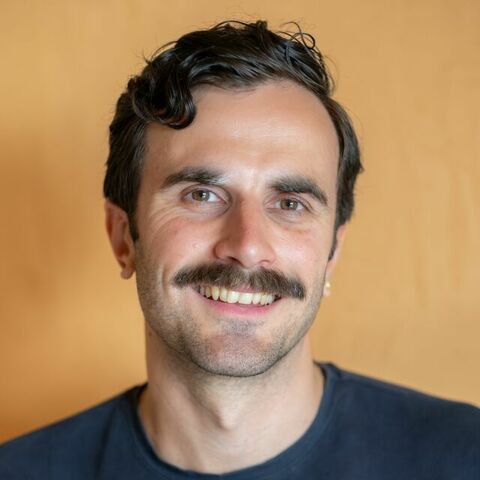
Today I talk with Rajan Shankara about his time as a yogi in a Hindu monastery.
On the island of Kauai,
He trained for 12 years on meditation and the purification process of a yogi.
We talk about his experience in the monastery,
His journey towards it,
And how it changed his life.
He's now a personal trainer for both fitness and meditation.
I'm sure his journey and his insights will motivate and inspire you in your practice.
Welcome,
Rajan,
To the Project Mindfulness podcast.
Great to have you here.
Yeah,
Thank you for having me.
Awesome.
So,
Rajan,
Tell us a bit about yourself.
Who are you and what do you do in life?
Okay,
Well,
I'm basically four months out of a 12-year monastic career.
I am 32.
I'm a personal trainer when I'm not teaching meditation.
And when I was younger,
I kind of decided to shift my life and instead of living a normal life out in the world,
I decided at the age of 19 to dedicate my entire waking hours to the study of meditation.
Right.
That's a big decision.
I really wonder now,
What drove you to that decision?
Is there a particular moment in your life where you felt like,
I really want to dedicate all my time to meditation?
Right,
Yeah.
So,
I kind of had a rough upbringing.
I dabbled with selling drugs when I was younger.
Just kind of coming from a broken home a bit with split parents and going back and forth between them every other week.
So,
I was pretty misguided and I thought being an adult was causing as much trouble as possible and making as much money as possible in the process.
So,
I was very immature and kind of a no-good thug.
And I did that all throughout high school and just barely got by.
And after having several fairly dangerous and fatal,
Near fatal experiences in that field,
I guess,
I decided to change my life around.
And I was basically given a second chance one night and I either could have gone to jail for a long time or changed my ways.
And so,
I immediately changed my ways overnight and I started an asphalt company at the age of 18.
And I made a lot of money and I had no problem with relationships or anything and it wasn t making me happy.
I wasn t satisfied at all with my reality,
External life.
And my roommate and I started to study mystical texts.
We both read the autobiography of a yogi and all of a sudden,
Something came over me and I finished the book and immediately thought,
Well,
This is what I have to do now.
I have to see if meditation is real,
If it brings you into higher states of consciousness.
And so,
I gave my business away to a good friend of mine.
I then went to the jungles of Kauai,
The smallest island in the chain of Hawaiian islands.
And I basically vowed to live the life of a homeless meditator in the woods.
And my sister,
Yeah,
Kind of a radical decision,
But I noticed when I do something,
I m kind of that all or nothing kind of guy.
So,
I m either going to go into something 100% or not do it at all.
So,
I said,
If I m going to do this,
I m going to do it 100%.
And so,
My sister said she would help me survive in the wild for one month and teach me because she had done the same thing before when she was younger.
So,
Me and my sister went to the jungles of Kauai and we had our backpacks and that was it.
I think I had 75 bucks to my name.
And for one month,
We meditated and chanted mantras and walked the island and basically survived off coconuts and trail mix.
And she kind of showed me where to go,
Where not to go,
And how to get coconuts and where to get bananas and things like that.
So,
This monastery was in the back of my mind the whole time because a friend told me about it.
And he said,
If you re going to go to Kauai,
Maybe you should check out this monastery.
So,
I thought,
Well,
You know,
I ll see about that,
But I wasn t sure.
I really wanted to just get off the mainland and dive into this new life of being a homeless meditator.
And so,
The one month was up and my sister said,
Well,
I m leaving.
I m going back to the mainland.
Good luck.
And I ended up accidentally near the monastery with my sister.
And so,
I went in for a tour and I talked to one of the monks and asked about training.
And he said,
No,
You know,
Go away.
And I said,
Well,
You know,
Why can t I train here?
I m just,
You know,
I need a teacher.
I want to study Raja Yoga.
And I m just a 19-year-old kid.
I look like some homeless beggar,
Probably,
To him.
And he said,
Well,
It s not easy to get in here and you need to fill out paperwork and everything and this and that.
And he said,
You really need to go home and sort out your life.
And I said,
Well,
My home is in the woods.
So,
It s either there or here.
And he said,
Okay,
Well,
Good luck.
And I went on my way and I went back and I said,
Well,
I figured,
You know,
I didn t think they would accept me.
So,
I actually made a call that night.
I called my mom,
Like any 19-year-old homeless wanderer.
And I just thought,
And after,
It had been a month,
So I figured I would give her an update.
And I said,
Yeah,
I m not going to be in this monastery.
I m just going to be out here in the woods and everything.
And so,
She said,
Go back.
And they re just testing you.
So,
I listened to her.
I said,
Okay,
I ll go back.
And I went back every day.
So,
Basically,
They were open from 9 to noon every day.
And I would walk up and I would spend the entire morning there in the temple and everything and meditate and read their books.
And then I d leave.
And after a few days,
One of the monks came up to me and said,
One of the older monks would like to have tea with you.
So,
I said,
Okay,
Great.
So,
I thought this was my in.
And I went and sat down and was served tea.
And this older monk said,
You know,
He had a long white beard.
He said,
What do you want?
And I said,
Well,
I want to study Raja Yoga here.
I need a teacher.
I don t think I can do this on my own.
And he said,
Okay,
Well,
I want you to come back every day and have tea with me at the same exact time.
And he said,
Write out as many questions as you can think of and bring your questions and we ll talk about meditation and what it means to be a monk.
And so,
I started to go back every day and we had tea.
And eventually,
I got the courage to ask,
How can I stay longer?
And he said,
What do you mean?
And I said,
Well,
How can I stay in the monastery after we have tea for more throughout more of the day,
Basically.
And he said,
Okay,
You can go to the forest out behind the temple here and pick up sticks from one end and drop them off on the other end of the forest until we tell you to stop.
And so,
I did.
And every day after tea for about a week,
I would go and pick up sticks on one end of the forest,
Walk over to the other side and drop the stick and repeat.
And I did that for about an hour a day.
And they would come out and say,
Okay,
That s enough.
Go away.
And eventually,
After the week of that,
I was picking up my sticks and putting them on the other end.
And a monk came up to me and took my photo and said,
We re going to give your picture to the guru.
And I said,
Okay,
That s fine.
And I came back the next day and I was picking up my sticks and putting them on the other side of the forest.
And a monk came up to me and said,
You ve been accepted into the monastery.
So,
I stayed for the six-month basic training and I succeeded and I fit in perfectly.
And then I went back home and had to make the decision that I was going to come back and take two-year vows and at that time,
Eventually become a lifetime vowed monastic and stay for the rest of my life as a philosopher and theologian and teach and everything.
So,
After- That s a huge dedication,
Right?
Yeah.
Yeah.
And I had an inner calling to do that.
And the meditation style is so profound that the monks taught me.
I had a lot of success right away,
Right away.
And so,
It was the evidence,
I mean,
It was the proof that I needed to keep me going on this austere path.
And the monastery was basically organized around a militaristic regime.
And so,
We had roll call at 5.
30 every day.
We worked all day,
Physically trained and everything.
And that s where I studied exercise science.
And that s why I m a personal trainer now because that s one of my deep,
Deep passions is elite human performance.
So,
You know,
Thus began this 12-year journey of controlling my mind and controlling the body and my speech and understanding what ego was and how to transcend it.
And after the 12-year,
That s the minimum period before you can take lifetime vows,
I was given the option to harmoniously leave or take those lifetime vows and grow a beard and become a part of the order.
And I decided,
I had changed my mind.
I had decided not to pursue lifetime vows and later changed my mind.
And so,
I left harmoniously as a student,
As a friend,
And they said,
Good luck,
Remember your training and we wish you the best.
And so,
Now I m trying to teach as much as I can the basics,
The basic concepts of the fact that we are not the body or the mind,
But we are a higher intelligence or soul that is controlling those tools.
And we don t have to get stressed out.
We don t have to be frustrated or angry or sad.
And we can live this powerful,
Effective,
Dynamic existence.
And meditation is a wonderful tool that can help us link back up with that real part of us inside.
Right.
And so,
It s a very inspiring story.
I wonder,
You say,
Like,
Yeah,
I stayed there for 12 years,
But 12 years is such,
For me,
It s such a long time.
And I imagine there s so many periods and things you go through in learning about meditation,
Learning about yourself,
Learning about the way that they teach there.
And was it,
Like,
How was that journey of 12 years?
Because in the end,
You say you changed your mind or,
Let s say,
You made the decision to leave the monastery.
Was it because of something that happened throughout these 12 years?
Or was there a certain purpose that you felt that made you leave?
Well,
I grew up,
Basically,
I became a man inside of a monastery,
Right?
As a yogi,
That s how I grew up and matured.
So,
It was an extremely profound experience and journey.
And I m forever grateful of having done that.
It was basically a university for 12 years of going through this.
In the beginning,
It was very painful.
The first two to four years was all character adjustment.
And I worked and learned how to grow food and farm land and cultivate soil and everything,
And learned how to work with others.
I was kind of a know-it-all jerk when I went in and thought that I was,
You know,
This,
You know,
Profound yogi because I had come in from the woods.
And over time,
I was basically broken down and trained to become an extremely harmonious machine to do work,
To not feel the effects of rigorous training,
Mental disciplines,
Fasting,
Sleep deprivation,
No bed,
You know,
I slept on the floor for six months on a concrete floor.
And all these things helped shape me into an effective person,
Essentially,
Who can control the mind and not be controlled by ego.
And so,
Yes,
Towards the end of the 10 years,
My last two years were two of the most intensive training years that I had to go through.
Essentially,
Before you take lifetime vows,
You have to go through what's called tapas.
And that's basically the Sanskrit word for an inner fire of purification.
Like an inner refinement through heat.
And your guru literally works with you on the inside and brings these karmas up in your life that were never going to come up for many,
Many lifetimes.
And throughout these two years,
I went through what a shaman would call the death of the ego.
Basically,
It's a type of psychosis and insanity period,
Where you lose yourself.
Because once we lose the ego,
Which is everything around us and our character and our mood and our attitude and our upbringing,
Once we lose that,
We actually don't know who we are anymore.
And you look in the mirror and you think,
I don't even understand who this person is that's looking back at me.
And that's the whole point.
That was the point of the process of why I was there.
And to attempt to gain enlightenment.
And when you have this kind of environment and this kind of process of change going on,
And this refinement going on throughout the years,
And control of mind and control of speech and never getting angry and understanding the inherent perfection of all things,
Your ego diminishes and you can actually transcend it.
And so that happened to me and I went through this mental breakdown.
And then the ego rebuilt itself,
Because that's the point of why we're here.
We're here to evolve through hardship and challenge and pain.
And that is what makes us who we are.
And that's why I was there.
And so the ego only dies when our physical body dies.
So you said that for two years,
You were going through this period of purification or like,
But sorry,
Psychosis almost you described it as?
Yes.
And basically the ego has to rebuild itself because we're still in the physical body.
And we need the ego.
The ego is a tool for us in life to be a person with interests and meaning and purpose.
And the key is to rebuild it in a way that it's refined.
And you understand that you can control it and then that you're not the slave.
And so when mine rebuilt itself,
And I got a new identity,
I realized I was growing out of the monastery lifestyle.
And I was,
You know,
I knew who I was at that moment.
And thought,
Okay,
I'm ready to live out in the world now.
I'm ready to meet people and help them and teach them about what I've gone through and what they can do to change their life and their perspective.
And I could,
I did that in the monastery.
I mentored about 500 people,
Both online and in person throughout the years.
And I helped a lot of young men online with meaning and purpose.
And I worked with families and everything.
But there was a calling to,
You know,
Leave these walls that had trained me and travel,
I guess,
And kind of be a world yogi and not one inside of a monastery.
Right.
And so on this path that you walked inside this monastery,
From what I know,
Like,
For instance,
From Buddhism is that there's this idea of nirvana,
Of a place that you work towards,
So to say,
That in the end,
You escape the cycle of samsara.
And do you feel that in your time as in the monastery and also outside now of the monastery,
You're still working towards something?
Could you describe it like that?
We would term it as moksha in Hinduism.
And that's basically very similar concepts of enlightenment and achieving this sort of evolution outside of reincarnating in a physical body again.
So yeah,
I believe that this evolution still goes on and I'm still learning.
I don't think we should stop learning and evolving and moving forward.
And I think that's kind of the only choice we have is to move forward.
And I think I take the perspective that my guru has,
Which is,
You know,
If I attain something,
If I've achieved a goal that I was seeking,
Then so be it.
And if not,
Then so be it.
And if I'm reborn and going to have to go through the wheel of samsara again and do something else that desire is driving me to do,
Then it is what it is.
And that's fine too because either way,
Our perspective is that our evolution is not our choice.
We are evolving no matter what.
And we are going towards divinity inside of ourselves no matter what.
It's automatic.
It's part of the life cycle of a soul in our religion.
Wow,
That's incredibly comforting,
That idea of this unfolding of your,
Our evolution.
I think that's very comforting.
It sounds to me that you in that way also found peace with who you are and what you are doing in this life.
Is that correct?
Do you?
Yeah.
Could I say it?
Yes,
Absolutely.
And most people live their life bound by the externalities of the mind and reality.
And what they see is basically all they understand.
And they don't turn inwards and self-reflect and go inside the mind and see what realities are in there and internalize their awareness.
It's always just this outer lens,
You know,
Relationships,
Jobs,
Money,
Clothing,
And desire,
Right?
That's driving us on.
That's moving our life towards interests and meaning.
And that's wonderful.
That's perfect really.
And there's nothing wrong with that and that's the way it is.
Yeah.
But we can,
We were born with an inherent divinity and perfection.
And we have to get back to that eventually.
And so this was,
I guess,
Just my time to do that and take time out of my life,
Take a small chunk of this life and see if,
You know,
You know,
The sages are really experiencing these kind of things.
And in fact,
Yes,
That's absolutely true.
That's incredible.
And it seems that you've come from a place of,
Well,
Where you're the person who you were,
You weren't able to live with,
Or you felt that it didn't work out for you and you redefined that person to the person you are now.
And I think that's incredible that you did that over that time.
Yes,
It's almost as if Jordan Peterson,
A famous psychologist,
Would say,
My soul was trying to break away from the tyranny of my ego.
And it was saying,
Yes,
All these things,
You know,
Money and relationships,
They're not the final end.
They're not going to bring ultimate contentment,
No matter how much money you make.
And no matter how good you are in relationships and with people and all the little things that you like to do to bring happiness,
Eventually will and can,
You know,
Bring sadness.
So that's the dual nature of life.
And that's a that's a beautiful thing,
Really.
And that's there for our evolution.
But we can also no longer react and we can not be above everyone but be beyond the lower states of mind,
Lower states of consciousness.
And we can fulfill and achieve a state of peace that we are designed already to attain.
And that's and that's ours when we're born.
It's our birthright.
Yes.
And so that is,
I imagine,
Very central to what you do now,
Which is training people,
Like being a personal trainer.
And do you also do meditation with that?
Or is it focused purely on yoga or exercise?
What is your role now as a personal trainer into people's lives?
Well,
In the mornings,
I focus 100% on meditation,
Right?
So I teach meditation,
Monday through Friday,
I teach guided meditation so that the meditators know exactly what to do,
When to do it,
And everyone's doing it together,
Essentially.
And then,
When I go off into the world and teach personal training,
It's a blend of physical training for athletes,
You know,
Boxers,
Weightlifters,
Runners,
Climbers,
Skiers,
Etc.
But it's also,
You know,
It's also there's an incorporation of stress management,
Self-reflection,
Understanding how to break through limitations and how to understand yourself more because really becoming an athlete requires you to understand yourself in the process.
And you will always be limited in everything you do until you truly understand your capabilities,
Which I believe are unlimited until it ends the physical body.
I mean,
And in my studies in the monastery with,
You know,
Great leaders throughout history and people who have struggled,
I mean really struggled,
Prisoners of war and the things that soldiers have had to go through,
You start to understand that our capacity for stress and struggle,
There's no end to that capacity.
So yes,
It's absolutely incorporated all of it into my whole day.
And then now we're also teaching meditation every Sunday at the athletic club that I train at.
So people start to realize that and then as they're training,
We start to talk about a lot of philosophical things really.
Yeah,
I can imagine because as you said,
The discovery of yourself and essentially reality around you,
To me personally,
That has also helped me actually achieve more and be more productive and effective in what I do because I'm being more honest about what I can do and what I can't do.
And that is so powerful once you realize that that,
You know,
This path of self-discovery is just mega essential to basically do anything in life and be successful in it.
It's just to understand your limits and as you said,
Your no limits actually,
The limits that you make up in your own mind but aren't really there.
Yeah,
It's incredibly powerful.
Absolutely.
And what's interesting about meditation specifically is that I've begun to understand that just practicing meditation did not make me who I am today and how I can meditate successfully.
It's a lot of the outer stuff.
It's a lot of the living correctly and living with purpose and changing your character and your nature and being harmonious with other people and understanding that you should appreciate the differences.
That has really helped my inner life and then my meditations as I matured as a person became better.
And for two years you're not allowed to sit down with the rest of the monks in the monastery.
You had to go through a two-year training period to not just learn the language of meditation that we were taught in but to take two years and sculpt yourself and change and loosen or really polish like your outer nature.
So you don't react emotionally to something that someone is doing to you or pushing one of your buttons.
And really essentially it's not that other people need to kind of treat you better.
You need to actually get rid of those buttons.
Yeah,
Right.
Makes a lot of sense.
Yeah.
And so right now when you practice meditation for yourself,
Is there a specific method that you use?
Do you focus on your breath or do you have a mantra or how does that work for you?
Right.
In the monastery we were taught the monk-made language of meditation called Shum.
And Shum was designed in the early 70s in Switzerland by my guru's guru and he basically was seeking a way to teach his monks without having to use a lot of words and without having to use English in general because a lot of the inner areas of the mind are so complex.
In order to guide people in meditation to one of those areas of the mind and beyond,
You would have to speak for a very long time and that would externalize you,
Right?
Once you start using a language like English,
You start developing concepts once you say a word or a phrase and that would draw you further away from your goal in meditation.
So we use this language that my guru's guru basically found within himself in deep meditation and he actually saw the images in his mind and he saw the letters and he had other monks write everything down that he was seeing in meditation and hearing and out of it,
Out of those inner years of study in Switzerland came this language of Shum and that language uses breathing techniques,
Three specifically,
Visualization of color and of parts of the physical body like the spine and it eventually goes into its final goal which is absolute pure focus and no thoughts whatsoever,
No bodily awareness and the eventual loss of awareness of space,
So the room that you're in,
Form itself and time and that would be where you would actually touch into your highest state of consciousness and which is no consciousness at all.
Right and so that is still the practice that you do up till this day?
Yes,
I am teaching that practice but I use English so I only teach the language to those who ask for it.
I was starting to use the language for the general population of meditators and students and I found out very quickly that that was much too complicated and overwhelming.
A lot of people when they want to meditate all they want to do is what?
They just want to clear their mind of thoughts.
They just want to relax and so while Shum does that,
It's also meant for the serious yogi,
Someone who really wants to advance in meditation beyond most practices and dedicate a part of their day every day to meditation and much longer than 10 or 20 minutes but into about an hour.
I have taught a few students so far successfully that language but what I do for the general population is I break down the language into English,
Simplified English and then guide using the English and so while I'm teaching and using Shum in my guided meditation,
You'd never know because I rarely will use the language itself.
Right,
Okay clear.
So it's a special kind of meditation,
At least to me,
I haven't heard of it before.
It's very interesting and as you said there is a point of so to say no consciousness that you can reach through this method and is that the place where your ego so to say you're detached from the ego and you can start to reshape yourselves or are you able to reshape yourself without ever reaching that point?
Yes,
I would say it's both.
You cannot rely on deep meditation to reshape yourself while at the same time it is invariably going to change you as a person the deeper you go into meditation.
Yeah,
Makes sense and so there has been an incredible change in your life because of meditation and I imagine that the people you teach,
They also have a big change in their lives because of the power of the mind I suppose that they discover through your teachings.
Yes,
It's fascinating.
I think that's a really good point and I'm used to teaching people in the monastery but I'm finding that with this method people who have never been able to meditate before are having these profound experiences and that's just absolutely so fulfilling to me that this guided these steps,
These logical steps into the mind and internalizing awareness methodically is so easy to catch on for a lot of people and then all of a sudden they're having these really deep experiences and I just think that that's absolutely wonderful.
Very excited to explore this with more and more people whoever you know comes forward I'm happy to show them these techniques that I was taught.
Awesome,
So for anyone listening right now to the podcast and from your experience in the monastery and your experience as a personal trader what would you give as an advice to anyone listening?
Maybe they just started on the path of meditation,
Maybe they haven't gotten further than a week down the road.
What would you advise?
What was your big lesson or the big lessons you would like to give our listeners?
Go slowly.
Don't try for too much too soon.
There's no rush.
There can't be a rush.
There can't be a rush.
You can't force the process.
So stop trying to sit for 30 minutes or an hour every day because eventually your mind is going to win.
It's going to flood your brain with thoughts and you're going to get frustrated and then you stop meditating right because it's too much and you didn't get that good at it.
So you can't set too high of expectations.
Okay so you just start with being able to sit down for five minutes and paying attention to your breathing and that's perfect and if you can do that you know for five minutes and take one day a week off you know if you can do that six days a week five minutes you can really get a long ways.
I mean that's really a profound practice and a lot of people they're just not sure what to do at that point and so they give it up but the secret of meditation is that the simpler you get the more profound things start to occur.
So yeah just start slow and don't get frustrated.
And there are ways with dealing with the mind.
There are techniques to deal with the thoughts that come in and one of them is to make a list.
You know have a piece of paper have a pen when you sit down to meditate for your five minutes as you're just starting out and something comes to your mind write it down on the piece of paper and then go back to your breathing and just pay attention to your breathing and breathing really is central I think probably to every meditation technique right because one of the only things in the present moment that's going on constantly not in the past or in the future but right now is your breathing and your thoughts are going to bring you into the past or the future and so you can't rely on thinking about something.
And you can't also just say I'm not going to think about anything I'm just going to you know just sit here and try to block everything out and when you do that you actually give more information to those thoughts that you're trying to block out right.
So that's one of the main problems that beginners go through is that they have a thought and then they attach or identify with it and they cling to it and then they'll open up the thought and they start to expand it and and they're now the character in a little movie and they they play out this little movie in their head for that one thought and then and they don't even realize that in the background there's like 20 other thoughts going on at the same time and what's going on is the mind is such a wonderful tool it's a day it's a database essentially so our conscious mind is picking up and perceiving reality and it's collecting data and cataloging it into the subconscious mind right and you can you can liken that to a bunch of boxes in a basement right a bunch of stuff and it's just it's not really organized that well and so when we start to meditate for the first time in our lives the mind is like thank god I can actually take these boxes unpack them and start to bring them up to the first floor and and unpack these uncatalogued unresolved experiences and so you start to sit down and you have these top level thoughts of what's going on that day and then all of a sudden you can get past what's going on that day and you go into yesterday and you go into last week and you go into that conversation that you've never been able to get over that happened a year ago and that that's all in there and it's basically like a phone that never had an app swiped close right we have this this this mind full of hundreds or thousands of apps and we've never taken the time to close them and so imagine a phone with a thousand apps open it wouldn't be able to run properly no it would be it would be bogged down it would be buffering everything and nothing would work and you wouldn't even know what was open you know deep down into those layers right so in our mind we have all these layers of experiences open and unresolved and so we sit down to meditate and the mind is such a wonderful tool it will actually like boiling water bring those things to the top surface and say let's cattle let's catalog this let's organize it and resolve it and so we need to have meditations where we actually know that we're not going to be in a thoughtless state of mind right we need to actually say okay i'm going to sit down and resolve the thoughts in my mind and i'm going to let them come up and i'm going to write them down and i'm going to get rid of the paper so we bring what's in the mental out into the physical and then your brain is done your brain is like yes done check that off we don't have to think about that anymore because because his consciousness saw it and wrote it down so we got that box unpacked brought to the top and it's out so that's one of the main techniques i would give to a beginner be okay with the thoughts that come out note them down and then you can go back and say okay and and resolve something for once wow all right well thank you so much for that advice i'm sure a lot of people can actually apply that in their meditation and their approach and thank you so much for joining me on this episode of the podcast it was a pleasure talking to you i've learned a lot thank you it was i love talking about this subject and um if anyone wants to email me and ask more questions um i think all my contact information is at uh my monkfitmeditation.
Com make sure to check out the rajan's website if you feel inspired by his story the link will be in the description don't forget to subscribe to this podcast if you enjoyed this talk and thank you for listening and have a great day