I think that trying to understand how the mind is socially made is really important.
And trying to understand these experiences that sometimes look psychological but are in fact profoundly the products of practice and interaction and social worlds,
That strikes me as really important.
I think the more you understand,
The easier it is to listen.
So in this divisive moment,
I think the more we're able to try to understand the richness of the social location of somebody we disagree with,
The better off we are.
Welcome to Mind and Life.
I'm Wendy Hasenkamp.
Today,
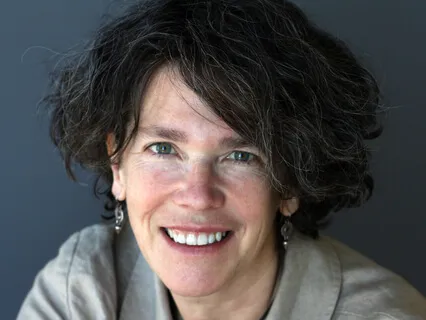
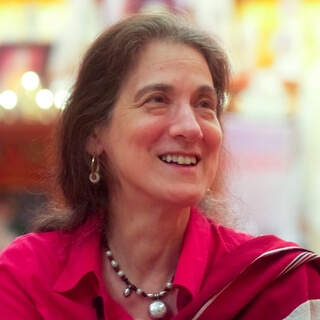
My guest is psychological anthropologist Tanya Lerman.
As we continue to delve into contemplative science and the many perspectives that live within it,
Tanya's view of the mind is focused on our social worlds.
Specifically,
She's interested in spiritual experiences,
And her research explores how practices embedded in social realities can change our minds from the way we think about thinking to our perception of reality and the divine.
In our conversation,
We discuss her research on unusual spiritual experiences like hearing voices,
Seeing visions,
Or experiencing the presence of an invisible other,
And how she's studied that with magic practitioners and in evangelical Christian communities.
We talk about the boundary between reality and imagination,
Psychological traits that underlie spiritual experiences,
How mental training and mindfulness affect the way we relate to our own thoughts,
And the impacts of a relationship with the divine on self and society.
This interview was recorded at last year's Summer Research Institute.
The theme that year was on mental habits,
And we took a broad definition of that concept,
Looking at the various perceptual,
Emotional,
And cognitive processes that shape how we think about ourselves,
Others,
And the world.
In this series so far,
We've already heard from a couple other speakers from that event,
Ann Elseth and John Powell,
And Tanya brought the valuable lens of anthropology to our discussions there.
I hope you enjoy this conversation as much as I did.
It's my pleasure to share with you Tanya Lerman.
So Tanya,
Thank you so much for taking the time to join us today.
It's a pleasure to be here.
I wonder if you could start by just telling us how you got interested in psychological anthropology.
I think one of the questions of my life has always been how does God become real for people,
And how do things that you can't see become real for you?
How do people construct their sense of their most fundamental reality?
I grew up as the daughter of a Baptist minister and the son of a Christian scientist,
And my mom became a Unitarian and my dad became a doctor.
All my cousins are evangelical Christians.
We grew up in an orthodox Jewish neighborhood.
I had a really rich sense that people had very different understandings of the ultimately real.
On top of that,
My dad became a psychiatrist kind of doctor.
So he was talking to people whose senses of reality were different and there was something wrong with them.
And I knew all these people who had different senses of reality and nobody wondered whether there was anything wrong with them.
So those questions really cut deep to the core from very early on.
So how did you become interested in your most recent work and looking at how people experience and talk to God in the evangelical communities?
I began doing a project many years ago in Southern California and I was interested in faith and communities and I was working with a colleague and we went to different communities and talked to them.
And there was one community where a woman said,
If you want to understand Jesus,
You ought to have a cup of coffee with him.
And I thought,
Wow.
And she's talked about dancing with him and hanging out with him and people really did have this idiom of conversation with God.
And then I realized that in fact this is many,
Many Americans,
Arguably a quarter of all Americans embrace a kind of faith in which they think that they should be having an intimate back and forth relationship with Jesus and that everybody in the congregation should be having powerful voices and visions.
And I just thought that was kind of amazing.
Wow.
So how have you gone about studying that?
Well,
I mean,
To be honest,
It has its roots even farther back when I was doing my doctoral research with people who call themselves witches and magicians and initiates of the Western mysteries.
And I noticed that they had odd experiences.
And in fact,
I had an odd experience.
I hung out with that world and I would do their exercises and I was spending 15 minutes to 60 minutes a day with my eyes closed,
My mind open,
Trying to construct things in my imagination which you do in that world.
It's a world in which people understand that magic works because people have vivid inner imaginative worlds that somehow connect,
Affect the world outside.
And I had this kind of remarkable experience in which I woke up one morning and I saw six druids standing by the window.
I was reading a book about druids and the mists of Avalon.
And I had this experience and I shot out of bed and it disappeared.
And I had that experience like after I had been spending months of daily practice trying to see the things I was imagining in my mind's eye.
And I thought at the time that this had something to do with training,
That maybe there were some people who were different than others,
People would say that,
But that I was spending a lot of time doing these practices.
And I thought these practices changed me.
People talked about how the practices changed them.
And so I saw that and I tucked it away.
And then I went off and I did a bunch of other things.
And then I began this project on evangelical Christianity because I was so fascinated by the idea of having coffee with God.
And then I realized that I could explore the story of are there special people?
Are some people more likely to have these experiences than others?
Are certain practices more likely to give rise to these vivid,
Almost sensory experiences of engaging with God?
And then more recently,
I've been trying to understand whether people in different cultures are more likely to have those experiences.
That's really fascinating about your earlier work in magic communities and that you were engaging in those practices and you saw some of these changes in yourself.
So is the idea that you were spending all this time engaging in very vivid mental imagery and then the experience that you had,
Do you think of it as like just kind of a spillover effect into reality?
So I think there is something like a spillover effect.
I think that we are,
As I understand it now,
We're constantly making judgments about what I'll call for want of a better term,
Mental events.
I think we constantly have many micro moments in which we are,
You know,
Life is full of events that you remember very,
Very quickly.
I think that when we make those judgments of whether something is real,
What I mean by real,
Did it originate from outside of you?
I think that we are looking for the amount of sensory information in the memory to say,
Is it a memory or did I imagine this?
Because imagination is often much more patchy than actual sensory experience.
Did I imagine this?
Did I create it myself?
Creating it yourself often has a quality of taking work that I worked to write this paper.
Did somebody else speak this to me?
Do I remember the words as if they came in from the outside?
So we're constantly making these judgments.
I think that what happens with these unusual experiences,
Voices,
Visions,
There is,
I think people are in effect judging an experience that may have a more internal quality and judging it to be more external.
That has something to do with what you're expecting.
Are you expecting God to speak?
It has something to do with whether you're cultivating God's presence or Spirit's presence in a way so that it has a lot of sensory detail.
And I think it has a lot to do with a bunch of things I don't understand.
The theory is that we can postulate about why this person rather than that person,
Why this person with 10 hours of training or 10,
000 hours of training rather than that person has these events.
Why this event happened to that person Tuesday afternoon at 3 o'clock,
None of us has any idea.
And I think that,
You know,
I think it's helpful as a researcher to hold open the possibility that people are in touch with something that is bigger,
Different,
Inexplicable,
Complex.
I don't think that science can prove that one way or another.
It's interesting you were mentioning about the amount of sensory detail and that that may be part of what the mind uses as a way of determining if something is internally or externally generated.
Do you know if there's been any research trying to parse that out maybe in like hallucinations I'm thinking of?
Yeah,
So there are really two big theories that people think about.
One of them is called reality monitoring or sometimes source monitoring.
And the suggestion is that you do this very quick,
You know,
Micro judgment of your fast memory of an event.
So the argument that they make,
These,
These,
Marsha Johnson is one of the key researchers here.
And she suggests that the amount of sensory information in the moment of attention has the potential to shift an experience to being experienced from the outside.
So these voices and visions,
You know,
And smells and tastes and feels,
And these are moments where you have a sensory perception.
So it feels to the person like they have heard or they've seen or they felt the fingertip or they've smelled or they've tasted and they can't see a sensory source.
So you hear,
You turn your head and nobody's there.
You see and you double check and then it's gone.
You smell and there's nothing that smells like that.
And so there's this quality of experience,
The sense of realness that comes from the perception,
That sensory perception.
Some people think that it comes with an extra emotion of realness,
Although what does that exactly mean?
People talk about that and that there's a judgment and then that comes with a startlement.
And so I know that these events happen to people because when I talk to people about them,
They talk about being startled.
So how do we make sense of the events taking place?
Well,
There's kind of a set of arguments about it.
So there's the reality monitoring folks.
There are the people who talk about predictive processing.
There are also people who talk about psychosis,
That there's something that is a little bit broken in the perceptual patterns that lead people to make these mistakes.
Most of the literature talks about these experiences as mistakes.
Our brain sees one thing,
But where brain also knows that something is not there.
Which at some level our brain makes mistakes all the time,
Right?
In the way that our perception doesn't accurately reflect reality.
So these experiences that you had and the people that you were studying in the kind of magic community,
Are there similarities there in things that you've seen in the communities of Christians who have these very real experiences of God?
Absolutely.
So I would say that these experiences,
I don't think they're constrained to religious folks.
If you're religious,
You're more likely to have them.
But many people have sort of odd experiences on the verge of sleep and awareness is the easiest time to have those experiences.
Among the Christians,
My experience was that people would talk more often about hearing God.
My memory of the folks who practice magic is that they would talk more often about seeing things.
And I think that that's because of an emphasis in Christianity on God's voice.
And so these are Protestant evangelicals.
That's a kind of,
You know,
Solo scriptura and a world that's culturally interested in what God says.
And the magical world,
People are trying to create a visual experience.
And so I think when people have these experiences,
I don't feel confident saying that the cultural invitation is one that people always follow.
Sure.
But I'm inclined to say that when the culture invites you to listen for a voice,
Or to watch for the edge of a wingtip,
You have these unusual events in a way that follows the cultural invitation.
So is that related to what you've talked about as a local theory of mind in the way that a culture might help shape the way the mind works?
Yeah,
I increasingly think that the way that we think about thinking shapes our experience of the world,
Certainly shapes our experience of thoughts.
And so the local theory of mind is a phrase that we use to describe the ideas people have about their own minds.
And you know,
Whether thoughts sort of stay in the mind or thoughts can leave the mind and go do things in the world,
What you might call magic or divination or sorcery or stuff like that.
And so what I think we've seen is that the more a social world encourages people to feel that it's possible for magic to work,
For sorcery to be effective,
The more that social world people report voices and visions.
And so we show this with individuals.
So we know that the more people say that they think that thoughts can affect the world directly,
The more they're likely to experience voices or visions or a sense of presence that is non-ordinary.
And the way I think they're connected is that I think that when you think of the mind as the mind world boundary is porous.
So many of us,
You know,
Humans have a sense of an interior minus,
An awareness that's different from an exterior outer world.
There are many different names for this.
And when people are in social worlds in which they think that say anger can affect somebody else's body,
I think they're inclined to think of their anger as more like stuff of the world,
As if it's thicker.
More material almost?
Yeah,
As if it's more substantial.
And I think that then creates a bias so that when they have events that become what they call voices,
They experience,
They're a little more likely to experience those as outside.
So a lot of the fics we talk to,
They're talking to God in their minds a lot.
So they are praying to God.
They're chatting with God.
They are thinking about God.
And they often have a sense of a back and forth so that God will nudge them,
Give them a thought or directly say to them,
This is not for you.
And I think some of those thoughts are,
You know,
When you have a theory of the mind,
A cultural model about the relationship between mind and world in which thoughts are a little more substantial,
I think that may change some of the quality of some of those experiences to make them be judged as more external.
More part of the material world or what we normally consider.
Yeah.
Interesting.
So this is,
I think you're starting to allude to some of the work that you've done on a large project recently funded by the Templeton Foundation,
Spiritual Curiosity and the Experience of God Project.
Could you just describe that project?
I was really intrigued about the relationship between the way people think about thinking and their spiritual experience.
And I should say again that spiritual experience is often thought-like events that people judge is coming from outside of them,
Not only because they know that God is outside of them,
But because they feel it's outside.
They feel like they heard God and it had a hearing quality.
They felt like they saw the goddess and it had a seeing quality.
They had some,
And these are extraordinary experiences that people report.
And often they have this kind of both external quality,
But they have also a mental quality too.
It sort of feels,
Sometimes people will say,
Well,
I know it wasn't in my mind and I know that it felt like I heard it,
But maybe it wasn't really in the world,
As if there's this kind of space between the mind and the world.
And so I was really interested in the relationship between the way you thought about thinking,
The way you understood what a thought was,
Whether thoughts could do stuff in the world and whether people had a more,
Kind of,
Had more and more luck to have these extraordinary experiences.
And so what we did was we put together this amazing team,
Five postdoctoral fellows that were anthropologists that were fluent in the local language and really knew the area really well.
Where was this done?
So we worked in China,
Ghana,
Thailand,
The United States and Vanuatu.
And we did rich,
Open-ended interviews.
We did surveys with college students.
We did face-to-face interviews.
We did all kinds of stuff.
And we found that there were two factors that were associated with unusual spiritual experience.
So there is this individual difference of absorption.
So there's a scale.
And I think it picks up your interest in being caught up in your own inner and outer sensory imagery.
So the items are things like sometimes I feel and experience the way I did as a child.
If I want,
I can turn noise into music by the way that I think about it.
So items that are about dwelling in the imaginative world,
But also items about being caught up in your ordinary sensory experience that's not instrumental.
So things like I like to watch the clouds change shape in the sky.
So 34 items.
And the way people answer this scale is turns out to be pretty tightly connected to whether they report voices,
Visions,
Unusual presence,
Out-of-body experiences,
A whole host of these extraordinary experiences that we call spiritual.
The other thing that we found is what I'll call porosity,
Which is the idea that the boundary between the mind and the world is porous or permeable,
The thoughts can pass over it and back.
Is this like what you were saying before about thoughts being more substantive?
Would that be the more porous or is it something different?
So what we see is that if we ask people questions about the domains of what you might call magic,
Prophecy,
They're more likely to report spiritual experiences.
And this is not just an effect of being religious.
There's something about the willingness to be open to the idea that your thoughts can kind of leech into the world and have an impact or that you were vulnerable to somebody placing a thought in your mind,
Which travels together with an increased report of spiritual experiences.
In spiritual experiences,
Do you mean those that you were describing,
These kind of very unusual voices,
Visions,
Those kinds of things?
Yeah.
It turns out that it also predicts other spiritual experiences.
It predicts whether you say that you feel a sense of harmony and joy,
You find comfort in your religion.
It also is associated with a whole host of other sort of more ordinary spiritual experiences.
So I'm wondering,
This may just be part and parcel of a challenge of this kind of research,
But it sounds like a lot of it maybe necessarily has to rely on self-report.
Absolutely.
Is that something that's wrestled with in your field in terms of the accuracy there?
Are there other ways of measuring this since it's all so internal?
Absolutely.
I think that the reason other people haven't done this work is that it does rely on self-report.
One of the things I like about our project is that we spend a lot of time talking to people.
It's not just handing them a questionnaire and walking away,
But we really sit with people and talk about these experiences.
We're trying to see whether we can get evidence that when people have these not me,
Other person speaking experiences on a regular basis,
That those experiences look differently when you look at the brain than other experiences.
I think even though a lot of life,
A lot of conscious experience is only accessible to self-report,
That's what it is to be human.
Yeah,
It's very challenging.
This is kind of a central piece in contemplative science to burn the whole neurophenomenology effort of how do we really,
Are there objective,
Quote unquote,
Objective ways of verifying or validating this and how can we integrate those other kinds of measures or behavioral measures with the ways that people talk about their own subjective experience.
I think it's really important because these experiences are profoundly important in human experience.
We know that when people are psychotic when they're ill and they have a lot of these experiences,
What they're experiencing does actually look like somebody is talking to them.
That's different than the way they imagine things.
I think that the pathway to those experiences in a religious setting is often quite different than the pathway in psychosis,
But the fact that people have these experiences and we know that it's not just a way of talking,
It's not just a way of pretending to be a pious person,
But that people report these events and they're very compelling,
I think that's worth paying attention to.
Do you think that these capacities to have the spiritual experiences and these other factors that you've identified,
Can these things be trained?
Is that part of what you imagine is happening through the practices that people do?
I think these experiences can be trained.
You cannot decide to have a hallucination-like event on Tuesday afternoon.
But if you spend time really trying to represent the invisible other,
God,
Spirit,
A ghost,
The dead,
You try to create a relationship with that other.
Or I think if you meditate and you meditate on something that is held to be internal and you try to see it and feel it and hear it,
If that's appropriate,
You're more likely to have these experiences.
So that's something I did at one point in my work.
I was so intrigued.
So people would say,
If you want to understand God,
You've got to pray.
Prayer is hard,
Some people are better than others,
And the ones who are good and who practice will change.
And they said that about magic as well.
If you want to understand magic,
You've got to do the magic.
Magic is hard,
Some people are better than others,
The ones who are good and who practice will change.
So we brought in over 100 people into my office and we sat them in front of a computer and gave them mental imagery exercises and we gave them questionnaires and we talked to them.
And then we randomized them to lectures on the Gospels or to these prayer practices that really use the imagination that ask you to really attend to your inner experience.
These were Christians?
These were all Christians.
And we found that in fact,
The training worked.
It changed the way they experienced.
It's not like 50 people were hallucinating.
But there were six people or so who had pretty powerful auditory or visual experiences and they were all but one of them.
I think maybe it was eight.
They were all but one of them in the prayer condition.
I actually redid this with undergraduates with Leland Stanford Jr.
So I'm at Stanford University,
Founded in honor of this 16-year-old kid who died of typhoid in Florence.
And so the undergraduates,
You can't really do anything experimental around God with undergraduates because they have different ideas about God.
But they did not have different ideas about Leland Stanford Jr.
So I created these trainings in which you found yourself in a clearing and then there was a mist and then it cleared and you saw this boy and this is what he looked like and he had these objects and then he went to another clearing and you interacted with him and you talked to him about something that matters to you and then he talked back.
In fact,
We had two conditions.
He showed you things in one condition and then in another condition you talked to him and then we asked people,
People did this like three or four times,
Seven or eight times sometimes over the course of a week,
And then we asked people whether they'd experienced him in the week that followed.
And in fact,
There were differences in the way they experienced.
So if we gave people lectures on Leland Stanford Jr.
,
They did not experience Leland in the week after.
We had them interact with a pretend Leland.
They were more likely to experience Leland.
We had them talk to Leland.
They were more likely to say they thought of his voice.
We had them,
Leland showed them things.
They were more likely to think of the images.
And so that was striking.
Yeah,
That's interesting.
So you created this intervention or it sounds like in different studies,
Different interventions modeled after the kinds of practices that you saw happening in these different communities.
And is it fair to say that the point of these practices or maybe the effect of these practices is to make what is imagined feel more real?
Absolutely.
Yeah.
And so that is the point of any prayer practice or any magical practice.
So you have something that must be imagined because God is invisible,
The spirits are invisible and you are trying to give yourself more confidence that the spirits are real.
So I think of faith or any religious practice,
And I would include magic in this,
As requiring effort and particularly the kinder the spirit is,
The bigger the spirit,
The more powerful the spirit,
The more effort it takes because while the idea of God or a powerful spirit is very,
Very accessible,
The idea that this powerful spirit is paying attention to you and is actually having an impact on your life,
That's pretty hard for people to really hang on to.
And so any prayer practices are practices in which you are interacting with this other.
You're talking to God,
You're waiting for God to say something.
Maybe God answers with a word,
Maybe with a nudge,
Maybe with a picture,
Maybe in some way.
And people who are in a faith tradition have a way of thinking about discerning the way in which God is talking back.
But the practice helps them to develop more confidence that God is there.
And these sensory experiences,
I think they actually make the mental imagery with which you represent God feel more vivid.
And sometimes those experiences kind of spill over so that they have a more sensory quality to them.
That's interesting.
It makes me think of,
With the mindfulness practice,
I think one of the goals is to be able to see thoughts as thoughts.
So it's almost the reverse.
It's like derealizing what's happening in your mental space or understanding that it is simply mental content,
It is not real.
And somewhere in between is our day-to-day reality,
Where we can have thoughts that our bodies respond as if they're real and things like that.
So there's this continuum.
And at the same time in Buddhism,
There are many practices that involve visualization and very rich imagery with the goals of cultivating certain emotional states and qualities.
So that's just an interesting landscape.
Have you done any work in Buddhism?
Are you familiar with any of those practices or thought about mindfulness and derealizing thoughts?
So you're asking,
What I take you to be asking is really the question of whether mindfulness and imagination-rich practices work differently and have produced different results.
And I think that's a really interesting question.
I think that I did a little bit of work with that.
When we brought all those Christians in and we had them,
We randomized them to lectures on the Gospels versus imagination-rich prayer,
We chucked 15 of them into a centering prayer task,
Which is very much like mindfulness.
You sit,
You try not to be distracted by any thoughts that are coming in.
The theological roots of this orientation are that any representation of God is wrong,
Is false.
So people sometimes call this the root of denial,
That you're not going to attend to the language or to the images or to the nature of God as a thing in the world.
And so when people do centering prayer,
What they do looks a lot like a mindfulness meditation.
And sometimes they talk about,
You know,
The thought comes up,
Surround it in a little fluffy cloud and help it float away,
Etc.
,
Etc.
So all we had is 15 subjects.
I was struck by the fact that practice was powerful for about half of them.
And for those for whom it was powerful,
It was quite powerful.
And so it seemed to me that mindfulness was hard.
I mean,
In some sense,
The way it's taught,
You know,
When it's taught and there's a voice in the background constantly reminding you what to do and what to disattend to,
It gets a lot easier because you just have to sit there and listen to the voice.
But if you're really doing Zen practice,
So that you are by yourself in a room seeking to distill your monkey mind,
It's pretty tough.
This other kind of imagination-rich prayer,
It's a lot easier.
It's still full of limitations.
I mean,
You know,
It's really hard to represent people's faces.
It's so people can't see Jesus's face.
Typically,
They can't really see Mary's face.
They see the garments.
They know the stories.
They can,
They are better at feeling and their experiences are often quite patchy.
But it's a little easier.
I am struck that both practices and the history and the ethnography in both practices suggest that when you practice,
You have more cool,
Weird experiences.
So how do I make sense of that?
Well,
That would suggest that the reality monitoring model is wrong.
It might suggest that there's something about a changed relationship with mind that means that people make judgments about their thought in somewhat idiosyncratic ways compared to the rest of the world.
That when people are practicing,
They have a different relationship with inner experience.
And so some of those inner experiences are more likely to pop out in some unusual way.
Yeah,
I wonder whether there could be value in both approaches depending on what the thing is that you're trying to relate to.
So it seems like with mindfulness,
A lot of the emphasis,
It's not on spiritual beings or experiences per se.
It's often relating to your own everyday thoughts,
Often possibly negative thoughts,
Rumination,
Things like that.
There,
It seems there's a real value in understanding the fact that those thoughts are not real.
Whereas it's very different,
It seems if you're intentionally visualizing and creating imagery around God or some spiritual figure that then could be a support for,
You know,
Provides a positive benefit for you.
And so you could argue that in effect mindfulness is targeted at the negative thoughts,
These thoughts that are distracting,
That are critical,
That are wounding.
That's why it's so effective as a therapeutic tool.
And you could argue that people who learn to do the imagination rich prayer,
What they're really trying to do is to create a good and loving inner object or an invisible person,
Somebody to love them,
Who is also reminding them always of the right way to be in the world.
So when God is working well for people,
You know,
They,
God will say,
Don't doubt yourself like that.
I know you can do this.
I have asked you to do my work.
I feel that you are able to do my work.
And so sometimes when you see Christians of this orientation give talks,
They'll take a moment before the talk to,
And they'll actually signal that they are,
You know,
They're bending their head so that they're going to hear God talk to them and tell them that they are doing his work before speaking.
And that can be very powerful.
It's the mindfulness approach would be to notice that you are anxious or worried or whatever,
And to observe that that's just a thought and it's not real.
So they both in effect have the same aim.
Right.
Yeah.
They both have almost opposite approaches for similar ends.
There's a tricky space in here that I wonder how you handle as an anthropologist.
The way you're describing it sounds very much like the practices are creating the experience of God.
I would imagine some Christians would take issue with that interpretation in that from their perspective,
They're not creating God.
God is real in existence,
External to them and delivering or enabling these experiences perhaps.
Have you had people push back on you from these communities as you're working with them,
Or how do you navigate that space?
Well,
Some people like what I have to say.
Some people don't.
Sometimes it depends on the way I'm phrasing what I have to say.
I'm actually open to the universe being richer and more complicated than we imagine.
I ascribe meaning to the word God.
I tend to think that what the anthropologist can see is the interface between the human and the world,
Which may be richer than we imagine.
And so in that interface,
I think you can see the ways in which humans attend,
Build,
Respond,
Shape.
I am comfortable with William James's understanding of what he calls the overbeliefs of theology.
So he had this idea and people have different ideas about his ideas,
But let me tell you what I think.
So I think that James is talking about there being more,
That's what he called it.
And he said that all of these religious ideas,
They're ways of talking.
And you have different communities.
He meant different religious communities in America.
We might now say different religious communities globally.
There are representations of how to frame the more.
And I am sharply aware that what happens in building the interface with what you might call the more,
Humans are shaped in very particular ways.
So I do not have the vision that if we all understood the more,
That all religions are really the same.
I just don't think that's true.
That there would be some universal truth.
Yeah.
I mean,
In some sense there,
Of course,
There's some universal truth because the world is as the world is.
But I do think that people are becoming deeply,
Deeply formed in their interaction with what they take to be the world.
And in that interaction,
They change and they change and they change.
So that the gaps between people,
Between humans become large.
But what I try to do is to talk in a way that leaves open the possibility that there's a rich and complex world.
So we've touched a little bit on the possible benefits of having such a deeply imagined relationship with God or spirit.
But can you say more about what the benefits of these types of practices or these type of experiences might be for individuals and then also how that might play out in society?
So I think that there's no question that God developing a relationship with a loving God is good for an individual.
It keeps that it's healthier for the body.
It's better for the immune system.
God becomes a real social relationship for people.
People seek to make God into the perfect parent.
And if they're lucky,
They really do experience that sense of joy and presence and partnership.
One of the challenges of groups of humans is that they build these overbeliefs.
They have a lot of ideas about who God is.
And stories about God are often particular.
Therefore particular people with particular visions of the good life.
And so one of the things I saw when I was spending time with evangelical Christians is that some people,
I mean,
Many of the evangelical Christians that I knew actually had a much more inclusive model of community than many Americans imagine that they do.
But there's no doubt that good chunks of evangelicals will hold a model of an ideal family,
An ideal community,
An ideal society,
Which is displeasing to other people.
And that can be costly.
Sometimes I get torn about thinking about how to parse this as a moral issue.
Because one of the things that a strong God offers is a community with rules,
A sense of what is good and what is not good.
And sometimes I think that humans do best in communities where rules are rigid,
Roles are defined,
Expectations are clear.
I think those communities are easier for humans to live in.
It's very hard to live in a world in which identity is all over the place.
People are choosing who they are.
They're choosing what gender they are.
They're choosing what,
You know,
Who they want to be in 20 years.
They're choosing,
You know,
They have all,
It's all open for them.
It's like reality breaks down at a certain point.
Everything is open.
And humans have a hard time living in a world where choice is entirely open.
It's you know,
This old experiment.
People are happier when they can choose one of three ice cream flavors rather than 55.
And so I am struck by that.
I think that one of the things our society is arguing over is a moral vision and an understanding of how humans should best live in society.
Yeah,
It seems like a lot of your work in anthropology in general highlights the different belief systems and different realities really that the different cultures and faith traditions have.
And it seems like on the one hand,
All can be useful for those people and can be valid in internally in their own ways and for individuals and for people who agree.
But one of the biggest problems,
I guess,
Is that most people also tend to,
Maybe it's just by virtue of the fact that they believe what they believe is real,
Then they believe that's real also for everyone else.
And then that's where the difficulties can really come in.
I think it can be hard when people have views about what's real that just get pretty different.
And so communities with very clear understandings of how God lays down roles for people have a hard time with people who don't want to fit into those roles.
And so one of the things I see is that people leave,
So conservative Christian communities are more accepting of non-heterosexual unions now than they once were.
There's no sense there's any budging on abortion.
Those disagreements,
When those disagreements come tied to an understanding that this is not only a decision,
Like abortion is a powerful example,
People who feel that abortion is wrong,
They don't feel that it's a wiser choice for our society not to have abortions.
They don't think of it as a policy choice.
They can see the policy advantages.
They might even get it that if you disallow abortions,
It's poor women of color who are going to be hurt.
They might even really get that.
But they don't experience themselves as being able to make a policy decision based on the way humans should best organize their society.
They think that there's a moral imperative and it's a real imperative.
And so that is the challenge of a God,
That God lays down your,
I mean,
I would make the argument that's a lot of human stuff making these understandings of God.
But once that God is sort of made,
It's very powerful.
And if you are willing to buy this God as being real,
Then those moral imperatives are absolute.
Yeah.
And it seems like there's not a lot of room for shifting ideas or the conviction because it's based on this fundamental reality that is a primary shaper,
Right,
Of those worlds.
It's very complicated.
And I remember talking to one evangelical pastor who said to me that when he was a hippie Christian back in the day and he was on those protest lines in front of the abortion clinic,
It suddenly occurred to him that if Jesus were present,
He would not be on his side of the line.
And so he shifted his understandings.
But it's hard.
And one of the things that I have seen is how morally hard it is for people when they feel themselves torn.
I mean,
I actually think that our current political moment is a pretty good example about that,
Those tensions for some people because they see a political government that they don't regard as particularly moral,
But they see an end towards which it aspires,
Which they think is commanded by God.
And then that becomes very,
Very hard.
They really wrestle with that.
I really appreciate the lens and the way that you hold all of this with a real inquisitive stance but also not making judgments about what is right or what is real and just being able to hold all that loosely.
I'm wondering for you as an anthropologist,
How is it to live and work in communities that may at times be very different from your own views,
But really being able to meet them as they are and seeing them,
That seems like a really valuable skill,
Not just for anthropologists,
But for everyone.
Well,
It's a deep question.
The real answer is that I don't really do it.
And the real answer is that the people with whom anthropologists become most intimate tend to be either a lot like them or they tend to be in a very,
Very different place.
So you don't have to worry about whether the person is really like you or not.
I do spend time with people who are very different from me,
But not who are so different that I have a rough time seeing them as human.
But you kind of – and I think it's possible that maybe anthropology is a kind of mindfulness of its own account,
That you are asking yourself always to try to be in the moment,
But to recognize that somebody else comes from a different – we call it positionality,
A different way of thinking about the world and interpreting the world.
I can still sometimes catch you and kind of bop you on the nose in unexpected ways.
Where would you like to see your field go next or what do you think are the most important questions to be asking?
I think that trying to understand how the mind is socially made is really important.
And trying to understand these experiences that sometimes look psychological but are in fact profoundly the products of practice and interaction and social worlds,
That strikes me as really important.
If we had a better understanding of the ways that minds can be socially constructed,
What are some outcomes you might hope to see shift in our society?
So I think the more you understand,
The easier it is to listen.
So in this divisive moment,
I think the more we're able to try to understand the richness of the social location of somebody we disagree with,
The better off we are.
Sometimes when I hear people I know and love who are not anthropologists and they hear somebody say,
Well God told me to do this.
But it's easy for people to say,
Well that's crazy.
And I think that that is an unhelpful place to begin a negotiation and a dialogue.
Yeah,
It seems like even more and more these days as we're able to select our own inputs and social realities with what already agrees with our beliefs,
I feel like that sense seems even more and more that someone who has a different view is just crazy.
I think a lot of people really can't understand how other people can think and feel the way they do.
Right.
And I do think that understanding more deeply how social worlds sort of catch you up and draw you farther down the line.
So that it's probably true that the internet has made available ways of thinking that people might not get to were they,
If they didn't have a space to talk to people who only shared certain points of views.
Maybe to ask that in a slightly different way,
How do you think that the ways that we think about minds or potentially experiences of God or spirit,
How does that impact one's sense of self and potentially also the way that we would relate to others?
So I actually think that often having a sense of spiritual others is really good for people.
It helps them to keep the dead around after they've gone.
It helps them to keep loving others closer to God.
You have to have a kind view of God for this to really to be helpful.
And I do think there's a difference between inhuman flourishing between spirits that are demons and spirits that are kind and helpful.
And so when you are with somebody who is kind and helpful,
You're often a little more relaxed.
You're often a little more open to other people.
You feel more confident.
You feel less anxious.
And so I do think that's good for people in general.
Yeah,
So having that with you all the time then can help create more of those qualities of confidence and openness really integrated into your sense of self,
Perhaps?
I think so.
Well,
Thank you so much for spending time with us today.
It's been really wonderful talking with you.
Thanks.
I've really enjoyed it.
This episode was edited and produced by me and Phil Walker.
Music on the show is from Blue Dot Sessions and Universal.