One of the classic features of addiction is that there's a blunting of the brain's reward system,
So that as the person becomes more and more addicted,
They become less able to extract a natural sense of pleasure and healthy joy from everyday objects and events in their lives.
Teaching people how to reclaim a healthy sense of pleasure,
Joy,
And meaning in everyday life can have profound clinical consequences.
It can help people to heal from addiction and from pain.
And so that is an untapped pathway that is worthy of more exploration.
Welcome to Mind and Life.
I'm Wendy Hasenkamp.
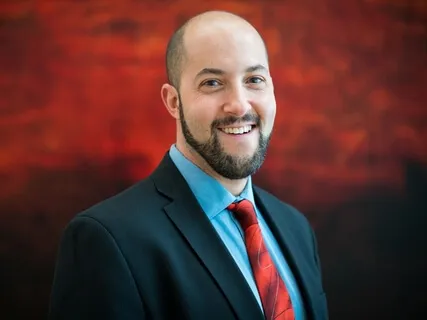
My guest today is clinical researcher and psychotherapist Eric Garland.
Eric has spent his career developing effective ways to use mindfulness and other contemplative approaches for problems like addiction,
Stress,
And chronic pain.
The intervention he's created is called Mindfulness Oriented Recovery Enhancement,
Or MORE for short,
And in our discussion,
He unpacks the how and the why of its effectiveness and promotion of well-being.
In our conversation,
We talk about how early mystical experiences led Eric to a contemplative path,
And from there we get into his perspective on the power of meditation to heal us,
Particularly around the idea of self-transcendence and non-dual states of consciousness.
Then Eric describes the features of his intervention and its application for addiction and chronic pain.
We discuss how reappraisal can help in difficult situations,
The important role of savoring and reconnecting with natural rewards,
And how mindfulness can be used to deconstruct pain.
We end the conversation going over the,
I must say,
Pretty impressive results of a large clinical trial for the MORE program that shows just how effective it is and also how it might work.
And Eric shares the biggest lesson he's learned so far.
Eric has been a part of the Mind & Life community for over a decade,
And we're so happy to have been able to fund his early research during the development of the MORE intervention.
I think the scope of his work is an inspiring example of how research can translate into real-world applications that relieve suffering,
And his intervention has already helped many thousands of people.
So with that,
I hope you enjoy this conversation.
It's my pleasure to share with you Eric Garland.
Well Eric Garland,
Welcome,
And thank you so much for being with us today.
Thanks Wendy,
It's a pleasure to be with you.
So you have done a lot of research and work in the clinical space,
Working with mindfulness in a number of different applications,
Particularly around addiction,
And I'm really looking forward to digging into that with you.
But first I'd love to chat personally and hear how you got interested in contemplative practice originally.
Good question.
That's a long and winding tale.
So I mean I think I always,
Even when I was a young kid,
Had a bent towards the mystical.
I think the part to really focus on is in college when I got exposed to meditation for the first time by another college kid who introduced me to just basic hatha yoga and mindful breathing.
So I began practicing meditation on my own as a personal spiritual practice,
And at the time I also was really interested in Indian and Chinese religion and philosophy.
Actually in addition to my psychology undergrad degree,
I also got a minor in religious studies and in anthropology,
And I've always also been interested in shamanism and native contemplative practices as well.
So it really began with my own personal interest,
And that was inspired by mystical experiences that I had off and on in my life,
And that really motivated me to pursue this.
So when I came out of undergrad,
I originally wanted to actually get my PhD in comparative religion and philosophy of mind,
But fate had a different intention for me.
So I ended up actually getting into clinical work.
When I got my degree in social work and started practicing as a clinical social worker doing psychotherapy with people,
I started integrating mindfulness and other contemplative practices into psychotherapy with my patients.
And at the time,
I didn't know that anybody else was really doing that.
I was going to ask,
Was that just something that you personally,
Because of your own experience,
Started doing?
Yeah.
It was just something I sort of,
I won it.
I just sort of figured it out myself.
Little did I know that MBSR was happening and MBCT was happening.
That's mindfulness-based stress reduction and mindfulness-based cognitive therapy,
Two standardized programs.
Yeah.
But this was in the early 2000s,
And so I guess it was out there if you were in academia you knew about it,
But most people didn't know about it.
Right.
It was just beginning in those days.
So I really cut my teeth on just weaving it into psychotherapy,
Into cognitive behavioral therapy.
I'm also certified in clinical hypnosis,
And actually there's a funny story there,
Which is that I was always interested in meditation,
But when I was training to be a psychotherapist,
There was no meditation in psychotherapy that I knew about.
So the closest thing to meditation that was sort of somewhat accepted practice in psychology and healthcare was hypnosis.
And then when I decided I wanted to get my PhD and become a scientist,
I first went to UNC Chapel Hill to study hypnosis.
Oh,
Wow.
And when I got to Chapel Hill and I was going to work with a pain researcher who was studying hypnosis for irritable bowel syndrome,
He ended up telling me that he couldn't work with me because his grants had run out and he was in a scramble to find more funding.
And I was really devastated because I had moved my family and had a little newborn baby.
And he said,
I'm sorry,
I can't help you,
But would you be interested in studying mindfulness,
Doing research on mindfulness?
And I said,
What?
I said,
People study mindfulness?
And he said,
Yeah,
I know somebody who has an NIH grant to study mindfulness as a treatment for irritable bowel syndrome.
Would you be interested in doing that?
And I sure wanted to study mindfulness.
And so there you go.
Wow.
Total serendipity.
And so I circled back to it and that began my scientific career.
Wow,
That's amazing.
I didn't know that.
So you started then in incorporating mindfulness in that space,
But you already had your social work experience at that time where you were working on it yourself.
Yeah.
I'm curious in the ways that you were just kind of testing it out with your own clients,
Is what you started developing similar at all to like the formalized MBSR or MBCT as you're saying?
Like,
Are there overlaps there of what you were doing just naturally?
Well,
What I was doing was developing more mindfulness oriented recovery enhancement,
Which is what I went on to study.
But certainly there were overlaps.
And when I was getting my PhD and began this mindfulness research,
I did take an MBSR course.
Meanwhile I was practicing at a private practice as a psychotherapist.
And so I continued to develop my approach.
And so that certainly had a strong influence on what I was doing.
And then I stumbled upon Zindel Siegel's treatment manual,
MBCT treatment manual.
And then that of course had a huge shaping influence.
But neither of those traditions were the sort of genesis point because I had already begun to develop this approach previous to that.
Right.
So before we get into your particular approach that you developed,
I'm curious as a social worker and with your own experience with these practices,
What made you think that it would be useful and how did you see it initially start helping,
Assuming that it was helping your clients and your patients?
Well,
I mean,
It certainly all emerges out of my own personal experience.
So it's very much a first person experience discovering that I could actually heal myself through contemplative practices.
Initially I think it was a discovery of sort of agency.
I could have agency over my own mind,
Over my own experience.
And I wasn't just sort of a captive at the whim to my emotions.
But actually there was something I could do about it.
But then I think there was something deeper,
Much deeper than that,
Which was early on having the lived experience of accessing a state of pure being that transcended suffering.
Having an experience of that and then recognizing that that is a potentiality really in any given moment because that's the fundamental nature of existence.
That's been a guiding principle that I brought to my clinical work because that gives you a sort of an abiding sense that no matter how messed up you are,
There's a possibility of tapping into well-being.
And so that actually ties back into my choice of going into social work rather than clinical psychology,
Which is I really railed against the psychiatric paradigm of believing that people had these fixed psychiatric diagnoses that were reflective of some sort of underlying permanent pathology in the brain or their genes.
And it didn't really fit with this philosophical kind of notion that the true nature of mind can transcend that.
And so actually social work was more in line with my values because it was more of an empowerment kind of focused approach.
So I brought all of that into my practice.
And so having that personal experience also,
And not just personal experience,
But obviously shaped by the Buddhism and Hinduism and Taoism that I had read really informed my clinical work.
Yeah,
That's interesting to hear you describe that.
And I definitely want to come back around those states you were describing,
Those kind of transcendent states.
I know you've been bringing your work in that direction to study self-transcendence.
So yeah,
We'll come back to that.
But I was wondering in terms of the clinical setting and bringing these ideas in,
How do you translate those to your clients who may not be familiar or meditation practitioners?
Just feels like these states aren't on demand necessarily,
Right?
Yeah,
They're not on demand.
Definitely not.
Definitely not.
Yeah,
I mean,
I think the way that I translated it was more of instilling hope in the possibility of change,
That no matter where you're at,
You can transform yourself and transcend that.
But I think also imparting,
What I tried to impart was the notion that reality was constructed.
And so if you're in a reality of suffering,
That there's a possibility of completely transforming that,
Because that is a constructed reality.
That's a reality that occurs within the space of consciousness.
Right.
And that is a big part of what mindfulness practices start to unfold when you start to investigate how your mind is operating and all these things.
Exactly.
So concretely,
I worked with everything under the sun from depression,
Anxiety,
PTSD,
Addiction,
Chronic pain,
And a whole host of psychosomatic conditions,
Because I worked in an integrative medicine setting.
So I was getting patients who had mental health and medical comorbidities and all combinations thereof.
And yeah,
I saw a lot of growth and a lot of healing and people experiencing significant relief of emotional and physical pain from entering altered states of consciousness.
That's really what I was doing in essence,
Was helping people to use mental mind training practices to achieve healing altered states of consciousness.
And so as a researcher for the first,
Let's say,
Period of my career,
I didn't really talk much about that,
Because as you know,
As a field,
We were really trained by our mentors like Richie Davidson and others to use the tools and methodologies of cognitive science to translate and understand the mechanisms of mindfulness and to make it a legitimate,
Rigorous scientific pursuit.
And so I took that really seriously.
That's what I've tried to do throughout my career.
And I think I've been pretty successful.
But of course,
The whole time in the background was what I really thought was going on,
You know,
But I didn't really,
I didn't have the courage to talk about it.
I didn't have the platform really to talk about it or even the ways to study it.
But in the new period of my career,
This is now something that I'm ready to circle back to because I really do believe that the states of consciousness that one achieves during meditation are healing.
And there's a lot more to it than just attention,
Attention regulation,
And acceptance.
There's a lot more to it than that.
Yeah.
Great.
Well,
Let's start with maybe with your MORE program,
Mindfulness Oriented Recovery Enhancement.
Great.
So you've been kind of the main program you've been developing and testing and working on.
So can you just briefly describe that program first?
Yeah.
So Mindfulness Oriented Recovery Enhancement unites complementary aspects of mindfulness training,
Cognitive behavioral therapy,
And principles from positive psychology into an integrative treatment that can simultaneously address addiction,
Stress,
And chronic pain.
Another way of framing it is MORE is a mind training program that combines skills and mindfulness reappraisal and savoring to be specific.
So we have a common understanding of what mindfulness is.
So that's meditation to enhance metacognitive awareness of present moment experience and to penetrate into experience and allow people to witness it from the standpoint of an objective observer.
Reappraisal is the process of reframing the meaning of adverse and stressful life events in such a way as to see those events as growth promoting or a source of meaning in life.
And then the third family of techniques is called savoring.
So that's mindfully focusing attention on what is pleasant,
Beautiful,
And good in life and then becoming aware of when positive emotions and pleasant sensations are arising in the mind and body and then deeply appreciating and absorbing them.
So those are sort of the three foundations of MORE,
The families of techniques that are brought together.
And then the fourth area is the one that I was alluding to that now we're directly investigating it more,
Which is the self-transcendence aspect,
Which isn't necessarily separate from the other three foundations of MORE,
Mindfulness,
Reappraisal,
And savoring,
But actually I think is more of like an emergent kind of phenomenon that is produced by the interaction of those techniques.
I think most listeners will be familiar with mindfulness as a concept and those kinds of practices and like you said that metacognitive awareness of our own mental and emotional states.
But this positive reappraisal you mentioned,
Can you give an example of how that might look for someone who's doing this practice?
Yeah.
So when a person is facing a stressor and they start to think negatively about it and they start to get bogged down in ruminations and spinning in their wheels over and over again about what's so terrible and awful about their life,
Which of course that creates emotional anguish which can drive craving for drugs and amplify chronic pain.
One of the things we ask them to do is to stop and first of all to become aware of the negative thought pattern and then to actually,
We integrate mindfulness into this technique so we ask people to practice a few moments of mindful breathing as a way to disrupt the negative automatic mental pattern and to loosen it up a little bit.
But then where we go from this point is actually ask people to begin to actively contemplate and challenge the negative thoughts,
Just like out of cognitive behavioral therapy.
So we ask them to contemplate what's a more helpful way of thinking about this life situation?
Is there an alternative perspective here?
If you had a friend in this situation,
What would you want them to believe about their life?
If you had a teacher or a guide or a spiritual advisor,
What would they want you to think about this experience?
Or we just ask them directly,
How can facing this experience teach you something as a person?
How can it make you stronger?
How can you grow from facing this experience?
So that's one type of reappraisal that we use in MORE.
Can you think of any examples with clients that have been particularly powerful in that way?
Yeah.
So for example,
For someone who is feeling a lot of guilt and shame over ending a destructive relationship and the person felt really guilty,
She said,
I'm abandoning him.
I'm abandoning him.
He's a troubled,
Broken person and I'm abandoning him when he needs me.
She was able to use this technique and come to the realization that actually she's not abandoning him,
But she's actually,
By ending the relationship,
She's ending something that's toxic for both of them.
This is giving him an opportunity to learn what he needs to learn to become a better person.
So actually she's doing right by him by doing this.
So that's sort of mental transformation of taking a negative appraisal about a life situation and transforming it into a positive reappraisal,
Helping to promote growth and meaning.
But then the other technique is savoring.
So a simple example of how that plays out is,
I mean,
I live in Utah,
So I'm looking out the window at a beautiful snow-capped mountain.
So when you're savoring,
You're appreciating the beauty of the object and you're appreciating all of your senses and noticing and really enjoying the richness of the experience.
But then there's this kind of metacognitive,
Reflective aspect,
Which is at some moment you become aware of your own response to that experience.
So how does it make the body feel?
What kind of emotions are arising?
And when you notice pleasant inner experience,
Then attention turns inward and you begin to savor the feeling in the body.
So it's not just the object,
But actually the experience that the object elicits.
And I think that's one of the key pieces here.
And then allowing yourself to become really absorbed in the positive emotions and pleasant body sensations.
And how this savoring experience then can bridge to transcendence is actually when becoming aware of the object in that moment as the mind becomes quiet and the mind becomes fully focused on this pleasant experience,
There's a sense of closeness or connection or intimacy with the thing that you're savoring that can actually deepen into a sense of oneness or interconnectedness with that thing.
And in that moment of absorption into this experience,
Then the sense of self can relax and there's a sense of expansion.
So we teach people to practice that and more.
And the reason why we teach them that from a scientific perspective is that we know in addiction that one of the classic features of addiction is that there's a blunting of the brain's reward system.
So that as the person becomes more and more addicted,
They become less able to extract a natural,
A sense of natural pleasure and healthy joy from everyday objects and events in their lives.
The things that they used to find meaningful and pleasurable,
They stop becoming so pleasurable as the drug sort of hijacks their brain and captures their attention.
Yeah,
I was going to ask if it is it understood why that happens,
That blunting of the reward response?
It's pretty well understood.
I mean,
It has to do with dopamine mediated learning processes,
Dopamine and interactions with endogenous opioids,
A learning process in the brain.
And so really the sense of value is switching from natural rewards and reinforcers to valuation of the drug.
So dopamine is also involved in pleasure and rewarding stimuli.
So the drug tends to activate these systems as well,
Right?
And so then the drug starts hijacking the dopamine systems and kind of takes over what a natural reward would be doing.
Exactly.
And so the notion then that I developed my hypothesis,
I call it the restructuring reward hypothesis,
Which is simply the reversal of that.
So if we teach people how to become more sensitive to natural healthy pleasure,
That will decrease reactivity to drug related cues and thereby reduce craving and addictive behavior.
So it's a pretty simple hypothesis,
But it actually is pretty profound.
And I've been working for the past decade to collect data and it looks like I'm right.
That's awesome.
What you were just saying about savoring and kind of experiencing those bodily sensations with appreciation and pleasure,
Which is so important for people who are struggling with addiction.
I was reading back over your mindfulness to meaning theory paper and in there something jumped out at me.
I've been increasingly interested in the role of the body in all sorts of mind states and emotional states.
And there's something in there about interoceptive recovery,
I think is the term.
Yeah.
Could you explain that?
I think that's really interesting.
I think the notion is that when a person is really fixated in a negative mental state,
You know,
To boil it down to layman's terms,
They're lost in their head.
And when you're lost in your head,
When you're lost in thoughts and ruminations on memories and in default mode processing,
Then you're not feeling the body.
And not only the body,
The paper talks a lot about the interoceptive recovery and the lack of attention to interoceptive information,
But it actually,
It's a general withdrawal of attention from the outer world as well.
You just become,
Your attention becomes captivated by the negative mental content.
And so you lose touch with both the outer world and the inner world.
But so in the moment of disrupting this process and turning it around so that you're through mindfulness being able to recognize this is happening and then to interrupt the process by returning attention to the body,
Which is not only is it quote neutral in,
In valence.
I would argue that the body is positive in valence because the sensation of the body is the sensation of being alive.
And the sensation of being alive is better than the sensation of being dead.
Maybe so,
You know,
Noticing that you're breathing in this moment,
Like there's an inherent goodness to it because it means at least you're alive.
At least you're okay by that,
By that much.
And so that's enough to create enough space to begin to,
To introduce new appraisals of your life situation.
Yeah.
Uh,
So I'm wondering,
I know you've also done a lot of work with people who suffer from chronic pain.
So what's been your experience there bringing people into the body when the body may not be a source of pleasant feelings at all?
Well,
I have a lot to say about that.
You know what,
What I,
I guess what I'd say is that most of the research that I've done in the past 10 years has been focused on people with chronic pain who are prescribed opioids to alleviate their pain and who are misusing their opioids or at risk for developing opioid use disorder or who have full,
Full blown opioid use disorder.
And so people come to us for help with their pain.
And so we teach them to actually to use mindfulness to actually focus on their pain,
Which is of course a really terrifying thing for somebody with pain to do.
But we actually asked them to really deeply kind of introspect using mindfulness and to break down the pain into,
Into its subcomponents sensations.
So rather than focusing on,
You know,
Just the overwhelming,
Terrible experience of pain,
We asked them to really zoom into it and to break it down into sensations of heat or tightness or tingling,
As well as to notice any emotions or thoughts associated with the sensations,
But also to notice do the sensations have edges?
Do they have a center?
Are there spaces inside the sensation where the sensation is not?
And when we direct people to do that,
What many people discover is,
First of all,
Their pain isn't as,
Isn't as solid and fixed and unchanging as they thought it was.
But even more amazingly,
Many,
Many patients discover that they're actually pleasant sensations either happening at the same time as the unpleasant ones,
Or even right inside the heart of the pain are pleasant sensations.
And actually,
Oftentimes people tell us,
You know,
You asked me to find the center of the pain and I could sort of find the center.
And then you asked me,
Does my pain have edges?
And I looked for the edges and I kind of found them in there,
But they felt a little,
They were like a little fuzzy and I kept looking at the edges and then I couldn't find the edges and then I couldn't find my pain.
And this is somebody who has had pain every day for the past 15 years,
A pain rating of six,
And on a scale of zero to 10.
So that's a pretty interesting process.
And it hearkens back,
You know,
The notion that there's a seed of pleasure inside the pain or potentially even an experience of bliss within the experience of pain hearkens back to the tantric tradition,
Both within Buddhism and non-dual Kashmir Shaivism.
There's a long tradition of the notion that inside the heart of any experience,
The true nature of that experience is emptiness and bliss,
Even painful experience.
So we teach,
You know,
Average people off the street to do this and they discover this on their own.
So I've been talking sort of lofty and in a clinically focused way,
But from a data focused way,
What we found in several studies now replicating this across a number of data sets is that people following mental training practices like this through mindfulness oriented recovery enhancement report being better able to experience their pain,
Not as pain,
But rather as pure sensation.
So they self-report this on the questionnaire and that changes on this factor actually mediate the effect of more on relieving pain.
So the better people are able at doing this,
The greater pain relief they achieve.
That's awesome.
And it also sounds almost like,
I mean,
Do you view it as a kind of reappraisal in the way that you were talking about before?
Like you're reframing your experience in that way?
It's definitely a form of reappraisal.
It's not a very cognitive reappraisal,
If you will,
Because it's a wordless reappraisal,
But it certainly is a shift in an appraisal.
So I know part of what has informed your development of this intervention is looking at something called attention bias that comes up with a lot of these issues for people.
Can you describe what attention bias is and how that plays into states like addiction or chronic pain?
Absolutely.
So attention bias is a really primordial phenomenon,
Which is that when our attention is captured by emotional experience,
We pay attention to the things that have emotional importance to us,
That capture our emotional concerns.
And that actually captivates our attention and constricts our attention upon the emotional stimulus that really matters to us.
So in the case of addiction,
As drugs become more and more part of a person's life,
Their attention becomes automatically captured by the drug-related cue.
It's hard for them to stop thinking about it.
It's hard for them to stop paying attention to it because it's what they want.
It's what they crave.
And so you can measure this phenomenon in lots of ways.
You can measure it with cognitive tasks,
Reaction time-based tasks that will tell you how much attention somebody is paying to the cue.
You can measure it with heart rate or brain activity that will show you how much the body is responding to the cue.
You can even show it with salivation.
And Adam Hanley and I recently published a paper showing that if you have an opioid user and they hold up their opioid pill in front of their face,
They'll start salivating to it like Pavlov's dogs.
As a measure of kind of desire,
Just like the whole appetitive system.
Exactly.
And amazingly,
We found that mindfulness-oriented recovery enhancement significantly decreases this attentional bias,
This reactivity to addictive cues.
So we've shown it in decreases in attentional bias in a cognitive task called the dot probe test.
We've shown it in changes in heart rate response when people are looking at the cue.
We've shown it in measuring EEG,
So brain activity at the scalp while people are looking at the cue.
And we showed it with salivation.
We showed it that after eight weeks of mindfulness-oriented recovery enhancement,
When chronic opioid users held up their pill to their face,
They actually salivated less to the cue,
Which was incredible.
Yeah.
Do you think that that happens because mindfulness and these other practices that you've incorporated help to kind of diffuse your attention more broadly?
Is that part of what's the underlying mechanism maybe of being able to pay attention to other things through this systematic practice of doing that?
Yeah.
So in the study with the dot probe that I published a few years ago,
We found that their attention was actually less captured by the cue initially.
So we found effects on initial attentional orienting.
So it wasn't just the disengagement from the cue,
But it was actually that their attention wasn't captivated as much initially.
I do think that that emerges from training people,
And this is part of the mindfulness-oriented recovery enhancement intervention,
When you notice that your attention is being captured by the drug.
First of all,
Don't get mad at yourself for it,
But just be aware of it and accept it,
But then disengage from it,
Return your attention back to your breath as a way to shift out of that,
And then expand your attention beyond the cue elsewhere,
To zoom out from that,
And to notice the parts of your life besides this drug that you're craving or besides this pain that you're feeling,
To notice the other parts of your life that are meaningful and growth-promoting,
That make your life worth living.
And so I think that whole process of noticing that the attention is being captured,
Noticing that this automaticity is occurring,
And then consciously disrupting it to then zoom out from that experience and get in touch with your life more broadly,
That is part of the process of freeing yourself from this pattern.
Yeah,
That's really interesting.
So you mentioned that you spent the last many years of your career working with these populations,
Often chronic pain populations who are experiencing an opioid misuse situation or addiction.
This is just a basic question,
But do you know the landscape of kind of the opioid crisis that we're experiencing in this country?
What percent have to do with this kind of population of chronic pain and opioid misuse?
I know it's a really common situation.
Yeah,
So there was a meta-analysis published a few years ago where 25% of people with chronic pain who are prescribed opioids misuse opioids.
Oh,
Wow.
So that was in 2015,
And no one's done an analysis like that since,
So I don't know where that stands.
But what I can tell you is,
And this is recent data,
Last year about 10 million Americans misused opioids.
And of the 10 million Americans who were misusing opioids,
Only 800,
000 of those were heroin users.
So about 9 million of them were misusing prescription opioids.
Now some of those weren't,
They didn't have a prescription,
They got it off the street.
It might have been illicit fentanyl.
But the overwhelming majority of the opioid crisis is being driven by prescription opioids,
Not by heroin,
Even though heroin is what seems to make the news a lot.
Does sometimes the prescription opioids,
The people who are prescribed then end up using heroin?
Like if addiction becomes too strong?
Yeah.
So a common pathway is that somebody gets prescribed an opioid for some sort of pain condition and then they go on to misuse the opioids or their doctor cuts them off of opioids and then they have to go to the street to get drugs illegally.
And then that oftentimes leads to addiction to heroin or fentanyl.
And then it overdoes.
So that's a very common pathway.
And of course,
Bound up in all of this is emotional suffering.
And so there's a really high comorbidity between psychiatric disorders like major depression and PTSD,
Trauma,
As well as chronic pain that are feeding into opioid misuse.
And my day job as a scientist is also doing some basic science to try to understand why do some patients take opioids as prescribed,
Whereas other patients go on to misuse them.
Have you come to any inferences there?
Yeah.
Yeah.
Pain is not the difference.
So pain is not the difference.
In my data sets,
And I've got a lot of data now.
I've got data in over 800 patients that are really carefully psychophysiologically phenotyped.
Both groups have the same pain level.
What's different is,
And this is really apropos to mindfulness-oriented recovery enhancement,
Is that people who misuse opioids have emotion regulation deficits,
But they have a really specific kind of emotion regulation deficit,
Which is they're unable to make themselves feel better.
They have trouble up-regulating positive emotions.
They have difficulty savoring natural healthy pleasure.
And so given that that's one of the key deficits that's driving the problem,
Then it makes sense to have a treatment that can directly address that.
And that's what mindfulness-oriented recovery enhancement is designed to do.
Yeah.
So I know you've just.
.
.
Oh,
Go ahead.
I was going to ask about your clinical trial.
Yeah,
I want to tell you that.
But before I do,
I'll tell you some psychophys findings,
Which is that we did a lot of work using various autonomic measures like heart rate variability and also EEG.
And last year,
Or 2019,
We published in the Journal of Science Advances a series of experiments showing that mindfulness-oriented recovery enhancement significantly decreased brain reactivity to opioid cues.
So people's brains were less reactive when they viewed opioid cues.
Like a picture of.
.
.
Like a picture of an opioid bottle or opioid pills.
But we also found that we asked people to look at positive images,
So pictures of beautiful mountains,
Sunsets,
Lovers holding hands,
And we asked them to savor those images.
And after eight weeks of mindfulness-oriented recovery enhancement,
Their brains became more sensitive and responsive to natural healthy pleasure.
And they also became happier when they viewed the cues.
So just looking at the pictures,
It just made them happier after they got the training.
And that this increase in responsivity to natural healthy reward was linked with decreased opioid misuse.
That's fantastic.
So the effects of more on decreasing opioid misuse were actually mediated by this increase in responsiveness to natural healthy pleasure.
So it was really strong evidence in support of the restructuring reward hypothesis.
Yeah,
That's great.
And just in case if listeners who aren't familiar with science and how this all works,
But when you start to really be able to piece out a mechanism like that,
You might see that end effect of like,
Oh,
People are misusing their opioids less,
But you don't know why.
And so then we're just starting to fill in the gaps here about this ability to increase their accessibility to pleasurable natural rewards and things like that,
Which aligns with what you were saying about your hypothesis.
So that's really exciting.
Yeah.
Yeah.
Thank you.
And so that's actually a replication because I've shown it in a number of different studies with a number of different measures that more is helping people's minds and bodies become more receptive and more sensitive to natural healthy pleasure and goodness in life.
I know you've just finished a really big clinical trial of your intervention.
Do you want to share about that?
Yeah,
I'd love to.
So this has been my life's work for the past five years and really for the 10 years before that,
Which led to all this.
So we did a randomized controlled trial funded by the National Institute on Drug Abuse.
And in this study,
We recruited chronic pain patients who had been prescribed long-term opioids.
They actually had been on opioids for about 10 years on average and had been in pain for about 15 years.
So we recruited 250 opioid misusing chronic pain patients and we randomized them to receive eight weeks of mindfulness oriented recovery enhancement or eight weeks of a supportive psychotherapy control condition.
And we treated them in primary care.
So they came to the doctor's offices where they were receiving their chronic pain management and we offered them these therapies.
Did these happen in groups or individual?
In groups.
Yeah.
And so folks came to the clinics in groups and they went through eight weeks of more or eight weeks of the supportive psychotherapy control condition.
And mindfulness oriented recovery enhancement really helped them.
It was astounding.
So more reduced opioid misuse by 46% by the nine month follow up point.
Wow.
And when you say opioid misuse,
I know that's kind of a clinical term.
How does that relate to addiction,
Quote unquote,
Or what does that actually mean?
Yeah,
Good question.
So opioid misuse was really measured as taking opioids for reasons other than pain.
So taking opioids to alleviate stress or negative emotions,
Or also taking opioids in higher doses than their doctor prescribed,
Trying to get opioids from multiple prescriptions from multiple doctors.
It's called doctor shopping.
Or using illicit drugs on top of opioids,
So using whatever,
Cocaine,
Speed,
Heroin on top of opioids.
So we measured opioid misuse using a measure that triangulated self-report,
Blinded clinical interview and drug urine screen.
And so the composite of that was how we measured opioid misuse.
So more reduced opioid misuse by 46% compared to 20,
I think it was 22% in the supportive psychotherapy control condition.
And these effects lasted nine months after the end of the eight week treatment.
And we also found that 36% of the patients in the Moore group were able to cut their opioid dose by half or greater.
Oh,
Wow.
Did the folks,
The nine month follow up,
Which first of all is an awesome finding and it's so rare in general in this field and in these kinds of clinical studies to have a longitudinal follow up like that.
So that's wonderful you were able to do that and amazing that the results were sustained.
Do you have any measures of the people,
Were they continuing kind of practices that they learned or was that measured at all?
Good question.
Yeah,
I'm kicking myself in the butt because we asked people to really,
Really carefully characterize the practices they were doing,
But only for about a month after the end of treatment.
So we have people use smartphones and we have tremendous,
Tremendous fine grained data like this asking people up to three times a day for 90 days to rate their pain,
Their craving,
Their mood state,
And the types of mindfulness reappraisal and savoring practice that they were engaged in,
How many minutes per day.
So in the future we're going to be looking at temporally dynamic changes in the relationship between these experiences and how practice changes it.
But back to the results,
So in addition to the effects on reducing opioid misuse and opioid dose,
We also found that more reduced pain and improved pain related function.
So by nine months after the end of treatment,
More had improved people's functioning by about 25%,
Which is pretty awesome.
And people were less depressed.
At the beginning of the trial,
About 70% of people met criteria for major depression.
But by the end of the study,
People in Moore,
Their level of depression was lower than the level for clinical depression,
Which was really pretty awesome.
And one of the things that I love most,
One of the findings that really makes me the most happy is that people reported that they had significantly greater meaning in life after the therapy and significantly greater positive affect at nine month follow up.
So Moore just made them happier people in general.
Yeah,
That's fantastic.
Another really amazing finding is that people reported that Moore significantly increased their tendency to experience self-transcendence.
Yeah,
That was going to be my next question.
I know you've been really interested in this idea of self-transcendence.
My understanding of this concept is,
As the name implies,
It's moving beyond our normal,
Everyday sense of self,
Kind of an ego-driven,
Self-focused state and gaining more appreciation and understanding of being part of a larger whole and things like that.
Can you say more about how you've studied that in your work?
Yeah,
So we measured self-transcendence with a questionnaire that we developed and published a couple of years ago called the Non-Dual Awareness Dimensional Assessment,
The NADA,
Which we think is pretty funny,
Actually.
I spoke with Adam Handley,
Who I know you've worked with a bunch on this.
So there's a previous podcast episode about some of this.
Yeah.
So Moore significantly increased self-transcendence,
Which we operationalized as experiences of the sense of self fading away and dissolving or the sense of self experiencing a oneness or a unity with all things,
As well as the feelings of love or affective bliss and energy in the body that often arise with these experiences of self-transcendence.
And so Moore significantly increased these experiences,
And that continued to grow for the nine months afterward.
But we have some data that is not yet published showing that Moore also increased frontal midline theta EEG activity during meditation.
EEG,
Just for our listeners,
Is an electrical measure from the scalp of brain activity,
Kind of on the superficial outer layers of the brain.
Yeah,
Exactly.
And that increase in frontal midline theta was significantly correlated with increases in self-transcendence.
So people who experienced the greatest self-transcendence experienced the largest changes in frontal midline theta.
And that actually mediated the effect of Moore on reducing opioid misuse.
Oh,
Wow.
I'm a little rusty on my EEG,
And I'm sure a lot of listeners won't know the different kind of waveforms and stuff.
But theta,
Is that is that a slower wave?
And is that related to anything that we would be used to experiencing in daily life?
Yeah,
So theta is a slower wave.
And it's associated with becoming absorbed in any sort of task that requires cognitive control.
Not when you're kind of working really hard at it,
But when you really become absorbed into that moment.
Kind of like the state of flow?
Kind of,
I guess,
Like the state of flow,
Yeah.
So it's considered,
I think,
A marker of cognitive control.
And also,
It's involved in sort of greater synchrony across the brain.
Other folks have found this to be this particular biomarker of heightened frontal midline theta to be one of the more reliably elicited effects of meditation across various forms of meditation.
This seems to be one of the key targets.
But what's really unique about these findings,
And actually we published complementary findings just last year in neuropsychopharmacology on this,
That Moore is enhancing frontal midline theta during meditation among people with chronic pain who are prescribed opioids.
And that the more that they are able to increase their frontal midline theta as they meditate,
The less opioids they use.
That's amazing.
Which is pretty awesome.
So I think this is like the first,
Really the first set of data that in a clinical population showing these kind of effects.
Yeah.
Oh,
That's really exciting.
Congratulations on all of your work.
That's a really beautiful set of findings and set of studies.
Thank you.
I feel that it's quite rare to go from theory and the basic science and be able to develop an intervention and apply it and it works.
There's so many,
So many pieces in there.
So really amazing effort.
Well,
Thank you.
That means a lot coming from you.
So I know you've been thinking about,
You know,
Obviously with such great results,
You've been thinking about how you can expand this program more and make it more accessible.
Are people able to find this if they're interested in it or how's that effort going?
Yeah.
So really the next step is to disseminate the therapy.
And so to do that,
I need to really train clinicians to deliver it.
And so I think that's going to be the next phase of my work is really helping people to learn this highly efficacious technique so that they can work with people in suffering and help them.
So for the past five years,
I've been training clinicians in mindfulness-oriented recovery enhancement.
So I typically train social workers,
Psychologists,
Nurses,
Physicians.
But I think that's the next step is really finding ways to disseminate and get it out there more broadly.
For example,
One of those ways is trying to integrate this into standard medical care.
Yeah.
Because I think if any of these contemplative interventions that we're developing are going to really take off,
They have to be something that the average person can access.
Right.
They're not somebody who has to pay a bunch of money to go on a meditation retreat in the Himalayas or something.
They have to be able to get this in the doctor's office.
They have to be able to get it in their community mental health center.
Right.
So I'm pretty excited.
There's a healthcare organization in the Midwest called Essentia Health,
And they've begun to start implementing more.
Their doctors are actually going to be delivering it as a physician group visit.
So they've started doing it already to their patients.
And that's as an insurance reimbursable service.
Wow.
So that's really,
Really exciting.
That's really exciting.
So that's,
I think,
The next step for this line of work is to try to get it out to the people.
And,
You know,
I've always been trying to be really careful into not overselling things and to really,
I was trained to be a circumspect scientist and to not make claims that the data didn't support.
So it's only very recently with the completion of this trial that I'll go around saying more works.
But I'll say it now,
More works.
It definitely works.
So it's time to get it out to folks.
And I feel really good about that.
That's great.
That's so exciting.
I know we're coming up on our time.
So I just want to wrap with one last question of if you could think of just kind of one succinct takeaway for folks that,
You know,
Something that you've learned from your work or your path,
What would that be?
I mean,
I think I just want to underscore the restructuring reward idea.
I mean,
I think my biggest contribution to science is the notion that one of the key paths to healing is to teach people how to reclaim a sense of healthy pleasure,
Joy,
And meaning from everyday life.
And that,
You know,
That's been overlooked in the mindfulness field for a variety of historical reasons relating to various takes on Buddhism that have influenced the field,
The modern mindfulness research field.
But you know,
Setting all that aside,
Just following the data,
What the data has taught me is that teaching people how to reclaim a healthy sense of pleasure,
Joy,
And meaning in everyday life can have profound clinical consequences.
It can really,
It can help people to heal from addiction and from pain.
And so that is,
That's an untapped pathway that is worthy of more exploration.
And I fully intend on continuing to explore that in my own work and want other people to join me.
Great.
Well,
Thank you so much for spending time with us today.
It's been really great to hear what you've been up to and have you share your wisdom.
Thank you.
Thanks so much.
Always,
Always love talking with you and always love Mind and Life.
This episode was edited and produced by me and Phil Walker.
Music on the show is from Blue Dot Sessions and Universal.
Mind and Life is a production of the Mind and Life Institute.