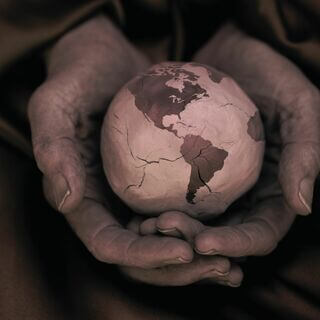
So I thought I would offer just a reflection,
Something that that we've been talking about with our guiding teachers is kind of the place that we're in and these just how intense it is to be looking at the world from all these different perspectives that are really up right now.
And so I'm going to just take take some time here to offer some ideas and reflections about this,
What I'm calling the,
The,
The triple bypass,
And,
And with that,
The triple blessing.
So here we go,
We'll see how this goes.
But it's,
These are some new ideas that I'm exploring and not sure where where they'll go.
But it's this,
This kind of way of seeing how the combination of Dharma,
Justice and ecological,
How these can really inform and inspire one another,
And then they can also bypass the other and the other two.
And as practitioners,
We can see how this manifests both both externally in the world and also internally so important for all all of us to,
To see how we all have our own ambivalence,
Our own participation,
Our own enabling of these that we can sometimes be so critical of the world.
So how do those,
Those,
Those beauties,
Those callings manifest in the world,
As well as the bypass,
And how does that that beauty those callings,
The the wisdom of each as well as the bypass of each manifest internally?
And then how can we use our practice,
Our our investigation,
Our being with to,
To nourish the wholesomeness while we guard against the trappings?
Well,
You discern and and guard against those trappings.
So what,
When I talk about the bypass,
What I'm what I'm thinking about here is that each of these domains has a tendency to set itself as primary,
And in that it can really negate the other two,
It provides this,
These this useful,
Very necessary,
Often critique of the other two,
But often to a degree that attention to those either two is considered an outright threat to to whatever that is,
That is being held as central.
So what do I mean?
What does this what is this bypassing thing look like?
So I'm going to take each one of these and talk about how it can what its way of looking in the way that it bypasses the other two.
So we're going to start with Dharma,
We're going to start with a spiritual bypass,
As a term,
Right?
It certainly applies to the Dharma.
So in holding the kind of like the ultimate wisdom,
This is when when when equanimity becomes aloofness and detachment.
This is when,
When we get too removed from the from the body,
From the,
From the human justice realms,
And make that Dharma primary,
The absolute is privileged over the relative.
So it's painful,
And not helpful to be told that if we're experiencing suffering,
With regard to say,
Marginalized people's identities,
Interpersonal racism,
Organizational or structural racism,
Patriarchy,
Colonialism,
If we're seeing that and feeling the suffering that radiates from that,
There,
The grief that is associated with so much harm done so much violence,
And the sense of remorse for those of us who have materially benefited from injustice,
The fear associated with how an interpersonal and structural marginalization continues,
And how embedded it is in our in our cultures in our institutions,
How much resistance,
How daunting it can seem,
When we face these in the embedded nature of these and we're attempting to counter and unwind them,
The confusion that we face when confronting the conditioned and conditioning nature of supremacy,
Especially when it is present in our own minds.
So there is a sense of an ethical breach in the realm of of justice that is only made worse by the denial by that bypass by that sort of diminishment,
The primacy of the absolute over the relative.
So how can we work skillfully with ourselves and one another regarding human rights,
Equity,
Inclusion,
Justice,
That calling that necessary calling,
These are deep challenges.
So so much harm is done to self and others.
And yet to say that this is only illusion that it is empty,
That reforms upset about it,
We should sit with that,
That is a form of spiritual bypass.
That is the way that Dharma can bypass justice.
Dharma can also bypass the ecological it is painful and not helpful to be told that if we're suffering with regard to all that is wrought to the rest of nature,
The use and abuse of earth,
Lands,
Waters,
Creatures,
And nature,
The eco grief,
This loss of beloved spaces and beings,
Landscapes,
Waters,
The eco anxiety,
The fear that sees the threat that we continue to pose not only to our own future,
That of our children,
But future generations of all beings of all species of the earth,
The vibrancy of the biosphere,
The living earth community,
The confusion that we face when conditioned and conditioning nature of human supremacy over the rest of nature,
How it is that that has taken up resonance in this heart,
Mind and body,
The conflict that we might see the ways that we might take part in objectifying the earth,
And how that is present here,
There is a sense of an ethical breach regarding the way it is that we are in relationship with the earth.
And that is made worse by denial,
A spiritual denial,
So painful and not helpful to be told by our spiritual traditions,
Our leaders,
That if we see and feel and experience the harm being done to the rest of nature to ourselves,
This large,
This body in the context of its meshed larger body,
That this is only illusion that it is empty,
We should sit.
So that's the way in which the Dharma can bypass the ecological,
The ecological can bypass the spiritual in its scientific materialistic tendencies,
Its reduction of nurture,
Nature to ecosystem services.
If anything,
You know,
Faith traditions are used as a source of power used to manipulate because I as somebody who cares about the earth,
And I'm an environmental activist,
And my job is to get you to care.
So I'm going to tell you,
Like,
It's all it's all such a horror story that's coming our way.
And I'm trying to shake you into caring,
Because you need to change.
Missing from that is the sensitivity,
The compassion,
The the the resonance,
The the regard for a complex,
Ever changing depth,
Irreducible,
Always in motion is the other and their way of looking the ways in which they love and care for the earth,
They have relationship to place.
But no,
My job as someone who cares is to get you to care and all you spiritual teachings only as a utility,
Because they might be helpful in getting you to care.
So whatever your tradition is,
Let me let me manipulate that to engage you.
So in that way,
The ecological can bypass the spiritual,
In its reduction of the other and the and the and the beauty of the ways in which the spiritual traditions are felt in and feeling their way into a larger sense of self,
The ecological good and vice pass equally justice.
We know what this looks like mainstream environmental movement,
Especially the climate movement is really good at doing what I call playing the climate card,
Insisting that social justice has no meaning in a world undone by climate catastrophe.
There is a history of displacement in conservation organizations and movements and land trusts,
Displacing people's conservation refugees less and less a thing but but has been deeply embedded in the history of of environmental causes.
It's also turning away from or diminishing environmental justice issues,
The the the land air water,
Health,
Diminishment,
How that how that disproportionately impacts marginalized communities.
So this is putting nature over the human.
And in that I detect self aversion,
The ways in which we have an aversion to what humans have wrought to the earth so much that we get we sometimes call ourselves a cancer upon the earth.
You know,
Environmentalists can speak this way.
It's so invalidating of this human being this human nature.
How is it that the human cannot be more than but also not less than the rest of nature.
And finally,
We come to justice and the way that holding the justice the human,
The necessary call for equity for inclusion,
For for a full recognition of the dignity and the worth and the really necessary political and institutional corrections that need to happen so that all human beings are equally valued.
But the this emphasis on justice can negate the spiritual goodness,
The complexity and the necessity of kindness,
The ways in which it gets really attached and isn't okay until everybody else changes.
I'm not okay until you get it.
The emphasis on difference can make its own enemies and recreate division.
The strong emphasis on critique can collude with the judging mind,
Which makes a separate self seated in judge in this judging space,
It can bypass its own shortcoming,
That self making that super critique aversion will will will create a blame worthy self,
Whether that's this self that is ashamed of the ways in which it participates in on justice or blames the other.
So there's a self making there a blame and shame.
And we know that change is not thwarted,
But actually utterly depends on that real change,
Real kind real transformation utterly depends on this on a softening and so that rigidity can actually work against the call of justice.
Similarly,
Justice can the call for justice can negate the ecological so human centric.
It can say justice for all people first,
And then we'll care about the earth,
It can almost seem like the call is,
Is so that all humans are so equally valued,
So that they can all equally exploit the earth together,
Earth and other species in this way of looking always come last.
So the Dharma,
The ecological the justice each in this way can make itself primary and negate the other.
What a great place for coming close becoming intimate looking carefully,
Validating and nourishing the gifts that these have for each other,
While detecting and recognizing encountering the ways in which they can thwart and deny and negate each other.
Spiritual gifts,
These recognize complexity,
The causes and conditions,
The true not true,
The flexible levels of being the softness,
The embeddedness,
The ultimate way that this self is not true,
Even as it is true.
The practices of compassion,
Insight,
Meta equanimity,
The practice of balance.
These are all spiritual gifts that can nourish the whole space.
Justice is a call for Sela a call for ethical practice,
The way maker really,
Because it insists that our even our spiritual development,
Our embodied well being as well as our spiritual well being is only possible if we can trust each other if we are all safe and equally valued and and and resource.
It is a recognition that this unfolds because we are are any unfolding for the human happens because we are all interdependent.
We need to enable well being for all of us in order for any of us to really move forward.
And then the ecological the utter embodiment,
The enmeshment in nature,
This wider self,
And the possibilities of yes,
Recognizing and ending harm,
But also reciprocity repair beyond the material,
But embedded.
These can so nourish and inform and enrich each other.
The middle way practice doesn't make any of them prime primary,
But emphasizes their gifts and holds them in balance.
So what insights do you see?
What ways do you see spiritual bypass,
Ecological bypass,
Justice bypass happening?
How does it happen in how you look and see in the world and both and in yourselves potentially?
And what are you finding as well as useful ways to counter?