Welcome to the Explorers Mind podcast,
Where we will inspire and empower you through conscious conversations with explorers of the inner and outer worlds that have ventured into uncharted territory,
Pursued bold challenges,
Found their purpose,
And expanded their consciousness.
We will journey through the insights and experiences of adventurers,
Scientists,
Conscious leaders,
Founders,
Activists,
And artists,
And provide you with the practical tools you need to get out of your comfort zone.
Expand your mind,
Find deep fulfillment,
And create an inspiring vision for your life.
It's time to find your inspiration and open up new possibilities for a meaningful life with your host,
Alma Michel.
Welcome to the Explorers Mind.
We really appreciate you being here.
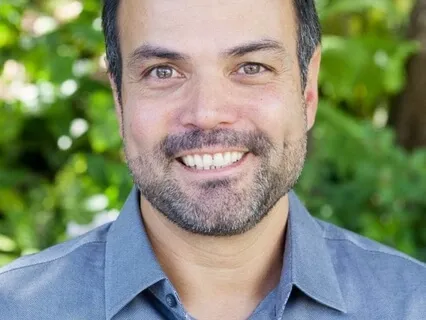
Our guest this week is Rich Fernandez,
The CEO of the Search Inside Yourself Leadership Institute,
Originally developed at Google and now an independent non-for-profit that has introduced mindfulness and emotional intelligence tools to over 100,
000 people,
Including organizations like Salesforce,
The United Nations,
And the Ministry of Education in Bhutan.
Rich and I originally connected in 2015 around our mutual interest in bringing mindfulness to organizations,
And in this episode,
He shares with us his personal journey and quest for living an inspired life,
The distinction between a job,
A career,
And a calling.
Why Bhutan,
The happiest country in the world,
Hired Rich and his team,
And he also shares practical tips on how you can live an inspired life.
I hope you will enjoy this episode and would love to hear your feedback.
Welcome to the show.
It's so great to have you here today and to reconnect with you after all these years and to speak about a topic that's really dear to both of our hearts,
Which is living an inspired life and bringing mindfulness into the organizations and basically into all corners of the planet.
Wonderful.
Yes.
Hi,
Palma.
Really,
Really wonderful to be here.
Now,
For those that don't know you and haven't heard you speak before,
I know you have shared this story a million times,
But you came to mindfulness or meditation quite early in life.
Could you share that with us,
But maybe also a detail about it that you haven't shared on all the other talks that you've given?
Yes,
Sure.
Well,
I,
As a kid,
Had a very,
Very powerful sort of sense that there was something much larger than me that I was a part of.
I couldn't really articulate it.
And at the time I was raised Catholic.
And so those were the kind of ways I had to understand perhaps a spiritual dimension or kind of a larger dimension of experience.
And I remember maybe I was around 10 years old.
I was living in New York city in Manhattan and I was able to walk to my school every day and it was a Catholic school attached to a church.
And I remember going very early in the morning to the church.
There was never any ceremonies or masses,
But I remember going there a couple of times a week to just sit in the silence.
And that silence was really refreshing and nourishing for me.
I think the age between 10 and 12 or 13 is,
You know,
For all of us a funny time.
And I found a lot of peace there.
And I remember my mother asked me,
Where are you going?
So early in the morning,
School's not even starting for another 30 or 60 minutes.
And I said,
Well,
I'm going to church.
And she said,
But there is no,
There's no mass.
Why are you going?
There's no ceremony.
I said,
I'm just going there to sit.
Needless to say,
She didn't really believe me at first,
But I said,
No,
I really am.
And it really helped me have a grounding is what I like to say.
Even at that age,
I was aware of that.
And then later on,
I came to know that it was a form of meditation,
Sort of sit quietly to reflect,
To just be with the experience that I was having as I was having it and embrace it in some ways without judgment.
And that led later to much more extensive exploration of meditation and mindfulness.
And these practices,
Which I will say,
As it did when I was 10 years old,
Even now,
Decades later,
Forms the foundation and the ground for a lot of what I do.
So I think the thing to share with people that I haven't shared explicitly is that there has been a thread or a throughline of practice of cultivating these qualities of awareness and intention throughout my life since I was a kid.
So this was really the main thing.
Thank you for sharing that.
Was there any teacher that had a major influence on you?
Or did you pick from many different teachers and traditions?
It was a little bit more the latter,
But there were some early influences which I can share.
So first,
There are some unknown teachers that are not commonly known.
And when I went to university,
I was 18 years old.
And I had a wonderful teacher of Tai Chi Chuan,
The traditional martial art from China.
And it was it's a very slow martial art,
As some of you may be familiar.
And what that helped me experience very,
Very deeply was a felt sense of this very thing I was talking about.
My teacher would say to me,
In other words,
You know,
This practice is like meditation in motion.
And I thought,
What first of all,
What really is meditation?
And oh,
My gosh,
It can actually be a experience in my body.
And in my,
The way I move and perceive of the world.
And she also was a wonderful teacher.
So she was one of my first teachers.
And she's never written any books.
She's not known,
But she did give us a book list.
And one of the earliest books I read was by a man,
A wonderful famous Vietnamese Zen monk named Thich Nhat Hanh,
Which some of you may be familiar with.
And he was one of the earliest influences about how to both formally cultivate these qualities of awareness and mindfulness,
And then also bring them into the daily activities,
Very much like that Tai Chi practice was bringing it into the movement form.
What I became aware of and started to practice was bringing it into the ways that I moved in the world,
The ways that I set intentions and carried out my daily activities.
And I don't want it to sound like that this was some perfect,
Like formula.
And all of a sudden,
Everything I did was intentional.
I mean,
I was 18 years old,
After all.
And even now,
Decades later,
There's very much sometimes these experiences of being on autopilot and just being in habit behaviors.
But at the same time,
It did bring the ability to cultivate these qualities of awareness and intention,
Which,
Like I said before,
Have served and informed me my whole life.
And what was your professional journey with mindfulness like?
I believe you started as a psychologist and worked in financial services and then with organizations like eBay and Google.
But you also started bringing these practices into corporates,
When I guess many people with their meditation practice were still in the closet,
When it was not really okay to say,
I'm going to go meditate in particular in a workplace.
Yes.
So this is a little bit of a longer story.
So let me if I could just share a bit of the journey.
So let me start by saying this.
So I grew up in a Filipino household.
And in the Filipino language,
When you ask,
Ask somebody,
You don't say to somebody,
What is your job?
Or,
You know,
What do you do for a living?
Or what's your work or your career,
You actually use the term,
You say,
Which means what is your search for life?
That is the term that in the language that they use to ask you about your work and what you do for livelihood.
What is your search for life?
It's a beautiful,
Beautiful way to consider what meaning and work are for you.
And so I can say that for myself,
I have taken the scenic route in my career on this journey of the search for life,
The Hana Puhai that I described.
And what I came to learn is the distinction between a job,
A career and a calling.
So that's not a new idea.
But that is certainly one that I kind of walked.
So you know,
Of course,
At first,
I had some jobs,
I worked in a restaurant.
So a job is something you do to pay the bills.
Career is something where you choose a field of endeavor,
Or effort,
And you progressively build your skills,
And potentially advance in terms of expertise,
But also role.
And finally,
A calling is truly where you're listening to kind of the inspiration that life itself,
Perhaps is a way to say it is giving you,
But you follow life,
You follow what's most alive for you.
So that was me.
That was me,
I went through all of those stages.
And like I said,
From working in a restaurant to doing some sales,
Some retail sales,
To then moving into a much deeper exploration of where I could use my skills,
I wanted to become a teacher.
And also I was very interested in human development.
So eventually,
I went on to do graduate studies in psychology,
Eventually going on to get my PhD in psychology.
And that started to move me into the arena of a career,
Where I acquired these skills in working with other people to help them be their best.
And where I found the easiest application for myself was to work within the context of large organizations in the field of what's called organizational psychology,
And help teams and also especially leaders be effective within these organizations,
Especially from the people or human dimension.
So I became a specialist in the field of learning and leadership development in large companies.
I worked at JPMorgan Chase and Bank of America.
And then after about 10 years of that,
I went over to the technology sector,
And worked at eBay,
Where I was the head of learning and development for the business.
And then eventually over to Google,
Where I was,
I took a role as the head of executive education,
Which was leadership development for the senior leaders at Google,
The directors,
VPs and above.
So within that,
Okay,
So that was the career.
So it was a it was actually a sort of a chosen field of expertise where I progressively built my skills and kind of advanced in seniority and enroll and responsibility.
And throughout that problem,
There was a calling,
Right,
There was this sense of paying attention to what was most alive for me.
And as I said earlier,
In this podcast,
One thing that has always been alive for me very,
Very prominently was the importance of cultivating attention and awareness and intention.
And this has been broadly described as mindfulness these days,
You could say mindfulness is awareness,
And the cultivation of awareness.
And also with that comes the cultivation,
Of course,
Of empathy and compassion,
All of them work together,
We can talk about that later.
But let's go back to 2006 or seven,
Where I had these personal practices of mindfulness.
So you know,
At the time,
I had a meditation practice,
I was also very actively a practitioner of kung fu,
I was doing that multiple times a week,
A few hours a day,
All of them were awareness,
In some ways,
Awareness cultivation practices.
So that was in my personal life.
And in 2006,
Especially around 2007,
And then eight was the global financial crisis,
Or that particular financial crisis,
I know,
We're in a different one today.
But at that time,
Let's call that the 2007,
Eight global financial crisis,
I was at eBay.
And I had these practices,
I was doing them regularly.
And all around me,
My colleagues,
Customers,
Stakeholders,
Were understandably really freaking out and really,
Really in a state of real suffering and pain,
A lot of them,
Not all but a lot.
And I experienced the anxiety,
The fear that we all did in such circumstances.
Yet I had this kind of grounding,
If you will,
This place where I could be where no matter what was happening in life or in the world,
It was as if almost they were like clouds passing in this blue sky of awareness.
And that was the ground,
The sky was the ground or the sky was the background and the clouds were the turbulence that comes through.
And I think some of my colleagues started asking me like,
How,
Why are you so calm?
You know,
You're like an executive in this global retail business,
And we're seriously suffering.
And layoffs are about to happen.
And you know,
Your will could be affected others,
Who knows.
And I said,
Well,
I have this way of practicing these skills called mindfulness,
If you will,
That really helped me navigate.
It's not that they allow me to sort of disregard or deny that difficulties are here,
But I'm able to navigate them through these.
This is kind of how I do at least,
You know,
It's a personal hygiene practice,
If you will.
And so my colleagues got really interested,
They didn't know anything about mindfulness or meditation,
And they just started asking me to teach them.
So I found myself in a small conference room with a few colleagues,
A handful,
Half a dozen for 20 minutes,
And then they requested it more frequently.
And then more people started coming and those four to six colleagues between 40 colleagues and we couldn't fit in conference rooms.
And,
And then I couldn't do it so much anymore because I had this day job where I was an executive and there was a lot to pay attention to.
So I actually started inviting meditation and mindfulness teachers into the business to teach.
And I remember very early on,
We had a session where I was expecting 20 to 30 people.
So we reserved a conference room,
200 people showed up,
And we had to like move quickly moved find a space.
And it was clear to me that these tools were hugely valuable.
So we began bringing that in.
And then eventually I moved over to Google,
Where it was more actually a part of the culture.
There was a group of people who were doing this.
There was an early engineer who brought some neuroscientists and meditation teachers together to cultivate to create a course called search,
Like Google search inside yourself.
So I shared an office with him.
His name is Meng Tan,
And he wrote a book called Search Inside Yourself.
He was writing it when when I joined,
And we shared an office and started teaching this at Google.
And then eventually,
The course became so incredibly in demand,
That was the most in demand and still is the most in demand and popular course at Google that we realized we were getting all of these requests from outside of Google to teach it.
And we eventually wound up getting permission to spin off a separate nonprofit educational institute that taught just these skills.
And that's the institute I lead today called the Search Inside Yourself Leadership Institute.
Maybe the final thing to say is just because you asked me how have you gone about offering these two large organizations and how is it,
You know,
Taking effect and having an impact.
I was particularly curious as I read that you have now introduced these practices to over 100,
000 people.
Yes,
Yes.
Around the world.
Yes.
And while I'm obviously aware that there's a huge demand for bringing mindfulness into the organizations very often in Europe,
Maybe it's different in the US,
It's often like,
Just people want a one off workshop,
A little bit more mental wellness,
Or something nice to give back to the team.
But your projects are much more in depth.
So I was curious,
What's the ROI basically,
Or the business case of bringing this into these large organizations that you have worked with?
Yeah,
Okay,
We can start at the end with the ROI,
Which has found to be about 200%.
So the cost of bringing them in compared to the output,
The benefit for the employees,
Our largest client is a software company called SAP,
Which many of you will know it's a global software provider headquartered in Germany,
Operates in 180 countries has over 100,
000 employees.
And so they've calculated that the cost of bringing this programming in from our institute,
And the ROI is about 200%.
Because they see increases in well being in the ability to focus and manage distraction,
In employee engagement,
In decreases in stress and absenteeism,
Increases in trust in the trust index of leaders,
Increases in the ability to build relationships to collaborate and to foster innovation.
So they measure all of those months after people,
Participants take the programming,
And those that are harnessing the tools that we have kind of shared with them,
Which are focused on mindfulness and emotional intelligence.
So it's a mindfulness based emotional intelligence curriculum that really enables them to have those outcomes.
But I think the more important question is how?
Yes,
I mean,
Of course,
The impact is important.
And if you're running a business,
You need to know those numbers,
The cost benefit and the ROI and the results.
But the important question is also how.
And so what we do is we like to train team members,
Employees within organizations and certify them in this curriculum so that they adopt the practices themselves,
And then they're able to share it with their peers.
It's sometimes what's been called the train the trainer model.
And that really tends to work well within the organization,
Because we work with the teachers to help them think about how to bring in the organizational priorities,
The culture and values of the organization,
And weave that together with the core practices of mindfulness and emotional intelligence to have these kinds of outcomes.
The other thing I should say is,
You know,
We operate in over 62 countries around the world in organizations across sectors.
So you asked about perhaps the business sector,
But we also work with educational institutes,
Healthcare,
And whole governments.
I mean,
One of the funnest projects we have is with the government of a small nation called Bhutan,
Which is in the Himalayas between India and China.
Oh,
You've been there beautiful.
An amazing place,
Right?
Absolutely.
And it's interesting,
Given that these practices of mindfulness are so embedded in their culture,
That they bring a Western organization,
If I dare say,
To teach them that.
So I'm really intrigued by that.
I tried to question why they would be interested in talking to us.
So I actually flew out there the first time and I met with the Minister of Education.
And he said,
I would like to propose that you teach all our school teachers in the nation,
The tools that you all have developed through Search Inside Yourself,
Which is to tell for the audience,
The way I would describe Search Inside Yourself is a secular neuroscience based mindfulness and emotional intelligence curriculum.
So I asked the minister,
I said,
You know,
With all due respect,
You have ancient traditions of meditation and mindfulness.
Why on earth would you need us to come in with all due respect and offer these here of all places?
And he said,
Look,
Our traditions are ancient and beautiful.
And they reside within a specific context.
It's more of a religious context.
It's more like in monasteries,
Which in our country are mostly on mountaintops.
He said,
What I need is our school teachers in front of the classroom,
Speaking with children,
Teenagers,
Whomever who,
You know,
Many come from,
It's one of the least developed countries,
It's a very agricultural country.
And a lot of them are confronting this reality of the technological world and their agrarian reality.
And the youth are experiencing a little bit of a crisis in that country.
And the teachers are trying to find tools to work with them themselves,
First of all,
For themselves,
To help navigate those challenges,
And then perhaps things they can pass to the kids.
So a science based and neuroscience based and secular approach that also offers tools that are really practical,
Because like a meditation and some of our curriculums there,
We have 30 second meditations,
Right,
As opposed to like three hour meditations,
This is what they're used to in their monasteries.
So he said,
So I think your curriculum will marry very well to our traditional culture,
But it'll give a new dimension.
And so we agreed to it.
So we trained all the school teachers in that country.
And then later,
All of the government employees,
Their whole civil service.
So trained 28,
000 employees there and to come back to the train the trainer model,
We that's how we did it.
I said to the minister,
If you give me 150 of your best teachers will teach them to teach other teachers.
And that's exactly what happened.
And so we were able to train 10,
000 school teachers and 18,
000 civil servants in that country.
Fascinating.
Yes,
It's been it.
I told you,
I took the scenic route in my career.
So it has been an amazing adventure.
And this is why I like to call this topic we're talking about an inspired life.
Because if I could speak personally,
All of this has been something that all of this work has been,
As I've shared before,
Something that has been within me that has inspired me my whole life and configuring or aligning my life to the things that are most important to me,
Has been the journey.
So matching my values with my actions and behaviors in the world,
That has been the journey.
And I think you have a vision for your life.
What is your vision?
Well,
I like to be very concrete about it and actually write it down and repeat it to myself.
And so I can share it with you.
It's one sentence,
Which is the full integration of consciousness in all domains of life.
Beautiful.
It's very similar to mine.
But I find mine is also it's very aspirational,
Because I'm confronted daily also with some of my blind spots and the shedding of conditioning.
For me,
There is no better vision than that.
But I'm not sure if it's a vision one can fully achieve in one lifetime.
No,
I mean,
It is highly aspirational.
And you can just ask my wife,
She'll tell you like all the time,
You know,
I'm not being very aware.
I'm not being very conscious.
We're all very human,
Right?
Like all of us,
I'm a flawed human being,
I have my blind spots have things I'm not proud of that I do.
But it's not about attaining perfection.
Right?
This aspiration is something of a North Star.
What it does for me is it lends meaning and purpose and direction to my life.
And that is a continual source of inspiration on a daily basis for me.
So when I think about,
If you remember the mission statement,
If you will,
Or that the aspiration is the full integration of consciousness in all domains of life.
For me,
What that means is how am I living fully and cultivating aliveness in each domain of my life,
In my work,
In my relationships,
In my physical health,
In my mental health,
In my art,
You know,
Because I'm a writer also.
And so how am I inhabiting a sense of aliveness?
Or if I'm not fully alive in those areas,
Again,
Because it's not about being perfect all the time.
If I'm experiencing some sort of gap,
If I'm experiencing a lack of aliveness,
Or even a deadness,
I've experienced that too,
By the way,
Right?
I've been in jobs where,
You know,
I've been sitting there feeling like day after day,
I'm just doing these things that are feel deadening to me,
That I'm struggling to finish that I'm struggling to care about.
That's okay,
Actually,
It's not necessarily in the bigger picture,
A bad thing,
Because it could point to ways that you can pivot or change or,
Or transform that experience.
So with all due respect to anyone in finance,
Who's on the line,
You know,
I'm not a banker,
And I worked in large banks for a long time.
And so I had to adopt some of the tools of banking.
And those were times when I suffered a little bit,
Not because of the profession.
So please don't hear me saying that that's a bad thing.
I'm just saying for me personally,
I was aware that I wasn't great with,
Like,
Spreadsheets.
And with cutting tons of data,
That wasn't really my superpower.
For some of my colleagues,
It was and I admired them greatly.
And so knowing that,
Huh,
I'm a bit misaligned here.
Right?
This isn't the source of vibrancy and aliveness for me.
And at some point,
Gradually,
How can I start to move and transform that experience and I moved more and more over time into the areas where I am feel more alive and vibrant,
Which was cultivating things like being a person who helped others cultivate leadership,
Being a coach,
Being a writer,
And that's kind of where I am today.
There's so much in what you just shared.
And it also relates,
I think,
To some of the people that are listening to the podcast,
Which might be currently in a career in a place in life where they know that they want freedom from.
They know it's no longer fitting them in some ways,
But they don't know what for.
And I also heard you previously speak about the connection.
Also,
You mentioned the beginning of the podcast,
You're saying about awareness and intention and values.
But how do people find out these things for themselves that they can also live an inspired life or that they can also find their calling?
Because so many people would love to have a calling.
They just don't know what their thing is.
Yes,
Yes.
And you know,
I don't know that we all will always manifest our calling.
I know that it is available,
Though,
I think that there are ways that we can find greater satisfaction than we may have,
Especially for feeling unsatisfied.
That I know,
We can move away from dissatisfaction towards more satisfaction,
And perhaps all the way through kind of fulfillment,
Fulfillment of a calling,
I would say that's been true for me.
So how again,
We come back to the how I think it's it is really important.
First of all,
I want to just share with everyone that this journey this arc of moving from a job to a career to a calling.
For me personally,
It sounds like it was all very neat and clean and tied up beautifully.
But I'm talking about years where I had to struggle through all of these things I'm talking about possibly decades,
Right.
And the way that I was able to kind of navigate was to continuously pay attention,
Not every second of every day,
But just be aware of how I was experiencing my very life,
Right.
So if I was feeling dissatisfied or misaligned,
Like I said,
Back when I was working,
Let's say,
And at some point,
There were times where I was very satisfied working in finance,
But there were towards the end,
I was really aware that it was time for a change.
And rather than ignoring that,
Or trying to push it away or distract myself from it,
Just letting myself explore that even if I didn't know the answer,
I would do a lot of reading,
I would do a lot of meditation on that very thing,
I would do a lot of journaling.
And it started to become clear to me as I was journaling,
For example,
That,
You know,
I wanted to work much more in helping develop the potential in people and in leaders.
And so that was my transition more one transition,
For example,
Into these roles that I said I had at eBay,
And then at Google,
Where I was working directly with people,
Helping them with leadership,
And exploring what that meant.
And even there,
There was another pivotal moment where I was actually in a meditation retreat.
And I wasn't even trying to think about what's next or what else needs to happen.
When I realized that cultivating this awareness was my main work in life,
And that I needed to start a company and leave my career to follow my calling.
And I started a company called wisdom labs,
That focuses on mindfulness and well being in the workplace.
It's a digital learning company.
So I left Google to do that,
You know,
I had to resign from Google,
Which was an interesting choice.
Not popular with my wife,
I will say I came back from a meditation retreat and said,
I'm gonna follow my calling now,
I am gonna start a mindfulness and wellness company,
And I'm gonna leave Google.
So that was interesting moment.
What was her reaction in that moment?
She basically looked at me,
She said that my dear is a very inconvenient existential crisis was in my 40s at the time,
And we live in San Francisco,
It's expensive,
You know,
So it brought up a lot for both of us,
Not just her,
I will,
For myself,
A lot of fear.
And this is let's come back to that question you had asked me earlier for those that are listening and are maybe feeling stuck or maybe feeling a sense of apprehension about how to pivot and make some changes.
I will say it is it does come it does come with some fear and some anxiety.
But that's not the only thing it comes with.
It also comes with a sense of joy and inspiration.
And it's all there.
It's like one big mess that you have to kind of navigate.
And importantly,
Maybe I didn't mention this that you asked about like having tools and practices to help you navigate is really important.
So here's a few of them.
Let me be like really specific.
So having some form of reflection practice,
Or mindfulness practice,
Being able to sit quietly,
For example,
For me,
It's the sit quietly for a few minutes a day,
And just simply observe,
Like,
What am I feeling?
What is my mental state?
What's showing up in my awareness?
What what,
What can I pay attention to?
What's prominent?
What's alive?
This fundamental question of what's alive for you,
And sometimes that alive thing can be fear,
Or sadness or dissatisfaction.
And there's nothing to do about that in this practice other than observe it.
Because the thing is,
All of those things are experiences that you are having.
They're not necessarily defining who you are.
That's the key thing,
Right?
They're not like an existential definition of you.
They're an experience you're having.
And so you,
You observe them without Palma,
We were talking about this earlier,
They're not necessarily things you have to identify with,
As definitive as defining you,
Their experiences that you are having,
And they may be very powerful experiences,
And they may be prominent,
And they may be related to situations,
They could even be related to brain chemistry,
Because they're organic.
As a psychologist,
I can say there are organic conditions we all have.
And yet in the reflection of these experiences,
We're able to see them a little bit more clearly get a little bit of distance.
And most importantly,
Insight starts to arise about how you can respond skillfully in relationship to the experience that you're having.
So that's the value of reflection or meditation,
Or mindfulness for me.
A second practice is intention.
So with that insight comes,
Like I said,
Perhaps a level of understanding of how to respond skillfully to these circumstances.
And so for me,
I like to journal every once in a while,
And state my intention,
Process my thoughts and emotions,
Muse or imagine some possible futures.
And then that last piece about stating a possible future or an ideal future for yourself is really important.
So putting into form or into words,
You know,
A future that you want to live,
That seems very alive for would seem very alive for you,
An ideal future of sorts,
Putting that in words and in form and being able to write that down.
So for me,
It was for example,
Writing in the midst of writing my first book,
I've written numerous articles,
But I've never written a full book.
So I'm in the midst of writing a book on living an inspired life,
The title of this podcast.
And that has been for the past couple years,
I've written that down as a goal,
But also not just as a static statement,
Like,
What does it mean to write for me what,
You know,
And just exploring that and making it alive in the moment,
Even though if it's reflecting on a future state.
It's beautiful that you're sharing that because I guess it's a bit similar to one of the practices that I used to have.
It was thinking about all the things that I wanted to create or attracted to my life,
But also already feeling them as if I already had them.
Imagining how would I feel,
How would I look,
Who would I be with,
What I would,
What I would be doing,
The gratitude I would feel.
So that already while doing this practice,
I felt so elated and joyful,
Basically,
Without even having created those things that then getting up in the morning and getting started with my work was a lot easier because I was already in a somewhat elated state through these practices.
And it makes it much more likely that it becomes the reality.
Ideas have power,
Right?
And if you have expectations of a certain outcome,
That is more likely than not the outcome that will arise.
Yes,
The only thing I'd say there,
Like for me,
These goals were,
These were things that I was excited about creating,
Or they seemed impossible,
But they were never related to,
I'll be happy when I'll have those or to some self-worth.
There was a certain innocence in these ideas.
These were kind of like a vision,
But I would also let go of them.
Because I often find when you desire something,
But you feel you will be happy when you have that in the future,
Or you will be a better person,
Or you will get something out of that,
Some state in the future,
That there is some kind of contraction in that desire,
In that expectation,
And that often prevents it from happening somehow.
That's right.
So I don't want to get too abstract here,
But I will share with you that one of my other teachers currently is,
And has for many years now been a man that a lot of you may be familiar with,
His name is Jon Kabat-Zinn.
And in the meditations that I go on an annual retreat with him,
Meditation retreat,
And one of the key learnings for me was he says that when you're cultivating mindfulness,
It's not so much important the object of your attention as it is the quality and the act of attending.
So you find an object of attention,
You pay attention to it,
In this case it's our breathing.
This is the meditation.
But as regards having an ideal future that you can imagine,
Right,
Yes,
You can set an object and attend to it.
But that can shift as well.
So if you say,
Oh,
I want to buy this house in this neighborhood in that future state,
And you're you're living,
You're writing as if that's happened,
It may not be exactly that house in that neighborhood,
It might not even be a house,
But it might be something that will bring you the same qualities.
The important thing is,
How are you inhabiting the feeling states,
The mental and emotional states as you contemplate this ideal future,
And pay attention to that.
So when your journal say,
Okay,
In this experience,
I'm in this house,
And then talk about the feeling of being in that house,
Talk about the gratitude,
As you said,
For being in an experience like that.
And that cultivation,
That attention to the aliveness of whatever that signifier is,
Is the most important thing.
And that signifier,
That object may not exactly be what you thought.
But it will perhaps be much more in line with those qualities that you've been writing about,
You have to allow room for like variation as you make this journey.
But it's helpful to initially choose a North Star an object of your attention,
And write as if it's already come to pass.
In the book that you're writing about living an inspired life,
I'm curious because you are also a neuroscience enthusiast.
Will there be any neuroscience in it?
Or what kind of neuroscience facts are related to living an inspired life?
Yeah,
Well,
First of all,
Thinking about the structure of the brain and how to activate different structures of the brain that can be conducive to being inspired.
So for example,
We have a part of our brain,
A set of structures that comprise something called the limbic system,
That are survival mechanism essentially.
But they often get us into these behaviors that are survival behaviors that are typically things like fighting or fleeing or feeding in response to stress and overwhelm or threat.
And in times like these,
Especially,
So for the listeners,
This is 2020,
Whenever you're listening to this,
We're in the middle of a global pandemic with related crises around economic crises,
Social unrest,
And so forth.
It's very easy to have these parts of the brain activated,
That get us into a fear state,
A state of anxiety,
A state of survivalism.
And some of that is necessary and has been throughout our evolution.
And there's parts though,
That we can also cultivate that help downregulate or quiet that part of the brain so that other parts of our brain are executive functioning centers,
The parts that are responsible for thinking about the future or inhabiting the present moment and cultivating the same awareness.
These are parts of our brain,
Like the prefrontal cortex or the insula or the anterior cruciate cingulate that are all responsible for attention,
Awareness,
Perception,
That aren't tied to kind of some of the negativity bias that gets activated in the limbic system.
And the more you harness those qualities of your brain,
The more you're able to kind of do the dance,
I'll call it,
Between limbic activation and executive function.
And so in the book,
I will definitely outline that the practices I'm talking about,
By the way,
Aren't just kind of nice to do just because,
But things like meditation and mindfulness,
Cultivation of attention and awareness activate the executive functioning centers of the brain that has actually been shown quite well,
Quite convincingly.
I mean,
The state of the research is still somewhat early.
It's like a couple of decades old,
But when you scan a brain and you do these exercises around mindfulness,
Meditation,
Etc,
You activate those executive centers.
So I will definitely be covering some of that in the book.
I think more importantly for the listeners,
There is like a neuroscience based reason to be cultivating qualities of awareness,
Of attention,
And of intention,
Because it activates parts of your brain that will help you be your best self.
What else do we need to live inspired lives?
Or what other practical tips do you have that you could share with our listeners?
So in all of this,
It's important that it not become a grim exercise in willpower.
Yes.
And then also,
As you're just saying this,
I'm also thinking about a lot of,
Forgive me to say,
Silicon value types who from A to Z,
They hack their dates,
They hack their brain,
They hack their health,
They hack their relationships.
Every single vitamin they take,
Every single food item they consume.
It sounds stressful to me if I would obey all these rules,
To be honest.
Yeah,
Absolutely.
I mean,
Look,
It's always,
It's all of the above,
Right?
So there's reasons that folks are really interested in the quantified self because there's a lot of science behind it.
And so that's really valid.
And at the same time,
If it becomes a stressful exercise,
For me,
The fundamental rule is if there's no joy in it,
That's a sure sign that you may be misaligned in what you're doing.
And so in all of this,
Palma,
In this inquiry about how to cultivate awareness,
This practice of cultivating intention and purpose and meaning,
There has to be joy in it.
Right?
And that's what I mean by doing what's alive for you,
You know,
And it's very easy,
Especially in the arena of work to do things because you think that's what's going to make you happy.
But research quite definitively shows that actually happiness leads to success,
Not the other way around.
Right.
And so I've heard of one of your previous guests,
Roz Savage is really interesting.
She said that in her life,
And she's a really interesting person,
She said that in her life,
She thought getting the great job and having the sports car and the house and the husband was going to be the source of her happiness.
But what she found out was no,
That those factors weren't the source of her happiness.
So she had to find that separately within her and make some different choices.
So I think that is very true,
That find the joy,
Find what's alive,
Let that be your guide.
And that will ultimately lead to fulfillment and or some success,
But not as defined by external factors.
We're often taking conventional wisdom that's been handed to us from societal norms,
And things that we are led to believe will make us happy,
And we adopt those,
That they often they sometimes have little to do with what actually make us happy.
What else to finally share,
Just on a personal note is I've tried to follow this principle.
And again,
I want to emphasize that it's been a many,
Many years journey.
This isn't like I woke up at 10 years old,
I had a meditation at church,
And all of a sudden,
I was fulfilled and happy throughout the rest of my life.
This has been a very up and down peaks and valleys journey for me where I've had to confront very difficult times,
Difficult decisions,
I had to spend a couple of years cultivating awareness,
Trying to understand what do I really care about?
What brings me joy?
What's alive for me?
So I want to emphasize be patient and kind with yourself.
Continue the inquiry.
And yes,
Invite in these questions about what is alive and joyful for you,
Which is,
As I said in the beginning,
Your hana,
Buhai,
Your search for life.
And I'm really happy that you shared that just now because for our listeners,
Because before we started the recording,
Rich also shared because the last time we spoke,
He was still at Wisdom Labs.
And now,
Obviously,
You're the CEO of a not for profit for global business.
And there is a global pandemic and many other challenges in being a CEO of a business and it's not every day super relaxed despite because you have these practices,
But that you also go through your ups and downs.
Yes,
Absolutely.
Many ups and downs,
Many times every day.
And what Palma and I were talking about was something I mentioned here earlier,
Which is they're like clouds passing for me,
At least the way I perceive them is like weather patterns,
Right?
In the mind and in the world.
And it's the perceiving the consciousness that is the background for me.
It's like the sky is the background and the weather patterns come through and they're intense sometimes and I get carried away by them,
But I can come back to a place where of grounding and that I think comes,
I like to think that comes from my practice.
And for the listeners,
I can only share my experience and say that it has been all the difference for me.
It has helped me navigate all the different chapters of my life.
This ground of awareness,
This consciousness that I aspire to integrate,
You know,
In my actions every day.
So whatever that means for you and whatever reflection or the cultivation of awareness means to you or looks like for you,
I would encourage you to go onward and deeper.
Do you have one last practical tip?
Maybe how someone who hasn't consciously,
Let's say been in touch with their ground of awareness or tasted that,
How they can in quotes find it?
Yeah.
Don't do anything.
Find time to do nothing.
So our lives are so packed and our screens call to us.
They're meant to be addictive.
So find time to transition from constantly doing to finding time to just be where you're not doing anything directional and nothing related to technology or screen.
It could be taking a walk just because it could be going into nature just because it could be quietly sitting down with no agenda just because the reason I want to recommend that to folks is because it's so rare in our world to have this space of stillness and quiet.
But it is within that space of stillness and quiet that the music arises.
They say music is the space between the notes.
So cultivate the space between the notes and see what arises.
Beautiful.
And if you had one last piece of advice for someone living his most his or her most inspired life,
What would that be?
If they're in to move towards living that inspired life,
Like I said,
Be kind and be patient with yourself.
If your journey and your life is precious and if you pay attention to it and take care of it,
It will guide you.
So trust that you yourself know what will inspire you.
It's probably whispering to you if you're not aware of it.
And the way you'll know that is the things that are difficult for you are probably not important.
Rather,
The things that don't bring you joy and bring you suffering compared to the things that could bring you more joy,
Paying attention to those differences.
Like I said,
For me,
It was moments where I had to leave jobs or careers to follow what I felt was more alive for me.
So for your own self,
Whatever that looks like,
Pay attention,
Pay attention to your thoughts and your feelings and your state of being how are you on a day to day basis in your life with the current situation or conditions that you're living.
It may take some time to shift if you want to make a shift,
But you start by paying attention,
How you are being and let that guide you.
The way you're being will inform your actions if you just pay attention to your state of being.
I know that may sound like a little bit of a riddle,
But I hope you know what I'm talking about.
You know how you feel.
Just pay attention to it a sec.
Check in,
Right?
Like in your work or in your life,
Like,
What is this feeling?
And just investigate it and it will guide you.
So trust yourself and in that process,
Be kind and patient with yourself.
Sometimes it takes a while,
A little while to really hear and to know and to have that insight to respond skillfully to the situation you're in.
But the more you pay attention,
The more you cultivate these qualities of awareness with kindness,
With curiosity,
The more clear your path will be towards living an inspired life.
Thank you so much for sharing that with us.
And what is the best way to keep up with your work or keep in touch with you?
Well,
You can either connect with us through the search inside yourself leadership Institute,
Or you can find me on LinkedIn is usually like my best way to stay connected with people.
So it's just rich Fernandez and you'll see me there and look out for my forthcoming book.
I do the very practices that I'm talking about.
You know,
I'm in the midst of writing it now and working towards releasing it in the next year or so.
So just look out for it.
And that prompts me just to one more question.
Do you have a daily writing practice?
I mean,
You're the CEO of a business and there's a pandemic and you're writing a book and you're a husband and you have your practice.
Yes.
So you name it.
Where do you make the time and what's your process for writing?
So my process is that I take a very,
Very brief amount of time,
Usually during the week.
So I'm talking about never on a Monday,
Because Monday the inbox is flooded and there's tons of things to do.
But usually one of those four other days of the week,
10 minutes a day,
Not every day,
Sometimes it's two days,
Sometimes it's,
It is four.
But then on the weekends,
What I do is I usually take a few hours and sometimes I will even go to my office and just sit there and write for like three or four hours.
And by the way,
Those three or four hours of writing is not actually always all writing.
It's just,
You know,
The time it takes to like dedicate to bringing in the thoughts.
And sometimes I'm going on a walk and then writing and then going for lunch and then writing,
But like a few hours on the weekend.
So between 10 minutes a day during the week and then a few hours on the weekend.
And it's not work for me because it's so joyful.
I love it.
You know,
I wish I could do more of it,
But I love also my role as a CEO of this educational Institute.
So I just sort of accept that like,
This is the way that the book is going to get written.
I'm about halfway through.
So it's been over the past year,
Right?
So it's been progressing,
But slowly.
And this is the very thing I was saying earlier about being kind and patient with oneself.
And this is what I try to exercise every day with myself.
Yeah,
This is so often that someone has a goal by what's the stressful part is then,
Then you put an artificial timeline to it.
And then often people have this inner critic that beats them up for not being fast enough,
But it was a timeline they picked in the first place.
So they could have given themselves maybe a longer timeline.
And also I find things do happen somehow in their own time.
Yes.
And absolutely.
Let's say sometimes you give yourself a month and you can write the same book in a month,
But maybe you have two years and it doesn't mean that it's better one way or the other.
It just,
It takes as long as it takes.
Yeah.
And it comes at the stage and phase of life when it does.
So I will share with the audience that I've been wanting to write a book for 30 years,
30 years,
I have written a dozen articles in places like Harvard Business Review and Mindful Magazine,
But I've always aspired to write kind of a more extended work.
And I have several books I still want to write.
There are already ideas of the topics already well formed in my head.
And they have been for years.
And like I said,
30,
At least 30 years,
But only now having kind of had the experiences I've had and the learnings that I've had.
Can I,
I think like it's coming at the right time.
I would say,
Even though I've been desiring and aspiring and honestly a bit impatient and even critical of myself,
I'm like,
I don't have a book yet,
But it is the right time now.
And I've accepted that and I'm inhabiting that.
And it's allowing me to do this practice,
Which looks like 10 minutes a few times a week and a few hours on the weekend.
And it's moving.
It's happening.
Thank you for giving like a mini spotlight into your personal practice.
I certainly look forward to reading the book and really,
Really appreciate you taking out the time to speaking with me today.
It was a real pleasure to reconnect.
And I'm sure there's lots of practical things that anyone listening can take away for their lives.
Thank you,
Palma.
Thank you.
It was a pleasure to speak with you and a real privilege if you're listening to this,
To join you with your time and your attention on this topic.
So I wish you an inspired life.
Thank you everybody.
Thank you for being here.
We really appreciate you listening to this episode.
Having listened to my conversation with Rich,
Is there anything that you see fresh or new?
Rich spoke about looking for joy and finding what is alive in you,
Which some of our previous guests like Ross Savage,
Jill Hicks,
Karen Palmer and Justin Pakschoe also pointed to.
He also mentioned the importance of patience and being kind to yourself.
From my experience as a coach,
It can sometimes be quite difficult to even know what brings one joy or what makes one feel alive if you have maybe been in a stuck place for a while.
So this week's reflection will be on joy and aliveness.
I invite you to make a list of 25 things or activities that bring you joy or make you feel alive.
And from my experience,
One of the best pointers towards joy and aliveness is curiosity.
So if you find it hard to come up with 25 things that bring you joy or aliveness,
Pick things or activities that you are curious about and write them down.
And curious in this context means you have some free time or a free weekend,
What would you do?
And after you've written down your 25 things,
Take a look at your list again and see if some of these activities or things could even be combined for maximum joy or aliveness.
Then pick one to three of these activities or things and spend a little bit of time on them this week,
Just a little bit each day and see what happens.
And if you enjoyed this episode,
We would be so grateful if you would rate us on iTunes.
And if you would like to keep in touch and never miss out on any new episodes launching,
Then send me an email to palmer at palmermichael.
Com to join our mailing list.
Thank you for being here and I wish you a wonderful week.
Until next time.
Thank you for joining us on this journey of the Explorer's Mind podcast.
Now it is time to find your own unique path.
We can help you to connect with your innate wisdom and create an inspiring vision for a deeply fulfilling and meaningful life.
Apply for a discovery session on our website,
Palmermichael.
Com.
Until next time,
We look forward to continuing this journey together.