Shalom,
Shalom,
Shalom,
Baruchim habaim,
Welcome.
Welcome to Awakening Torah,
Musar,
Mindfulness.
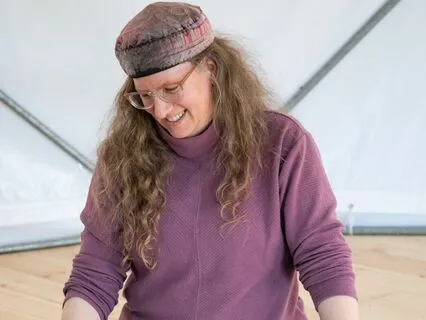
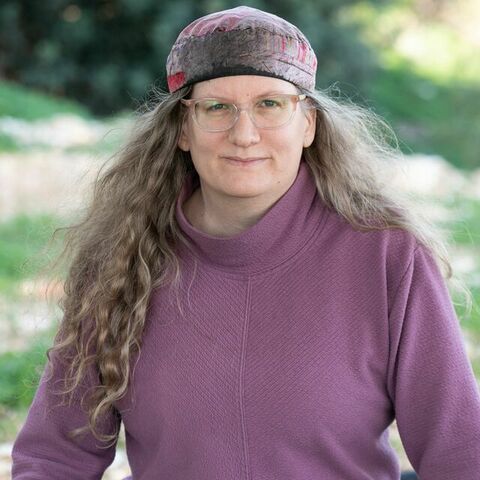
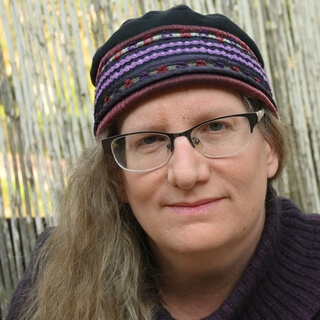
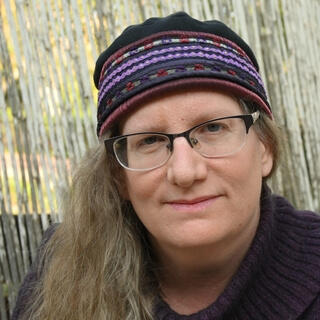
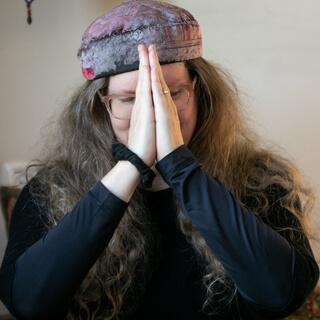
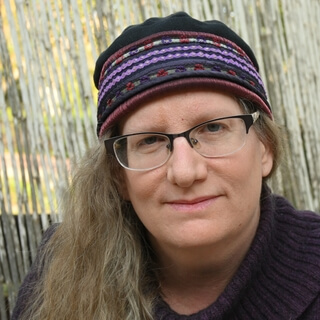
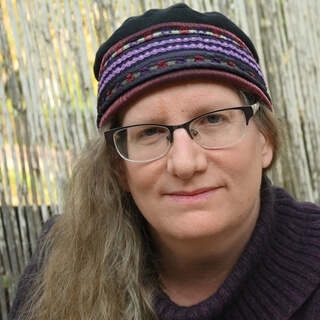
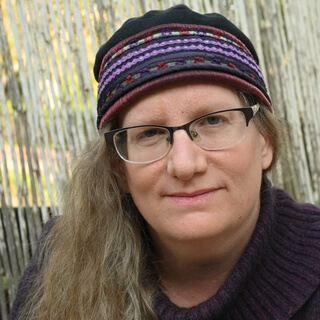
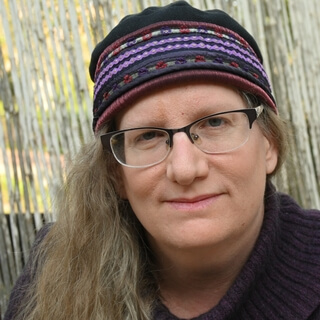
I am Rabba Hasya Oriel Steinbauer,
The founder and director of the Institute for Holiness,
And I'm delighted that you are joining us today.
Whether you are live streaming or through our Zoom channel,
Please also join on the YouTube channel or any other place on social media where you can find this live stream.
You can also find it later,
Both at Insight Timer and on our website in the blog section.
So we have traditionally been meeting every Sunday,
With God's help,
At 7.
30 p.
M.
Israeli Standard Time,
IDT.
We are about to embark on a new path together of changing the time in which we meet.
So for today,
We are live streaming at 9.
30 in the morning Israeli time,
Which means it's 2.
30 in the morning Eastern Standard Time.
It will be 11.
30 p.
M.
Pacific Standard Time,
And of course all the other time zones in the whole world.
We most likely will not keep it at 9.
30.
We are experimenting with the times because,
As you know,
The holidays,
The Jewish holidays are coming up,
The Chagim,
And there's going to be a lot of Sundays that get interrupted by the Chagim.
The Chagim,
I don't teach or use social media or any method during the festivals and Shabbat.
So it looks like that we might start meeting after Shabbat,
On Saturday evening,
Motzei Shabbat,
And for those of you in different time zones,
You can either join us before or after,
And we would be delighted to have you.
All this information will be posted later on the website and also social media,
And you're welcome to look up the information there.
So what are we covering today?
This is a very exciting moment for all of us.
This is the last of the parashiyot,
The last of the Torah portions from the Hebrew Bible,
Before the new year on the Jewish calendar,
On the Hebrew calendar.
So that means it's the last of the parashiyot,
The last of the Torah portions,
From the Hebrew year of Tash and Pegimel,
5783.
As we move into the new year,
Rosh Hashanah,
Meaning head of the year,
Coming this Friday night through Sunday night.
So we will change to the new Hebrew year of Tash and Pegimel,
5784.
So this is a key moment of us that we have made it this far.
I believe this is our 47th meeting.
I believe,
Yes.
So we've been meeting all year,
Covering all these Torah portions together,
And it's been an honor and a delight to be together.
So thank you.
So what are we covering today?
As you know,
Today on the calendar is September 10th,
2023.
It is the Chaf Dalet of the Hebrew month of Elul,
The 24th of Elul.
And we're covering the Torah portion,
Both of them,
From yesterday,
The Jewish Sabbath,
Shabbat,
Which was on September 9th,
2023.
It started the night of the 8th.
And that was on Kaf Gimel,
The 23rd of Elul.
And we are covering Nitzavim Vayelech,
Two Torah portions.
All right.
You can find all this in the book of Deuteronomy,
Chapter 29,
Starting with verse 9,
All the way through chapter 31,
Verse 30.
Just trying to see if Vayelech is included.
Give me one second.
So hopefully you've had a chance to look at this and study and read it a little.
Actually,
It goes on.
I take that back.
All right.
Let's see here.
Chapter 31.
I said chapter 31.
Chapter 3130.
No,
It continues until maybe it is 30.
Yes.
Okay,
I'm correct.
Chapter 3130.
Once in a while I'm correct.
Excuse me.
As you know,
If you've been with us this whole year,
We always begin with our covenant,
Our intentions for today's session,
Which I will show on shared screen shortly.
For those of you who have vision,
You can look at it and read it if you're joining us by live stream or video.
If you join us by podcast or audio or instant insight time or later,
You will be able to hear on the audio as I read these covenant,
These intentions out loud.
So I'm going to go ahead and share screen now.
For those of you with vision.
So we see this awakening,
This time together of sharing Torah and Musa mindfulness to be an act of radical self-care because we're taking this precious time of 45 minutes a day to learn a bit together and to engage in practice so that we can continue on this path together to take refuge in God,
Take refuge in the teachings of the Dharma,
Take refuge in the teachings of Musa,
Take refuge and community.
So that is our beautiful threefold path.
And so we say we're doing this as an act of radical self-care and our intention for today that we're doing this to strengthen our own souls in order to be of benefit to others in the future.
Now the second intention is that we're also doing this on behalf of others.
We say I'm doing this to strengthen my relationship to others,
So that I can be a better conduit of God's good to others when they need me.
And then the final intention the final covenant is that we're doing this to strengthen our relationship with the divine,
However we define that relationship,
Or however we define the divine.
We say this is something I'm doing to strengthen my relationship with the creator,
The one of all,
The universe,
So that I can be a better conduit of God's good to others when they need me.
So may we merit this today on our last learning of the Hebrew year of 5783.
It's an honor to be here together.
I'm letting go of the screen sharing and the cover note to move into what we're going to learn and cover today.
So as usual,
I will move through a summary of the Torah portion,
In this case two of them.
And then we'll delve into a focus of what we feel like we need to really get out of this this year,
Together to be present.
Okay.
So,
As I said,
It's a double parasha,
And we combine the Nitzavim and Vayelech together.
Now Nitzavim is all about the B'rit that we've actually been talking about and preparing in the two previous parashiyot,
The two previous Torah portions.
It's almost like we're with Moshe Rabbeinu,
Our great saba,
Our great grandfather,
Our great teacher,
And it's almost like we're in a salon together.
We're sitting maybe by the fire,
And he is telling us what he's going to tell us,
And he's not getting to it yet,
Or he might get to bits of it.
And this is how kind of people sometimes converse together,
You know,
I'm going to teach you about this and then they don't teach it yet,
They announce what they're going to teach.
So Nitzavim is all about the B'rit,
The covenant between God and the children of Israel,
B'nai Israel,
Our ancestors.
And the B'rit includes everyone.
This is important.
It doesn't include just the men.
It doesn't include just the leaders,
The Kohanim,
The priests,
Moshe and the Zekinim,
The elders,
The princes,
The heads of the tribes.
It doesn't include just them.
It includes everyone,
Women,
Children,
Everyone who's present,
Essentially,
Who are part of B'nai Israel at the time,
And even those who weren't there yet,
Including you and me.
So God promises to be our God,
And we promise to be faithful.
What do we know about B'rit,
Covenant,
And any relationship is that we can promise things.
And to be human means that you will break that promise,
Most likely eventually in your lifetime.
You will make mistakes.
You will not be faithful in some way.
This is to be human.
This doesn't mean that you are a failure,
Or that you are wrong,
Or that you were made wrong,
Or that you are soiled.
We do not hold or believe this way.
We believe that instead,
God,
Hashem,
Has given us something called teshuvah,
The act of turning and returning and doing repentance.
And every time we go off the derak,
Off the path,
Every time we sin,
Every time we make a mistake,
That is the ability to maintain that B'rit,
That covenant,
And the relationships in general,
Even with other human beings.
If we don't allow that ability to people to make mistakes,
Including ourselves,
And then to take responsibility for it,
To get back on the path,
To try to become the best version of ourselves over time,
We have to have that.
It's built into the universe,
Or we wouldn't be here today.
So,
That's it.
Now,
If we do what's right in the ideal form of this relationship of B'rit,
We'll enjoy blessings.
And if we don't do what's right,
What happens?
There's consequences,
Right?
There's consequences in all of our lives when we don't choose appropriate responses,
Wise,
Wholesome behavior.
In this case,
Following the mitzvot.
But this applies for all of our behavior throughout relationships and in the world today.
If we hurt,
If we cause harm and suffering to the earth,
To others,
There are consequences.
And they might not be immediate to you personally,
But they will be there eventually in your lifetime and the lifetime of others.
And so,
What is built in,
We can always change our ways.
Can we undo what we've done?
No.
We can't undo what we've done.
We have to take responsibility for that and face that that's going to be part of our curriculum now.
That we will bring in to learn from,
B'zrat Hashem God willing.
And that that's part of what happens when people are in relationship with you,
They have the right to remember what you did and forgive you.
So,
People don't have to be naive and,
Forgive me for saying so,
Stupid in the sense of like pretending you never behaved poorly.
As I said,
There are consequences for behavior.
And at the same time,
People are to forgive you,
Right?
Right?
And we forgive ourselves.
We forgive others.
So,
We can always change our ways by doing teshuvah,
By returning to God.
So,
Moshe emphasizes that the Torah and the mitzvot are close by and accessible to all,
Right?
They're not up in the sky,
Lo bashamayim.
They're not across the sea.
Asad sheinisha olam.
Asad sheinisha olam.
They're not on the other side of the world.
Okay?
As if you need some special person or some special power or a privileged class that will only have access to these teachings.
That is not who we are.
That is not Judaism.
That is not the Torah,
The teaching.
Okay?
This is something that we all can do.
And this is the path,
Right?
It's awakening to the path and realizing it is before us.
And we have this amazing gift to us to take that step each day to be on this journey towards holiness.
All right?
So,
Now switching to the other portion before I give you a little bit more summary.
Moshe tells B'nai Israel that he's 120 years old and his life is coming to an end.
And he will not be able to enter Eretz Israel,
The land of Canaan,
That will be the land of Israel.
So,
Moshe encourages the people.
He tells them not to be afraid that God will take care of them and Yehoshua will lead them,
The next leader that's been appointed.
And every seven years on Sukkot,
The festival of booths,
Coming up shortly,
In about a month,
There's a massive public reading of the Torah.
It's called Hafez,
Okay?
Very,
Very important event.
One that signifies something very deeply about the Jewish tradition and about the Torah.
That is democratic,
That everyone must hear and learn and have access to the text.
Very different tradition coming out of the ancient Near East,
Okay?
Now,
Such as that there really is,
Even though there's obviously different roles for like the priest and the leviim and the leaders and the zekinim and the elders and those who hold certain positions and eventually they'll be king.
And then what we have today,
You have rabbis and lay people,
Scholars,
Torah scholars and others.
Those are not and shouldn't be given more privilege necessarily,
As if they are only the ones that know the Torah and the keepers,
Right?
It's everyone has access to this.
And something to teach all of us and bring to the text and so forth.
There's a message from God in the Torah to all of us.
So,
This is quite amazing.
It's not as if we have a tradition of what you might call monastics of those who necessarily isolate in some ways in order to master these texts and learn them.
Although you do have scholars and rabbis who spend great amount of time with these texts,
More so than lay people.
But the difference is that there isn't just that class and then the lay people,
The rest of us,
Right?
Instead,
It's accessible to all of us to learn from the Torah and to have a voice.
So,
Finally God tells Moshe to write down the song,
The shear or the poem of the Torah and teach it to B'nai Yisrael,
Which is quite beautiful.
All right.
So,
Let me continue with a quick summary.
And then we'll jump in to what I want to emphasize today,
Which is important to all of us.
Okay.
Which is really a practice in the path.
There are some really deep lessons in these two,
Moshe,
That I think are difficult for all of us to face.
It's part of what we call in Theravada Buddhism,
In the Dharma,
The inarguables.
So,
There's some inarguables,
Such as that we're all born,
We'll all get sick,
And we'll all die.
You can't argue with those,
Right?
And then there's also this concept of pain and suffering,
Which is built into life.
Some people will say pain is inarguable,
That we'll all experience pain sooner or later.
But suffering is optional in the sense that they say you can choose your reaction,
Your response,
Instead of reacting.
You can choose your response so you're not suffering.
So,
You're not adding to the pain with your reactivity,
Which will just cause more suffering.
Okay,
Fair enough,
How you want to make the distinctions.
But this thing is called dukkha.
And it's more than just pain and suffering.
It's dissatisfaction.
It's a feeling that you didn't get what you wanted in life,
Or you got what you wanted and you're disappointed in it.
All these things that is just built in to be human.
And we learn this from the teachings of the Dharma that are so wise,
That really are going to inform a lot that we get from these two parashitas today.
It's that same,
There are inarguables here that we have to face and that Jews particularly really hold on to and struggle with,
Right?
And to this day,
You still have commentators who have so much reactivity,
For instance,
That Moshe dies and does not enter the land.
There's this sense of injustice.
It's not fair.
There's anger.
There is,
Yeah,
Anger towards God.
Like that's not fair.
You should have let Moshe in.
Okay,
So we're going to look at that.
We're going to look at what goes on in this Torah portion.
There's some great stuff.
All right.
So let's finish with our summary and then I'll jump in because I want to make sure I have the background of everything with you.
Give me one second.
Thank you for your patience.
Okay.
So,
As I said,
Every single Israelite is taking part in the ceremony,
Establishing the covenant with God.
Right,
Moshe alluded to this ceremony before,
But we actually don't know precisely when it took place,
Right?
What it consisted exactly,
The text never explicitly narrates it.
This is very common in ancient Near East texts.
They allude to ceremonies without narrating the actual performance.
And so we only get a description of the content of the agreement.
So in this ancient covenant,
It really is established by a ceremony.
There's proclamation.
There's writing of the terms.
There's blessing and curses.
There's erecting and sacrifice.
These are all very common,
Right?
As described even in Exodus 24 and Shemot and Varim 27,
Deuteronomy 27.
And then there are also acts that symbolize the fate of the violators.
Right?
What's going to happen to you if you don't follow?
So one of the key ways is the kareit,
Right?
This concept of bereit is that you get caught up,
You cut up animals,
Right?
There's animal sacrifice,
But there's a certain cutting up of animals to indicate that one will have a similar fate if one violates that covenant.
And then we are to pass through,
Right?
There's literally an overit.
I'm passing through between these pieces in order to symbolically say I've agreed to this relationship to this covenant.
It's very powerful.
We don't have to like it or agree with it today,
But we don't have the same type of ritualistic,
Really visceral ways of being in contract,
Right?
In relationship.
So that's what we find in Nitzavim.
And what else do I want to share with you?
And then as we move towards Vayelech,
It's this Moshe's last days.
As I said,
It will continue on to Ha'azinu,
The next Torah portion.
And really,
It actually is quite beautiful what happens here.
I want you to notice everything he does.
He takes steps,
Moshe himself,
Great responsibility here.
The midah of acharayut,
Okay?
Responsibility.
It's very important.
He takes steps.
He does a major address.
He prepares Israel for the future.
There's a conclusion of his death and people mourning,
But what does he do?
He announced his intimate departure.
He lets everyone know I'm about to die.
He appoints the next leader in front of everyone,
Yehoshua,
Joshua in English,
As his successor.
He writes a copy of the Torah,
Of the teaching.
He places it in the care of the priests and the elders and gives instructions for the regular public reading for everyone to hear and learn.
He urges the people to observe him.
He teaches the people a beautiful prophetic poem orally and then deposits a copy of it with the priest and then delivers a final blessing to the tribe.
Then he ascends and he dies.
Why do I say this is great responsibility?
I can tell you personally,
I lost,
Well,
My father went to the ancestors about six,
Seven years ago.
May his memory be for a blessing.
My Abba and my Ima,
Who is still with us,
Is heading towards the ancestors.
I can imagine,
I'm not God,
I don't know exactly,
But I can imagine about six months to a year she's going to pass.
And neither one of my parents,
Especially my Abba,
But right now of my mother,
Face that they are about to pass in a certain amount of time and didn't take responsibility of preparing everyone and making sure things,
Everything was in order.
There was almost this sense of denial is too strong,
But there was definitely aversion.
Aversion to,
Which is one of the hindrances,
One of the major obstacles to awakening.
That when we practice pushing something away instead of facing what's before us and what we're obligated to do to make sure that everyone's taking care of as best as possible.
And to pass on that ethical will and those teachings and what you can give before you return to the ancestors.
That didn't happen with my Abba and it's certainly not happening with my Ima.
We are trying to assist her along,
But this is something very powerful that I want you to take from this Torah portion.
As Moshe,
As a model of how we can behave if we are blessed to make it to old age,
He's 120,
How we want to head towards death.
Is that we want to take care of what needs to be taken care of right here and now to make it as easy,
Not easy and as in life is easy,
But like it with less harm and suffering and even more weight for the children,
Those who survive afterwards.
This is very,
Very important.
A lot of people don't talk about this,
How important this is.
Okay.
And I already talked about how the steps that he when he decided to give us a public reading,
How far reaching the significance is right.
This led eventually led to the creation of actually sacred scripture of what we call the Bible,
The Hebrew Bible,
The Torah today.
And it's the heart of Judaism.
And there's a real democratic character to this,
The biblical religion and its teachings and its demands with few distinctions between priests and lay people,
Laity.
And it calls for this universal education,
As I point out,
And I think that's really significant.
Okay,
I think we're ready.
I always want to give you so much but I have to limit what I'm going to share with you.
What is significant what's going on here.
So,
As I said,
There are certain in arguables in life that we're here that will experience pain and illness and among other things.
And then eventually we will pass.
And we it's up to us to kind of awaken to that reality of life as a human being.
So how we practice around this how we cultivate our meadows our soul traits or personality traits over time.
We're going to really cultivate wisdom,
And less reactivity.
And we're going to cultivate a really calm centered,
One that we call equanimity and metal cotton fish response to the world on a day to day basis,
One that we're going to cause less harm and suffering to ourselves and others.
And I feel like God is giving us a insight to this path.
Okay,
Like if we even look first.
That comes later,
And what we call him.
Yeah,
The prophet and the VFC are who the second idea right in hotels the exiled Israelites that they are God's witnesses we get this poem by God that says long ago I foretold things that happen.
I let you know,
Life,
And the end arguables and let you know that there's a certain way to behave.
And if you don't behave that way,
There are consequences or consequences for good things too.
But this is built into how Hashem made the universe right,
Because I know how stubborn you are right listen to this poem because I know how stubborn you are,
Meaning,
A lot of people with this path,
We won't want to will argue with the end arguables.
We'll try to avoid.
We'll try to pretend that we're different right we can spend our whole 20s and 30s very famously,
Not facing and seeing that one day we will die,
We will get sick,
We will have things wrong with us,
You know,
If we're privileged enough to have not experienced that beforehand there are plenty of people who do.
This is,
Therefore I told you long beforehand announced you things that will happen right as they happen,
That you may not say this right what is it what our ancestors would have said my idol caused them my idol cause this suffering my idol caused a bad things to happen.
My carved and molten images ordain them okay and what is our idol today.
We don't most of us don't have like a physical statue that we are blaming for our pain and suffering,
Right,
But instead,
What do we do we have so much ill will and reactivity,
Often,
Where we will we will avoid facing that.
What is our responsibility in this,
How much have we contributed to our situation.
And if we haven't contributed to the actual situation itself say it's like institutional like institutional racism,
Where it's really not in your power of control to change how you're being treated for instance,
If you're from a certain race,
Ethnicity,
Class,
Citizenship,
Refugee status,
Whatever it might be it,
You still have within you to choose your response to the situation.
And if it's going to cause you more harm and suffering as you go on.
You know,
And even Rambam and his code on to Shiva reminds us that and it's very dramatic language raises every person he says every man I'm going to change it call it down right.
Every person should regard her or himself the whole year round,
As if equally balanced between guilt and innocence.
So,
That language is very strong for most of us today but think back to what the Dharma is trying to teach us right this concept of karma which essentially means consequences so we walk around and how we behave is either going to have this negative consequence or positive,
Which is essentially a form of,
Are we guilty or are we innocent.
And he said goes on to say the whole world is on the scale.
Right.
We know this it's built into the very fabric of the world in the system.
We can't like think on a global level,
We can't just keep using fossil fuels and burning the world essentially and think that we could just go on living,
And everything's going to be fine.
No,
We're facing those consequences right now we're having extreme temperature sometimes are extreme,
You know,
Either way,
We're seeing a devastation of the land,
Whether it's by hurricanes or floods or fires forest fires and others you know this is it it's built into the very balancing of the universe.
This consequence,
Right.
So,
A,
He just wants us to be in mind that we walked we have the ability to walk through this life this path with mindfulness with practice on the path to be aware that we want to tip the scale towards repair and connection and wisdom to care for ourselves and others.
Okay,
So I love this about Ralph Cook right and he goes on to talk about the role of to Shuba I'm just going to jump in with little teachings here and there because I obviously have so much I want to share with you today.
So he goes there,
When people say this is from his texts and what text is this one,
Oh,
Or wrote touches Shuba okay lights of repentance.
And if you don't know who Ralph Cook is amazing and rabbi and teacher former and chief rabbi in Jerusalem.
When it was the mandate of Palestine from the British mandates okay so before the establishment of the modern state of Israel.
So he goes on to say,
And when people sincerely desire to come back to God.
They're held back by numerous hindrances.
And here's what I want to point out we have hindrances,
We have unbalanced me don't right.
We have sloth and torpor where we just get heavy or lazy or tired.
We have worry,
Right,
We allow worry to take over that whole movie that runs in our head that narrative.
We have the aversion,
It will denial I don't want to deal with this.
Right,
Unbalanced attachment right that isn't healthy.
And,
And we have one of the worst right which is doubt,
Where we just think ourselves unworthy,
Where we have too much humility too much on the back.
And so,
What's happening here we,
We just don't think we can be on this path we don't think we're worthy of taking responsibility of doing to Shuba God won't accept us the people that we hurt won't.
So we just don't act we freeze right that whole freeze run right flee,
And the whole behavior that we can do so rough cook is noticing this we're held back by numerous hindrances obstacles,
And he says such as confused thinking weakness or the inability those matters pertaining to relations between the human being and her his neighbor.
Right.
He said goes on to say these hindrances are a serious barrier barrier and they require complete mastery so my,
My would say the language they require us to practice.
Mindfulness practice on a daily basis over time.
If you want to call it mastery fine.
I don't like that terminology I'd like to we're just on the path.
Right.
And he goes on that this is how we will mend our ways and it's a beautiful teaching,
I recommend listening to it about how he says that if you start heading towards to Shuba you of course,
This rabbinic idea you will be assisted,
And it actually changes the,
He takes it from the Torah,
The language of,
Of,
You will turn towards Hashem add the Hashem verses the other pursuit that comes to say,
You will turn a Hashem on to towards right that it's also toward but different understanding so he says when we first go about our own on this path this desire to repent to return to God,
It'll be this really toward God,
And then God will assist and bring us to this next stage of a really will graduate he says essentially right if we continue in practice from to Shuba add Hashem to this to Shuba Hashem.
Hashem.
Okay,
So it just,
You know the basics right.
And one of the most famous statements a call heaven earth to record this day.
Right,
I set before you life and death,
Choose life,
So that you your seed may live.
And so the rabbis are perplexed by this they say,
How can I choose life so that I should live right it's it's contradictory to them.
I don't think we have to get that involved in thinking too much about this does it say that when we choose life.
That means we're choosing the path that means we're choosing the practice,
It means we are choosing to cultivate to be awake to be mindful to be practicing and taking refuge and community,
And that in itself is that so that we may live right.
Not only that we may live but we actually will thrive,
Because we'll be caring for ourselves and bringing God's good to others.
All right.
Um,
I think that's how I want to end with this here today.
If there's one more thing.
I'm obviously a lot we could say more about to Shuba.
And that we only have so much time.
The final thing I want to say is how do we witness,
Remember I told you Moshe was so full of responsibility Moshe Rabbeinu Moses,
Where he really gets sets up and gets ready for passing and assist those in the next generation.
He all along,
It's not just as if he hit the rock but more so attributed the water coming out to himself and Aharon.
He all along has been slowly aging,
Like we all do.
And I don't want to call it deteriorate because that's,
That's not it,
But we change and we age and with that comes.
And sometimes inability.
And I would say not just sometimes eventually,
If you live in old age,
The inability to do and behave and think in the way that we could.
When we were younger 20s 30s,
Whatever.
Right.
So,
And that's very much pointed out to us he's very much a model for our own practice of stop arguing with the inarguables that we are here.
We have to make do with what our life is right here and right now.
Not try to run away.
Right.
One day at a time,
Be in community,
Commit to the path and the practice and accept,
Accept the inarguables.
So this is what he eventually models to us as painful as it is to him and I mentioned how as a culture in Judaism,
There's a lot of arguing with the inarguables.
So for instance in Devarim Rabbah,
They go on to show how Moshe was able to fly up to the heaven like an eagle.
And then he now is just asking to cross the river and he's not able to cross the Yarden.
So we see this as negative and as a demise,
But this is for me just the reality of life.
This is the teaching.
This is the Dharma.
This is just the reality of life,
I might have been able to soar up to the heavens like an eagle.
And now I have to ask if I can even cross the Yarden and I won't even be able to write we all have that thing that we wanted to do or could we do that we can.
Accepting the limitations of being a human.
Before angels would tremble in fear before Moshe.
And now he says I'm afraid of the anger and wrath.
That's great humility.
That's unbelievable to be able to know that you are afraid and to be able to say it.
I think this is great saging right great wisdom that's being imparted to us.
Then he goes on to say,
Moshe was a wise man who could beat a city of mighty people and bring down strength from heaven and now the power was taken from him and given to Yehoshua.
I don't think it was taken from him.
He participated.
It's time.
I'm 120 years old.
Am I really going to cross that Yarden and lead the people.
You're arguing with the inarguables,
If you demand that,
Or believe it.
Moshe had to go through his own difficulty of arguing with the inarguable.
We witnessed that he's supposed to be a model to us that he eventually stops arguing.
He eventually accepts.
And not only does he accept,
He models for us great responsibility of how we should behave.
If we are blessed and privileged to live into old age,
What we can do for the next generation.
So that passing is one that is with the least amount of harm and suffering to everyone involved.
So,
With that,
There are obviously much more teachings about humility that we must all accept the inarguables in life.
But I only can cover so much.
So let's move into a short mindfulness meditation practice together to work on acceptance.
And we do this with a daily sitting practice.
It doesn't have to be sitting if you live with the chronic pain or pain in the low back and it's just uncomfortable to sit,
Please feel free to stand in a strong kind of mountain pose.
You can sit back and forth or lie down with eyes open so you stay awake and alert.
If you're seated like me then you come to the edge of the chair so that you really feel held by Mother Earth.
Allow your hands to rest wherever is comfortable.
I invite you to close your eyes if you have vision and you feel safe and comfortable to do so.
Otherwise,
I invite you to lower your gaze so that you just limit the amount of visual stimuli.
And then we tap into the full body breathing by inviting the gift with mindfulness of oxygen from God.
We say inhalation and exhalation.
Now inhalation this time raise your shoulders.
And exhalation,
Let it go.
Feel free to make sounds here.
This is a real joy to take in this oxygen.
God willing,
We all have clean enough air.
I know many of us do not.
And finally the last inhalation to really invite yourself to fully arrive and be here,
Right here and right now in this moment with me.
Inhalation and exhalation.
Now,
As you may know,
And for those of you who are new and don't know yet,
So much of our mindfulness meditation practice is about sitting with what is.
And over time,
This bearing witness without reacting,
Watching our breath,
Watching our thoughts come and go,
Watching our emotions come and go,
Watching the sensations in our body arise,
Have a certain shelf life and pass.
All that practice on a daily basis,
Whether you sit for five minutes or 45 is building that spiritual muscle for you to be able to bear witness without reactivity.
And that is so much of the wisdom of the path and practice to make this world a better place.
So I invite you now,
Invite you for about five minutes of silent meditation,
Where to really notice what arises,
Befriending yourself.
And if anything gets too challenging for you,
Whether it's storytelling in your own minds,
Or say you're having some pain in the body.
Before you respond.
Ask yourself,
Can I be with this.
What would be an appropriate response in this moment.
We move to silence.
From time to time your thoughts will wander.
And when you notice it simply just bring them back to the present moment.
With our teacher Joseph Goldstein says simply begin again,
It's like to show that you get this opportunity to return to simply begin again.
One more minute of silence.
Keep your eyes shut.
Gently and slowly open them back up to allow the life back in.
If it's your practice to bow give yourself a bow.
Thank God to thank yourself for your practice.
Thank me and your other teachers for your practice for the Institute for Holiness.
Thank you to the community of the Institute for Holiness for us gathering and taking refuge together.
As I said at the beginning I am Rabbi Chassi Oriel Steinbauer the founder and director of the Institute for Holiness.
So grateful to practice and learn together today.
We will attempt to make an announcement when the next time will happen.
Because if you look at the calendar.
The next Yom Rishon is Rosh Hashanah.
And even Erev Shabbat and Erev Shabbat are both Rosh Hashanah.
So we will not be meeting on Saturday evening Israeli time.
We will not be meeting on Sunday.
We might be able to meet Sunday after sundown here.
So I will see if we are either going to meet Sunday after Rosh Hashanah is done here in Israel.
Or if it will happen on the fast of Gedaliah.
Which is the psalm the next day on the third of Tishrei.
The Hebrew month of Tishrei.
So we will see.
I will make an announcement and let you know.
Do subscribe so you can learn and gain the updates and information.
So grateful again for the sit today.
And I look forward to being with you soon.
In the meantime I want to wish you all a sweet and delightful happy new year.
May you just really be present for it all.
That is my wish for you.
Take care.