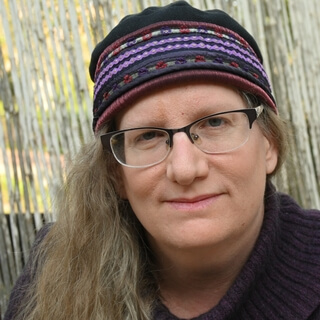
Welcome to Awakening Torah Musar Mindfulness.
Allow yourselves a minute to settle and arrive.
We will begin soon.
Welcome,
Baruchim Habaim,
To Awakening Torah Musar Mindfulness,
Where we meet every Sunday,
B'ezrat Hashem,
God willing,
At 7.
30 p.
M.
Israeli Standard Time,
Usually 12.
30 p.
M.
Eastern Standard Time,
But for one more week,
Not the case because of daylight savings.
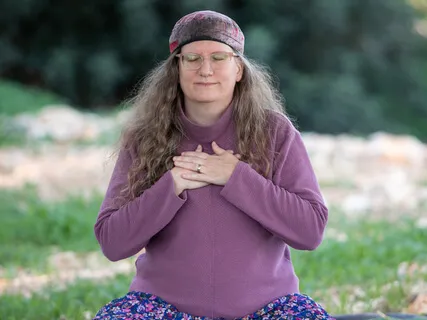
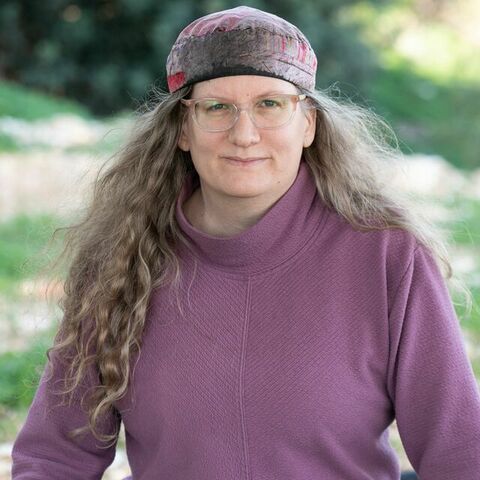
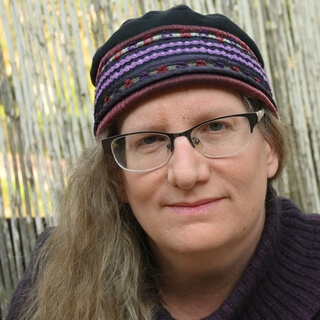
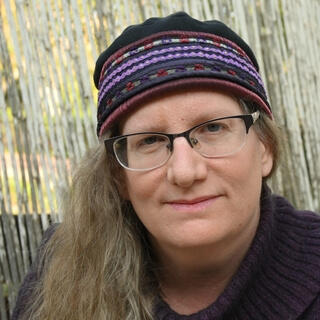
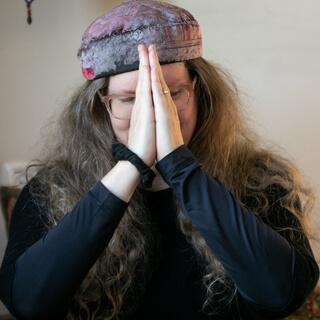
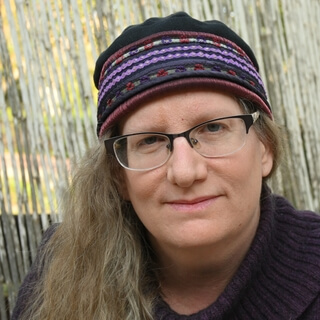
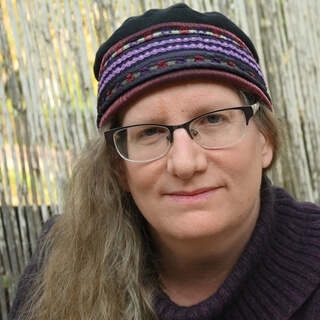
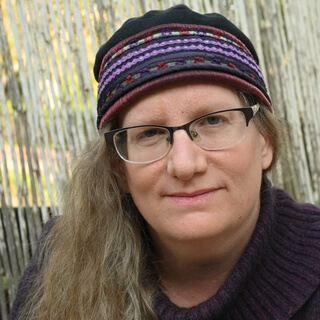
I am Rabbi Chassio Uriel Steinbauer,
The founder and director of the Institute for Holiness,
Kehillat Musar Mindfulness,
Delighted to have you today.
Today is Sunday,
March 19,
2023,
And we,
Of course,
Will be covering the Torah portion,
The parasha,
That took place yesterday on March 18,
2023,
Which was Kloph Hei,
25th of Adar,
The Hebrew month of Adar,
And the year was in the Hebrew calendar is Tafshen Pei Gimel,
5783.
So we're delighted to have you.
The parasha was Vayak Hel Pekudei,
A double Torah portion,
And it was the two parashiot at the end of the book of Shemot.
So we finished the book of Shemot in addition to these two parashiot.
Of course,
We never finish learning,
But this round,
This year,
We have finished Shemot and we say,
Chazak,
Chazak,
V'nit chazek,
Is,
You know,
Strong,
Strengthen,
Strengthen,
May we be strengthened by this learning and may we return to it and strengthen each other and what we can learn and get out of this together.
I'm delighted that you're here.
Whether you are live with us on Zoom or live streaming on our YouTube channel,
Please subscribe.
Join us also on Facebook,
Twitter,
LinkedIn,
And of course our website at our blog.
You can gain all the information you need to join us weekly in this project where we take Musar from the Jewish tradition and mindfulness from the Dharma of Theravada Buddhism and gain all that we can of insight and awareness into the weekly Torah portion to learn from God and our ancestors this path towards holiness.
So let us begin.
We always begin with our kavanot,
Our intentions for today's session,
Which are always the same.
And so part of the task in this practice of Musar mindfulness is what are you going to bring to this right now in this moment for it to be new,
Mit chadesh,
Right?
How are you going to renew this since it is something that you say and pray every week with me?
So let's try it as an experiment.
All right,
Bringing yourself fully to this moment.
For those of you who are not watching visually but are listening on audio or on our podcast,
I say that we are doing an act of radical self-care right now by engaging in this learning and mindfulness meditation that we will engage in later.
And that we say this is something that we are doing to strengthen our own soul in order to be a benefit to others in the future.
We're also doing this to strengthen our relationship to others so that we can be a better conduit of God's good to others when they need us.
So we can bear the burden with someone.
And the final is that we're doing this to strengthen our relationship with the divine,
Whatever the divine may mean to you.
This is something where we really want to be an excellence life affirming conduit of God's good to all sentient beings everywhere.
So may it be so may we merit this today in our practice and in our learning together.
So today's session is actually an honor of Ahava Bat Avraham Vassara,
Ahava Steinbauer,
Who was injured pretty severely in a major auto accident here in Israel,
And did some recovery and got some help at Rambam Hospital.
And so this session today is in her honor that we may all pray for her full health and healing and really bring the merits of this learning together to a speedy recovery.
And for anyone else out there too,
Who has suffered from anything in the past week.
So let's jump in this parasha,
What happened in these two parashiot.
There are far parashiot that in the book of Shemot that cover the building of God's sanctuary,
The Mishkan.
And these two are surely part of those two.
And they're very important in the sense that you're going to see here what Rambam calls one of our greatest parashanim,
Our commentators,
Rambam.
He really feels that the whole book of Shemot,
The Sidra,
Is really about ge'ula,
About redemption from the galut,
From the exile,
Both physical and spiritual,
Being a slave in Egypt,
And then from yitziyat mitzrayim,
Where we still were very much caught in our own trauma and slavery.
And then to matan torah,
The receiving of Torah,
Where there might have been a physical ge'ula,
There's a physical redemption that we are out of slavery,
Physically out of the land of Egypt.
But there still wasn't that spiritual,
Psychic,
Mental,
Full health,
Heart and health and being a ge'ula,
Redemption that still needed to happen.
So it's like on this path,
Right?
And at the same time,
We move from matan torah to what we're going to experience in these two parashiot,
Which is known as hakamat le'mishkan,
Right?
Ha'mishkan,
The setting up of the sanctuary.
And here,
You could fully say that the people have found a physical home,
They have built their,
They're working on their interior world at the same time as building their exterior world with the mishkan.
And this has helped to,
With the ge'ula,
Both physical and psychic,
Mental and spiritual,
Full health and healing,
In the sense of really returning to the roots of who you are.
And we'll talk a little bit more about this,
We'll jump into it a little deeper.
But this is what happens here.
So first,
Moshe gathers B'nai Israel,
The children of Israel,
The Israelites,
Our ancestors,
And teaches them first about Shabbat.
So you may be wondering,
What are we learning about Shabbat when we're building the sh'mishkan?
Because we often learn what is Shabbat first from creation,
Right?
That it means shin betav,
Which means to cease.
It doesn't mean just rest,
It means you are to cease.
You cease what you do during the six days,
The week,
On Shabbat.
So here,
We learn that we are going to cease all the type of labor that you witness in building the mishkan.
This is very important.
It teaches us what is Shabbat,
Right?
So that's the first thing.
Then Moshe asks our ancestors to donate supplies to build the mishkan,
The sanctuary for God and community.
And they are so generous with this joyous,
Open,
Generous heart that they donate more than what is needed.
They keep bringing and bringing and bringing.
And then we learn about all the keyleim,
All the different vessels that are built and put into the mishkan and around the around the roofs and the walls from the aron,
The ark and the shulchan,
The table and the menorah,
Which is known as techora,
The only kli vessel that is called that.
And the mizbachot,
The altars,
All built according to what is commanded to Moshe.
And the Torah counts out all the different supplies that were used in building this to a tee.
And there are special pieces of clothing for Aharon,
The high priest,
The kohen gadol are created in the simpler uniform for the other kohenim.
And then on the first of Nisan,
Which is coming up,
The zvart Hashem on Yom Hamishi on Thursday,
In here in our parasha,
It's almost one year after Yitzyat Mitzrayim.
So keep that in mind.
It took one year of physically leaving Egypt before we have built this mishkan and finished it,
Right?
One year.
So if you're ever feeling impatient about leaving your own slavery,
Remember,
It's slow and it took one year for our ancestors to just build this,
Right?
The Hakamat Hamishkan.
So the exodus,
The mishkan is complete.
Everything is done again,
Exactly as Hashem,
God commanded it to Moshe.
Moshe sets up the walls and all the vessels.
He places the luchot,
The tablets that he came down with for the second time into the ark,
The Aharon.
He burns the ketorah,
The incense,
The samim on the golden mizbach,
On the golden altar.
And finally,
Just like at Har Sinai at Mount Sinai,
A big cloud appears and covers the mishkan and God's presence fills it very similar to what happened at the top of the mountain.
So this is a brief summary of what we witness in this parasha.
And I'm going to move into specifics now of what we really want to focus on for our own learning and practice.
So the first thing that we need to realize and our ancestors point out to us,
The parashanim,
Is that the building of this mishkan is really tied to creation.
Similar language,
Like the building of the world,
The mishkan is like building a new world.
And similar to us and our Musar mindfulness practice and what our ancestors had to simultaneously work through,
And that what we do today is that we're constantly in creation with God,
Building our interior world,
Our new world,
Daily with our deeds and our behavior,
And similar with our ancestors,
Especially with them moving from a galut,
From exile to geulah,
To redemption,
There's a constant internal building of an internal world,
Practicing just like we do today.
So if you look at the language that comes in chapter,
If you're following along,
I want to make sure that you study the right chapters and pesukim,
The aliyot,
The chapters begin in chapter 35 verse 1 and go all the way to chapter 40 verse 38.
So if you want to follow along,
We're moving into chapter 39 verse 42 to 43,
Where we are told that just as God had commanded Moshe,
That is what our ancestors did.
All their service,
All their work is exactly as commanded to Moshe.
And then it goes on to say that,
And again,
The verb to see is here.
Moshe saw all the work,
The labor that our ancestors had done.
And he may ask,
So we are talking about,
And I,
It's done exactly as Hashem commanded.
Right.
That's how it's done.
And Moshe blessed them.
So think about Hashem,
God creating the universe during the seven days,
Six days of creation in the book of Beir Sheit at the beginning,
God commands with voice,
The world to begin to make itself into form,
Especially one that can be inhabited by animals,
Humans,
And other sentient beings.
And God blesses them.
God sees that it's good.
God sees that it was done exactly as was commanded and told and blesses.
So this is where we are seeing here that why are we being told so specifically and repetitively that B'nai Yisrael,
Our ancestors,
The children of Israel did exactly as was commanded.
So this is where you want to be very mindful that this is a beloved,
Safer,
Beloved book,
Texts handed down to us and that our ancestors want us to know something from it and learn from it.
And especially if you believe that God is part of the authorship of it,
Then God wants you to know something.
Right.
And the thing that's beautiful about our tradition is that you can look at something and what is so key is how you look at it.
What do you bring to it?
So for instance,
Say I was of the melancholic bent,
That was my temperament,
And perhaps I had an imbalance in betrothal and trust,
And I'm looking for what's wrong,
Right?
I might say here,
Oh,
They kept repeating that they did exactly as God commanded because we would assume that they didn't.
We would assume our ancestors sinned again,
Just like they did with the golden calf,
And that they wanted to be very clear that they didn't mess up again and that they didn't do this.
And this is why we're being told this exactly,
That they did.
Okay.
That's one way that someone with who they are,
Their present social location could bring to this text and how they could see it.
And that's valid,
But I don't think that that's what's going on here.
What I think is going on here,
And this isn't much about the temperament of myself,
Which is quite sanguine and that giving the great mitzvah and a practice of mine to give the benefit of the doubt,
But also see the beauty of this.
We are being told that our ancestors did it exactly as commanded in order to show how much God and our ancestors loved our ancestors who did this.
We love and recognize what work and heart and soul they put into this.
And we recognize that they had that same pure intention when they started giving their earrings and gold and told,
Commanded Aharon to build the golden calf.
The deed was incorrect.
The deed was not commanded.
The deed was not wanted or acceptable by both God and Moshe,
But the people and their love and service and what they were seeking to have their leader.
And that was pure intention.
And so we see now in this Torah portion,
That same pure intention.
And this time,
Because there's a map,
There are orders,
There is a boundary and a design that's being commanded and told that they can follow and put that rat zone,
That will in the correct key wound in the correct direct,
The correct path,
The correct pathway.
It ends up being exactly how God commanded and what God wanted.
And of course,
Because now it's,
There's a framework there's there it's been laid out.
These are the rules.
This is what I want.
And they bring and they bring,
They bring with their hearts and they bring too much,
Bring and bring and bring and they give and Moshe has to stop it.
So a barb and L from Portugal 550 years ago brings that.
He sees that it's told that they did exactly as God commanded because they did it all for the right reasons,
Right?
That they were serving God,
That they were fulfilling the meat of the folks.
Right.
I don't think it's only the right reasons,
But they were finally having the right path and action for their hands and their deeds,
Right.
Of what they were going to build.
So that's part of it.
I really think the golden calf also had right reasons,
Right intention,
But it was the wrong deed,
The wrong action with the hands.
Correct.
So this Mishkan,
We are told we labor and labor,
Right?
We do service to Hashem six days a week,
Right?
And alignment creation.
And then there's Shabbat.
Shin Bet Tav.
Shin Bet Tav.
We cease,
We cease,
We rest.
So beautiful as a lesson,
Because when we continue to act,
And especially because what ends up happening is we act without purpose or direction,
But particularly direction,
We end up building things like the golden half.
We end up causing harm and suffering when there's no ceasing of human creation.
The creation is a partnership with God and always has been and continues to be as we build this inner world.
And the same thing happens in our Musa mindfulness practice.
If we did this every single day for seven days,
And didn't rest from our building interior world and working on Tikkun Hamidot,
And trying to bring God's good to others,
We would not only burn out,
We would definitely end up building something awry within,
Because it's almost like a idol worship.
It's almost like a worship of the creation and the building and the spiritual practice of the human being.
It is not God centered.
It's not in creation with God.
The God has brought this gift of Shabbat to teach us that we too must stop our spiritual practice of trying to correct and fix,
Trying to be with and not react.
All the things that happen on our sitting cushion and on our Chishbon Hanefesh journal,
Our accounting of the soul journaling,
And in the VAD practice and with our Chavruta,
Our learning partner,
And in our sangha.
All this is beautiful and part of our Avodah,
Our service,
And there must be a ceasing.
So I really feel that this whole like Rambam wants to open us to this concept that Shemot is this book of Geula,
Of redemption.
It's very important that we begin to see how much this wholeheartedly,
Like our ancestors bringing all the gifts wholeheartedly.
This so much ties to how we can see our personal lives,
Our community lives,
The larger nation lives,
And the world,
Right?
And all sentient beings.
So what happens in this journey in the book of Shemot,
As I said,
We have Yitzyat Mitzrayim,
We have the exodus from slavery from Egypt,
Okay?
You've been taken out of slavery,
You've been saved,
There's redemption.
What is it that you've been saved?
You physically are removed from slavery.
You can imagine what you are walking away with,
Trauma,
Communal trauma,
Transgenerational trauma,
Intergenerational trauma,
That is with you.
So you thank God you're physically alive,
You physically have been saved,
But your soul will need so much refuah shlema,
Full health and healing over time.
And so with time,
With healing,
And with matan Torah,
The giving of Torah is a gift from God,
It's really about a gavul,
A big boundary about creating a rule of law,
So that we can feel safe with each other,
So that we can expect rules and laws to contain human behavior when it doesn't cease,
When it doesn't do a Shabbat,
When humans begin to think that they are God,
When all those behaviors that we know humans unfortunately are capable of,
The matan Torah is there to say,
This is how you live.
And these are the consequences,
The karma,
When you choose to cause harm and suffering from others that you will face as consequence.
That is matan Torah,
It ends up creating a spiritual healing,
A way for our soul to really start moving through the trauma to move towards resilience,
Because we feel safety within the laws and the rules and the boundaries.
And that's so important to our healing,
Both at the individual level and the communal level,
The national level and international level.
So then we move or you know,
We could always be going back and forth,
But we're moving as we are in the book of Shemot,
The book of Exodus,
To the Hakamata Mishkan,
The setting up of the establishment of the Mishkan,
The sanctuary for God and community.
And this is really the resilience builder,
Because now we are not just receivers,
We are givers,
And we are building and doing with our own hands.
We are suddenly no longer slaves that are being beaten and commanded to just do for some other nation and some other emperor.
We are a free people who are just full of joy to be safe living with the rule of law and these boundaries and are building something that's the benefit of everyone in the community.
And it's really building this both external world and internal world through the process.
And that's where full resilience happens.
And that's quite beautiful.
That's where you finally feel I am healed.
I'm being able to be fully present to bear the benefit with others,
Bear the burden also with others,
And to move through this beautiful theme of ge'ula,
Of redemption.
Redemption means a lot of things to a lot of different people.
In our traditions,
It means saving someone or something or being saved.
And it could also mean regaining something that was once yours.
I think about it.
What has always been ours?
What did Hashem give us when we were created?
There is that nikudah kedushah,
There's that holy point that Hashem touched that's in all of us that were created in the likeness and the image of the divine.
And that's in all of us.
It's pure.
No one can take it away.
No one can soil it.
It is part of us.
And it's part of us.
And that even slavery can break bones,
And even feel like it's destroying your soul.
But deep inside,
There's always I know what I once was.
And for those who are able to hold on to the resilience with the trauma,
They are able to tap into that and survive the most boring of experiences.
So basically,
We want to apply this to our own practice,
You want to think to yourself personally,
What,
What is the redemption in my life?
Where?
What and when was my yitziyat mitzrayim?
When did I leave my Egypt?
What was it?
What was my Egypt?
And what was my receiving?
What did I receive as a gift to get me through that trauma?
Right?
And finally started making me feel safe?
What was my matan torah,
My giving of Torah as a gift from Hashem?
And then what is my hakamat ha-mishkan?
What is my establishing of an inner sanctuary and external sanctuary,
Where there's that full health and healing,
Right?
True geula,
True redemption?
What where when was that for you?
Or maybe you're in it right now?
Where you're really starting to feel?
I have resilience,
I'm no longer reacting to the trauma.
So this is quite beautiful.
And I will just conclude before we move into our mindfulness meditation,
With this theme in mind,
That every day,
We who are observant religious Jews,
We pray for a complete geula in the future,
We pray for a complete redemption in the future.
And so that that signifies that that therefore tells us that we feel that we are still missing a complete geula,
A complete redemption.
And so we have to then question what are we still missing?
And what kind of geula,
What kind of redemption are we asking for?
So I want to say that each of us can have our own individual redemption,
And even sometimes a people.
But to be all honest with you,
We don't have full redemption of on the communal level on the national level,
The nation,
And surely worldwide,
Universe wide of all sentient beings,
Right,
Where we really are asking for that there be no harm and suffering,
Right,
That all beings be able to live free from harm,
Free from suffering,
That they feel safe,
That they feel seen and loved.
There's something quite,
When we pray for a future redemption,
That is what we are praying for.
So with modeling our ancestors voluntary effort and joy and contributing to this sacred cause of building the Mishkan,
And this is our practice that we and our joy and being together in our practice,
Building this sacred moment,
Taking refuge in the sacred practice and path together.
This is where we are.
And I invite you now to assume your posture that you normally readily assume and to engage in mindfulness meditation.
So for me,
I'm going to come to the edge of my seat as usual,
I'm going to really ground my feet.
I do have a past of both personal trauma,
But also communal,
Transgenerational.
And so it's very important to ground my feet so that I feel that I'm safe and here in the moment.
And so I encourage you to do the same if you have any trauma in the present or in the past.
For some of you,
You'll need to stand or do a walking meditation or lie down,
Do what is most comfortable for you.
And I invite you to put your hands where they are comfortable,
Where you can rest them with ease.
Some people like to hold their hearts,
Their hands on their chest,
I invite you to do what feels most natural,
Most comfortable right now.
I will lead you in a mindfulness meditation.
Now,
If you're new to meditation,
Just follow my direction.
I invite you to close your eyes if you have vision and you feel safe and comfortable.
Otherwise,
Lower your gaze.
And we begin with three deep cleansing breaths,
Inhalation,
Inviting awareness and exhalation.
Letting go of any tension in the body,
Smile,
My emerge on your face,
Inhalation,
Inviting insights and exhalation.
These you're beginning to arrive,
You're beginning to settle.
And finally,
One beautiful inhalation,
Our last one,
And exhalation,
Letting go of anything that is pulling you from this present moment.
If you're having difficulty letting go,
Simply acknowledge it.
No need to push it away.
The more you try to push it away,
The stronger,
The stronger,
Whatever it is will stay on.
So if you might be having some strong feelings,
Or sensations in the body,
Emotions,
Whatever it might be,
Just acknowledge it.
Just say to yourself,
I see you,
I'll visit you soon.
No need to over identify with it.
Just being with whatever is here.
And allowing your breath to settle to its own natural rhythm,
Inviting a sense of ease and comforts,
Noticing whatever is here for you right here and right now.
So much of redemption is recognizing when we have not befriended ourselves,
When we haven't forgiven ourselves,
When we are our own worst critic,
When we cause more harm and suffering with our own thoughts,
Sometimes even deeds and emotions than somebody outside of ourselves.
We often move through the day judging ourselves the ways we feel that we are falling short.
Think about our ancestors,
How much they fell short in building the golden calf and how much they knew it.
It takes so much self forgiveness.
It takes so much to Shuvah,
Returning to that Nikodah Kedushah,
That holy point within knowing that you are created in the image and likeness of the divine,
That you too deserve to be loved because you are a child of God,
Each and every one holy soul.
Think about the courage and the support our ancestors must have given to each other to be able to come with an open joyful heart to give gifts to build the Mishkan after feeling that they had fallen so short.
So we begin this practice by bringing to full awareness any self judgments that we have.
So we can just see and release,
Taking some moments to become still,
Relax any obvious areas of tension,
Arriving fully in the body and gently ask yourself,
Is there anything between me and being at home with myself?
Is there anything between me and being at home with myself?
You can gently name them judgment,
Fear,
Pain,
Whatever might be there for you.
Pause and see what comes up in your body and mind.
What is the felt sense?
Any tension,
Tightness in the stomach or chest?
What stories of wrongdoing have you been telling yourself?
Continue in this way until you've identified whatever self judgments you have been carrying.
Explore as deep as you can.
Whatever part you feel is an unacceptable part of you that you have felt is unforgivable.
Allow yourself to feel the aversion that you have towards yourself.
Simply acknowledge with whatever arises and offer it forgiveness.
You might gently place your hand on your heart and whisper forgiven,
Forgiven,
Or it's okay.
Recall your intention now not to push yourself out of your own heart.
Allow yourself to inquire again,
Is there anything else you're holding against yourself?
You might mentally whisper,
I see how I've caused myself suffering.
And I forgive myself now.
In the scan by offering yourself a prayer or a blessing,
A wish for your own peace of heart.
And if there has been an opening for you,
Allow yourself to rest in this new awareness,
In this new spaciousness,
Whispering words of Hakarata Tova,
Recognizing the good,
Awakening to the good and giving thanks,
Practice and gratitude.
So thank you for the spaciousness.
I offer my gratitude that I can forgive myself.
I offer the gratitude for God and whatever other help there has been of taking me out of my Egypt.
I offer gratitude for God giving the Torah and our communities and nations for supporting rule of law so that we feel held safe and seen.
I offer gratitude,
Moving from trauma,
From Galut,
From exile to get to redemption.
Repeat after me,
I offer gratitude for Hakamot,
For the establishment of the Mishkan of my inner sanctuary of my soul,
Building the inner world along with this world that we continue to build and be in partnership and creation with God,
Allowing whatever gratitude you have in this moment to naturally arise.
I offer gratitude to all the sentient beings,
Sky,
The sea,
The air,
The water,
The fire,
The earth,
Who bless me every day of my life.
With gratitude,
We remember the care and avodah,
The labor,
The service,
The generations of elders and ancestors who came before us.
We offer gratitude for the measure of health and safety and well being that we've been given for the family and friends and community.
We offer gratitude that Ahava,
Bat Avraham Vesara survived the car accident and she is here with us to continue to be of service to be in community.
May we bear the burden with her.
Allowing yourself one minute of silence.
If your eyes have been closed,
Please gently and slowly open them,
Allowing the light to filter back in before we join each other on the sacred Zoom space online or live streaming or watching later on the video or listening to podcasts and audio.
Thank you for your practice today.
Thank you for taking refuge in community and the teachings of Torah and Dharma.
Thank you for taking refuge in the teachings of the Buddha and the teachings of Hashem,
The Torah and our ancestors.
Thank you for our teachers.
Thank you to all of you for supporting the Institute for Holiness with your donations and sponsorships so that we may offer public offerings like this weekly.
Please give what you can.
I hope you felt movement,
Patience,
Spaciousness and opening towards self-forgiveness.
May you continue to practice this meditation every day this week.
Very important that we begin to move towards our own redemption of love and forgiveness before we can move towards Nisan and Passover,
Pesach,
To make a communal redemption and a world redemption.
I look forward to meeting with you next Sunday,
B'ezrat Hashem,
Which we will be returning to the same timing of 1230 Eastern Standard Time,
730 Israeli Time.
And you're welcome to find whatever you need at our blog or on our channel.
Thank you.
Be well,
Be safe,
Take care of others,
Care for yourself.
Thank you.