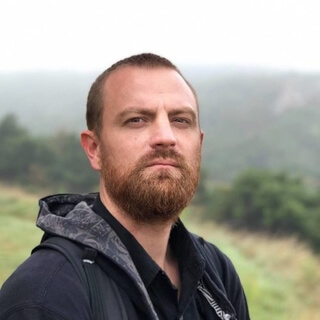
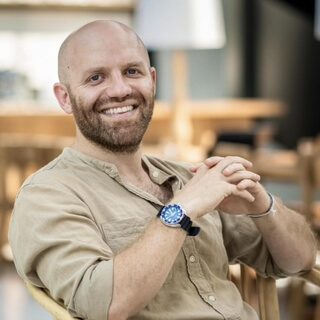
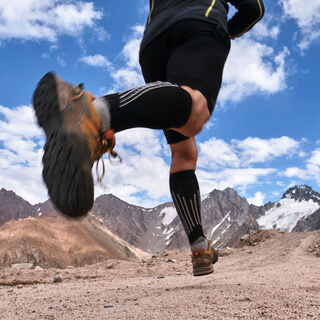
Today's guest is Ivan Zorich.
Ivan is a movement mechanic,
He's a strength and fitness trainer,
And he is the owner of space here in Koh Phangan,
Thailand,
Known as Momentum Koh Phangan,
Mixed movement arts.
I met Ivan here in Thailand,
If you follow my story from episode episode,
Back in March I had to rush back here during the height of COVID.
I came back to Thailand from Africa with my ex-girlfriend to be quarantined in a safer place.
And I met Ivan because he hosts Brazilian Jiu-jitsu classes at his space,
Along with other kinds of movement classes,
Which I found fascinating.
And about a week before we had this conversation,
He gave this kind of impromptu workshop on his training philosophy,
Which he calls Four Corners,
Which goes through four stages of development from infancy,
Toddlerhood,
Until about seven years old,
Where you have all the physical tools to move,
Climb,
Run,
Do anything.
Which I thought,
Other than just being a really useful strength and mobility principles,
Intellectually it was really fascinating because it mapped a lot to a lot of the things we've been speaking about in different episodes on this podcast,
In terms of the Prometheus Rising,
First four circuits of neural development,
Our Hero's Journey stuff,
We're speaking about how the journey that our psyche goes through in order to individuate,
Goes to different stages,
Which map to different parts of our development,
Infancy,
Toddlerhood.
Around seven is where our personalities are fully developed,
Which connected to,
You know,
What Ivan was speaking about from a movement perspective,
Which I thought was very interesting and perhaps a little synchronistic.
I'll say it's been about a week and a half at this point since I've been employing these,
You know,
Pretty simple fundamental ideas that Ivan taught me,
And I've already noticed strength gains.
I kind of incorporate as a warm-up when I do my kettlebell work.
I've already seen strength gains,
I feel a little more mobile,
I feel like my joints are a little more robust.
That was all great.
It was also fascinating hearing how he put together these ideas,
And a lot of things clicked for me in this conversation,
So I was really grateful to get the time to speak with him.
If you do happen to make it out to Thailand,
Come out to Koh Phangan,
It's a great little yoga island,
But there's also a great strength training opportunity here.
You should definitely check out Momentum Panyan.
You can check out his YouTube channel,
Momentum Panyan,
On YouTube.
You can find him on Instagram.
All these links will be in the show notes.
And any other announcements?
Let me see.
The Architect class is still available,
As always.
Given that the world is starting to open up and travel is starting to be available,
I may still do some in-person trainings,
Probably in Europe.
I don't know if the Camino de Santiago is going to be a part of that.
I've been eager to do more things in person since we've all been on Zoom most of this dark period,
But we'll see.
Just stay in touch.
You can always get all the updates on my email list at rwondo.
Com.
I've also added the first chapter,
The first scene of my book up there.
So if you're not on my email list,
If you join,
You will get the both audio and text version of the first scene of my book.
The one great thing about quarantine is that I've been tearing through my book and I should,
Unless something crazy happens,
I should finish it this year.
So anyway,
That's all.
Right now you're listening to episode 086,
Ivan Zorich,
Mixed Movement Arts.
You're listening to the Rwanda Podcast,
Part of the Gotham Podcast Studio Network in New York,
New York.
If you enjoy the show,
Please subscribe and rate it wherever you listen to podcasts.
All right,
Ivan,
I've been looking forward to speaking with you about this.
We've been training at your place,
Momentum Panyan here in Copanyan.
And last week you showed us your foundations of,
You call it Four Corners,
Right?
Yes.
And I thought it was fascinating,
Both,
It's been great for me this week on my shoulders,
I'll share about that.
But the philosophy was intellectually fascinating about going from infancy to uprightness.
Could you share about that first?
Sure,
Yeah.
In terms of movement or just fitness or health,
There was a progressive evolution happening since we were born to the point where we can run,
Climb.
And this whole idea with the Four Corners was to like really go back in time to the point where we were really helpless.
We had these very soft and helpless bodies,
We were fully dependent on our parents or whoever was taking care of us in our environment.
And there were clear steps along the way,
Movement education that made you go from being this very helpless ball to that kid that can run and climb and do all this crazy stuff.
And along the way,
You have learned some particular mechanisms that we have forgotten about,
We took for granted.
And as we grow into adults,
They're usually lost because we live more of a mental existence.
We spend a lot of time sitting and thinking and not so much time moving.
But we still live in these vehicles and these bodies and they deteriorate and fall apart.
And sometimes,
If we're lucky,
We just do a sport or fitness.
But usually,
It doesn't really restore that movement capacity that we all once had.
We all came from a time where everything was perfect and then something went wrong and then we started to lose it.
And yeah,
The Four Corners is actually a way to restore that capacity and with the help.
Yeah.
And just so for everyone,
You start like the first part is basically just using your core with no limbs,
Right?
Yes.
So there is four major stages.
And the first one is where you are heavy,
Kind of heavy for your limbs.
So your limbs cannot move you,
Right?
But you can move your limbs,
You can move like move your arms and legs,
But they cannot move your mass.
And so up until we can sit upright,
Right?
This is for your first six months of life.
Yeah.
I would say the first month or two is pretty much like that.
You have this very heavy head that you can barely move and you're really dependent.
And the first thing you develop,
I think I should mention before that children are guided by curiosity.
So they're really guided by wanting to know what is around them.
So when they are on their backs,
The first thing they do learn is to move their head left and right.
And that builds up the extension in the spine.
So they learn to,
The spine is awakened through the neck first.
And the stage of posture development has begun.
And at some point they are strong enough to actually rotate and roll over onto their bellies.
You know,
Even to get a better view.
For the first time they see the world as it is before it was always upside down.
So the spine articulation,
This mechanism of being able to create different shapes with the spine,
That's like the first stage in a child's development.
And yeah,
This is the first,
What I call the first corner,
Where we're really learning about articulation of the spine on the ground.
How I can really,
Just with the movement of my spine,
Move in any direction I want.
Roll over onto my belly,
Roll over my shoulder.
And we take it of course a little bit further than kids have,
Because we are more interested in a holistic movement vocabulary.
But still it's part of the basics.
Yeah,
And it was so fascinating because it's kind of synchronistic.
We just did an episode on,
I don't know if you're familiar from Timothy Leary's Eight Circuits of Consciousness.
And the first four circuits are basically how we develop our behavior as infants and then what happens when we stand upright.
And when you're teaching this,
It's like this is exactly what we were talking about last week,
But now from a movement perspective.
Because I was actually comparing when you're an infant,
You have the same mechanisms as a worm.
Like we're very,
Very primitive.
We have our ring muscles and we're basically a tube.
We can't really do anything other than eat and poop.
And it was so,
So it's really interesting,
Like kind of being a snake in this first movement.
You're just moving your spine.
It was really cool,
I thought.
Yeah,
I actually labeled it snake and worm in the beginning because it's all you really can,
You know.
You can just like roll around or like,
Yeah,
That's really your only choice.
But you become really good at that.
And that actually builds the foundation for everything that follows.
Yeah.
So the spine needs to be educated on the ground to create certain postures so that later on we can use them when we move into being quadruped and then bipeds and then finally understanding running and climbing.
Yeah.
And I found it just in my own,
I've done a lot of strength training.
I've got a lot,
Many injuries over time.
And you hear all this stuff like Joseph Pilates,
He would say like,
You're only as old as your spine.
Ido Portas is that a lot too.
And then like just movements in jujitsu are all core based.
But when I was drilling ab work,
It was so different than like these weird rotating movements and realizing that I can move my entire body with just my core if I,
You know,
I can notice in certain angles,
I've never used my core on this angle,
But now I can move my whole body.
And I think it's already improved like certain strength movements for me,
Just the simple worm,
Worm nature.
Yeah.
Yeah.
Beautiful.
You know,
Traditionally in strength training,
We look at the body as muscle parts,
You know,
Like we have a very machine like thinking when we think about body,
You know,
You have,
You know,
You categorize and,
You know,
This type of chain and that type of muscle and so on.
And then we train things in isolation.
And then later we expect it to work very well.
But you can make a lot of mistakes within that because when you train everything in isolation,
You never know how much of what you need.
Right.
So you can overdo one thing and underdo another.
And it's,
You know,
Like,
You know,
The classic beach muscle approach,
You know,
Just train the large chest,
Bicep,
Abs,
Quads,
You know,
And then you forget about everything else.
But we were never as kids like growing up,
We didn't,
This is not how we gain control of our bodies.
We didn't do exercise,
Something linear that we were drilling,
You know,
We had a completely different motivation why we wanted to move.
And I think that's very important that we go back to that.
Yeah.
So I remember the first person who taught me how to lift weights was my friend's dad.
And he was all isolation Arnold Schwarzenegger style.
Yeah.
And he even I remember he told us like,
You need to work out your rear delt because this is going to get too strong and you're going to have a shoulder injury.
Like he just told us that at 15 you're going to have a shoulder injury.
That's just how it is.
Yeah.
And I'm like,
I mean,
I just accepted it.
I didn't think that there's another way to turn.
Yeah,
So many of us do,
You know,
Again,
To this traditional strength training is we have those.
There's king exercises like bench press,
Deadlift squats,
And so on.
And once you do these exercises,
It's quite known in this culture that you need to do corrective exercises.
Yeah.
So you are really aware of that that exercise will damage something else unless you find another corrective exercise and then you keep you keep you continuously keep fixing yourself.
Yeah.
So how can we avoid this altogether?
Just look in the animal kingdom.
You know,
We really romanticize animals like tigers and lions and how beautiful and strong they look and how they move.
And they are basically just a product of their own life.
They live a lion's life and that's why they look like that.
But I think with us humans is a bit more complicated because we really moved like we really changed our environment to be as comfortable as possible.
So we need exercise in some way.
But I feel like what is out there is still a lot like in the Middle Ages.
And I think we should there's a lot that we could do to improve that.
Yeah,
I remember you saying that.
Can you explain what you mean by,
Like you said strength training is in the Middle Ages?
Yeah.
Well,
The thing is that we look at the body,
We kind of train it as if it was a machine,
You know,
Like just enter the workout and press enter,
You know,
And you expect a certain result.
And when you want to improve a machine,
You are just concerned about its capacity,
You know,
How much,
How fast,
You know,
How flexible,
How,
You know,
It must be measurable.
So progress is if the numbers go up.
And that's very easy if you,
You know,
You can track weight,
You know,
Am I getting stronger in a certain lift,
You know.
And if you just got it by this,
Then first of all,
It will never be enough.
Because,
You know,
What does a 100 kilo bench press mean,
You know,
When you get it?
Nothing.
You want more,
You want 110,
You want 120,
130.
And you will go on till you injure yourself.
Yeah.
That's because there's no end.
Like why should you,
When is enough enough?
And yeah,
Plus we are using,
Like we are holding on to,
We do a synchronized training,
You know,
Like very balanced symmetrical movements,
You know,
Where my two limbs,
Usually my two legs and my two arms are simultaneously performing the same movements when,
You know,
When we are grappling,
That's never the case.
So we are forcing ourselves in a very organized and balanced way of moving.
But then when actual life or play happens,
That's not the case.
But we forget that everything we train will be neurally transferred.
So if that's the way how you push something really heavy,
Then every time you're going to push,
You will assume that position.
And you will mess yourself up.
Yeah.
Yeah,
I've gotten,
All of my training injuries have come because I set an arbitrary goal.
Like I've wanted to deadlift three times my weight for,
I don't know,
Since I was 18.
Every time I move towards it,
I have some sort of injury.
Yeah.
And so I'm curious though,
Do you set like fitness goals?
Do you work towards something?
I don't even know how to structure my training if I don't have something I'm trying to achieve.
Yeah,
I do.
And there are certain milestones that,
That you can chase.
For example,
Not that they are necessary,
But for example,
Look at it more this way.
In terms of,
Like I'm talking about again about the four mechanism,
Let's talk about traction.
What would be the ultimate traction move?
And that would be that I can pull myself up with one arm.
So basically doing a one arm china.
Because you have to put things into a relation like this arm is capable to move this body,
Entire body.
Will I ever in my life need more strength than that?
Probably not.
So I can satisfy myself that it's not strength that I will be missing if I ever encounter some situation that I'm going to struggle with.
Because this arm alone can already move this whole weight.
So I'm looking more for this type of things,
Because then you can really tell when enough is enough.
But then again,
If I want to compete in one arm chin ups,
Then you get back into the same game.
And we were just calling for injuries once again.
So I have this type of goals,
Because you have to remember that first of all,
By nature,
You should be able to move your own weight.
That's like the bare minimum you have to be able to do.
Otherwise,
You're just burning for everybody else.
So just make sure that that's possible in all kinds of situations.
And all these situations is what we explore here at Momentum.
There's all kinds of creative play and motor skills that really unlock all kinds of potential.
All kinds of potential.
Yeah.
So just to illustrate to everyone,
You brought us through four drills and instead of reps or movements we're supposed to do,
We just had guidelines and we were supposed to play for like three minutes or five minutes,
Right?
Yeah.
So the second one,
We had our hands on the ground and our feet on the bench,
And we just had to see what the body does.
And is that just how you train typically?
So this would be my strength and conditioning practice,
Because I'm taking care of the mechanisms and I can really tell by how they feel,
Whether I am in a good state or whether I became lazier or whatnot.
Because these practices need to support my discipline,
My main discipline.
So yeah,
This is how I train them.
But it's not a program.
I see the body more as an instrument,
Like the same way that you would learn to play the guitar is how to learn to play the body.
So you cannot force it into things that are very strictly measurable.
So you should more go into how to feel into the body.
But that's the whole practice itself.
Yeah.
Can you say more about that?
Because I'm trying to think,
I buy everything you're saying,
But when I think of my program and my own training,
That's where I kind of like,
Well,
I don't,
I mean,
If I don't have some sort of scheme of what I do this day,
Do I just like see how I feel every morning?
Is that what you do?
Yeah.
So let's,
For example,
Let's draw a bigger picture.
Let's look in like basic motor skills for children are running,
Walking,
Climbing,
Swimming,
Balancing,
Throwing,
Like very,
Very basic stuff that probably most of us still can do.
Maybe not with the same efficiency and maybe we have more like cracking and clicking noises in our joints,
But we're still capable to do them.
But I'm more interested in the more impressive movement arts,
You know,
Like what is really impressive to me,
Like something like gymnastics,
Wrestling,
BJJ,
MMA,
All kinds of striking,
Boxing,
Whatever,
Whatever,
Muay Thai,
Capoeira,
Like things that are like truly complex.
When people look at it and like,
Wow,
This is like,
Wow,
This is that like really takes a lot of practice.
And then you overlap and look what kind of motor skills all of them have,
Like what are the things that if you practice those,
You will just excel in all the other areas at the same time.
And there's a certain things that come out,
That you can filter out.
And then funny enough,
It's the exact same mechanisms that we learn while we're growing up as children.
So when I train,
At this point,
I feel I think I should say that I see movement more like a language.
So my strength and conditioning practice is kind of just making sure that I know all the letters and all the words.
So when it's playtime,
I can be creative in writing.
And I don't have any issues understanding what's going on.
So the four corner practice is basically just kind of reminding the body of what are the letters and the words.
And what are the four corners,
As I said in the beginning,
The first one is rolling.
So we have a drill where we're laying down on the floor.
And all four limbs have to be off the ground.
So arms and legs,
And even the head,
Although I allow the head to touch down sometimes.
And then you're allowed to move anywhere you want,
You know,
And we don't count anything,
We don't follow any kind of protocols.
You are just given a time limit,
We usually play music because,
You know,
Once you get into the rhythm,
You actually start to play and you forget that it's work.
It's more like dancing.
Yeah,
And then you dance to it.
But you're only allowed to move within this limitation.
And this limitation will actually educate the entire spine to be capable,
Be competent in all the disciplines that will require you to go into the ground.
We call them different spheres.
So the four corners,
All of them bleed into different spheres,
Which are different playing fields.
I can maybe explain later.
Yeah.
The sec,
Should I go step by step?
Yeah.
So is this clear a little bit about the ground drill?
Then the second drill is the support mechanism.
Because when we were growing up,
We learned to walk on our hands and legs.
So we were quadruped before we were bipeds.
Before we learned two legs,
We had to learn how to move on four.
And this is the stuff that you see a lot in capoeira,
Gymnastics,
Wrestling,
BJJ,
Like disciplines where we are close to the ground,
But we're not rolling all the time.
We are,
You know,
We need to crawl wrestling,
Shoot and things like that.
And they have an entire vocabulary and the bench drill that we did,
Where we placed the feet on an elevated surface and the hands on the ground.
And again,
Same format,
We choose a timeframe and then you are kind of moving going through the sequences as you want,
Going through the vocabulary.
Ideally,
You want to go through the vocabulary that is most relevant to your practice.
And if you don't know,
Then you can just improvise.
And funny enough,
When people improvise,
They come up with the exact vocabulary.
It's almost like they find it themselves.
Because I think these are the inherent movement patterns that make us human.
Yeah,
That was really cool doing that in that I said this to you before,
But I noticed where in my shoulder range,
I was strong from all the same things I've done in that and then I could feel a weak spot and it's just like a black spot in my range and I can feel my body's unstable.
That's where I needed,
It actually felt good to work that area.
And unlike other kinds of strength training,
I didn't feel tight,
Like I needed to stretch afterwards.
I was moving through the whole range,
Maybe slowly during the weak spots,
Which was cool.
Yeah.
And I think that's the beauty of it because you move the way you were designed to,
Everything is taken care of.
Yeah.
You don't run the risk to develop disbalances because you're focused only on the front,
Let's say in the bench drill.
You will naturally turn around because we are not drilling a muscle group,
We are drilling an entire mechanism.
Yeah.
And the mechanism will naturally balance itself because it has two sides.
It also gets boring to do the same thing.
I saw someone else do something with his legs,
I'll try that too.
It's like learning words,
I guess.
Yeah.
And the good thing is,
Man,
People become so creative doing this and I learn every day just by observing what people find within.
You just set a little limitation and a lot of interesting things comes up.
Yeah.
Cool.
So you're saying the third?
Yeah,
The third corner is the base.
This is where we actually stand on our feet and we have a rooted and an unrooted form of standing.
And this is more really about educating base in all walks of life,
Like in all movement situation.
If you think again through the lens of sport,
Every sport has a base.
Tennis has a form of standing,
Basketball,
Judo,
Wrestling,
Boxing,
They all have a type of base where you root yourself into the ground and you allow the upper body to do whatever the movement situation requires while having a very good balance that allow you to not collapse and to not lose balance.
And we have a group for that.
Again,
We played in the same format.
It's all very playful,
Very dense style.
And it was cool,
I mean,
The one that you did with us,
You had a partner hold a ball and we had to move around our body.
And it was cool seeing how at certain points I thought I'm going to fall and I can't do that.
I can't do this.
But then when we go back again,
I can realize,
Oh,
I can just shift my weight a little bit and I can reach all the way to the back,
Which is cool.
It's just like more dexterity,
Which applies to every sport.
I was actually gonna ask you about that one.
Have you ever done push hands?
I've never done it,
But I have seen it and it looks very interesting.
Yeah.
Because it seems like the same principle.
I've done Qigong and Tai Chi for a long time,
But it's really hard to tell when you're actually rooted if you're just standing and doing a form by yourself.
When someone's pushing on you,
It becomes very clear.
Either they push you easily or they don't push you easily.
And actually something I've been doing here in quarantine on the beach is I've been doing Tai Chi forms with my feet in the ocean.
And I was shocked at how easily the waves would make me move my feet.
I thought I was rooted because it's easy when you're on dry land.
But when the waves come,
I would immediately lose my footing,
But I've been working on it and now I can go all the way in the ocean up to my neck and I can stay for a little bit without losing my feet.
And I was thinking the same principle,
It seems like to actually be on the ground with unpredictable stimuli.
Yeah.
Yeah.
Yeah.
No,
Clearly like the first two layers in the syllabus is really the solo practice,
But the solo practice doesn't mean nothing.
Like life really happens when you start interacting with other people.
This is where the true creativity,
The true.
.
.
Yeah.
This is where life happens when you're responding to something.
Yeah.
Because you can practice all you want by yourself and then it's showtime,
You step and do the game and now you can't play anything because you don't control anything anymore like before.
So this is the third layer,
Which I call the communication where we are,
You know,
Where my movement is a response to your movement,
Is a response to my movement,
We're creating this dialogue,
You know.
Like jiu-jitsu is a dialogue.
It's a language we're having a debate in some sort.
Yeah.
That's one of the.
.
.
I got so excited about this idea because I've never found a strength training protocol that doesn't take away from jiu-jitsu a little bit.
Like I got into kettlebells because it's way better than what I was doing before,
But still like at certain angles,
My spine doesn't work well or I'm weak,
I have to tap in certain positions and like I could see how doing this over time,
Every angle I should be okay.
You know,
It's not going to drain me or,
You know,
Stress my spine or something.
Yeah.
Yeah.
This is really what it's meant to be like the corner of the four corner practice is what I call the first layer,
Which is the physical potential.
This is by the way,
Nothing like extraordinary.
It's not going to make you superhuman.
It's actually going to make you just human like an actual mobile pain-free,
Yeah,
Resilient human.
On top of that,
You can add all you want.
You can add weightlifting if you want.
You can add kettlebells,
Which I believe kettlebells are pretty good actually.
I really enjoy them.
But this is more meant the general training.
What we call today fitness,
You know,
Which doesn't really give us the real fitness.
This is meant to be giving us the fitness because fitness for me means to be adaptable in every situation.
It doesn't mean just to be strong.
It means to be soft at the right time,
Flexible at the right time,
Resilient but strong enough at the right time.
Strong enough,
You know,
Just strong.
So it's where it starts,
You know,
And then it depends where you take it from there.
Yeah.
I want to ask you about your background,
But actually just so we complete the four corners,
Can you speak about the four?
Yeah.
The fourth corner is traction.
So if you,
Again,
If I started at the beginning,
Imagine that child that is kind of like connected to the ground.
It cannot leave the ground without help.
And it earns the right to,
You know,
Roll around,
Eventually sit up,
Stand up,
Walk around,
And then it will actually leave the ground and it will climb stuff.
You know,
You just have to take a kid to the playground that they immediately climb stuff.
They climb stuff all the time.
So this is again something very like in us,
You know,
Like inherent in us.
So the fourth corner is all about traction.
What happens when I'm holding onto an object or a person,
When I'm climbing,
Hanging,
Clinching in a way where I can leave the ground and I can really hold on to something.
And there's no entire vocabulary to that.
And one way we do that is with the ring flow or the ring drill.
We take a ring,
We put it about chest level,
Chest height.
The feet are connected to the ground.
You have to hold the ring at least with one hand.
You can hold them with both if you want,
Depending on your strength level.
And then again we're creating a dance with it,
Creating a flow.
You're free to move.
You can put more weight into the ground or less more weight into the ring.
You can choose.
And again,
You go through this exploration by yourself and you are starting to discover the vocabulary there is.
You will really understand how your shoulder moves.
You will really understand the path of the joint and you will honor the path of the joint.
Okay,
It's like,
Oh,
It doesn't want to go that way.
Or here I'm very vulnerable.
Maybe not a smart idea to go there.
And you can really re-educate your brain in how the body was designed to move.
Something that you cannot really get when you do this closed kinetic chain exercise where you're holding onto a bar and just banging out pull-ups.
You need this asymmetry.
You need this unpredictability.
You need this,
Yeah,
It's,
You cannot get this from a very controlled and organized practice.
Yeah,
That was the one where I really noticed the imbalances in my mobility.
And I could see,
You know,
Obviously work the muscles and shoulder girdle,
But I didn't feel tight.
I didn't feel like I needed to stretch afterwards,
Which was really cool.
Yeah.
Yeah.
So just these are the four things you showed us last Friday.
I've been doing them,
You know,
Like eight minutes a day as a warm up and it's actually made my kettlebell training seem a lot easier and less tight afterwards,
Actually.
So it's cool.
Yeah.
Yeah.
Nice.
Yeah.
So how'd you get into all of this?
You grew up in Croatia.
Somehow you ended up here.
What happened in between?
I was born in Croatia.
I lived there first four years,
Then moved to Switzerland.
And I was swimming semi-professionally.
And when I retired,
I just needed something physical,
You know,
Some kind of physical practice and then went on the journey of trying all kinds of different sports.
How old were you when you retired?
22.
How old are you now?
30.
And yeah,
I liked everything a bit,
But nothing really made me stay and like,
Oh,
I want to like now compete in the sport.
Like really get into that.
And then shortly after that,
The movement culture appeared with Ido Kordal.
And,
You know,
He introduced this idea of,
You know,
Us as humans,
We are generalists and we thrive and we know many things and we actually made to be able to do all things and not just specialize in one.
And I really fell in love with this idea of,
You know,
Being physically free.
Yeah,
It's interesting what you're saying about the generalist things.
When I was talking about the four circuits from like a neural perspective,
A lot of everything was saying about how when we're babies,
We can learn any language,
We can learn any sport,
We can specialize in any kind of movement.
But then after time,
After seven or so,
We have to specialize in our mother tongue,
In our whatever,
Like our environment has its due all the time.
But there are a lot is lost when we try to get good at one thing or something,
Whether it's injuries or just being boxed into a certain kind of body.
So it's really interesting seeing like these parallels.
That's why I got so fascinated about it.
Wait,
So what actually,
Like where,
How did you end up in Thailand?
So back home in Switzerland when I like was so passionately researching this movement thing,
I had my own gym,
Like a garage,
So kind of big garage,
The same size as the Dojo,
We have like 100 square.
And with a bunch of friends,
We like bought all kinds of stuff and mats and rings and this and that.
And we were like teaching each other and giving like classes once a week,
You know,
Like a hobby on the side.
And when I traveled to Thailand in 2014,
And I came to Koh Phangan,
I was like,
Wow.
You came to Thailand and you're like,
This is the place.
Yeah,
This is the place.
People are open for it.
People are looking and seeking for this physical,
Spiritual,
Mental freedom.
And I felt like,
Well,
I have to plant my seed here.
And then like a few years later,
I came and.
.
.
You started last year,
Right?
I started,
I opened 2018.
I opened 2018 in June.
Gotcha.
Yeah,
It's funny because I came here last year for the first time.
I love it here.
It's amazing.
But I needed to do jujitsu or something,
Strength training.
I was like,
There's no way this hippie island has jujitsu.
So I was like,
I'm going to Chiang Mai.
But then last time I was here,
I randomly passed by here right before I left and I was like,
Oh,
Cool.
So yeah.
I'm glad you found us.
Yeah.
I was actually just going to the 365 bar and happened to see it.
Accidentally.
Yeah.
But you were just saying,
You're talking about capoeira and jujitsu as like the two things that intrigued you?
Yeah.
When I was looking at movement,
I was looking for these two movement arts kind of sticked out to me.
It was capoeira and jujitsu because they had such a broad vocabulary and such a broad freedom of the things you're allowed to do.
Capoeira was more about momentum,
Understanding momentum because you can like flip and move and go high,
Go low.
And you can like just add sequence after sequence and move after move and felt like this infinite improvisation.
And jujitsu was the same but was more combat related.
So it was actually like hands-on and you're solving problems,
Actual problems.
And I was like,
Wow,
I want to practice these two.
So this is how we started.
And then with the movement foundation came into existence because I wanted to see,
I wanted to know how I can get someone from zero to be able to have the potential to be comfortable within these two disciplines and not to be battling with injuries and being concerned over their knees and shoulders and this and that.
And this is how I then started to identify what are these fears,
Like what are the playing fields,
What are the mechanisms that are supporting these disciplines,
Like what are the basics that you need to be able to do just in order to play.
And yeah,
That approach really helped me break things down and create a system,
Actual language,
A movement language.
It's really fascinating because I mean I've met some of your students,
I've only been training with you for like a month or something and they're already tapping people and obviously they're strong.
But there's something you're doing with this movement stuff that's really shortening the learning curve,
Which is cool.
I remember in high school wrestling,
There's some guys who maybe couldn't do a back bend and they just assumed,
Oh,
You can never be good at wrestling.
But maybe if they'd learned some fundamentals,
They could actually do it.
It's kind of just like,
Oh,
You can't touch your toes,
You're gone.
And no one ever addressed that maybe you can learn to touch your toes or move your body,
However.
So it's really cool.
And was this just a trial and error for you?
Well,
Trial and error and a lot of experimentation.
I always love to experiment.
Whenever I see something that catches my attention,
I really dig into it and I really look at it and try to – and then I test it.
I teach foundation every day for two years straight now.
So I get the chance to really bring in new material and try new stuff and that really helped me gain an understanding how things work and how to break things down.
And by the way,
I have to also give credit to Stas Alpha Gravity.
Alpha Gravity made a big,
Big jump in my understanding how the body works because understanding the body upside down,
Like inverting and changing the direction of gravity really gives you an understanding on the joints,
How the joints favor to move.
If you let them to go how they want to go,
You can really understand that.
And that's like an update to the brain.
And once you have that,
It makes everything different.
So for those who don't know,
If you can actually hear a Russian accent in the background,
There's an Alpha Gravity class going on and it's basically hanging from your feet and I actually don't know exactly what it does.
So Alpha Gravity is a system where you can,
For your entire body or for some parts of your body,
You can change the direction of gravity.
So we are working with finger loops and shoes.
And for example,
I'm laying on the ground and I can hook my two legs into two ropes.
So they are maybe at this height where the rest of my body is lying down.
So for my hips towards my feet,
It feels like the gravity goes the other way.
So they can be pulled out.
And then when you start to rotate your foot and your leg,
There's suddenly so much less resistance.
And when you pull your knee to you,
You kind of notice that the knee travels to out.
So it kind of abducts at the same time as the hip flexes.
And when you spend enough time doing that,
You really recondition yourself in understanding of how your joints want to be moved actually.
And you can do the same thing for your upper body,
Hanging from your arm or only one arm,
Only one leg or hanging upside down all the way or only your neck.
And yeah,
This experience is very valuable because not only do you gain that new understanding,
But you also clean up a lot of mobility issues.
You clean all that fuzz that has accumulated over time from improper practice or lazy lifestyle or all these things.
So half of gravity is for me a healing practice.
You can really reset your body and set you in a process of fixing things that you thought cannot be fixed.
That's interesting.
It reminds me of,
I had a physics teacher saying that when you go into space,
People's arms automatically do this.
Like there's certain shapes your limbs will just go in and there's no gravity.
And it was interesting that this movement is kind of like a basic Tai Chi form.
Like somehow the ancient Chinese figured this out,
But this is what your body goes to and is floating or anything.
So yeah,
I'm sure it's the same principle.
Yeah.
Yeah.
That's interesting.
Yeah.
There's some natural things that were just like the same in water.
When you're just like walking through water,
Chest level,
The arms float up too.
Yeah.
Yeah.
Very interesting.
And you just met Stas here?
Was it a.
.
.
Yeah,
I met Stas here like a year ago.
He just came and he introduced me to that and it immediately caught my attention.
And then when I tried it,
I was like,
Wow,
This is something else.
This is something I never experienced because it allows you this no form movement.
Like everywhere you go,
There are certain forms.
Like yoga has certain forms that you have to assume when you're practicing.
It's the same boxing or whatever.
And this is really a no form practice.
Like there is no right or wrong.
You just follow your intuition and you will notice when something is wrong or it hurts your body.
And that's valuable because it gives you the ultimate freedom.
So yeah,
I practice with enormous potential,
Very unknown still,
Very young,
But enormous potential.
Yeah,
This formlessness as a theme is interesting because like in martial arts,
Martial arts has obviously evolved like incredibly since like UFC and mixed martial arts.
But you see a lot more fighters who don't really have a form anymore because every style has something that is exposed,
Even wrestling and boxing,
Muay Thai.
You see guys like Israel Adesanya who kind of have a karate style,
But he kind of just does anything.
And it's as effective as any hard stance.
Yeah.
Yeah.
I think once you like really put things together and this is what happens,
I guess,
Also with the movement culture now,
You really just look for what is efficient,
What is not.
You leave dogma behind and you just go for what works,
What works well and what doesn't.
You can really.
.
.
Yeah,
It's interesting times in so many ways.
Yeah.
Have you ever done parkour?
Just tried it.
Yeah.
I like it.
Yeah.
It's another thing I've wanted to check out,
But I don't know how to start.
But maybe one day,
Maybe one of them.
Well,
You see that if you do the four corners,
It's already preparing for it.
Yeah.
Of course,
The parkour,
The discipline has its own skill that you need to practice.
But yeah,
The four corners will always give you the potential to be able to do it.
Just adding that.
Yeah.
Cool.
So is there anything that you are,
Is like new for you that you're exploring in your own movement,
Stuff that you're experimenting with now?
Yes.
I'm very interested in understanding motivation and what makes us do certain things.
I lately came to understanding that a lot of it has to do with the stuff that we're looking at,
You know.
Like in like all the practices that impress me,
You always kind of have some kind of target that you are aware of.
And it's an even more complex discipline where the target can move.
So I noticed that movement is usually created from your head and eyes following some kind of targets.
And then the body just behaves in a way that you can either catch,
Destroy,
Or get to the target.
Similar to a predator catching its prey.
I mean,
This practice is all over.
In tennis,
You're looking at the ball.
In boxing,
You are aiming at the head without trying to get hit you.
And when I introduced you to all these tennis ball things,
There's this component where you were being focused on a target,
You forget about everything else.
And it seems like that the movement takes over by itself.
And I'm trying to find this now everywhere.
Have you heard of the book,
Inner Game of Tennis?
No.
It's I think you'd find it fascinating.
It's a very short book.
It's like 90 pages,
But it's by this tennis pro who is realizing that teaching tennis skills don't work.
Like it gets people in their head like,
How do I put my feet and hit the racket.
But he noticed if he had people focus on things like how the ball is spinning,
They naturally find the perfect.
Wow.
When they don't think about their stance,
They find the perfect stance.
I think it's maybe… Oh man,
I need to read this.
Yeah.
I might actually have it with me.
I have to check.
I brought a few books with me.
I'll see if I have it.
I'll lend it to you.
Yeah.
Cool.
So cool.
Yeah.
Cool,
Man.
This has been awesome.
Is there anything,
Any last thoughts you want to share about movement?
Actually,
Please share how people can find your work and your gym.
Yeah.
Our gym is called Momentum Mixed Movement Arts in Koh Phangan,
Thailand.
Momentum Phangan on Instagram.
And you have YouTube channel now too,
Right?
No,
We have YouTube channel where we introduce some of the concepts that we're using.
Some of them are known.
Some of them are unknown yet.
But of course,
It's best experience if you get the chance to come and practice with us.
And yeah,
I want to encourage people if they're looking for help and for a good practice that look for disciplines that include another human being.
It should come out of an interaction,
Out of a dialogue with someone else because you can practice,
You can self-practice all you want.
It never really will give you that satisfaction that you get when you are interacting with someone.
And it can be anything.
It can be a dance.
It could be a fight.
It could be a game of whatever,
Ping pong.
There's this component of something that is unpredictable,
That is responding to whatever you're doing that makes it so much more interesting.
Awesome.
Thanks,
Man.
It's been super awesome.
Thank you.
Hey,
Thanks for listening to the podcast.
If you want to catch the rest of my work,
Go to www.
Ruandoh.
Com.
Catch me on social media,
At Ruandoh.
And please do not forget to subscribe.
Thank you.
Take the whole thing golden,
Not stolen,
I give it away.
Truth ain't black and white,
Even act right,
Right?
They're still a little gray,
I'm coming from Brooklyn,
Straight to your headphones.
Get nothing but hate,
Don't break,
Don't knock on my bed.
I hit the run,
Dawg,
Make the street,
Don't stop,
Don't stop.
Time is running out,
Gucci's',
Is keeping me only for a few minutes.