Hey everyone,
And thanks for tuning in to the Sage Sapien podcast.
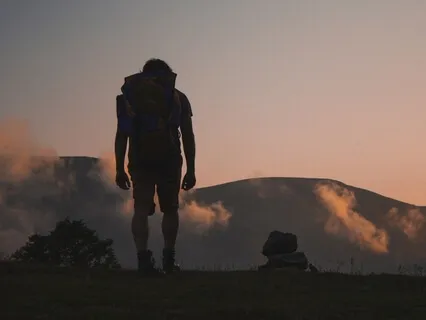
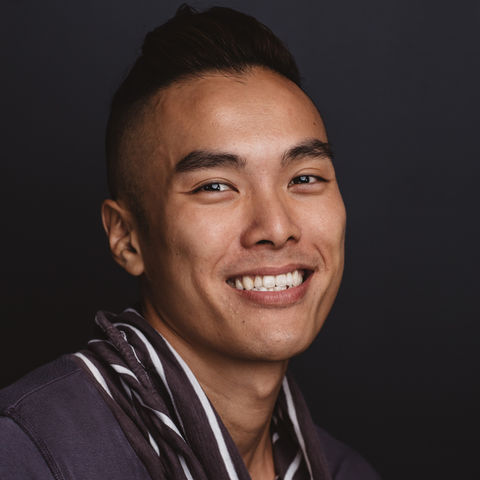
Today we are talking about conscious traveling and I'm really lucky to be joined here today with Marcus Pukonnen who is the founder of The Roots of Change and he's been traveling for the past three years around the world without using any type of motorized transport so that means no planes,
No trains,
No cars,
No buses,
Not even an elevator or an escalator,
Which is quite challenging and it definitely gives you perspective on life and how much there is in life and the wide array of experiences that you could possibly have from traveling that way.
Most people like to say that it gives them perspective on how crazy people are.
But I swear I'm not that crazy.
I'm not necessarily against motors.
It's just something I've chosen to do and I really appreciate moving under my own power.
One thing that I've come to appreciate even more is the value in slowing down.
I think our society and our culture believes that we need to consistently develop and progress really fast or we're gonna get left behind and we're starting to move so fast that we're forgetting where we are and the purpose of life is.
Yeah,
For sure.
I can definitely relate to that.
I see that a lot in my clients.
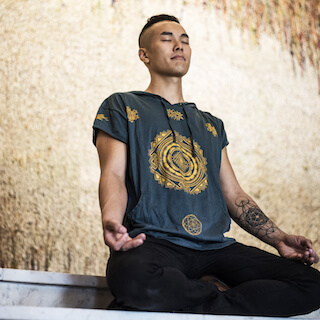
I definitely see that in myself and that's probably why I gravitated towards facilitating and leading retreats to sacred places of power.
Maybe we can't spend three years traveling around the world.
It's not,
You know,
Without a motorized way of going.
Not everyone can do that or is blessed enough to do that.
And so we go for seven days,
Ten days and we do these little short retreats to recharge,
To rediscover,
Reconnect.
That's one of the hardest things I think for everyone,
Especially if you live in an urban city.
It's really hard to stop.
Stopping is It almost feels like dying in a way.
And in a way it is kind of a dying.
It's a dying of the ego.
It's a dying of old conditioned patterns,
Expectations of how things should be.
And dying is what most people are most afraid of too,
Right?
So people are afraid to slow down,
Afraid to die,
Afraid to lose something.
Are you afraid of death?
I'm sure you must have come across many different opportunities where that I am not afraid of death.
I've dealt with death quite a bit in my life.
I lost my mom when I was five years old and my dad when I was 27,
Which is part of the motivation that created this trip for me was finding out that my dad was very sick.
So I've dealt with death very closely and I'm,
I guess through that,
Through dealing with it,
I've become very comfortable with my own death.
Never more so than when I first,
When I took the first steps of this trip because this was the answer to that question.
What do I want to be doing if I found out that I was gonna die?
Not in the sense like what would you do if you're gonna die tomorrow type of thing,
But like what was my dream job?
What would I feel most satisfied?
What is like my purpose?
What,
What would I,
What could I be doing that I would have no regrets?
So when I took the first step on this trip,
I was living it and I was just like I'm ready.
Like I'm happy to die.
I'm ready to die.
And of course,
I mean people think that I might like that I'm giving myself a death wish by doing what I'm doing because I'm taking risks.
In reality,
What I'm doing is not really that dangerous.
It's just,
It's,
It's out of people's comfort zones and it's,
And it's somewhat unknown.
So I do a lot of things that people are afraid of and I think are very dangerous because they don't know what,
What it's like to be out on the ocean in the middle of the ocean.
One of the things that I really realize is that people are very comfortable now driving,
Driving on highways,
Driving on these cars and that is like extremely dangerous act that people have lost most of their fear about.
Whereas I have a bit of fear of that.
It's not,
It's not so much a fear.
It's appreciation and acceptance of the fact that the ironically,
The most likely thing to end my trip around the world without using a motor is that I get hit by a motor vehicle.
And I've also said that the other most likely thing and the only other thing that I could really think would end this trip and that is if I decide to follow my heart,
Like I fell in love and took that direction instead.
That would be a nice way to end the trip.
Yeah,
Yeah.
Three years or four years or five years or how many other years you plan on going on.
Can you talk a little bit about those first moments when you left Canada and started the first leg of your conscious trip around the world without using any motors and give the listeners an idea of dangers or perceived dangers.
Yeah,
So I actually,
I started the trip in Toronto on the east side of Canada.
It wasn't a particularly dangerous start,
But I ended up going across Canada.
I started with a friend,
So I had company.
I was in a canoe and we canoed through the Great Lakes.
When my friends left me,
I had four or five different people join me in that canoe and when they left me,
That's when I started having a bit more dangerous times because I was on the Great Lakes by myself in a canoe.
The potential for the weather to pick up and me to flip the canoe is pretty high.
But I was never really afraid of my life because through this whole journey,
I've always had this little satellite device that I can hit the SOS button.
My fear was not about dying out there because I knew I could survive.
I'm tough.
My fear was about getting rescued.
The only time in going all the way across Canada,
Which I started in a canoe and then I tri-marined and then I hand cycled,
I pogo-sticked,
I recumbent tricycleed,
And I skied and then I got on a raft.
I was skiing,
So it was December,
January in Canada through the Rockies and a friend met me with a raft and we got on a raft to float down a river that was ice on either side of the river.
Beautiful,
But also,
You know,
Freezing cold water and it's one of those things you don't want to fall in.
What my friend didn't tell me when he was joining me on this rafting trip is that he had to work in two days and the plan was still to go down the river,
So I was left by myself on this raft.
Literally two hours after he left me,
I was floating down the river.
Sure enough,
Right ahead of me,
I see an ice dam.
Literally ice just right across the river.
The river disappears below the ice.
In that situation,
It doesn't matter if I have an SOS satellite beacon.
If I go in the water,
I'm toast.
I'm done.
So thankfully,
I was able to row this raft as hard as I could to the shore and pull it over there.
Eventually,
The next day,
I ran into another ice raft and I had to like scamper across a thin ice sheet.
Then I decided it was time to leave the river.
Thankfully,
A friend brought me a bicycle to get to the nearest town.
And so when you.
.
.
I mean,
It sounds.
.
.
It doesn't sound like something I would opt to do,
But it's in your purpose.
So what happens?
What goes through your mind when you approach these moments of danger?
What goes on in your mind?
What's the point of having these types of experiences of coming out of our comfort zone?
Well,
I guess more than anything,
I feel alive.
I feel sort of become more intensely focused.
I guess you get in what they call the zone,
Right?
Where,
You know,
If you make a mistake,
You don't survive.
So yeah,
I don't.
.
.
It's hard for me to say because I'm not really thinking about it at the time.
I'm thinking where I need to get to and how I need to get there as fast as possible.
I'm not able to really observe myself too well in that situation.
But we can say that there's a level of focus and intense concentration and non-thinking.
Yeah,
Definitely.
And so I'm all about not thinking so much and more being and that's a lot of the concepts that I work with and trying to impart that to people that come around on retreats,
To listeners.
And when we come to a place of non-thinking and we come to a place of being and just pure connection,
I mean,
You're there in nature with the elements,
With ice,
You know,
With a flowing current.
You become fully present and you already said it,
Fully alive.
And I think when people start to hear about your tales of danger,
People start to perhaps feel a little bit of that and it's almost like people are conditioned to not be alive with their jobs and with their 9-5s and with all of the routines that people have set into place.
And I'm sure your message is not to tell everyone to quit their job.
Not at all.
But I think it's very inspiring.
It might help a lot of people.
It may not be,
I mean,
Who's going to run the world.
If you don't like your job,
You might want to find a different one.
Sure.
Try to at least.
So what kind of advice could you give to people who are looking to feel a little bit more connected to nature,
To themselves,
To life?
Well,
I mean,
Simply go out in nature more and feel the elements.
I mean,
That would be the simplest thing is just to get outside more and experience it.
Maybe play around with your comfort zone.
You're from Toronto,
So I'm sure you must have noticed a palpable difference between being in the city for a long time and then going out into nature.
I grew up in the city.
I didn't spend a ton of time camping or anything,
Like very little,
When I was young growing up in the city.
But I first fell in love with being outside and climbing and in nature when I left high school and went out to the Rockies.
I immediately felt how healthy I could feel being in fresh air,
Drinking fresh water,
Being healthy out in the mountains,
Because I never really had felt my true health living in Toronto.
And once I spent a summer out in the Rockies,
It was like,
Wow,
I can't believe I've been missing this feeling.
I just felt so alive.
And then I went traveling and that's when I really discovered my favorite and most beautiful thing that traveling provides for me.
And that is bring it back to being present,
Not necessarily non-thinking,
But thinking in the present moment and relying on your instinct.
That's something that traveling sort of forces me to do.
And I mean,
Obviously people travel in different ways and they don't necessarily have endless amount of time,
But whenever I have a friend or I know somebody who's going traveling,
I always recommend them to very much limit the amount of plans that they make and just appreciate your ability to wake up in the morning and decide you want to go left or you want to go right and just feel where your instinct takes you.
Yeah.
Because it's a beautiful thing,
You know,
We lose our instinct so much in life because we have our life scheduled and planned and there's very little time for instinct.
But when traveling,
You have that ability to just follow your instinct and that's what I really love about traveling.
I don't think I have a very good instinct,
But I have good intuition.
And so the way that I see instinct versus intuition is that instinct is more visceral,
It's more in the gut.
The sensations physically live there more.
It's about fight or flight,
It's about survival,
It's about being in the great outdoors and intuition to me is more focused around the head.
It's the ability to interpret signs and give meaning to dreams.
And so my strength lies in my intuition.
Would you see yourself as more of an intuitive person or because you spend so much time outdoors,
Are you a more instinctive person?
I never really thought about necessarily the difference between intuition and instinct like that.
I'd say I'm somewhat balanced.
When I think about this,
My first thought comes to sensing thieves or sensing somebody with a bad intention.
I don't know if that's necessarily an instinctual thing or a bit of an intuition as well.
It's hard to say.
It might be a combination of the two because it is something I can pick up on a thief very fast.
And because of that,
I think I don't run into them.
Thieves are also like animals in the sense that they can smell fear.
They can see somebody who looks vulnerable and know that they'll be an easy target.
I recently had an experience in Indonesia where I had four guys on two motorbikes try to rob me.
And I could sense it was going to happen.
I'd been warned about this specific area and they pulled up beside me,
Started trying to talk to me.
And then they waited for there to be no traffic on the road.
I was bicycling down the highway.
And so there's first there was just two guys on one bike.
Then they called in their support.
And they waited for a gap in the traffic.
And then the guys in front circled back and basically stopped right in front of me.
So I had to stop.
And then the other guys pulled up behind me and tried to grab my bags off my bike.
And I just stood up and got really angry and pushed them as hard as I could.
And they got scared.
I don't know,
I probably yelled some obscenities at them or something.
And then a car came and I was just like,
Hey,
Police,
Police.
And that was it.
Nothing happened.
And that's the only time of the whole trip that I've had any trouble.
That put a little bit of an edge on me so that when I was cycling down the road and a guy,
Somebody came up behind me on a motorcycle,
Which happens quite a bit because they're just curious,
I'd always be ready to have my knife out or,
You know,
Just thinking like,
Am I going to have to defend myself?
That went away eventually,
But it lasted for a week or so.
Well,
I think that's important.
I think if we go into these types of situations and are naive,
Things will invite a whole nother type of energy coming in.
And so there definitely needs to be a balance between the instinct and the intuition so that you are safe and you're continuing your purpose and your mission and helping the nonprofits and traveling around the world.
Sometimes there's this misperception that people who are on a path of higher consciousness are Zen all the time.
And I think that's complete bullshit.
It doesn't make sense.
In India,
My meditation teacher,
He told me to get on the back of his motorcycle and then he started screaming and cursing at people.
Road rage in the middle of these streets in India going up through the mountains.
We're trying to go up to the mountains.
I was like,
Swamiji,
Why are you so angry?
He's like,
I'm not angry,
Dear.
How are you supposed to drive in India?
But this is where you are.
And I think part of being a conscious person,
A conscious traveler is knowing where you are and working with what is around you.
And sometimes that is unfortunately very primal circumstances,
Fight or flight.
How does that reinforce or perhaps change your perspective on people as you travel since you've been to so many different places,
Remote places,
Populated places?
Something new that's come is that when people ask me what my favorite animal is,
I would never have thought this in the past,
But now I definitely say humans.
Why do you say that?
The amount of really amazing,
Fascinating,
Interesting people that I've met,
Just super heartwarming.
Obviously,
What I'm doing takes me away from family and friends a lot.
I end up finding family and friends where I go and it's really not that hard to do.
There's times when I don't because the cultural differences are so strong and the language gaps make it challenging.
I try to learn as much language as I can wherever I am to bridge that gap.
But the amount of people who I've made eye contact with,
Who I've just felt the love,
It's growing and it's increased my love of people more than anything,
Which has been great.
It's like on this roots of change,
You're building bridges of empathy between yourself and other people,
Other cultures.
Do you see yourself as a bridge or do you see yourself as a change agent as you come into these different areas of the world?
Talk a little bit about these nonprofits that you support.
Yeah,
So the way I'm making it work is as I travel,
I sort of look for people who are doing cool things,
Good work.
Every little town or community I drop into,
I sort of ask around if there's anybody doing some really good stuff for the community or for people who are in need.
And I reach out to them and go and have chats with them and see if it's a good fit.
I try and get them some media attention.
Depending on the communities,
I will do a speaking event,
Donate the proceeds to the organization.
There's been a whole wide array of different nonprofits,
Everything from after school kids program,
School gardening program,
To people who are defending the ancient forests on the west coast of Canada,
To people who are helping out street kids in Hanoi.
So it's a whole mix of different environmental social justice organizations,
Just people who I think are doing great work that they don't necessarily have the time to market themselves or find the support they need to continue doing their work.
And so that's where I feel like I can fill that role because I am a good news story.
I can get media attention and if I can shine that spotlight on other people,
Then that's great.
And so I guess in that sense,
It reminds me of something that a friend of mine who I met in Colombia,
A Canadian guy actually in Colombia,
This is when I was traveling like 15 years ago,
And he was calling me something that not in relation to what I'm doing now,
But just in relation to the fact that I had very blonde hair.
He was calling me Alfaro,
Which means the lighthouse.
So perhaps instead of,
I think of myself less of a bridge and more of a lighthouse,
Shining the light on people who are doing cool things around the planet and sharing that light with other people.
Are you finding that as you travel more and more,
You're coming more in contact with your purpose?
I know we talked a little about purpose before this chat.
Do you find yourself changing in your purpose or adding on to it?
Yeah,
Yeah.
I've had to change.
I've definitely had to change and adapt and accept the way the trip has unraveled and the journey has unraveled because I had initial idea of what I wanted this to be like and it has not necessarily been like that because it's been,
Well,
It was harder from the beginning to find the support that I thought I needed in order to do this in the way I wanted it to be done.
So I've been doing it with less support,
Lower budget,
Which is fine.
I've just had to sort of adapt and accept that it's going to work the way it's going to work.
In terms of my purpose,
My purpose still is pretty much the same.
It's a pretty simple purpose.
I mean,
Maybe there's details of that purpose that have changed.
My purpose of helping people around the world is still the same through the crazy adventure that I'm on.
And that's beautiful.
It's a beautiful,
Inspiring way of combining what you love and a mission that is greater than yourself.
Traveling and doing all these outdoor activities,
Something that you're passionate about,
And then integrating that with all of these gestures of goodwill,
These actions that you've been taking and it's very inspiring.
You are a lighthouse.
It is you doing things and adapting.
I think adaptability is very key in everything that you've been talking about.
Being sensitive to how things are changing and without fearing the change,
You just go right into it.
You go right into the storm,
Literally.
Oh,
There's a storm coming.
You sail across the Pacific.
Go right into it.
So you can get to the other side.
And I think that's a beautiful lesson to impart on all of humanity.
Well,
Speaking of lessons,
Another big part of what I do is I go into schools and I share my story with kids.
One of the sort of consistent messages that I share with the kids is the fact that whether they choose to believe it or not,
They're changing the world.
And so in that sense,
I don't necessarily think that I'm alone in being a lighthouse.
I think we all are lighthouses.
It's just some of us turn the light down really low.
Or we like to believe we can turn the light down really low.
But we really are affecting the world around us.
And it's sort of this really cool power that we have that most people choose to not even appreciate or accept.
The power to influence and change the world around us.
And it can be really fun and help people.
And that's something I always like the kids to grasp onto.
Yeah,
Not even the kids.
Not even just the kids,
But also the adults need to relearn that too.
That's beautiful.
Well,
Thank you so much for taking the time out and talking with me about traveling and adventures and consciously traveling.
Is there anything else you would like to share about any upcoming projects?
Well,
I'm working on trying to get to Borneo right now.
You have to find a small sailboat to get across to Borneo.
Slowly continuing around the planet.
I'm about halfway around the planet.
Maybe another three to four years to go.
If you're keen on joining me,
You can find me at RootsOfChange.
And that's www.
RootsOfChange.
Com.
And you can follow Marcus or.
Org.
And you can also follow Marcus on Instagram at RootsOfChange.
Yeah,
And it's Roots spelt R-O-U-T-E-S.
That's right.
I mean,
To play on words,
It could also be the other way too.
That would be kind of funny because it's grounded and you're traveling if it was R-O-T-S.
I think that site was taken.
Great.
Thank you so much for your time.
Thank you.
It was great to talk.
Thank you all for listening.
And we look forward to sharing more stories in the next podcast.