Today,
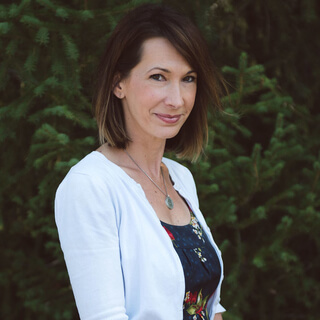
My special guest is Diane Kochilas.
Diane is a Greek American cookbook author.
She is a celebrity chef.
She's appeared on several shows with Bobby Blay,
Martha Stewart,
PBS.
I saw her on The Dish.
She spends her time between Greece and New York.
Diane,
Thanks for coming on the show.
Thank you.
Thank you.
So Diane,
Tell me,
How did you get started in all this?
Little bit serendipity,
But like most things in life.
I studied journalism and always wanted to be a writer and that's basically what I've always been.
And one thing led to another in a job I had when I was right out of college and I ended up writing this cookbook called The Food and Wine of Greece and really enjoyed that experience.
I moved to Greece to do the research and it's kind of been an evolution from that moment ever since.
I get your newsletter and I feel like there's a lot of healthy versions of food in that.
Do you feel like you go that way specifically because you're health conscious or you feel like that's just a better way of life?
I am a very big proponent of plant-based cooking.
I'm not a vegetarian,
But just by default,
Greek cuisine has a lot of really great plant-based dishes and plant-forward dishes,
Which might include a little bit of animal protein,
A little bit of meat,
Whatever.
But I've also been living in Greece for most of my adult life.
I'm a born and bred New Yorker,
But I've spent 26 years of my life in Greece and I've become very spoiled when it comes to the quality of fruits and vegetables.
So all of that stuff just tastes really good and makes you feel really good,
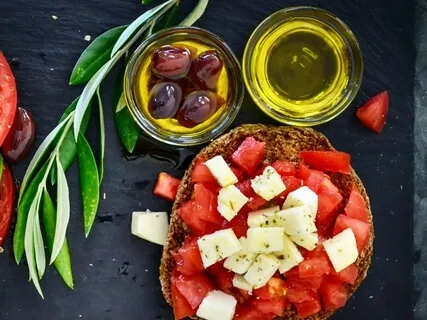
Especially when you cook it with great extra virgin Greek olive oil.
So it's been more or less the way that I've always eaten.
That's not to say I don't enjoy a good steak,
But I certainly don't enjoy one once a week.
You're more plant-based than anything else.
So usually you eat more vegetarian.
Definitely more vegetables and olive oil and beans.
I eat fish,
Of course.
I'm not a.
.
.
There's no label.
I just eat a healthy Mediterranean diet,
A healthy Greek diet.
You also have a cooking school.
I have a cooking school.
It's actually more than a cooking school.
It's really sort of a life experience.
It's on the island of Ikaria,
Which is where my family is from.
It's a blue zone.
I don't know if you know what that is.
It's one of the pockets on earth where the longevity statistics are crazy high off the charts.
People tend to live a long time on this island.
One of the reasons,
One of many reasons is the diet,
But there are also other factors like lifestyle and kind of a very relaxed outlook on life and not taking yourself too seriously and a very,
Very strong social fabric.
But I ran a restaurant.
I had a restaurant there about 20 years ago for two summers.
One of the things that we were doing to attract business to the restaurant was doing these day classes.
I really enjoyed teaching and I had been doing some teaching in the States and that kind of,
We closed the restaurant,
But kept the cooking school and expanded on that.
You teach at the cooking school?
It's in my home.
So yeah,
I teach and we get,
You know,
Most of my guests are American.
Some are of Greek descent,
But I would say the vast majority are not.
Most people who come are,
You know,
I guess in that category of adventure travel because to get to Gariya is still a little bit of an adventure.
Most people are interested in a healthier way to live,
Not only physically,
But also emotionally.
So the experience on the islands and seeing,
You know,
Some of the things that are second nature to a carrion,
I think is,
Those are some radical messages to most Americans.
People are so nervous and uptight and anxious and stressed out all the time and ruled by the clock.
So you end up,
You know,
You spend time in a place where the complete opposite is true and serendipity plays a huge part in people's lives.
It's kind of a life changing experience for many people.
So that's why I got started doing that and I've been doing it for about 15 years now.
I love it.
I mean,
It's really great fun.
I met incredible people,
Stay in touch with many of them.
So it's a great,
You know,
It's a great experience.
So over the years,
Do you feel like the demand for healthy eating has gotten bigger?
Like have you seen that with your school?
Because I feel like nowadays,
Especially in American culture,
You really see that.
Like everybody's really into the paleo.
They're really into the keto.
You hear the Mediterranean diet thrown around a lot.
I mean,
I think people are very interested in understanding how to eat better.
There's a lot of corporate directed,
Crazy nutritional messaging in this country.
And like,
What do you mean?
I mean,
Even,
Sorry,
Like even the whole keto diet,
Really like a totally high fat diet on like meat and cheese.
And you're 70.
I had a woman who was on the keto diet last year.
She was grossly overweight and all her joints were swollen and she couldn't walk.
We're like,
What are you doing?
And you're telling me you feel great.
You know,
That can't be,
There's something wrong with this picture.
Yeah.
I had a friend who went on the keto diet and he was like,
It's great.
Cause I can eat cheese and bacon and vodka.
And I'm like,
That sounds like a recipe for a heart attack.
I don't know if that's actually healthy.
You know,
I think that there's so little attention paid to just keeping things in check,
You know,
In balance.
And we get so uptight about,
I mean,
Everyone.
We should be,
We should indulge with pleasure and not do anything too extreme.
And that's the Mediterranean way of life.
I mean,
You know,
It's,
It's about finding that balance and sure it helps,
You know,
It's easier when you live in a place where the quality of produce is,
Is amazing because of the climate,
But you can still replicate that in,
In an American community.
And I think,
You know,
I,
I go to the supermarket here and the first time,
A couple of times,
You know,
Recently,
Not so recently,
Maybe 10 years ago when my kids were still little.
And I remember going to the supermarket looking,
You know,
To buy a container of milk and you know,
There was all,
There was so many choices that it was,
It was stressful.
Well,
And I think too,
It's like what you don't find in Greece that you find out here.
Like I know when I go visit my family in Greece,
It's like it is fresh and like,
You know,
In my mom's village,
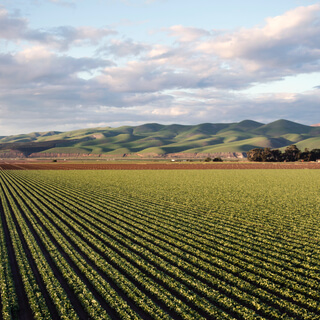
It's like everything's grown in people's backyards.
You know,
My aunt has a farm and that's where we get the eggs.
Like people are growing fruits and vegetables in their backyard.
That's,
And here I feel like it's just a lot of corporate farming.
So if you want,
If you want the simplicity of that,
You have to pay extra for that here.
Right.
Well,
That's what I'm saying.
Everything is,
You know,
There's always a money element and I think that's the root of people's deep unhappiness in the United States.
There's always,
There's you're charged for everything.
I mean,
That's,
It's,
There's,
That's wrong.
Yeah.
You know,
There's something innately wrong about that.
There's something,
I don't know.
Maybe that's,
You know,
Too radical a thought for advanced capitalism.
I just think it's wrong.
I think that,
You know,
We should go,
There should be more local food.
People should be more involved in their food production.
I remember a time in New York City when I was a kid where there were still community gardens and things were clustered differently.
And I,
You know,
I just,
You know,
I think that we're also very,
We have this entitlement attitude to everything and no,
You know,
You shouldn't be eating strawberries in January if you're in New York City because they're not in season.
So to like to ship them from halfway around the world just seems completely insane.
Absolutely.
And very spoiled.
And not to mention the toll that that takes on our planet and our environment.
And you know,
Eat an apple.
New York has amazing apples.
Eat an apple.
It's January.
They're in season.
Eat a pear.
Eat an orange.
And there's a reason that every fruit has its season or vegetables have it.
Mix it up.
You know,
When the season comes for that vegetable or fruit,
Have that vegetable or that fruit.
That's one of the great things that Living in Greece has taught me that you appreciate things because you actually have to wait for them.
You wait for cherry season.
I eat more cherries in the three weeks of cherry season.
I just love them.
I can't get enough of them,
But then it's over and it's okay.
It's over.
I don't have to eat cherries in August.
They're not in season anymore.
They're in season in June and they're great.
You can let go and move on to the next thing.
Yeah.
So do you think that that,
Because you're talking about the blue zone and I have read a bit about the blue zone and it's like,
You know,
The longevity of people.
Do you think that that has something to do with it,
That people tend to go more with the natural waves of what's in season,
What's not in season?
Because a lot of what happens here in the country too,
I feel like,
Okay,
What's produced in a lab?
Like now the big thing is that vegetarian burger that bleeds the impossible burger and everybody's like,
Oh my God,
This is amazing and it's so healthy.
And I'm like,
Is it?
Because it's still produced in a lab.
It's still super high in sugar.
I'm not exactly sure if what we think is healthy out here is really what's healthy or if it's what the meat is telling us.
That's what I'm saying.
It's a lot of,
I mean,
I haven't tasted the impossible burger,
So it's delicious.
It is delicious,
But I don't have an opinion,
But I do think that there's a lot of corporate messaging in nutrition that is not directed.
It's not in our best interest.
It's in the interest of the corporate profits.
And if there were a plates shift,
I think that there would also be,
There would still be profits at the end of the day,
But people would be healthier.
And I don't know,
I think that something has gone terribly awry here.
I mean,
I have,
You know,
I just,
It's gone awry.
There's something that's very different in the way in people's,
You know,
Me,
Myself and I attitude and about everything that has very,
It's not what it was when I was a kid.
People were much more community conscious.
It wasn't,
I don't know,
It's just different.
And I think food has a big,
There's a big part of,
You know,
Food is a big part of that.
I mean,
I grew up in the sixties,
So the food was terrible.
Was it?
Oh,
It was terrible.
It wasn't the food back then.
It was terrible.
It was all industrial farming.
There was no awareness whatsoever of,
You know,
Everything was processed.
We wanted pop tarts.
We wanted,
You know,
Cakes that came out of a box.
We didn't want anything homemade.
It was just,
That was the fashion of the day.
But you know,
Then there were people like Alice Waters and other people who really helped enlighten,
You know,
Awareness,
Whatever.
Paved the way.
Yeah.
But I think there are so many,
You know,
There's,
There are so many mixed messages and we're so used to having,
You know,
A lot of everything.
It really struck me how you were talking about people on the Island and you know,
It's not just the food,
But it's also the social fabric,
The social component,
Which I think is a really important part of having a healthy lifestyle that I don't know in New York City,
But in San Francisco,
We just kind of don't live that way.
You know,
Everybody sort of just isolates themselves.
Well,
I mean,
San Francisco also is,
You know,
Like New York,
It's a good example of just regular people being squeezed out of their own city because of corporate greed and skewing the real estate.
I mean,
It's very complicated.
Well,
Diane,
Thank you so much for your time.
I know you're really busy today,
But thanks for hopping on this call with me.
Okay.
Thank you.