All right,
Well,
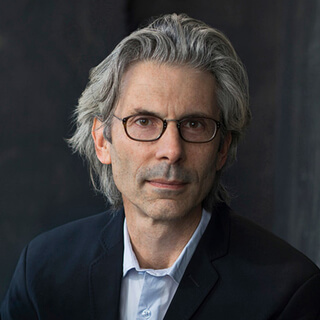
I'm sitting here with Alan Bediner,
Who is the editor of Zigzag Zen,
Buddhism and Psychedelics.
Great to speak with you.
Thank you,
Don.
I'm a fan of yours,
So this is a pleasure.
As a religion journalist,
Someone who spent a lot of time interviewing people about their spiritual journey,
You know,
I would talk to people from the San Francisco Zen Center back in the 80s and 90s when I was first working for the Chronicle,
Covering this stuff,
The San Francisco Chronicle.
And I'd say,
How did you get into Buddhism?
And often there'd be a pause and there'd be like,
Well,
Back in the 60s,
There was this acid trip.
And I always remember that,
That quite a few people did,
At least there was some connection between psychedelic experiences back in the 60s and 70s and their current practice.
What role did psychedelics,
Psychedelic drugs play in your exploration of Buddhism?
None.
None.
And I think that's a bit of an anomaly as you've characterized it,
That most people,
If there's a obvious role for psychedelics in the Buddhist context,
It's sort of a door opener where it allows you to have these experiences that are extraordinary.
And then you try to look for something a little more sustainable to practice forward with it.
But usually the psychedelic experience introduces the,
Initiates the interest in pursuing Buddhism.
And that wasn't the case for me.
It was the reverse actually.
And so I spent a year,
Actually I went with the intention of spending a couple of months in India and traveling other places too,
But I got bitten by the India bug.
I came across this book by a English journalist named Paul Brunton,
And he wrote a book called A Search in Secret India.
And while I was there,
I was reading this book and having parallel experiences that he had.
He had these experiences in the 30s.
He was out to bust the whole Indian spirituality thing and investigate the fakirs and determine they were fakers.
And instead he discovered a current of profound spirituality that was like magic for him.
And he was describing it in beautiful terms.
And so I thought this needs an update.
I'm going to do that too.
And I got very excited.
So you went as a skeptic.
I went,
Well,
Not so much as a skeptic,
But not a believer.
And I was just reading this book and getting,
Becoming more of a,
More enchanted with this new spirituality and,
And dove in and kind of unsettling ways.
I mean,
You know,
Shaving my head.
And I found this basically ancient meditation center in the Hills of Kandy,
Outside of Kandy in Sri Lanka and checked in for a 14 day meditation experience.
Well,
It was awful.
I mean,
Just awful.
My bones all hurt.
It was dirty.
There were bugs.
It was hot.
Breakfast was stewed greens at,
You know,
Six in the morning and the same stewed greens for lunch at 1130 and no dinner.
So it was,
It was excruciating.
And I was having a miserable time and I kept debating every day.
Should I get a car and couldn't just get a taxi?
You have to arrange this days in advance.
And,
But I decided to stick it out just cause it was logistically easier.
Two days before,
A day and a half before the end of the retreat,
It all fell away.
The pain,
The discomfort,
The anxiety,
Everything just fell away.
And I,
I found myself in a sort of quiet state of ecstasy and it was,
I was felt an incredible shocking kind of kinship to all life around me and the environment,
The,
The breeze,
The bugs,
Everything,
The trees,
People,
Were coming up to me and engaging me in ways they had never done before.
So I realized I must be putting out something different or there must be something about me that has changed that has caused this all to happen.
I wanted to know more about what that was.
And that really was sort of the Buddhist bug that bit me there.
And I became,
When I went back,
I started studying.
What sort of school or what flavor of Buddhism are we talking about?
Vipassana,
But sort of lazy Sri Lankan Vipassana.
I mean,
There wasn't organized periods where you do scanning and you know,
It was,
It was basically just sit.
And so kind of Zen like in a way.
Yeah.
Yeah.
And for two years I studied Pali.
I studied the Dharma,
Went through the whole Tripitaka and picked out Sutras to study and spend time on and write papers on.
And this went on for several years.
And at the same time I was interested in whether it was Buddhism or perhaps even psychedelics,
Finding a way back to that experience that I had in Sri Lanka.
So that created the interest in finding ways that might alter my consciousness in such a way that I could have that experience again or go to that place again.
Yeah.
That is a bit of the flip side of some of the other stories that I've heard of people starting with psychedelics because it's so much,
In some ways it's so much easier to have the experience with a psychedelic drug than the rigors of a meditation practice.
Yeah.
So the closest thing that came to getting to touching on that experience was,
Was MDMA at the time known as ADAM and now known as ecstasy.
I was just reading Sasha Shulgin's book who really helped.
He didn't invent MDMA,
But he certainly rediscovered it and popularized it in the eighties and seventies and eighties.
And he was talking about the first time he took it,
He said,
It's like nothing happened,
But something extraordinary happened at the same time.
Right.
Yeah.
Right.
There's no subtlety.
There's no subtlety to it.
Very subtle and you find your heart opening.
And of course people would make jokes about it that,
You know,
You gotta be careful.
You hang out with when you're on it because you might marry them,
You know,
Or something.
I found myself saying,
Why don't I always feel this way?
Why can't we always,
Why can't all of us always feel this way?
This is how one,
This is actually,
It's the same words that Huxley used,
I think when,
When he was given mescaline by Humphrey Osman in 1953 or four,
He said,
This is how one ought to feel,
You know?
Right.
Right.
Well,
It's interesting.
You mentioned Sasha,
Of course,
Alexander Shulgin,
Who,
Who was the creator slash discoverer of this.
I think he pulled it off a shelf with other formulas that were initially being developed by Merck as a diet suppressant.
No,
No,
No.
He was just experimenting with that category of drug.
Phenylethymine.
And just,
He knows enough about the chemistry that he said,
This might be an interesting combination.
Right.
And he thought he completely invented it.
And then later he learned that it had actually been invented by Merck,
A German chemical company,
Back in like 1917 or something.
As a diet suppressant.
Yeah.
Well,
There were,
There were some research with MDA and MDMA,
But,
Yeah,
It had these,
These unfortunate psychoactive side effects,
Which is now a reason everybody takes it.
So I looked him up.
I looked him up.
I wanted to learn more about it.
And I was writing at that time for the LA weekly,
Had reinvented myself as a writer,
Which I really enjoyed.
And I was basically canvassing the whole area of mind changing phenomena from psychoneuroimmunology to Scientology to Anthony Robbins to Thich Nhat Hanh,
The Terrence McKenna.
And it was Terrence who actually drew me in further to the whole psychedelic exploration mode because he was so compelling.
And I found him.
Another prophetic character.
He was,
He was very compelling and fascinating and a lot of fun and got to know him and we became friends.
And so I started experimenting with psilocybin.
And so the experiences with psilocybin also touched that area where I felt that kinship with all life and,
You know,
Similar kinds of feelings without necessarily.
Were you taking mushrooms in a shamanic kind of a context or a recreational context or a therapeutic context?
How about a Terrence McKenna context?
The experience that I wrote about on ayahuasca was actually,
He was my shaman,
But of course he had his own theory about how it should be used.
And,
You know,
No ayahuasca to soothe your experience and your passage from one part of it to the next.
No comforting friends to interlock your arms with in a circle.
None of that.
Middle of the night,
In the jungle,
By yourself,
Face your demons.
That's the way to do it.
And he liked the edge of terror that that produced.
It's often unclear how much of that has to do with the,
Whether it's ayahuasca or mushrooms or LSD,
How much of it has to do with the drug or the sacred medicine and how much of it has to do with the person,
The set and the setting.
Well,
Like all sacraments,
I think you bring so much of the experience to the table.
I mean,
It's different for everyone.
I mean,
Even something as simple as cannabis has very different effects on people.
Some people it's a stimulant,
Some people it's a depressant.
So in all cases,
I think these materials,
You know,
They have a range of possible outcomes,
But what actually happens is in large part dictated by your experience,
Your consciousness,
Your set and setting that you bring to it.
Why don't you just briefly tell us what happened with your experience with Terrence and Hawaii?
I mean,
You say in your chapter here,
Which you called Yahay and the Yanas.
Terrible title.
Nobody knows what the hell that means.
You say that nothing but your Buddhist meditation practice prepared you for what was about to happen.
So first of all,
Briefly tell us what happened and then how did your Buddhist meditation prepare you?
So as I mentioned,
This is the way he likes to go about it himself,
The middle of the night alone.
And so that's what I did.
And he showed me a place where I would vomit because that's typically involved in the journey as part of a purgative.
And he showed me the tent that I'd be confined to once it kicked in because you wouldn't be able to stand on your two feet.
And I guess the first thing that I noticed was I was looking up,
Sort of waiting for it to kick in.
And I was looking up at the stars and I was noticing just how delightfully beautiful they were.
And then I noticed that there was movement in the sky and all of these stars representing points of light on a particular massive being of some sort moved in symphony.
So it was like this giant being.
Right,
You said like a spider,
I think is what you said.
Yeah.
And it moved and all the other stars moved with it.
And I could see,
I said,
Oh my God,
I'm seeing something.
It was so visceral and real.
It didn't seem like a hallucination at all.
And so I thought,
This is just weird that I've never noticed this before.
It felt so real.
And then it was quite quickly came in in a very strong way.
And I had to lay down and the flashes of colors were all very amazing.
In fact,
It's kind of terrifying when you're seeing the same thing when your eyes are closed or open.
Yeah,
Because often it's a subtler thing.
People talk about psychedelics and hallucinations,
But normally people don't really have hallucinations.
I mean,
Things that just aren't there.
In your case,
Though,
You sound like you certainly did.
Yeah.
I mean,
It's debatable whether they're there or not,
But yeah,
Definitely they were hallucinations.
Well,
Usually what we call hallucinations,
It's like a shifting of patterns or a blurring or noticing patterns or new kinds of ways of seeing things,
But not just an out and out hallucination.
Well,
It shifted from this.
.
.
And there was interesting hallucinations in the sense that I looked around and I was in my experience,
I was looking around,
I was like flat on my back,
But I was seeing walls that had the Mayan iconography,
The alphabet,
Those letters,
Which never particularly fascinated me.
And I was surprised to see them because I thought,
Well,
If all this is coming from my consciousness,
I assume it was,
Then where did that come from?
That's not something I felt that I was ever interested in or stored.
But that came along with the experience intermittently.
I would see that iconography.
But I found myself running really rapidly for my life from a dragon.
And I knew it was a dragon because I could hear it thumping and I could smell the hair on my legs burning from its flame.
I mean,
It almost sounded like you were in a bad horror movie or something.
Exactly.
Exactly.
And you said you were a little embarrassed by your hallucinations there.
I mean,
Couldn't you come up with something more interesting than a fire-breathing dragon?
And I suddenly turned around and I found a sword in my hand and I found the courage to actually use it and plunged it into the dragon's chest and watched it slinker down into a pile and watched its face to make sure it was really dead.
And as I was looking at its face and it became more and more quiet and moved less,
I started to see it morph into my own.
And it was a powerful,
Hard to explain,
But a powerful experience of just having compassion for the least likely characters for the most offensive and scary parts of my experience,
To be able to feel for it as it was dying,
Particularly because it had my face on it.
And you say in the chapter that you experienced your own death or saw your own corpse.
Was that part of this?
Well,
Then from that moment on,
The journey was all about dead Alan.
I mean,
It was holding my dead body.
You were holding your dead body.
I was holding my dead body.
And there was always throughout a voice inside sort of going,
Reacting to the experience as if there was a separate Alan up here watching everything and commenting on it.
Yes,
We know we're going to die,
But rarely do we have this,
The visceral image of,
Of our death and our body and all of that in our awareness.
And so it was a much more intense awareness of death and the fact,
The fact that I was going to be dead or was dead.
And so that was all about,
It was,
You know,
I would,
I describe it as a shamanic death journey,
But it really was all about death.
And it was terrifying every minute of it.
But you,
And one part of you knew that you were on this medicine or were you completely No,
I didn't know.
I didn't know.
I was actually,
I had forgotten that I was on this.
You were really living this,
Experiencing this.
I was really living it.
And it was confusing of course,
Because I had this voice that was still alive,
But the,
My visceral experience was I was a corpse.
I was dead.
Buddhist meditation allows you to weather the storm.
Whatever difficulties you're having in your life,
They're more,
They're more controllable.
They're more understandable.
They're more contextualized when you're calm,
When your awareness is stronger,
When you've sublimated your emotional response to it and you're able to breathe through it.
And so the,
In that sense,
The training,
I spent a lot of time with Thich Nhat Hanh and going to retreats.
And,
And a friend of mine said one point,
Well,
Don't you get tired of the same simple lines over and over again.
And these teachings are,
He always says the same thing.
And I said,
Well,
I'm so forgetful.
I need to hear it over and over and over.
And there's a real value to the teachings being simple because in a crisis mode,
You're not going to go,
Oh,
No,
I have to stop,
You know,
And think of all the technologies of where you're sitting right.
And all this other stuff.
You just,
You need immediate assistance.
And his simple teaching of breathing and smiling really made a difference.
And there was a couple of aspects,
A couple of experiences I had that really brought that home.
I could remember to smile.
I could remember to breathe,
Even though I was having a terrible experience.
And it made a huge difference.
It was able to calm me.
Yeah,
Breathing,
Just breathing,
Just breathing.
And smiling is his characteristic teaching.
Well,
You mentioned that after that,
That kind of horrifying experience on the,
On the Ayahuasca that it took your meditation practice to another level.
And you've been the breath was a part of that having this appreciation for the breath.
Yes,
Absolutely.
And what stays with me is this awareness of death,
And awareness that I'm still alive right now.
But death is coming and death is there.
And in some sense,
It's always been there.
And it's it will be primary again.
And so it's,
It's,
It makes every moment more vivid and more precious and more special.
And it helps me remember not to waste my time and try to apply,
Do the things that I feel that I can do that make a contribution.
And keeps me more on track.
Yeah,
One of the things that people were talking about and ask the questions people were asking back in the,
All the way back into the 1950s and into the 1960s,
And this whole first wave of scientific research and spiritual exploration around psychedelics was people were having these mystical experiences.
I mean,
Secular scientists,
Somebody like Timothy Leary,
Who had no interest in religion or spirituality.
You know,
He,
He was a clinical psychologist at Harvard and he started having these religious experiences.
And they were wondering,
What is this?
I mean,
Is this really religion?
You know,
And then back then,
And they brought in Houston Smith,
You know,
The scholar of world religions into the Harvard,
Who wrote the forward by the way,
To zigzag zen.
Yeah,
Yeah.
And they brought Houston in.
And I know Houston pretty well.
I wrote a book that was partly he was one of the main characters in it.
And they brought Houston in to say,
Well,
Are they,
Can you tell us,
Are these the kind of real spiritual?
Are these quote real spiritual experiences?
Are these authentic spiritual experiences people are having on these drugs?
And Houston came to believe that,
Well,
Yeah,
The experiences,
Maybe it's the brain chemistry or the experience might be the same.
And I get your thoughts on this.
But,
But that's not the important question.
At least it wasn't to Houston Smith.
The important question is,
Does it change the way you live your life?
Yeah.
And he has a great line I love,
Which is to do the altered states lead to altered traits.
Right.
I mentioned that.
Or yeah,
Religious experiences lead to a religious life.
And by I guess that means just a moral better life being a better person.
I was only interested in those psychedelics that are known to expand consciousness and not restrict them.
I wasn't interested in people's cocaine stories.
As a rule,
Those are not particularly what I think are consciousness expanding in the sense that,
More importantly,
Do they increase compassion?
Right.
Do they give you a stronger sense of your kinship with all life?
Does it make you feel like you're part of something else that's greater than yourself?
Those questions,
I think,
Which I think in my thinking define whether a psychedelic is potentially a sacrament or not.
And we've been using sacraments,
Human beings,
That is,
For thousands of years.
And every religion has its quieter experimentation with sacraments going esoteric segments of every religion have that.
So it comes to us in the context of a sacramental use that's alive within cultures that go way back,
Indigenous cultures.
And so it has that character that a lot of these other pills and chemicals don't seem to have.
They're all floating around without this rootedness and that history in use within a religious context ongoing.
And so for that reason,
And also the fact that it doesn't lend itself to abuse.
And you're not going to go Saturday night to the movies on ayahuasca.
You're not going to go dancing on ayahuasca.
And the idea that,
I mean,
You make a commitment when you take ayahuasca that you want to have a purifying experience.
You want to have a sacred experience.
Otherwise you wouldn't be willing to vomit and go into a state that you have no control over.
And there are lots of people in my own experience who were taking things recreationally and having much to their surprise these profound spiritual experiences.
And there were other people who wanted to have a profound spiritual experience,
But ended up having quite a delightful,
But not particularly consequential kind of experience.
So we don't get to decide that.
In fact,
I think the statistics on the Good Friday experiment,
Even the new one,
The revised,
The new version of it.
The one they did at Johns Hopkins,
The research a few years ago.
Maybe that's not where it came from,
But there's a percentage,
I think 60 something percent of people who have this strong intention to have a meaningful spiritual experience on a psychedelic will have it.
But what about the other people?
Yeah,
Of course,
With the Good Friday experiment,
It was with seminary students,
Which is not exactly the general population when it comes to spiritual experiences.
But do you think from a Buddhist perspective,
Does it make a difference about your intention going into taking these substances?
I mean,
Does it matter if you're saying this is therapeutic,
This is shamanic,
This is recreational?
I think it does matter.
We don't always get to decide,
But I think it does matter.
In Buddhism,
Intention always matters.
It's like the main issue.
What is your intention?
Where is your mind on this?
Well,
The five precepts are very important because it was a recipe for how you can cultivate a base sense of goodness about yourself because you hadn't done all these bad things.
And you could then progress along the path.
That it was a path that required an ethical posture in your life.
That was very important.
And so,
You know,
Do not kill is of course number one and do not steal and do not lie.
And these basic principles of this is the basic ethical system of Buddhism.
The fifth precept is characteristically different because it was really addressing the big problem of the day at the time of the Buddha,
Alcohol.
In fact,
In Pali,
The translation is very clear that he's referring to alcohol.
Really?
Yes.
And Bob Thurman,
He told a crowd that not only are certain psychedelics not a violation of the fifth precept,
But they could be skillful means in the age that we're living in,
One where we have a planetary crisis,
Etc.
,
Etc.
And anything that encourages compassion and encourages empathy is a good thing if it's judiciously used.
We talked about that more and it didn't refer to psychedelics,
Although there were psychedelics at the time,
And there was use of psychoactive plants,
Even at the time of the Buddha.
What it was referring to was alcohol.
But of course,
That doesn't excuse the idea that,
Okay,
The reason it was directed to alcohol is it made you careless.
Using alcohol made you reckless.
And so you would violate the other four precepts,
Or you would potentially violate them.
So that's not to say,
Okay,
Well,
Even though it was referring to alcohol,
That it couldn't also refer to anything that would cause heedlessness,
Or ill will,
Or recklessness about your relationships with other people.
So that's the question.
It's not about the material itself,
Whether it's alcohol,
Or whether it's drugs,
Whatever that means.
But it's about your intention and your behavior.
Are you going to be reckless with other people?
Are you going to be immoral or are you going to violate your ethical systems?
Those are the things that we look at when we consider the fifth precept.
They're training precepts,
They're training principles.
Intention is key.
Intention is always key.
Yeah,
Yeah,
Yeah.
You know,
I started out talking about how,
You know,
When I first noticed people,
It was baby boomers who came of age in the 60s and 70s who got interested in Buddhism through psychedelics.
What's your sense of younger people today,
People that are in their 20s now?
Are people,
You know,
There's been a lot of interest in other,
Of course,
MDMA and ecstasy.
And there seems to be a whole new wave of interest,
Both in the scientific research into these substances and in the spiritual exploration,
Especially with ayahuasca,
Which everybody's talking about right now.
You know,
Young people are different now than they were before.
They're more thoughtful,
More serious.
We're advancing as time goes on generationally so that there is an evolution that goes on just over time.
And I think there is more seriousness about this stuff,
More intelligent use of these things,
Both these and the other materials we've talked about,
Even cannabis.
People are looking for a sacred context for that,
Not just to go and get high.
And I think there is much more seriousness about these things.
There's a lot of talk,
Or at least there were a few years ago,
And I was reporting on this stuff about the graying of the Sangha,
The American Buddhist communities.
And I wonder,
Do you,
Are we seeing young people getting interested in Buddhism through the psychedelic doorway now again or not?
Well,
That's classically been,
You know,
The best thing you can say about psychedelics.
Well,
It got you interested,
You know,
Interested in Buddhism.
But,
You know,
I don't see it that way.
I think they're two very distinct,
Different activities.
Taking a drug does not make you more Buddhist.
And being a Buddhist does not give you any special ticket to ride when you take a psychedelic.
But they can be mutually reinforcing and helpful to a person.
And so you could,
You can have,
You know,
You don't necessarily have to take one.
And while you practice,
You don't have to combine them both in the same moment of time.
But I think there's more to the benefit than just being an introductory kind of experience that you can work with these materials over time,
As well as your develop your practice.
You know,
So I think there's,
There's a lot of work on multiple paths that you can be doing,
And probably should be doing,
If you really want to evolve.
Okay,
Well,
Listen,
Alan,
Thanks very much.
It was a pleasure.
I enjoyed the conversation.
Thank you.
Me too.
Not that we're doing it for a living,
Unless it's not.