Life can only be touched in the here and the now.
And we will try to.
.
.
Let him go.
.
.
This is Tricycle Talks.
Hi,
I'm Pamela Gail White.
While serving as a Chaplain Resident at the University of Virginia Medical Center this past year,
My work led me to contemplate the great matter of life and death every single day.
Happily,
I was blessed with the opportunity to work with and learn from many kind and knowledgeable people whose wisdom and experience helped me hold it together,
And who made it possible for me to keep going and growing into my role as a Chaplain.
In the following short conversations,
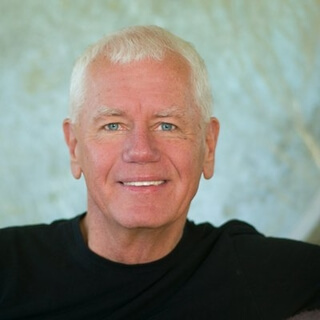
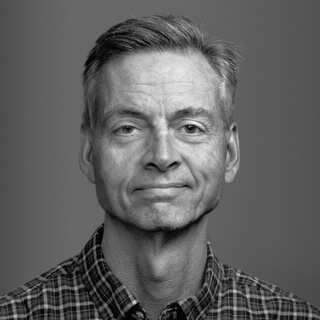
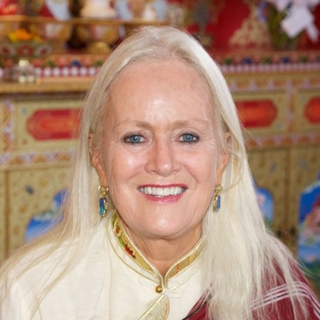
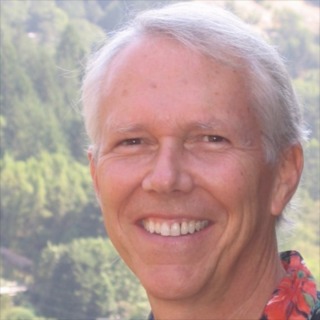
I speak with four doctors and nurses whose skill and compassion I witnessed and admired on the job.
Since I worked in palliative care,
I naturally wanted to focus on topics relating to chronic illness and end-of-life care,
From reframing hope to awareness and acceptance of death.
Even though death and dying is a super trendy subject these days,
It can feel a little bit squirmy or unseemly,
And so we often hesitate to dig in and discuss it in a meaningful way with those who are dear to us.
My goal in recording these exchanges for Tricycle is to keep us thinking and talking to one another about this great matter of life and death.
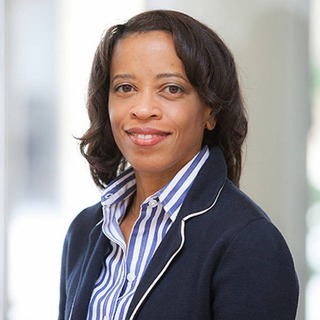
I'm talking with Dr.
Leslie Blackhall.
Leslie is Section Head for Palliative Care at the University of Virginia School of Medicine,
Where she is an Associate Professor of Medicine.
She has also extensively studied Tibetan medicine,
And she got her master in theological studies from Harvard some years ago.
Leslie,
I believe that today we're going to be talking about awareness of death and dying,
How that plays out in our individual lives,
In the greater medical picture today,
And in our society.
Yeah,
I think this is really one of the central issues that's facing us as a culture.
I mean,
We spend an enormous amount of money on medical care at the end of life,
And there's a lot of it that's not really beneficial or helpful.
I think I've been working in this field since the late 1990s.
I've been here at UVA since 2001,
And I've been interested in it since I was a medical student in the 80s during the AIDS crisis.
If you look at—there are many problems,
But I think in this country all of them really boil down to our inability to really clearly look at human mortality,
At the fact that all of us are going to die one day.
And the way we have chosen to deal with this as a culture is in some ways extremely unhelpful and actually causes extra suffering.
You know,
There's suffering and there's optional suffering.
So I'm going to tell you a story of a patient of mine I saw in hospice many years ago when I was in California,
And he was 85 years old and he had lung cancer which had metastasized to his brain.
So it's now in his brain,
And he couldn't really speak very well because of that.
And so I went and did a home visit,
And when he went into his room he would just burst into tears.
And so I couldn't tell if he was crying partially.
I mean,
I don't even know if this makes sense to be a difference,
But how distressed he truly was or whether there was some sort of almost physical thing because of his tumor location,
And I had never met him before,
So I asked his wife.
You know,
But when he could speak before the tumor had involved his brain so much,
You know,
Was he accepting of his diagnosis?
Was he at peace?
And she looked at me and she said,
Oh,
No.
He just kept saying again and again,
How could God have done this terrible thing to me?
What did I do to deserve this?
Now,
This man was 85 years old,
And he'd been smoking since the age of 15,
And I really almost had an out-of-body experience because I felt there were things that I did not feel that were helpful to say,
But I was thinking them so strongly,
Which was that that particular suffering,
That is,
There was a lot of suffering associated with having advanced and incurable lung cancer,
Pain,
And sort of the decline in function and a lot of grieving you need to do,
But the idea that God is punishing you or you are to blame for essentially being mortal struck me as such,
You know,
Sort of an odd almost,
An odd but common reaction.
It was one of those epiphany,
Moments of epiphany,
That this family was suffering an additional amount because of somehow feeling that he was being picked on to suffer this way and not that this was a normal part of human existence.
And so I'm saying that is that this story,
His story,
Is played out every day in every family as their loved ones approach the end of life.
Variants on this type of reaction are so common that I think that that's the idea that we don't really understand,
We have it incorporated into our medical system and into our own way of life,
The notion that all of us must approach the end of their life creates incalculable suffering for every one of us.
So if we compare that to what you've learned from your Buddhist studies and your forays into Tibetan medicine,
What's the difference?
How do they approach it that's different?
I think I've heard you say much more helpful and healthier.
Well,
I would say that being able to die well is the same as being able to live well,
Really.
And to be able to approach your death with equanimity means really that through your life you have to have really understood the notion that all of us lead a death-limited life.
That is,
Every day and in every way,
Not only do we approach the end of our life because today is,
Even though I don't know when I'm going to die,
I do know that today I'm one day closer than I was yesterday.
But also,
In a way,
Every day we are different than we were the day before.
We are experiencing constant change.
That means that,
As a practicing Buddhist,
I can say that the awareness of constant change and impermanence in our lives is part of what allows you to face the big impermanence,
The impermanence with a capital I that happens.
In this culture,
Though,
The tendency is to have sort of a.
.
.
If you look at the way the Tibetan medical folks view human life,
The metaphor would be circular.
There's the wheel of life and death.
There's birth and childhood and aging and death and rebirth.
It's sort of a circular metaphor.
The metaphor that is sort of dominant in our culture and in our medical field is one of progress,
Like time marching on and progress.
This has been very helpful in many ways.
The idea of continual questing to improve care.
As a physician,
I watched AIDS go from an 18-month terminal illness to one that's really manageable.
I can't tell you how remarkable and gratifying it has been to see that happen.
But in that space of the narrative of ongoing progress,
There's really no space for any of us,
Physicians,
Nurses,
Those of us who are human beings,
Which includes everybody,
To have a place to put the idea of progress is not a linear thing.
That is,
All of those folks with HIV who've lived long enough to get highly active antiretrovirals will eventually die of something,
And that won't be because they're a failure.
It will be because they're mortal,
Which we all are.
If we cure breast cancer,
All those women with incurable breast cancers,
I hope and pray we find a cure for them.
But if we find that cure,
They will eventually die of something else because there is no number of scientific breakthroughs that are going to make humans immortal.
And so unless we have a view of reality that encompasses both the progress and the striving to learn more and to be better and to cure more illnesses or treat more illnesses more effectively,
And the fact that no matter how much we do,
All of us will get to the point one day when we have to die because that is simply part of our biological reality,
If we can't have both of those things,
Then we are so out of joint with reality that we're unlikely to be able to actually enjoy life because enjoying life means enjoying what life really is,
Which is impermanent.
And what I see is that we're not there.
We're really not there.
And I think we've made strides,
But the problem is it's embedded not just in the need to have one little class on palliative care here or there or a few more really good hospices for home use or to educate people in filling out an advanced directive or people themselves to sort of set aside from some money in case they need help at home.
Those are all things that we all need on an individual basis.
What's really needed is a change in our entire conception of what our lives are for everybody to really build in the awareness of human mortality into our lives and into our systems,
Because if we don't do that,
Then we're all just trying to piecemeal it together and suffering a lot of optional suffering.
So to get back to the question you asked when I sort of went off,
This is really what Tibetan culture is like.
I mean,
There is this sort of basis for practice and for being an adult,
Part of what being a mature adult means in that society,
The understanding of what's called death awareness,
That is specifically there is the general idea of death awareness,
Which is just a general knowledge that's considered a basic form of knowledge,
And then there's actually specific meditational practices to help make that sort of more deeply part of your awareness and your basis of practice,
Buddhist practice.
So you have to really understand that all humans are mortal,
Yourself included,
That the timing of death is none of us know how long we're going to learn.
I mean,
These are sort of,
If you look in text,
These are the,
It's what's called the discursive meditations.
So what it means is being able to sit and focus on these thoughts and understand them very deeply that all of us are mortal,
That our timing of death is uncertain,
Although the certainty of death is there for all of us and that each day brings us one day closer to the end of our lives,
And that at the end of our lives,
The only thing that serves us is that we had practiced,
You know,
That we had done something.
I mean,
In the specific way,
If you're someone who believes in rebirth,
That's the only thing that helps that overwhelming anxiety at the end of life.
But I would say on a more general basis,
The only way to lead a good life,
Really,
Is to lead a life where you're,
You know,
Making choices based on the knowledge that you won't be here forever.
So really,
If you're not going to be here forever,
If we lead a death-limited life,
What is worth doing?
That's an awesome question.
I mean,
I would say asking that question,
Like,
What's meaningful to do if I only have a small amount of time on this planet,
If I have an uncertain amount of time on this planet,
I think can help all of us avoid worrying about a lot of bullshit that we actually don't,
Isn't very important to worry about.
Thank you so much.
That was really lots to think about.
Thanks,
Leslie,
For joining us.
Dr.
Timothy Short is a physician and associate professor of palliative medicine here at the University of Virginia School of Medicine.
It has been my honor and pleasure to work closely with Tim on the palliative unit.
Tim and I will be talking about hope and meaning.
In the Bible,
We are famously taught that of the three qualities,
Faith,
Hope,
And love,
The greatest is love.
But today,
We're going to focus on hope.
And I think that's a good place to focus because that's often where families focus.
They struggle with the concept of hope,
And at the same time,
They cling to hope in facing the reality of an advanced illness and a terminal disease.
Faith,
Hope,
And love are all important as we encounter our mortality.
I live and breathe daily this arena in a medical world and in a medical context.
I think it's a shame because what happens in the medical world is we speak a scientific language around discussions and decisions in advanced illness that are really ultimately about how to love your loved one.
And they are about how to make courageous,
Difficult,
Loving decisions.
We tend to hide from the enemy,
Which is dying in our culture.
And when we get fearful and when we hide,
We,
The medical community,
Retreats to scientific language and medicine talk.
And this isn't medicine talk.
This is about how to love.
Faith is difficult.
So unlike love,
Where there's,
I think,
A universal language and so all faith traditions and all peoples understand and can converse in dialogue about love,
Faith and the language of faith tends to separate us.
And so that's,
I think,
Almost a whole other session to address that.
Hope frequently,
Frequently surfaces in these conversations.
And I've struggled personally in my understanding and application of that understanding of hope in journeying with families at the end of life.
And I think,
You know,
Most of what I've learned,
If not all really,
About how to help families and shepherd families in this transition has been from families over the years,
My own family,
My own experiences,
As well as other families that have taught me and redefined and refined my understanding of faith,
Hope,
And love at the end of life.
The medical world doesn't teach it.
It somewhat embraces it,
These concepts,
And yet these are the primary concepts as I see it,
Underlying healthy,
Meaningful,
Effective conversations near the end of life.
Let me give you an example story about hope and about how I've shifted in my understanding of hope near the end of life.
And I'll tell you the story about a patient of mine when I was in practice as a family physician.
I took care of a young woman,
I'll call her Gail,
And she had two young toddlers at the time,
And she was in her 30s,
And she was diagnosed with an advanced breast cancer.
And we caught it early enough that we hoped to offer her a surgical cure.
She went through surgery,
And at that time,
Her hope was very much for a cure and to live life normally again.
And we claimed that hope,
She claimed that hope,
Moved forward in that,
But several years later,
She had a recurrence in her bones.
And her hope kind of got redefined to,
We're going to slow this down because I want to see my kids grow up.
But unfortunately,
A little while later,
She had recurrence that not only involved the bones but now the liver,
And it really started to compromise her quality of life and threaten her length of life.
And her hope shifted to,
You know,
I want one more family vacation next summer.
And we didn't quite make it to next summer when she had involvement in her lungs,
And then she wanted hope for this Christmas.
And that became not really realistic,
And then she wanted hope for another week.
And when she wrestled with,
As time became compressed,
She switched her hope to,
I just want comfort for one day.
And for me,
What she taught me with this story was that hope really isn't about an attachment to an outcome in the future.
Hope is about the present moment,
This present moment.
And it's about that posture of your heart.
It's about being open to surprise and keeping an open heart in a frightening and foreign place.
And when you have that,
You can have hope to your last breath.
And so I've looked at hope differently now in dealing with people all along the continuum of advanced illnesses,
Not really having to abandon hope,
Give up hope,
But always able to support hope.
I used to think maybe sometimes we offered people false hope.
I don't believe in false hope anymore.
I'm honest in our communications,
I'm honest in our prognostication,
But at the same time I can be honest about hope,
That those three things,
Faith,
Hope,
And love,
These diseases can't touch.
They are transcendent,
And they don't get threatened by these diseases.
In fact,
When they're nurtured and cared for,
They flourish.
And so as diseases progress and we see the body get weak,
Truly the spirit can get strong.
And those things thrive,
Faith,
Hope,
And love.
For ourselves,
Tim,
As well as for people we may be caring for,
In reframing how we envision hope,
Is there a method,
Is there a way to think about this,
To contemplate this?
How can we get there?
Really good question,
And sometimes you can't get everybody there.
I think we have to recognize that to begin with.
I think that starts with making sure people are comfortable.
So physically,
Our expertise is to get people comfortable from nausea,
From pain or whatever,
So that they can approach the deeper and richer and more meaningful aspects in their life that they're confronting,
Issues of hope,
Et cetera.
And then the second part is people want control.
And when they encounter the medical system as we know it now,
We yank all control out of their hands.
And that also imbalances them so that they're just struggling to keep their boat afloat and have some sense of control of their destiny.
And so they're not willing to let go of that wheel because they're holding tight to try to get some control.
And I think if we establish or reestablish control and offer that to them,
Then they can let go,
Open up,
And be more attentive to these matters of the heart,
So to speak,
Faith,
Hope,
And love.
Some people would say that along with faith,
Hope,
And love,
One of the fundamental things that illness cannot take from us is meaning.
And how would you say that meaning ties into that?
I've heard you talk about meaning,
The meaning that is still present within illness,
Within suffering,
Or caring for people who are suffering.
Can you say something to that?
Yeah.
My experience is at the end of life,
Meaning very,
Very intimately merges with relationships.
That's all that matters in people that really are facing their mortality and at the end of their life.
It's their relationships.
It's their relationship with themselves that's part of that issue of meaning,
The relationships with others and their life that have been important and resolution of those relationships,
The relationships with their God,
Their universe,
Where they are in that spectrum that also defines meaning.
But it's a dynamic,
Mutual aspect of relationship with those arenas that I think define meaning.
So I'd just say start today.
Thank you so much.
Yeah.
All right.
That was wonderful.
Thanks.
Dr.
Susan Bower-Wu is Director of the Compassionate Care Initiative at the University of Virginia School of Nursing.
She is a Tussey and John Kluge Professor of Contemplative End-of-Life Care,
And she is also the author of the book Leaves Falling Gently,
Living fully with life-limiting illness through mindfulness,
Compassion,
And connectedness.
Thank you,
Susan,
For joining us.
What can you tell us from your experience?
What has been helpful for you and for the people that you teach that we should know?
One way to reflect on what's helpful is to also reflect on what's not helpful,
And I think that we have a lot of people who want to help their family,
Help their friends through the last stage of their life,
And in that desire to help,
There's this uneasiness of feeling like you need to always do something.
So there's this desire,
For example,
To cook different kinds of food and to play different kinds of music and to have these conversations that you wished you had a long time ago.
And in reality,
When we're facing the last phase of our life,
And this is through my observations with lots of patients,
As well as my own family and friends who have died,
Is really the last thing they feel like doing is talking and eating and doing anything.
And what can be most helpful is simply being present in an openhearted,
Relaxed way.
In your experience,
Does everyone have the capacity to do that,
To simply be present with a situation that is so disturbing for so many of us?
No,
Clearly,
Clearly no.
So if we look at it from both sides,
So there's the person who's dying,
And can they be present to what's happening and to be open to what is happening?
No,
And there are some people who are very,
Very scared and are doing everything they can to hang on to every moment of being alive in a way that they're just literally hanging on to life,
And will do anything to do that.
And conversations and a presence around dying is not necessarily something that they're comfortable with.
But I do believe that when the loved ones,
When the family and friends,
Are more receptive and more okay and have this sense of peace,
You can be sad,
But you can still also have this sense of peace and acceptance to what is happening.
When that is there,
Then there's more spaciousness to the experience,
And it allows for less fear,
It allows for tenderness,
This sense of real love and connection that truly transcends words,
It truly transcends doing anything when we can just stop and be present,
Be open with one another.
So what can we do today to train for that,
To be ready for that,
When the time comes for us to accompany someone that we love who is dying or when it is our own time to die?
What can we do now to make that possible?
That's a great question,
And I think that one way to do it is to have this sense of appreciation that this life,
As we know it,
Is very precious and that it's not going to stay this way all of the time.
So the practices where we can be aware of the ever-changing nature of our lives are very helpful.
So it seems to me that the fear and anxiety that exist are often related to this holding on to the way things used to be.
So you're talking about training and letting go of wanting things to stay the way we know them or that we're familiar with.
And can you give us a more direct idea about how we would train in that?
I'm guessing you're talking about mindfulness.
I know that's your thing.
How do we train in mindfulness with this purpose in mind?
Well,
I mean,
If we are living our lives and living our moments in ways that are mindful,
Which we are bringing this open,
Non-judgmental awareness to our present moment experience with this sense of curiosity and receptivity,
We will begin to see more clearly that things are changing.
And in that process of changing,
There can also be this beauty that we can experience that instead of holding on to these fixated ideas of the way things need to be,
Should be,
Have to be,
But if we can loosen up and just be with things as they are,
We can actually experience more of a sweetness to our moment-by-moment experiences,
Whether it's sitting outside and feeling the sun on your face and the breeze on your face,
Holding and touching your animal companion,
Or savoring a flavor of a food,
These very simple moments we can cherish and enjoy,
And we also realize those moments aren't forever.
That's just like a simple practical way to do that.
But to come back to your question earlier about what can we do to prepare and to be prepared,
The other thing that I just have seen time and time again is that there's this,
In our culture,
There's this fear of talking about dying,
And what we do is we avoid those conversations.
There's this myth in our minds thinking that if we talk about it,
We're going to make it happen.
We're going to jinx it.
Like,
Is it having the conversations going to make us die faster?
No.
Or conversely,
It's as if we don't have the conversations and we're not going to die.
That's an illusion.
That's not going to happen.
And so unfortunately what happens is that these very,
Very important conversations that we need to be having with our loved ones never happen.
We keep waiting because we don't want them to be thinking that we want them to die.
If we talk about it,
They're going to die sooner,
So we don't have the conversations.
And unfortunately what happens is a lot of times the conversations never happen.
Or they're forced at a time when people don't have the energy.
They're too tired.
They can have barely just enough energy to open their eyes for part of the day.
And to be forced to have those conversations,
They're not going to happen in those meaningful ways if they were done earlier.
All right.
Well,
Thank you so much.
That's been really,
Really wonderful to talk to you about this conversation.
I hope we'll have time to talk some more.
Thank you very much.
Jonathan Bartels works as an RNEer at the University of Virginia Medical Center.
He's certified in hospice and palliative care and serves as the palliative liaison for University of Virginia Hospital.
I've learned an awful lot from John,
And I am happy to be able to speak with him here today about redefining relationships and leaving a legacy.
So if we can start by talking a little bit about reframing,
Redefining relationship when we know that one of the partners in that relationship is going to be leaving physically,
Going to be dying.
So when we talk about end of life,
When we talk about transitions,
Often especially leaving legacy and leaving something behind,
Especially for this type of idea,
There's a preface that we know that this will be part of what will happen to each of us.
It doesn't have to be within the diagnosis of a terminal illness.
It doesn't have to be in light of news that you may only have a short time left.
But this is actually something that we can all practice and we can all do.
But often in my role,
I'm talking to people that have had that preface knowledge that we all should have and are born with.
And the importance of leaving a legacy is to link ourselves up in such a way that we're leaving this moment and we're leaving traces of who we are so that people who are left behind can remember who we are,
Can remember parts of who we are,
Can get a glimpse of that even if they can't get the whole who we are at this time,
At this moment,
And at this breath.
So often when I'm asked to do a meet with families,
This might come up because this is a redefining of hope in a very dire situation.
Because you're going to ask,
I remember asking a 40-year-old woman,
What is it that you hope for?
And she had three kids and she said,
I want to be there for them.
I want to be there when they grow up.
I want to be there when they have their first kiss.
I want to be there when they get married.
And unfortunately,
That hope can't be realized.
And my role at that point is to help redefine what that hope is and re-explore what we can do to keep that.
How can we link the present,
The past,
And the future all into one?
And what are the acts that we can do?
So you're talking about relationship and redefining that really strong relationship and how that is expressed after the death of one of the parties?
It's a link to maintain that link in some way,
To maintain that memory.
That's what legacy is,
Is maintaining the memory.
But it's also reaching beyond this present moment to play an influence in the future because you're not there any longer physically.
Your body is past.
You're no longer there.
And how can you play that role and how can you reach beyond that?
Yeah,
I had myself an encounter with a woman who was dying,
And I said,
What can you leave behind?
She didn't want to leave,
But of course she was dying.
And what can you leave behind in the time you have left?
And all of a sudden she remembered that she had made quilts for her children,
And she thought I would have just enough time to get the pieces together and make a quilt for my grandchildren before I die.
And it just gave her so much joy to think about that.
Is that the kind of legacy you're talking about?
That is.
That's one way to do it,
And that's a beautiful way to do it because in that it's infused with her hands.
It's infused with her efforts.
I think artwork always carries a part of the artist,
And that's what makes it.
And that's a perfect example.
Sometimes I will look at other ways,
Like leaving letters and writing letters.
In this case with this lady,
This woman who was passing,
Who knew she would be passing,
How could she reach out to her kids?
And so I encourage her to write letters about the important moments,
The important rites of passage that these kids will go through,
The first day of school,
When they get married,
When they have their child for the first time,
When they have a child.
What messages will you give,
And can you,
Knowing that you're going to be departing,
Can you impart some wisdom now and leave that for them in the form of a letter,
In her case if she was too weak to write,
To audio tape her voice and leave messages in an audio form.
And some people are even more comfortable with video and doing video,
But some people don't want to be remembered as being ill,
So videos for them may not be the answer that they can reach out.
But the letter writing I think is so important because that's,
It goes beyond just that one person you might be writing to,
And it goes on,
It's an ancestral way to reach beyond that to people that come after you.
Many generations can read that,
And many generations can see who you are and who you were about and what you believed and what messages you wanted to impart.
What was important to you?
What was important in life?
I was wondering if,
In conclusion,
You'd talk to us a little bit about how relationship changes when one partner in that relationship is no longer there,
But how we can sustain that other than the legacy part.
Is there a way to find meaning in relationship?
That's a human response and a human answer,
Because relationship is always there in memory.
It's always there in influence.
Initially,
There is a void and an emptiness,
But we fill that void and emptiness with memory,
And we fill that void and emptiness with remembrance of the person who passed before.
And I often tell people,
My father passed away a bunch of years ago,
But he lives in me,
And that's the difference.
My dad's physically gone,
But the influences he had lived through me,
Just like in the relationships.
Those people live in the memory and in the other people in terms of how much they influence their lives.
What did they do?
What do you do now that this person had an influence many,
Many years before?
And that's where the relationship survives.
I was wondering if,
In conclusion,
You could talk to us a little bit about how relationship changes when one partner in that relationship is no longer there,
But how we can sustain that other than the legacy part.
When somebody's dead,
Is the relationship always going to be painful?
Is there a way to find meaning in relationship?
That's a human response and a human answer,
Because relationship is always there in memory.
It's always there in influence.
Initially,
There is a void and an emptiness,
But we fill that void and emptiness with memory,
And we fill that void and emptiness with remembrance of the person who passed before.
And I often tell people,
My father passed away a bunch of years ago,
But he lives in me,
And that's the difference.
My dad's physically gone,
But the influences he had lived through me,
Just like in the relationships.
Those people live in the memory and in the other people in terms of how much they influence their lives.
What do they do?
What do you do now that this person had an influence many,
Many years before?
And that's where the relationship survives.
Who am I now that is a combination of those past influences?
I'm who I am because of you,
Ben,
Because of our relationship and our friendship.
All right.
Thank you.
Thank you.