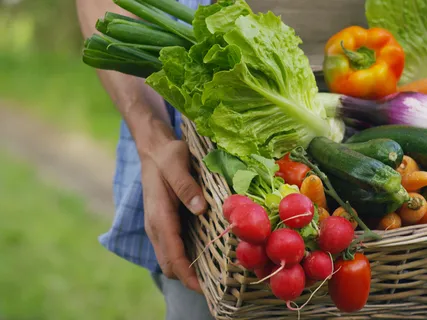
Eating with the seasons is something that is a common discussion,
Especially in the area of wellness medicine.
One of the most common aspects of it is eat the food that is in season and in your area.
This is a really great idea because if you do that,
You can't really go wrong.
The problem with it is that as our food grows in hot houses and also in areas where it never grew in the past,
This makes this idea a little bit more complex.
For example,
In Australia,
If one used to look at what the Aboriginals used to eat,
It is quite clear that now we do not eat swans or turtles and we do not eat what they call bush tucker or the bush type of foods and fruits and berries.
We eat really what is a European diet which was all brought over,
Pigs,
Lamb,
Beef.
Therefore,
We can look at this from a slightly different angle in terms of what Ayurvedic and Chinese medicines and how they recommended to eat according to the seasons.
Actually,
Both their systems vary slightly,
But all have good points.
So there are three particular points to pay attention to.
In Chinese medicine,
It is the general idea that in summer you should eat hot and warming foods such as chilli,
Ginger,
Garlic and spices.
In winter you should eat cooling foods such as salads,
Fruits and raw foods.
This may sound the contrary,
Why am I eating cooling foods in winter and heating foods in summer?
The reason being is that it appears as though that in summer the digestive system tends to get a little bit sluggish.
And because the digestive system gets sluggish in the summer,
We need foods that stimulate the digestive system.
In the winter it is opposite where it seems that the digestive system is cranking quite strongly.
Therefore,
One needs to make sure that it doesn't over rev and therefore eat cooling foods.
This concept also has the same idea in the fact that in summer as the energy is going outwards,
Hence we see the growth of trees and everything outside,
That one should follow this direction of this movement and sweat.
Therefore,
By eating foods such as chilli and stuff,
They help promote the upward and outward moving and the sweating.
In winter it is the opposite where energy goes down and the trees lose their leaves and it was seen as though that one needs to keep the energy going down within the winter by making sure they're eating foods that are not creating sweating.
This is the first aspect of the Chinese medicine idea.
The second aspect of the Chinese medicine idea is that in each of the four seasons there is a type of pathogenic weather condition that it creates sickness.
The pathogenic weather condition in spring is wind,
In summer it is the heat,
In autumn it is dryness,
And in winter it is coldness.
The Chinese also separated kind of like a fifth season,
The late summer where it is hot and damp.
What was important to do was to eat foods that guarded one against getting that pathogenic weather inside of them.
On a modern note here,
I don't think you get sick from cold weather or you get sick from humid weather or you get sick from wind.
That doesn't seem to be the case to me because as we all know it's viruses and bacteria that create illness.
In winter for example,
It appears as though that if you get too cold it seems to drop your immune system by which the influenza virus for example can cause you illness.
It's the same with many gastric flus that are commonly seen in the late summer where the weather is hot and damp.
There's obviously something to do with that environment that that bacteria grows better in an environment that is hot and damp.
This is the same as those who get the dry cough in autumn.
There is something with the dry weather that disrupts the lungs or allows certain bacteria to grow where one can get a dry cough or even a dry cough with very little green sputum.
These connections are very obvious in clinic but in terms of proving them on a modern scientific level this can be difficult.
It's therefore in each of those five seasons one needs to eat certain foods to protect themselves.
So in late summer for example when it's hot and damp if you have a heaty type body it was highly recommended that you have watermelon.
If your body is not so heaty then you can have the green young coconut juice.
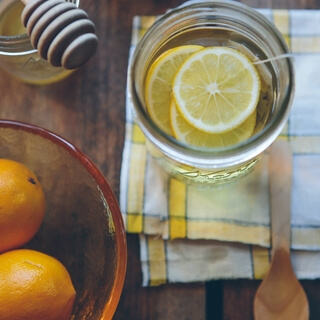
In autumn for example with the dryness in the air it was recommended that you can have yogurt and honey or lemon and honey together.
In winter because it's so cold it is sometimes recommended that if you're getting cold feet you eat more lamb or mutton or if you're getting that runny nose because you're feeling too cold to add raw ginger to your food.
In spring you eat spring onion to help with the wind and summer when it's hot they would commonly have lotus leaf.
The Ayurvedic method had a slightly different approach to this where they separated the body into kapa,
Vata and pita.
Three different constitutions.
The Chinese just put it into yin and yang constitutions.
These three kapa,
Pita and vata were related to weather conditions.
So for example if the weather was cold and wet they would see that as a kapa condition and therefore you would need to eat foods that would counteract that.
If it was hot then you would have a pita condition and then if it was dry and cold you have a vata condition.
So these three then were created on the weather that you see at that time of the year and then I just eat according to the weather that I'm seeing.
In terms of what foods to eat with the kapa,
Pita and vata constitutions you just do the opposites so with weather that is hot you have cooling food,
Weather that is damp and cold you have warming and drying foods and for weather that is cold and dry you have warm and moistening foods.
These different aspects of eating with the seasons actually can be relatively complex and show some complexity to the systems.
The real difficult here then is that the balance of eating with the seasons is not like a pendulum.
The balance is cyclic and that's where the art form and difficulty lies within.