There are three groups of people that tend to benefit the most from learning and using mind-body tools for their digestive issues.
I'll walk you through those three categories and let's see if you might fit into any of them.
Welcome to the Rest and Digest podcast.
I'm your host,
Dr.
Scott Rauer.
This is a podcast for anyone with a digestive disorder and we focus on something called GI psychology.
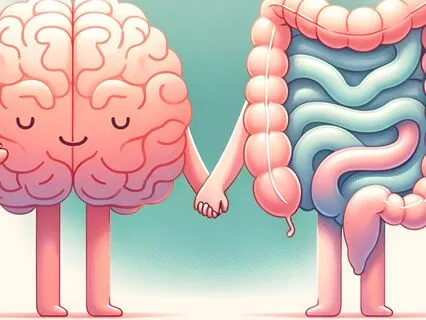
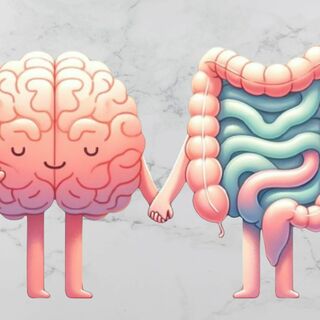
And this is the science of the interaction between the mind,
The nervous system,
And the digestive system.
Stress,
Anxiety,
And depression are all linked to having worse GI symptoms.
GI psychology explains why that happens and,
More importantly,
What we can do about it.
So let's get into this first category of people.
This first category actually has two different types of people.
The first type are people who have noticed that there's a connection between their stress and their digestive symptoms.
These are people that are aware of that connection,
That pattern in how this all plays out for them.
The second type of people in this first category are people that are drawn to a more holistic or natural approach to treatment.
So if either one of those is you,
You see that connection between symptoms and stress,
Or you're someone that's just naturally driven towards a more holistic or natural approach,
Then you're in this category.
And if you're in this category,
That's good news.
Learning about GI psychology and the mind-body connection can help you better understand what's happening in your body.
It can also expand your toolkit for relief.
The second category of people I would group together under the name,
I've Tried Everything.
The I've Tried Everything group.
So the second group of people includes anyone that is living with a moderate to severe GI condition,
And especially if you have significant pain or if you're also dealing with anxiety or depression layered in.
It's important to note that people with digestive issues have higher rates of both anxiety and depression.
So if this describes you,
Please know you're far from alone.
You're also in this category if you've tried medications,
Diet changes,
Supplements,
All the different types of things a lot of people try to get their symptoms to calm down,
But they're just,
Maybe they've helped,
But they're just not enough on their own.
The symptoms still persist,
They still return.
And if that's you,
The mind-body approach may be a key missing piece of the puzzle.
It helps address the nervous system patterns that often keep symptoms stuck.
This is the category that I fall into myself personally.
And finally,
The third group of people are those who are caught in a cycle of worry,
Fear,
And hypervigilance about their symptoms.
Maybe you find yourself over-preparing before you leave your home.
You could be avoiding social situations due to fear of having symptoms,
Or you could be constantly checking for the nearest bathroom.
And finally,
A common pattern would be noticing thoughts spiraling into worst-case scenarios.
Those are not abnormal experiences for people to have if they have a severe enough digestive issue.
But if you notice that has taken over,
That's hijacked you,
And the worry really is perpetuating things and clearly causing a lot more stress,
And that stress might be just making things worse,
Then you could be dealing with something called GI-specific anxiety.
And mind-body tools can be especially helpful here for anyone dealing with that.
Often these are tools that are more helpful than trying to do another tweak of the diet or finding that magic bullet supplement.
Because these tools,
They can help calm your nervous system down and help to restore a healthier sense of control over both your symptoms and your life.
So these are the three categories.
And if you fit into any one of these,
That's good news.
It means there are concepts and skills that could likely really help you and give you more control over your health beyond medications,
Supplements,
Or diet changes alone.
Now,
I want to include an important piece of information with all that.
I want to address a couple of misunderstandings that often come up when people hear these concepts.
The first misunderstanding is that when people hear that mind-body skills or psychologically-based tools can be helpful for their digestive condition,
A big chunk of people will initially take this as invalidation.
That they're being told that it's all in their head or maybe that their digestive issue isn't real.
And that is absolutely not the case.
Digestive issues are very real medical conditions.
Your condition is not in your head and it's not due to just stress.
But it's also not black and white.
There's no evidence that stress causes a digestive issue.
But there's plenty of research that shows that once a GI condition has started,
Stress can become a primary factor in what flares symptoms,
What worsens the severity over time,
Or prolongs recovery.
The majority of digestive disorders or conditions are stress-sensitive,
Meaning that stress,
Anxiety,
Depression,
Or trauma can all influence how the condition behaves over time.
A classic example of this is peptic ulcers.
So for decades,
Ulcers were thought to be caused by stress or a certain personality type,
Like a type 8 type personality.
Then in the 1980s,
Researchers discovered that most peptic ulcers were actually caused by an infection.
It was an infection of a bacterium called H.
Pylori.
And so a short course of antibiotics usually clears the infection and that allows the ulcer to heal.
But that discovery didn't make stress irrelevant.
It just clarified the role of stress.
Stress doesn't cause the ulcer to begin with.
But once it's there,
Whether from an infection,
From irritation from a medication,
Or another source,
Then stress can worsen the symptoms.
It can slow the healing and it can increase the risk of recurrence.
So stress isn't their root cause,
But it's a powerful amplifier of how the condition plays out over time,
Either towards healing and remission or towards future flares and reoccurrence.
The second misunderstanding is seeing mind-body approaches as somehow in opposition to medical care.
In reality,
The most advanced GI departments in elite medical institutions across the world take an integrated or a holistic approach.
They combine medical care,
Diet,
And GI psychology.
And so they have full-time GI psychologists on staff,
They have dieticians on staff,
And those professionals work alongside gastroenterologist doctors because treating the whole system produces the best outcomes.
Mind-body tools are meant to complement medical treatment,
Not replace it.
In my own journey with Crohn's disease,
I rely on my gastroenterologists and medications to manage my inflammation.
And I do my part,
I prioritize my diet,
I exercise,
I'm regulating my nervous system,
I'm actively working always on reducing stress.
So it's not an either-or,
It's both.
So if you recognize yourself in any of those groups I started with,
The stress-aware or holistically-minded people in group one,
The I've-tried-everything group in group two,
Or those people that are hijacked by anxiety about their digestion in group three,
Again,
This is good news.
It means there are proven practical tools that might be a missing piece of the puzzle for you,
Tools that can help you take back more control over your health and your symptoms.
These skills are not about doing more,
They're about helping your body and your nervous system feel safe enough to heal.
Thanks for listening.