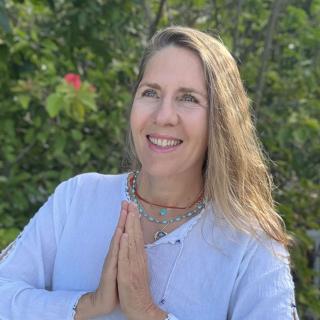
Welcome my friends,
Welcome,
Welcome,
Happy to have you here,
Good day to you.
Let's take a moment to land,
Just a few deep breaths to anchor our mind into the body and simply be here now.
I invite you into a little bit of silence,
That is you,
Before we jump into the words.
We are here and we are alive.
In this moment,
Regardless of what is going on in your life,
And I'm sure all of us have some stuff going on,
Right?
You know your stuff,
Right?
Regardless of what's going on,
In this moment,
Is there any problem?
Is there any issue?
Just right here,
Right now,
In this breath,
As we calm our nervous systems and we land our minds into the body,
Through the breath,
In present moment,
Is there any problem right now?
If you're finding a problem,
I bet you're finding it in your mind.
You're either thinking of the past or the future,
You're not right here.
Because when we are just right here,
In this moment,
It just is,
Just the is-ness of this moment,
No stories,
No narrative,
This is good,
This is bad,
No judgements,
No expectations,
Just is-ness.
And that's some of what we're going to talk about today in the third agreement.
So,
I'm very grateful that you've joined me,
Very excited to have you here,
Whether you're new,
Brand spanking new,
Or you've been here before,
This is our love stream,
I think we're on number 16,
So it's been a few weeks that I've been on this side of the screen,
Sharing,
Just sharing,
My life,
My transformation,
The wisdom teachings from the Buddha that have transformed my life.
And sure,
I give it a personal spin,
Using my unique experience,
My personality,
My silliness,
My language,
My verbiage,
And that's exactly what the Buddha wanted for us.
He wanted us to question everything,
Not take his word for it,
Question it all,
And then put it through our own filters,
Our own life experience,
And check it out.
Does this wisdom apply to me?
Does it relate to my life?
Can I use any nuggets,
Little nuggets,
One thing,
If you take away one little nugget from our time together today,
It's a lot.
So I'm simply sharing my life experience,
My own transformation,
My life experience,
My deep dive into the journey of self-discovery over the past 18 years or so,
Although I feel like I've been on this journey since I was very young,
When I began writing poetry as a child,
And creating art,
But it all hit the fan about 18 years ago,
Through the doorway of suffering.
Isn't that the case,
My friends?
Isn't that usually the case?
We enter this journey of awakening through suffering,
And when suffering comes knocking,
We can either use it to alchemize our life experience,
Or we can just suffer.
So suffering for suffering's sake is a waste of suffering.
Suffering for growth and transformation and awakening,
Ah,
Now that's something special.
So you'll see that in our time together today,
I'm going to offer you a lot of questions.
I have more questions than answers,
And the questions are a way to boomerang back to yourself,
To personalize what we're exploring here,
Because otherwise it just becomes a lot of blah,
Blah,
Blah,
And God knows this world does not need more blah,
Blah,
Blah.
We've got plenty of that going on,
And that's certainly not my intention.
My intention is not to just spew out more information.
It's more so to become embodied,
To pluck a little nugget from the ancient wisdom teachings and apply it to your life,
Apply it to yourself.
That is my intention here.
I share what's worked for me.
I share what I've lived and what I've applied,
And also what doesn't work for me.
So these teachings invite us to be really honest and to tell ourselves,
This isn't working,
That's not working,
This relationship doesn't serve me,
The way I am behaving in this space doesn't serve me,
My old conditioned habits don't serve me,
My autopilot behavior of going from 0 to 100 when I get upset,
Angry,
Frustrated,
Sad,
No longer serves me.
So really the question is,
Are you sick and tired of being sick and tired?
Are you just weary of feeling weary?
Are you done with your stuff?
Ask yourself,
Am I done with it?
Or do I need to keep regurgitating the cud,
Continue to live in the same habitual conditioned patterns,
The ego driving the show,
Perhaps a perfectionist lives in there,
Perhaps the inner critic,
Perhaps this bully that says,
You're not good enough,
You're not worthy.
Who's in there inside of you?
And are you done with it?
Are you ready to really embrace all of you?
We don't try to throw out the inner critic or the perfectionist.
We embrace them,
We befriend them.
We embrace all these parts of ourselves.
So take a moment to check in with yourself and ask yourself,
Am I just weary,
Tired with my stuff?
So this journey,
My friends,
Is a journey of radical honesty,
Real honesty with ourselves and our stuff.
So take a little moment to check in with your stuff and then as we open up our topic today,
Just notice,
How can I apply this to my life so that this Dharma talk isn't just entertainment,
It actually serves in your life.
And as always,
I only share what I have done,
What I have experienced,
What I live with,
What is true for me.
And whenever you see me or hear me taking my one deep breath to land within myself,
I invite you to join me and do the same.
What else do we need?
Here we are,
In this moment,
Fully available to live this life.
One more breath with me.
Join me.
The breath is so important.
It's not just a pause,
But the breath sends a signal to our nervous system that everything is okay,
That we are safe,
That we are calm,
That nothing is threatening us in this moment.
And that's why we take these one breath meditations often to support ourselves,
To land.
Okay,
My friends,
So glad you're here.
Everyone who's been with me before,
And everyone who's new,
Welcome to the Love Stream.
I'm very excited about our topic today,
The Third Agreement.
So I've been doing this series of four.
We already have the two agreements that we explored in these last couple of weeks,
And they are being posted as recordings on my page.
So if you feel inspired to go in and take a listen to them,
You're welcome to.
And now,
Let's dive into the Third Agreement.
That's why we're here today.
And the Third Agreement is Don't Make Assumptions.
How does that feel for you?
Are you someone who assumes a lot in your life?
Do you even notice?
Are you even aware that you make assumptions,
When you make the assumptions?
Well,
I'm going to share with you,
My friends,
That you're not alone.
We all make assumptions.
Why?
Because that's how our minds have been conditioned.
So let's break it down in this beautiful,
Exploratory Dharma talk.
And I invite you to personalize it.
Whatever it is that I say,
And I'll share little bits of stories of my own personal experience to make it more tangible,
And I'll offer you questions.
I invite you to turn it around and personalize it.
When I say personalize it,
I mean bring it into your life experience.
Because if it's just a talk that you're listening to,
It stays out there.
And I would love for you to bring it in here,
Into your own self,
Into your own life.
That's how we transform.
We transform when we take the teachings,
Chew on them for a little bit,
And then embody them,
Live with them,
Take accountability,
Take responsibility for ourselves.
So,
Let's get into it.
The other thing I wanted to share is that we're not only talking about the book by Don Miguel Ruiz,
The Four Agreements,
We're also bringing in the Dharma,
The Buddhist teachings.
So you're going to see that I weave in and out of this topic of don't make assumptions,
And bring the Buddha's wisdom into it.
So you'll notice how it ties together.
So let's begin simply by defining.
What does it mean to assume?
We want to define the words that we're using,
Because we want to be impeccable with the language we use.
So assume means to take something to be true,
But without any proof or direct awareness.
So it's basically accepting a fact without verifying it.
And when we assume often,
We end up mistaking these thoughts for facts,
And then for reality.
And you can see where this is leading,
That this could be a problem over time.
Because the mind begins to pretend,
Oh,
I already know.
I already know what's going to happen,
I already know what this person is going to say,
I already know what this life is about to tell me.
And one of the reasons why we make these assumptions,
And we take things to be true without any proof,
Is because we are trained to keep ourselves safe.
That's just in the hard drive.
That's hardwired into us.
We are trained to predict,
To diagnose,
To conclude,
And to know what's going on.
Why?
Because we like being alive.
So our brains have become these predicting machines.
They're constantly scanning for information and trying to predict what the next thing is going to be.
And in order to predict,
We need to assume.
We need to fill in the blank,
Because what is the ultimate truth?
The ultimate truth is,
We have no idea.
We have no idea.
I don't know if in the next three seconds the internet is going to shut down,
No wifi,
And we all just disappear off the screen.
I don't know.
I don't know if I'll be alive by the end of this love stream.
So since we live in this world of complete uncertainty,
We're trained from a young age to fill in the blank.
To assume,
In other words.
Which over time has us creating our own reality.
And then we start living farther and farther away from real reality.
From what's happening here.
Because we're just filling in the blank with our assumptions.
So what this third agreement is actually inviting us to do is something super radical.
It's asking us not to assume.
It's asking us not to know,
On purpose,
Intentionally.
Don't know mind.
Beginner's mind,
As it's called in Zen Buddhism.
This agreement is asking us not to conclude.
To stay open.
And this is where wisdom comes from in the Buddhist tradition.
Wisdom begins with empty hands.
Not with answers.
Wisdom begins with empty hands.
Empty mind.
Don't know mind.
So take a moment to think for yourself.
How much does my mind assume?
Do I assume far more than the things that I actually know?
Do I use this survival strategy to fill in the blanks so that I can create this subconscious certainty and control when somebody is about to say something?
Do you already jump to,
I know what they're going to say?
Or are you able to meet them with don't know mind?
Even if you had the same conversation 50 times,
Are you able to show up in presence with humility?
You see,
My friends,
This is a practice of presence and humility.
Because even though the assumptions feel safe,
They make the mind feel like,
Oh yes,
I know where this is going.
So I kind of feel safe.
I know where this is going.
But really,
The assumptions are dead ends.
They stop us from seeing the person.
The experience.
They stop us from truly,
Deeply listening.
Because to deeply listen,
We need to be present.
When we're assuming,
We're in our thoughts,
We're not present.
We're in our minds.
To really be present with every moment,
We need to be with the what is-ness of that moment.
But we can't be with the what is if we're in our thoughts,
Filling in the blanks,
Creating assumptions.
So the way that we bridge this to the Buddha's Dharma,
Dharma means teachings,
Is that in Buddhism we learn that suffering doesn't arise from the experience itself.
It comes from misperceiving the experience.
And creating assumptions adds to our suffering.
Because it adds to our misperception of experience.
So you're going to see as we continue with our talk today and our exploration,
That asking a question is the antidote to the assuming mind.
And that takes practice.
So when we make assumptions,
We're not seen clearly.
Because the assumptions are in effect conclusions.
We're creating conclusions without direct knowing.
When we assume over and over again,
We create a new reality.
The reality of these thoughts.
So when I speak of reality,
My friends,
I'm speaking of reality from the Zen Buddhist perspective.
So let's define in our impeccable language,
What do we mean by reality?
I'm talking about consensual reality.
Consensual reality means we all agree that this is a glass.
And this is liquid.
We may not know what liquid this is.
It is water.
It's not vodka.
But this is a glass with liquid.
Anyone of us,
8 billion who would see this would agree.
That is consensual reality.
Reality.
When I start creating stories in my mind,
Perhaps this is a glass that her grandmother gave her and it has deep meaning.
Perhaps this is a glass from her daughter's college.
Which it is by the way.
Perhaps,
Perhaps,
Perhaps.
Perhaps she's drinking vodka first thing in the morning because it's a clear liquid.
Right?
So those are assumptions.
But when we walk this path of awakening of self-discovery,
We want to live in consensual reality.
In just what is here.
And sometimes what is here is very painful.
It's very difficult.
Maybe what's here is a divorce.
Maybe what's here is the end of a relationship.
Maybe what's here is death of a loved one.
Perhaps a diagnosis of a physical illness.
So you can see how we quickly turn away from what is here and use the mind to create stories.
To create assumptions rather than just coming back to present moment awareness.
So what we want to do,
If we want,
If we want to be free ask yourself my friends,
What do I want?
What is my ultimate want?
When all the superficial wants have been covered what is your ultimate desire?
Pure desire.
And if it is to be free then you're in the right place.
Because all of these Dharma teachings support us in being free.
And so what we want to practice,
So that we can practice this third agreement of do not assume we want to look carefully in each situation of our life rather than jumping to meaning making.
Because that's really what an assumption is.
The mind is just jumping into creating meaning of the situation.
So just take a moment and chat in how you notice or not notice how much you live in the assuming mind.
Yeah,
Just notice that for yourself.
And I begin to meet life as it is.
As I like to say,
The good,
The bad and the ugly.
Is that easy?
No.
Is it comfortable?
No,
Not always.
But you get to choose my friends.
Do you want comfort?
Or do you want consciousness?
How do you want to live?
It's a good question.
How do you want to live my friends?
Do you want to live in comfort?
Or do you want to live in consciousness?
Consciousness is often not comfortable.
Why?
Because we get to tell the truth.
And the truth is not always comfortable.
It's not always comfortable to realize,
Wow,
My relationship with my partner is not what I assumed it to be.
We're not on the same page.
Or my relationship with my child.
So do I choose to live in comfort or do I choose to live in consciousness?
It's your choice.
It's not right or wrong.
It's not good or bad.
It's a choice that we can make from an awakened mind that says do I want to live awake?
Honest?
Aware?
Or do I want to live creating stories in my mind?
So like Moni is saying,
It's difficult to remember in moments of overwhelm.
Well,
Yes it is.
I agree with you.
It is very difficult to remember in moments of overwhelm.
And this is why we need to practice.
This is why we need to practice my friends.
So I ask you,
What is your practice?
And we're going to discuss a practice that has to do with assumptions today,
Which can be used for anything and everything that the mind does.
And let's continue exploring what the option is instead of feeding the assumptions,
Instead of continually making up stories.
Again,
It's what the mind does.
It's not intentional.
It's just autopilot.
But what can we do if we want to live in presence?
What we want to practice is to live in direct experience.
That's what the Buddha offered us.
To practice pausing,
Coming into the body,
Noticing what is here,
Listening deeply,
Without preparing a response.
Deep listening.
We can do a love stream on deep listening.
That's a beautiful topic.
And then we want to open a space of curiosity.
To ask instead of conclude.
Remembering that curiosity is an act of compassion.
That space of curiosity,
Rather than showing up from the place of knowing.
So again,
I'm inviting us into Don't Know Mind.
Beginner's Mind.
There's a beautiful book called Beginner's Mind,
Zen Mind.
That's by Suzuki Roshi.
And it invites us into this practice.
Because what is the opposite of assume?
Don't know.
And that's why this agreement,
This third agreement in this beautiful book of the Four Agreements,
Is a radical invitation to do the opposite of what we've been conditioned to our whole lives.
The conditioning of feeling safe,
Creating certainty,
Even though the honest truth is there is no safety.
There is no certainty.
It's just an illusion,
A creation of the mind,
A story.
So when we bring that compassionate practice of curiosity,
By not assuming,
By asking a question,
We're also listening more deeply,
Listening to the experience.
We then speak more honestly,
Going back to the first agreement,
Being impeccable with our word.
And we create spaciousness within ourselves,
In the relationship,
Instead of adding conflict.
Most harm in relationship comes from not questioning.
Most harm comes from making assumptions.
It doesn't come from the truth,
Even though the truth may be uncomfortable.
But most difficulties in the interrelational space between people,
Between us and our parents,
Us and our children,
Us and our partners,
Us and our colleagues,
Most of the harm comes from not questioning,
Making assumptions.
And what happens when we make assumptions is that our nervous system is already tweaked to feel calmer when we make an assumption,
Because we're so trained to do that.
We're so triggered to create assumptions.
And our nervous system wants to feel safe and certain.
So you can see how deeply wired we are to have this assuming mind.
So we don't want to beat ourselves up for it and say oh,
You dum-dum,
Look at you again making assumptions.
No,
That's not the way we're going to go about it.
We want to bring compassion.
We want to bring compassion and remind ourselves,
Oh yeah,
Wait a minute,
I've been practicing this for decades.
Of course my mind is going to assume right off the bat,
It's on autopilot.
But I'm going to reset it now.
I'm going to reset my nervous system.
I'm going to stay open rather than closed.
How do I stay open?
By inviting curiosity rather than aiming for certainty.
And it feels uncomfortable at first.
But can I stay in the discomfort of not knowing?
It can feel destabilizing.
Because again,
The ego wants certainty.
The ego sense of self wants to know exactly how this story is going to turn out.
We don't know,
My friends.
From breath to breath we don't know.
All we know is this moment.
Right?
All we really know ever and always is this moment.
This breath.
So we practice,
And we'll do that together here in a few moments,
We practice staying with a pause,
Staying with a breath,
And opening to curiosity.
Opening to questions.
And we do that by noticing the body.
Noticing the contraction that occurs.
And there is a contraction preceding the assumption because that uncertainty feels like a little contraction.
And then immediately we go to the story,
To the assumption.
So what we want to do is we want to get more intimate.
We spoke a little bit about intimacy in our last love stream.
We want to get more intimate with the bodily sensations.
And we want to soften the body.
How?
By breathing into it.
Do it with me.
One breath meditation.
Deep inhale.
Long exhale.
Let's do another one that feels so good.
Deep inhale.
Long exhale.
Dropping the shoulders,
Relaxing the jaw on the exhale.
And don't worry if your inhale or exhale turn into a yawn,
They do for me often,
Because guess what?
The yawn stimulates the vagus nerve,
Stimulates the parasympathetic nervous system.
And that's the system that we want to be in.
Rest,
Relax,
Restore.
So what is a beginner's mind?
What is this don't know mind that we speak of in Zen?
It's a mind that's the opposite of an assuming automatic mind.
It's a mind that meets each moment as if for the first time.
It's a mind that sees directly into the what is,
Rather than going into the inherited belief systems that we've created over a lifetime.
It's a let's check it out and see kind of mind.
It's a not assuming mind.
How would your life look different if you lived from this space of don't know mind?
There's freedom in not knowing,
My friends.
Is it always comfortable?
No,
We said it's not always comfortable.
But again,
What do you want?
Do you want comfort?
Or do you want consciousness?
We realize the benefits of living in present moment awareness and not missing our lives.
And we miss our lives by living in the stories,
In the assumptions,
In the narratives,
In the story of me.
How would your life look different?
How would you show up to your stuff,
To the challenges in your life if you lived from a don't know mind,
From a non-assuming mind,
From dropping the assumptions of this mental tyrant,
This mental tyrant that is constantly telling you it's like this,
Or it should be like this,
Or if it's not like that it should be this way,
Or why aren't you controlling it to be that way?
And isn't that how we live,
So many of us,
In our minds?
But the don't know mind offers us a willingness to stay present,
Responsive,
Responsive to whatever shows up,
Intimate with life.
Whereas the assuming mind closes it up,
It's a dead end.
It gives us the answer before we even have a chance to explore.
And so the Buddha reminds us that suffering ends when ignorance ends,
When we learn to actually live from this space of don't know mind.
And this is exactly what the Third Agreement is offering us.
Don't assume is inviting us to come back,
To have this intimacy with life,
So that we can meet reality fresh,
Fresh in every moment.
We suffer less this way,
My friends.
And I love this little snippet from a poem of Mary Oliver's and the poem is called Sometimes,
And this is what she writes Instructions for living a life Pay attention.
Be astonished.
Tell about it.
Instructions for living a life Pay attention.
Be astonished.
Tell about it.
What do you think about Mary Oliver's offering,
My friends?
Instructions for living a life.
It ties directly into what we're speaking of.
Pay attention means listen deeply,
Be intimate with life.
It's the opposite of assuming.
Assuming removes the intimacy with life,
Removes curiosity.
Assuming is living from the ego mind space.
So she offers us to pay attention to life.
And then be astonished.
Be curious.
Be in awe.
So Mary Oliver is inviting us to be astonished.
Be surprised.
That keeps life fresh,
Moment to moment.
There's no boredom here.
And then Mary Oliver closes it up by saying tell about it.
Share.
Share your life experience.
So my friends I want to invite us into the ABCs of soul surgery before we do our guided meditation.
And so for those of you who might not be familiar with the ABCs of soul surgery,
I came up with these ABCs from my experience as a trauma surgeon for many years.
In trauma surgery we have the ABCs airway,
Breathing,
Circulation.
So that when somebody comes in in dire straits,
As physicians,
As a surgeon,
I'm able to very quickly assess what I need to do to keep that person alive.
And one day I sat around thinking we need ABCs of soul surgery because we are doing surgery here,
My friends.
We are excavating and extirpating that which no longer serves us.
And we're planting seeds in our mind garden.
Healthy seeds.
Seeds of love and joy and compassion.
Seeds of patience and equanimity.
Seeds of generosity.
So I thought we need something to support us.
We need a practice.
Just like with these assumptions.
We need a way to practice to free ourselves from this conditioned mind that goes on autopilot so quickly creating assumptions.
So I came up with the ABCs of soul surgery.
Awareness.
Breath.
Compassionate Contemplation.
A is for awareness.
The first intervention always is being aware.
If we're not aware in this moment of what is going on,
We cannot shift.
We cannot transform.
We are not conscious.
So the awareness is that first intervention.
Become aware of what is here.
So let's say if we're working with the assumptions,
Oh,
An assumption is here.
So you start becoming more intimate with your thought stream,
With your mind stream,
Realizing okay,
These assumptions are popping up faster than I can even catch them.
Or maybe you notice a quiet mind.
I don't really assume much.
We each have our own minds.
And we get to know our mind.
This is the journey of self-discovery.
So awareness.
Huh.
Well,
I just made an assumption.
That's your mindful noticing in present moment.
Time.
Now sometimes if you can't catch it in present moment,
That's okay.
You can do it later.
You know,
Later on in the evening when you're sitting around and you go,
Hmm,
Wow,
I just realized I was making 10 assumptions about this person that I don't really even know what's going on with them.
So at first it might be challenging to develop that practice,
That ABC,
That awareness in real time,
In the moment.
So that's okay if you practice it later.
As long as you have the intention to observe your mind,
To look deeply into the functioning of your mind.
So once you have that awareness,
Hmm,
I'm aware that there's an assumption here.
The next step is to come out of the mind and into the present.
How do we do it?
With a B.
Breath.
Conscious breath.
Take it with me.
Nice.
Now I like to close my eyes when I take my deep breath but you don't have to.
For me when I close my eyes it just really calms my nervous system,
Quiets my mind and brings my mind's attention directly on the breath.
On that inhale and on that long exhale.
So that's the second step in the ABCs.
The breath helps us to regulate our nervous system.
Helps us to be in the here and now because our breath and our bodies are always and only in the here and now.
So now that our nervous system is a little bit calmer and it might take a few breaths to notice,
Oh,
Those were assumptions I just made and got into an argument because of my assumptions.
Come back to the breath.
And then the C.
Compassionate contemplation.
So first we bring in the compassion.
It's okay dear.
It's okay.
We all make assumptions.
It happens.
Anyone in that circumstance might have made an assumption.
So do you see that gentle compassion?
That sweetness like you would speak to a child or a dear friend.
So that's how we speak to ourselves.
Again,
This regulates the nervous system.
Why do we want our nervous system calm and regulated?
Because that space of curiosity and contemplation that is our next C that we're walking into in the ABCs.
Contemplation and curiosity.
Is more available to us with a regulated nervous system.
Just think about it for yourself.
When you're in an anxious state of mind,
When you're kind of all over the place,
Overwhelmed,
Are you available to be curious,
To be calm,
To be contemplative,
To evaluate and inquire about your assumptions?
Probably not.
I know I'm not.
I'm just in the muck when I'm in it.
So we have two points of contact to regulate our nervous system.
The breath and then the compassion.
They both calm.
Calm our bodies.
Calm our minds.
And then we're ready to go into the third element of the ABCs.
The contemplation.
Which I think we might need to add another C.
We're going to have three Cs.
It's going to be curious contemplation.
Which contemplation in and of itself is a curiosity.
But that word curiosity is so important because that's where the don't know mind lives.
We want to contemplate from a space of curiosity,
A space of don't know mind.
We don't want to contemplate from the ego mind that knows.
We don't get anywhere.
So curiosity and contemplation.
This is when we get to look deeper,
Take a deeper dive into our assumption.
We get to question ourselves.
Huh.
Every time I engage with that person all these assumptions come up.
So let me know my friends how this lands,
These ABCs of soul surgery.
If you're on the market shopping for a practice,
This is a practice that you can use.
Remember that when we stop assuming,
We can meet life as it is.
Rather than through our imagined fears.
Right?
Through trying to create certainty.
By controlling the narrative.
We stop assuming and we meet life as it is.
When we practice on a regular basis,
Day to day maybe several times a day whenever we feel a reactivity or even when nothing's going on.
No major reactivity.
In a relaxed posture.
We practice so that when there is a moment of overwhelm,
We're able to meet it more directly.
More lovingly.
And then we don't have to stay in that space of anxiety and overwhelm and fear and upset and suffering for too long.
We can notice the overwhelm,
Awareness and then do the ABCs to bring ourselves back into presence so that we can work our way to that curious contemplation.
What is really happening here?
How much of my upset is a story and a narrative that I'm telling based on assumptions,
Judgments,
Belief systems?
And how much of my suffering is based on really what's happening here?
It's just painful.
My child doesn't want to talk to me.
That's just painful.
Without a story.
Anybody's child who doesn't talk to them the parent would likely not like that.
Not feel good about that.
Using that as an example we can see what are my stories around that situation versus the reality.
The reality is what a video camera can capture.
That's consensual reality.
There's a child and they're not talking to the parent.
That's the reality.
Do we stay with the reality in present moment time?
No,
My friends.
We mostly create stories based on assumptions,
Judgments,
Expectations,
Belief systems.
All of these conditioned habits of mind.
So the story is I upset him.
He doesn't love me.
I'm a bad mother.
That's a good one.
So the ABCs of Soul Surgery support us in slowing down the mind,
Slowing down the narrative,
And being present with what is truly here.
Hey,
My friends.
Let's enter the space of a guided meditation to invite these teachings to land more deeply within us.
These teachings about the third agreement do not assume.
These teachings about embracing a beginner's mind,
A don't know mind.
So I invite you to close your eyes if that's available to you.
And find a comfortable stance in your body.
Relaxing the eyelids,
And the eyes and their sockets.
Separating the lips a bit,
Relaxing the jaw.
Relaxing the forehead and the brows.
Relaxing the neck and shoulders.
Relaxing the torso and abdomen.
Pelvis and lower body.
Feeling your feet grounding in the earth.
Feeling your body grounded in the earth.
Offering a position of receiving.
Perhaps hands on your lap with palms up.
Available to receive.
Now bringing the light of your awareness to the breath.
Inhaling through the nose.
Blowing up the belly like a big balloon.
And exhaling through the mouth.
Squeezing the abdominal muscles.
Letting it go.
Connecting with the stillness and the silence between the words.
And if the mind stream is still busy,
You can give it a task On the inhale it can say breathing in,
I know I am breathing in.
Breathing out,
I know I am safe.
Now let's explore the assuming mind versus the don't know mind.
If you can bring up an assumption that you've made recently or in the past about someone,
About something,
A situation or a conversation.
And notice how that feels.
Notice how assuming feels in your body.
Does it feel spacious or constricted?
Does it feel like it's coming from an ego centered space of knowing all or from the spacious unknown?
Simply noticing without judgment how it feels.
And now let's drop this assumption.
Take a deep breath to clear it out.
Long exhale.
Now invite yourself into beginner's mind.
Don't know mind.
A mind of curiosity.
It might feel uncomfortable,
Unfamiliar,
Because the mind is so used to thinking.
But just give it a try.
There's no doing it right and there's no doing it wrong.
Take a deep breath into don't know mind.
On the inhale,
Your mind can say,
Breathing in,
I know I am breathing in.
Breathing out,
I rest in don't know mind.
Noticing how your body feels in the space of not knowing.
There is nothing you need to know in this moment.
If you feel lost,
Just come back to the breath.
How does the body feel in the space of not knowing?
Uncertainty In this ever-changing world,
Everything is always changing.
Come into your body and notice what is here.
Is there contraction or expansion?
There's no right or wrong.
There's simply meeting what is here in this moment.
And can you bring a curiosity to this moment?
Hmm.
How does it feel to not know?
How does it feel to rest in uncertainty?
It may be pleasant and it may be unpleasant.
Can I stay?
Can I stay in the uncertainty?
Can I stay in not knowing?
What's next?
Can I bring a mind of awe and curiosity into every moment in my life?
Can I see the ocean for the first time,
Though I've seen it thousands of times?
Can I see snow for the first time,
Though I may have seen it thousands of times?
Can I see my child's face for the first time,
Though I've seen it thousands of times?
How would my life change if I dropped the assuming mind and showed up to life with this don't-know mind?
This curious mind.
This present mind.
As we prepare to enter back into our space of togetherness,
You can wiggle your fingers,
Perhaps do some circles with your shoulders or your neck.
Give yourself whatever you need in this moment,
A little stretch,
Maybe a little tapping.
Shift the energy.
And when you're ready,
You can open your eyes.
Returning to our space.
Just noticing how you feel in this moment.
I feel present,
Relaxed,
And deeply grateful.
Our closing poem from Rumi,
The 13th century mystical poet,
Titled The Breeze at Dawn.
The Breeze at Dawn has secrets to tell you.
Don't go back to sleep.
You must ask for what you really want.
Don't go back to sleep.
People are going back and forth across the door sill where the two worlds touch.
The door is round and open.
Don't go back to sleep.
Om shanti,
Shanti,
Shanti.
Peace be with you.
Peace in your heart.
Peace in your mind.
Peace in your body.
And peace in our world.
And let us share the merit that whatever benefit might have come to us today from our listening,
May it benefit ourselves and be of benefit to everyone we encounter.
And may it aid in the healing and transformation of our world.
Thank you,
My friends,
For being here with me,
For holding space,
For sending loves in our love stream,
For co-creating this beautiful energy together.
And if you feel called to dive in deeper,
I do offer one-on-one consultations and you are welcome to connect and communicate to go more deeply into what is going on for you,
As I call it,
The stuff,
The drama of real life,
Everyday life.
And if you'd like to have some support in using these incredible teachings that have transformed my life completely over the last 18 years.
We do this life alone,
My friends,
Because no one else can walk our walk for us.
But it's so fun to do it alone together.
And that's what we are offered here.
In this platform and when we meet one-on-one and when we meet in the workshops and upcoming retreats that I'm creating for us.
We get to do each of us our own path alone,
Yet together.
Thank you for all the little hearts for our beautiful love stream and I wish you peace,
Love,
And most of all presence.
So I'll see you on the next one and don't forget what Rumi tells us,
Don't go back to sleep.