Hello.
Welcome to Sleep Stories with Steph,
Your go-to romantic podcast that guarantees you a calm and entertaining transition into a great night's sleep.
Come with me as we immerse ourselves in a romantic journey to a time long since forgotten.
But before we begin,
Let's take a moment to focus on where we are now.
Take a deep breath in through your nose and let it out with a long sigh.
Now close your eyes and feel yourself sink deeper into the support beneath you.
It is time to relax and fully let go.
There is nothing you need to be doing now and nowhere you need to go.
Happy listening.
Jane Austen and her works,
Written by Sarah Tytler,
Scottish novelist of the 19th century.
Chapter 1.
Jane Austen It is said there is an ancient tradition in the East that close on a certain date of the year are born the men to whom are given special gifts to enlighten and delight their fellow creatures.
To or near to this date,
We can assign the birthdays of William Caxton by the invention of printing the father of widely diffused learning.
William Shakespeare,
With his marvellous knowledge of human nature,
Cervantes,
The great humorist,
And William Wordsworth,
To whom skies and hills,
Trees and flowers,
Beasts and birds had a voice and told a story which he could make plain to the duller comprehension of thousands.
But no oriental sage had a word to say in anticipation of the birthday,
At a very different season of the year,
When they looked out for the first time on the world and its wonders,
The child eyes of a woman who was to edify and charm some of the wisest men of her own and succeeding generations.
Women may well be proud of the woman who has been held on high authority,
Second only to Shakespeare,
In the comprehension of the springs which move the heart.
Girls may well be proud of the girl who,
Strange to say,
Wrote two of her masterpieces,
Pride and Prejudice and Northanger Abbey,
Before she had completed her twenty-third year.
When other girls were practising their music and working at their embroidery,
Having their youthful gaieties and youthful dreams,
Jane Austen,
Who was fair to see and charming to listen to,
Who practised her music,
Sowed at her worstest work,
Joined in the gatherings of young people,
And had her morning visions with the best,
Possessed in addition the power and found the time to accomplish those wonders of fiction which,
For their subtle reproduction of character and exquisite weaving of a web so like that of the common lot,
Have been the instruction and solace,
Not of companion girls alone,
But of statesmen and historians,
Philosophers and poets,
Down to the present day.
Both men and women may be proud of the woman who did this great thing,
Yet whom never forfeited a title of her womanliness,
Who was essentially as good,
True and dear as devoted to home,
As cherished in its narrow circle,
As the most obscure of her sisters,
Who are nothing to the world while they are everything to their own people.
The slight,
Yet not unsatisfactory record of Jane Austen's life came late to literature,
After most of the materials which might have supplied a fuller memoir had been destroyed,
And nearly every contemporary recollection of her was lost.
The relatives who were left to accomplish a biography of Aunt Jane,
Whose personal kindness had made so deep an impression on them half a century before,
And of whose permanent and still increasing fame they have remained justly proud,
Were more or less elderly people,
And were not writers like the subject of the biography.
But any disadvantages which exist are not without their ample compensation in the affectionate simplicity and pathos of the narrative.
Jane Austen was born 104 years ago,
On December 16,
1775,
At the Parsonage House of Steventon in Hampshire.
The Austens were a Kent family,
Originally one of those aristocratic cloth workers who,
Possessing landed property in the Weald,
Did not disdain to work in wool,
And who were generally known as the Greycoats of Kent.
Mr Austen Leigh,
Jane Austen's nephew,
Writes that a trace of the family origin survives in the family livery of light blue and white,
Called Kentish Grey.
Jane Austen's father,
An orphan brought up by an uncle,
A lawyer in Tunbridge,
Was in succession a scholar at Tunbridge School,
A fellow of St John's,
Oxford,
And rector of the two livings of Deane and Steventon,
Hampshire villages little more than a mile apart,
And numbering a united population of not more than 300.
The young rector married Cassandra Leigh,
A daughter of the incumbent of Harpenden,
Near Henley-on-the-Thames.
The Leighs were a Warwickshire family,
Descended on their mother's side,
From the Chandos House.
Jane Austen's great uncle,
Sir Theophilus Leigh,
Was master of Ballinol College for upwards of half a century.
I mention him because he was a man famous in his day for ready repartee,
And it is possible his wit may have descended to his granny's Jane.
For 30 years the Austens resided at Steventon,
And there Jane Austen spent for the most part the first 25 years of her life in a quiet country circle,
Certainly not without its cultured members,
Among who was her father,
A scholarly and accomplished man.
The Reverend George Austen was so good-looking a man,
From youth to age,
As to have been called the handsome proctor at Oxford,
And to be still noticed at Bath,
When he was over 70 years of age,
On account of his fine features and abundance of snow-white hair.
I have already said he was a man of ability.
He directed the studies of all his children,
And increased his income by the practice,
Usual with clergymen,
Of taking pupils.
Mrs Austen was also reputed a clever woman,
Endowed with a lively imagination,
In addition to much good sense.
Jane Austen's biographer says rightly the members of her own family were so much to her,
And the rest of the world so little,
That a brief sketch of her brothers and sister is necessary to furnish a complete idea of her life.
He remarks elsewhere,
In alluding to the retirement in which she generally dwelt,
That she had probably never been in company with anybody of greater literary ability and reputation than herself.
In these observations,
He touches inadvertently on what I think formed the root of the defects,
To which I shall refer afterwards,
In an otherwise fine character.
Jane Austen had five brothers and one sister.
James,
The eldest of the family and the father of Jane's biographer,
Is described as well read in English literature,
Writing readily and happily both in prose and verse.
When yet a young man at Oxford,
He originated a periodical called The Loiterer,
And by his example may have turned Jane's attention to authorship.
He was a clergyman and succeeded his father at Steventon.
Edward Austen was early adopted by his cousin Mr Knight of Godmacham Park in Kent.
He adopted the name of Knight and was,
Like Frank Churchill in Emma,
A good deal separated from his family in their youth.
But it was to his neighbourhood and to the support of his position as the squire of the parish,
That the women of the Austen family returned at last.
This brother Edward is said to have been full of amiability and fun.
He seems to have borne some resemblance to his character,
As well as in his circumstances,
To the Frank Churchill of Jane's story.
Henry Austen was a good talker,
But he was the least successful of the brothers.
While he resided in London,
He appears to have been the literary authority and the means of communication between his sister Jane and her publishers.
Francis and Charles Austen were both sailors and both lived to become admirals.
Francis possessed a firm temper and strong sense of duty,
And was distinguished by his religious principles,
At a time when a religious profession was rare in the service.
Charles,
Specially beloved in his family for the sweet temper and affectionate disposition which resembled Jane's,
Was on one occasion,
Seven consecutive years absent from England,
On active service.
He died of cholera in the course of the Burmese War.
Cassandra Austen was three years Jane's senior.
The warmest affections subsisted between the two,
Jane in her maturity and fame,
Continuing to look up to her elder sister,
A beautiful,
Stayed,
Thoughtful woman from her girlhood.
When Cassandra was sent to the school of a Mrs.
Laterville,
In Reading,
Jane went with her,
Not because she was old enough,
But because she would have been miserable without her sister,
Her mother observing that if Cassandra were going to have her head cut off,
Jane would insist on sharing her fate.
Steventon was one of those villages and parsonages which Jane Austen so often described.
It was situated among the low chalk hills and winding lanes of North Hanse.
The parsonage house stood in a shallow valley,
Surrounded by sloping meadows well sprinkled with elm trees,
At the end of a small village of cottages,
Each provided with a garden scattered about prettily on either side of the road.
Within the house,
Though,
It was reckoned rather above the average of the parsonages of its day.
No cornice marked at the junction of wall and ceiling,
While the beams which supported the upper floors projected into the room below in all their naked simplicity,
Covered only by a coat of paint or whitewash.
About five years after Jane Austen's death,
Her old home at Steventon was pulled down.
At the front of the house was a carriage drive through turf and trees,
She said.
On the south side,
The ground rose gently and was occupied by an old-fashioned garden in which flowers and vegetables kept each other company,
Flanked on the east by a thatched mud wall and overshadowed by fine elms.
Along the upper side of the garden ran a terrace of fine turf,
Where,
In my childhood,
I might have emulated young Catherine Morland in rolling down the green slope.
Mr Austen Lee says the chief beauty of Steventon was in its hedgerows,
Borders of copsewood and timber,
Often wide enough to contain a winding footpath or rough cart track.
There,
He says,
The earliest primroses,
Anemones and wild hyacinths were to be found,
The first bird's nest and sometimes an unwelcome adder.
Two such hedgerows radiated from the parsonage garden.
One,
A continuation of the turf terrace,
Ran westward and formed the boundary of the home meadows.
It was made into a rustic shrubbery with occasional seats and was called,
In the sentimental language of the day,
The woodwalk.
No doubt Jane Austen often strolled or sat there,
Alone or with her sister or one of her brothers.
She might carry there her little work box or the volume of Evelina or Cecilia or The Mysteries of Udolpho or The Romance of the Forest,
Which she was devouring.
It was to such a shrubbery or wildness that she sent Elizabeth Bennet to seek her father,
To read an important letter or hold her famous interview with Lady Catherine de Bourgh.
The other hedgerow bore the name of the Church Walk because it climbed the hill to the parish church,
Near which,
Surrounded by sycamores,
Was a manor house of Henry VIII's,
Tenanted for upwards of a hundred years by a human family bearing the appropriate name of Digweed.
The little church,
Without a spire,
With its narrow early English windows,
Is said to have been upwards of 700 years old.
Sweet violets,
Purple and white,
Grew in profusion beneath the South Wall,
And the large family at Steventon were worthy,
Prosperous and happy.
They had in some respects the position and privileges of the family of the principal squire,
As well as the rector of the parish,
Since the Reverend George Austin represented the absentee cousin of whom the clergyman's second son was the adopted son and heir.
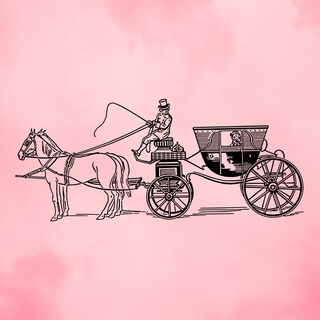
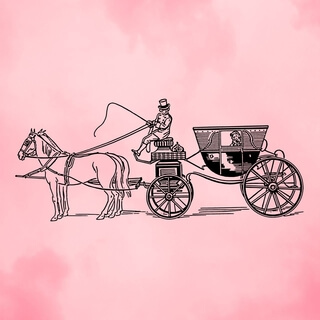
The Austins kept a carriage and pair of horses and lived in a style equal to that of the country gentry,
Whose near relatives or intimate friends the household at the Parsonage were.
In reckoning up the special advantages of such a home in one of her novels,
Jane Austen lays stress on it being well-connected.
A well-connected Parsonage,
She says.
Among the most frequent visitors at Steventon were two families of cousins who could both of them bring fresh experience to the country Parsonage.
The one family,
The Coopers,
Lived in the brilliant Bath of their generation,
Where Cassandra and Jane Austen,
As young women,
Visited their relations long before they ever thought of Bath as a residence for themselves.
Jane was still able to enjoy the gay watering place with a keen appetite of a country-bred girl,
And it is these vivid reminiscences which she transfers to the pages of Northanger Abbey,
While she reserves the much more sober,
Rather adverse estimate of later years,
For the concluding chapters of Persuasion.
One of these cousins,
Jane Austen's dear friend and namesake,
Was married from her uncle's house at Steventon to a captain in the navy,
Under whom Charles Austen served.
Another cousin had been brought up in Paris and married a Count de Fouillard,
Who was guillotined during the French Revolution.
Thus,
The quiet Hampshire Parsonage was not entirely without its excitements.
In addition to the arrivals and departures of its sailors' sons,
The naval battles and sieges in which they were engaged,
The ship intelligence which was always eagerly scanned on their behalf.
Had the future author been so disposed,
She might have found in the conversation and adventures of her cousin and sister-in-law,
Materials for novels which would have been more to the taste of a large section of the public than Jane Austen's perfect tales.
As it was,
The chief immediate results of the young widow Countess's stay in Steventon,
When Jane Austen was just entering her teens,
Were the improvement of the family French and the performance of amateur theatricals in a summer theatre in the barn and a winter theatre in the little dining room.
One of these theatricals,
Jane Austen made stock for Mansfield Park.
Whether or not the real theatricals led to the attachment and engagement of Henry Austen and Madame de Fouillard,
We may conjecture,
But cannot ascertain from Mr Austen Lee's narrative.
Jane Austen's biographer writes of the Austen's long stay at Steventon as having remained unshadowed by any serious family misfortune or death.
But one great disaster,
Which,
Though it did not concern Jane directly,
Touched her nearly,
Befell a member of the family.
Cassandra Austen,
More regularly beautiful than Jane,
Wise for her years and good,
Was engaged to be married to a young clergyman who had a prospect of early preferment from a nobleman,
His relative and friend.
The two men went together to the West Indies,
The one to act for a time as chaplain to the regiment of the other,
But very soon the chaplain died of yellow fever.
The melancholy news,
Descending like a thunderbolt on the cheerful Hampshire parsonage,
Brought great grief to Cassandra Austen,
And Jane was certain to suffer too.