Hello.
Welcome to Sleep Stories with Steph,
Your go-to romantic podcast that guarantees you a calm and entertaining transition into a great night's sleep.
Come with me as we immerse ourselves in a romantic journey to a time long since forgotten.
But before we begin,
Let's take a moment to focus on where we are now.
Take a deep breath in through your nose and let it out with a long sigh.
That's it.
Now close your eyes and feel yourself sink deeper into the support beneath you.
It is time to relax and fully let go.
There is nothing you need to be doing now and nowhere you need to go.
Happy listening.
Sense and Sensibility by Jane Austen Chapter 46 Chapter 46 Marianne's illness had not been long enough to make her recovery slow,
And with youth,
Natural strength and her mother's presence in aid,
It proceeded so smoothly as to enable her to remove,
Within four days after the arrival of the latter,
Into Mrs Palmer's dressing room.
When there,
For she was impatient to pour forth her thanks to him for fetching her mother,
Colonel Brandon was invited to visit her.
His emotion in entering the room,
In seeing her altered looks,
Was such as,
In Eleanor's conjecture,
Must arise from something more than his affectionate for Marianne,
And she soon discovered in his melancholy eye and varying complexion as he looked at her sister,
The probable recurrence of many past scenes of misery to his mind,
Brought back by that resemblance between Marianne and Eliza already acknowledged,
And now strengthened by the hollow eye and the sickly skin.
Mrs Dashwood saw nothing in the Colonel's behaviour but what arose from the most simple and self-evident sensations,
While in the actions and words of Marianne,
She persuaded herself to think that something more than gratitude already dawned.
At the end of another day or two,
Mrs Dashwood began to talk of removing to Barton.
At Colonel Brandon's and Mrs Jennings' united request in return,
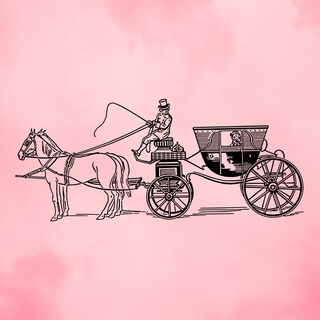
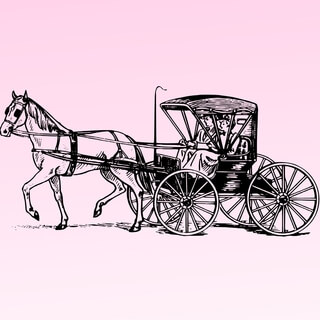
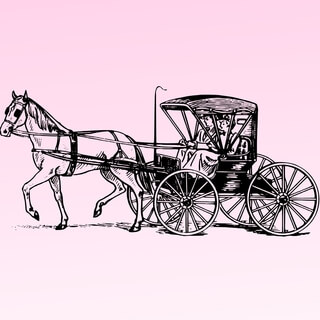
Mrs Dashwood was prevailed upon to accept the use of his carriage on her journey back,
For the better accommodation of her sick child,
And the Colonel,
At the joint invitation of Mrs Dashwood and Mrs Jennings,
Engaged with pleasure to redeem it by a visit at the cottage in the course of the next few weeks.
The day of separation and departure arrived,
And Marianne,
After taking so particular length at leave of Mrs Jennings,
And bidding Colonel Brandon farewell with the cordiality of a friend,
Was carefully assisted by him into the carriage.
Mrs Dashwood and Eleanor then followed,
And the others were left by themselves to talk of the travellers and feel their own dullness,
Till Mrs Jennings was summoned to her chaise to take comfort in the gossip of her maid for the loss of her two young companions,
And Colonel Brandon immediately afterwards took his solitary way to Delaford.
The Dashwoods were two days on the road,
And Marianne bore her journey on both without essential fatigue.
Everything that the most solicitous care could do to render her comfortable was the office of each watchful companion,
And each found their reward in her bodily ease and her calmness of spirit.
Eleanor,
Who had seen her week after week so constantly suffering,
Now saw with a joy which no other could equally share,
An apparent composure of mind which,
In being the result as she trusted of serious reflection,
Must eventually lead her to contentment and cheerfulness.
As they approached Barton,
She grew silent and thoughtful,
And turning her face away from their notice,
Sat earnestly gazing through the window.
But here Eleanor could neither wonder nor blame,
And when she saw as she assisted Marianne from the carriage,
She had been crying.
She saw only an emotion too natural in itself to raise anything less tender than pity,
And in its unobtrusiveness entitled to praise.
No sooner had they entered their common sitting-room than Marianne turned her eyes around it with a look of resolute firmness,
As if determined at once to accustom herself to the sight of every object with which the remembrance of Willoughby could be connected.
She said little but every sentence aimed at cheerfulness,
And though a sigh sometimes escaped her,
It never passed away without the atonement of a smile.
The next morning produced no abatement in these happy symptoms.
When the weather is settled and I have recovered my strength,
Said she,
We will take long walks together every day.
We'll walk to the farm on the edge of the down and see how the children go on.
I mean never to be later than rising,
Till at six,
And from that time till dinner,
I shall divide every moment between music and reading.
There are many works well worth reading at the park,
And there are others of more modern production which I know I can borrow from Colonel Brandon.
By reading only six hours a day,
I shall gain in the course of a twelve-month a great deal of instruction,
Which I now feel myself to want.
Eleanor honoured her for a plan which originated so nobly as this,
Though smiling,
To see the same eager fancy which had been leading her to the extreme of languid indolence and selfish repining now at work in introducing excess into a scheme of such rational employment and virtuous self-control.
Her smile,
However,
Changed to a sigh when she remembered her promise to Willoughby was yet unfilled,
And feared she had to communicate which might again unsettle the mind of Marianne.
Willing,
Therefore,
To delay the evil hour,
She resolved to wait till her sister's health was more secure before she appointed it.
But the resolution was made only to be broken.
Marianne had been two or three days at home before the weather was fine enough for an invalid like herself to venture out.
But at last a soft genial morning appeared,
And Marianne,
Leaning on Eleanor's arm,
Was authorised to walk as long as she could without fatigue in the lane before the house.
They had advanced only so far beyond the house as to admit a full view of the hill.
The important hill behind,
When pausing with her eyes turned towards it,
Marianne calmly said,
There,
Exactly there I fell,
And there I first saw Willoughby.
Her voice sank with a word,
But presently reviving,
She added,
I am grateful to find I can look with so little pain on the spot.
Shall we ever talk on that subject,
Eleanor?
Hesitatingly,
It was said.
Or will it be so wrong?
I can talk of it now,
I hope,
As I ought to.
Eleanor tenderly invited her to be open.
As for regret,
Said Marianne,
I have done with that,
As far as he is concerned.
At present,
If I could be satisfied on one point,
If I could be allowed to think he was not always acting apart,
Not always deceiving me,
But above all,
If I could be assured that he never was so very wicked as my fears have sometimes fancied him,
Since the story of that unfortunate girl.
.
.
She stopped.
Eleanor joyfully treasured her words as she answered,
If you could be assured of that,
You think you should be easy?
Yes,
Said Marianne.
My peace of mind is doubly involved in it,
For not only is it horrible to suspect a person who has been what he has been to me of such designs,
But what must it make me appear to myself?
How then,
Asked Eleanor,
Would you account for his behaviour?
I would suppose him,
Oh,
How gladly would I suppose him,
Only fickle,
Very,
Very fickle.
Eleanor said no more.
She was debating within herself on the eligibility of beginning her story directly,
Or postponing it,
Till Marianne were in stronger health.
I am not wishing him too much good,
Said Marianne,
At last,
With a sigh,
When I was his secret reflections may be no more unpleasant than my own.
Do you compare your conduct with his?
Said Eleanor incredulously.
No,
I compare it with what it ought to have been.
I compare it with yours.
Our situations have borne little resemblance.
They have borne more than our conduct.
My illness has given me leisure and calmness for serious recollection.
I considered the past.
I saw in my own behaviour since the beginning of our acquaintance with him last autumn,
Nothing but a series of imprudence towards myself,
And want of kindness to others.
I saw that my own feelings had prepared my sufferings,
And that my want of fortitude under them had almost led me to the grave.
My illness,
I well knew,
Had been entirely brought on by myself,
By such negligence of my own health,
As I had felt even at the time to be wrong.
Had I died,
In what peculiar misery should I have left you,
My nurse,
My friend,
My sister?
How I should have lived in your remembrance!
My mother,
Too.
How could you have consoled her?
Everybody seemed injured by me.
The kindness,
The unceasing kindness of Mrs.
Jennings,
I had repaid with ungrateful contempt.
To the Middletons,
The Palmers,
The Steeles,
To every common acquaintance even,
I had been insolent and unjust.
To John,
To Fanny,
Yes,
Even to them,
Little as they deserve,
I had given less than they're due.
But you,
You above all,
Above my mother,
Had been wronged by me,
Eleanor.
I,
And only I,
Knew your heart and its sorrows,
Yet to what did it influence me?
Not to any compassion that could benefit you or myself.
Here ceased the rapid flow of her self-reproving spirit,
And Eleanor,
Impatient to soothe,
Though too honest to flatter,
Gave her instantly that praise and support which her frankness and her contrition so well deserved.
Marianne pressed her hand and replied,
You are very good,
My sister.
The future must be my proof.
I have laid down my plan,
And if I am capable of adhering to it,
My feelings shall be governed and my temper improved.
I shall now live solely for my family.
You,
My mother and Margaret,
Must henceforth be all the world to me.
You will share my affections entirely between you.
As for Willoughby,
To say that I shall soon,
Or I could ever forget him,
Would be idle.
His remembrance can be overcome by no change of circumstances or opinions,
But it shall be regulated,
It shall be checked by religion,
By reason,
By constant employment.
She paused and added in a lower voice,
If I could but know his heart,
Everything would become easy.
Eleanor,
Who had now been for some time reflecting on the propriety or impropriety of speedily hazarding her narration,
Without feeling at all nearer decision than at first,
Heard this,
And perceiving that as reflection did nothing,
Resolution must do all,
And soon found herself leading to the fact.
She managed the recital as she hoped,
With address.
She prepared her anxious listener with caution,
Related simply and honestly the chief points on which Willoughby grounded his apology.
Marianne said not a word.
She trembled,
Her eyes were fixed on the ground,
And her lips became whiter than even sickness had left them.
She caught every syllable with panting eagerness.
Her hand,
Unknowingly to herself,
Closely pressed her sister's,
And tears covered her cheeks.
Eleanor,
Dreading her being tired,
Led her towards home,
Until they reached the door of the cottage,
Easily conjecturing what her curiosity must be,
Though no question was suffered to speak it,
Talked of nothing but Willoughby and their conversation together.
As soon as they entered the house,
Marianne,
With a kiss of gratitude,
And these two words,
Just articulate through her tears,
Tell Mama,
Withdrew from her sister and walked slowly upstairs.
Eleanor would not attempt to disturb a solitude so reasonable as what she now sought,
And she turned into the parlour to fulfil her parting injunction.